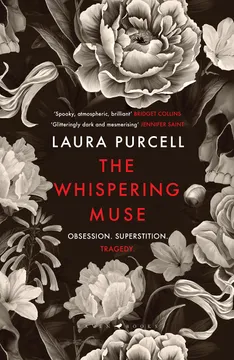


Plot Summary
The Offer Beneath the Rain
With her brother Greg gone and her family struggling, Jenny Wilcox accepts work from Sylvia Dyer, the wealthy patron of the Mercury Theatre. Jenny will dress the new leading actress, Lilith Erikson, and quietly report on her. The salary could pay for treatment for Bertie, Jenny’s younger brother, whose clubfoot limits his mobility.
Sylvia also gives Jenny money to take her siblings to a performance at the Helicon. There they watch celebrated actor Eugene Grieves play Doctor Faustus. As the character’s bargain with the Devil reaches its end, Grieves chokes, convulses, and dies before the audience. The manager dismisses the death as an indisposition, but Jenny leaves the theatre frightened by how convincingly its fiction became real.
The job is not simply an escape from poverty. It binds Jenny’s care for her siblings to the theatre’s private intrigues, making security conditional on service to a powerful employer. Grieves’s death then breaks the distinction Jenny depends on between performance and ordinary life. The horror is public, witnessed by her younger brother, yet no authority names it plainly. That denial establishes the book’s central danger: people keep working inside a lethal story because admitting what happened would threaten their livelihoods.
A Dresser Meets Her Star
On her first day at the Mercury, Jenny finds a working theatre rather than the glamorous world she imagined. Scene painter Oscar Thorne, once Greg’s friend, treats her coldly because he suspects she helped Greg steal an engagement ring from his former fiancée, Georgiana Mildmay.
In the wardrobe room, Mrs Nettles and Polly teach Jenny the practical work of dressing actors, while Silas warns her that speaking Macbeth’s name inside a theatre invites bad luck.
Jenny then meets Lilith, who has a poodle, a room crowded with lilies, and little patience for her new dresser. Hugh Dyer, Sylvia’s husband and the theatre’s manager, visits Lilith privately under the pretext of coaching her. Jenny recognizes the intimacy, but has no proof of what it means.
Jenny enters the Mercury already carrying the consequences of Greg’s choices, while other workers mistake family resemblance for shared guilt. The theatre’s hierarchy reproduces that mistake: actors command attention, dressers absorb blame, and a manager’s private access is treated as ordinary business. Silas’s superstition sounds comic beside the material work of sewing and painting, yet the warning gives staff a language for dangers they cannot otherwise explain. Jenny’s first task is therefore double: learn her craft and learn which appearances the company expects her to accept.
Milk Beneath the Bandages
When Lilith finally allows Jenny to take her measurements, Jenny finds bandages wrapped around her body and breast milk soaking through them. Lilith has secretly given birth, and the pregnancy has changed her figure enough to make the Mercury’s costumes fit badly.
Angered by Jenny’s discovery, she crushes Jenny’s sewing hand and threatens her into silence. Later, Jenny slips into Hugh’s office to leave Sylvia’s auction notice for Grieves’s watch. Instead she finds a photograph of Lilith holding an infant, taken during the supposed summer tour.
Hugh catches Jenny and pays her to keep quiet about Lilith’s condition. She pockets the photograph and the money, knowing Sylvia has been deceived, but delays telling her until Bertie’s medical assessment is secured.
The fitting turns a routine act of women’s labor into an investigation of the body. Lilith’s bindings conceal the evidence that her career depends on appearing untouched by pregnancy, while Jenny’s injured hand makes the cost of exposure immediate. Jenny’s delay is neither simple loyalty nor cowardice: she is bargaining for her family’s survival with information that could destroy another woman’s position. The scene exposes how little privacy either woman possesses. Lilith’s body is scrutinized for work, while Jenny’s conscience is constrained by the money she needs.
The Watch Changes Hands
For the Mercury’s opening Macbeth, Jenny dresses Lilith in a gown designed to make Lady Macbeth look dangerous and regal. Lilith’s performance is startlingly physical: she kneels, tears up Macbeth’s letter, and eats it under crimson lights.
The audience applauds her, though Anthony Frost, playing Macbeth, receives the warmer praise. At the anniversary celebration, Hugh presents Grieves’s engraved watch to Lilith as the theatre’s next tragic star, despite Sylvia’s expectation that it was meant for her.
Sylvia retreats to a private box, devastated. Jenny finally gives her the photograph and explains that Lilith has had Hugh’s child. Sylvia’s grief hardens into a determination to use the secret against Lilith, while Jenny realizes her evidence has not brought comfort or justice.
The watch transforms a private betrayal into public ceremony. Hugh does not merely favor Lilith; he uses his wife’s theatrical devotion to Grieves as the stage for her humiliation. Sylvia’s response is shaped by the same dramatic logic that has sustained her marriage: she seeks a counterplot rather than confronting the limits of her power directly. Jenny’s evidence seems decisive, but it only changes the terms of the rivalry. In this theatre, truth is rarely an ending. It becomes another prop, handled by whoever can use it most effectively.
A Fall from the Flies
As Lilith grows fixated on Grieves’s watch, Jenny notices her nosebleeds, thinning hair, and increasingly forceful behavior. She also sees bruises and scratches on Anthony after Lilith grips him during rehearsal.
Convinced the watch is harming her, Jenny agrees to help Silas steal it during a photographic sitting. She unclips it from Lilith’s costume and passes it to him. Before Silas can destroy it, a windlass screams and a heavy piece of stage machinery plunges through the platform.
Silas is crushed below, still clutching the watch. At the inquest, the jury rules his death accidental, while Lilith claims the watch as her property and returns it to herself. Jenny is left with guilt and no proof that the theatre’s dangers are anything but ordinary accidents.
Jenny and Silas act from a plausible reading of the evidence: Lilith is deteriorating, the watch is newly central to her behavior, and the stage contains dangerous machinery. Their attempt to intervene instead produces another death. This is the novel’s cruelest form of causal uncertainty. The watch may be cursed, but a theatre’s ordinary hazards can also kill, and the official verdict seals off further inquiry. Silas’s death makes Jenny’s protective impulse feel dangerous, not because care is misguided, but because she has no reliable way to distinguish rescue from interference.
Cats at the Dressing Door
After Silas’s funeral, Sylvia asks Jenny to help disrupt Lilith’s performance. They scatter cat-attracting herbs over the nightgown Lilith wears in Macbeth’s final act, knowing Lilith is allergic. The plan works too well. Lilith develops hives, streams from her eyes, and collapses onstage; Jenny has to carry her backstage and explain the attack as an accident.
At Lilith’s home, Jenny apologizes and learns that Lilith is also suffering from milk fever after giving birth. Lilith recognizes Sylvia’s hand in the sabotage but does not retaliate. Instead, she lets Jenny stay and talk. Jenny begins to see her as a lonely, ambitious woman rather than merely the threat Sylvia described, though her guilt remains between them.
Sylvia’s revenge repeats the structure of Hugh’s betrayal: a powerful person uses someone else’s body as the instrument of a private conflict. Jenny participates because she wants to repay Sylvia and protect her family, then becomes the one who must tend the harm. Lilith’s refusal to punish her does not erase the injury; it makes their relationship harder to simplify. The scene begins Jenny’s moral separation from Sylvia, but not through a grand declaration. It starts with the intimate, practical labor of caring for the person she helped hurt.
The Duchess Loses Her Leading Man
The Mercury reopens with The Duchess of Malfi, and Lilith returns to the stage after her illness. During a scene in which the Duchess eats apricots, she becomes violently sick and loses a tooth, leaving Jenny to suspect that someone has poisoned her.
Anthony, still grieving Silas and battered by critical reviews, has refused the villainous role Lilith wanted him to play. His performance as the Duchess’s husband unravels under the strain. During a staged blackout, Anthony climbs into the theatre’s flies and hangs himself from a rope cut too short to catch his fall.
His body strikes the stage and his head is torn from it. In the aftermath, Jenny discovers that Lilith’s new pregnancy has begun to quicken. The company’s tragedy is no longer confined to the script.
The stage’s tricks, including darkness, false deaths, and hidden machinery, have trained the company to treat danger as part of the show. Anthony’s suicide ruptures that habit with a death no one can contain inside a role. His distress has been visible, but the demands of performance keep turning it into a problem to manage rather than a crisis to address. Lilith’s pregnancy emerges in the same aftermath, linking bodily vulnerability to professional ambition. Both events expose a workplace that can aestheticize suffering faster than it can care for the people who suffer.
Brothers Return, Secrets Surface
While Lilith grieves Anthony and confronts another pregnancy, Greg returns to Jenny’s new home with Georgiana, his wife. Jenny rejects them, especially after recognizing a ring Greg stole from her former employer, and Bertie is hurt that she sends away the brother he still admires.
Soon Sylvia arrives with a torn baptism record from Southend. It names Hugh and Lilith as parents of a boy, Algernon, and confirms that Hugh has been supporting the child. Sylvia fears the boy may inherit her husband’s money and asks Jenny to help ruin Lilith.
Jenny refuses to poison or deliberately endanger her, but Hugh separately arranges an illegal abortion because Lilith wants to return to acting. Jenny agrees to accompany Lilith, not trusting Hugh to care for her afterward.
The family plot mirrors the theatre’s rivalries without making the injuries equivalent. Greg’s return forces Jenny to confront the brotherly affection she still feels alongside the damage he caused; Sylvia’s discovery turns a child into a claim in a contest over money and legitimacy. Jenny resists becoming Sylvia’s weapon, yet agrees to help Hugh with an abortion, a decision made under equally coercive circumstances. Her choices are shaped by care, but the novel refuses to present care as morally clean when every available option is controlled by wealth, secrecy, or fear.
A Dangerous Freedom
Disguised and using a false name, Lilith enters a Harley Street house for an illegal abortion while Jenny waits with her hat, shawl, and watch. A hidden scream leaves Jenny fearing the procedure has gone wrong. The attendant sends Lilith out pale and barely able to walk, warning Jenny to keep her warm, watch for bleeding, and avoid calling attention to the visit.
At home, Lilith vomits, bleeds heavily, and cannot climb the stairs. Jenny carries her to the bathroom, where black, tar-like blood and tissue fill the basin. She faints from shock. When she wakes the next morning, Lilith has left her bed and gone to the Mercury, determined to perform in the benefit production of Antony and Cleopatra.
The procedure is framed as a choice, but the scene makes clear how narrow that choice is. Lilith wants to remain an actress in a profession that punishes motherhood; Hugh wants to avoid scandal; Jenny is left to manage the physical consequences without medical authority or a safe way to seek help. The black discharge intensifies the Gothic uncertainty, but the immediate terror is also social and practical. Jenny’s care becomes emergency nursing, carried out in secrecy because the law makes honest assistance dangerous.
Cleopatra’s Stolen Triumph
At the Mercury, Georgiana expects to play Cleopatra, but Felix Whitlow refuses to perform without Lilith after seeing the watch she carries. Jenny improvises padding to protect Lilith’s injured body beneath the costume.
Lilith then gives a commanding performance, appearing to take on Cleopatra’s strength despite her recent ordeal. At the end, she lies so still that Jenny fears she has died. Jenny spots the club-shaped wound on Lilith’s arm, snaps the watch from its chain, and hides it.
Lilith convulses and breathes again. Jenny carries the watch to Sylvia in Box Six, hoping the two women are now even. Sylvia accepts it with reverence, while Jenny returns to find Lilith frantically searching for the relic and unable to understand its absence.
Lilith’s performance demonstrates how art can give a person temporary command over a body that is failing her. Yet the scene’s apparent triumph depends on Jenny removing the object Lilith believes sustains her talent. Jenny acts to save her, but does so without consent, repeating the controlling logic she has resisted in Sylvia and Hugh. Giving the watch to Sylvia does not neutralize its influence. It transfers the danger to someone whose longing for theatrical power has already begun to eclipse ordinary attachments.
Juliet’s Final Silence
Without the watch, Lilith loses confidence and struggles through Romeo and Juliet. Sylvia engineers a hostile audience that pelts Lilith with fruit, shells, and a bottle, forcing the curtain down while Jenny refuses to abandon her. In the weeks that follow, Lilith grows increasingly listless and clings to Juliet’s spring-loaded dagger.
She tells Jenny that her second pregnancy ended in the birth of a malformed girl who could not have survived, and that she has arranged for her first son to be raised by another family. On the final night, Jenny finds a Latin warning to flee written on Lilith’s mirror. During the tomb scene, Lilith uses a real blade instead of the prop and stabs herself. Jenny reaches her too late.
The audience’s violence turns public taste into an instrument of punishment, while Sylvia’s paid spectators make humiliation look spontaneous. Lilith’s collapse is not explained by one cause: lost confidence, grief, illness, and the belief that her time is ending converge. The real dagger makes the boundary between performance and life impossible to restore. Jenny has learned to recognize the signs of danger, yet recognition is not the same as control. The tragedy tests the fantasy that devotion, observation, or better costume work can save someone who no longer wants an ordinary life.
A New Faust, Old Debts
After Lilith’s death, Sylvia makes Georgiana the Mercury’s leading actress and dismisses Jenny, who blackmails her into keeping the job until Christmas. Sylvia chooses Faust as the next production, while the theatre’s owner, Hugh, approaches Oscar with money to establish a small playhouse and raise Algernon with Jenny.
Jenny and Oscar agree to marry and adopt the boy. Sylvia, meanwhile, announces that she is pregnant and locks Grieves’s watch in a safe. During rehearsal, a veiled figure appears as the Evil Spirit and a painted backdrop crashes onto Georgiana.
Jenny recognizes Lilith’s presence in the voice and the supernatural timing. The accident strengthens her fear that the dead actress remains bound to the Mercury, even as the adults make plans for a future beyond it.
The proposed new family offers Jenny and Oscar a way to turn Lilith’s abandoned child into a living bond, but it also rests on money from Hugh, whose support has repeatedly carried hidden costs. Sylvia’s pregnancy gives her a new claim to the future and reinforces her faith that she can direct events. The falling backdrop unsettles both projects: the theatre’s past refuses to stay safely behind scenery. The chapter’s tension comes from competing inheritances, one biological and one theatrical, each asking Jenny to decide what she owes.
Greg Names His Price
On Faust’s opening night, Jenny follows a woman in black through the Mercury, then finds Greg waiting in the lobby. He has learned that she and Oscar plan to adopt Algernon and threatens to tell Georgiana unless they pay him.
Jenny returns to dressing Georgiana, but another blackout reveals the pale, tear-marked figure from the theatre’s earlier haunting. The apparition leads Jenny to Hugh’s office. Grieves’s portrait falls, Sylvia’s safe opens, and the watch waits inside. Jenny understands that Lilith, or something wearing her image, is directing her toward the relic.
She takes it despite remembering the deaths that followed its previous owners. For the first time, the choice is hers alone: destroy the watch and risk what it may unleash, or leave Algernon exposed to Sylvia’s ambition.
Greg’s blackmail brings the family’s old pattern of theft into the final crisis: once again, Jenny must protect a vulnerable sibling from a man who assumes kinship entitles him to her resources. The apparition offers help, but not reassurance. Its guidance leads Jenny to the same object associated with deaths, ambition, and impossible bargains. The book leaves open whether this is Lilith’s spirit or the watch’s own agency. Either way, Jenny’s decision is no longer a matter of spying for the wealthy. It is a direct wager on the future she hopes to build.
The Watch Burns the Theatre
Jenny takes a paperweight and smashes the watch. Smoke fills the office, then the theatre erupts in fire as Faust continues onstage. Georgiana’s costume catches, and she runs burning into the orchestra pit. Jenny pushes through the panicked audience with Eurydice, Lilith’s poodle, until Oscar finds them outside.
Jenny realizes Greg is still inside and tries to return, but the balcony collapses and traps the entrances. Oscar tells her Greg cannot have survived. The Dyers and other company members have not reached the street, and the fire consumes the building before Jenny can learn who escaped.
She clings to Oscar and Eurydice, uncertain whether destroying the watch caused the blaze or merely coincided with the theatre’s dangerous effects. She knows only that she must leave the Mercury behind.
The climax refuses a clean distinction between supernatural punishment and material disaster. The watch breaks just before a fire made plausible by the Mercury’s elaborate effects, so Jenny cannot know whether she has released a curse or triggered a catastrophe. Her liberation is correspondingly compromised: the theatre is gone, but Greg is presumed dead and the survival of others remains uncertain. The final act makes escape both necessary and morally costly. Jenny can flee the place that consumed her, but she cannot separate that freedom from the lives lost within it.
Analysis
The novel’s central horror is not simply that the supernatural may be real. It is that the characters have learned to treat the extraordinary as an acceptable price for survival or success. Jenny accepts Sylvia’s employment because Bertie needs treatment; Lilith pursues the stage because it offers a self beyond the stigma attached to her birth and motherhood; Sylvia uses money and theatrical influence to regain a sense of control. Each woman has a different form of agency, but none begins with equal power. The theatre makes that inequality visible. Actors receive applause, while dressers and painters perform the labor that makes the illusion possible. Yet the workers also inhabit the machinery and danger hidden from the audience. Costumes, lighting, and stage effects blur the border between representation and lived experience, until the company can mistake actual suffering for another scene to manage.
The watch concentrates these pressures into an object that may be cursed, or may reveal the desires already governing its owners. Grieves and Lilith associate artistic greatness with a Muse; Sylvia sees the relic as a path back to a lost romance and a theater of her own. Jenny’s most consequential choices concern whether to possess, transfer, or destroy it. Her development is not a simple rejection of ambition. She discovers real creative pleasure in dressing plays and wants a future with Oscar, but increasingly understands that no promised reward is free when another person controls the terms. The book’s tragedies also turn on failures of care. Anthony’s distress is subordinated to performance, Lilith’s health to her career, and the children’s security to adult rivalries. Jenny tries to intervene, sometimes compassionately and sometimes harmfully, but good intentions cannot undo a system that makes people choose between safety, livelihood, and one another. The ending’s fire leaves causation unsettled and victory incomplete. Jenny escapes, but only after the theatre has consumed her work, her colleagues, and the possibility of knowing exactly what happened. Its final lesson is not that people should abandon art or ambition, but that any calling becomes monstrous when its devotees are taught to sacrifice the living for the spectacle.
Review Summary
The Whispering Muse receives mostly positive reviews, averaging 3.91/5. Admirers praise Laura Purcell's atmospheric Victorian gothic storytelling, rich theatrical setting, and complex female characters. The structure of five acts mirroring actual plays is widely appreciated. Critics note some weaknesses, including flat characterisation, predictable plotting, and an abrupt ending. Several longtime Purcell fans consider it slightly below her previous works like The Silent Companions and The Corset, while newcomers to her writing are thoroughly impressed. Overall, it's regarded as an enjoyable, atmospheric gothic read.
People Also Read


Characters
Jenny Wilcox
Family’s determined keeperJenny is a young former lady’s maid who takes a dresser’s position at the Mercury to support her younger siblings. Practical, observant, and accustomed to doing other people’s work without complaint, she initially treats security as the highest good. Her loyalty to family makes her vulnerable to employers who offer help with conditions attached. At the theatre, she discovers a vocation in costumes and performance, but she also becomes entangled in surveillance, secrecy, and dangerous acts of care. Jenny’s strength is not innocence: she can be angry, calculating, and wrong. Her central struggle is learning to protect people without surrendering her judgment to wealth, guilt, or theatrical fantasy.
Lilith Erikson
Ambition in the spotlightLilith is the Mercury’s ambitious leading actress, celebrated for a commanding voice and an ability to make tragic roles feel physically immediate. She is proud, provocative, and impatient with the limits others place on her, yet her confidence conceals a precarious sense of self. Acting gives her an identity and a future in a profession that offers women little security beyond youth and public favor. Her belief in the tragic Muse is inseparable from her artistic ambition: she reads success as evidence of a calling, not mere luck. Lilith can wound those around her, but she is also isolated, hungry for recognition, and capable of tenderness when she trusts someone.
Sylvia Dyer
Theatre’s possessive patronSylvia is the Mercury’s wealthy patron, Hugh’s wife, and mother to Rachel. Generous to Jenny’s family, she pays attention to practical needs that others overlook, including Bertie’s medical care. At the same time, she experiences love and art through an intensely theatrical imagination, turning personal injuries into roles and rivalries. Her devotion to Eugene Grieves shapes her sense of marriage and the theatre, while her fear of losing status or family security sharpens her possessiveness. Sylvia’s charity is real, but it can become a form of authority: she expects gratitude and uses money to draw people into her plans.
Oscar Thorne
Idealistic scene painterOscar paints the Mercury’s scenery and once imagined building a theatre with Georgiana. Creative and romantic, he is drawn to what the stage might make possible, sometimes mistaking ambition for a plan. Greg’s actions leave him suspicious of Jenny, but Oscar is capable of revising his judgment when he learns what happened. His craft gives him a practical understanding of theatrical illusion, while his hopes make him susceptible to the theatre’s glamour. He and Jenny share a growing trust rooted in work, grief, and a mutual desire for a life not governed by other people’s whims.
Hugh Dyer
The Mercury’s managerHugh owns and manages the Mercury, presenting himself as a seasoned judge of talent and a generous patron. His investment in Lilith’s career brings her opportunity, but his private choices place other people in danger and leave women to manage the consequences. He is charming when authority serves him and evasive when responsibility demands more than words. His marriage to Sylvia and his dependence on her fortune complicate his power within the theatre, though they do not absolve him of how he uses it.
Greg Wilcox
Restless elder brotherGreg is Jenny’s eldest brother and, after their father left, the boy expected to act as head of the family. Handsome and once protective, he carries resentment about the responsibilities imposed on him. He wants a life of his own and is easily swept up by romance and the promise of success. His choices repeatedly collide with the obligations he leaves behind, especially Jenny’s duty to protect their younger siblings.
Georgiana Mildmay
The self-promoting actressGeorgiana is an actress whose ambitions exceed the roles and opportunities offered at the Mercury. Charming and socially quick, she knows how to make herself desirable to patrons and colleagues. She is dissatisfied with modest prospects and gravitates toward people who promise a larger stage. Her relationship with Greg and her history with Oscar connect her to Jenny’s family life as well as the theatre’s internal rivalries.
Anthony Frost
The Mercury’s leading manAnthony is the Mercury’s principal actor, known for a rich voice and a gentle manner that contrasts with the formidable characters he plays. He respects his dresser, Silas, and takes pride in his craft, but the pressure to perform and the loss of a close companion unsettle him. He prefers roles that allow decency over villainy, a preference that puts him at odds with Lilith’s artistic demands.
Silas
Anthony’s devoted dresserSilas dresses Anthony and takes great pride in the actor’s appearance and reputation. His theatrical superstitions can seem fussy, but they reflect years spent in a profession where accidents and mysteries are difficult to separate. Beneath his vanity and dramatic manner is real affection for Anthony and a willingness to protect the company from what he believes is a threat.
Dorcas Wilcox
Jenny’s clear-eyed sisterDorcas is Jenny’s younger sister, employed in a flower shop and skilled in the meanings and arrangement of flowers. She is warm, teasing, and more willing than Jenny to question the price of wealthy people’s help. Dorcas understands the family’s hardships, but she does not romanticize the theatre or its promises. Her steadiness gives Jenny a home life beyond the Mercury.
Philip Wilcox
The responsible middle brotherPhilip is Jenny’s teenage brother, already working in a hat factory and trying to take responsibility for the family. His first theatre visit excites him, but the spectacle also frightens him. He is protective of Bertie and often voices concerns Jenny tries to suppress, particularly when her work draws her deeper into danger.
Bertie Wilcox
The youngest WilcoxBertie is Jenny’s youngest brother, a lively boy whose clubfoot limits his movement and employment. He longs to share the theatre with Jenny and looks up to Greg as a father figure. His needs give Jenny’s choices their urgency, while his affection makes the family’s fractures impossible to dismiss as mere adult business.
Rachel Dyer
Sylvia and Hugh’s daughterRachel is the young daughter of Sylvia and Hugh. Curious and affectionate, she is often present at moments when adult rivalries threaten to shape her future. Her closeness to her mother gives Sylvia’s fears a personal, protective dimension.
Eurydice
Lilith’s watchful poodleEurydice is Lilith’s black poodle, bold around strangers and fiercely attached to her mistress. She reacts to the theatre’s shifting atmosphere with an animal’s blunt instinct, often showing alarm before the people around her admit that anything is wrong. Her loyalty eventually extends to Jenny and Oscar.
Mrs Nettles
The wardrobe’s exacting mistressMrs Nettles supervises the Mercury’s wardrobe and designs its costumes. Competent, practical, and protective of the people who work for her, she judges actors by how difficult they make the work. She gives Jenny a craft to master and a professional community amid the theatre’s personal intrigues.
Polly
The wardrobe room’s seamstressPolly is a skilled young seamstress who works beside Mrs Nettles. Quietly focused, she knows the costume rails and fabrics by heart. Her direct observations give Jenny an early sense of how the Mercury’s staff regard its celebrated performers.
Felix Whitlow
A wary theatrical veteranFelix is an experienced actor with a flamboyant presence and a professional history that links him to Eugene Grieves. He understands the pull of the stage and the danger of theatrical ambition better than he initially lets on. His caution around Lilith’s watch contrasts with the company’s eagerness to treat it as a harmless relic.
Plot Devices
Grieves’s Melpomene Watch
Ambition with a priceThe black-cased watch belonged to Eugene Grieves and bears the image of Melpomene, the Muse of tragedy. A Latin warning to flee is scratched into its back. Hugh gives it to Lilith as a symbol of succession, and she treats it as proof that the Muse has chosen her. Its presence coincides with her extraordinary performances, physical decline, and a string of deaths. The novel never fully settles whether the watch contains a supernatural force or concentrates the characters’ beliefs and desires. Its changing owners reveal how willingly people mistake success for a gift without cost.
Plays Within the Play
Roles shape real choicesThe Mercury stages Macbeth, The Duchess of Malfi, Antony and Cleopatra, Romeo and Juliet, and Faust. Their plots offer Jenny and the actors ready-made language for ambition, betrayal, guilt, and death. Sylvia and Lilith use theatrical roles to understand their own conflicts, sometimes treating their lives as scripts with predetermined parts. Costumes and performances also give Jenny her first chance to create rather than merely serve. The plays therefore function as both art and interpretive traps: they help characters express what they cannot say plainly, but can also encourage them to mistake dramatic patterns for instructions.
Theatre Machinery
Illusion hides real dangerThe Mercury’s ropes, bridges, trapdoors, lighting, painted scenery, and stage effects create convincing ghosts and deaths for the audience. The same equipment makes backstage work hazardous, and the company’s familiarity with theatrical danger can delay its response to real distress. A vanished actor may be a trick; a falling body may be a planned effect; a blaze may be part of a spectacle until it is too late. Machinery makes the theatre’s central ambiguity physical: the audience sees a carefully controlled illusion, while the workers know how fragile that control is.
Patronage and Poverty
Help creates obligationsJenny’s family needs wages, housing, and medical care, while Sylvia and Hugh possess the money and influence to supply them. Their generosity is meaningful, especially when it improves Bertie’s mobility, but it also draws Jenny into spying, secrecy, and acts she later regrets. Actors face a similar dependence on patrons and managers, whose approval determines roles and reputations. The economic arrangement gives emotional manipulation practical force: refusing a demand can mean losing a home or livelihood. The device grounds the Gothic plot in class, showing why people continue to cooperate with patrons they distrust.
Download PDF
Download EPUB
.epub digital book format is ideal for reading ebooks on phones, tablets, and e-readers.








