

Key Takeaways
Treat your face as a prompt for self-understanding, not a verdict
A mirror, not a sentence. Jean Haner presents Chinese face reading as a way to reflect on temperament, emotional patterns, and what kinds of work or relationships may suit a person. Her central claim is that a face can help people recognize qualities they have learned to suppress, then make room for a more authentic life. The method is not meant to declare someone lucky, doomed, or defective. Haner argues that a person’s future can change as their inner life changes.
A revealing mix-up. One client repeatedly failed a physical test for a firefighter job. Haner read her face as showing a stronger desire for partnership and family. The client realized she wanted a firefighter as a partner, not a firefighting career. The story illustrates the book’s most useful invitation: question whether a goal is truly yours.
The story works because it converts a fixed ambition into a question about the need underneath it. That move resembles reflective coaching: a person tests whether a stated goal is a means to something else, such as belonging, status, or adventure. The face reading itself is not evidence that Haner could infer this accurately from appearance. Its more defensible value is as a prompt that helped the client reconsider her own motives. Readers can keep that reflective benefit while treating facial interpretations as hypotheses to check, not discoveries imposed from outside.
Read facial impressions with curiosity, because first impressions inherit your biases
Notice your filter. Haner distinguishes deliberate face reading from the snap judgments people already make. A familiar-looking face can trigger memories of someone from the past, while differences in manner or emotional style can create affinity or unease. Neither reaction necessarily tells the observer who the new person is. One mother nearly moved her son out of a teacher’s class because the teacher seemed tense and exacting. That same attention to detail helped the teacher identify a learning difficulty missed by others.
Ask before concluding. Haner also cites research on people making judgments from photographs, including a reported finding that women identified men who liked children with close to 70 percent accuracy. Such findings suggest that people draw impressions from faces, but do not establish that facial structure reliably reveals character. Her practical advice is to use an impression to guide a question, then let the person’s words and actions test it.
The teacher story captures a familiar error: treating discomfort as proof of another person’s bad intent. Social psychology calls one version of this the fundamental attribution error, the tendency to explain behavior through character while overlooking context. A more generous interpretation can uncover competence hidden inside an irritating style. Yet generosity should not erase evidence. A face-based hunch may help someone stay curious, but decisions about trust, care, or safety should rest on observed conduct and conversation, not an attractive story about facial cues.
Use the five phases as a vocabulary for needs, not fixed personality boxes
Five patterns of energy. Haner adapts the Chinese Five Elements, also called Five Phases, as a map of changing qualities rather than literal substances. Water represents inward stillness and potential; Wood, initiative and growth; Fire, excitement and connection; Earth, care and stability; Metal, sensitivity, refinement, and release. In her account, each phase supports the next, as water nourishes growth, growth fuels fire, and the cycle continues. People contain all five, though one or two may feel more prominent.
A flexible portrait. Haner describes a Water-dominant person as needing privacy and freedom, while a Wood-dominant person may thrive on activity and direct action. These are broad tendencies, not complete portraits. She repeatedly advises looking at the whole face and personality rather than treating one feature or category as conclusive. The framework’s purpose is to help name a need and consider how to support it, not to reduce someone to a type.
Archetypes can make complex inner experience easier to discuss. A person who says they need more quiet, structure, or social contact has a practical starting point for change, and a shared vocabulary can reduce shame around difference. The framework also has a clear limit: compelling categories can become self-fulfilling labels, especially when bodily appearance is treated as proof. Used lightly, the Five Phases resemble a set of metaphors for shifting needs. Used rigidly, they risk turning a nuanced, changing person into a decorative diagnosis.
Shape your work around the energy that actually restores you
Support the natural pattern. Haner argues that people often become stressed by trying to live according to someone else’s preferred pace. In her examples, Water energy benefits from quiet, flexible time; Wood from movement and purposeful projects; Fire from variety and human contact; Earth from comfortable connection; and Metal from calm, order, and time to prepare. The point is not to indulge every impulse, but to make room for conditions that help a person function well.
Make differences workable. Haner describes a couple who argued because the husband was often late. She interpreted his behavior through a Water tendency to lose track of linear time. His partner stopped treating every delay as a deliberate slight and began bringing a book when they met. This did not make punctuality irrelevant; it changed how they understood the friction and helped them find a more manageable arrangement.
The practical strength here is person-environment fit. A schedule, workspace, or job can either support concentration and recovery or demand constant self-correction. Designing around real preferences can conserve effort, much as workplace accommodations make it easier for people to contribute without pretending everyone works identically. Still, an explanatory type should not become a free pass. A need for flexibility can be genuine, while repeatedly leaving others waiting still has consequences. The useful question is both what helps this person thrive and what agreements make the arrangement fair to everyone.
Let features start a conversation, never substitute for evidence
Read the whole picture. Haner assigns meanings to individual features: a strong chin is associated with determination, prominent eyebrows with drive, the mouth with relational needs, and the eyes with ways of communicating. She cautions that a feature’s meaning can be modified by other features and says readers should compare proportions within a face and avoid relying on tiny details. Her approach also asks readers to consider a person’s background and to check interpretations through questions.
Keep health claims separate. The book links facial areas to organs and emotional states, but it is not a medical diagnostic guide, and its interpretations should not replace professional assessment. A dark under-eye area, for example, could have many explanations; Haner herself describes physical and emotional possibilities. The safest practical use is to ask someone what they experience rather than infer illness, trauma, or personality from their appearance.
This distinction is essential because ordinary facial perception and claims about fixed facial structure are not the same thing. Expressions can communicate momentary emotion, but a feature’s shape does not establish a person’s character, history, or health. That gap matters ethically: a confident but incorrect reading can stigmatize someone or encourage amateur diagnosis. Haner’s advice to combine cues and ask questions improves the method’s interpersonal posture, though it cannot validate the underlying system. Treating each interpretation as tentative protects both curiosity and the person being read.
Treat life-stage markings as invitations to reflect, not forecasts
A symbolic life map. Haner maps broad areas of the face to periods of life. Ears represent childhood, the hairline adolescence, the forehead the twenties, the eyes the thirties, and further features correspond to later decades. In this system, Mountains are bony features associated with outward action, while Rivers are softer features associated with inward or emotional periods. The Four Gates mark transitions into the forties, fifties, sixties, and seventies.
Use the map gently. Wrinkles, scars, or other markings are read as traces of significant experiences or unresolved concerns. Haner says they do not mean that a future event is inevitable; a person can change the pattern by working through the underlying issue. As a reflective exercise, a mark can prompt questions about what was happening at a certain age. It cannot reliably predict what will happen at a future age, and a mark should never be used to frighten someone.
A life map can help people organize memory into a coherent story. Developmental reflection often reveals that a present reaction has roots in an earlier transition, even when the connection is not immediately obvious. The map’s decade-by-decade structure gives that reflection a memorable scaffold. Its danger lies in converting a scaffold into prophecy: once a person expects a crisis at a certain age, ordinary events may be interpreted as confirmation. The best use is retrospective and open-ended. Ask what a period meant to someone, rather than telling them what their face says must have happened.
Ask what need sits beneath behavior before calling it selfish or controlling
Translate the friction. Haner’s examples show how different needs can collide without either person intending harm. An Earth-oriented neighbor expresses care by bringing food or offering help; a more sensitive neighbor experiences uninvited help as intrusion. In another case, a mother mistakes her Metal daughter’s need for a particular bedtime routine as a bid for control. Once the mother sees the routine as a way the child feels secure, their conflict eases.
Understanding is not surrender. The book encourages adapting communication to the person in front of you. A direct, practical approach may suit someone who values action, while another person may need time, warmth, or personal space. The goal is less blame and better contact. That does not require accepting behavior that harms others. A useful conversation names the need, explains the impact, and negotiates boundaries that protect both people.
The framework’s strongest relational insight is that the same act can carry different meanings for giver and receiver. This resembles work on attachment and communication: people often offer the care they themselves would welcome, then feel rejected when it is not received that way. Curiosity can interrupt that loop. At the same time, compassionate interpretation must include accountability. Knowing why someone is intrusive or unreliable may reduce resentment, but the other person still gets to say no, ask for change, or leave a relationship that does not feel safe.
Use your face's three zones and two sides as reflection prompts
Three ways to decide. Haner divides the face horizontally into an upper analytical zone, a middle practical zone, and a lower intuitive zone. A prominent zone is said to indicate a preferred decision-making style. Her house-hunting example makes the distinction concrete: one person researches neighborhoods, another checks repairs and costs, and another relies more heavily on an immediate gut response.
Public and private selves. She also interprets the right side of the face as more public and the left as more private, with differences between the two offering clues about what someone reveals or holds back. These are the author’s symbolic readings, not validated tests. They can still prompt useful questions: Do I need more facts, practical checks, or time to notice my instincts? What parts of myself do I tend to show, and what do I keep private?
The zones offer a practical decision checklist because they separate information gathering, feasibility, and felt response. A good choice often needs all three, even when one mode comes naturally. The public-private distinction can likewise encourage reflection on how people manage self-presentation. But facial proportions and asymmetries do not reliably measure those tendencies. The value is in using the categories to inspect one’s process, then comparing them with actual choices and outcomes. A metaphor can organize attention without serving as a diagnostic instrument.
See wrinkles as records of expression, not defects to erase
Appearance carries a story. Haner reframes wrinkles as signs of repeated expression and meaningful experience rather than automatic evidence of decline. She describes joy lines near the eyes as linked to smiling, and the lines called fa lin as associated, in this tradition, with living more fully in one’s purpose. Her argument challenges the idea that every visible mark is a flaw requiring correction.
Notice without obsessing. Haner suggests paying attention to facial tension and the feelings that accompany it. If someone repeatedly tightens their mouth or brow, that habit may be worth exploring. She also recounts clients whose appearance seemed to change after emotional work. Such stories support her theme of mind and body influencing one another, but they do not establish that personal growth reliably removes wrinkles or changes facial structure. Cosmetic choices remain personal, not moral tests.
The shift from defect to lived expression is humane, especially in a culture that often treats aging as a problem to conceal. It can loosen the link between self-worth and a narrow beauty standard. Yet it would be inaccurate to treat lines as a precise diary: skin also changes with age, genetics, health, and environment. The meaningful claim is not that every crease has a decipherable emotional cause, but that a face need not be judged only as an aesthetic object. Respecting appearance and choosing cosmetic care can coexist.
Analysis
The book’s central move is to turn face reading away from fortune-telling and toward self-acceptance. Haner’s stories make that turn vivid: the aspiring firefighter discovers she wants a firefighter partner, and a mother reinterprets her child’s strict bedtime preference as a need for security rather than a power struggle. These are strong examples of how a charitable interpretation can loosen shame and soften conflict. The method’s emotional usefulness, however, is distinct from the truth of its claims about facial features.
The book draws on several different kinds of evidence without consistently separating them. Humans do attend closely to faces, and expressions can offer information about current emotional states. That does not establish that chin shape reveals willpower, that cheek lines identify grief, or that a facial map predicts the age of future difficulties. The cited studies about facial impressions and smiles do not, as presented here, validate the Five Elements as a system for inferring personality. Nor does a resemblance between a feature and a health issue establish a medical connection.
The Five Phases are most compelling as a metaphorical vocabulary. They help name contrasting needs: motion and stillness, independence and connection, stimulation and calm. Such categories can make differences discussable, but they can also encourage confirmation bias. Once someone is called a Water or Metal type, ordinary behavior may be interpreted to fit the label, while contradictory evidence gets ignored. The book’s repeated counsel to consider the whole person and ask questions is therefore more reliable than its feature-by-feature rules.
A careful reader can preserve the useful core: treat an interpretation as a prompt, verify it through conversation, and prioritize observed behavior over appearance. That approach keeps the book’s compassionate ambition while avoiding the risks of stereotyping, amateur diagnosis, or fatalistic predictions. Its enduring value is less a secret code in the face than a reminder to meet oneself and others with curiosity instead of judgment.
Review Summary
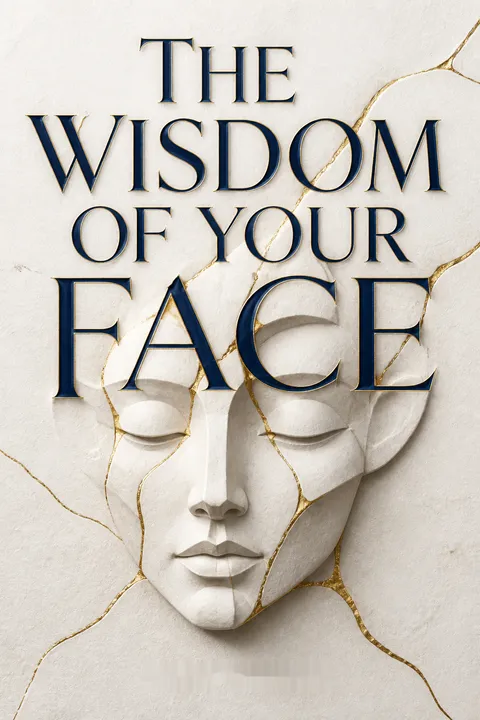
The Wisdom of Your Face by Jean Haner explores Chinese face reading, a method to understand personalities through facial features. Readers find it fascinating, insightful, and useful for self-discovery and understanding others. Many praise its accuracy and depth, though some find it confusing or hard to apply. The book categorizes personalities into five elements: water, wood, fire, earth, and metal, explaining how facial features correspond to these types. While some are skeptical, most reviewers appreciate the book's unique perspective on human nature and relationships.
People Also Read





Glossary
Five Elements
Five changing energy patternsHaner’s adaptation of a traditional Chinese model that describes change through five symbolic phases: Water, Wood, Fire, Earth, and Metal. Each phase represents a cluster of tendencies and needs, and each is said to nourish the next. In the book, people contain all five, with some more prominent than others. The system is best understood as the author’s interpretive framework, not a validated personality test.
Mountains and Rivers
Bony and soft featuresHaner’s two broad categories for facial features in her life-stage map. Mountains are bony features, including the forehead, nose, chin, and jaw, and are associated with more active, outward periods. Rivers are softer features, including ears, hairline, eyes, and mouth, and are associated with more inward or emotional periods. These are symbolic associations within the book’s face-reading system.
Four Gates
Four major life transitionsA face-reading scheme that locates important transitions at the points associated with entering one’s forties, fifties, sixties, and seventies. Haner links these transitions to the area between the eyebrows, the philtrum, the area under the lower lip, and the bottom of the chin. The Gates provide a symbolic structure for reflecting on life changes, not evidence that a particular event will occur.
Three Horizontal Zones
Three decision-making areasHaner’s division of the face into an upper analytical zone, a middle practical zone, and a lower intuitive zone. A comparatively prominent zone is interpreted as indicating a preferred way to make decisions: through analysis, practical evaluation, or intuition. The model can be used as a reflective checklist, but facial proportions do not establish a person’s decision-making style.
fa lin lines
Purpose-associated mouth linesThe two lines that run from the sides of the nose toward the mouth. Haner interprets them as signs of personal authority and living in closer alignment with one’s purpose, rather than simply as marks of aging. She also notes that their appearance can be affected by other facial changes. This meaning belongs to the book’s traditional face-reading framework, not an established measure of vocation.
jing
Inherited vitality reserveA Chinese medicine term Haner uses for the constitution or reserve of vitality a person is born with and draws upon during periods of demand. In her reading system, the ears are said to offer clues about the depth of this reserve. The term is presented within the book’s traditional framework and should not be confused with a clinical measurement of energy, immunity, or health.
Download PDF
Download EPUB
.epub digital book format is ideal for reading ebooks on phones, tablets, and e-readers.








