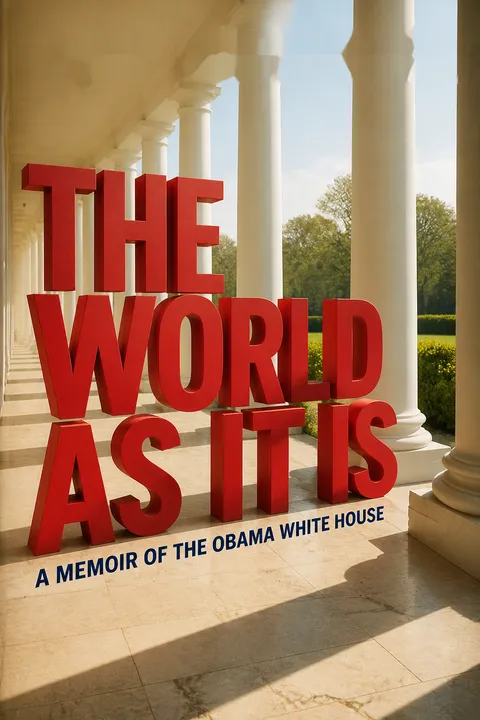


Key Takeaways
Let the wreckage of a failed war challenge your inherited certainties.
Iraq changed the mission. Ben Rhodes moved to Washington after 9/11, wanting to serve his country. He initially supported the invasion of Iraq, trusting the case made by senior officials. A later visit exposed what that confidence had missed: sectarian violence, traumatized soldiers, and a political order that American troops could not repair. One general told the Iraq Study Group that security would remain elusive without reconciliation among Iraq’s communities. The group recommended a phased withdrawal; President George W. Bush instead sent more troops. For Rhodes, the lesson was not simply that a policy had failed. The people trusted to know better had helped create a moral and strategic disaster.
The memoir’s strongest argument for humility is experiential: proximity to consequences can overturn what abstract briefings make persuasive. This resembles a basic principle in safety engineering, where near misses and system failures are examined to reveal assumptions that routine operations conceal. Yet witnessing damage does not automatically produce better policy. Decision-makers can interpret the same evidence as proof that the mission needs more time, more force, or a narrower goal. The practical discipline is to ask what evidence would count as failure before commitment turns into identity.
Do not mistake diplomatic contact for weakness or military resolve for wisdom.
Engagement was a deliberate choice. During the 2008 campaign, Obama faced attacks for saying he would meet adversaries, including Iran, without preconditions. At the same time, he promised to pursue Osama bin Laden in Pakistan, even though advisors warned that such a move could antagonize an ally. Rhodes helped shape a speech that paired diplomacy with counterterrorism, rejecting the idea that a country must choose between talking and defending itself. The speech anticipated two defining efforts of the presidency: negotiations over Iran’s nuclear program and the operation that killed bin Laden. The logic was practical, not sentimental: refusing to talk had not stopped Iran’s nuclear progress, while a clear commitment to pursue bin Laden meant accepting risk.
The pairing matters because political debate often treats restraint and resolve as competing personality traits. In reality, diplomacy can gather information, clarify interests, and create options, while credible force can sometimes support negotiation. The reverse is also true: talks can become theater, and force can close avenues for compromise. A useful test is whether a policy expands the decision-maker’s real options or merely performs toughness for an audience. The memoir makes that test vivid, though it cannot prove that every promised use of force is wise simply because it accompanies diplomacy.
Use presidential words to set direction, then confront the institutions that resist it.
A speech is not a command. Obama often used public addresses to explain his foreign policy and guide the government toward it. When he asked Rhodes to frame his approach to detainees and torture, agencies pushed back on terms such as “torture” and resisted describing Guantanamo as a national security liability. Their edits reflected institutional priorities, not necessarily the president’s judgment. Rhodes, a speechwriter with access to the Oval Office, had to carry the president’s views into meetings with officials far senior to him. The work showed how words could organize policy, but also how government agencies could dilute, delay, or redirect the message before it reached the public.
This is a classic principal-agent problem: leaders delegate work to institutions whose expertise is indispensable, while those institutions have their own incentives and definitions of risk. A speech can clarify a goal, but implementation depends on budgets, procedures, and personnel. That makes communication more than publicity, yet less than control. The useful question is not only whether a leader said the right thing, but whether authority, incentives, and accountability are aligned with it. The memoir also reveals a limit of insider access: being in the room can expose resistance without giving a staffer the power to overcome it.
Treat symbolic diplomacy as an opening, not proof that society has changed.
Cairo carried expectations. In 2009, Obama chose to address Muslim audiences in Cairo, a politically difficult setting, rather than deliver a safer speech in Indonesia, where he had lived as a child. He acknowledged colonial history, criticized American policies, and argued that people across cultures shared hopes for family, faith, and opportunity. The audience included activists, clerics, women’s rights advocates, and members of the Muslim Brotherhood. Its applause revealed genuine interest, but it could not dissolve repression, conflict, or distrust. A Palestinian woman later told Rhodes that the sight of a Black American president mattered to young people asking whether they, too, could lead. Rhodes resisted giving one speech credit for a political upheaval.
The distinction between symbolic recognition and institutional change is essential. Political symbols can enlarge what people imagine as possible, especially when someone previously excluded occupies a position of authority. But inspiration is not a substitute for durable organizations, rights, or economic opportunity. The Cairo moment shows how a leader can be meaningful to audiences beyond the policy content of a speech, while also showing why observers should avoid treating symbolic impact as a causal explanation for later events. The book’s account is strongest when it holds both truths together.
Set a war’s limited objective before escalation becomes the default.
Afghanistan tested civilian control. In 2009, senior military and civilian officials pressed Obama to send tens of thousands more troops. Their arguments were amplified by leaks that made the escalation debate public before Obama had reached a decision. He questioned whether the goal was to defeat al-Qaeda, weaken the Taliban, or transform Afghanistan, and what each goal would cost in lives, money, and time. He ultimately sent 30,000 additional U.S. troops, with NATO supplying the rest of the requested increase, while setting an 18-month timeline for beginning withdrawal. His narrower formulation emphasized pushing back the Taliban, training Afghan forces, and transferring responsibility. The choice still meant sending young people into danger, but it rejected an open-ended project of remaking the country.
The episode illustrates how organizations can generate momentum: once a large force request becomes the reference point, a smaller commitment can be portrayed as indecision, even if the original plan lacks a credible theory of success. Clear objectives and exit criteria help expose that drift. But a timetable is not itself a strategy, and local actors may respond to announced deadlines in ways that weaken the mission. The deeper lesson is procedural: a president should identify the political outcome sought, test whether military means can achieve it, and make those assumptions explicit before the institution’s preferred option becomes the only option on the table.
A rescue can save lives without making a country governable.
Libya showed the gap between stopping harm and building order. In 2011, Muammar Gaddafi’s forces advanced toward Benghazi, threatening a city of more than 600,000 people. A no-fly zone alone could not stop ground troops, so Obama backed a United Nations mandate allowing force to protect civilians. U.S. forces initially struck Gaddafi’s air defenses and troops, then transferred the operation to NATO. No American troops were put on the ground, and the threatened advance was stopped. Yet the intervention did not create a stable political settlement. Syria presented a harder version of the dilemma: Assad’s violence was immense, but there was no clear coalition or credible path by which American force could end the war.
Humanitarian intervention is often judged through two different clocks. The first asks whether an immediate atrocity was prevented; the second asks whether the political order afterward can protect people. Success on the first clock does not guarantee success on the second, but failure to act can also carry irreversible costs. The memoir does not resolve that moral tension, and it should not. Its useful contribution is to make the choice concrete: military capability can interrupt a threat, but it cannot manufacture legitimate institutions or reliable political partners simply by winning an air campaign.
Invest in diplomacy when the alternative is a nuclear crisis or frozen hostility.
Negotiation produced measurable limits. After years of sanctions and secret contacts, the 2015 Iran agreement required Iran to remove two-thirds of its centrifuges, reduce its enriched uranium stockpile by 98 percent, and accept extensive inspections. Its supporters argued that without a deal, Iran could move closer to a bomb, leaving the United States to choose between accepting that risk and striking Iranian facilities. Rhodes later led the public campaign to protect the agreement from congressional rejection. In parallel, secret talks with Cuba secured the release of American Alan Gross and a U.S. intelligence asset, restored diplomatic relations, and led Cuba to release 53 political prisoners. The U.S. embargo remained, and the two governments continued to disagree.
The cases show diplomacy as risk management rather than reconciliation. Verification can reduce uncertainty even when governments remain adversaries; a diplomatic channel can also prevent every dispute from becoming a crisis. These gains are often less dramatic than military action, and therefore harder to defend politically. Their durability is another question: agreements depend on both parties continuing to see compliance as preferable to collapse. The memoir makes a strong case that talks can produce concrete security benefits, while the later political fragility of such arrangements underscores the need for institutions and public coalitions that can sustain them.
When facts become tribal property, corrections rarely repair public trust.
Benghazi became a story larger than its evidence. After the 2012 attacks killed Ambassador Chris Stevens and three other Americans, officials worked with incomplete intelligence while also trying to prevent protests over an anti-Muslim video from spreading. A short email Rhodes wrote to prepare Susan Rice for television appearances was later presented as evidence of a cover-up. He says its wording was distorted and its context ignored, but years of investigations and hearings did not dislodge the conspiracy claims. Meanwhile, Russia used hacked material and contradictory claims to shape public debate in Ukraine and, eventually, the United States. In both cases, information was not merely inaccurate; it was selected and circulated to deepen existing political divisions.
Corrections work best when people trust the institutions delivering them and share some standards for evidence. When identity and media habits determine which sources count, a rebuttal can be recast as proof of the conspiracy. This connects political communication to motivated reasoning, the tendency to judge evidence by whether it supports a valued group or belief. The author’s own account is necessarily that of a targeted insider, so it should not substitute for independent investigation. Still, the episode shows why transparency, speed, and consistent standards matter before a false narrative becomes part of political identity.
Measure national ideals against the human damage power leaves behind.
History makes patriotic language accountable. Obama’s visit to Laos brought the consequences of American power into view: from 1964 to 1973, the United States dropped more than two million tons of ordnance there. Of roughly 270 million cluster munitions, about 80 million failed to explode; unexploded bombs continued to injure and kill civilians, including children. At Hiroshima, Obama confronted the destruction caused by the atomic bomb without pretending the history was simple. Across both visits, the memoir’s central tension comes into focus: the world as it is, shaped by violence and competing interests, versus the world people hope to build. American ideals gain credibility when their history includes the harm done in their name.
A national story can create solidarity and motivate public service, but it can also turn past actions into unquestionable virtues. A more credible civic narrative includes achievement, injury, and the capacity for self-correction. This is not the same as equating every side or dissolving moral judgment; it is a demand that power be judged by consequences as well as intentions. The Laos account is especially clarifying because the harm persists across generations, long after the military objective has disappeared from public memory. Honest remembrance makes ideals harder to claim casually and more useful as standards for action.
Analysis
This memoir uses an unusual vantage point: Rhodes is neither the president making the decisions nor a detached historian reconstructing them. As a speechwriter and national security communications official, he watches decisions take shape, helps translate them for the public, and sometimes discovers that the government’s internal account differs from its public story. That position gives the narrative an illuminating focus on the machinery around power: interagency resistance, military pressure, leaks, political incentives, and the struggle to make language match policy.
The book’s deepest subject is not Obama’s personality alone. It is the friction between aspiration and constraint. Obama’s symbolic presence could inspire audiences, and his words could reframe a debate, but neither could dissolve authoritarianism, repair fractured states, or command bipartisan trust. Rhodes’s own movement from the urgency of intervention in Libya and Syria toward greater skepticism makes this friction personal. The memoir shows how judgment changes when a policy advocate must live with uncertainty, consequences, and the prospect that action can compound harm.
Its insider strength is also its limitation. Rhodes writes with affection for Obama and with the memory of being vilified by political opponents. His account makes the administration’s reasoning vivid, especially around Iran, Cuba, and Russia, but it is not a neutral audit of those decisions. Readers should distinguish what he witnessed directly from his interpretation of motives and responsibility. The book is most persuasive when it exposes competing arguments and admits uncertainty, as in the Libya and Syria debates, rather than when it treats the administration’s position as the only reasonable one.
The concluding insight is about political storytelling. Nations depend on shared narratives, but narratives can either acknowledge complexity or flatten it into heroes, villains, and comforting myths. Rhodes’s account asks readers to hold two views together: institutions and ideals matter, yet they are fragile; progress can be real, yet reversible; and public service can change lives while consuming the private life of the people who serve. The memoir is therefore both a record of an administration and a study of how political hope survives contact with power, failure, and historical backlash.
Review Summary
The World as It Is offers an insider's view of the Obama White House, focusing on foreign policy decisions and challenges. Readers appreciate Rhodes' candid storytelling and insights into Obama's character and leadership style. The book provides a nostalgic look at a more thoughtful administration, contrasting sharply with the current political climate. While some found it occasionally slow or biased, most reviewers praised Rhodes' writing and the book's historical value. Many readers felt inspired by the Obama team's dedication and idealism, despite facing numerous obstacles and criticisms.
People Also Read


Glossary
the Blob
foreign policy establishmentRhodes uses “the Blob” to describe the influential American foreign policy establishment, including officials, experts, commentators, and institutions that often share assumptions about U.S. power and military intervention. The term captures a network rather than a formal organization. In the memoir, it also conveys Rhodes’s frustration with groupthink that, in his view, helped normalize the Iraq War and calls for further intervention.
red line
declared threshold for actionA “red line” is a warning that a specified action could trigger a stronger response. Obama used the phrase about the movement or use of chemical weapons by the Syrian government. It became politically consequential because observers treated the warning as a promise of military action, while the administration still had to assess evidence, legal authority, allies, public support, and the likely consequences of striking Syria.
Target, train, transfer
limited Afghanistan strategy“Target, train, transfer” was a concise formulation for Obama’s Afghanistan approach after the 2009 review. It described targeting al-Qaeda, training Afghan security forces, and transferring responsibility to Afghans. The phrase helped distinguish the administration’s stated aims from a broader effort to transform Afghanistan. The strategy still involved a temporary troop increase, but it set a narrower objective and a timetable for beginning withdrawal.
Antiwar Room
Iran deal advocacy teamThe “Antiwar Room” was the White House working group Rhodes organized to secure congressional support for the 2015 Iran nuclear agreement. Its members coordinated policy explanations, public outreach, congressional briefings, and responses to criticism. The name reflected the administration’s argument that the agreement offered a diplomatic alternative to either an advancing Iranian nuclear program or military strikes. The group tracked lawmakers and organized support during the congressional review period.
Global Engagement Center
government counter-messaging hubThe Global Engagement Center was a State Department unit established to coordinate efforts against extremist propaganda and, later, Russian disinformation. It aimed to identify and expose propaganda, support credible voices opposing it, and coordinate relevant work across U.S. agencies. Rhodes describes it as a modest institutional response, with funding in the tens of millions of dollars, to information campaigns backed by much larger media and online operations.
FAQ
What's The World As It Is about?
- Memoir of Obama Era: The World As It Is is a memoir by Ben Rhodes, who served as Deputy National Security Advisor under President Obama. It provides a behind-the-scenes look at the Obama administration.
- Key Events and Decisions: The book covers significant events such as the Arab Spring, the operation to kill Osama bin Laden, and the Iran nuclear deal, offering insights into U.S. foreign policy.
- Themes of Leadership: Rhodes reflects on the complexities of leadership, the challenges of governance, and the personal experiences of working closely with President Obama.
Why should I read The World As It Is?
- Unique Insider Perspective: As a close aide to Obama, Rhodes offers a rare insider's view of the administration, providing context and nuance to historical events.
- Engaging Storytelling: The memoir combines personal anecdotes with significant political events, making it both informative and engaging.
- Understanding Modern Politics: Readers gain insights into contemporary political challenges, the impact of media, and the dynamics of international relations.
What are the key takeaways of The World As It Is?
- Complexity of Foreign Policy: The book illustrates that foreign policy involves navigating competing interests and moral dilemmas, emphasizing the importance of historical context.
- Role of Personal Relationships: Rhodes highlights how personal relationships between leaders can significantly impact diplomatic outcomes, underscoring the human element in politics.
- Balance of Idealism and Pragmatism: The memoir discusses the tension between idealistic goals and pragmatic realities, reflecting on the challenges of maintaining a moral compass in governance.
What are the best quotes from The World As It Is and what do they mean?
- “There are more stars in the sky than grains of sand on the earth.”: Reflects Obama’s belief in progress and hope, even in adversity, reminding us of vast possibilities.
- “Don’t do stupid shit.”: Encapsulates Obama’s cautious approach to foreign policy, advocating for careful consideration before military intervention.
- “History doesn’t move in a straight line, it zigs and zags.”: Suggests that progress is non-linear, with setbacks and challenges being part of the journey toward goals.
How does The World As It Is address the Arab Spring?
- Administration's Response: Chronicles the Obama administration's reaction, particularly in Egypt and Libya, and the internal debates about supporting authoritarian leaders or protesters.
- Moral Responsibility: Emphasizes the moral imperative to support democratic movements, reflecting on the tension between U.S. interests and democratic reform.
- Consequences of Inaction: Discusses the implications of the U.S. response, including challenges in Libya and the rise of extremism, highlighting the complexities of foreign policy.
What insights does The World As It Is provide about the decision to intervene in Libya?
- Pressure for Action: Describes the intense pressure on the administration to intervene as Gaddafi’s forces advanced on civilians, recounting debates about risks and benefits.
- Humanitarian Rationale: The intervention was framed as a humanitarian effort to protect civilians, highlighting the administration's commitment to human rights.
- Long-term Implications: Reflects on the consequences of the intervention, including nation-building challenges and regional instability, emphasizing the need for a clear strategy.
How does The World As It Is depict the operation that killed Osama bin Laden?
- Decision-Making Process: Provides an insider’s view of the meetings leading up to the operation, capturing the tension and urgency surrounding the decision.
- Emphasis on Intelligence: Highlights the importance of intelligence in locating bin Laden, detailing the role of CIA operatives and analysts.
- Reflections on Leadership: Reflects on Obama’s leadership during this critical moment, emphasizing his resolve and commitment to national security.
What challenges did the Obama administration face regarding Iran, according to The World As It Is?
- Diplomatic Complexities: Discusses the challenges of engaging with Iran, particularly regarding its nuclear program, and the balance between diplomacy and accountability.
- Historical Context: Provides insight into historical grievances shaping U.S.-Iran relations, emphasizing the importance of acknowledging history to move forward.
- Internal Debates: Details internal debates about engagement versus sanctions, illustrating the complexities of crafting a coherent policy.
How does The World As It Is address the theme of race and identity in politics?
- Personal Reflections: Rhodes shares his experiences as a Jewish American in a predominantly white political landscape, reflecting on identity and representation.
- Obama’s Unique Position: Explores how Obama’s identity as the first African American president influenced his governance and diplomacy approach.
- Challenges of Representation: Discusses the challenges of representing a diverse nation while navigating race complexities in American politics.
What role did Ben Rhodes play in the Obama administration, according to The World As It Is?
- Key Advisor and Speechwriter: Rhodes served as a principal speechwriter and advisor, shaping the administration’s messaging and communication strategies.
- Influence on Foreign Policy: Had significant influence on foreign policy decisions, particularly regarding the Middle East and national security.
- Chronicler of History: Positions himself as a chronicler of the Obama presidency, providing insights into the administration's challenges and triumphs.
How does The World As It Is depict the relationship between the U.S. and Cuba?
- Historical Context: Provides a historical overview of U.S.-Cuba relations, highlighting long-standing tensions and the impact of the embargo.
- Diplomatic Efforts: Details secret negotiations leading to a thaw in relations, emphasizing dialogue and understanding.
- Cultural Exchange: Reflects on the potential for cultural exchange and cooperation, suggesting improved relations could benefit both nations.
What insights does Rhodes offer about the challenges of foreign policy in The World As It Is?
- Complex Decision-Making: Illustrates the complexities of foreign policy decisions, where multiple factors must be considered, often leading to difficult trade-offs.
- Need for Patience: Emphasizes the importance of patience and long-term thinking, particularly in regions with deep-rooted conflicts.
- Lessons from History: Draws on historical examples to highlight the need for humility and caution, advocating for a more measured approach to intervention.
About the Author

Download PDF
Download EPUB
.epub digital book format is ideal for reading ebooks on phones, tablets, and e-readers.








