

Key Takeaways
Treat death awareness as a hidden motive, not a passing thought.
The buried motive. Terror management theory (TMT) proposes that knowing death is inevitable can produce deep anxiety, even when death is nowhere near. People manage it by defending beliefs that make life meaningful and by seeking to feel valuable within those beliefs. A reminder of death, called mortality salience, can trigger these defenses without people noticing.
A striking test. In one experiment, judges who had answered questions about their own deaths set an average bail of $455 for a fictional prostitution charge, compared with the usual $50. The researchers interpret the harsher judgment as an unconscious effort to uphold cultural morality. Hundreds of studies explored related responses, from praising supporters of familiar values to rejecting critics.
The theory connects private anxieties to public behavior: a small, unnoticed cue can change how people judge a stranger. Its value lies in explaining why supposedly ordinary decisions may carry emotional stakes beyond the facts at hand. Still, one laboratory result cannot show that death anxiety explains every harsh judgment. The stronger claim is that mortality concerns can become one influence among several, often hidden from the decision-maker.
Build self-worth inside a meaningful world, not around one brittle badge.
Two psychological supports. A cultural worldview supplies an account of reality, standards of right conduct, and a sense that life belongs to something enduring. Self-esteem, as the book uses the term, is the feeling of being a valued participant in that meaningful world. Both supports matter: shared beliefs alone may not make someone feel personally worthwhile, and personal approval depends partly on standards their culture supplies.
Worth has local rules. In one San Francisco school system, only 37 percent of students eligible for free lunches took them. Some feared the meal would mark them as poor in front of peers. Their choice shows how protecting status can outweigh immediate physical needs. What earns respect varies across communities, so self-esteem is not simply private self-love.
This account makes self-worth social without making it imaginary. Recognition, belonging, and valued roles are real human needs, but the standards that distribute them can be unjust or unreachable. That creates a useful question: does a source of pride support a person’s life, or does it demand conformity at any cost? A resilient sense of worth may need more than one source, especially when a job, identity, or community becomes unstable.
Notice how early care and shared symbols teach people what feels safe.
Security comes first. Human infants depend on responsive caregivers for protection and emotional security. In Harry Harlow’s monkey studies, young monkeys clung to a soft surrogate even when a wire surrogate provided food. When frightened, those with the soft surrogate used it as a secure base, then returned to exploring. The book links this early experience of safety to later trust and self-worth.
Culture gives safety a larger frame. Children learn their community’s stories, rituals, symbols, and rules as they grow. The authors propose that human self-awareness and symbolic thought made death imaginable, while ritual, art, and religion offered ways to imagine continuity. At Göbekli Tepe, about twelve thousand years ago, people built monumental stone circles before clear evidence of agriculture. The authors suggest shared ritual may have helped organize settled life, though the site cannot prove that sequence.
The connection between attachment and culture is a powerful bridge between developmental psychology and anthropology. A child first learns security through a dependable caregiver, then encounters communities that extend belonging through symbols and shared practices. The archaeological interpretation is necessarily less certain: a monument can reveal coordinated labor and ritual importance, but not the builders’ precise motives. The distinction between evidence and plausible reconstruction keeps this ambitious account on solid ground.
Separate hopes of surviving death from hopes of being remembered.
Two routes beyond a lifetime. Literal immortality means believing that a person, soul, or other essential part of the self continues after bodily death. Symbolic immortality means living on through something that outlasts the individual, such as children, creative work, a community, or a public memory. These routes can overlap, but they are not the same.
Old longing, new machinery. In the Epic of Gilgamesh, the hero searches for a way to escape death after his companion dies, but fails. Chinese emperor Qin Shihuangdi was buried with a vast terracotta army intended to serve him after death. Modern cryonics offers a scientific version of the hope: preserve a body or brain until future technology might revive it. Poems, descendants, and memorials offer less literal forms of persistence.
The contrast clarifies why projects as different as building a tomb, raising a family, and preserving a brain can answer a similar emotional need. It also helps distinguish comfort from proof: a belief in continuation may steady a person without demonstrating that continuation occurs. Symbolic survival has its own limits, too. Being remembered is not the same as remaining conscious, and legacies can be interpreted in ways their creators never intended.
Pause when threatened beliefs make outsiders look like enemies.
From doubt to defense. When people feel that their worldview is under attack, they may protect it by criticizing dissenters, persuading them to conform, or absorbing parts of their culture without accepting its challenge. In one experiment, participants reminded of death gave a political opponent who insulted their views more than twice as much hot sauce as participants who had not received the reminder.
Conflict can escalate. The authors apply this pattern to events after September 11, 2001. The attacks intensified American vulnerability, while the response and its humiliations intensified fear and anger among people on the receiving end. Each side could cast the other as evil and its own actions as righteous. The book also argues that mortality concerns can increase the appeal of leaders who promise a heroic, enduring group identity.
The framework explains how symbolic disputes can acquire the urgency of physical threats. It is especially useful for noticing dehumanizing language before it becomes a rationale for cruelty. But fear is not a complete explanation of political violence: territory, resources, institutions, and strategic interests matter as well. The model is most persuasive when it shows how existential anxiety can intensify existing conflicts, rather than treating it as their sole cause.
Ask what lasting worth status and luxury are meant to buy.
More than useful goods. Wealth can signal prestige, social approval, and a sense of being exceptional. The book argues that money and possessions can therefore serve as symbolic protection against mortality, not merely as tools for meeting practical needs. Research described in the book found that, after death reminders, participants showed more interest in high-status products such as a Lexus or Rolex, but not in ordinary items such as Pringles or an economical car.
A public version of worth. Fame offers another route to being remembered, whether through major accomplishments or brief celebrity. The authors also discuss lavish spending as a way to display distinction. These examples suggest that consumption can answer an emotional question, not just a practical one: what will make a person feel significant to others?
This perspective adds emotional depth to consumer behavior, which standard cost-and-benefit explanations can miss. It invites a useful check before a status purchase: is the object solving a need, expressing taste, or trying to secure recognition? Those motives can coexist. The account should not be used to pathologize ordinary enjoyment or ignore material conditions. Many purchases reflect convenience, economic constraint, or genuine pleasure, not a disguised effort to defeat death.
Notice how beauty rules and sexual scripts distance people from animality.
The body can feel threatening. Humans are animals with bodily needs, vulnerability, and finite lives. The book argues that people manage the discomfort this creates by covering, altering, and symbolically elevating the body. Cultures set standards for grooming and beauty, while rules and rituals can turn sex from an animal act into an expression of love or social meaning.
A revealing experiment. After thinking about death, participants found physical details of sex less appealing, while romantic aspects such as closeness and affection did not change. The authors also describe research in which exposure to a tampon led people to rate a woman less favorably. They connect such responses to disgust and to efforts, often directed at women, to control reminders of bodily processes.
The analysis usefully shows that shame and disgust are shaped by culture, not just by biology. It also draws attention to the unequal costs of body rules, particularly when women are blamed for provoking desire or for displaying ordinary bodily functions. The book’s broad account should not flatten every beauty practice into death denial: adornment can also express play, identity, artistry, or community. Multiple meanings can inhabit the same ritual.
Distinguish direct safety steps from defenses that merely restore identity.
Two kinds of defense. Proximal defenses are conscious efforts to push death thoughts away, such as telling oneself the danger is distant or taking a health precaution. Distal defenses operate when death is no longer in awareness; they reinforce self-esteem and familiar cultural beliefs, even when they do not improve safety.
Timing changes the response. Immediately after a death reminder, people may say they plan to exercise more or use stronger sunscreen. After a delay, behavior can follow whatever identity provides self-worth: someone who values fitness may exercise, while someone who prizes a tan may seek tanning and weaker sunscreen. The same pattern can encourage risky driving, smoking, or other behavior when those acts support a valued self-image.
This distinction helps explain why a frightening warning can produce a sensible response in one moment and an unhelpful one later. It also offers a practical test for health communication: does the message make safe behavior feel effective and compatible with the audience’s identity? One caution is that stated intentions and laboratory choices do not always predict conduct outside the study. The framework is most useful as a guide to designing and evaluating messages, not as a guarantee of behavior.
Treat psychological distress with care, not as proof of a single cause.
Shields can fail. The authors argue that death anxiety may worsen psychological distress when a person cannot rely on a stable sense of meaning, self-worth, or connection. They describe Pat, a student with schizophrenia whose grandiose beliefs temporarily made him feel powerful amid fears of persecution. They also discuss phobias, obsessive behavior, post-traumatic stress, depression, and addiction as conditions in which fears may be displaced or defenses overwhelmed.
Support needs more than one tool. Existential psychotherapy, as presented in the book, builds an authentic therapeutic relationship and helps clients explore meaning, responsibility, and social connection. It may help people develop or revise sources of meaning that feel sustainable. The authors do not present this as a replacement for other care. Psychological disorders have multiple causes, and people may also need medical, behavioral, or other forms of treatment.
The existential lens can help clinicians hear questions about meaning and mortality that symptom checklists may not capture. Its humane emphasis on relationship and agency complements, rather than competes with, biological and behavioral accounts. The boundary matters: a theory about how death anxiety may shape distress cannot diagnose an individual or explain a disorder by itself. Pat’s story is moving, but one person’s life cannot establish a general cause.
Keep convictions, but loosen the certainty that makes outsiders dangerous.
Acceptance without surrender. The book argues that simply reasoning away death fear has not ended humanity’s pursuit of immortality. It instead recommends confronting mortality more honestly and finding significance through relationships, creative work, spirituality, nature, and present experience. Such sources can make life feel connected to something beyond an individual lifespan without requiring one promise of literal survival.
A difficult middle ground. The authors contrast rigid worldviews that offer certainty but can fuel exclusion with more flexible views that tolerate ambiguity but may feel less secure. Their challenge is to preserve meaning without claiming exclusive possession of truth. In practice, that means examining whether a belief helps people live with courage and care, or requires them to punish those who believe differently.
The strongest practical implication is not to stop seeking meaning, but to make meaning less dependent on enemies and absolute certainty. This resembles a pluralist ethic: commitments can be serious while remaining open to correction. Such openness can be emotionally demanding, especially in crises, when certainty feels protective. The proposal is therefore less a quick remedy than a discipline of reflection, sustained by relationships and purposes sturdy enough to withstand disagreement.
Analysis
The book’s most useful contribution is its bridge between existential philosophy and experimental social psychology. Instead of treating death anxiety as a private feeling that appears only in moments of danger, terror management theory predicts observable shifts in judgment, identity, consumption, and intergroup attitudes. Its central sequence is memorable: awareness of mortality threatens psychological security, and people defend the cultural meanings and personal value that help restore it.
The evidence has different strengths. Controlled studies can show that a mortality reminder changes a measured response under specified conditions. They cannot, by themselves, establish that the same mechanism explains a historical atrocity, a shopping habit, or a person’s mental illness. The book’s historical readings are best treated as interpretive applications, not experimental demonstrations. Nor does the theory displace material interests, political institutions, attachment history, or biological processes. It explains how existential concerns may interact with them.
A further caution concerns measurement. Many experiments infer unconscious death concern from indirect outcomes, such as word completions or evaluations of cultural critics. That is an ingenious research strategy, but an indirect indicator is not identical to a person’s conscious fear. Results should be interpreted in context, especially when moving from a laboratory task to broad claims about society.
The theory remains compelling because it does not reduce human beings to fear alone. The same need for enduring significance can support art, care, scientific inquiry, or exclusion and violence. That moral openness is crucial: meaning is not automatically humane. The practical question is whether a source of significance can sustain identity while allowing other people to possess different sources of meaning. The book’s most durable lesson is to scrutinize the defenses that feel like certainty, particularly when they make contempt seem virtuous.
Review Summary
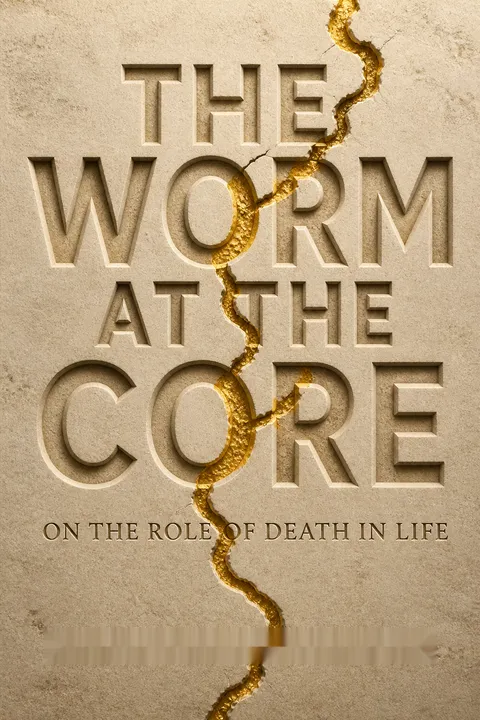
The Worm at the Core received mixed reviews, with many praising its accessible exploration of Terror Management Theory and its insights into human behavior driven by death anxiety. Readers appreciated the book's thorough research and thought-provoking ideas. However, some critics found the arguments overstated and the experimental evidence unconvincing. The book was lauded for its clear writing and philosophical connections, but criticized for potential bias and organizational issues. Overall, it was seen as an important contribution to understanding human motivation and coping mechanisms related to mortality.
People Also Read





Glossary
Terror management theory
Managing awareness of mortalityA psychological theory that people manage anxiety arising from awareness of inevitable death by defending shared cultural beliefs and seeking self-esteem within them. These resources make life feel meaningful and the self feel significant. The theory predicts that reminders of death can intensify defense of familiar values and rejection of people who challenge them.
mortality salience
A reminder of deathA condition in which a person’s death is made mentally noticeable, for example through questions about their own death. In terror management research, mortality salience is used to test whether death reminders alter later judgments or behavior. The predicted effects often emerge after death thoughts have left conscious attention.
cultural worldview
Shared map of meaningA culturally shared account of reality that provides meaning, standards of conduct, and a sense of order and continuity. It can be religious, political, or otherwise secular. In terror management theory, confidence in a worldview helps people feel that existence is significant and that valued forms of life can endure.
literal immortality
Survival beyond bodily deathThe belief or aspiration that a person will continue to exist after physical death, either bodily or through an enduring soul or self. The book traces religious ideas of an afterlife alongside efforts to extend life through alchemy, medical technology, cryonics, or imagined future revival.
symbolic immortality
Enduring through lasting tracesThe sense that some part of a person persists through things that outlast individual life. Possible routes include children, family memory, creative work, public reputation, and membership in a continuing group or nation. It does not claim that the person remains consciously alive.
proximal defenses
Conscious death-thought managementImmediate, relatively direct efforts to remove thoughts of death from conscious attention. A person may deny personal vulnerability, push the danger into a distant future, or take a precaution that seems to reduce risk. These defenses differ from later responses that reinforce cultural identity or self-esteem.
distal defenses
Unconscious identity protectionResponses that protect psychological security after death thoughts have moved outside conscious awareness. They do not directly solve the physical problem of mortality. Instead, they can strengthen self-esteem or confidence in a cultural worldview, sometimes increasing approval of supporters and hostility toward critics.
the rock and the hard place
Certain versus flexible worldviewsThe book’s contrast between rigid belief systems that offer clear rules and strong psychological security, and flexible outlooks that accept ambiguity and uncertainty. Rigid systems can encourage exclusion of dissenters; flexible ones may support tolerance but provide less certainty. The authors seek meaning that combines security with openness.
FAQ
What's The Worm at the Core about?
- Exploration of Death's Role: The book examines how the awareness of death profoundly influences human behavior, thoughts, and emotions. It delves into the psychological mechanisms we use to manage the terror associated with our mortality.
- Terror Management Theory: The authors introduce and elaborate on terror management theory, which posits that cultural worldviews and self-esteem help individuals cope with the fear of death. This theory is rooted in the work of Ernest Becker, particularly his book The Denial of Death.
- Cultural and Historical Context: The book discusses how different cultures throughout history have addressed the fear of death through art, religion, and rituals. It highlights the evolution of these practices and their significance in human society.
Why should I read The Worm at the Core?
- Understanding Human Behavior: This book provides insights into the fundamental motivations behind human actions, helping readers understand why people behave the way they do. It connects psychological theories to everyday life.
- Relevance to Modern Life: The themes of mortality and the quest for meaning are universal and timeless, making the book relevant to contemporary readers. It encourages reflection on personal beliefs and values.
- Interdisciplinary Approach: The authors draw from various fields, including psychology, anthropology, and philosophy, offering a rich, multifaceted perspective on the human condition. This makes it an engaging read for those interested in a broad range of topics.
What are the key takeaways of The Worm at the Core?
- Death Awareness Drives Behavior: The book emphasizes that the awareness of death is a primary motivator of human behavior, influencing everything from personal choices to societal conflicts. This insight is crucial for understanding human psychology.
- Cultural Worldviews Provide Comfort: The authors argue that cultural beliefs and self-esteem serve as buffers against the fear of death, allowing individuals to feel significant and valued. This is a central tenet of terror management theory.
- Symbolic Immortality: The book discusses the concept of symbolic immortality, where individuals seek to leave a lasting legacy through their actions, relationships, and contributions to society. This desire for enduring significance is a powerful motivator.
What is Terror Management Theory as described in The Worm at the Core?
- Definition of Terror Management Theory: Terror management theory posits that humans have a fundamental need to manage the fear of death, which they do through cultural beliefs and self-esteem. This theory is rooted in the work of Ernest Becker.
- Cultural Worldviews and Self-Esteem: The theory suggests that individuals cling to their cultural worldviews and strive for self-esteem to feel significant and valued, thereby alleviating existential dread. This is a key mechanism for coping with mortality.
- Empirical Evidence: The authors present numerous studies that support terror management theory, demonstrating how reminders of death influence attitudes and behaviors, such as increased nationalism or hostility towards out-groups.
How do cultural worldviews help manage the fear of death in The Worm at the Core?
- Providing Meaning and Order: Cultural worldviews offer frameworks that give life meaning and structure, helping individuals make sense of their existence. This is crucial for alleviating existential anxiety.
- Sense of Belonging: By adhering to a cultural worldview, individuals feel connected to a larger community, which reinforces their sense of identity and purpose. This connection is vital for psychological security.
- Defense Against Dissonance: When faced with conflicting beliefs, individuals often double down on their cultural worldviews to maintain a sense of stability and security. This can lead to increased hostility towards those with differing beliefs.
What role does self-esteem play in managing existential terror according to The Worm at the Core?
- Foundation of Psychological Security: Self-esteem is described as a crucial buffer against anxiety, providing individuals with a sense of worth and significance. This helps them cope with the fear of death.
- Influence on Behavior: The authors argue that high self-esteem leads to more positive behaviors and attitudes, while low self-esteem can result in anxiety and defensiveness. This dynamic is essential for understanding human interactions.
- Cultural Variability: The sources of self-esteem can vary widely across cultures, reflecting different values and beliefs. This variability highlights the importance of cultural context in shaping self-perception.
How does The Worm at the Core explain the relationship between death and creativity?
- Creativity as a Response to Mortality: The authors suggest that the awareness of death can inspire creativity, as individuals seek to leave a lasting legacy through their work. This drive for symbolic immortality fuels artistic and intellectual endeavors.
- Art and Rituals: The book discusses how art and rituals serve as expressions of cultural beliefs about death, helping to manage existential fears. These creative outlets allow individuals to confront mortality in meaningful ways.
- Historical Examples: Throughout history, many artists and thinkers have grappled with themes of mortality in their work, producing profound insights and contributions to culture. This connection underscores the role of death in shaping human creativity.
What are some examples of how death anxiety influences behavior in The Worm at the Core?
- Aggression Towards Others: The book discusses how reminders of death can lead to increased aggression towards those who threaten one’s cultural beliefs. This is evident in various historical and contemporary conflicts.
- Consumer Behavior: The authors illustrate that mortality salience can drive people to engage in excessive consumption or risky behaviors, such as smoking or reckless driving, as a way to bolster self-esteem. This highlights the paradox of seeking comfort in materialism while simultaneously confronting mortality.
- Social Dynamics: The book explains how death anxiety can lead to heightened in-group favoritism and out-group hostility. This dynamic is crucial for understanding societal tensions and conflicts.
What are the best quotes from The Worm at the Core and what do they mean?
- “Death is indeed the worm at the core of the human condition.”: This quote encapsulates the book's central thesis, highlighting how the fear of death underlies many aspects of human behavior and culture.
- “We build character and culture in order to shield ourselves from the devastating awareness of our underlying helplessness and the terror of our inevitable death.”: This reflects the authors' argument that much of human achievement is driven by a desire to manage existential fears.
- “Life, not death, is the great adventure.”: This quote encapsulates the book's message that embracing life and its challenges, including the reality of death, can lead to a more fulfilling existence. It encourages readers to find meaning in their lives despite the inevitability of death.
How does The Worm at the Core address the concept of symbolic immortality?
- Definition of Symbolic Immortality: Symbolic immortality refers to the ways individuals seek to leave a lasting impact through their actions, relationships, and contributions to society. This concept is central to the authors' exploration of human motivation.
- Legacy and Memory: The book discusses how people strive to be remembered through their achievements, family, and cultural contributions. This desire for remembrance is a powerful motivator in human behavior.
- Cultural Expressions: Various cultural practices, such as storytelling, art, and rituals, serve to reinforce the idea of symbolic immortality, helping individuals cope with the reality of death. These expressions provide a sense of continuity and connection across generations.
What coping strategies does The Worm at the Core suggest for dealing with death anxiety?
- Acceptance of Mortality: The authors advocate for confronting and accepting the reality of death as a means to reduce anxiety. This acceptance can lead to a greater appreciation for life and its fleeting moments.
- Building Meaningful Connections: Strengthening social bonds and fostering relationships can help individuals feel more connected and less isolated in their mortality. This connection can provide emotional support and enhance well-being.
- Engaging in Creative and Spiritual Practices: The book suggests that engaging in creative activities or spiritual practices can provide avenues for transcendence and meaning. These practices can help individuals cope with the fear of death by fostering a sense of purpose.
What are the implications of The Worm at the Core for understanding modern society?
- Cultural Conflicts: The book highlights how differing cultural worldviews can lead to conflict, particularly when existential fears are at play. Understanding these dynamics is crucial for addressing contemporary societal issues.
- Mental Health: Insights from the book can inform approaches to mental health, emphasizing the importance of self-esteem and cultural belonging in promoting well-being. This perspective can guide therapeutic practices.
- Social Responsibility: The authors encourage readers to consider how their actions contribute to a meaningful legacy, fostering a sense of responsibility towards future generations. This call to action is relevant in discussions about sustainability and social justice.
Download PDF
Download EPUB
.epub digital book format is ideal for reading ebooks on phones, tablets, and e-readers.








