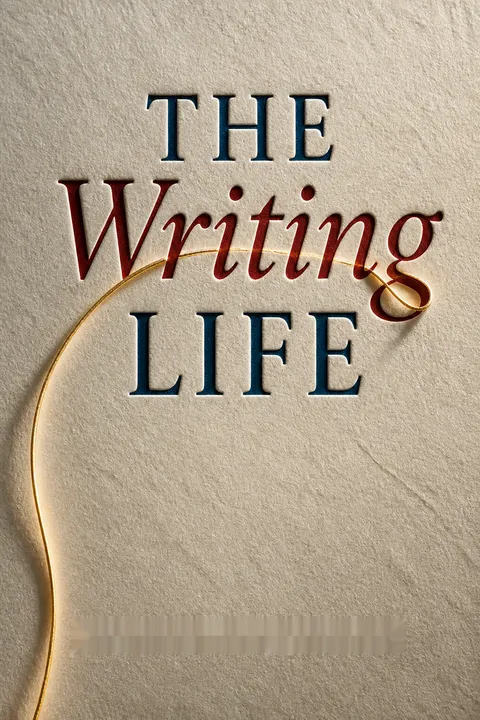


Key Takeaways
Use words to discover what you think before you know it
Writing is a probe. Dillard presents a sentence not merely as a container for thoughts, but as a tool for finding the subject. The writer starts along a path without knowing whether it leads anywhere, then follows what the words reveal. Her image of an inchworm searching frantically for its next foothold captures the uncertainty: progress can be tiny, confused, and still real.
Follow the evidence. The draft may uncover a better subject than the one that started it. That means the writer must attend to what appears on the page instead of forcing the original plan to remain in charge. The writing process is not the finished work, and its tracks may need to disappear.
What's useful here is the shift from writing as self-expression to writing as inquiry. A notebook can function like an instrument: it makes an idea visible enough to examine, while also shaping what can be noticed. This resembles scientific observation, where tools reveal some features and obscure others. The method therefore calls for curiosity and skepticism together. A newly discovered pattern in a draft is worth pursuing, but the feeling of discovery does not prove the pattern is true or important.
Throw away pages whose original purpose no longer serves the book
Effort is not relevance. A book's opening may preserve discarded ideas, false settings, or a voice the work has outgrown. Dillard argues that writers often keep such pages because they have reread them until they feel inevitable, or because producing them was difficult. But readers need the work that belongs, not a record of the struggle that produced it.
Climbing is no guarantee. She tells of a young photographer who repeatedly submitted a landscape he prized because reaching the spot had required a hard mountain climb. An experienced photographer kept rejecting it. The lesson applies to prose: personal cost can explain attachment, but it cannot make a passage serve the whole. Save what still works, and rebuild the rest.
This is a precise antidote to sunk-cost thinking, the tendency to value something more because time or effort has already been invested in it. Editing asks a different question: what does this element contribute now? The photographer's climb explains the image's emotional value to its maker, not its value in a portfolio. Still, ruthless cutting is not automatically wise. A passage can appear irrelevant before the structure is clear, so deletion should follow a considered view of the whole rather than impatience with a difficult draft.
Treat a stalled draft as a structural warning, not laziness
Resistance may carry information. When Dillard became unable to continue a book despite knowing what she had planned to write, she considered two possibilities: the structure had developed a fracture, or the next section depended on a false premise. She compares ignored warning signs to a concrete building that collapsed during construction after a passerby noticed it shaking and was dismissed.
Inspect before forcing progress. The writer can map the existing structure, test the next section's assumptions, and ask what makes the work refuse to move. The answer may require starting again. Dillard's point is not that every difficult day signals a fatal flaw. It is that persistent resistance deserves investigation, rather than an automatic command to try harder.
Creative resistance can be treated as a diagnostic signal, much like an unexpected result in an experiment. It invites a test: does the problem lie in the premise, the sequence, the available evidence, or simply fatigue? That approach is more productive than moralizing about discipline. The caution is important, though: intuition is not infallible. Anxiety, distraction, and perfectionism can also block a task. A useful response pairs respect for the warning with concrete attempts to identify its cause.
Judge progress in years, not by today's mood
Serious work takes time. Dillard says most books take years, often between two and ten. She contrasts rare bursts of speed, such as Faulkner's reported six-week effort on one novel, with Thomas Mann's steady page-a-day practice. A writer finishing a substantial book every five years might produce only about seventy-three usable pages in a year, once discarded work is counted.
Feelings are poor scorecards. A draft can feel brilliant or awful without either reaction matching its quality. Dillard treats both moods as distractions, not reliable verdicts. The practical lesson is to measure a project by sustained attention and the finished work, not by daily page totals or passing confidence. Exceptional speed exists, but it is a bad standard for ordinary practice.
The distinction between output and progress matters because creative work includes substantial invisible labor: reading, testing a structure, and removing material that does not hold. This resembles long-horizon research, where a slow period may still refine the question. Dillard's examples also deflate survivorship bias, the habit of using famous exceptions as ordinary benchmarks. A nuance is that slow work is not inherently better. Pace depends on the project and the writer's circumstances, so patience should support revision rather than excuse avoidable drift.
Use schedules and plain rooms to protect attention
Build a net for time. Dillard describes a schedule as a structure that keeps the day from dissolving into whim. Repeated days can form a life even when no single day seems remarkable. Her own writing spaces were often small and visually plain. In one library study, she shut the blinds and used a drawing of the view to keep the outside world from pulling her attention away.
Attention has a cost. While finishing a book, she worked late, missed social visits, and let her houseplants die. Yet a June bug at the window eventually made her notice fireworks she had forgotten were happening. The episode reveals both the power and the danger of concentration: a protected workspace helps the work, but total absorption can narrow awareness of life beyond it.
A schedule and a stripped-down workspace reduce the number of decisions competing with attention. That is a practical insight, not a claim that everyone needs the same ritual or room. The fireworks scene adds an important counterweight: attention is selective, and a focused mind can miss experiences that give work its subject matter. A sustainable practice needs boundaries in both directions, protected time for concentration and deliberate room for relationships, rest, and observation.
Let the written work replace, not merely reproduce, your vision
The plan cannot survive intact. Before writing, an artist may carry a vivid sense of the work's shape. Dillard calls this the vision: an imagined arrangement of ideas and effects. But words meet the stubborn realities of paper, sequence, and time. The finished work is not the original vision filled in; it is a different object formed through the process of making it.
Let materials answer back. A sentence changes the options for the sentence that follows. A section may prove useless, while an unexpected form begins to hold. Dillard describes the final work as an imperfect substitute for the initial conception, not a flawless copy. This is why writers must keep responding to the actual pages instead of judging every choice against an image that no longer exists.
This account aligns with a broader idea from design practice: making is a way of thinking, because materials expose constraints that a plan cannot anticipate. A page is not a passive surface; its sequence and limits shape the result. The insight can relieve the pressure to preserve a pristine initial concept. It also demands judgment, since adaptation is not an excuse for losing the work's purpose. The emerging draft must still be assessed for coherence, not simply accepted because it differs from the plan.
Follow your private fascination, then train it through literary models
Notice what grips you. Dillard urges writers to pursue subjects that hold their attention for reasons they cannot yet explain. One person may care about a particular patch of light; another may be drawn to a plant, a bodily detail, or a trick with a toy. The writer's task is to give careful form to that unusual interest, rather than choose a subject solely because it seems important to everyone.
Learn the field. Dillard also insists that writers study literature. She names authors who learned from earlier writers, arguing that an art must become part of the practitioner's working knowledge. Private fascination supplies a reason to look; familiarity with the craft supplies ways to make others see. Originality is not isolation from tradition, but a distinctive response formed through close study.
The strongest version of this advice treats originality as attention, not as a demand to invent something no one has ever seen. Expertise helps an artist notice distinctions that casual observation misses, while individual interest determines which distinctions matter. Studying models can therefore sharpen a personal subject rather than flatten it. The risk is confusing private intensity with public significance. Craft is the bridge: it lets a writer preserve the specificity of an obsession while giving readers enough context to enter it.
Return to the work daily, and learn your launch ritual
Keep the connection alive. Dillard compares a manuscript left alone to an untamed animal: after even a short absence, it can feel unfamiliar and harder to approach. Regular visits preserve the writer's sense of the work's problems and possibilities. She also describes the awkward effort of preparing to write, adjusting coffee, movement, reading, and small routines until her attention could engage with a difficult passage.
Find your workable threshold. Too little energy made starting impossible; too much left her restless and sick. Her experience suggests that entering a demanding task often requires deliberate preparation, but not a universal formula. A brief return to yesterday's pages, a walk, or a consistent time may help someone cross the distance between ordinary life and sustained concentration.
Regular contact reduces the reorientation cost of returning to a complex project. Small rituals can act as cues that help attention shift into a task, a principle familiar in behavioral design. Dillard's account also shows how unstable creative energy can be. Her personal dependence on heavy coffee and cigarettes should not be mistaken for a recommended method. The useful question is what reliably supports concentration without damaging health, rather than how to reproduce another writer's private routine.
Make books do what screens cannot: engage the reader's inner senses
Use the medium's strengths. Dillard argues that writing cannot outdo film at spectacle. A huge moving image or a chase on screen directly stimulates sight and sound; prose works more quietly through imagination, language, reasoning, and moral attention. A book that strains to behave like a movie may seem embarrassed by its own form.
Write for readers. Dillard's challenge is to make the verbal experience itself compelling, not to court people who do not want to read. Her distinction is not that books should avoid vivid scenes. Rather, they can make readers construct those scenes internally and follow the thought and rhythm of language. The writer should understand what the medium can offer that a screen cannot simply display.
This is a useful media-specific principle: artistic forms are not interchangeable delivery systems. Prose can make a reader participate by imagining what is not shown, and can hold attention through syntax, reflection, and ambiguity. Yet the boundary is porous. Film can provoke thought, and contemporary storytelling often crosses media. The deeper point is not to reject adaptation or visual writing, but to avoid weakening prose by measuring it only against a medium with different powers.
Spend strong material now instead of hoarding it for later
Use what you have. Dillard warns against saving a good sentence or insight for a supposedly better future location. The impulse to preserve it may be a reason to use it where it can strengthen the present work. She connects this generosity to close examination: follow a detail until it reveals its specific force, rather than skimming past it as already understood.
Transform personal material. A writer may draw on painful or intimate experience, but the book should not require readers to admire the author's sacrifice. The experience needs to become part of a shaped work, not remain a private ledger of what it cost to produce. Dillard's model is demanding: offer what is alive in the material, and trust that further insight can emerge through continued attention.
The advice opposes scarcity thinking, the fear that using an idea now means losing it forever. In creative work, development often generates new material, so hoarding can protect an imagined future at the expense of the present draft. The distinction between disclosure and transformation is equally important. Personal pain is not automatically art, and readers are not obliged to reward confession. Form creates distance without erasing feeling, allowing experience to become communicable rather than merely exposed.
Push an art form's limits through mastery, not danger alone
Beauty takes control. Dillard recalls stunt pilot Dave Rahm drawing elaborate patterns through the sky with a biplane. His performance seemed continuous, each maneuver answering or unsettling the audience's expectation of what should come next. The effect depended on exceptional command of the aircraft and the space around it, not simply on spectacle.
Risk is not the point. Rahm later died during a dangerous low-altitude maneuver in Jordan. Dillard's account holds both facts together: his flying expanded what an audience thought possible, and its physical stakes were real. The lesson is to study how skilled artists push the limits of their medium, while refusing to romanticize mortality as proof of artistic seriousness. What lasts may be an experience that vanished as soon as it was made.
Rahm's performance makes visible a central artistic paradox: the work can feel spontaneous to an audience while resting on practiced control. This connects to expertise in sport and performance, where timing and anticipation allow complex action to appear fluid. The tragic ending sharpens an ethical distinction. Aesthetic risk means testing form, attention, or convention; bodily danger is not a necessary measure of courage. Celebrating the art should not turn the artist's death into a credential.
Analysis
The book resists the tidy architecture of a writing manual. Its ideas arrive through remembered rooms, working habits, animals, other artists, and episodes of danger. That form is part of the argument: writing is not a detachable set of rules but an encounter with material, time, attention, and uncertainty. Dillard repeatedly turns an anecdote into a working model. The inchworm makes progress look locally bewildering; the failed opening reveals the difference between effort and relevance; the island tide shows how persistence without orientation can carry a person away from the goal.
The most consequential claim is that writing discovers rather than simply reports. That claim has affinities with constructivist accounts of knowledge, in which observation is shaped by the means used to observe. A sentence does not merely reveal an already complete thought. It changes the thought's available next steps. This makes revision epistemic as well as stylistic: cutting can be a way of correcting what the writer believes the work to be.
Dillard also gives discipline a less glamorous face. It means returning to an unstable project, accepting a normal pace, and allowing a schedule to protect work that may matter to no one else. Yet the book does not fully resolve the cost of that protection. Its images of neglected plants, social absence, and physical strain are vivid, but could be misread as endorsements of self-erasure. The stronger reading is that concentration has a price that must be chosen consciously, not that suffering proves seriousness.
The final portrait of Rahm widens the subject from writing to art. His aerial patterns show form as an event unfolding in time, made legible through skill and audience response. His death prevents an easy equation of danger with achievement. Across the book, the writer's task is neither pure self-expression nor obedience to a market. It is to enter a medium deeply enough to discover what it can do, then make something that exists beyond the private vision that began it.
Review Summary
The Writing Life receives mixed reviews. Many praise Dillard's poetic prose and insightful reflections on the writing process, finding inspiration in her honest portrayal of the craft's challenges. Others criticize the book as overly discouraging and abstract, lacking practical advice. Some readers appreciate Dillard's unique metaphors and anecdotes, while others find them meandering and pretentious. The book's short length and quotable passages are noted positively, but its depiction of writing as a solitary, grueling pursuit divides opinions.
People Also Read

Glossary
line of words
Writing as an exploratory toolDillard's recurring metaphor for language as an instrument that leads the writer into unfamiliar territory. Words do more than communicate pre-existing ideas: they help locate a subject, test its structure, and reveal paths the writer could not see before beginning.
vision
The imagined shape of a workThe writer's early mental sense of a work's intellectual structure and aesthetic character. In Dillard's account, this conception can inspire the writing but cannot be transferred intact to the page. The actual work emerges through time, language, and revision, becoming a distinct object rather than a completed copy of the original idea.
the page
The material limits of makingDillard uses the page to represent the actual conditions of artistic work: words, sequence, time, and physical form. These conditions resist the writer's imagined design and help determine the finished result. The page is not a blank container for a vision, but the medium through which that vision changes into a work.
FAQ
What's "The Writing Life" by Annie Dillard about?
- Exploration of Writing: "The Writing Life" is a reflective exploration of the writing process, delving into the challenges and rewards of being a writer.
- Personal Experiences: Annie Dillard shares her personal experiences and anecdotes, offering insights into her own writing journey and the solitary nature of the craft.
- Philosophical Insights: The book provides philosophical musings on the nature of creativity, the struggle for perfection, and the relationship between the writer and their work.
- Metaphors and Analogies: Dillard uses vivid metaphors and analogies to describe the writing process, comparing it to activities like wood-splitting and alligator wrestling.
Why should I read "The Writing Life" by Annie Dillard?
- Inspiration for Writers: The book is a source of inspiration for writers, offering encouragement and understanding of the writing life.
- Deep Reflection: It provides deep reflections on the nature of creativity and the dedication required to pursue writing as a craft.
- Unique Perspective: Dillard's unique perspective and eloquent prose make it a compelling read for anyone interested in the artistic process.
- Universal Themes: The themes of perseverance, solitude, and the pursuit of beauty are universal and resonate beyond just the writing community.
What are the key takeaways of "The Writing Life" by Annie Dillard?
- Persistence is Key: Writing requires persistence and the courage to continually face the blank page despite challenges.
- Sacrifice and Solitude: The writing life often involves sacrifice and solitude, as writers must dedicate themselves to their craft.
- Embrace the Process: Writers should embrace the process of writing, including its uncertainties and the necessity of revising and discarding work.
- Artistic Integrity: Maintaining artistic integrity and staying true to one's unique voice and vision is crucial.
How does Annie Dillard describe the writing process in "The Writing Life"?
- Metaphorical Descriptions: Dillard uses metaphors like a miner's pick and a surgeon's probe to describe the writing process as a journey of discovery.
- Epistemological Tool: Writing is portrayed as an epistemological tool that helps writers explore and understand new territories.
- Courage and Fear: The process involves both courage and fear, as writers must boldly create and fearfully follow the path their words carve.
- Destruction and Creation: Writers often need to demolish parts of their work to create something stronger and more coherent.
What are some of the best quotes from "The Writing Life" and what do they mean?
- "Do not hurry; do not rest." This quote emphasizes the importance of patience and persistence in the writing process.
- "The line of words is a hammer." It suggests that writing is a tool for breaking through barriers and discovering new insights.
- "You write it all, discovering it at the end of the line of words." This highlights the exploratory nature of writing, where the true meaning often emerges through the act of writing itself.
- "Spend it all, shoot it, play it, lose it, all, right away, every time." Dillard encourages writers to give their all in their work, trusting that more inspiration will come.
How does Annie Dillard view the relationship between the writer and their work in "The Writing Life"?
- Symbiotic Relationship: Dillard sees the relationship as symbiotic, where the writer and the work influence and shape each other.
- Work as a Living Entity: She describes the work as a living entity that can become feral if neglected, requiring daily attention and mastery.
- Emotional Investment: The writer is emotionally invested in the work, often experiencing dread and sympathy for its many disorders.
- Transformation Over Time: The work transforms over time, and the writer must be willing to let go of parts that no longer serve the overall vision.
What advice does Annie Dillard give to aspiring writers in "The Writing Life"?
- Love Sentences: Dillard emphasizes the importance of loving sentences and the craft of writing itself, not just the idea of being a writer.
- Embrace Challenges: Writers should embrace the inherent challenges and structural impossibilities of their work, finding ways to overcome them.
- Write as if Dying: She advises writing as if you were dying, focusing on what truly matters and avoiding triviality.
- Spend Everything: Dillard encourages writers to spend all their creative energy and ideas immediately, trusting that more will come.
How does Annie Dillard use metaphors to describe writing in "The Writing Life"?
- Wood-Splitting: Writing is compared to wood-splitting, where the writer must aim past the wood to split it effectively, symbolizing the need to look beyond the immediate task.
- Alligator Wrestling: The struggle of writing is likened to alligator wrestling, highlighting the physical and mental exertion involved.
- Inchworm's Journey: The writing process is compared to an inchworm's journey, emphasizing the slow, deliberate progress and constant search for footing.
- Lava Eruption: A typewriter erupting like a volcano symbolizes the explosive and unpredictable nature of creativity.
What role does solitude play in "The Writing Life" by Annie Dillard?
- Essential for Creativity: Solitude is portrayed as essential for creativity, allowing writers to focus deeply on their work without distractions.
- Isolation and Reflection: Dillard describes the isolation of the writing life as a time for reflection and introspection, necessary for producing meaningful work.
- Challenge and Reward: While solitude can be challenging, it is also rewarding, providing the space needed for ideas to develop and flourish.
- Contrast with Society: The solitary nature of writing contrasts with societal expectations, highlighting the unique demands of the writer's life.
How does Annie Dillard address the concept of failure in "The Writing Life"?
- Inevitable Part of Writing: Failure is presented as an inevitable part of the writing process, something every writer must confront and learn from.
- Opportunity for Growth: Dillard views failure as an opportunity for growth, where writers can reassess and improve their work.
- Courage to Start Over: She emphasizes the courage required to demolish parts of a work and start over, even when it involves discarding well-crafted sections.
- Learning from Mistakes: Writers are encouraged to learn from their mistakes and use them to strengthen their future work.
What is the significance of the title "The Writing Life"?
- Focus on the Lifestyle: The title emphasizes the lifestyle and daily experiences of a writer, rather than just the act of writing itself.
- Holistic View: It suggests a holistic view of writing, encompassing the emotional, philosophical, and practical aspects of being a writer.
- Continuous Journey: The title implies that writing is a continuous journey, with no definitive endpoint, reflecting the ongoing nature of the craft.
- Integration with Life: Dillard portrays writing as an integral part of life, influencing and being influenced by the writer's personal experiences and worldview.
How does Annie Dillard's personal experience influence "The Writing Life"?
- Anecdotal Insights: Dillard shares personal anecdotes and experiences, providing a firsthand account of the challenges and triumphs of writing.
- Authentic Voice: Her authentic voice and candid reflections offer readers a genuine glimpse into the life of a writer.
- Lessons Learned: The book is filled with lessons learned from her own writing journey, offering practical advice and philosophical insights.
- Connection to Nature: Dillard's connection to nature and her surroundings is evident throughout the book, influencing her perspective on creativity and the writing process.
Download PDF
Download EPUB
.epub digital book format is ideal for reading ebooks on phones, tablets, and e-readers.








