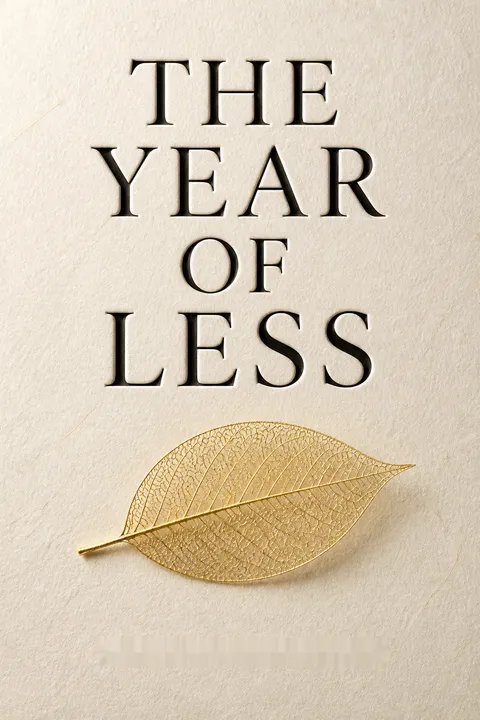


Key Takeaways
Want less, and you may need far less money to live well
The numbers changed her choices. Cait Flanders began a yearlong shopping ban after paying off nearly $30,000 of debt, yet still struggling to save. At the end of the experiment, she had lived on 51 percent of her income, saved 31 percent, or $17,000, and spent 18 percent on travel. Before the ban, she often saved 10 percent or less. The shift was not simply a reward for resisting purchases. Spending less revealed how much less income her actual life required.
Money became a tool. With lower expenses and savings in reserve, Flanders could consider leaving an unfulfilling job and working for herself. Her central discovery was that wanting more had kept her earning and spending more. Reducing wants made room for travel, savings, and a different career.
The financial result is persuasive because it links restraint to a concrete option: the ability to leave work that no longer fits. This resembles a broader idea in personal finance: lowering fixed demands can create more freedom than increasing income alone. The caveat is that her experiment took place within a specific set of circumstances, including steady earnings and the ability to travel. A low-spending year is not equally feasible for everyone. Its wider value lies less in copying her percentages than in distinguishing necessities from habits that quietly make a larger paycheck feel indispensable.
Inventory your belongings before deciding you need anything more
Clutter hid the evidence. Flanders was unusually tidy, yet owned many things she rarely used. When a missing can opener finally frustrated her, she emptied the drawers, closets, and cupboards and sorted what she found. The problem was not disorder. It was abundance that made useful objects hard to locate and purchases easy to forget. She donated 43 percent of her belongings in the first purge, then about 70 percent by the end of the year.
Possessions exposed a false self. Unread books, unworn clothes, and abandoned project supplies often belonged to an imagined version of herself: more literary, polished, or creative. Asking whether an item served the person she was, rather than the person she hoped to become, helped her let go. The purge also made existing supplies visible, reducing the temptation to buy duplicates.
An inventory turns vague restraint into evidence. In behavioral economics, people often make decisions with incomplete attention to what they already own; a visible count corrects that blind spot. The more personal insight here is that possessions can function as stored promises about identity. Releasing them may therefore feel like abandoning a possible self, not merely clearing a shelf. That is why decluttering can stir grief or guilt. Still, a dramatic purge is not the only route to awareness. A room-by-room inventory can reveal excess without requiring anyone to discard useful, sentimental, or expensive items hastily.
Pause at the urge and identify the feeling underneath it
Cravings had contexts. Flanders discovered that shopping, take-out coffee, alcohol, food, and television could all serve as quick escapes from discomfort. A latte was tied to mornings, work breaks, and errands. A breakup prompted fantasies of buying a planner, new clothes, books, a mug, and even a phone. The items seemed like solutions, but often the immediate need was comfort, distraction, or relief from loneliness.
A pause made choice possible. During the ban, she began noticing where she was, what she felt, and what story justified a purchase. She could then choose another response, such as brewing coffee at home, calling a friend, or going for a walk. The aim was not to eliminate every desire. It was to stop treating desire as an instruction and learn what need it might be pointing toward.
This turns consumption into a form of emotional information. The impulse may reveal fatigue, loneliness, or the wish for a reset, even when the product itself is irrelevant. That distinction echoes mindfulness-based approaches, which encourage observing a craving without immediately obeying it. The book also usefully resists the idea that a substitute must feel equally pleasurable: sometimes a home-brewed coffee simply makes the next step easier. A pause is not a cure for addiction or distress, however. When compulsive behavior creates serious harm, practical experiments can complement, but should not replace, appropriate professional support.
Set clear shopping rules before temptation writes them for you
Boundaries replaced improvisation. Flanders called her yearlong experiment a shopping ban. She could buy groceries, toiletries when she ran out, gifts, and items on a short approved shopping list. Clothes, books, household décor, electronics, and take-out coffee were off limits. A broken item could be replaced only when the original was discarded. Later, she revised the rules to allow supplies for gardening, candle-making, and homemade cleaning products.
The exceptions mattered. The approved list did not make the experiment pointless. It forced her to choose carefully: a single sweatshirt had to fit well and suit her actual life, so finding one took months. She also removed store accounts from social media, unsubscribed from marketing emails, tracked her belongings, and set aside saved money in a dedicated account. These measures made her intention easier to follow in ordinary moments.
The rules work as personal choice architecture: they reshape the environment so each purchase does not require a fresh moral debate. The planned exceptions also make the experiment more realistic than an absolute ban, especially when essentials wear out or life changes. This is a useful distinction between a boundary and a punishment. A good rule should clarify what matters, not create needless deprivation. Since household needs and financial circumstances vary, Flanders’s categories are a template for designing one’s own constraints, not a universal list. Her willingness to revise the rules also shows that fidelity to a goal can require changing its original form.
Treat a slip as evidence to learn from, not proof you failed
One purchase nearly reopened the cycle. On Black Friday, a promotional email convinced Flanders that a discounted e-reader was both necessary and unusually affordable. She ordered two, one for a giveaway and one for herself, before fully registering what she had done. Once she noticed the order, she canceled the unnecessary device. She then wrote publicly about the lapse rather than hiding it.
Shame could have made it worse. In earlier attempts to change her drinking and eating habits, one exception often became an excuse to abandon the effort altogether. Flanders recognized that condemning herself as a failure could turn a mistake into a relapse. Instead, she separated the action from her character: the purchase contradicted her plan, but it did not make her a bad person. Honesty and correction kept the lapse from becoming a reason to give up.
The important move is not pretending the slip was harmless. It is responding proportionately: notice the mismatch, repair what can be repaired, and preserve the larger commitment. This resembles the distinction between guilt about an action and shame about the self. Shame often encourages concealment, while specific accountability makes course correction easier. Public disclosure helped Flanders, though public accountability can also become pressure or performance. The underlying practice is more portable: tell a trusted person, examine the trigger, and resume the intended behavior without demanding perfection.
Expect spending habits to be social, not just personal
Shopping helped people connect. Flanders assumed a private experiment would affect only her. Instead, friends urged her to visit outlet malls, praised purchases she had not made, and sometimes stopped inviting her to outings because they assumed she could no longer join. Shopping had been a shared ritual, much like drinking or dining out. Changing it altered the ordinary ways some friendships were maintained.
Support made change less lonely. Her friend Emma responded to shopping urges with humor, reminders of the rules, and encouragement. Other friends built connection around hikes, walks, brunch, and travel instead of browsing stores. Flanders saw that people can influence one another toward old habits, but also help make new ones sustainable. Her advice was to tell people about the experiment and find at least one person to contact when an urge becomes difficult.
Consumption is often a social activity disguised as an individual preference. A mall trip offers company, conversation, and a shared story about bargains, so removing the purchase alone may not replace what the outing provided. This is why social support works best when it offers an alternative form of belonging, not only a reminder to be disciplined. At the same time, friends who continue to shop are not necessarily hostile to change; they may simply be following familiar scripts. The more useful question is which relationships can accommodate different routines without requiring everyone to adopt the same rules.
Do not mistake numbing pain for resolving what hurts
A family crisis changed the experiment. During the year, Flanders learned that her parents were divorcing. The news destabilized her sense of home and family, and she experienced panic, grief, and a period of withdrawing into bed. She had begun the challenge to spend less, not to prepare for this loss. Yet the ban made her more attentive to how she responded to pain.
Old escapes returned in new forms. She considered drinking, ate comfort food, and watched hours of television to avoid silence. Rather than treating every imperfect choice as a moral failure, she tracked how food affected her body and set limits on passive viewing. She also leaned on a few trusted friends. The larger lesson was not that shopping or other comforts are always wrong. It was that buying, eating, drinking, or streaming cannot repair the underlying event.
This part gives the book emotional credibility because restraint does not make grief disappear. It shows how coping can shift from one behavior to another, and how awareness may precede change without immediately producing it. The distinction between comfort and avoidance is especially useful: a meal or a television episode can be a reasonable relief, while an unchosen pattern can narrow life further. There is also a limit worth keeping in view. Flanders describes her own response, not a general treatment for grief or depression. Persistent distress deserves human and professional care, not only better consumption rules.
Use your budget to calculate what kind of work you can leave
Lower expenses clarified the runway. Flanders had long assumed she needed a larger income to afford the life she wanted. During the ban, she tracked her spending and discovered that her ordinary living costs were far below her previous spending. In some months she saved more than half her income. Her freelance earnings were already close to what she needed for basic expenses, so leaving a draining job became a calculated possibility rather than a fantasy.
A deadline made the change concrete. She chose September as a target for resigning and July as a stretch goal, then built savings and found more freelance clients. After calculating her needs and securing work, she gave notice and left in June. The budget did more than measure restraint. It showed which obligations were essential, which pleasures could remain, and how much uncertainty she could afford.
A budget can be a map of agency, not merely a record of discipline. By separating essential costs from discretionary spending, Flanders found a way to evaluate career risk with more precision. That is a powerful counterweight to the assumption that a stable paycheck is always the safest choice. Yet self-employment carries volatility, and a personal runway depends on factors such as dependents, benefits, debt, and local costs. The transferable method is not to quit on a deadline, but to calculate a minimum viable life before making a major career decision.
Spend on the life you remember, not the identity you decorate
Experiences outlasted acquisitions. As Flanders spent less on objects, she used more of her money for travel. A road trip through cities and landmarks became vivid in memory, while she could barely recall many donated belongings. By the end of the year, she had spent $10,000 on travel, saved $17,000, and still lived on just over half her income.
Use revealed what mattered. She returned to sewing, gardening, and other practical skills she had once dismissed as easier to buy around. She also recognized herself more clearly as a reader, writer, hiker, traveler, daughter, sister, and friend, rather than as someone who needed objects to become smarter, more professional, or more creative. The goal was not owning nothing. It was allowing purchases to serve a real life instead of an imagined one.
The strongest contrast is not between things and experiences, but between consumption that supports a valued life and consumption meant to manufacture a more acceptable self. That distinction helps explain why a carefully chosen tool can matter while a closet of aspirational purchases can feel burdensome. Experiences also tend to create stories and relationships, though they are not automatically more meaningful or accessible than material goods. The practical test is whether spending connects to a value that is actually practiced. A purchase can be an expression of identity, but it cannot substitute for living that identity.
Analysis
The Year of Less is a memoir that uses a yearlong spending experiment as a narrative engine, not as a universal prescription. Its arc begins with a practical financial frustration: after paying off substantial debt, Flanders still cannot save as much as she intends. The shopping ban supplies a visible constraint, but the story’s deeper subject is the discovery that consumption has been doing emotional and social work. Purchases promise a fresh start, ease, confidence, or relief; shopping rituals also bind friends together. Removing the behavior exposes both the needs it temporarily serves and the relationships organized around it.
The dual method matters. Flanders does not only stop buying. She takes inventory and gives away what she does not use, making past spending visible in physical form. The purge confronts the fantasy that objects can turn their owner into a more accomplished or appealing person. The ban then tests whether life actually requires replacements. Together, these practices make the experiment more revealing than a simple savings challenge. Its eventual financial result, saving $17,000 while traveling, supports the claim that lower consumption can expand options, including leaving work that no longer fits.
The memoir also avoids a tidy transformation story. A Black Friday purchase occurs; grief over her parents’ divorce brings periods of retreat and renewed cravings for food, alcohol, and television. These episodes distinguish behavior change from emotional invulnerability. Flanders’s response is imperfect but increasingly conscious: she notices triggers, seeks trusted support, and avoids turning a lapse into a verdict on her character.
The book’s strongest contribution is therefore not minimalism as an aesthetic, but attention as a financial and emotional resource. It asks what a person is buying, what need the purchase is meant to meet, and what life becomes possible when less money and attention flow toward things that do not deliver. Its method has limits: a yearlong ban requires room to choose, and cannot address addiction or grief by itself. But its central inquiry is widely useful: distinguish actual needs and values from habits, marketing, and the self one hopes to purchase.
Review Summary
The Year of Less received mixed reviews. Some readers found it inspiring and relatable, praising Flanders' honesty about her struggles with addiction and consumerism. They appreciated her journey of self-discovery and the practical tips provided. However, many were disappointed by the lack of focus on the shopping ban, feeling misled by the title. Critics found the memoir aspect tedious and self-indulgent, wanting more practical advice on minimalism. Overall, the book resonated with those seeking personal growth but fell short for readers expecting a guide on living with less.
People Also Read





Glossary
shopping ban
temporary limits on buyingA self-imposed period during which a person restricts purchases to essentials and clearly defined exceptions. Flanders’s yearlong version prohibited categories such as clothes, books, household décor, electronics, and take-out coffee, while allowing groceries, necessary toiletries, gifts, and items on a limited approved list. The purpose was to interrupt habitual spending and examine what she actually needed.
approved shopping list
preselected permitted purchasesA short list of specific items a person may buy during a shopping ban. Flanders included a few foreseeable needs, such as a replacement bed, seasonal footwear, and clothing for particular occasions. Deciding in advance what qualified reduced on-the-spot rationalization, while still allowing necessary purchases. The list could be revised when circumstances changed or when the experiment’s goals expanded.
blackout purchase
impulsive buying with little awarenessFlanders’s description of a purchase made so automatically that it felt as if awareness had briefly disappeared. During a Black Friday sale, she ordered e-readers before registering that the purchase contradicted her plan. The term emphasizes the gap between a familiar purchasing routine and conscious choice. She canceled the unnecessary device and treated the episode as a lapse to examine rather than a reason to abandon the experiment.
mindful consumer
intentional, value-led buyerFlanders’s term for a person who slows down before purchasing and considers whether an item is genuinely wanted or needed. Mindful consumption does not mean never buying anything. It means noticing impulses, marketing, emotional triggers, and existing possessions, then choosing in line with personal needs and values. In her account, this approach replaces automatic spending with considered purchases that are more likely to be used.
FAQ
What's "The Year of Less" about?
- Personal journey: "The Year of Less" by Cait Flanders is a memoir detailing her year-long experiment of not shopping, giving away her belongings, and discovering a life beyond consumerism.
- Shopping ban: The book chronicles Flanders' decision to implement a yearlong shopping ban, outlining what she was allowed and not allowed to purchase.
- Self-discovery: Through this process, Flanders explores themes of minimalism, mindfulness, and the impact of consumer culture on personal well-being.
- Transformation: The narrative highlights her transformation from a binge consumer to a mindful consumer, emphasizing the emotional and financial benefits of living with less.
Why should I read "The Year of Less"?
- Inspiration for change: The book offers inspiration for those looking to break free from the cycle of consumerism and find more meaning in their lives.
- Relatable struggles: Flanders shares her personal struggles with addiction, debt, and emotional challenges, making her journey relatable to many readers.
- Practical advice: It provides practical advice on how to implement a shopping ban, declutter, and live more intentionally.
- Emotional depth: The memoir is not just about financial savings but also about emotional growth and self-discovery, offering a holistic view of personal transformation.
What are the key takeaways of "The Year of Less"?
- Mindful consumption: Flanders emphasizes the importance of being a mindful consumer, making intentional choices about what to buy and why.
- Value of less: The book illustrates how living with less can lead to more freedom, savings, and happiness.
- Emotional clarity: By removing distractions and unnecessary possessions, Flanders finds clarity in her emotional and mental well-being.
- Financial empowerment: The narrative shows how reducing consumption can lead to significant financial savings and a sense of empowerment over one's finances.
How did Cait Flanders implement her shopping ban?
- Defined rules: Flanders set clear rules for her shopping ban, including what she was allowed to buy (groceries, toiletries) and what she wasn't (clothes, books).
- Approved list: She created an approved shopping list for items she anticipated needing, like a new bed and workout pants.
- Accountability: Flanders stayed accountable by documenting her journey on her blog, sharing her progress and challenges.
- Mindful decisions: She focused on making mindful decisions, questioning her impulses and understanding her spending triggers.
What challenges did Cait Flanders face during her year of less?
- Emotional triggers: Flanders had to confront emotional triggers that led to impulsive shopping, such as stress and loneliness.
- Social pressures: She faced social pressures from friends and society, questioning her decision to live with less.
- Habit changes: Breaking long-standing habits of consumerism required significant effort and self-reflection.
- Personal struggles: Throughout the year, Flanders dealt with personal challenges, including her parents' divorce and maintaining her sobriety.
What are the best quotes from "The Year of Less" and what do they mean?
- "More was never the answer. The answer, it turned out, was always less." This quote encapsulates the book's central theme that fulfillment comes from simplifying life, not accumulating more.
- "I wanted to stop making impulse purchases only to realize I had been fooled by another marketing strategy or sale sign." It highlights the importance of mindful consumption and resisting marketing tactics.
- "I had to let go of the stuff I wanted the ideal version of myself to use, and accept myself for who I really was." This reflects the journey of self-acceptance and understanding one's true needs versus perceived needs.
- "The best gift the ban had given me was the tools to take control of my life and get a fresh start as my real self." It emphasizes the empowerment and clarity gained from living with less.
How did Cait Flanders' shopping ban affect her finances?
- Significant savings: Flanders saved 31% of her income, amounting to $17,000, by living on 51% of her income during the ban.
- Reduced expenses: She learned to live on less, cutting unnecessary expenses and focusing on essentials.
- Financial clarity: The ban provided clarity on her spending habits, helping her align her finances with her values.
- Empowerment: By taking control of her consumption, Flanders felt empowered and financially secure, allowing her to pursue other life goals.
What role did minimalism play in "The Year of Less"?
- Decluttering: Flanders began her journey by decluttering her home, removing 70% of her belongings to focus on what truly mattered.
- Mindset shift: Minimalism shifted her mindset from acquiring to appreciating, valuing experiences over possessions.
- Emotional impact: The process of decluttering helped her confront emotional attachments to items and let go of the past.
- Simplicity: Embracing minimalism led to a simpler, more intentional lifestyle, reducing stress and increasing happiness.
How did Cait Flanders' personal struggles influence her journey?
- Addiction recovery: Flanders' journey included overcoming addictions to alcohol, food, and shopping, which were intertwined with her emotional well-being.
- Family dynamics: Her parents' divorce during the year added emotional complexity, challenging her to maintain focus on her goals.
- Self-discovery: Personal struggles prompted deep self-reflection, leading to greater self-awareness and growth.
- Resilience: Despite challenges, Flanders demonstrated resilience, using her struggles as motivation to continue her journey.
What advice does Cait Flanders offer for those considering a shopping ban?
- Set clear rules: Define what you can and cannot buy, and create an approved shopping list for anticipated needs.
- Stay accountable: Share your journey with others, whether through a blog, social media, or personal connections.
- Identify triggers: Pay attention to emotional and situational triggers that lead to impulsive spending, and find healthier coping mechanisms.
- Focus on values: Align your spending with your values, prioritizing experiences and relationships over material possessions.
How did Cait Flanders' year of less impact her relationships?
- Support system: Flanders relied on a strong support system of friends and family who understood and encouraged her journey.
- Social challenges: She faced challenges with friends who didn't understand her decision, leading to shifts in some relationships.
- Deeper connections: By focusing on meaningful experiences, Flanders strengthened her connections with those who shared her values.
- Personal growth: The journey allowed her to be more present and authentic in her relationships, fostering deeper bonds.
What lasting changes did Cait Flanders experience after "The Year of Less"?
- Continued mindfulness: Flanders continued to practice mindful consumption, only buying what she truly needed.
- Sustained minimalism: She maintained a minimalist lifestyle, regularly decluttering and valuing simplicity.
- Financial stability: The financial habits developed during the ban provided long-term stability and security.
- Personal fulfillment: Flanders found greater fulfillment in life, focusing on experiences, relationships, and personal growth over material possessions.
Download PDF
Download EPUB
.epub digital book format is ideal for reading ebooks on phones, tablets, and e-readers.








