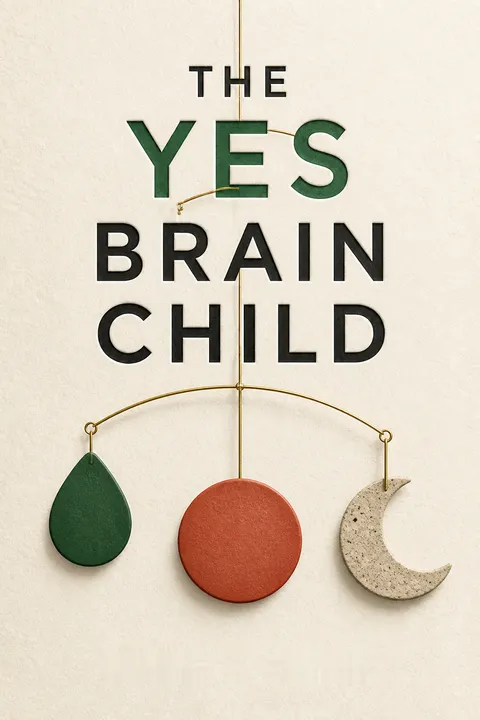


Key Takeaways
Build a child’s openness to life, not a habit of saying yes.
A state, not a label. The authors call a receptive, flexible way of meeting life a Yes Brain. Its opposite, a No Brain, is a defensive state in which fear or frustration can narrow attention and make connection harder. These are temporary ways of responding, not fixed personality types. The goal is to help children develop balance, resilience, insight, and empathy, not to make them agreeable or cheerful all the time.
Limits still matter. A Yes Brain does not mean granting every request or removing disappointment. A parent can hold a boundary while staying warm and curious about the child’s feelings. The central idea is that everyday interactions, including arguments and setbacks, can help children practise meeting the world with openness rather than reflexive defense.
The distinction between openness and compliance is especially valuable in a culture that can mistake a quiet, convenient child for a thriving one. The model also makes room for difficult feelings: emotional health is not perpetual calm, but the capacity to remain connected and responsive when upset. Its brain language is best read as a practical map rather than a precise neurological switch. Children’s reactions reflect development, temperament, context, and relationships, not simply a choice between two brain modes.
Calm the nervous system before asking for better behavior.
Find the child’s zone. The book uses a window of tolerance to describe the range of emotional arousal in which a child can still think, listen, and respond flexibly. Within it is the green zone, a regulated state. When overwhelmed, a child may move into the red zone of agitation or the blue zone of shutdown. These are explanatory labels, not diagnoses. Teddy, an eight-year-old football player, regularly exploded when he missed a shot or had to sit out.
Connect, then teach. The parent’s first task is to help the child regain composure through a steady voice, empathy, and, when welcome, comforting touch. Once the child can take in what is being said, the adult can discuss limits, repair harm, and plan for next time. Demanding an explanation mid-meltdown usually asks for skills the child cannot access in that moment.
This approach fits a basic insight from stress research: high arousal can make reflective thinking and flexible problem-solving less available. It also offers parents a useful sequence, regulate first, teach second. The zone metaphor can help families describe experience without calling a child bad. Still, it should not become a blanket excuse for harmful actions or a substitute for assessment when distress is persistent, severe, or linked to trauma, health, or developmental needs.
Stay close enough to steady them, separate enough to let them grow.
Connection with boundaries. The authors describe healthy support as a balance between linkage, staying emotionally attuned, and differentiation, remaining a separate person with limits. A child furious about being denied another show may need an adult to acknowledge the disappointment without changing the rule. The child receives connection, but also learns that frustration can be felt without being rescued from it.
Avoid both extremes. Too little connection leaves children alone with feelings they may not yet know how to manage. Too much involvement can mean doing their homework, solving every peer conflict, or stepping in at the first sign of struggle. The parent’s role is to offer a safe base, not to remove every obstacle. That lets children practise problem-solving, self-advocacy, and tolerating discomfort while knowing help is available.
This balance resembles the secure-base idea in attachment theory: dependable care supports exploration rather than replacing it. The distinction also helps separate emotional validation from agreement. A child can feel understood while a limit remains firm. The difficult judgment is deciding what a child can manage today, since capacity varies by age, temperament, and circumstance. Encouraging independence should never become a demand that children handle serious distress or unsafe situations alone.
Translate misbehavior into the skill your child has not learned yet.
Look for the missing skill. The book treats behavior as communication about what a child may not yet know how to do. Four-year-old Jake repeatedly grabbed a ball or kicked it away when he had to wait his turn. Instead of treating him as a bad kid and relying only on rewards or punishment, his mother and teacher gave him practice sharing, taking turns, and playing fairly. They used role-play and stories with toys to rehearse situations before they happened.
Add, do not only subtract. The aim is not to ignore behavior or abandon consequences. It is to ask what capability would make a better response possible, then teach and practise it. After a child is regulated, adults can set limits and support repair. This shifts the question from “How do we stop this?” to “What can we help the child learn to do instead?”
This reframing has a close parallel in functional behavior assessment, which asks what purpose a behavior serves and what conditions sustain it. It can replace moral judgment with a more useful diagnosis of the learning problem. The approach is strongest when paired with clear boundaries: understanding why a child hits does not make hitting acceptable. It does, however, help adults choose instruction and support that address the cause rather than merely suppressing the visible behavior.
Stretch tolerance in small doses, with a parent-sized safety net.
Choose the right challenge. Resilience means recovering from difficulty and gradually handling more of it. The authors call the calibration “pushin’ and cushion”: encourage a child to try a manageable challenge, but provide support when the task exceeds current capacity. A child anxious about separation might practise brief departures in familiar settings before attempting a longer one. Pressuring a child into overwhelming distress can make the challenge feel more threatening, not less.
Make safety dependable. The book’s Four S’s are safe, seen, soothed, and secure. Repeated experiences of protection, understanding, comfort, and dependable care help children feel able to explore. When Alanah’s anxiety escalated into panic, she practised calming breaths and gradual separation with her mother and teacher. The point is not to eliminate fear, but to help the child experience difficulty with enough support to learn that it can be faced.
Gradual practice resembles exposure-based approaches, in which manageable contact with a feared situation can build tolerance more effectively than either avoidance or flooding. The relational safety in this account matters: courage is easier to practise when a trusted adult is available. Yet “just enough” challenge cannot be reduced to a universal recipe. A child’s signals, history, sensory needs, and actual safety should guide the pace, and professional help may be appropriate when anxiety significantly disrupts daily life.
Teach children to pause, notice inner signals, and choose a response.
Build an inner observer. Mindsight is the ability to notice and understand one’s own mind and the minds of others. The authors describe a child as both the player in an emotional moment and the spectator who can observe it. A pause lets the spectator notice rising anger, fear, or bodily tension before the player reacts. SIFT is a prompt to notice sensations, images, feelings, and thoughts rather than being swept along by them.
Practise before the crisis. Parents can help children name what is happening in their bodies, breathe slowly, and reflect once they are calm. The Red Volcano is the book’s image for rising arousal: warning signs appear as a child approaches an emotional eruption. The purpose is not to suppress feelings. It is to recognize them early enough to choose a response, such as asking for help, taking a break, or trying a practical solution.
The pause translates metacognition into something a child can practise: noticing a thought or feeling without treating it as an order. That skill connects mindfulness with executive control and emotional learning. It is most useful when taught outside the heated moment and modelled by adults. A caution is important: children cannot always reason themselves out of panic or shutdown. Support, environmental changes, and treatment may matter as much as a self-regulation technique.
Make empathy a daily practice of noticing, imagining, and helping.
Train attention outward. The authors present empathy as more than feeling another person’s emotion. It also includes taking another perspective, understanding their situation, caring about their distress, and sharing their happiness. Parents can build these capacities in ordinary moments by asking what a character in a story might feel, or wondering why a classmate acted unusually. Such questions invite curiosity instead of immediate blame.
Turn concern into action. Dean was self-centered as a young child, but his parents repeatedly helped him notice other people’s needs and practise considerate behavior. They also let him experience his own sadness and frustration rather than distracting him at once, giving him emotional experiences he could later recognize in others. Empathy does not require pleasing everyone or absorbing their pain. It means staying aware of others while retaining a sense of self and choosing when and how to help.
The account usefully links perspective-taking to caring action. Understanding another person’s motives can support patience, while compassion gives that understanding an ethical direction. Classroom and clinical settings also show why empathic attention matters: people who feel understood may be more willing to engage and cooperate. Still, empathy is not infallible. Perspective-taking can serve manipulation, and concern can become exhausting when boundaries disappear. The book’s emphasis on both care and a distinct self helps address those risks.
Protect sleep, play, and unclaimed time as developmental essentials.
Make room for varied mental work. The Healthy Mind Platter is the authors’ model for a balanced day. It includes focused effort, play, connection, movement, inward reflection, unfocused downtime, and sleep. The point is variety, not a rigid hourly prescription. Free play gives children practice inventing, negotiating rules, coping with disappointment, and adjusting to other people. The authors also cite research suggesting that block play can support language development and that play can help children manage separation at school.
Watch the family’s pace. Too many activities can crowd out sleep, friendships, shared meals, and unstructured exploration. Too little structure can leave a child isolated in front of screens. Parents can check whether a child seems chronically tired or pressured, and whether the calendar leaves room to recover. Sleep supports attention and emotional regulation, while boredom can prompt children to invent something of their own.
The model is a helpful counterweight to the assumption that every valuable childhood hour must produce a measurable achievement. Play also lets children practise social negotiation in conditions with lower stakes than adult-directed instruction. The challenge is that time is not distributed equally: work schedules, housing, school demands, and access to safe play spaces constrain many families. The principle is not to blame parents for crowded calendars, but to recognize that balance depends partly on institutions, not willpower alone.
Let achievement serve the child’s inner compass, not replace it.
Define success more broadly. The authors distinguish outward markers, such as grades, awards, and prestigious jobs, from inner capacities that support a meaningful life. They describe Eric, a high-achieving graduate who had followed the expected path but felt unsure who he was or what mattered to him. His story is not an argument against ambition. It is a warning that external rewards can accumulate without helping a young person develop direction, curiosity, or self-understanding.
Follow the child’s attention. A mother once stopped rushing her toddler to a scheduled music class and joined him on the floor as he explored nesting cups. The moment illustrates the book’s call to notice what genuinely engages a child, rather than treating enrichment as automatically beneficial. Activities and achievement can be valuable when they fit the child’s interests and leave room for play, relationships, and rest.
This argument aligns with self-determination theory, which distinguishes motivation rooted in interest and agency from behavior driven mainly by external approval. External achievements can open doors, but they are poor substitutes for knowing why a goal matters. The contrast should not be made absolute: structure, effort, and recognition can support growth, and some children find meaning through demanding pursuits. The useful test is whether achievement expands the child’s capacities and choices or steadily crowds out their own developing judgment.
Model the regulation and self-understanding you hope to pass on.
Parents shape the climate. Children learn from how adults handle anger, disappointment, and repair, not only from direct instruction. The authors ask parents to notice whether they become distant when a child is upset or so emotionally entangled that they rush to fix every problem. Adult sleep, stress, and support affect how available a parent can be, so the advice is not a demand for flawless composure.
Make sense of your own past. A coherent narrative is a clear, reflective account of childhood that recognizes both what happened and how it shaped present patterns. The authors argue that difficult early experiences do not determine someone’s parenting forever. Reflection can help a parent notice inherited habits and choose a different response. Where painful memories or trauma remain overwhelming, support from trusted people or a qualified professional may be needed.
The intergenerational perspective adds an important point: parenting is not simply a set of techniques applied to a child. A caregiver’s own history can shape what feels threatening, familiar, or difficult in the present. Reflective narration can create distance from automatic repetition, while repair after inevitable mistakes shows children that relationships can recover. Still, insight alone does not erase structural stress or trauma. Self-understanding is a resource, not a guarantee, and seeking help can be part of responsible care.
Analysis
The book’s strongest contribution is its shift in the parent’s question. Instead of asking only how to stop a behavior, it asks what state the child is in, what skill is missing, and what support makes learning possible. That sequence makes emotional regulation, relationship, and instruction parts of one process. The four capacities, balance, resilience, insight, and empathy, also keep parenting goals broader than obedience or measurable achievement.
Its practical metaphors are memorable because they translate difficult internal experiences into language families can use. The zones help distinguish agitation from shutdown; the player and spectator clarify self-observation; pushin’ and cushion describe calibrated support. Their value is pedagogical, however, not diagnostic. Real nervous-system responses are more complex than three colored zones, and no metaphor can determine whether a child needs ordinary practice, environmental accommodation, or clinical care.
The book’s neuroscience framing should be held with more caution than its relational advice. Brain plasticity and development support the general claim that experience matters, but phrases about attention wiring the brain can make learning sound more direct and predictable than it is. The cited claim that brain integration predicts many positive outcomes is not itself proof that a particular parenting interaction produces those outcomes. Neural development is shaped by genetics, health, stress, material conditions, and many relationships, not by parental attention alone.
That qualification strengthens rather than weakens the book’s central message. Parents do influence the emotional climate, but they are not solely responsible for a child’s eventual wellbeing. The most actionable guidance is modest and humane: maintain limits, reconnect after distress, teach the skill beneath the behavior, allow manageable struggle, protect room for play and rest, and treat the child as a person becoming rather than a performance to optimize.
Review Summary
The Yes Brain Child receives mostly positive reviews for its insights on fostering courage, resilience, and empathy in children. Readers appreciate the practical strategies and clear explanations of brain science. Many find it helpful for understanding children's emotions and behavior. Some criticize repetitiveness and overlap with the authors' previous works. Parents generally recommend it for its actionable advice on helping children develop emotional intelligence and cope with challenges. The book's emphasis on balance, resilience, insight, and empathy resonates with many readers.
People Also Read






Glossary
Yes Brain
receptive, flexible stateThe book’s term for a state of mind in which a person can stay open, curious, and connected while facing experience. It is associated with emotional balance, resilience, self-understanding, and care for others. It does not mean agreeing to every request or avoiding negative feelings; it describes a way of responding rather than a fixed personality.
No Brain
defensive, reactive stateThe book’s contrast to the Yes Brain: a state in which perceived threat or overwhelming emotion narrows attention and encourages fighting, fleeing, freezing, shutting down, or rejecting input. The term is a teaching metaphor, not a formal diagnosis. Everyone, including adults, can enter this state, and children may need help returning to flexible engagement.
Window of tolerance
range for regulated functioningThe range of emotional and nervous-system activation in which a person can still think, listen, and respond flexibly. Beyond its upper edge, a person may become highly agitated or chaotic; below its lower edge, a person may become rigid or withdrawn. The book applies the idea to understanding why different children tolerate different levels of emotion or stress.
FACES
qualities of integrationAn acronym the authors use for qualities they associate with an integrated brain: flexibility, adaptability, coherence, energy, and stability. It describes a broad picture of coordinated functioning, where different capacities work together rather than operating in isolation. The acronym is a simplified explanatory tool, not a clinical measure of a child’s brain.
Mindsight
understanding mindsThe ability to notice and make sense of one’s own mental life and the mental lives of other people. In the book, it includes insight into one’s own feelings and thoughts, empathy for others, and integration, or linking distinct parts of experience without erasing their differences. Mindsight is presented as a skill that can grow through practice and supportive relationships.
SIFT
notice inner experienceA prompt for paying attention to four parts of inner experience: sensations, images, feelings, and thoughts. The authors use it to help children and adults notice what is happening inside before reacting automatically. Recognizing these signals can create room for reflection and a more deliberate response, especially when paired with practice and adult support.
Four S’s
secure relational careThe authors’ shorthand for helping a child feel safe, seen, soothed, and secure. Safe means protected, seen means understood and recognized, soothed means comforted during distress, and secure means able to rely on the relationship over time. The book presents repeated, dependable experiences of these qualities as a foundation for exploration and resilience.
Healthy Mind Platter
varied daily mental nourishmentA model of seven kinds of daily experience that the authors consider supportive of mental wellbeing: focused work, play, social connection, physical movement, inward reflection, unfocused downtime, and sleep. It is meant to prompt variety and balance, not to prescribe exact amounts of time. A child’s needs and circumstances shape how the elements fit together.
Empathy diamond
five facets of empathyThe authors’ image for empathy’s distinct but related dimensions: seeing another’s perspective, resonating with their feelings, understanding their experience, wanting to reduce their suffering, and sharing their joy. The model emphasizes that empathy is more than feeling another person’s emotion. It can include understanding, care, and action while retaining one’s own sense of self.
Red Volcano
rising emotional arousalA child-friendly image for the build-up of emotional and bodily arousal that can lead to an outburst. As activation rises, signs such as faster breathing, muscle tension, or a quickening heartbeat may appear. Noticing these signs before reaching the peak can help a child pause, regulate, and choose a response. It is a teaching metaphor, not a measurement.
pushin’ and cushion
calibrated challenge and supportA phrase for deciding whether a child needs encouragement to attempt a manageable challenge or extra support because the challenge exceeds current capacity. Pushing too hard can intensify fear; cushioning every difficulty can prevent practice. The approach calls for attention to the child’s temperament, developmental stage, signals, and the particular problem at hand.
FAQ
What's "The Yes Brain Child" about?
- Focus on a "Yes Brain": The book by Daniel J. Siegel and Tina Payne Bryson is about helping children develop a "Yes Brain," which is characterized by openness, curiosity, and resilience.
- Four Key Characteristics: It introduces four key characteristics of a Yes Brain: balance, resilience, insight, and empathy, which are essential for children to handle life's challenges.
- Practical Guidance: The authors provide practical strategies for parents to nurture these qualities in their children, aiming to help them become more emotionally balanced and resilient.
- Science-Inspired Approach: The book is based on scientific research and offers a comprehensive approach to parenting that focuses on developing a child's internal strengths.
Why should I read "The Yes Brain Child"?
- Parenting Insights: It offers valuable insights into how to raise children who are resilient, independent, and creative, which are crucial skills in today's world.
- Practical Strategies: The book provides actionable strategies that parents can implement in everyday interactions with their children to foster a Yes Brain.
- Scientific Foundation: The advice is grounded in neuroscience, making it a credible resource for understanding child development and behavior.
- Holistic Development: It emphasizes the importance of nurturing a child's emotional and social intelligence, not just academic success.
What are the key takeaways of "The Yes Brain Child"?
- Yes vs. No Brain: A Yes Brain is open and receptive, while a No Brain is reactive and defensive. The goal is to cultivate a Yes Brain in children.
- Four Fundamentals: The book focuses on developing balance, resilience, insight, and empathy in children as foundational skills for life.
- Integration and Connection: It highlights the importance of integrating different parts of the brain and fostering strong parent-child connections.
- Skill-Building Approach: Instead of extinguishing unwanted behaviors, the book advocates for building skills that help children handle challenges better.
How does "The Yes Brain Child" define a "Yes Brain"?
- Receptivity Over Reactivity: A Yes Brain is characterized by receptivity, allowing children to be open to new experiences and challenges.
- Social Engagement System: It involves neural circuits that help children connect with others and their own inner experiences.
- Emotional Equilibrium: A Yes Brain helps children maintain emotional balance and approach life with curiosity and flexibility.
- Internal Compass: It provides children with an internal guide to face life's challenges with security and enthusiasm.
What are the four key characteristics of a "Yes Brain" according to the authors?
- Balance: The ability to manage emotions and behavior, preventing children from losing control.
- Resilience: The capacity to bounce back from life's inevitable problems and struggles.
- Insight: The ability to understand oneself and make informed decisions.
- Empathy: The ability to understand and care for others' perspectives and feelings.
How can parents nurture a "Yes Brain" in their children?
- Everyday Interactions: Use daily interactions, like driving to school or playing, to teach Yes Brain principles.
- Modeling Behavior: Parents should model the behaviors they want to see, such as balance and empathy.
- Skill Development: Focus on building skills rather than punishing unwanted behaviors.
- Create a Supportive Environment: Provide opportunities for children to explore, play, and learn in a safe and supportive setting.
What is the significance of the "Four S's" in "The Yes Brain Child"?
- Safe: Ensuring children feel protected and secure in their environment.
- Seen: Acknowledging and validating children's feelings and experiences.
- Soothed: Helping children calm down and manage their emotions.
- Secure: Building a strong, trusting relationship that provides a foundation for resilience.
How does "The Yes Brain Child" suggest handling children's emotional outbursts?
- Connect First: Before addressing behavior, connect with the child emotionally to help them calm down.
- Teach Insight: Help children understand their emotions and reactions to build self-awareness.
- Promote Balance: Encourage strategies that help children regain emotional balance, like deep breathing.
- Skill-Building: Use outbursts as opportunities to teach skills for better emotional regulation in the future.
What role does "insight" play in developing a "Yes Brain"?
- Self-Understanding: Insight helps children understand their own emotions and reactions.
- Pause and Reflect: It encourages children to pause and reflect before reacting, promoting better decision-making.
- Empowers Control: By understanding themselves, children gain more control over their emotions and actions.
- Facilitates Growth: Insight is crucial for personal growth and developing a strong internal compass.
How does "The Yes Brain Child" address the concept of empathy?
- Empathy Diamond: The book introduces the empathy diamond, which includes perspective-taking, emotional resonance, cognitive empathy, compassionate empathy, and empathic joy.
- Building Empathy: It emphasizes the importance of teaching children to understand and care for others' feelings.
- Integration: Empathy is seen as a form of integration, linking self-awareness with awareness of others.
- Action-Oriented: True empathy involves taking action to help others, not just understanding their feelings.
What are some practical strategies from "The Yes Brain Child" for promoting resilience?
- Pushin' and Cushion: Balance challenging children to grow with providing support when needed.
- Mindsight Skills: Teach children to shift perspectives and manage emotions through mindfulness.
- Expand the Green Zone: Help children increase their tolerance for discomfort and adversity.
- Skill-Building Focus: Use challenges as opportunities to build resilience and coping skills.
What are the best quotes from "The Yes Brain Child" and what do they mean?
- "I'm not afraid of storms, for I'm learning how to sail my ship." This quote emphasizes the importance of resilience and learning to navigate life's challenges.
- "Where attention goes, neurons fire." It highlights the concept of neuroplasticity and the importance of focusing on positive experiences to shape the brain.
- "Integration made visible is kindness and compassion." This quote underscores the idea that a well-integrated brain leads to empathy and caring behavior.
- "The Yes Brain leads not to some sort of perfection or paradise, but to the ability to find joy and meaning even in the midst of life’s challenges." It conveys the book's message that true success comes from internal growth and resilience, not external achievements.
Download PDF
Download EPUB
.epub digital book format is ideal for reading ebooks on phones, tablets, and e-readers.








