

Plot Summary
The Gun at Halloween
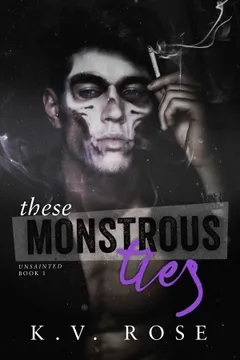
On Halloween, nineteen-year-old Sid leaves her shabby apartment dressed as Lilith, carrying a real gun and intending to end her life. Years in foster care have taught her to expect little from anyone; escort work has paid the bills, but she sees no future worth keeping. At a crosswalk, a skeleton-painted stranger blows cigarette smoke in her face, recognizes her costume, and calls himself Lucifer.
He takes her hand and insists she accompany him to a party in Raven Park. Sid resists, but the prospect of one last strange night pulls harder than caution. She follows him toward the bonfire, unaware that the party is an initiation ground for a secretive group with power over the city.
Sid’s plan to die is framed as an attempt to reclaim authorship after years in which other people have controlled her body and circumstances. Lucifer’s arrival interrupts that plan, but not through conventional rescue: he approaches through command, attraction, and mystery. The encounter therefore plants the novel’s central unease. Being kept alive may feel like a gift, yet the person who offers it immediately limits her choices. The costume gives Sid a temporary identity she can inhabit, while the gun remains the more literal instrument of control she hoped to wield.
Raven Park's Blood Moon
At the party, Sid meets Ria, a student who warns that the Unsaints turn Halloween into something more dangerous than a costume gathering. Lucifer’s friends treat the women as part of a ritual, and Sid, uneasy, leaves the fire and walks toward the park’s abandoned merry-go-round. Jeremiah, a stranger in a hood, follows and restrains her, making clear that he intends to take her.
Lucifer arrives before Jeremiah can carry out the attack. He pulls Sid away, then throws her gun into the woods so she cannot use it on herself. Instead of letting her return home, he leads her to the abandoned Raven Shores psychiatric hospital, where the Unsaints have gathered for their ceremony.
This sequence turns Sid’s chosen danger into danger imposed by others. She went to the park expecting to control the terms of her own death; Jeremiah’s assault exposes how quickly that control can be seized. Lucifer’s intervention is real, but it remains coercive: he discards her weapon and decides where she must go. The story refuses an uncomplicated rescuer role. Protection, possession, and threat arrive through the same hands, so Sid’s relief at being saved cannot settle into trust.
The Death Oath
Inside the ruined hospital, the Unsaints make their female companions kneel and perform the Death Oath, a ritual in which each man cuts himself and offers his blood to a woman. Lucifer draws Sid aside, cuts his own thigh, and has her taste his blood; she returns the act by cutting her leg.
In a basement room, their attraction becomes a private, intensely physical encounter. Lucifer asks her to stay alive and promises not to abandon her, while Sid, drunk and overwhelmed, agrees to bind herself to him for the night. She eventually blacks out. When she wakes, the party and Lucifer are gone, and she has no clear memory of what happened after sleep took her.
The oath gives bodily intimacy the shape of a contract, but its promise of permanence lasts only as long as the ritual’s night. Blood becomes both evidence and currency: it binds the participants while making their bodies part of a group’s private law. Sid’s intoxication and blackout leave a dangerous gap between what she remembers and what occurred. That gap matters beyond plot suspense. It shows how a ritual that claims to create consent can also obscure it, particularly when power and alcohol make refusal difficult to exercise.
Jamie Returns as Jeremiah
Sid wakes in the forest, bruised and stripped of her costume, with no sign of Lucifer. The hooded stranger returns, and Sid recognizes him as Jamie, the older foster brother she has not seen since they were children. He now calls himself Jeremiah and has become a wealthy power broker in Alexandria. He carries her to his hotel-like mansion, washes her himself, and refuses to explain what happened at the hospital.
Sid fights him, demanding to know where he has been; he insists he searched for her. Then he confines her under constant watch, including two weeks in a cell, where Nicolas forces her to eat and stay alive. The reunion restores a familiar bond, but Jeremiah’s care arrives as custody rather than comfort.
The reunion offers Sid an answer to one lifelong absence, but the answer is not safety. Jeremiah’s childhood familiarity gives him emotional authority that strangers cannot claim, and he uses that authority to impose surveillance and control. His practical acts of care, from carrying her to feeding her, are inseparable from coercion. The distinction matters because Sid is vulnerable to reading possession as protection. The brothers’ shared history makes the relationship more psychologically binding, not less dangerous.
The Kill Room Lesson
A year later, Jeremiah has made Sid watch the aftermath of his murders, hoping repeated exposure will make her tougher. At Raven Park he spins her on the children’s carousel, then tackles her when she relaxes; afterward, he brings her to a dead man’s house and orders her to touch the corpse. When Sid demands another job, Jeremiah assigns her to Kristof, his guard, for the night.
Kristof ties her up and tries to assault her, but Sid frees herself with a hidden knife and stabs his thigh. Jeremiah interrupts before Kristof can go further, then insists the ordeal was meant to teach her to trust him. The next morning, Jeremiah says Lucifer has returned and offers Sid money, a car, and limited freedom if she kills him.
Jeremiah calls his punishments preparation, turning violence into a twisted curriculum in which Sid must prove strength by enduring his choices. Her knife attack marks a change: she no longer accepts helplessness as the only available role. Yet the escape does not make her free. Jeremiah converts her resistance into a recruitment opportunity, redirecting her anger toward Lucifer. His offer of independence is structured as another form of control, because he defines both the target and the price of release.
A Contract on Lucifer
Sid accepts the assignment because she wants revenge, not the car or money Jeremiah promises. She questions Nicolas, Jeremiah’s longtime lieutenant, and learns that Lucifer has a young son with Julie, a woman Nicolas believes is his partner. Nicolas also confirms that Lucifer does not know Sid is being held at the mansion. Rather than wait for Halloween, Sid starts searching.
In the mansion’s kitchen, Trey reveals that Lucifer and the Unsaints have been staying in an isolated house beside Raven Park. Sid threatens Nicolas into helping her leave unnoticed, and he hides her in a tool-filled body bag in his car. She reaches the park armed and alone, determined to confront the man she believes abandoned her.
Sid’s acceptance looks like obedience, but she quietly changes the assignment from a scheduled execution into an investigation she controls. Her questions reveal that revenge is entangled with jealousy and an unanswered need to know whether Lucifer built a life without her. Nicolas’s answers sharpen that wound, even as he withholds other information. Sid’s escape also exposes the limits of the Rain mansion’s security: the system depends on loyalty, and she exploits the small emotional ties she has formed with its people.
Julie in the Crosshairs
Sid and Nicolas drive to Virginia, where Lucifer has hidden Julie and her son. They enter the house at night with guns, intending to kill Julie, but find her asleep beside the child. Sid cannot make herself fire, so Nicolas takes responsibility for the attack. Before either can act, Lucifer catches Sid downstairs and holds her at gunpoint.
Nicolas refuses to leave until Lucifer summons the other Unsaints, who surround him; Sid persuades Nicolas to retreat so he can warn Jeremiah. Lucifer then takes Sid to a house near Raven Park. The failed mission has reversed the power balance: the woman sent to murder a family is now a prisoner among the people she meant to destroy.
The sleeping mother and child transform an abstract revenge assignment into a visible moral test. Sid’s hesitation does not erase her willingness to invade the house, but it interrupts the violence before it becomes irreversible. Nicolas’s decision to protect her, even when it means leaving her behind, reveals that loyalty can be more than obedience to Jeremiah. Lucifer’s capture then strips away Sid’s planned control. The episode forces her to confront the distance between imagining vengeance and carrying it out against people who are not responsible for her pain.
The Secret in the Asylum
At Lucifer’s house, Sid hides that Jeremiah is her foster brother, but the men’s questions and the approaching Rain crew make concealment impossible. When Sid reveals the connection, Ezra attacks Jeremiah, while the others restrain the gathering men at gunpoint. Lucifer explains that Jeremiah drugged the Unsaints on Halloween, restrained him, and tried to assault Sid while she was too impaired to understand who was touching her.
Jeremiah stopped when he recognized her, but later lied about the night and kept Sid captive. Nicolas admits he knew the truth. Sid punches Jeremiah, rejects the men who concealed the assault, and leaves with Lucifer. Her childhood bond with Jeremiah can no longer protect him from what he chose to do.
The revelation reorganizes the story’s moral map. Sid’s supposed abandonment by Lucifer was partly built from Jeremiah’s lie, while the person who claimed to protect her had inflicted the injury he later used to justify controlling her. The detail that Jeremiah stopped after recognizing her does not undo the attempted assault or the concealment that followed. Nicolas’s silence makes complicity communal, not merely individual. Sid’s decision to leave is therefore less a romantic choice than a refusal to let familiar loyalty dictate what she must forgive.
Julie Was Never His
After fleeing the confrontation, Sid becomes ill on the roadside, then returns to the house by Raven River. Lucifer explains that Julie was a former school friend; her son is Finley’s, not his, though Lucifer supports them. Sid had mistaken their closeness for a family he chose over her. The Unsaints soon hold a party, and Sid, drinking and taking pills from Natalie, watches Lucifer with his childhood friend Ophelia.
Hurt and angry, she sleeps with Mayhem, who tells Lucifer what happened. Lucifer and Mayhem fight before Lucifer asks Sid to face what she wants. Sid admits she has thought about him all year, and they reconcile. Their renewed intimacy creates a fragile alliance, but it does not resolve the danger surrounding Jeremiah.
This section corrects a factual misunderstanding without curing the emotional wound that grew around it. Julie’s child is not proof that Lucifer replaced Sid, yet Sid’s fear of being disposable remains powerful enough to shape her actions. Her hookup with Mayhem functions as retaliation and self-numbing, especially because alcohol and pills blur her judgment. Lucifer’s jealousy mirrors her own possessiveness, and their reconciliation rests on attraction more than stability. The bond is genuine, but the same impulsive intensity that joins them also threatens to turn hurt into further harm.
Rain Mansion Reckoning
On Halloween, Sid dresses as Lilith again and goes with Lucifer and the Unsaints to the Rain mansion. She insists that Jeremiah’s reckoning is hers, though the Unsaints have their own grievance. At the entrance, Mayhem attacks Nicolas while Sid holds the guards back; Brooklin remains with the group as Sid and Lucifer take the elevator upstairs.
Jeremiah waits in his room, drunk and surrounded by broken bottles. He admits he has transferred the mansion, the Order of Rain, and its money to Sid, then asks for one last embrace. Lucifer nearly shoots him, but Sid stops him. Lucifer beats Jeremiah instead and lets him leave. Jeremiah walks out alive, while the empire he built now belongs to Sid.
The mansion confrontation makes inheritance an ethical burden rather than a reward. Jeremiah transfers the organization to Sid as if money and authority could compensate for betrayal, but the gesture also tries to bind her to the violent world he created. Lucifer’s intervention risks replacing Jeremiah’s coercion with his own, so Sid’s plea matters: she asserts control over the punishment even while refusing reconciliation. Jeremiah’s departure leaves the central relationship unresolved, but it ends his immediate power to dictate her life.
The Hotel Burns
Sid refuses to run the Order of Rain and prepares to leave Alexandria. Mayhem warns that the Unsaints have their own reasons to pursue Jeremiah and that they may track Sid wherever she goes. She does not wait for Lucifer’s permission or take the train ticket she once planned to use; instead, she leaves in a Rain vehicle to search for Ria, hoping to learn what happened during the Unsaints’ rituals.
That night, from a hotel across town, Sid sees smoke rising from the mansion on Alexandria’s highest hill. The building burns in the distance, an unmistakable sign that the conflict has not ended with Jeremiah’s departure. Sid is alone, but no longer under her brother’s roof.
Sid’s refusal to inherit the Order is a refusal of the premise that survival must be purchased by becoming the next person who controls others. Yet leaving does not amount to safety. Mayhem’s warning and the burning mansion make clear that the Unsaints’ private justice operates beyond the boundaries Sid has tried to draw. Her search for Ria turns flight into inquiry: she is not simply disappearing, but attempting to understand the system that has repeatedly claimed authority over her.
Epilogue
In the epilogue, Jeremiah lies bleeding in a bathtub after cutting his arms and losing access to his phone. He thinks he may die, but his thoughts return to Sid and his wish to protect her from the Unsaints. He also reveals that they were never biological siblings: his mother fostered Sid when she was a toddler, and the children were separated because they were not related by blood.
Jeremiah remembers raising her for three years before searching for her across the country. His final hope is that he might find her again, though he understands that his attempts to keep her have helped destroy their bond.
The epilogue complicates the word brother without weakening the damage done in its name. Jeremiah’s love for Sid began in genuine childhood attachment, but he turned that attachment into entitlement, then used protection to disguise control. His memories explain why the separation felt like a family rupture to him, yet explanation is not absolution. The bathtub scene leaves him suspended between remorse and self-destruction, still imagining that protecting Sid might justify reaching for her again. His emotional insight arrives late, and it does not restore the trust his actions erased.
Analysis
These Monstrous Ties makes the language of protection deliberately unstable. Sid encounters several people who claim a right to keep her safe, but their methods range from surveillance and confinement to sexual coercion and violence. The novel’s crucial distinction is not between dark and decent characters. Nearly everyone inhabits a compromised moral world. The distinction is between care that recognizes another person’s agency and care that treats agency as a threat.
Sid’s history makes that distinction difficult to perceive. She has been trained by neglect to treat attention as scarce, so possession can resemble devotion, and familiarity can feel safer than freedom. Jeremiah exploits the emotional force of their shared childhood; Lucifer offers a different intensity, but his protectiveness also repeatedly edges toward ownership. Sid’s development therefore cannot be reduced to choosing the better man. Her strongest acts come when she refuses to let either man decide the terms of her survival, whether she is rejecting Jeremiah’s empire or stopping Lucifer from killing him.
The novel also makes memory a contested space. Sid’s blackout leaves her dependent on other people’s accounts, and those accounts are shaped by guilt, loyalty, and self-protection. The later revelation does not restore a clean past. Instead, it forces Sid to hold contradictory facts together: Jeremiah stopped, yet he initiated the assault and lied afterward; Lucifer failed to protect her, yet he was also restrained and searching for her. Such complexity does not make harm morally neutral. It shows how incomplete knowledge can keep victims emotionally attached to those who harmed them.
The Unsaints’ rituals and the Rain organization mirror one another. Both turn private codes into systems of power, and both demand loyalty while exposing women to risk. The ending grants Sid money and authority but not uncomplicated freedom. She leaves, the mansion burns, and the Unsaints remain dangerous. The book’s sharpest insight is that escape begins with reclaiming choice, while the structures that once controlled a person may continue pursuing her long after she walks out the door.
Review Summary
These Monstrous Ties is a divisive dark romance novel that elicits strong reactions from readers. Many praise its intense, twisted plot and compelling characters, particularly Lucifer and Jeremiah. Others criticize the confusing narrative structure and unreliable protagonist. The book features themes of violence, cults, and complex relationships. While some readers found it addictive and thrilling, others struggled with its graphic content and inconsistent pacing. Overall, it's a polarizing read that appeals to fans of dark, suspenseful romance but may not suit all tastes.
Characters
Sid
Survivor turned avengerSid is a guarded young woman shaped by foster placements, exploitation, and a lifelong expectation that care will come with a price. Escort work once gave her practical independence, while her plan to die on Halloween expresses both despair and a desire to make one decision that belongs entirely to her. She is observant, physically resourceful, and quick to use anger when fear leaves her cornered. Her attachment to Lucifer and her complicated history with Jeremiah expose how intensely she longs for connection, even when she distrusts it. Sid’s central struggle is not simply choosing whom to love, but learning to distinguish genuine care from possession dressed as protection.
Lucifer
Unsaint leader and dark mirrorLucifer leads the Unsaints, a wealthy and secretive group whose rituals make violence look ceremonial. He is magnetic, controlling, and accustomed to turning danger into a language of intimacy. Sid unsettles him because she does not fit neatly into his usual roles of conquest or companionship. His attraction to her carries genuine tenderness, but it also comes tangled with possessiveness and the belief that he can decide what she needs. Beneath his composed cruelty lies a history of family rejection and emotional loss. Lucifer’s challenge is to recognize that wanting to protect Sid does not give him ownership of her choices.
Jeremiah
The controlling Rain bossJeremiah is a wealthy criminal leader whose authority reaches from the Rain mansion into much of Alexandria. He is calculating, violent, and skilled at making coercion resemble care. His relationship with Sid draws on a shared childhood and years of separation, giving his demands emotional force beyond ordinary criminal loyalty. He wants to keep her safe, but his fear of losing her repeatedly turns into surveillance, punishment, and control. Jeremiah can show tenderness, yet he often expresses it through possession rather than respect. He represents the danger of confusing attachment with entitlement, especially when money and force allow him to make that confusion everyone else’s problem.
Nicolas
Loyal lieutenant with a conscienceNicolas is Jeremiah’s longtime lieutenant, a disciplined and physically capable man who understands the Rain organization from the inside. He watches over Sid, sometimes protecting her and sometimes enforcing the rules that confine her. Their dry humor and private yes-or-no game give them a closeness that neither calls friendship. Nicolas’s loyalty is sincere, but it can make him complicit when he keeps dangerous truths from Sid. He is a man who can recognize harm without always choosing the courage to interrupt it.
Brooklin
Jeremiah's enduring companionBrooklin is Jeremiah’s longtime companion and the younger sister of Mayhem, one of the Unsaints. She is polished, self-contained, and more perceptive than her quiet manner suggests. Her estrangement from her family has left her living between two hostile worlds, while her connection to Jeremiah gives her a precarious place inside the Rain household. Brooklin’s presence exposes the personal cost of the Unsaints’ rigid codes, especially for women caught in their orbit. She is wary of Sid at first, but her knowledge of the group’s history makes her an important source of context.
Mayhem
Unsaint's blunt enforcerMayhem is one of Lucifer’s Unsaints, a tattooed, unpredictable man whose humor often shades into menace. He is Brooklin’s older brother, though their estrangement makes family loyalty feel less like affection than an unresolved injury. Mayhem speaks plainly when the others rely on ceremony or implication, and his loyalties to Lucifer are deep enough to become confrontational. He is also willing to use intimacy as leverage, a trait that makes his connection to Sid volatile. Beneath his bluntness, he understands how the Unsaints’ history binds people even when they wish to break away.
Ezra
Ritualist with a violent temperEzra is a physically imposing Unsaint who helps lead the group’s Halloween rites. He treats the rituals as serious obligations, enforcing the rules even when others question them. His intensity can turn abruptly into violence, particularly when the group’s history or loyalty is challenged. Ezra is neither a detached observer nor a simple brute; he is invested in a private code that gives his actions a sense of order. That code can restrain him, but it can also make him dangerous when he believes someone has betrayed the group.
Atlas
Unsaint's charismatic revelerAtlas is an outgoing Unsaint whose ease at parties conceals how firmly he upholds the group’s rules. He helps organize the Halloween gathering and moves comfortably between flirtation, mockery, and threat. His history with Brooklin contributed to her rejection by her family, giving his charm a darker consequence. Atlas is socially skilled but not especially reflective about the harm his choices cause. He treats the Unsaints’ traditions as a world he belongs to, even when they expose the people around him to danger.
Cain
The watchful UnsaintCain is the largest and most physically imposing of the Unsaints. He watches the group’s gatherings with a guarded seriousness and is quick to question whether newcomers can be trusted. His authority is often conveyed through restraint rather than speech. Cain’s presence reminds others that the Unsaints’ rituals are backed by real force, not merely theatrical rules.
Ria
Student near the UnsaintsRia is a university student Sid meets at the Halloween gathering. She is friendly enough to explain the Unsaints’ local reputation, but her unease suggests that she knows only part of what happens around them. Ria’s position near the group gives her access to information while leaving her exposed to its power. Her presence marks one of the first times Sid encounters someone outside the Rain household who might understand the city’s hidden social rules.
Kristof
Rain's brutal guardKristof is a muscular guard in Jeremiah’s organization who relies on size and authority to intimidate others. He treats Sid as someone he can overpower, underestimating her willingness to fight back. His brutality shows how readily the Rain household’s hierarchy permits abuse when powerful men decide that a woman’s refusal does not matter.
Trey
Young guard who talksTrey is a young Rain guard who jokes with Sid and treats her more casually than most of Jeremiah’s staff. His loose talk gives her a lead on Lucifer’s whereabouts, despite the danger that disclosure creates for him. Trey’s informality makes him a small but meaningful point of human connection inside a coercive organization.
Julie
Lucifer's former school friendJulie is a former school friend of Lucifer who lives with her young son away from Alexandria. Their past and Lucifer’s continued support for her make Sid misread the nature of their connection. Julie is largely absent from the central conflict, but her home and child give Sid’s revenge plan a human cost she cannot ignore.
Natalie
Party guest with pillsNatalie attends the Unsaints’ gathering and is involved with Atlas. She offers Sid pills at the party, adding another layer of impairment to an already emotionally charged night. Her easy confidence contrasts with Sid’s isolation, while her private drug use shows that the party’s bright surface does not mean anyone is safe or in control.
Monica
Bartender who calls out excessMonica tends bar for the Rain household and is unafraid to tell Sid and Brooklin that drinking cannot solve what troubles them. Her directness briefly cuts through the mansion’s culture of indulgence. She has no authority over the people she serves, but she speaks with a clarity many of them avoid.
Plot Devices
The Death Oath
Blood makes a temporary bondThe Death Oath is an Unsaint ritual in which a man cuts himself and offers his blood to a chosen woman. The ceremony turns bodily risk into a sign of belonging, while its language suggests a bond more permanent than the night that contains it. For Sid and Lucifer, the ritual gives their attraction a shared symbolic form and leaves them with memories that later become difficult to interpret. It also introduces the Unsaints’ habit of treating private rules as binding law, even when the rules are theatrical, coercive, or selectively enforced.
Lover's Death
A Halloween rite of controlLover’s Death is the larger Halloween gathering surrounding the Death Oath. The Unsaints use the night to stage elaborate power rituals, separate women from one another, and enforce their group’s hierarchy. The event turns a public park and an abandoned hospital into an enclosed social world with its own rules. For Sid, the rite is the opposite of the private ending she planned: it makes her body and choices part of a group’s spectacle. Its yearly return also gives the plot a deadline and a recurring place where old violence can resurface.
Halloween Disguises
Masks permit dangerous selvesSid’s Lilith costume and Lucifer’s skeleton makeup let each approach the Halloween gathering through a chosen persona. Their aliases make attraction feel separate from ordinary life, encouraging them to act with a recklessness neither can easily sustain afterward. Masks also conceal identity at the moment when mistaken assumptions have serious consequences. The device is not merely visual: it connects the characters’ wish to escape their histories with the danger of becoming unaccountable inside a role. When the same figures meet again, the mask gives way, but the identities they created remain emotionally charged.
The Rain Mansion
Luxury disguises confinementJeremiah’s immense former hotel houses his staff, businesses, bars, guards, and private rooms. Its marble and glass suggest comfort, yet Sid cannot leave freely and is watched by the people who work there. The mansion therefore functions as both a criminal headquarters and a domestic prison. Its resources allow Jeremiah to absorb police scrutiny, control information, and turn violence into routine. The building’s eventual transfer and destruction matter because the story treats property as a form of power: ownership can appear to offer freedom while binding its recipient to the system that produced it.
Interwoven Timelines
The past revises the presentThe narrative moves between Sid’s first Halloween with Lucifer and the year she spends under Jeremiah’s control. Each return to the past changes the reader’s understanding of the present, while Sid’s incomplete memory delays her own understanding of what happened. The structure makes recollection an active source of suspense rather than a neutral record. It also mirrors trauma’s uneven temporality: a past event can remain emotionally immediate even when the people involved have built new identities around it. As missing facts emerge, Sid’s anger shifts targets without simply disappearing.
Download PDF
Download EPUB
.epub digital book format is ideal for reading ebooks on phones, tablets, and e-readers.








