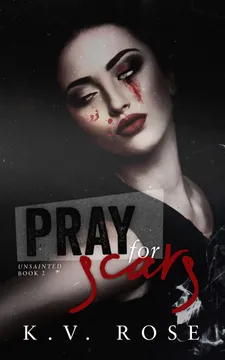


Plot Summary
Alexandria's Unsaint Lesson
Sid Rain, a young woman hiding in Alexandria after a violent Halloween, enrolls in a local history course hoping to understand the town's powerful families. Instead, she finds Ria Cuevas teaching. Ria's lesson describes the Malikovs, their criminal roots, and the Unsaints, the sons of Alexandria's elite. It also mentions Sid's missing brother Jeremiah and the hotel that burned under his name.
After class, Ria explains that the women from the previous year's Unsaint gathering were forced to sign a confidentiality agreement connected to Sid herself. She warns Sid that her brother's actions have made her a target. The warning leaves Sid with more questions about her identity and the men who seem to know her past.
The lecture makes public history function as a map of private danger. Alexandria's respectable institutions, including its university and donated buildings, carry the names of families whose power also reaches into violence and secrecy. Sid enters looking for facts, but Ria's account shows how little protection facts offer when powerful people can suppress them. Ria's warning creates a second pressure: Sid's past has affected other women, even if Sid herself does not yet understand how. The class is therefore not simply exposition. It turns Sid's search for knowledge into an immediate threat and establishes the central conflict between what can be documented and what the town has worked to erase.
A Brother at the Door
After Ria refuses to explain more, Sid returns to her hotel and drinks heavily. Jeremiah, the older brother she has been avoiding, arrives instead of the client she expected. He grabs her, insults her work, and turns their reunion into a sexual threat. Sid fights back with her knee and elbow, then runs down the stairwell.
When Jeremiah catches her, she tells him that another man abused her soon after she left him as a child. She draws a knife, makes clear that his behavior does not make him uniquely entitled to her, and leaves him behind. Barefoot and without money or a phone, Sid runs through the woods behind the hotel. There, Lucifer Malikov and his friend Mayhem find her before she can escape.
Sid's escape is less a clean victory than a refusal to let Jeremiah define what happened to her. Her disclosure exposes a history that began before their reunion, undermining his claim that he alone shaped her pain. The knife gives her a way to make that refusal physical, but her flight leaves her exposed and depleted. That vulnerability is what brings Lucifer into the scene, where danger and rescue become difficult to separate. Sid's survival strategies are effective in the moment, yet they repeatedly carry her from one form of control into another. The chapter's emotional movement, from defiance to exhaustion, explains why being found does not feel like being saved.
The Forest Finds Her
Lucifer removes Sid's knife and tells her he knows her secrets, while Mayhem watches without offering help. He takes her to a drag strip where the other Unsaints, Atlas, Ezra, and Cain are gathered, then brings her to his house. Sid wakes in Lucifer's bedroom to learn that she is expected to face a punishment that night.
He alternates threats with a disturbing tenderness, asking what Jeremiah did to her while refusing to explain his own intentions. Sid tries to read whether Lucifer is protecting her or preparing her for death. His attention only deepens her confusion: he seems to desire her, but also speaks as though her life is already promised to someone else.
Lucifer's contradictory behavior turns captivity into an emotional trap. Sid is not merely afraid of what he might do; she is unsettled by his capacity to be gentle at the same time. That mixture makes it harder for her to rely on the clear rules she uses elsewhere: identify the threat, resist it, escape. Lucifer's questions about Jeremiah suggest concern, but his refusal to explain gives concern the shape of surveillance. The Unsaints' presence places Sid inside a masculine hierarchy where violence is routine and allegiance is inherited. Her uncertainty becomes the section's real pressure point: she cannot tell whether Lucifer's desire offers another kind of danger or an opening to resist the people who want her dead.
The Father's Deadline
At Sanctum, the private cathedral used by the Society of 6, Lucifer's father Lazar presses him to find Sid and Jeremiah before the annual Sacrificium. Lazar says the two have endangered the Society's secrecy and gives Lucifer until the ceremony to bring them in, dead or alive. He also tells Lucifer that Jeremiah is not Sid's brother, a fact Lucifer keeps from her.
Though Lucifer has spent weeks searching, he resists the task because his feelings for Sid have grown beyond the role his father assigned him. He visits Mayhem's house, where Sid is chained to a guest bed, and prepares to take her to Sanctum. The deadline makes clear that Lucifer's private conflict cannot keep her outside his family's reach for long.
Lazar's order makes family loyalty an instrument of state power. He does not need to persuade Lucifer that the Society is right; he uses a deadline and the threat of consequences to make refusal costly. Lucifer's resistance remains compromised because he conceals crucial information from Sid while acting in her name. That combination of protectiveness and deception is central to their bond: he wants to save her, but still assumes the right to decide what she can know. Sanctum embodies the Society's self-image as sacred, while Lazar's command exposes the brutality underneath it. The scene frames the coming conflict not as a simple choice between good and evil, but as a struggle over who gets to control the truth and the person at its center.
The Dark Angel's Memory
At Sanctum, the Unsaints place Sid in a dark chamber and use a drug during a sexualized ritual meant to force her memories forward. Lucifer stops the others when Sid panics, then stays with her as she sees fragments of childhood: a social worker handing her to Reverend Wilson, Wilson abusing her, and eight-year-old Sid killing him with a kitchen knife.
She remembers a blue-eyed man ordering the social worker to deal with her, and a younger boy watching from nearby. Afterward, Lucifer asks her what she saw, but she escapes while he takes her to the restroom. Sid finds an office phone, calls Nicolas, and runs through a back door toward the church gate. Lucifer catches her as she climbs it, leaving her once again in his custody.
The drugged memory does not offer Sid a complete explanation; it delivers pieces of experience she has survived by separating from herself. The child who kills Reverend Wilson is both victim and agent, an unsettling combination that complicates any easy distinction between innocence and guilt. Lucifer's interruption matters, but it does not undo the coercive ritual that brought her to the memory. Sid's escape shows that disclosure has not made her trust him. Her body reacts to the past, while her actions still aim at immediate freedom. The scene thus treats memory not as a puzzle that can be solved once, but as something that returns under pressure and changes what survival requires.
Liber's Jealous Pool
Lucifer takes Sid to Liber, the Unsaints' private party house, where she meets Natalie and watches the group's easy intimacy. When Lucifer arrives with Ophelia, a longtime friend, Sid borrows a swimsuit and dives into the pool with a stranger to provoke him. Lucifer pulls her from the water and demands to know why she is baiting him, but neither will admit how much the other's attention matters.
Back at his house, Sid slips outside while Lucifer sleeps and runs into the woods. She reaches Nicolas's apartment, where she asks whether she is connected to the Society of 6. He confirms that she is, but cannot explain why they want her. Jeremiah arrives soon after, and Sid realizes Nicolas has brought her back into her brother's orbit.
The pool scene turns jealousy into a contest over who can appear least affected. Sid performs desire for an audience because direct vulnerability feels more dangerous than provocation; Lucifer answers by asserting control rather than admitting fear. Their attraction does not soften the power struggle, it intensifies it. Sid's escape afterward is therefore both a practical attempt to leave and a test of whether she can remain separate from him. At Nicolas's, the confirmation that she is connected to the Society gives her a new reason to investigate, but no usable answer. The emotional sequence moves from spectacle to isolation: Sid can command a room's attention and still lack the knowledge needed to understand why her life is in danger.
Ria's Missing Files
Nicolas admits that he has spoken with Jeremiah, who appears at the apartment and shows Sid the cuts on his wrists. He asks her to accompany him, then abducts Ria and Natalie at gunpoint while Sid holds the weapon. On a dark road, Jeremiah forces Ria to explain what she found in Alexandria University's records.
Ria describes evidence suggesting Lazar Malikov ran a prostitution ring supplied with children, but the files vanished before she could investigate further. She also tells Sid that Lucifer knew the Society wanted her. Sid turns the gun on Jeremiah, orders him out, and drives away with Ria and Natalie. Rather than flee Alexandria, she takes them toward Lucifer's house, determined to confront him about the betrayal.
Ria's research gives the private violence around Sid a political and institutional shape. The alleged trafficking ring is not an isolated crime but part of the same network that controls records, families, and public reputation. Yet Ria's account remains incomplete, which preserves uncertainty even as it changes Sid's understanding of Lucifer. Jeremiah's use of a gun forces Sid into complicity with his coercion, a role she resists by taking the weapon and choosing her own destination. Her decision to confront Lucifer rather than disappear is a shift from reactive flight to active investigation. It is also emotionally risky: she returns to the person she suspects most because he is the one most likely to know what has been done to her.
A Return to Lucifer
Sid reaches Lucifer's house during a party and finds Ophelia with him. Mayhem intercepts Sid before she can leave and brings Lucifer to her. She accuses him of intending to hand her over to Lazar. Lucifer denies sleeping with Ophelia and says he wanted to protect Sid, but he still cannot give her the full truth.
Their argument becomes an intimate encounter at Mayhem's house, after which Sid drives back to Nicolas's apartment. Jeremiah is waiting there. He resents that she has been with Lucifer, but asks her to come with him, promising to show her what he knows. Sid agrees, still unsure whether he is offering honesty or another form of control.
The encounter does not resolve the betrayal; it reveals how attraction can temporarily outrun trust without repairing it. Sid's return to Lucifer is an attempt to make him account for his actions, but physical intimacy fills the space where a credible explanation should be. Lucifer's insistence that he meant to protect her is plausible and insufficient at once. When Sid goes back to Jeremiah, she is not choosing safety so much as choosing another source of information. The pattern reflects a life in which intimacy and threat have become entangled, making each relationship feel like both shelter and leverage. Her agreement to go with Jeremiah leaves the emotional question unsettled and moves the story toward a more explicit revelation.
Not a Sister's Kiss
At a nightclub, Jeremiah tells Sid that they spent only a few early years together before being taken from their mother and sent to different families. He says they are not siblings, and confesses that he let her believe otherwise while trying to protect her. Sid is shaken, but she kisses him, seeking comfort in the person she has treated as family.
Lucifer enters the private room, finds them together, and points a gun at Jeremiah. He forces Sid to kneel, then uses a drug to incapacitate Jeremiah. Lucifer tells Sid that the Society wants either her death or a child by him, and she realizes he may still be pursuing his father's plan even as he claims to care for her. He takes them toward the coming sacrifice.
Jeremiah's revelation removes a boundary Sid has organized her life around, but it does not instantly make her free to choose without confusion. Their shared childhood remains real even if the family label was false, and that history has shaped both attachment and harm. Sid's kiss is less a romantic solution than an attempt to find reassurance inside a destabilized relationship. Lucifer's arrival makes the triangle's power imbalance unmistakable: he can use a weapon, a drug, and knowledge Sid lacks to dictate what happens next. His claim that the Society wants a child or a corpse exposes the stakes, while his continued secrecy prevents care from becoming trustworthy. The scene pushes desire into the open without making it a substitute for consent or truth.
The Altar's False Death
The Society locks Sid and Jeremiah in Sanctum's basement, where guards ration them bread and wine. Lazar later brings Sid to the altar, where Jeremiah lies motionless beside a pool of blood. Lazar says Sid will be released with him if she submits to the ceremony, then forces her to the floor while the Society gathers.
At the appointed hour, Lucifer arrives with the other Unsaints and attacks his father instead of killing Sid. Lazar's words expose the central family secret: Sid is the daughter of Maddox Astor, making her Maverick's half-sister, while Jeremiah is Lazar's son and Lucifer's brother. Jeremiah's apparent corpse is a drugged deception. Brooklin appears as smoke fills the church, and the captives escape in the confusion.
The ceremony stages the Society's violence as holy procedure, using ritual language and an altar to make coercion look ordained. Lazar's promise of release is another control tactic: he offers a narrow choice while keeping Sid bound and the outcome in his hands. The family revelations dismantle the identities that have organized the story. Sid is not the Rain sister she believed herself to be, and the two men fighting over her are brothers through Lazar. Jeremiah's false death shows how performance has become a survival tool within this world. Brooklin's arrival interrupts the ritual, but the smoke and escape do not settle the violence. They move the characters from an institution's control into a more personal and dangerous reckoning.
The Warehouse Burns Open
At the warehouse, Jeremiah explains that Lazar sent him and Sid into separate foster placements as part of a scheme tied to the Society's child-trafficking ring. Sid's resistance made her dangerous to Lazar, and Jeremiah says he once drugged the Unsaints to deliver her to him, then chose to protect her instead. Now he tries to mark Sid with the Society's binding scar, claiming it will keep others away.
Lucifer arrives, appears to leave, then sets the warehouse on fire and returns as the flames spread. He attacks Jeremiah and tells Sid that the hanging men are the abusers he found in Lazar's records. Sid begs him to save Jeremiah. Lucifer leaves the choice to Maverick, who runs into the burning building and carries his half-brother out.
The warehouse turns the past into physical evidence: the men Lucifer has killed are not abstract names in a file but bodies suspended above Sid. His vengeance answers the scale of her abuse, yet it also forces her to witness another brutal act without having chosen it. Jeremiah's attempt to bind her repeats the possessive logic he claims to be resisting, making his protection inseparable from ownership. Lucifer's apparent departure briefly abandons Sid to that threat, then his return makes clear that he intends to control the outcome by force. Maverick's decision to enter the fire for Jeremiah complicates the conflict further: family loyalty can be an act of rescue, even after years of violence have made the word family unreliable.
Blood Makes a Bond
After Maverick carries Jeremiah from the warehouse, Lucifer marks Sid's palm with the Society's Coagula scar and presses their bloody hands together. The mark binds them in a union the Society must recognize, protecting Sid from being taken for Sacrificium.
Lucifer takes her to his home, where she wakes angry at him for leaving Jeremiah in danger. She demands to know whether her brother is alive, and Lucifer confirms that Maverick saved him.
In the weeks that follow, the new Dominus, Ezra's father, agrees to honor the binding and rebuild the Society's order without Lazar. Sid and Lucifer settle into the same home, but their relationship remains shaped by mistrust, grief, and the knowledge that their fathers made their lives into instruments.
Coagula turns the Society's own binding custom into a means of protection, but the protection comes with a cost: Sid's future is tied to Lucifer through blood and institutional recognition. The act therefore resists one form of ownership by adopting another, a contradiction the novel does not pretend to resolve cleanly. Sid's insistence that Jeremiah's survival matters also prevents the romantic pairing from erasing her other attachments. Lucifer's power has shifted after Lazar's fall, yet power itself has not disappeared; the new leadership must decide whether the old structures can be remade. Their shared home offers a pause rather than a cure. Safety is newly possible, but trust still has to be built through choices rather than declarations.
A Future with Teeth
Two weeks later, Sid and Lucifer are living as newlyweds, though neither can make their past disappear. On the porch, Lucifer asks Sid to describe the abuse she suffered as a child. She begins, then recoils when his questions press too close; he holds her and acknowledges that they were both damaged by their fathers.
Sid agrees to keep trying to speak about what happened, while Lucifer promises to stay and listen. Their domestic routines, including running together and sharing a home, give them room to negotiate limits as well as desire.
Sid then seeks Maverick's help to find Pammie, Lucifer's stepmother, whose abuse of him remains unresolved. Maverick agrees to help her pursue revenge, leaving the couple's future bound not only to love but to the violence they have yet to confront.
The ending offers neither a clean recovery nor a stable moral settlement. Sid's first attempt to narrate her childhood ends in retreat, but Lucifer's response gives her a different experience from the secrecy and coercion that have structured her past: he does not demand a complete confession before offering care. Their routines make intimacy concrete, while the limits they negotiate show that love cannot simply erase their capacity for harm. Sid's decision to enlist Maverick against Pammie extends the story beyond the couple and into the unfinished consequences of abuse. Revenge may feel like agency, especially after years of being treated as an object, but it also risks reproducing the violence that shaped them. The closing choice remains active and morally unsettled.
Analysis
Pray for Scars builds its dark romance around a question more difficult than whether Sid and Lucifer desire each other: can care be distinguished from possession when both characters have learned intimacy through violence? Lucifer's acts of protection are real, but he repeatedly lies, restrains Sid, and decides what she is allowed to know. Sid's attraction does not cancel her fear, and her resistance does not make her untouched by the relationship. The novel keeps these contradictions visible rather than treating love as a moral absolution.
The family structure broadens that problem. Lazar and Maddox wield wealth and ritual to turn children into heirs, instruments, or liabilities. Sid's childhood abuse is not presented as an isolated secret but as part of a network that converts social authority into private access. Ria's missing records and the Society's ceremonies show two ways power hides itself: by erasing evidence and by giving violence the appearance of tradition. The revelation of Sid's lineage then exposes family identity as something imposed and managed, not simply inherited.
Sid's fragmented memories complicate the familiar victim-survivor arc. She is both someone harmed by adults and a child who fought back lethally. Her struggle is not to become innocent again, but to understand what happened without letting others use her past as a claim on her body. Yet the ending leaves a real ethical tension: the blood bond protects her by adopting the same institution's language of ownership, while revenge against Pammie promises agency through further violence. The book offers attachment and chosen honesty as possible counterweights to inherited cruelty, but not as a cure. Its final vision of love is intimate, volatile, and still unfinished.
Review Summary
Pray for Scars received mixed reviews, with many praising its dark, twisted plot and complex characters. Readers found the book intense, emotional, and unpredictable. Some appreciated the author's writing style and character development, particularly for Sid and Lucifer. However, others felt the plot was confusing, repetitive, or lacked depth. Trigger warnings were emphasized due to graphic content. While some readers were captivated by the series, others found it disappointing or too extreme. Overall, the book elicited strong reactions, both positive and negative.
People Also Read






Characters
Sid Rain
The runaway historianSid is a young woman who has survived a succession of dangerous homes by learning to read threats quickly and act before anyone can stop her. She carries deep distrust, a volatile sense of humor, and a complicated relationship with pain and sexual attention. Her search for information about Alexandria begins as a practical effort to stay alive, but it becomes a search for the story others have hidden from her. Sid's fierce independence is both a source of strength and a way to avoid relying on people who might betray her. She is drawn to people who meet her intensity, even when that attraction makes her vulnerable. Her central struggle is to claim her own choices without pretending that survival has left her untouched.
Lucifer Malikov
The possessive heirLucifer is the volatile son of Lazar Malikov and a leader among the Unsaints, raised to serve the Society of 6. He hides fear and attachment beneath cruelty, sexual bravado, and a practiced command of other people. His attraction to Sid unsettles the role his father expects him to play, but his instinct to protect her often arrives entangled with secrecy and control. He is both capable of tenderness and fluent in violence, a contradiction that makes him compelling and dangerous. Lucifer's longing is not automatically generous: he wants Sid close, yet must learn that wanting to protect someone does not grant him authority over her. His history has taught him to treat vulnerability as a liability.
Jeremiah Rain
Sid's dangerous protectorJeremiah is the older boy Sid believes to be her brother, a calculating survivor whose protectiveness can become frighteningly possessive. He has endured childhood abuse and carries his damage into the adult life he builds around secrecy, money, and control. His bond with Sid is intense because it began when they were both young and vulnerable, but shared history does not make his treatment of her safe. Jeremiah often presents himself as the person who can keep Sid alive, even as his methods make her fear him. He is capable of tenderness, self-sacrifice, and violence, sometimes in the same breath. His need to remain indispensable to Sid shapes his most dangerous decisions.
Maverick Astor
Lucifer's loyal brotherMaverick, also called Mayhem, is one of Lucifer's closest friends and fellow Unsaints. He is charming, irreverent, and often high, but the lightness is a mask over loyalties and wounds he rarely discusses. His attraction to Ria and his place within the Astor family complicate his efforts to remain detached from the danger surrounding Sid. Maverick can be cruel when he feels threatened, yet he also recognizes when someone is being pushed beyond their limits. His friendships with the Unsaints are built on a shared childhood shaped by their parents' expectations. Beneath his swagger is a man who wants connection but has learned to treat it as something that can be used against him.
Lazar Malikov
The Society's patriarchLazar is Lucifer's father and a powerful figure in Alexandria's Society of 6. He presents himself as composed, wealthy, and respected, while using family loyalty and tradition to direct the people around him. His authority rests on secrecy as much as money: he expects others to carry out orders without asking what they mean. Lazar treats sons as heirs and tools, and women as assets within the Society's private arrangements. His polished manner makes his threats more disturbing, because he can speak calmly while demanding acts of extreme violence. He embodies a system that turns private abuse into organized power and teaches its children to confuse obedience with duty.
Ria Cuevas
The stubborn researcherRia is a history student with an interest in Alexandria's powerful families and the documents they would rather keep hidden. Her curiosity leads her toward dangerous records, but she is not reckless about the risks; she understands that powerful people can threaten both her and those close to her. She cares about fairness and knowledge, even when fear makes her hesitate. Her connection with Maverick draws her deeper into the Unsaints' orbit, while her friendship with Sid remains strained by what the group has done. Ria's research supplies crucial questions, though she does not possess all the answers.
Nicolas
Jeremiah's trusted fixerNicolas is Jeremiah's longtime associate and a practical operator who provides Sid with a place to land when she is running out of options. He is calm under pressure and accustomed to keeping secrets, qualities that make him useful and difficult to trust. Nicolas cares for Sid, but his loyalties remain divided by his history with Jeremiah. He often knows more than he says, and Sid has to weigh his help against the possibility that he is steering her back toward danger.
Brooklin Astor
The absent Astor sisterBrooklin is Maverick's sister, a stylish and outspoken woman who refuses to let the men around her dictate every choice. She encourages Sid to leave the warehouse and experience ordinary pleasures, even when those pleasures carry risk. Her relationship with Jeremiah is intense and complicated, and she has her own history with the power of the 6. Brooklin's boldness conceals the knowledge of how quickly family loyalty can become a weapon.
Maddox Astor
The guarded family patriarchMaddox is Maverick's father and a member of the Society of 6. He speaks with the authority of someone accustomed to being obeyed and expects family matters to remain under his control. His connection to Lazar and the other Society families places the Astors inside Alexandria's network of influence. Maddox's guarded manner makes it difficult to know where paternal concern ends and institutional loyalty begins.
Ezra
The watchful UnsaintEzra is one of Lucifer's fellow Unsaints, known for his deep voice, drinking, and willingness to confront people directly. He watches the tensions among the group with more seriousness than his easygoing manner suggests. His father is part of the 6, which gives Ezra a stake in the group's future. He is loyal to his friends, but his bluntness can turn a private conflict into a public one.
Atlas
The smiling confidantAtlas is a relaxed, sociable Unsaint who often uses humor and a steady smile to keep his own pain out of view. He makes music and moves easily among the group's parties, but he understands the costs of growing up under the 6. His relationship with Natalie gives him a glimpse of a connection outside the boys' inherited duties. He is often the one who warns Lucifer when desire is blinding him to danger.
Cain
The silent enforcerCain is the largest and most physically intimidating of the Unsaints, a fighter who says little and keeps his emotions difficult to read. His apparent indifference is a form of self-control, not an absence of feeling. He understands the violence built into the Society's traditions and tends to ask practical questions when others are caught in emotion. Cain's blunt presence helps expose what the group would rather avoid discussing.
Natalie
The warm partygoerNatalie is a friendly young woman who moves comfortably among the Unsaints and their guests. She offers Sid uncomplicated kindness at Liber, including a swimsuit and a drink, and her openness contrasts with the group's secrets. Her relationship with Atlas brings her close to a world whose dangers she does not fully control. Natalie is affectionate and trusting, but those qualities leave her vulnerable when the Unsaints' conflicts spill into ordinary life.
Ophelia
Lucifer's longtime friendOphelia grew up near Lucifer and remains part of his social circle. Her easy familiarity with him unsettles Sid, while Ophelia herself appears accustomed to the casual intimacy and blurred boundaries of the Unsaints' world.
Pammie
Lucifer's abusive stepmotherPammie is Lucifer's stepmother, whose abuse has left him carrying memories he rarely discusses. Her actions are part of the private violence hidden beneath the Malikov family's wealth and public standing.
Elijah Carter
Ezra's influential fatherElijah is Ezra's father and a member of the 6. He becomes an important political figure within the Society, representing the possibility of a new leadership without changing the institution's history overnight.
Reverend Wilson
Sid's first foster abuserReverend Wilson is one of the adults assigned to care for Sid as a child. His respected religious position contrasts sharply with the abuse he commits behind closed doors.
Plot Devices
The Society of 6
Power behind the altarThe 6 is a secret society formed by Alexandria's oldest and wealthiest families. Its members use respectable businesses, political influence, and private rituals to preserve their power. The Unsaints, including Lucifer and his friends, are the sons expected to carry out the older generation's demands. This device connects the local history lesson, the missing records, the threatened women, and the annual Sacrificium. The Society makes family loyalty a mechanism of control: its children inherit not only money and status, but obligations and violence. Its rituals give that violence a ceremonial shape, disguising coercion as tradition.
Ria's Historical Files
Evidence the town erasedRia searches historical records at Alexandria University for information about the 6 and discovers references suggesting Lazar's criminal network exploited children. The documents are incomplete, redacted, and ultimately removed, so they point toward a crime without offering a full account. Their disappearance signals the Society's ability to control what can be known and makes Ria's investigation dangerous. The files also connect Sid's personal danger to a wider institutional history. As the story progresses, they prompt Sid to ask whether her past was accidental or arranged, while leaving her dependent on testimony from people who may be lying.
The Deprivation Chamber
Memory forced into viewAt Sanctum, the Unsaints use darkness, drugs, chanting, and touch in a ritual designed to make Sid's buried memories surface. The experience does not produce a neat or reliable explanation; it brings back vivid fragments of her childhood, including abuse, violence, and encounters with people connected to the 6. Lucifer interrupts the ritual when Sid panics, but the experience still leaves her shaken and uncertain about what she remembers. The chamber externalizes the story's central conflict over memory: Sid has survived by suppressing the past, while the men around her want access to it for their own reasons.
Coagula
A binding scarCoagula is the 6's blood-marking custom for binding two people in a recognized union. Jeremiah tries to use the mark to claim Sid; later Lucifer uses it to prevent the Society from taking her for Sacrificium. The ritual makes protection inseparable from possession, since the mark gives Sid safety within the Society while binding her to Lucifer. It also reworks one of the 6's traditions against Lazar's immediate plan. The scar becomes a physical reminder that love in this world cannot be separated cleanly from power, obligation, and the threat of violence.
The False Siblinghood
A family story unravelsSid's belief that Jeremiah is her brother shapes her understanding of their childhood bond and makes his sexual possessiveness feel especially violating. Ria's research first raises doubts; Jeremiah later tells Sid they were separated as children and are not siblings. Further revelations at Sanctum disclose the larger scheme behind their placements and connections to the Society's families. This device does more than create a twist: it destabilizes the names and relationships that have governed the characters' loyalties. It also complicates Sid's choices without erasing the genuine history and harm shared between her and Jeremiah.

Download PDF
Download EPUB
.epub digital book format is ideal for reading ebooks on phones, tablets, and e-readers.








