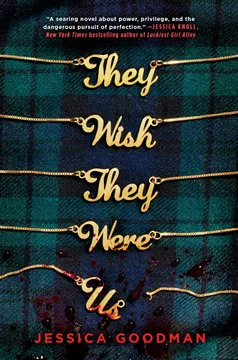


Plot Summary
Prologue
Jill reflects on the official account of Shaila Arnold’s death: her boyfriend, Graham Calloway, was convicted after Shaila suffered a fatal head injury. But the record does not explain the anger Jill now carries, or the fury she imagines Shaila felt.
In Jill’s memory, Shaila was brilliant, funny, and hungry for life, not a saint made simpler by tragedy. The prologue frames the story as both a murder mystery and an inquiry into what grief, guilt, and buried secrets do to the people left behind.
The prologue puts two explanations of death beside each other. The official one is physical and settled, while Jill’s account is emotional, unresolved, and dangerously personal. Her insistence that anger shaped Shaila’s final moments also exposes the narrator’s own state: she is not a neutral investigator but a grieving survivor who recognizes something of herself in the dead girl. By questioning the familiar idea that the young dead must have been innocent, the opening resists turning Shaila into a symbol. Her contradictions matter, and the people who loved her must reckon with the person she actually was.
A Memorial and a Message
Three years after Shaila’s death, Jill Newman returns to Gold Coast Prep for senior year and sits through the school’s annual memorial beside her five fellow Players. The ceremony praises Shaila while leaving Graham, the boyfriend convicted of killing her, unmentioned. By lunch, Jill is back at the exclusive table she once longed to claim, with her boyfriend Henry and her friends gathered around her.
Then a message from an unknown number upends the day: Rachel Calloway, Graham’s sister, says her brother did not kill Shaila. She asks Jill to meet. The accusation lands in the middle of a life Jill has carefully rebuilt, where school status and friendship depend on treating the old case as closed.
The memorial shows how Gold Coast converts private grief into a polished public ritual. The school remembers Shaila in language that protects its image, while excluding the uncomfortable fact that a boy from the same community was convicted of her murder. Jill benefits from that arrangement: her place among the Players gives her safety and status, but also binds her to the silence surrounding the death. Rachel’s message interrupts not merely a settled investigation but the social agreement that made the verdict convenient. Jill’s return to school therefore begins with a divided self, the girl who wants to belong and the survivor who cannot stop wondering what belonging cost.
The Cost of Belonging
Jill’s place at Gold Coast has never felt secure. Her parents stretch their resources to keep her and her dyslexic younger brother, Jared, at the school, while Jill must maintain high grades to protect her STEM scholarship.
The Players offer a different kind of insurance: parties, influence, and a secret archive of exams and college advice. Jill first met Adam Miller when he tutored Jared; his attention and praise became a private attachment she could not confess. Shaila later joined their visits, and the two girls were eventually tapped into the Players together.
Now, after a summer boat date with Henry Barnes, Jill is officially his girlfriend, though her feelings for Adam remain unresolved. The clique gives her belonging, but its rules teach her to trade judgment for access.
Jill’s ambition is not simple vanity. She is trying to protect a family investment that her wealthy classmates can take for granted, so the Players’ hidden advantages feel less like indulgence than survival equipment. That pressure helps explain why she rationalizes cheating and humiliating tasks even when they violate her instincts. Adam’s attention adds a more intimate form of dependence: he makes Jill feel seen, and she confuses being chosen by him with becoming someone. Her relationship with Henry offers a safer, socially legible future, but it does not dissolve that longing. The section establishes how material insecurity and romantic idealization make the same bargain attractive: let someone else define the terms of belonging.
The Verdict Frays
At a party, Quentin shows Jill a newspaper report that Graham has withdrawn his confession and is seeking a new trial. Her friends dismiss the claim, warning that revisiting the case could damage their futures.
Jill is unsettled enough to answer Rachel’s messages and visit her cramped New York apartment. Rachel explains that the police never properly tested the evidence and shows Jill results from a blood test: the blood on Graham’s shirt was his own, not Shaila’s.
Rachel has used her newly accessible trust to pay for further legal work, and she believes the evidence can free her brother. Jill leaves without promising help, still suspicious that Rachel is protecting family rather than seeking truth. Yet the case can no longer be dismissed as a rumor.
The blood test does not prove Graham innocent, but it breaks the apparent certainty of the original case. Its force lies in exposing how little certainty the conviction rested on: the town accepted a confession and a bloody shirt without asking whose blood it contained. Rachel’s wealth gives her the power to reopen a question that poorer families might not be able to challenge, while the original investigation’s speed protected the powerful from scrutiny. Jill’s hesitation is psychologically credible. To believe Rachel would mean revising not only a public verdict but the memory of a night she survived. Evidence begins the investigation; emotional allegiance determines whether Jill can bear to follow it.
A New Class, Old Cruelty
Jill and the senior Players select Jared, Adam’s younger brother Bryce, and several other freshmen for the clique. Hoping to make the year safer, Jill tells Jared that the Players’ hidden files can help him academically, including with biology, and encourages him to join.
Nikki, newly installed as the first female Toastmaster, promises that the group’s challenges will change. Instead, at the Show, she urges the freshmen to act out sexual scenes while the seniors jeer.
Jill tries to stop her, especially when Jared is involved, but Nikki insists that surviving the same humiliation made their own class stronger. Jill recognizes that the seniors are reproducing the harm they endured, yet she stays with them, still hoping their authority can be used differently.
Jill’s attempt to bring Jared into the Players is loving and compromised at once. She wants to give him academic help and social protection, but she also exposes him to the very system she fears will deform him. Nikki’s transformation into Toastmaster is similarly double-edged: a girl finally holds formal power, but she uses inherited rituals rather than changing their terms. The Show makes the group’s moral logic visible. Because humiliation once produced solidarity among the seniors, they mistake endurance for consent and repetition for tradition. Jill sees the distinction, but recognition alone does not yet free her from the status and friendships that keep the ritual alive.
Jill Walks Away
During the Players’ all-night Road Rally, Jill sees photographs of freshman Sierra looking frightened while an older student kisses her for the group’s amusement. Jared is laughing in the background.
When Jill confronts Marla, Nikki calls the episode harmless and Jared confirms that he was having fun. Jill finally names the clique’s rules as a lie and quits in front of everyone. The next morning she tells Henry she will not return, and ends their relationship when he assumes she will change her mind.
Nikki then changes Jill’s password to the Players’ files, cutting off the academic support Jill had relied on. Isolated from the group, Jill fails an English test and faces the consequences of having mistaken borrowed answers for earned knowledge.
The photographs make the Players’ abstract cruelty concrete: Sierra’s fear is visible, while Jared’s laughter shows how quickly the group can teach a newcomer to become an audience for someone else’s humiliation. Jill’s anger is partly protective, but it also carries recognition of her own earlier complicity. Leaving costs her more than a lunch seat. She loses Henry, the clique’s resources, and the reassuring idea that access has made her competent. Her failed exam turns an ethical break into a practical crisis. The section marks a genuine point of no return because Jill can no longer claim that she objects only when the rituals reach someone she loves.
Graham Tells His Story
Rachel drives Jill to the Danbury Juvenile Center, where Graham has been held since Shaila’s death. He describes a police interrogation conducted without his sister or a lawyer, after which he agreed with the account investigators supplied.
His wealthy parents chose a quiet deal over a public trial, and the police never tested the shirt that carried his blood. Graham says he loved Shaila, but also reveals that he found messages suggesting she was seeing someone else. He never confronted her before the night she died.
Jill cannot tell whether his account is honest, but his uncertainty and Rachel’s account of their family’s abandonment complicate the story of a confident killer. The visit gives Jill a reason to search for what Shaila concealed.
Graham’s account is persuasive partly because it is incomplete. He cannot remember the crucial hours, and his explanation of the confession describes vulnerability rather than a clean exoneration. That uncertainty keeps Jill from replacing one unquestioned story with another. The family’s money has protected its reputation while leaving Graham confined in a privileged institution, a version of justice that is cushioned but still coercive. His admission about Shaila’s affair also restores her agency in an unsettling way: she had private desires beyond the relationships her friends understood. Jill’s grief now has to accommodate not only the possibility of a wrongful conviction but the possibility that she never knew her closest friend as fully as she believed.
A Letter Behind the Glass
Rachel and Jill visit Kara Sullivan, Shaila’s childhood friend, who has been cut off from Gold Coast since the murder. Kara confirms that Shaila told her she was cheating on Graham, but withheld the man’s name. Near the end, Shaila said the lover had become possessive: he gave her expensive diamond earrings, and reacted angrily when she returned them.
Kara’s mother had taken Shaila’s letters away after the death, but Kara lets the two friends read the note Jill found hidden behind a photograph in Shaila’s bedroom. It describes an older, experienced man and a secret relationship. A detail about their first encounter in the staff parking lot behind the theater points toward someone who worked at Gold Coast.
The letter turns Shaila’s private voice into evidence, but it also resists making her an easy witness. She writes with excitement, guilt, and self-justification, revealing a relationship that Jill’s memory had no room for. Kara’s recollections add a pattern of possessiveness, yet the lover remains unnamed, so the evidence directs suspicion without settling it. The earrings matter because they are both an intimate gift and a material trace of a man’s attempt to make the affair permanent. For Jill, the discovery is a second bereavement: the lost friend is now also a person with secrets she chose to share elsewhere.
Beaumont Is Cleared
Jill and Rachel take the letter to Graham’s lawyers, who investigate Jill’s suspicion that English teacher Logan Beaumont was Shaila’s older lover. Police bring Beaumont in for questioning, but the Gazette soon reports that he was in Amagansett with his family during the relevant weekend.
Jill has mistaken a suggestive rumor and a staff parking lot for proof. At school, she tells Nikki the full story, including the letter and the prison visit. Nikki admits that Shaila once told her about the affair, though not the man’s identity, and the two friends reconcile.
Jill still cannot accept the conclusion that Graham must be guilty. She asks Quentin about the old teacher rumor, and he confirms that Gold Coast administrators heard it but chose not to investigate.
The false lead tests whether Jill is pursuing truth or merely a satisfying alternative to Graham’s conviction. Beaumont’s alibi dismantles the neatest suspect theory, while the school’s failure to investigate the earlier rumor reveals a deeper institutional pattern: Gold Coast prefers quiet over accountability. Nikki’s admission also changes the emotional map of Shaila’s friendships. She had trusted more than one person, and Jill was not the only one kept outside a secret. Their reconciliation is not proof that everything is repaired; it gives Jill a partner willing to face uncertainty. The mystery narrows less through a new culprit than through a clearer understanding of who benefits when questions are left unanswered.
The Headmaster’s Warning
After Jill sits the exam for a full scholarship to Brown’s Women in Science and Engineering program, Headmaster Weingarten summons her. He accuses her of harming Gold Coast by drawing attention to Beaumont and Shaila’s case, then threatens to tell Brown that Jill cheated through the Players’ files. He also points to Jared’s improved biology grade, making clear that he could expose the younger boy as well.
Jill leaves believing that she must abandon Rachel’s investigation to protect her family. At home, however, she finally tells her parents how much pressure she carries. They admit they pushed too hard and remind her that State’s honors program offers a full ride. Their support frees Jill to consider a future not dictated by prestige.
Weingarten’s threat reveals the school’s real hierarchy more clearly than its motto ever could. Academic integrity matters only when useful: the headmaster is willing to conceal a system of cheating until Jill threatens the institution’s reputation, then weaponizes that same system against her and Jared. Jill’s parents have contributed to her perfectionism, but their response breaks its emotional hold. By accepting that she may not win Brown funding, they separate love from achievement. The shift is not a simple rejection of ambition. Jill can still want a demanding scientific future; she no longer has to purchase it by protecting an institution that treats students as investments.
The Initiation Repeats
Jill tells Rachel she is leaving the investigation, but Rachel’s anger forces her to revisit the Players’ initiation that ended with Shaila dead. Jill remembers being locked in a dark crawlspace and made to drink, then waking disoriented after former Player Jake Horowitz had tried to assault her.
Adam intervened and secured the room, while Shaila was assigned to jump from Ocean Cliff, her known fear of heights. The girls received harsher, more dangerous tests than the boys.
Their class later repeated those same traditions with younger students, and Jill now sees how her own participation helped the system survive. She changes course: she will keep pursuing what happened to Shaila, while refusing to excuse the Players’ violence as a rite of passage.
The memory supplies the moral context missing from the murder investigation. Jill’s terror in the crawlspace and Jake’s assault show that the Players’ cruelty was not an accidental excess but a structure organized around unequal power. Adam’s past intervention complicates Jill’s feelings toward him, making him seem protective even as the mystery remains unresolved. Shaila’s assignment at Ocean Cliff similarly turns a known vulnerability into a tool of control. Most important, Jill recognizes that the system persisted because each class suffered and then reenacted what it had endured. Her decision to continue is therefore not only about identifying a killer. It is a refusal to let the group’s inherited violence remain unnamed.
The Diamonds in Adam’s Drawer
As graduation approaches, Rachel obtains photographs of Shaila’s remaining letters from Kara. Jill visits Adam, who is home from Brown and upset about criticism of his writing. In one letter, Shaila describes spending time alone with Adam and rehearsing Rent with him, clarifying a closeness Jill had never understood.
While he leaves the room, Jill finds a jewelry box in his nightstand containing the diamond studs Kara said Shaila had returned to her lover. The pieces join the letter, the affair, and the unexplained evidence into a new suspicion. Jill rushes to Rachel, who sees the implication: Adam may have been the older lover. Together they arrange to meet him at Nikki’s beach house, record what he says, and call the police.
The earrings turn a romantic suspicion into a testable connection, while the letter destabilizes Jill’s belief that her bond with Adam was unique. She has spent years treating his attention as recognition of her becoming; Shaila’s correspondence reveals that he cultivated intimacy elsewhere too. The discovery is emotionally brutal because it does not merely implicate a suspect. It revises Jill’s self-understanding and the history of her friendship. Rachel’s plan to record Adam is an effort to move beyond intuition, yet it also places Jill directly in danger. The investigation reaches its most personal point precisely when its evidence becomes strongest.
A Confession on the Beach
Jill meets Adam at the beach and pretends she knows only that he and Shaila had an affair. When she mentions the earrings, he grows angry and begins to explain. He says he chose Shaila’s Ocean Cliff initiation after she ended their relationship, intending to force a private reconciliation.
When she refused to jump and tried to leave, he grabbed her; she fell against driftwood, and he shoved her into rocks, fatally striking her head. He then found the drunken, bloodied Graham and directed him toward Shaila before alerting the police.
Rachel and Nikki are recording from nearby. Adam turns on them, kicking Rachel and striking Jill with a heavy object, but Nikki rushes in with a field hockey stick and knocks him unconscious. Police arrive and take him into custody.
Adam’s confession collapses the story’s romantic center. The boy Jill trusted and imagined a future with used intimacy as leverage, then used the initiation ritual to isolate Shaila after she rejected him. His account also explains why the official evidence pointed toward Graham: Adam deliberately redirected a confused, injured boy into the scene and contacted police himself. The violence that follows confirms that his need for control has not vanished with the confession. Nikki’s intervention makes the climax a collective act of protection, not Jill’s solitary triumph. Recording, testimony, and physical courage finally interrupt the secrecy that allowed Adam to shape the story.
The Players’ Fire Goes Out
Jill wakes in the hospital with Jared and her parents beside her; Rachel is injured but recovering, and Adam is jailed while awaiting trial. Graham is expected to leave the juvenile center and live with Rachel. At school, Jill returns to the Players’ table, where Nikki calls one last gathering. That night, the seniors burn the Players’ rulebook, and Nikki confirms that Frida has deleted the secret files.
Students from across Gold Coast join them by the shore. A Brown envelope arrives at Jill’s home, but she leaves it unopened and chooses the full scholarship at State instead. With her friends beside her under the stars, she accepts a future built on her own work, not on the clique’s borrowed advantages.
The ending resolves the opening’s central tension between belonging and survival. Jill does not recover Shaila or erase the damage, but she helps stop the machinery that trained students to confuse privilege with merit and coercion with loyalty. Burning the rulebook and deleting the files are concrete choices, though they cannot guarantee that every student will become kinder. Jill’s unopened Brown letter matters because she refuses to let a prestigious name decide what her life means. State is not a consolation prize in this emotional register; it is a future she can choose without Adam’s shadow or Gold Coast’s leverage. The stars return as an orienting image, not a promise that the darkness is gone.
Analysis
They Wish They Were Us builds its mystery inside an institution that has already taught its students how to misread power. Gold Coast Prep calls itself a family, but its actual protections flow through wealth, reputation, and the Players’ private network. The secret files convert inherited advantage into apparent achievement; the initiation rituals convert coercion into a story about resilience. Students are harmed, then recruited into reproducing the harm, which is why Jill’s eventual refusal has to involve more than exposing one killer.
The investigation is also an education in partial knowledge. Jill begins with memories that feel complete: Graham was convicted, Adam is trustworthy, and Shaila was the friend whose inner life she shared. Each new piece of evidence unsettles a different certainty. Graham’s confession may have been coerced; Shaila had an intimate life she concealed; Adam’s attentiveness may have served his own desire. The novel makes truth emotionally expensive because each revision threatens a relationship Jill has used to define herself.
Jill’s class position sharpens that conflict. She has genuine talent, but her scholarship and her family’s sacrifices make failure feel morally loaded. The Players’ resources offer relief from a competition designed to favor the already wealthy, yet taking their help makes it harder for Jill to tell earned ability from borrowed access. Her decision to pursue a future at State, rather than depend on a contested Brown scholarship, is not a rejection of ambition. It is a claim to choose without allowing prestige or fear to dictate her worth.
The final destruction of the Players’ rules cannot undo Shaila’s death or guarantee that the school will become just. It does, however, interrupt the mechanism by which each generation called cruelty tradition. Jill’s movement from looking to Adam for recognition toward trusting her own judgment is the novel’s deepest resolution. The stars remain above her, but she no longer needs someone else to tell her what they mean.
Review Summary
They Wish They Were Us received mixed reviews. Many praised its addictive storyline, compelling characters, and exploration of privilege in elite prep schools. Readers enjoyed the blend of murder mystery and high school drama. However, some found the plot predictable and the characters unlikable. Critics noted pacing issues and a lack of originality in the mystery elements. Despite these flaws, many readers found it an entertaining and fast-paced read, comparing it to popular series like Gossip Girl and Pretty Little Liars.
People Also Read





Characters
Jill Newman
Scholarship-seeking investigatorJill is an academically driven Gold Coast student whose STEM scholarship makes belonging feel financially precarious as well as socially earned. She relies on the Players’ status and hidden academic resources, yet her astronomy-minded habit of looking for patterns makes her attentive to what the school prefers to obscure. Her loyalties are divided among her dead best friend, her brother, her clique, and Adam, the older student whose attention helped shape her sense of self. Jill is observant but not detached: grief, insecurity, and romantic idealization can distort what she believes. Her central strength is a growing willingness to accept the cost of acting on what she sees, even when the truth threatens the future she once thought she needed.
Shaila Arnold
Brilliant absent best friendShaila is Jill’s closest childhood friend, a gifted student, performer, and magnetic presence whose confidence makes ordinary school life feel vivid. She is fiercely loyal and often generous, as when she protects friends from embarrassment, but she also guards parts of herself and makes choices that unsettle the people who assume they know her. Her ambition, appetite for experience, and desire to be wanted coexist with genuine affection for Graham, Jill, and her other friends. Shaila’s letters and memories reveal that friendship does not grant total knowledge of another person. She remains central not because everyone agrees on who she was, but because each survivor must revise their understanding of her.
Adam Miller
Brilliant older confidantAdam is a gifted playwright and former Gold Coast Player who attends Brown. He first enters Jill’s life as Jared’s tutor, then becomes her mentor, confidant, and enduring romantic ideal. His intelligence and easy warmth make him seem older and more self-possessed than the students around him, while his talent gives him an identity beyond the school’s social hierarchy. Jill values the way he notices her interests and encourages her ambitions, and she is reluctant to question the authority that comes with his attention. Adam’s relationships sit at the intersection of mentorship, desire, and power, making it difficult for Jill to separate feeling special from being treated fairly.
Rachel Calloway
Brother’s determined advocateRachel is Graham’s older sister, a former Gold Coast senior who built a life outside the school after the murder case shattered her family. She is polished, forceful, and unwilling to accept the convenient version of events that left her brother confined without a proper investigation. Her loyalty to Graham drives her to use her own resources, but grief and isolation also sharpen her anger. Rachel can be impatient with Jill’s doubts because she has spent years carrying the fight largely alone. Beneath her urgency is a capacity for connection: she recognizes Jill as someone who knew Shaila before the case turned everyone into opposing camps.
Nikki Wu
Ambitious Player leaderNikki is Jill’s closest surviving friend and a talented fashion designer with a sharp sense of style and social timing. She is the first girl to become Toastmaster, a role that gives her influence in a group long controlled by boys. Nikki craves recognition and fears being treated as secondary, especially in the shadow of Shaila and Jill’s childhood closeness. Her loyalty is intense, but grief can make her imitate the very hierarchy she resents. She is capable of admitting hurt and changing direction when friendship requires more than a confident public face. Her arc centers on what it means to hold power without reproducing the humiliations that once shaped her.
Graham Calloway
Imprisoned former boyfriendGraham is Shaila’s boyfriend and Rachel’s younger brother, a wealthy Gold Coast lifer accustomed to getting attention and space. As a child and teenager, he can be crude, competitive, and physically imposing, though his relationship with Shaila reveals a more affectionate side. The murder case fixes him in the town’s imagination as a single, terrible story, while his family’s money and social standing complicate how the justice system treats him. Graham’s account of events is shaped by memory gaps and years of confinement, so Jill must weigh his vulnerability without accepting his claims automatically. His character asks how much a person can be reduced to the worst thing others believe about him.
Henry Barnes
Jill’s dependable boyfriendHenry is a handsome, thoughtful senior, a lacrosse captain and aspiring journalist whose wealthy father expects him to choose business over reporting. He is gentle with Jill and attentive to her needs, yet often avoids confrontation when the Players mistreat younger students. His desire to please his family mirrors Jill’s pressure to justify her scholarship, even as their resources differ sharply. Henry offers affection and stability, but his reluctance to challenge the clique limits how much safety he can provide.
Jared Newman
Jill’s younger brotherJared is Jill’s younger brother, a dyslexic student who loves music and wants to be accepted by the older students he admires. His academic struggles make the Players’ files seem especially valuable, and Jill hopes she can use her senior status to protect him. He is not merely a child to be guarded: he wants independence, friendship, and the chance to make his own choices. His growing confidence can also draw him toward the group’s worst habits.
Quentin
Player historian and artistQuentin is a warm, red-haired artist who knows Gold Coast and Players history almost by heart. His closeness with Henry predates Jill’s arrival in their inner circle, and he often softens tense gatherings with humor and tenderness. He is also ambitious, carrying the pressure of a visual arts scholarship and a future in which money matters. Quentin’s pragmatism can make him reluctant to revisit painful events, but his loyalty to Jill and his ability to recognize her talent give her a rare source of honest support.
Marla
Steady field hockey starMarla is a disciplined varsity field hockey player with strong academic skills and a cool, self-contained manner. Her family has fewer resources than many Gold Coast families, and she feels the pressure of being their major investment. She often acts as the practical voice among the Players, but she is not outside the system’s harm simply because she sees its risks. Her athletic ambition and family loyalty shape the compromises she makes.
Kara Sullivan
Shaila’s guarded confidanteKara is Shaila’s childhood friend, raised in a wealthy Manhattan art world and accustomed to being read as polished and aloof. Her connection to Shaila predates Gold Coast’s social divisions, though adult loyalties and family rules keep her at a distance after the murder. Kara protects what Shaila told her in confidence, even when that restraint frustrates Rachel and Jill. Her grief is private and complicated by the knowledge that she holds fragments of a story others need.
Logan Beaumont
Popular English teacherBeaumont is a young Gold Coast English teacher who once attended the school himself. He cultivates an informal rapport with students, including Jill, Nikki, and Shaila, and is especially attentive to talented young writers. His easy manner makes him seem like an adult who understands the students’ world, while rumors around the school show how little the institution investigates potential misconduct. He represents the blurred boundaries that can arise when adults seek the approval of students.
Headmaster Weingarten
Guardian of Gold Coast’s imageWeingarten is the polished headmaster of Gold Coast Prep, a practiced speaker who presents the school as a protective family. He values institutional stability and the donors who sustain the school, and his concern for students is bounded by the reputation he must preserve. He knows how to sound compassionate without asking questions that might expose the school to scrutiny. His authority reveals how a culture of silence can be maintained through both warmth and threat.
Robert
Volatile senior PlayerRobert is a wealthy, swaggering Player who uses connections, money, and a sharp tongue to command attention. He is unpredictable at parties and often pushes the group toward risk or humiliation, treating consequences as entertainment. His social confidence masks a need to remain central and admired. Robert shows how privilege can turn recklessness into a game whose costs fall on other people.
Jill’s mother
Artist and hopeful parentJill’s mother is a ceramics artist and teacher who works hard to give her children educational opportunities she never had. She believes people are fundamentally good and responds to family stress with care, food, and practical effort. Her hope for Jill’s future can become pressure, though her love is not conditional on achievement.
Jill’s father
Accountant and quiet supportJill’s father is an accountant who shares his love of astronomy with Jill and encourages her to use the night sky as a source of order. He worries about the family’s finances and the cost of college, but he wants his children to have more choices than he did. He is often quiet where Jill needs reassurance, yet he is willing to admit when family expectations have become too heavy.
Diane
Diner owner and witnessDiane owns the local diner where generations of Gold Coast students gather. She remembers the Players’ habits, feeds Jill and her friends, and sees more of the town’s private life than its wealthy families realize. Her warmth makes the diner one of Jill’s few places that feels ordinary.
Jake Horowitz
Former Player enforcerJake is a former senior Player who helps run the initiation rituals when Jill and her friends are freshmen. He presents cruelty as tradition and uses his authority to test how far younger students can be pushed. His behavior shows the group’s gendered power structure at its most dangerous.
Frida
Rachel’s grounded partnerFrida is Rachel’s girlfriend, a coder who lives near her in New York. She exists outside Gold Coast’s old loyalties and offers Rachel a relationship rooted in her present life. Her technical skills later prove useful to the group’s effort to dismantle the Players’ private system.
Plot Devices
The Players’ Files
Privilege in an appThe Players’ encrypted archive contains old exams, study guides, standardized tests, college advice, and useful contacts. For Jill, who depends on a scholarship, it offers a practical advantage as well as a promise of membership in an elite circle. The files blur the line between support and cheating, letting students treat inherited answers as proof of their own merit. Access is controlled by the group, so its academic benefits also enforce obedience. The archive ultimately exposes the clique’s dependence on hidden privilege and gives the students something concrete to destroy.
Pops and initiation
Ritualized coercionThe Players’ challenges, called pops, begin as tests of loyalty and escalate into humiliation, danger, and unequal treatment of girls. Seniors insist that the tasks build trust, while the students who endure them learn to repeat them on the next class. Initiation concentrates the group’s rules into one night, assigning challenges based on personal fears and allowing senior leaders to control access, alcohol, and escape. The rituals provide both plot clues and a model of how institutional cruelty survives: each class experiences itself as a victim before becoming a custodian of the same practice.
The case evidence
A trail of contradictionsThe murder investigation advances through evidence that was overlooked or misread: the blood on Graham’s clothes, his unreliable confession, Shaila’s hidden letter, Kara’s memory of returned earrings, and the location named in Shaila’s account. Each clue revises the meaning of earlier events without immediately identifying a culprit. The sequence forces Jill to distinguish suggestive detail from proof, especially when the apparent lead against Beaumont fails. The earrings finally connect the private affair to a person Jill trusts, making physical evidence inseparable from emotional betrayal.
Letters and keepsakes
Shaila speaks after silenceShaila’s letters, photographs, and remembered objects preserve aspects of her life that the school’s memorial cannot hold. A note hidden behind a photograph in her bedroom gives Jill evidence of an affair, while Kara’s archive of correspondence offers context the surviving friends lacked. The diamond earrings function as a keepsake and a clue, linking Shaila’s private relationship to the present investigation. These objects do not make Shaila transparent; instead, they reveal how much the people closest to her never knew and make Jill confront the difference between loving someone and possessing their whole story.
Jill’s star maps
A private compassJill learned astronomy from her father and uses familiar constellations to steady herself when nightmares, fear, or social pressure overwhelm her. Stars mark moments of closeness with Adam, recall Shaila’s presence, and become a quiet measure of Jill’s changing relationship to darkness. They do not solve the murder or promise safety. Instead, looking upward gives Jill a pause in which she can observe rather than react. At the end, she shares the sky with her friends without needing one person to interpret it for her, turning a childhood coping practice into a symbol of self-trust.
Download PDF
Download EPUB
.epub digital book format is ideal for reading ebooks on phones, tablets, and e-readers.








