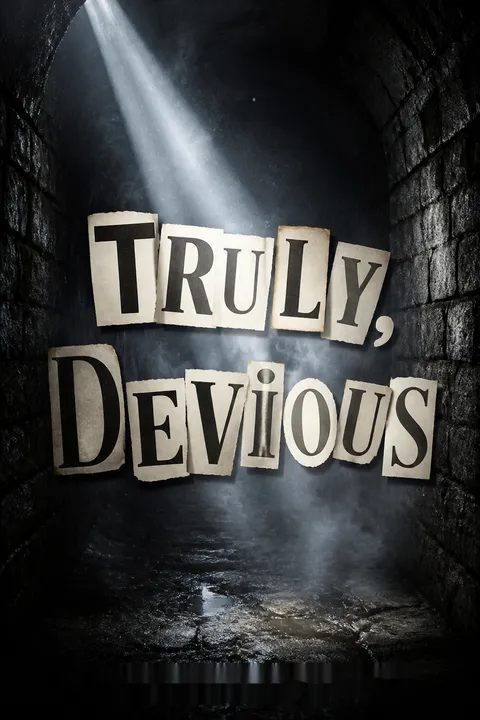


Plot Summary
Dottie’s Last Hiding Place
Fourteen-year-old Dolores Epstein, called Dottie, earns a place at Albert Ellingham’s experimental Vermont school, where her quick mind can roam freely. Exploring the grounds, she discovers a tunnel leading to a glass-domed room on an island in the lake, and makes it her private reading nook.
One foggy afternoon, she hides there with a Sherlock Holmes book when a stranger climbs in carrying rope, handcuffs, binoculars, and a flashlight. The stranger calls the equipment part of a game, but Dottie’s instincts warn her otherwise. She marks a line in her book, then tries to escape. She falls from the dome into the room below, where the stranger leaves her badly injured. Dottie dies before help can reach her.
Fog, Ransom, and Disappearances
That same evening in April 1936, Albert Ellingham returns to find a kidnapper on the telephone claiming to hold his wife, Iris, and their three-year-old daughter, Alice. Ordered not to contact police, Albert carries cash by rowboat to the island dome, where the masked caller knocks him unconscious and takes the money.
Family friend George Marsh, an FBI agent, arrives, but the kidnappers blame Albert for involving him and demand another payment. Marsh delivers the larger sum at Rock Point, where a child’s shoe and Iris’s handbag provide no proof that either captive is alive. The boat disappears with the ransom. Dottie is also reported missing. Later, investigators find Dottie dead and Iris’s body in the lake, but Alice is never found.
Stevie Takes the Mountain
Decades later, sixteen-year-old Stevie Bell leaves her Pittsburgh home for Ellingham Academy, where she hopes to investigate the unsolved kidnappings. Her parents, who work for Pennsylvania politician Edward King, are uneasy about her independence and fascination with murder, but Stevie insists on staying.
At Minerva House she meets inventive Janelle Franklin, blocked writer Nate Fisher, art-minded Ellie Walker, internet actor Hayes Major, and the elusive David Eastman. The campus feels made for Stevie: its hidden passages, strange statues, and drained lake preserve the old crime in plain sight.
During the student tour, she explains that the Ellingham estate and fortune still legally belong to the missing Alice. Her classmates hear her expertise, and Stevie finally finds people willing to take her interests seriously.
The Case Gets a Classroom
Stevie builds a case board from boxes, arranging photographs, reports, and the surviving image of the threatening Truly Devious letter. At the library, librarian Kyoko Obi shows her Dottie’s copy of Sherlock Holmes and records of the hundreds of books the girl requested.
Head of school Charles Scott asks Stevie to create a project that remembers the people behind the old crime, rather than treating it as a puzzle alone. Hayes proposes a video reenactment and reveals that construction has reopened the tunnel beneath the sunken garden.
Stevie recruits Nate to write the script. Around the same time, she sees a cutout-letter message projected on her bedroom wall, then finds Janelle’s access pass missing after yoga. She cannot tell whether the message was real or a vivid dream.
The Tunnel Takes a Life
Stevie, Nate, Hayes, Maris Coombes, and film student Dash sneak into the woods to reach the reopened tunnel. A new padlock blocks the hatch, and Stevie picks it with paper clips. She follows the narrow passage alone, opens the old liquor-room door, climbs the ladder, and reaches the observatory where Dottie once read. The crew films Hayes reciting the old threat, then leaves the garden without him.
That night Hayes misses curfew. Stevie finally tells security chief Larry that Hayes knew about the tunnel. Larry searches below with the school nurse and groundskeeper. Stevie follows them and sees Hayes’s motionless body in the liquor room. The wish she once had to stand beside a corpse becomes real in the cold, blue light of a flashlight.
A Body Changes the House
Larry confirms that Hayes is dead and takes Stevie back to Minerva, where he asks her not to tell the others until the scene is secure. Instead of sleeping, Stevie writes a precise account of the evening before memory can shift.
At the Great House, she helps Nate through his shock by guiding him through slow breathing, then gives police a careful timeline. Back at Minerva, David visits her room, and their conversation turns into a kiss that Stevie cannot separate from the shock of finding Hayes.
The next morning, she and her housemates face the silence left by the death. Stevie is questioned again about the filming, especially the fog machines, and she remembers that Janelle’s missing pass later reappeared outside the house. A strange detail now has the weight of evidence.
The Fog Has a Source
When Detective Agiter asks about the fog used during filming, Stevie remembers seeing dry ice in the workshop. She follows Larry and the detective there and hears that Janelle’s pass opened the workshop at 1:12 a.m. on the night Hayes died. The dry-ice container is nearly empty.
Stevie learns that carbon dioxide can overwhelm someone inside a confined space, giving investigators a plausible explanation for Hayes’s death. Her parents then arrive, determined to take her home. David accompanies Stevie to Burlington and wins their confidence by presenting himself as a suitable boyfriend.
His performance keeps Stevie at Ellingham, but it leaves her angry that her parents trust him more readily than they trust her. She returns with a new question: if Hayes used the pass, why did someone else need it?
Hayes’s Story Comes Apart
Stevie asks Hayes’s ex-girlfriend Gretchen to explain their last argument. Gretchen says Hayes borrowed five hundred dollars, let her complete much of his schoolwork, and relied on other students while taking credit. She also reveals that Hayes’s online zombie series may not have been his work.
Stevie searches his room and finds little evidence that he wrote it; the files show he made the series at Ellingham, not during the Florida trip he described.
Then Hayes’s long-distance girlfriend, Beth Brave, confirms that they spoke by video at 1:20 a.m. on the night the pass opened the workshop. Hayes could not have been in both places. The supposed accident now looks staged by someone who wanted the dry ice blamed on him, though Stevie still does not know who moved it or why.
The Verdict Never Settles
In the old investigation, Burlington residents report that anarchist Anton Vorachek suddenly has money, and police find marked ransom bills and a child’s shoe in his home. Witness accounts conflict about how he travelled to the ransom site, but the evidence persuades a jury to convict him of kidnapping Iris and Alice and murdering Iris and Dottie.
Albert visits Vorachek before sentencing, hoping to learn where Alice is. Vorachek gives him nothing. The next day, a shot kills Vorachek outside the courthouse before he can be sentenced; his final attempt to speak leaves the case no clearer.
In 1938, Albert takes George sailing on a bright autumn day, carrying one of his unsolved riddles. Their boat explodes. Alice remains missing, and the official solution never gives Albert the answer he wants.
Ellie Runs Through the Wall
At Ellingham’s silent dance, Stevie compares Germaine Batt’s photographs of Hayes with pictures she took after his death. Three fresh scratches mark his laptop. Stevie recognizes them from the injury she got reaching beneath the tub, where someone had hidden the computer.
The evidence points toward Ellie or David, the two Minerva residents who were at Ellingham the previous year. Stevie confronts them during a game in Ellie’s room. Ellie admits helping Hayes make his series and confirms that he owed her money, but denies placing the dry ice in the tunnel.
She says Hayes’s plans caused his death, then bolts from Minerva. Larry catches her at the entrance, but Ellie escapes again through a concealed panel connecting the Great House office to the basement. The police search the grounds, but she is gone.
The Tin Box Remembers
As security searches for Ellie, Stevie and David return to Minerva and enter Ellie’s disturbed room. Beneath the bedding, Stevie finds a battered tea tin filled with small keepsakes, photographs of a teenage pair posing as Bonnie and Clyde, and a handwritten poem about two young people challenging a powerful man.
One photo has a tiny magazine clipping stuck between its layers. The box’s dates place it near the 1936 kidnappings, and the poem’s cutout letters echo the method used in the Truly Devious threat.
Stevie connects the pair to an old witness description of two unusually bright Ellingham students. The clue does not identify them or prove what they did, but it turns the accepted history inside out: the original crime may have begun with students, not the anarchist convicted for it.
King Arrives at Ellingham
Before Stevie can make sense of the photographs, a helicopter marked with Edward King’s name lands on the green. The Pennsylvania senator steps out, and David freezes. Stevie recognizes the resemblance she could not place when they first met and understands why David has hidden his family, avoided photographs, and lied about his parents.
David finally identifies the arriving politician as his father, overturning the story he gave Stevie about his family. She is still holding evidence that may reopen a decades-old murder when this new secret lands between them. Ellie remains missing, Hayes’s death has not been conclusively explained, Alice’s fate is unknown, and the clues in the tea tin have only begun to speak.
Analysis
Truly, Devious makes investigation both Stevie’s ambition and her defense against fear. She trusts documents, timelines, and material traces because they seem more stable than social life, where people flatter, mislead, and change their stories. Yet the novel repeatedly shows that evidence is not self-interpreting. The ransom money implicates Vorachek, but inconsistent witnesses and his final unfinished attempt to speak leave the verdict morally fragile. Hayes’s pass and the dry ice likewise appear to explain his death until Beth’s call makes the timeline impossible. In both cases, a convincing account risks becoming a substitute for truth.
Ellingham Academy embodies this problem in stone and brick. Its tunnels invite discovery, but they also turn private curiosity into physical danger. The school celebrates play while its founder’s games coexist with real grief: a drained lake, a preserved dollhouse, and an absent child whose ownership of the institution is more than a legal technicality. Charles’s request that Stevie restore a human face to the old crime challenges her desire to solve it as a perfect puzzle. Dottie’s book makes that challenge tangible. She was not merely the body in the observatory; she was a curious student with habits and pleasures much like Stevie’s.
The contemporary students repeat the story’s central conflict over authorship. Hayes’s public image obscures the work other people did for him, and Ellie’s artistic labor becomes entangled with credit, money, and resentment. Stevie herself crosses ethical lines by entering rooms and withholding suspicions, even as she claims the authority of a detective. Her growing maturity depends less on noticing clues than on accepting responsibility for how she uses them. The ending offers no clean closure: Ellie disappears, the hidden tin unsettles the old case, and David’s family secret destabilizes Stevie’s trust. The mystery remains active because each apparent answer exposes another person or motive the official story left out.
Review Summary
Truly Devious is a YA mystery set at an elite boarding school with a dark history. Readers praised the atmospheric setting, intriguing dual timeline, and anxiety representation. Many found the main character Stevie relatable and enjoyed the mystery elements. However, some criticized the slow pacing, lack of resolution, and underdeveloped characters. The romance subplot was divisive, with many disliking the love interest. Despite mixed opinions, most readers were eager to continue the series due to the cliffhanger ending and engaging writing style.
People Also Read




Characters
Stevie Bell
The determined case readerStevie is a sixteen-year-old true-crime obsessive who has spent years learning how investigations work. She notices overlooked details, builds theories from documents, and wants a future in law enforcement. Her blunt intelligence can make ordinary social life feel like a code she has not cracked, while anxiety sometimes turns uncertainty into physical danger. Mysteries give her mind structure, but Ellingham forces her to reckon with the human consequences behind the evidence. Her bond with Janelle gives her a safe place to be vulnerable; her attraction to David complicates her confidence in her own judgment. Stevie is driven by the belief that careful attention can restore people whom history has reduced to names in a file.
David Eastman
The guarded provocateurDavid is a sharp, difficult-to-read student who uses jokes, teasing, and half-truths to control how close people can get. He is intellectually curious and capable of tenderness, but often turns vulnerability into a contest before anyone can reach it. His ease with Ellie and his charged exchanges with Stevie show that he understands social dynamics even when he pretends not to care about them. Stevie is drawn to both his intelligence and his refusal to behave predictably, then must confront how little she actually knows about him. David’s guardedness suggests a history he has chosen not to share, and his loyalties remain hard for others to read.
Janelle Franklin
The inventive loyalistJanelle is an engineer-minded student from a large Chicago family, quick to turn problems into practical tasks. She builds machines, thinks in systems, and brings an easy warmth that helps Stevie settle into Minerva. Her confidence does not make her invulnerable: she has recently ended a relationship and worries about balancing new feelings with school and friendship. When Stevie has a panic attack, Janelle stays beside her through the night without demanding an explanation. She becomes Stevie’s most dependable ally, but also forms connections beyond their friendship. Janelle’s mix of technical competence and emotional steadiness makes her a grounding presence in a school full of intense private obsessions.
Nate Fisher
The reluctant storytellerNate is a young fantasy novelist whose early success has turned writing into a source of dread. He has produced thousands of pages for a sequel without finding a story he trusts, and questions about his work make him defensive. His dry humor and retreat into books can look like simple pessimism, but he is observant and loyal once he feels safe. Stevie’s interest in the Ellingham case gives them a shared project, and he helps her remember that investigation does not excuse isolation. Nate is a reluctant participant in social life, yet his willingness to show up for Stevie reveals a quieter courage than his self-description allows.
Ellie Walker
The unruly artistEllie, often called Element, treats conventional rules as negotiable and turns clothes, music, and daily routines into materials for art. Raised among shifting creative communities, she values freedom and improvisation more than order or respectability. Her friendship with David is comfortable and teasing, while her affection for her saxophone gives her a personal attachment amid her deliberately chaotic style. Ellie can be generous and accepting, especially toward Stevie’s unusual interests, but she also resists being managed or interpreted by others. Her impulsiveness makes her difficult to predict, and her artistic identity is closely tied to the question of who gets credit for making something.
Hayes Major
The polished online starHayes is a handsome student whose online zombie series has made him recognizable beyond Ellingham. He knows how to hold an audience and move through social situations with practiced ease, while his ambitions draw attention from classmates and entertainment professionals. Stevie is initially impressed by his fame, then notices how often he centers himself and leaves practical work to others. His performance skills make it hard to separate the person from the image he presents. Hayes’s popularity affects the loyalties and rivalries around him, turning his private relationships into a public spectacle.
Security Larry
The watchful former detectiveLarry oversees safety at Ellingham and knows the campus, its students, and its many dangerous passages. His manner is blunt, but he treats Stevie as a capable witness and insists that she distinguish evidence from speculation. Years in homicide work have left him wary of amateur investigation and attentive to the emotional cost of violence. He provides practical guidance without pretending that curiosity alone makes someone a detective. Stevie respects him because he takes both the facts and the people affected by them seriously.
Dr. Nell Pixwell
Minerva’s steady housemasterPix is Minerva House’s faculty head and a bioarchaeologist who works on digs in Egypt. Her practical warmth gives the students room to be eccentric without leaving them entirely unsupervised. She enforces rules, especially around safety, but also recognizes when a student needs patience rather than discipline. Stevie appreciates that Pix responds to her curiosity without belittling it. As a teacher, she is more demanding than her relaxed house manner first suggests.
Charles Scott
The ambitious educatorCharles, whom students call by his first name, leads Ellingham Academy and believes learning should be driven by curiosity. He encourages Stevie’s ambition while asking her to consider the people behind her chosen crime story. His office and the preserved objects in the Great House reflect his investment in the school’s history. Charles wants students to take intellectual risks, but the deaths and mysteries surrounding the campus test how much freedom an institution can responsibly offer.
Dolores Epstein
The gifted first-year readerDottie is a fourteen-year-old scholarship student from New York, unusually advanced in languages, mathematics, and science. She has a restless curiosity that leads her to explore every corner of Ellingham, not from malice but from a need to see how things work. Books and hidden spaces offer her both intellectual pleasure and private refuge. Her sharp instincts coexist with a trusting belief that the people around her are playing by the same rules she is. Dottie’s story gives Stevie a personal connection to the old case and challenges her to see the victim as more than a clue.
Albert Ellingham
The playful school founderAlbert is a wealthy industrialist and media owner who builds Ellingham Academy around his belief that learning should feel like a game. He is generous, imaginative, and accustomed to making his visions real through money and force of will. His love for puzzles shapes the school’s architecture and its culture, while his confidence can blind him to risks other people see clearly. He wants the campus to be both a home for his family and a living experiment in education. The school’s history is inseparable from his ambition, his riddles, and his refusal to abandon hope.
Iris Ellingham
The athletic creative partnerIris is Albert’s wife, a champion swimmer and skier with interests and ambitions of her own. She supports the academy while valuing the social life and movement she enjoyed before moving to the remote mountain. Her close friendship with Flora gives her an intimate ally in the household. Iris is often viewed through her marriage to Albert, but she is also a writer and a person with an independent appetite for stimulation and companionship.
Alice Ellingham
The absent young heiressAlice is Albert and Iris’s young daughter and the legal beneficiary at the center of Ellingham’s unusual arrangements. Though too young to shape the school herself, her place in the family gives the institution its promise of a future. Albert’s affection for her appears in the toys, clothes, and careful spaces preserved for her. The students are taught that the academy belongs to Alice, a rule that makes her absence an active part of campus life.
Flora Robinson
Iris’s fiercely loyal friendFlora is Iris’s closest friend, a former speakeasy hostess accustomed to reading a room for danger. She moves comfortably through the Ellingham household and has a sharper sense of its social undercurrents than many of its staff. Her loyalty is intense, sometimes making her guarded when outsiders question her motives. Flora knows Iris as a full person rather than merely Albert Ellingham’s wife, and she is determined to protect that friendship.
Robert Mackenzie
Ellingham’s practical secretaryRobert is Albert’s business secretary and the orderly counterweight to his employer’s restless imagination. He thinks in schedules, money, and consequences, and repeatedly recognizes the danger of delaying contact with law enforcement. His loyalty to Albert does not erase his capacity for judgment, though he is often forced to carry out decisions he doubts. Robert’s careful records preserve a human scale amid the Ellingham household’s spectacle.
George Marsh
The family’s FBI allyGeorge is a former New York detective and FBI agent who became close to Albert after saving his life in an earlier bombing attempt. He serves as a security-minded friend, combining professional caution with personal loyalty. George understands that Ellingham’s mountain estate is difficult to protect and tries to keep danger from becoming a spectacle. His direct manner contrasts with Albert’s confidence in games and improvisation.
Gretchen Coombes
The pianist with a grievanceGretchen is a talented pianist with a striking presence and a history with Hayes. She is proud and emotionally direct, but her attachment to him has left her embarrassed by the favors she once granted. Her music gives her a way to express anger without softening it for other people. Gretchen’s perspective helps Stevie see how charm can persuade someone to ignore an unequal relationship.
Germaine Batt
The ever-recording reporterGermaine is a student journalist who watches campus life through her phone and publishes the Batt Report. She is reserved in person, but alert to the stories other students would rather keep private. Her habit of documenting people makes her both a source of information and a source of discomfort. Germaine understands that attention has value, especially when a famous student is involved.
Maris Coombes
The theatrical opera singerMaris is a first-year opera singer who brings theatrical flair to the video project and becomes close to Hayes. She is expressive, ambitious, and drawn to people who seem destined for a larger stage. Her emotional openness makes her relationships visible to the whole school.
Edward King
The powerful Pennsylvania senatorEdward King is a prominent Pennsylvania politician whose influence reaches Stevie’s family and shapes the political atmosphere she wants to escape. Stevie regards his public positions with deep hostility, while her parents admire and work for him. His name represents the divide between Stevie’s convictions and the household she left behind.
Anton Vorachek
The accused local anarchistAnton is a Burlington anarchist who publicly opposes industrialists such as Albert Ellingham. His political anger and limited English make him an easy target for suspicion, but the evidence surrounding him is complicated. He becomes the official answer to a crime whose unanswered questions outlast the trial.
Plot Devices
The Truly Devious letter
A threat that outlives its authorA poem assembled from cutout words reaches the Ellingham estate days before the 1936 kidnappings. Its playful form lists methods of death, making the threat feel like a performance as well as a warning. The sender signs with a chosen name, turning the letter into a legend that investigators and spectators can debate long after the original evidence is lost. For Stevie, its style raises a central question: why would a criminal announce a plan in such an elaborate way? The letters also connect the historical case to the present, when a new cutout message appears on her bedroom wall.
The tunnel and observatory
A hidden route through the pastEllingham’s secret passages and lake island dome make the campus both a school and a physical archive of its crime. Dottie uses the observatory as a reading refuge, Albert carries ransom money there, and Stevie later enters through the Prohibition-era liquor tunnel. The passage’s reopening lets her inspect a place normally available only through reports and photographs. It also creates real danger: the cramped, aging spaces can conceal people, objects, and lethal conditions. The architecture turns curiosity into action, repeatedly tempting characters to cross boundaries that were meant to remain closed.
Janelle’s access pass and dry ice
An accident shaped to resemble proofThe school pass records entry to restricted areas, so its disappearance gives investigators a traceable route into the workshop. Dry ice is stored there, and in a sealed underground room it can release enough carbon dioxide to displace breathable air. When the pass is used during the night and the dry ice is gone, the facts seem to support an accidental death. Stevie notices that the timing conflicts with Hayes’s video call to Beth, suggesting that someone used his identity or planted evidence around him. The device combines ordinary school security with a hazardous material to make a staged explanation look convincing.
The hidden tea tin
A buried clue to the first crimeThe rusted tin found in Ellie’s room contains keepsakes, a handmade poem, old photographs, and a tiny piece of cutout lettering. The photographs show a pair of students adopting the poses of famous outlaws, while the poem describes a challenge to the powerful man on the hill. Stevie connects the objects to the anonymous letter and to an old witness’s description of two bright students. The tin does not establish who the pair were or prove that they committed the crimes, but it undermines the tidy public account of the Ellingham Affair and offers the first concrete lead toward a student connection.
FAQ
Synopsis & Basic Details
What is Truly, Devious about?
- A dual timeline mystery: The story alternates between 1936, when a kidnapping and murder occur at Ellingham Academy, and the present day, where a new student, Stevie Bell, arrives determined to solve the cold case.
- A school for geniuses: Ellingham Academy is a unique boarding school for exceptionally talented students, founded by the wealthy Albert Ellingham, but it is also the site of a notorious unsolved crime.
- A quest for truth: Stevie, a true-crime enthusiast, is determined to uncover the truth behind the decades-old mystery, navigating the secrets and complexities of the academy and its inhabitants.
Why should I read Truly, Devious?
- Intriguing mystery: The novel presents a compelling mystery with twists and turns, keeping readers engaged as they try to solve the case alongside Stevie.
- Unique setting: Ellingham Academy, with its history and eccentricities, provides a captivating backdrop for the story, adding to the overall atmosphere of suspense.
- Compelling characters: The diverse cast of characters, each with their own secrets and motivations, adds depth and complexity to the narrative, making them relatable and intriguing.
What is the background of Truly, Devious?
- 1930s setting: The historical timeline is set in 1936, during the Great Depression, which adds a layer of social and economic context to the story, influencing the characters' motivations and actions.
- Wealth and power: The story explores the themes of wealth and power through the character of Albert Ellingham, a wealthy industrialist who founded the academy, and the impact of his influence on the lives of those around him.
- Cultural references: The novel incorporates cultural references from the 1930s, including literary allusions, fashion, and social norms, creating a rich and immersive historical setting.
What are the most memorable quotes in Truly, Devious?
- "You know I can't let you leave.": This line, spoken by Dottie Epstein's killer, foreshadows her tragic fate and highlights the sinister undercurrent of the story.
- "I believe learning is a game, a wonderful game.": This quote, from Albert Ellingham, encapsulates his philosophy of education and the unique approach of Ellingham Academy, but also hints at the dangerous games that are played within its walls.
- "What shall we use? We can't decide. Just like you cannot run or hide. Ha ha. Truly, Devious.": This excerpt from the Truly Devious letter is chilling and memorable, showcasing the antagonist's taunting and menacing nature.
What writing style, narrative choices, and literary techniques does Maureen Johnson use?
- Alternating perspectives: Johnson uses alternating perspectives between the past and present timelines, creating suspense and allowing readers to piece together the mystery from different viewpoints.
- Foreshadowing and red herrings: The author employs subtle foreshadowing and red herrings to keep readers guessing, creating a sense of unease and uncertainty throughout the story.
- Character-driven narrative: The story is driven by the characters' motivations and actions, with a focus on their relationships and personal struggles, adding depth and emotional resonance to the mystery.
Hidden Details & Subtle Connections
What are some minor details that add significant meaning?
- The silver lighter: Dottie Epstein finds a silver lighter, which she uses to explore the tunnel, and this object becomes a symbol of her curiosity and her tragic fate.
- The name "Mount Hatchet": The local name for the mountain where Ellingham Academy is located, "Mount Hatchet," foreshadows the violence and tragedy that occur there.
- The description of the statues: The statues on the Ellingham grounds, with their "empty eyes" and "determined expressions," create a sense of unease and foreshadow the hidden dangers within the academy.
What are some subtle foreshadowing and callbacks?
- The Truly Devious letter: The poem in the letter foreshadows the various methods of death that occur in the story, including drowning, a fall, and a gunshot.
- The mention of the sunken garden: The sunken garden, a drained lake, is a constant reminder of the Ellingham kidnapping and foreshadows the discovery of Dottie's body.
- The description of the tunnels: The descriptions of the tunnels as being "not very secure" and "just there to be explored" foreshadow Dottie's discovery of the tunnel and her subsequent death.
What are some unexpected character connections?
- Hayes and Gretchen: The reveal that Hayes and Gretchen had a past relationship and that she did much of his work for him adds a layer of complexity to their characters and their motivations.
- David and Edward King: The connection between David and Edward King, revealed at the end of the book, is unexpected and suggests a deeper conspiracy at play.
- Pix and Stevie: Pix's understanding of Stevie's analytical mind and her shared love of mysteries creates a bond between them, making Pix a valuable mentor and confidante.
Who are the most significant supporting characters?
- Robert Mackenzie: Albert Ellingham's secretary, who is a witness to the events of the past and provides a sense of order and reason amidst the chaos.
- George Marsh: A former police detective and friend of Albert Ellingham, who serves as a de facto security man and is involved in the events of the kidnapping.
- Flora Robinson: Iris Ellingham's best friend, who is a complex character with a mysterious past and a strong connection to the Ellingham family.
Psychological, Emotional, & Relational Analysis
What are some unspoken motivations of the characters?
- Stevie's need for control: Stevie's obsession with solving the Ellingham case stems from a need to control her anxiety and find order in a chaotic world.
- Hayes's desire for fame: Hayes's ambition and desire for fame drive his actions, leading him to take risks and manipulate others for his own gain.
- David's hidden agenda: David's aloofness and mysterious background suggest that he has a hidden agenda, and his actions are driven by a desire to protect himself and his secrets.
What psychological complexities do the characters exhibit?
- Stevie's anxiety: Stevie's anxiety manifests in her obsessive focus on the case and her need for control, highlighting the psychological toll of her investigation.
- Nate's self-doubt: Nate's struggles with his writing and his self-doubt reveal his internal conflict and his fear of failure.
- Ellie's impulsivity: Ellie's impulsive behavior and her tendency to act out reflect her inner turmoil and her desire to escape the constraints of her past.
What are the major emotional turning points?
- Stevie's panic attack: Stevie's panic attack in her room is a major emotional turning point, highlighting her vulnerability and her need for support.
- Hayes's death: Hayes's death is a major emotional turning point, forcing the characters to confront the reality of violence and loss.
- Stevie's discovery of the truth: Stevie's discovery of the truth about Hayes's show and the dry ice is a major emotional turning point, leading her to question everything she thought she knew.
How do relationship dynamics evolve?
- Stevie and Janelle's friendship: Stevie and Janelle's friendship evolves from a shared interest in their new school to a deep bond of trust and support, highlighting the importance of female friendship.
- Stevie and Nate's connection: Stevie and Nate's connection grows from a shared sense of alienation to a mutual understanding and respect, showing how shared experiences can forge strong bonds.
- Stevie and David's tension: Stevie and David's relationship is marked by tension and attraction, reflecting the complexities of human connection and the challenges of navigating hidden motives.
Interpretation & Debate
Which parts of the story remain ambiguous or open-ended?
- The identity of Truly Devious: The true identity of Truly Devious remains ambiguous, leaving readers to speculate about their motives and their connection to the Ellingham case.
- David's true intentions: David's true intentions and his connection to Edward King are left open-ended, suggesting that there is more to his story than meets the eye.
- The nature of the "game": The nature of the "game" that Albert Ellingham believed in is left open to interpretation, raising questions about the role of fate and free will in the characters' lives.
What are some debatable, controversial scenes or moments in Truly, Devious?
- Stevie's actions in Hayes's room: Stevie's decision to go through Hayes's room after his death is a controversial moment, raising questions about her ethics and her methods.
- David's behavior towards Stevie: David's behavior towards Stevie, including his lies and his manipulation, is a controversial aspect of the story, prompting readers to question his true nature.
- The portrayal of the Ellingham family: The portrayal of the Ellingham family, particularly Albert Ellingham, is open to debate, with some readers questioning his motives and his role in the tragedy.
Truly, Devious Ending Explained: How It Ends & What It Means
- The reveal of the Truly Devious letter's origin: The discovery that the Truly Devious letter was written by students at Ellingham Academy adds a new layer of complexity to the mystery, suggesting that the past is not as clear-cut as it seems.
- The implication of David's connection to Edward King: The revelation that David's father is connected to Edward King suggests a larger conspiracy at play, leaving readers to wonder about the true extent of the power and influence of the wealthy and powerful.
- The open-ended nature of the story: The ending of the book leaves many questions unanswered, suggesting that the mystery of Ellingham Academy is far from over and that the search for truth is an ongoing process.
Truly Devious Series
Download PDF
Download EPUB
.epub digital book format is ideal for reading ebooks on phones, tablets, and e-readers.








