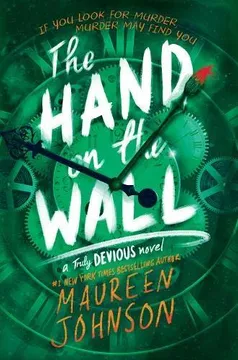


Plot Summary
Prologue
In 1932, Flora Robinson gives birth to a daughter in a private Swiss clinic, and her friends Albert and Iris Ellingham raise the child as their own, keeping the arrangement secret. Years later, Iris and Alice are kidnapped, Dottie Epstein is killed, and Albert’s search for his daughter becomes one of America’s most famous unsolved cases.
A newspaper account reports Albert’s death in a boat explosion and concludes that Alice may still be found. The story’s opening places that public certainty beside a private truth: the child’s origins were concealed long before she disappeared.
The birth scene plants the story’s most intimate mystery inside its grand historical one. Alice is cherished as the Ellinghams’ daughter, yet her identity is already shaped by secrecy and by adults deciding what a child should know. The later newspaper summary turns that private decision into public myth, reducing a family’s grief to a famous case. This contrast matters: the investigation will not only ask who committed crimes, but how wealth, affection, and reputation determine which version of a family becomes official.
Three Deaths, One Theory
After two days of avoiding meals and friends, Stevie Bell tells Nate Fisher the theory consuming her. She believes FBI agent George Marsh, who knew the Ellinghams’ routines, arranged the 1936 kidnapping; Dottie Epstein may have recognized him before she died.
Stevie thinks Albert later suspected Marsh, perhaps explaining the explosion that killed both men on Lake Champlain. She also believes Francis Crane and Eddie Davenport wrote the notorious Truly Devious letter as a prank, unrelated to the kidnapping.
Yet her adviser, Dr. Irene Fenton, had recently insisted that a hidden clause in Albert’s will could reward whoever found Alice. Stevie called Fenton with her theory, heard that someone was present, and learned the next day that Fenton’s house had burned. David Eastman is also missing after staging his own beating.
Stevie’s theory is compelling because she assembles scattered clues into a narrative, but she knows the difference between a pattern and proof. Her isolation reflects both concentration and avoidance: solving an old crime feels safer than facing David’s disappearance, Ellie’s death, or Fenton’s. The crucial tension is that each apparent solution produces a more immediate danger. Stevie has moved from studying the past to suspecting that someone is killing people now, yet she has not decided whether she can trust her own deductions enough to involve others.
The Wall Was Real
At Ellingham, headmaster Charles Scott dismisses the rumored reward clause and explains that Alice’s remaining funds are supporting new school buildings. He also tells Stevie that Hunter, Fenton’s nephew, will move into Minerva House after losing his home.
In Burlington, former security chief Larry warns Stevie that the fire could have been an accident, but David’s deliberate beating and disappearance make him dangerous to himself. Stevie then visits the art collective where Ellie Walker once performed.
Ellie’s friend Bathsheba says Ellie believed the glowing riddle on Stevie’s wall was real, knew who had placed it, and had been angry about it. Bathsheba also recalls Ellie saying that Ellingham’s walls concealed spaces and objects. Stevie leaves with a new lead and a reason to distrust her memory of the message.
The wall shifts from a possible symptom of Stevie’s anxiety into evidence that another person has been shaping her experience. Bathsheba’s testimony does not identify the culprit, but it restores Stevie’s confidence in a perception she had dismissed as a dream. The meeting also makes grief practical: remembering Ellie supplies a clue, but it does not make Stevie responsible for Ellie’s fate. Meanwhile, Charles’s denial of the codicil gives institutional authority to the simplest explanation, illustrating how a plausible official answer can obscure a fact that powerful people would rather keep quiet.
A Prank Beneath the Mountain
In April 1936, student Francis Crane and her boyfriend, Eddie Davenport, use a hidden grotto beneath Ellingham to plan an escape and a future crime spree. Francis resents Albert Ellingham for treating her interest in dynamite as a joke, so she and Eddie turn a detective-story idea into a ransom-style poem signed Truly Devious.
They cut and paste letters from magazines, wearing gloves, and intend the warning as a game that will frighten Albert, not as an actual kidnapping plan.
Nearby, Dottie Epstein has secretly watched the pair enter the grotto. As they leave, photographs of Francis and Eddie posing as Bonnie and Clyde fall from Francis’s book. Dottie keeps the pictures rather than returning them, hiding them in a collection behind her bedroom molding.
The prank’s danger lies in the distance between intention and consequence. Francis and Eddie believe that a threat can remain a private joke because they control its meaning; Albert and the public will later read it as prophecy. Dottie’s quiet choice to keep the photographs gives the story a second kind of secrecy, born not of power but of curiosity and loneliness. The same walls that shelter the rich students’ games also become hiding places for evidence, making architecture a record of what people think they can conceal.
The Machine Goes Wrong
Janelle Franklin gathers students in the art barn to demonstrate her elaborate Rube Goldberg machine. A canister flies from the apparatus, shattering dishes and injuring Mudge, whose arm is broken. Stevie recognizes the carbon dioxide connection to Hayes Major’s death and adds the accident to her private list of suspicious events.
The next morning, Charles announces that the school will close because of the recent deaths and an approaching blizzard, ordering everyone to leave that day.
As Stevie’s group returns to Minerva to pack, David appears in the common room, bruised and carrying a heavy backpack. He reveals that Senator Edward King is his father and says he has brought campaign files that could expose illegal conduct. He asks Stevie and her friends to stay behind and help him examine them.
Janelle’s machine is designed to make a simple action needlessly elaborate, which mirrors Stevie’s growing suspicion that apparently ordinary mishaps are being engineered. The injury turns that suspicion into a risk shared by the whole school, and the closure removes the community that might otherwise protect its students. David’s return offers a competing mystery: his campaign files could stop his father, but his history of secrecy makes his appeal difficult to trust. The group must decide whether solidarity means joining a dangerous plan or refusing to be recruited by someone they care about.
Flora Names the Father
In April 1936, while the Ellingham household waits for news of kidnapped Iris and Alice, painter Leonard Holmes Nair notices that the child’s face resembles FBI agent George Marsh. Flora Robinson, Iris’s closest friend, confirms to Leo that Alice is her biological daughter and that Marsh is the father.
She and Iris had arranged the private Swiss birth so the child could be raised safely by the Ellinghams, who had wanted a daughter. Flora had not told Marsh, and she insists that the arrangement was meant to protect Alice, not to deceive him for gain. Leo recognizes that the press may turn the child’s origins into a scandal, but neither friend knows where Alice is or whether she is still alive.
Flora’s decision gives Alice a home while denying George knowledge of his fatherhood, a contradiction that becomes painful once the child is in danger. The scene refuses an easy moral verdict: secrecy is both a form of care and an act that limits another person’s agency. Leo’s concern is less about abstract propriety than about a hungry public converting private love into spectacle. The chapter also reframes George, whose closeness to the Ellinghams will carry a hidden emotional cost that neither his professional role nor his loyalty can resolve.
The Dollhouse and the Grave
Months later, a psychic’s claim that Alice lies beneath the garden lake convinces the desperate Albert to drain it, leaving Flora to watch a place associated with her lost friend disappear.
Albert commissions a miniature replica of the Great House as a gift for Alice, preserving her empty room in painstaking detail. Flora finally tells George the truth: Alice is their daughter, born while they were briefly together. George absorbs that he has a child somewhere in the world and resolves to find her.
The revelation transforms his work from a duty to his employer into a personal search. Albert continues to believe Alice may return, while the adults around him carry different versions of the child’s parentage and an increasingly difficult silence.
The dollhouse converts grief into an object that can be inspected and controlled. Albert can arrange miniature rooms and keep Alice’s belongings ready, but he cannot restore the child herself. George’s new knowledge likewise changes the meaning of his search: what began as service becomes paternal responsibility. Flora, meanwhile, must watch both men attach hope to different stories about Alice. The lake’s disappearance makes loss visible, while the carefully preserved bedroom shows how memory can keep a family functioning and keep it from accepting what has happened.
The Students Stay Behind
David persuades Stevie, Janelle, Nate, Vi, and Hunter to miss their departures and hide in the gym while classmates leave. He disables his father’s security system long enough to move them, then settles everyone in a pool-supply closet as snow closes the roads.
Janelle insists they carry food, water, flashlights, and emergency blankets, a precaution that proves valuable when the power fails. David gives several friends access to campaign files but refuses Stevie a tablet, fearing that her connection to Edward King makes her vulnerable.
His refusal renews their unresolved hurt. Hunter later tells Stevie that Fenton had been fixated on the codicil and had recently said that a child was present. He cannot explain what she meant, but Stevie begins to suspect that Alice is at Ellingham.
The snowstorm makes the group’s choice literal: they have shut themselves inside a place whose dangers they barely understand. Janelle’s practical preparation contrasts with David’s improvisation, revealing that care can look less dramatic than courage but be more useful. David’s decision to exclude Stevie from the files repeats the paternal control he claims to oppose, even if his motive is protection. Hunter’s recollection supplies the first bridge between Fenton’s death and Alice’s possible location, turning the storm’s confinement into an investigative advantage.
Francis’s Diary in the Wall
After Stevie tells Janelle that Ellie spoke of objects inside Ellingham’s walls, Janelle fetches a wall scanner from the maintenance shed. In Stevie’s closet, the device detects a hollow space behind the baseboard.
Janelle pries it open and retrieves a brittle cigarette packet, then breaks through a higher section of plaster to pull out a red diary. Its photographs show Francis and Eddie, while its clippings and notes document their fascination with gangsters, weapons, and explosives.
Most important, the pages contain drafts of the Truly Devious letter, confirming that students composed it. A cryptic poem labeled as a treasure clue points toward a place on campus. When the power fails, the group relocates to the Great House, carrying the diary and its new questions with them.
Janelle’s technical skill turns Stevie’s intuition into material evidence. The discovery also changes the meaning of the riddle: what seemed to predict violence was a student performance that became entangled with real crimes. Francis’s diary is not merely an archive; it records how privilege can let young people experiment with danger while assuming consequences are theatrical. The hidden book gives Stevie a method for moving forward, but it also warns her that knowledge at Ellingham is often buried in spaces built to be overlooked.
George Finds Alice Too Late
In 1937, George Marsh searches New York for Andy Delvicco and Jerry Castelli, the men he hired to help abduct Iris and Alice so he could steal money from Albert and cover gambling debts. A postcard from Jerry draws him to a restaurant, where George captures him and forces him to reveal that the kidnappers left Alice with a couple in the Adirondacks.
During the drive north, Jerry admits that Iris tried to help Alice escape, fought him, and was shot by Andy. At the cabin, the couple tells George that Alice died of measles weeks earlier and shows him her shallow grave. George retrieves his daughter’s body, then kills Jerry and buries him in the same hole. He carries Alice back toward Ellingham, determined to bring her home.
George’s search exposes the gap between intention and responsibility. He may have imagined the kidnapping as a controlled theft, but his plan placed Iris and Alice in the hands of violent men and ended in irreversible loss. Jerry’s account makes Iris’s courage central to the history, while George’s discovery strips away the fantasy that he can undo his failure. Killing Jerry is not justice so much as a desperate attempt to impose an ending on a crime he created. His decision to return Alice home sets up the novel’s most consequential act of concealment.
Alice Buried Beneath the Tunnel
In April 1937, George remains at Ellingham while Albert, Flora, and Leo prepare to leave for Burlington. After the workers begin filling the tunnel beneath the drained lake, George secretly opens a passage and buries Alice there, believing she belongs beside the home she was taken from. Leo has stayed behind and watches him carry the small trunk into the tunnel.
When confronted, George admits that he found Alice dead and hid her body to preserve Albert’s hope that she might still be alive. He also confirms that Flora told him the child was his. Leo considers calling the police, but decides that exposing the truth would devastate Albert without saving Alice. He agrees to keep the burial secret, sharing a burden that will outlast them both.
George’s burial is an act of love corrupted by the need to control what others know. He brings Alice home, yet denies her father the truth and prevents a public investigation from beginning. Leo’s consent is equally complex: compassion for Albert becomes a reason to withhold justice. The tunnel gives the secret a physical form, hidden beneath a landscape already emptied of its lake. This choice preserves hope in the short term, but it also leaves a body, a legal question, and a future fortune waiting for someone to find them.
The Codicil Sleeps in Marble
After Albert and George die in the boat explosion, secretary Robert Mackenzie plays the wire recording Albert had made of Dottie and discovers that the dead girl’s book still matters to him. Mackenzie also finds Albert’s codicil: ten million dollars is promised to anyone who locates Alice’s remains, unless the finder helped cause her disappearance.
Leo takes the document and hides it in the secret drawer beneath the green marble clock, unwilling to let treasure hunters descend on the school. He then repaints his portrait of the Ellinghams, replacing the house with the dome and shaping moonlight over the place where Alice lies. His painted clue preserves the family together while concealing the grave in plain sight.
The codicil turns grief into an incentive, attaching a price to the recovery of a child’s remains. Leo understands that a public reward could distort the search, but hiding the document also transfers control from law and family to a few private custodians. His painting performs the same double action: it memorializes Alice and points toward her grave, though only someone who knows how to read its changes can follow the hint. The clock and portrait become competing archives, one concealing a legal truth and the other disguising an emotional one.
The Files Reveal a Fortune
At the Great House, David and his friends compare files from Edward King’s campaign and find payments tied to a private investigator and major donors. The pattern suggests that King’s campaign used compromising information to pressure wealthy supporters into funding his presidential bid.
Hunter asks David to use his invented staff identity, Jim Malloy, to request the rumored codicil from Ellingham. Charles and Dr. Quinn initially resist, then Charles sends the document, confirming the reward is real.
Vi wants to release the files and expose everyone involved; Janelle argues that the stolen material should be destroyed instead. Vi ultimately smashes the tablets and David disposes of the drives. The choice protects donors from blackmail but removes the group’s most direct evidence against King.
The campaign subplot tests whether good ends can justify using information obtained through unlawful means. David wants to stop his father, while Vi sees disclosure as a route to broader accountability; Janelle insists that destroying the material is itself a principled limit. Their disagreement is not simply about tactics, since each option distributes harm differently. The codicil’s arrival also alters Stevie’s investigation: the rumored fortune is real, and an outsider could claim it. A financial motive now connects the school’s buried past to its present danger.
The Grotto Closes Above Them
Stevie matches Francis’s poem to the old campus map and follows its directions through the blizzard to a statue whose hinged toe opens a hidden shaft. She falls into the unfinished grotto where Francis and Eddie once planned their escape.
David follows her down, but the hatch shuts, leaving them trapped underground. Searching for a way out, they find boxes of dynamite and wiring among the abandoned supplies. David explains that he withheld the campaign tablet because Edward had once manipulated Stevie, then shows her Charles’s message containing the codicil.
Stevie tells David she has solved the historical case: George caused the kidnapping. With the cold worsening and no way to signal for help, they use two sticks of dynamite to blast the hatch. The explosion damages it but does not free them.
Stevie’s physical descent mirrors her investigative method: she trusts a pattern, accepts the risk, and discovers that knowledge can become a trap. David’s presence complicates the danger because their intimacy and distrust occupy the same confined space. His explanation offers care, but it arrives through unilateral control, the very behavior that has hurt her. The dynamite, once a toy of Francis’s imagined criminal future, becomes a practical tool for survival. Its partial success is important: the past can open a door, but it cannot finish the work for them.
Stevie Names the Killer
Germaine, who stayed behind after the evacuation, hears the blast and returns with makeshift sheeting to pull Stevie and David out of the shaft. Back at the Great House, Stevie’s panic attack gives way to a final connection: Alice must be buried where the tunnel was excavated.
She gathers the students and faculty and accuses Charles of killing Hayes, Ellie, and Fenton to secure the reward. Stevie explains how Charles planted dry ice for Hayes, sealed Ellie in the passage, arranged the gas leak at Fenton’s home, and sabotaged Janelle’s machine to empty the school.
Larry arrives with a wall scanner and finds a hollow space in Charles’s office. Inside lies a child’s body. Charles tries to flee through an unstable passage and falls to his death before police can take him into custody.
The solution is not a sudden flash of brilliance but the convergence of objects Stevie has tracked across the book: the canister, the wall message, the excavation, the codicil, and the altered portrait. Charles’s crimes exploit the very language of accident, making other people’s ordinary actions appear to cause their own deaths. Larry’s scanner converts accusation into physical evidence, while Janelle and Germaine’s practical acts make the confrontation possible. Charles’s death prevents a courtroom resolution, leaving the truth established through evidence and investigation rather than confession.
The School Keeps Alice
After Charles’s death, investigators connect him to the three recent killings, and reports expose King’s blackmail operation; David’s sister secretly recorded his father’s angry reaction after the files were destroyed. King withdraws his presidential bid, and Ellingham reopens under Dr. Quinn.
DNA testing says the child in Charles’s office was not related to Albert or Iris, but Stevie finds a 1932 birth notice naming Flora as the Ellinghams’ companion. House records show Flora’s prolonged morning sickness and George’s visits around conception, while photographs reveal the child’s resemblance to him.
Stevie concludes that the remains are Alice’s, born to Flora and George and adopted by the Ellinghams. She chooses not to claim the fortune, leaving it with the school. Her friendships deepen, she stays with David, and she finally sees a moose near the classroom path.
The DNA mismatch threatens to reopen the mystery, but Stevie recognizes that the test answers a narrower question than the history itself. Alice can be the Ellinghams’ daughter through adoption without sharing their genes. The final proof depends on ordinary records, menus and photographs, rather than a dramatic confession. Stevie’s refusal of the reward resolves the book’s conflict between money and care: the school that sheltered Alice will retain the funds. Her decision also marks a shift in identity. She no longer needs fame or certainty to validate her work; she can return to class, friendship, and an imperfectly knowable world.
Analysis
The novel’s central mystery is not simply who killed Alice or who is killing at Ellingham. It asks how a secret changes when it is held by different people. Flora and Iris hide Alice’s birth to give her a secure home. George hides her death to preserve Albert’s hope. Leo hides the codicil to protect the school from treasure hunters. Charles hides the body to turn that same secret into money. Each act claims to serve someone, but the motives and consequences differ sharply. The book distinguishes protective secrecy from predatory secrecy by asking who gains control and who loses the right to know.
Ellingham’s architecture makes this ethical problem physical. Tunnels, sealed passages, the grotto, the clock drawer, and hollow walls all promise access to knowledge while concealing the cost of reaching it. Stevie’s detective work depends on refusing to treat an accident as self-explanatory, but the story also shows that suspicion alone is not enough. She needs Janelle’s tools, Hunter’s memories, Larry’s investigative experience, Germaine’s persistence, and the historical records that others overlooked. Detection becomes a collective practice rather than a solitary performance.
The two generations of crime mirror each other without becoming identical. Francis and Eddie turn danger into play, believing a fabricated threat can remain harmless. George’s scheme begins as a supposedly controlled theft and becomes kidnapping, death, and decades of concealment. Charles studies the same institutional weaknesses and uses them deliberately. The repeated failures of control expose the arrogance beneath each plan: the assumption that other people can be made into pieces on a board.
The ending refuses to let DNA define family. Alice’s remains do not genetically match Albert or Iris, but Stevie reconstructs the adoption through a birth notice, household records, and physical resemblance. She recognizes that Alice belonged to the Ellinghams through care, not biology, and leaves the reward with the school that was built for her. Stevie’s final growth is similarly practical. Solving the mystery matters, but so do friendship, education, and accepting that uncertainty does not make a life unreal.
Review Summary
The Hand on the Wall received mostly positive reviews, with readers praising the satisfying conclusion to the Truly Devious trilogy. Many enjoyed the atmospheric setting, intriguing mystery, and character development. Some criticized pacing issues and the romance subplot. Readers appreciated the intertwining of past and present storylines, the clever puzzles, and the engaging protagonist, Stevie Bell. While some felt the resolution was anticlimactic, most found the book a page-turning, entertaining read that wrapped up the series well.
People Also Read





Characters
Stevie Bell
Obsessive student detectiveStevie is a sharp, anxious student whose fascination with murder cases gives her a sense of purpose and a language for interpreting the world. At Ellingham, she has built friendships and experienced her first serious romance, but intimacy can feel as difficult as danger. She notices patterns others dismiss, then doubts herself when those patterns implicate people she trusts. Her investigative instinct is not simply fearless curiosity; it is a way to manage uncertainty by turning it into questions, records, and clues. Stevie is learning that detective work requires collaboration and that being right does not erase grief or responsibility. Her greatest strength is persistence, particularly when she can pair it with evidence and allow other people to help.
David Eastman
Runaway political heirDavid is the estranged son of Senator Edward King, a clever, provocative teenager accustomed to using performance and misdirection as armor. His jokes and risky stunts can make him seem unserious, but he understands his father’s habits and recognizes the damage political power can do. David’s attachment to Stevie is genuine, though his instinct to control information in order to protect her repeatedly strains their trust. He is drawn to direct acts of rebellion, even when their legal and personal consequences are unclear. His campaign-file scheme puts his political convictions into action and forces him to decide what evidence should be used, destroyed, or kept. Beneath the bravado is a young man trying to become independent of a powerful parent.
Janelle Franklin
Inventive problem solverJanelle is Stevie’s closest friend at Ellingham, a practical, inventive student who turns engineering problems into working machines. Her careful attention to safety, supplies, and preparation contrasts with the impulsiveness of the people around her. She is also deeply loyal, especially to Vi, and does not treat affection as a reason to abandon her principles. When her machine is damaged and a student is injured, Janelle initially blames herself, reflecting how seriously she takes responsibility for what she builds. Her technical skill repeatedly helps the group move from speculation to physical evidence. Janelle’s confidence grows through action, but she remains attentive to the ethical consequences of the choices her friends make.
Nate Fisher
Dry-witted confidantNate is Stevie’s close friend and an aspiring writer who uses dry humor and withdrawal to manage emotional strain. He sees the danger in Stevie’s fixation without dismissing her ability, and he often asks the practical question she would rather avoid. His loyalty is quiet rather than demonstrative: he stays beside Stevie through the storm and encourages her to share her conclusions with someone who can help. Nate’s own fear of failing as a writer parallels Stevie’s fear of being wrong. He understands that wanting to create something worthwhile can make a person hesitate indefinitely.
Vi
Committed campus activistVi is Janelle’s partner and a politically engaged student who wants to use action, not observation alone, to improve the world. They support David’s attempt to expose his father because the campaign files appear to reveal serious wrongdoing. Vi’s commitment sometimes puts them at odds with Janelle, whose caution emphasizes the ethics of how information was obtained. Their relationship is affectionate but not frictionless; they must make room for disagreement without treating it as betrayal. Vi is guided by a strong sense of collective responsibility and learns that accountability can involve refusing to publish material, even when it might bring powerful people down.
Hunter
Fenton’s displaced nephewHunter studies environmental science and uses a crutch because of arthritis. After his aunt’s house burns, Ellingham gives him a temporary place to stay. He is thoughtful, direct, and more perceptive than his easygoing manner initially suggests. His interest in the old case comes from living near Fenton’s research, though he recognizes that her drinking and isolation complicated her final days. Hunter’s questions about the codicil help the group connect the historical mystery to its present motive. He also offers Stevie a calm, nonjudgmental friendship at a moment when her relationship with David becomes painful.
Charles Scott
Charming head of schoolCharles is Ellingham’s energetic head of school, an administrator who cultivates an approachable, playful image while carrying responsibility for a campus under intense pressure. He listens carefully to students and tries to preserve the school through crises, balancing care for individuals against the institution’s survival. His interest in challenges and solutions makes him seem especially compatible with Stevie’s investigative mind. Charles is also a political and practical figure, aware that one more tragedy could close Ellingham. His authority makes him a central presence in the school’s response to danger, and his polished manner encourages students to trust him.
Larry
Former security investigatorKnown to the students as Security Larry, Larry is a former homicide detective who once ran security at Ellingham. Losing his school position does not end his concern for the students or his habit of examining facts without softening them. He warns Stevie that danger may be closer than she wants to believe, while also asking her to involve the authorities. Larry respects practical evidence and knows how institutions can sacrifice an employee to reassure the public. His experience makes him an important bridge between Stevie’s amateur investigation and a formal police response.
Germaine Batt
Relentless student reporterGermaine is the sharp, persistent student journalist behind the Batt Report. She follows stories that other people would prefer to leave alone, especially the deaths and accidents surrounding Ellingham. Her reporting can wound people who are already frightened, but she is not merely chasing attention; she wants to make hidden events visible. Germaine’s instinct to keep investigating leads her to remain near the school during the evacuation, where she can act when Stevie and David need help. She is observant, self-reliant, and willing to move through the storm for a story or a person.
Dr. Jenny Quinn
Exacting senior educatorDr. Quinn is Ellingham’s associate head, a demanding teacher whose composure and intelligence make students wary of her. She expects preparation and precision, but she also listens closely when a student offers an unexpected interpretation. Her authority is not dependent on Charles’s approval, and she is willing to act when the school’s safety requires it. Quinn represents the institution at its most rigorous: skeptical of unsupported claims, but capable of recognizing that established authority can be wrong.
Dr. Nell Pixwell
Forensic anthropology teacherKnown as Pix, Dr. Nell Pixwell teaches anatomy and forensic anthropology and serves as housemistress of Minerva House. She is practical, warm, and protective without pretending that Ellingham’s dangers are ordinary. Her teaching makes the body a source of evidence rather than an abstraction, while her care for students extends to food, shelter, and firm rules. Pix’s humor and directness help steady the group when fear begins to dominate.
Albert Ellingham
Idealistic school founderAlbert Ellingham is a wealthy businessman who builds an extraordinary school in the Vermont mountains because he believes education should make room for unusual minds. He loves games, riddles, and elaborate designs, and he approaches his family with visible devotion. His immense resources allow him to create a sanctuary, but they also make his household a target and magnify the public appetite for its troubles. Albert’s faith in the school and his hope for Alice shape the institution long after his own life. He embodies both the generosity and the vulnerability of a person who believes money can construct a better world.
Iris Ellingham
Lively Ellingham matriarchIris is Albert’s wife and a spirited, sociable woman with a generous appetite for art, travel, and company. She is Flora’s closest friend and shares with her a private decision about raising Alice. Iris does not fit the passive role expected of a wealthy wife; she has her own appetite for excitement and a strong protective instinct. Her friendships and personal choices shape the Ellingham family’s history as surely as Albert’s plans and money do.
George Marsh
Ellingham security confidantGeorge Marsh is an experienced lawman and trusted protector who has been close to the Ellingham family for years. He is practical, physically capable, and accustomed to operating in spaces where loyalty and authority overlap. His connection to the family is more intimate than most people realize, though he keeps his private life guarded. George’s position gives him unusual access to the household’s routines and secrets. He is a man shaped by duty and by a tendency to believe that personal action can repair damage, even when the consequences of his choices are difficult to control.
Flora Robinson
Iris’s fiercely loyal friendFlora is Iris’s closest friend and a frequent presence at the Ellingham estate. She is perceptive, proud, and capable of making difficult choices in the name of a child’s security. Her loyalty is not passive: she has a strong sense of what Alice needs, even when that means keeping painful information from others. As the family’s crisis unfolds, Flora bears grief outside the public role assigned to her, and her private knowledge complicates the story told about the Ellinghams.
Leonard Holmes Nair
Painter and family confidantLeo is an artist and longtime friend of the Ellinghams, observant, irreverent, and unusually skilled at noticing the emotional truths people conceal. He sees how wealth can shelter people while also leaving them bored, lonely, or dependent. Leo’s paintings preserve the family’s image, but he is not content to make beautiful surfaces without meaning. His loyalty to Flora and the Ellinghams places him among their keepers of secrets, a role he approaches with both affection and unease.
Francis Crane
Restless heiress and schemerFrancis is a wealthy student with a sharp mind, a taste for crime stories, and an appetite for risk. She resents being underestimated and often responds by making her own plans rather than seeking permission. Her relationship with Eddie gives her an accomplice, but she is more disciplined and decisive than he is. Francis treats the school’s hidden spaces as places where she can imagine a life beyond the expectations attached to her family.
Eddie Davenport
Poet with outlaw dreamsEddie is a privileged student who wants to be a poet and is drawn to danger as an aesthetic as much as a plan. He shares Francis’s fascination with gangsters and helps shape the language of their prank. His charm and impulsiveness make him exciting company but less reliable as a partner in practical schemes. Eddie’s romantic view of rebellion contrasts with Francis’s more deliberate intelligence.
Dottie Epstein
Observant scholarship studentDottie is an intelligent student from a poor family who loves detective stories and notices what wealthier classmates overlook. She is reserved, self-contained, and alert to the small signs that reveal other people’s secrets. Her curiosity leads her to watch Francis and Eddie, while her private collection reflects a desire to preserve beautiful or intriguing objects. Dottie’s attention to detail makes her an unusually important witness in the Ellingham history.
Alice Ellingham
Missing Ellingham childAlice is the young daughter raised by Albert and Iris Ellingham, a child at the center of her family’s hopes and the school’s history. The adults around her make choices about her identity and safety before she is old enough to understand them. Her disappearance becomes a public mystery, but her significance is also personal: she is loved by several people whose different relationships to her shape the story.
Ellie Walker
Unconventional student artistEllie is a student artist whose performances draw on improvisation, music, and participation. She is warm toward Stevie and takes her detective ambitions seriously, offering friendship without asking her to become someone else. Ellie also has a strong sense of consent in art and dislikes using fear as a tool. Her connections in Burlington give Stevie a way to learn about her life beyond the school.
Hayes Major
Ambitious online performerHayes is a student and online performer eager to reach Hollywood and build a public career. He is charismatic and ambitious, but often relies on other people to supply the labor behind his projects. His relationships leave a trail of hurt and resentment, complicating how his classmates interpret his choices. Hayes’s appetite for recognition makes him a force in the school’s social world.
Edward King
Powerful political fatherEdward King is a senator with presidential ambitions and the father of David. His political influence reaches into the lives of people around Ellingham, including Stevie’s family. He is forceful, polarizing, and accustomed to treating security and loyalty as matters he can arrange. David’s resistance to him grows from personal history as well as ideological disagreement. King represents power exercised through money, access, and the ability to shape public narratives.
Mudge
Death-metal anatomy studentMudge is Stevie’s anatomy lab partner, a tall death-metal fan devoted to Disney Imagineering. His eccentric style fits Ellingham’s culture of unusual passions, and he approaches grisly classroom material with enthusiasm.
Robert Mackenzie
Ellingham’s trusted secretaryMackenzie is Albert Ellingham’s efficient personal secretary and a careful keeper of the family’s business. He manages information with discretion and understands how public attention can complicate private searches.
Plot Devices
The hidden walls
Evidence behind the plasterEllingham’s walls contain concealed spaces, including Francis’s hiding place and the final chamber in Charles’s office. The wall scanner turns Stevie and Janelle’s suspicion into a repeatable method: they can distinguish structural spaces from deliberate cavities and then open them carefully. Hidden walls connect the school’s physical design to its culture of secrecy. Objects placed inside them survive their owners, creating evidence that can outlast memory, official explanations, and the people who chose to hide it.
The Alice codicil
A fortune with conditionsAlbert’s codicil promises a large sum to whoever locates Alice’s remains, provided the finder had no connection to her disappearance. If Alice remains undiscovered until her ninetieth birthday, the money goes to Ellingham Academy. The document creates a present-day motive and explains why the secret of the child’s burial becomes valuable. Its restrictions shape the antagonist’s plan: someone connected to the school cannot simply claim the reward, so the search must appear to belong to an outsider.
Francis’s diary
A prank becomes a mapFrancis’s diary preserves photographs, criminal clippings, drafts of the Truly Devious letter, and a poem that directs Stevie toward the hidden grotto. It proves that Francis and Eddie composed the letter as a prank rather than as part of the Ellingham kidnapping. The diary also transforms the school’s map and statues into a puzzle that can be solved through careful comparison. Its contents show how a student’s private fantasy became part of a much larger and more dangerous history.
The green marble clock
A secret inside a secretThe clock Albert bought in Switzerland has a small concealed drawer in its base. Leo knows how to open it and uses the compartment to hide the codicil after Albert’s death. In the present, its old story and its location in the school make it a reminder that Ellingham’s valuable objects often contain more than they appear to. The clock also marks the passage of time across the book, linking Alice’s birth, the adults’ hidden decisions, and Stevie’s investigation.
Staged accidents
A murderer leaves no witnessThe recent deaths appear to result from dangerous spaces and ordinary mishaps: carbon dioxide accumulates where Hayes enters, Ellie is cut off inside a passage, Fenton’s gas-filled kitchen ignites, and Janelle’s machine is altered. The method allows the culprit to create conditions and leave, making victims’ own movements seem to complete the trap. Stevie recognizes that the deaths share a preference for containment and distance. The pattern turns apparent accidents into a question about who could prepare them and why.
Truly Devious Series
Download PDF
Download EPUB
.epub digital book format is ideal for reading ebooks on phones, tablets, and e-readers.








