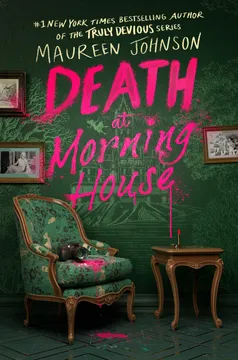


Plot Summary
One Candle, Two Alarms
Marlowe Wexler has spent years quietly loving Akilah Jones, her witty, musical classmate. When they finally share a date, Marlowe takes Akilah to a lakeside cottage she is trusted to maintain and lights a candle scented like petrichor, rain on dry earth. Akilah loves the gesture, and their first kiss begins. Then the candle explodes.
Marlowe fumbles at the flames while Akilah calls for help, and the fire guts the cottage. Investigators rule it an accident, but Marlowe feels she betrayed the owners, Juan and Carlita, and ruined the chance she had with Akilah. At Guffy’s Ice Cream, whispers and fire jokes follow her. Akilah leaves for a better-paying job, and Marlowe retreats from work, friends, and home.
The fire begins as an act of attention: Marlowe listens closely to what Akilah likes and tries to turn that knowledge into intimacy. Its accidental violence gives her shame a concrete object, but her self-blame grows beyond what the evidence warrants. She treats Akilah’s silence and job change as rejection without asking what they mean. That habit of converting uncertainty into guilt explains why she accepts exile so readily, and why learning to ask direct questions becomes part of her eventual recovery.
Guilt Gets a Ferry Ticket
When Mx. Wren Gibson finds Marlowe hiding in her room, they offer her summer work at Morning House, an abandoned Thousand Islands mansion newly opened to tours. Marlowe accepts because she has lost her job and cannot face her hometown. On the island, red-haired April welcomes her to the playhouse where the teenage guides live.
Marlowe meets Van, Liani, and Tom, then takes a prickly first step toward Riki, the bookstore-owning guide who runs the gift shop. Dr. Belinda Henson, a local historian researching the Ralstons, quizzes Marlowe on the house and tells her to report anything troubling. She also warns her against candles and shows her the balcony where Clara Ralston fell in 1932, anchoring the old family tragedy in the building itself.
Morning House offers Marlowe both refuge and a new arena in which she must be useful. The house’s elaborate design suggests that its owner tried to manage even light and movement, while its hidden service routes reveal how much labor was kept out of sight. Henson’s request that Marlowe watch the others gives the newcomer a role before she understands the group’s history. Her outsider status is not merely social; it makes her a fresh witness in a place where familiar people have learned to accept silences.
The Empty Place at Dinner
At Marlowe’s welcome dinner, Riki jolts the group by reminding them that Marlowe has taken the summer job of Chris Nelson, their friend who died at a prom-night party. April explains that Chris’s body was found at dawn below a rocky point on Mulligan Island. His former girlfriend Liani had jumped into the water to try to save him, while his boyfriend Van was so distraught that friends had to restrain him.
Tom, whose family runs local boating businesses, had been the one guide who was not romantically involved with Chris. Riki says little about her own break with the group, but her sharpness draws Liani’s anger. Henson recounts the Ralston family’s later deaths, and Riki mentions a supposed treasure Benjamin left behind.
The group’s grief has not settled into one shared account. April protects the memory of a generous friend, while Riki insists that Chris could be selfish and hurtful as well as kind. Liani’s rescue attempt and Van’s collapse make the death intimate, not just a local headline. Their opposing memories help establish the novel’s central investigative problem: affection can preserve someone’s best qualities while suppressing the details that complicate them. Marlowe’s outsider perspective lets her hear the contradictions without yet knowing what they mean.
A Family Trained to Obey
In 1932, the Ralston children live by their father Phillip’s rigid schedule and his belief in eugenics. Clara, a gifted dancer who longs to return to New York, drinks bootleg liquor and resents being displayed as the family’s strongest swimmer.
Her four-year-old brother Max resists lessons and harms servants; after a nurse is badly injured, Clara pays a delivery boy named Lenny to learn what the staff know. She becomes convinced Max is dangerous and that the family’s polished order is failing.
Phillip responds to her doubts by asking her to teach Max to swim, promising she may meet dancer Martha Graham. When Max fights her lesson and throws a rock, Faye asks Clara to conceal the incident. Phillip continues to insist that Max’s behavior is harmless.
Clara’s rebellion is not simple adolescent defiance. She sees that the household’s discipline protects Phillip’s theories more than it protects the people living under them. Max’s cruelty is minimized because acknowledging it would challenge his father’s authority, while Clara is expected to absorb responsibility for managing him. Her private investigations and illicit drinking are attempts to claim knowledge and pleasure in a system that tightly controls both. The family’s dysfunction grows from a principle that ranks human worth, then refuses to revise its judgment when reality contradicts it.
The Paddleboard Returns Empty
When a Yale researcher arrives to meet Henson, Marlowe cannot find her. Henson’s room is empty, her phone is gone, and her walkie-talkie remains on its charger. Liani notices that the lagoon paddleboard and oar are missing, then searches the water with Tom. Their rescue instincts turn a missed appointment into a possible drowning.
April and Marlowe search the boathouse, where April slips under the dock and cuts herself on its netting; Riki pulls her out. Police arrive, find Henson’s keys still in her room, and organize a search. A boater soon reports finding the matching purple board near Mulligan Island. With the board adrift and no sign of Henson, the group fears she has been carried into the river.
The search repeats the emotional shape of Chris’s death: a young person vanishes near the water, friends search, and the remaining evidence appears to support an accident. Liani’s rapid shift into rescue mode shows how grief has made her vigilant, but the search also exposes how limited that vigilance is when the evidence is staged beyond the lagoon. The paddleboard seems persuasive precisely because it fits what the group already fears. The novel asks readers to notice how an explanation can feel true before anyone has established where its missing person actually went.
A Curse With a Dosage
After police search the house, Riki persuades Marlowe to enter Henson’s locked room at night and photograph her research before it can be lost. They use a rope ladder to reach the balcony, copy papers, and upload files from Henson’s laptop.
The next morning Riki brings out six bottles of old liquor hidden around the boathouse, confirming stories that the Ralston children drank despite Phillip’s rules. Her reading of Henson’s notes gives the family’s tragedy a darker possibility: on the day Max drowned, everyone in the house reportedly fell asleep at once, and Max hated water.
Riki suspects someone drugged the household and deliberately drowned him. Marlowe recognizes that the official story may be another version shaped by whoever held power.
The break-in turns Marlowe and Riki from uneasy coworkers into collaborators, though their impulsive method makes their alliance ethically messy. Riki’s theory is plausible because it joins scattered details, but she is already vulnerable to the thrill of a hidden crime and may be overconfident. The bottles and archival notes function differently: one materializes local rumor, while the other gives it documentary weight. Together they show that memory is neither automatically false nor automatically reliable. It must be tested against objects, records, and competing accounts.
A Tooth Beneath the Patio
As a severe storm approaches, the guides secure the island and move cushions indoors. Marlowe finds a human tooth among the rubble beneath the balcony where Clara fell, and the shape of the building makes her suspect Henson fell there too. The missing yoga mat deepens the doubt: Henson told Marlowe she kept it on the upper balcony, but Marlowe saw it in Henson’s room during the overnight search.
She hides the tooth inside the cap of Akilah’s Midnight Rose lipstick. Later, after eating Moose Tracks ice cream, Marlowe becomes unnaturally disoriented and realizes someone has put an edible in it. She reaches Riki’s turret to explain her theory, then finds Henson’s large camera on Riki’s floor. The evidence suggests a killer is framing Riki.
The tooth turns an abstract suspicion into physical evidence, while the lipstick links Marlowe’s past intimacy with Akilah to the danger she now faces. The yoga mat matters because it contradicts the tidy drowning narrative, not because it proves the full crime by itself. Marlowe’s drugged state weakens her confidence just when she needs careful reasoning, making her testimony easier to dismiss. The camera’s appearance in Riki’s room similarly threatens to redirect suspicion. The section dramatizes how evidence can clarify events while also being planted, misplaced, or interpreted through fear.
The Turret Becomes a Trap
Smoke reaches Riki’s turret, and Marlowe realizes the stairs are burning. With her fire ladder gone from their earlier break-in, the two teenagers cannot use the normal escape route. Marlowe keeps Riki from opening the window at first, then tears down Riki’s handmade curtains and loops them over an ornamental point outside.
They edge along a narrow ledge four stories above the ground as rain and wind batter the mansion. Riki slides down the roof and Marlowe catches her ankle; Van and April throw them a fire ladder from a window. The guides pull both girls back inside and lead them out of the burning house. They watch the upper floors and stained-glass dome collapse, while the storm prevents the fireboat from reaching the island.
Marlowe’s earlier fire has made her fear credible, but it has also taught her to recognize the difference between an accident and a deliberate threat. Her quick decisions in the turret show a new capacity to act without first treating herself as the problem. Riki’s willingness to follow and Marlowe’s refusal to abandon her turn their charged but uncertain connection into mutual trust. The burning mansion destroys the setting that has preserved the Ralston story, yet the fire cannot erase the evidence already carried outside it.
The Body in the Wall
Cold and soaked, Marlowe and Riki return to the playhouse, where Marlowe realizes the bad smell near the basement bathrooms is not sewage. They search the basement and find a sealed cavity behind cleaning supplies.
Tom appears with a sledgehammer, having followed them while looking for the rumored treasure, and helps break through the wall. Inside lies Henson’s body wrapped in a missing blue tarp. Marlowe argues that Henson fell from the balcony and that the killer hid her body, planted the camera in Riki’s room, and started the fire.
The guides search for April’s missing A necklace with Liani’s metal detector and find it near the body’s path. They corner April at the boathouse as she tries to escape on the Jet Ski. She admits pushing Chris during their argument, then breaks down over Henson’s death.
The discovery of Henson’s body changes the group’s task from interpreting signs to confronting a death they can no longer explain away. April’s necklace is modest evidence, but its recovery links her physical presence to the struggle and undermines her account of searching for Henson. Her admission leaves the first death morally complicated: she describes a push, while the consequence was fatal. The group must separate grief for Chris from loyalty to April, just as it had to separate affection for Chris from a truthful account of him.
The Buried Ralston Truth
After the storm, Riki and Marlowe examine a small box they recovered from the patio rubble. It contains two letters buried there by Benjamin Ralston in 2002, along with a 1995 note that led him to preserve the older document. In that letter, Dagmar, Phillip’s sister and the children’s mother figure, reveals that Phillip had secretly fathered the six older Ralston children and presented them as war orphans he adopted.
Her account says Unity drugged the household with Veronal, drowned Max, and later fought Clara on the roof, where Unity struck her and caused her fatal fall. Phillip covered the murders as accidents. Dagmar then arranged to drown Unity and herself in a frozen pond that Christmas. Benjamin had carried the family’s truth alone.
The letters expose the instability of the family story at its source. Phillip’s public identity as benefactor and scientific authority depended on concealing his own conduct, while his eugenic doctrine gave his children a language for ranking one another’s worth. Unity’s crime grows from that household logic, though the letter does not excuse it. Dagmar’s decision to take Unity with her shows how secrecy became a substitute for justice. Benjamin’s buried archive preserves truth, but also reveals the cost of waiting for someone else to speak.
Epilogue
Four months later, Marlowe and Akilah are together again, driving back to Clement Bay in Marlowe’s small car. The fire investigation confirms that the blaze began in the turret, and Henson’s broken tooth matches the one Marlowe found beneath the balcony. A fishing influencer’s old footage shows April with Chris near the rocky point before his death, strengthening the case against her without showing the fatal push.
Morning House may be demolished because its burned structure is unsafe. Riki plans a podcast about the crimes and records Marlowe and the others at the Blue Anchor. Marlowe begins telling the story where it began, with a date, a candle, and the smell Akilah loved.
The ending does not restore Morning House or make every loss legible. Instead, it gives the survivors a way to carry the evidence forward: a video, a podcast, and Marlowe’s willingness to tell what happened without turning uncertainty into self-condemnation. Her renewed relationship with Akilah rests on the question she had avoided asking, not on a grand romantic rescue. The final act of narration also answers the novel’s archival concern. A story can be shaped by omissions, but people who compare records, memories, and physical traces can make a more honest account possible.
Analysis
The novel builds its mystery around the gap between what a community knows and what it is willing to say. Morning House is a museum of controlled appearances: Phillip’s health rules, family portraits, the stained-glass dome, and the official accounts of deaths all make order visible. Yet the house’s less public spaces contain the routes and evidence that unsettle that order. Its history reveals that respectability can conceal violence, while the present-day investigation shows how grief and loyalty can reproduce that concealment without deliberate malice.
The two timelines mirror one another without making their crimes identical. Phillip’s eugenics gives Unity a brutal framework for deciding who is worthy; April’s actions grow from possessiveness, social panic, and fear of exposure. In both cases, harm escalates when a person treats a private judgment as more important than another person’s life. The book does not make these motives equivalent, but it traces how rationalizations turn one consequential act into a chain of cover-ups.
Marlowe’s development provides the counterforce. She begins by confusing guilt with responsibility and reading other people’s silence as a verdict. At Morning House, she learns to compare physical traces, documents, and testimony, while also asking Akilah directly what she meant. Her first gift to Akilah was an attempt to manufacture perfect intimacy; her later discoveries depend on accepting uncertainty and acting anyway. Riki supplies skepticism and appetite for the hidden story, while Marlowe supplies persistence and a willingness to revise. Their methods work because neither is sufficient alone.
The ending insists that recovering truth is not the same as repairing damage. The mansion may burn, the dead cannot return, and a video may still leave legal questions unanswered. But evidence can interrupt inherited lies, and narration can give survivors a way to carry what the official version excludes. The book’s deepest lesson is not that every mystery has a clean answer. It is that care requires looking closely, admitting what remains uncertain, and refusing to let convenient stories stand in for the people they erase.
People Also Read





Characters
Marlowe Wexler
The guilt-prone witnessA high-school senior from near Syracuse, Marlowe is observant, quick to learn, and much less confident than her sharp humor suggests. She has long loved Akilah, and after an accidental fire she interprets embarrassment as proof that she has ruined every relationship around her. At Morning House, her outsider status lets her notice tensions the local guides take for granted. She is not a trained detective; she makes mistakes, follows bad plans, and sometimes doubts her own perceptions. Her strength is the persistence to return to a confusing detail until it makes sense. Marlowe’s central need is to distinguish responsibility from shame and to ask other people what they actually mean.
Riki Rajpac
The truth-hunting outsiderRiki works Morning House’s gift shop for her family’s bookstore and lives in a turret room among books, wind chimes, and discarded furniture. Darkly funny and fiercely independent, she is fascinated by mysteries and suspicious of the clean stories people tell about the past. Her estrangement from the other guides leaves her both isolated and unusually alert to their shifting loyalties. Riki can be impulsive, especially when a plan promises access to hidden information, but she is also brave and protective when someone is in danger. Her connection with Marlowe grows through shared investigation, humor, and the difficult work of admitting when she has misread someone.
Akilah Jones
Marlowe’s first loveAkilah is Marlowe’s classmate and coworker at Guffy’s, a talented musician whose warmth and ease make Marlowe feel seen. She pays attention to details about people, including the makeup colors that suit Marlowe, and expresses affection through small, considered gestures. Akilah is not simply an idealized crush: she has her own ambitions, including saving for a keyboard before college, and expects honest communication rather than mind-reading. Her distance after the cottage fire is partly shaped by Marlowe’s retreat, not just by the accident itself. Akilah’s presence gives Marlowe a measure of the difference between genuine rejection and the fearful stories she invents when she feels guilty.
April
The group’s bright connectorA red-haired local guide, April welcomes Marlowe and tries to keep the summer’s uneasy group functioning. She is friendly, socially perceptive, and invested in the shared history that binds the guides together. Her care often appears as practical attention: explaining routines, making a newcomer feel included, and checking on friends who are struggling. April has known the others since childhood, so she carries more of their private history than Marlowe can initially see. Her preference for harmony can make conflict hard for her to confront directly, and the group’s shifting loyalties place her in a difficult position between people she cares about.
Liani Harris
The vigilant lifeguardLiani is the athletic guide responsible for the lagoon and water safety. She is disciplined, direct, and accustomed to taking charge when other people freeze. Her past relationship with Chris and her attempt to rescue him have made the river a place of both skill and grief. She prefers swimming to discussing what happened, finding in the physical effort a temporary order that conversation cannot provide. Liani is wary of Marlowe’s jokes around water, but she gradually recognizes her as a thoughtful person rather than an unprepared outsider. Her bond with Tom offers a quieter form of closeness built on shared responsibility.
Van
The grieving comicVan is a lanky, expressive guide whose jokes, vaping, and casual manner help him manage pain he rarely names directly. He was romantically involved with Chris and remains haunted by their last argument. His account of Chris refuses easy idealization: Chris could be generous and devoted to animal rescue while also being careless with other people’s feelings. Van offers Marlowe companionship without demanding that she perform cheerfulness, and his humor often lets difficult truths enter the room. Beneath his apparent detachment is a strong instinct for loyalty and a deep need to understand how one bad moment can become the final one.
Tom Keeting
The boating-family guideTom comes from a prominent local boating family and handles Morning House’s docks and boats. He is practical, physically capable, and proud of his family’s place in the community. His close friendship with Liani has the ease of a long history, though their feelings are changing. Tom is less emotionally entangled with Chris than the others, but the conflict between Chris’s environmental work and the Keeting business puts him near the group’s fault lines. He tends to act before explaining himself, which makes his motives hard for Marlowe to read.
Dr. Belinda Henson
The guarded historianHenson is a local academic writing a history of the Ralston family and overseeing Morning House’s summer operation. She is exacting, private, and more interested in the family’s history than in supervising teenagers. Her knowledge of the house comes from years of research and from growing up nearby, where its abandoned rooms held local meaning. Henson distrusts nostalgia when it hides violence, and she knows that prominent families can shape what later generations accept as fact. Her camera, notes, and archival work make her an important observer in a place where the line between public display and private history is unusually thin.
Chris Nelson
The complicated lost friendChris was the energetic local teenager who helped create the summer guide program and worked for River Rescue. He cared about animals and the St. Lawrence, and he could be generous when friends needed him. He was also impulsive and careless in romance, leaving several people hurt by his choices. His death gathers the guides around a shared grief, but their memories of him differ sharply. Those contradictions matter: Chris was neither a saint nor a simple villain, and the story of his last night depends on understanding how his friends saw him.
Clara Ralston
The restless eldest sisterClara is the oldest of Phillip Ralston’s six children and a gifted dancer and swimmer. She is bold, physically confident, and impatient with a life organized around her father’s routines. Her artistic ambition draws her toward New York, while the isolated island leaves her restless and increasingly attentive to what the adults refuse to discuss. Clara can be generous with her siblings, but she is also forceful and willing to test limits. Her sharp eye for the family’s weaknesses makes her a counterweight to Phillip’s insistence that the household is healthy and exceptional.
Unity Ralston
Phillip’s devoted studentUnity is the most linguistically gifted of the Ralston children and takes comfort in study, routines, and her father’s approval. She wants the family’s carefully arranged world to be coherent, and Phillip’s certainty gives her a framework for understanding who deserves care and authority. Her devotion makes her seem calm and dependable, but that composure can also conceal how intensely she has absorbed his beliefs. Unity’s relationship with Clara is shaped by contrasting temperaments: Clara questions the household’s order, while Unity is inclined to protect it.
Phillip Ralston
The eugenicist patriarchPhillip is a wealthy New York physician who presents himself as a humanitarian and devoted father. He adopts six children during the First World War, marries former performer Faye, and later has a biological son, Max. His household runs on strict schedules, health rituals, and a belief in eugenics that he treats as respectable science. Phillip’s intellectual confidence gives his family structure, but it also makes him resistant to evidence that challenges his theories or his authority. He values discipline and achievement while failing to recognize the harm his ideals can inflict on those he claims to protect.
Dagmar Ralston
The children’s watchful auntDagmar is Phillip’s sister and a steady presence in the children’s lives, having helped raise them before Faye joined the household. She is intelligent, observant, and constrained by a family structure in which her brother controls most of the Ralston fortune. Her affection for the children coexists with a clear-eyed understanding of Phillip’s influence. Dagmar notices shifts in the household that others explain away and keeps private records of what she learns. Her sense of duty is profound, though the family’s demand for secrecy places her in painful conflict with what she believes is right.
Faye Ralston
The actress turned motherFaye is a former stage and screen performer who marries Phillip and becomes mother to his six older children before having Max. She is affectionate and attentive, bringing warmth to a household governed by schedules and instruction. Her career and public glamour stand in contrast to the secluded life at Morning House. Faye tries to protect the children from Phillip’s expectations, though she has limited power to change how he runs the family. Her love for them makes the household’s growing strain especially painful.
Max Ralston
The youngest Ralston childMax is Phillip and Faye’s four-year-old son, raised among six older siblings who are expected to excel. Unlike them, he resists lessons and routines, and his tantrums often become destructive. Adults disagree about whether he needs ordinary boundaries or more specialized care, leaving his behavior to unsettle the household. Max’s position as the biological child also changes the family’s dynamics, drawing Phillip and Faye’s attention in ways the older children notice.
Benjamin Ralston
The family’s artistBenjamin is one of Phillip’s six older children and a serious painter who finds refuge in careful study of art. Quiet and observant, he often processes emotion by working with his hands rather than speaking. As an adult, he becomes a respected artist and a supporter of people living with AIDS. His connection to Morning House is complicated by childhood memories and the burden of family history. Benjamin’s instinct to preserve objects and stories reflects both his artistic eye and his difficulty deciding what should be made public.
Victory Ralston
The skeptical future doctorVictory, who prefers her middle name, is practical and medically minded. She questions the claims Phillip makes about heredity and human worth, even while she has been raised to trust his expertise. Her instinct is to care for people directly, and she often tries to manage the consequences of other family members’ decisions. She is close to her siblings but does not always know how to challenge the ideas governing their home.
William Ralston
The family’s pianistWilliam is a talented musician whose piano playing gives emotional force to the Ralston children’s shared life. He is especially close to Clara and notices when her behavior changes, though concern does not always translate into action. Music offers him an outlet in a household that otherwise expects the children to follow a fixed program. As an adult, he studies at Juilliard and contributes to wartime relief work.
Edward Ralston
The restless brotherEdward is one of the older Ralston children. He uses irreverent humor and risk-taking to push against the family’s formality, and he is less committed than Unity to Phillip’s rules. His later struggle with alcohol reflects the family’s difficulty turning discipline into genuine emotional care.
Mx. Wren Gibson
The teacher who intervenesMx. Gibson is Marlowe’s history teacher and a trusted neighbor who notices when she has withdrawn after the cottage fire. They connect Marlowe with Henson and the Morning House job, offering a practical way out of her isolation without forcing her to explain herself first.
Lenny
Clara’s paid informantLenny is a young delivery worker in New York whom Clara pays to gather information from the Ralston household staff. His casual access to workers gives Clara a view of the family that its formal routines conceal.
Juhi
Riki’s bookstore sisterJuhi helps run the family bookstore in Clement Bay and supports Riki’s plan to sell goods at Morning House. She is sociable and candid, and her conversation gives Marlowe a glimpse of the local business and family ties surrounding the island.
Juan and Carlita Manzano-Solis
The cottage ownersJuan and Carlita are family friends who trust Marlowe to maintain their lakeside cottage. Their kindness after the fire contrasts with the blame Marlowe places on herself, though the damaged home remains a real consequence of her carelessness.
Plot Devices
Morning House
A mansion full of evidenceThe isolated Ralston estate is both workplace and crime scene. Its grand public rooms display family wealth, while servants’ corridors, basements, a boathouse, and a rumored concealed space preserve what visitors are not meant to see. The high balcony connects the 1932 deaths with Henson’s disappearance, and the basement cavity hides a body. The house’s eventual fire threatens to erase evidence and forces Marlowe and Riki into a dangerous escape. Its architecture is not mere atmosphere: its division between display and concealment shapes what can be known.
The Ralston Archive
Records contest official memoryHenson’s research, police reports, Phillip’s coded diaries, and Dagmar’s letters offer competing accounts of the family’s past. Riki copies Henson’s work because she fears it may disappear, then later reads it to test the local legend against documented details. Benjamin’s buried cache contains a letter that explains the concealed history and the reason the public version survived. The archive demonstrates that documents do not interpret themselves: investigators must ask who created each record, what was omitted, and whose interests the accepted story protects.
Water and the River
A beautiful, lethal boundaryThe St. Lawrence makes boats, swimming, tourism, and smuggling part of daily life, but it also complicates every disappearance. The guides know the lagoon’s depth and currents, Chris dies near a rocky island point, and Henson’s missing paddleboard makes drowning seem likely. Water is both a practical setting and a misleading explanation: bodies can vanish, evidence can drift, and a familiar rescue story can conceal violence. The river’s shifting border between the United States and Canada echoes the novel’s uncertainty about where public stories end and private truths begin.
Lipstick and the Tooth
A gift becomes evidence storageAkilah gives Marlowe Midnight Rose lipstick on their first date, making the tube a personal reminder of the connection Marlowe fears she has lost. When Marlowe finds a tooth beneath the balcony, she hides it in the lipstick cap because it is small, familiar, and easy to carry. The object moves from romance into investigation without losing its emotional meaning. It is a concrete clue linking Henson to the balcony, and it also prompts Marlowe to contact Akilah rather than keep guessing about their relationship.
Truly Devious Series
Download PDF
Download EPUB
.epub digital book format is ideal for reading ebooks on phones, tablets, and e-readers.








