

Plot Summary
Prologue
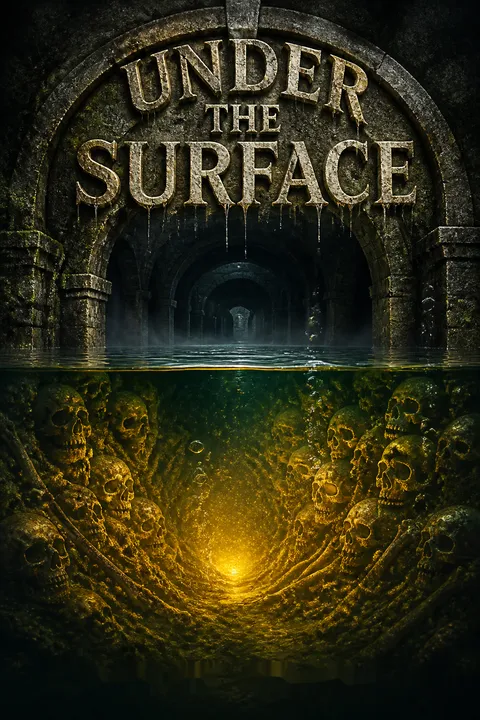
Two days after arriving in Paris, Ruby is alone in the catacombs, fleeing through a low, dark passage with her phone light fading. The tunnels hold six million dead, but the immediate danger is alive and close behind her.
Ruby hides, hears a rasping growl, and realizes someone has found her. The opening leaves her fate uncertain, then turns back to the day her class first reached the Eiffel Tower.
The prologue makes the city’s celebrated brightness a cruel contrast to Ruby’s underground predicament. Its threat is deliberately unresolved: the reader knows she has entered danger, but not whether it is human, supernatural, or the product of fear. The dead are more than scenery here. Their presence compresses Ruby’s sense of time and possibility, while the dwindling phone light makes survival feel dependent on fragile technology. By opening at the edge of catastrophe, the novel asks us to watch the earlier choices with foreknowledge, turning youthful curiosity into suspense without dismissing it as foolishness.
The Bunker Beside the Eiffel
On her first day in Paris, Ruby Hale, an aspiring travel vlogger, tries to reach a rumored bunker beneath the Eiffel Tower with her best friends, Val and Sean. Sean helps edit Ruby’s videos and is close to kissing her, but Ruby retreats from the moment, afraid that loving someone means risking the grief her father has carried since her mother died.
Val, restless and thrill-seeking, meets Julien, a charming French university student, who promises her a secret party. After dinner, Ruby discovers her camera and wallet missing. Val messages that she is heading to the party alone, and Ruby fears what might happen to her. Rather than alert their teacher, Ruby leaves the hotel with Selena and Olivia to bring Val back.
The first turning point ties the adventure to four distinct needs: Ruby wants proof she can travel independently, Val wants an experience vivid enough to make her feel chosen, Selena is caught between Ruby and the life she built after their friendship fractured, and Olivia is tempted to step outside her dependable reputation. Sean’s almost-kiss introduces a parallel risk, intimacy, that Ruby treats like a threat because she has mistaken avoidance for protection. The missing belongings also establish how easily the group misreads events. Ruby thinks a stranger robbed her, while the real explanation is tied to the friend she is trying to rescue.
Below the Street
At a quiet street, Julien lifts a drain grate and reveals a ladder into the catacombs. Ruby recognizes the chance to film a rare place, and Val’s enthusiasm draws the others after him. Belowground, they pass graffiti and a human femur before entering a chamber where skulls and bones form elaborate walls. Olivia explains that Paris moved remains into the old quarries after its cemeteries overflowed.
Julien confiscates Ruby’s camera when she tries to record, then hurries the group toward the party. At a narrow well, Selena ignores his warning to descend carefully. A rusted ladder support snaps, dropping her onto the level below with a deep arm wound. Julien orders the others onward, leaving Selena alone while they seek another route.
The descent converts sightseeing into trespass, but the group’s risk is not evenly chosen. Ruby wants footage and discovery; Val has engineered the excursion; Olivia decides to disobey for once; Selena’s decision is sharpened by the challenge to her courage. Julien’s authority grows because he appears to know the space, though his impatience and control over the camera signal that the visitors are not fully informed. Selena’s fall makes the group responsible for one another in practical terms, while leaving her behind exposes a more painful emotional question: can Ruby care for someone she still resents for abandoning her first?
The Throne of Bones
The group follows Selena’s blood trail, then hears her calling from a different passage. Ruby runs ahead, leaving paper markers at junctions, and finds Selena beside a grotesque throne built from human bones.
Selena says she saw skeletons pursuing her, but the others blame exhaustion and darkness. Their argument ends when pounding erupts behind a wall of skulls, which bursts apart. They flee through the tunnels and discover a fresh corpse, a missing filmmaker Julien says vanished while exploring.
A mural above the body depicts Paris splitting open, while its painted skulls resemble the masks glimpsed in the shadows. Julien admits that cataphiles have reported eerie pranks and a video of a scream. The group now has reason to fear people, not ghosts.
The supernatural interpretation gains force because the characters lack information, not because the book asks them to abandon reason. Selena’s fright, Ruby’s grief, and the acoustics of the catacombs make bones seem animate; the ruined wall and recent corpse then provide a human explanation that is no less terrifying. The filmmaker’s missing-person story shifts the group’s problem from navigation to pursuit. Ruby’s paper markers are a small act of regained agency, yet they cannot restore control over a maze whose scale exceeds their experience. The throne also foreshadows the story’s central moral horror: the dead are being treated as materials, and the living may be next.
The Flooded Serpent
The tunnels flood after a storm, cutting off the way back and forcing the group toward a submerged passage called the Serpent Basin. Julien knows it may lead to a dry ladder, but crossing requires a long underwater swim. Val cannot swim, so Selena straps Val’s purse around herself and guides her through while Ruby and Olivia follow.
They reach Julien, but Olivia has dropped her purse during the crossing. Her inhaler is inside. When Olivia begins choking, Ruby dives back into the dark water and finds it, but Olivia has already stopped breathing. Selena attempts CPR; the inhaler comes too late. The survivors leave Olivia’s body only after recording a message for her family and taking a lock of her hair as a keepsake.
The basin makes trust a physical calculation: Selena risks her own breath to tow Val, Ruby follows without knowing what she will find, and Olivia’s effort to recover her dropped bag becomes fatal. The tragedy is not framed as a single bad choice but as several ordinary vulnerabilities colliding: asthma, darkness, panic, and the group’s lack of equipment. Ruby’s successful dive sharpens her grief because courage cannot reverse the outcome. The farewell recording and the lock of hair echo the novel’s concern with what survives a person. They are not substitutes for Olivia, but attempts to preserve evidence of her particular life against the catacombs’ anonymity.
A Map in the Backpack
While packing after Olivia’s death, Ruby discovers her wallet in Val’s bag. Val admits she took it by accident while rushing out, though Ruby does not yet know that Val also switched a letter months earlier.
They find a map in Julien’s backpack, but it covers a different part of the tunnels and cannot guide them home. Julien leads them toward a known route, only to meet a cave-in. He spirals into guilt, convinced his invitation caused Olivia’s death. Ruby reminds him that she chose to come too, then urges him to keep helping the survivors.
In the darkness, Val admits she pushed Olivia toward Sean because she thought Ruby would be hurt when Sean left for military training. Ruby is angry, but refuses to settle the argument while they are still trapped.
The cave-in removes the false comfort of a single reliable guide. Julien’s map is real but useless, and Ruby recognizes that his shame can become another obstacle if he stops functioning. Her willingness to share responsibility is compassionate, though it also reflects a habit of taking blame to keep relationships intact. Val’s explanation reveals that her interference comes from fear of losing Ruby, not simple malice; the impulse is still controlling, and Olivia has paid an emotional price. In this cramped pause, the novel links survival with the harder task of speaking plainly. The characters cannot repair everything yet, but they begin to name what they have done.
Sean Finds the Grate
Aboveground, Sean notices Ruby’s laptop has synced a photograph of a toad mural taken near the girls’ last known location. He uses its location data to find the street, but police captain Charlotte Debois believes the students may have left voluntarily.
During a public catacombs tour, Sean hears that explorers enter through old grates and shafts. He recognizes the drain he tripped over on the street and persuades Aliyah to help him alert their teacher. When the adults hesitate, Sean publishes a video explaining his theory through Ruby’s YouTube account.
It spreads rapidly, drawing public attention and giving rescue teams a specific entrance to inspect. Sean breaks his father’s and teacher’s rules, choosing action over the obedient future others have planned for him.
Sean’s investigation is the story’s counterpoint to Ruby’s subterranean struggle: she has lost contact with the surface, while he turns a forgotten digital trace into a route back to her. The cloud-synced image, initially just a travel snapshot, becomes evidence because Sean knows Ruby’s habits and pays attention to the details others dismiss. His public post is ethically complicated; it risks feeding a media frenzy, but it also forces the search to consider the catacombs. More personally, Sean’s disobedience is a first break from his father’s prescribed military path. His emerging identity as a filmmaker and investigator begins with using a camera to locate, rather than merely frame, the truth.
The Mask in the Dark
As the survivors search for a route aboveground, a skull-masked figure with a knife lunges at Ruby. She runs despite Julien’s warning not to separate, then rejoins the others when Val finds her. They crawl into a lower cavern and discover the filmmaker’s decomposing body, confirming Julien’s account was no hoax. Later, a masked attacker corners Ruby while she sleeps.
Julien strikes him with a stone, and Ruby joins the fight, hitting the man with a femur when he threatens Julien. The attacker dies, and the group takes his supplies. Ruby recognizes the mask’s keyhole-shaped eyes from the graffiti. At a ladder, she climbs toward a manhole but is stopped by a mass of crickets and a cover sealed from above. The surface remains unreachable.
Ruby’s running is both her familiar response to conflict and, here, an instinct that keeps her from being stabbed. The novel does not simply condemn flight; it shows how a coping strategy can be useful in one danger and isolating in another. Her return to the group matters as much as her escape. When she uses a femur to protect Julien, the bones cease to be only symbols of mortality and become an instrument of immediate defense. The sealed manhole then refuses the easy shape of rescue: being physically near the world above does not mean she can reach it. The crickets turn a phobia into a final test of action under fear.
The Letter Was Replaced
Sean’s video prompts a full rescue effort, while Ruby’s group makes a farewell recording in case no one finds them. As the survivors press on, Selena explains that the letter that ended her friendship with Ruby accused her of using friends and threatened to expose her.
Ruby knows she never wrote those words. She realizes Val replaced her sincere apology with a forged attack, then let both girls believe the other had rejected her. Val admits she wanted Ruby to herself, fearing another friendship would vanish as earlier ones had.
Ruby and Selena explain the loneliness and misunderstandings beneath their estrangement, and recognize that they had both wanted space without knowing how to ask for it. Their reconciliation begins just as masked men arrive.
The switched letter makes the novel’s title operate on two levels: danger lies beneath Paris, but so do the motives and misunderstandings hidden beneath friendship. Val’s act is a betrayal, yet its psychological source is recognizable. Repeatedly uprooted, she tries to prevent abandonment by controlling Ruby’s attachments, creating the very distrust she fears. Selena and Ruby are not absolved of their own mistakes: Ruby kissed the boy Selena liked, and Selena withdrew without hearing her apology. Their reunion comes through specific truths rather than a sentimental erasure of harm. That they begin repairing the relationship under threat gives honesty a practical urgency, not merely an emotional one.
Julien’s Hidden Allegiance
The masked men identify themselves through their leader, Stefan, who treats Julien like a son and condemns him for bringing outsiders into their territory. Ruby understands that Julien belongs to the secretive Gardiens des Morts, whose members believe the bones protect Paris.
She and Selena pretend they want to join, hoping to survive. Val breaks the performance with a laugh at Stefan’s apocalyptic beliefs. He slams her head against the stone, killing her.
Stefan orders the others to conceal Val’s body in a structure of bones, and Ruby recognizes the reeking bone thrones as hiding places for earlier victims. Julien’s presence in the group has not made him a safe guide; his silence leaves Ruby and Selena facing the cult without a clear ally.
The cult’s power rests less on supernatural proof than on a closed system of fear: threatened catastrophe justifies obedience, financial demands, secrecy, and violence. Stefan’s calm authority makes his claims sound orderly even when they are grotesque. Val’s laughter is an act of defiance, but it also exposes how little leverage the weakened survivors possess. Her death changes the group’s emotional landscape from a painful argument about trust to an irreversible loss. Ruby must hold two truths at once: Julien helped lead them into danger, and the truth of his allegiance is more complicated than his apparent submission suggests. Certainty is a luxury no one can afford.
The Gardiens’ Price
Stefan forces Ruby and Selena to help build a bone enclosure around Val, then explains that flooding weakens the dead and threatens Paris. Julien privately reveals the human machinery beneath the doctrine: members pay into a supposed repair fund, while those unable to contribute face a lottery that demands a life.
His father refused to provide another victim and threatened to expose the group; Stefan killed him, then made Julien believe the family had no choice. Julien had brought Ruby and the others as potential sacrifices, but changed course when he hesitated near the party.
Rescue dogs bark in the distance. Stefan orders the survivors through a crawlspace toward a hidden exit, threatening Selena with a pistol. Ruby passes Selena her phone and urges her to run when she gets through.
Julien’s explanation does not excuse his decision to endanger the girls, but it reveals the coercive inheritance that shaped it. Stefan turns grief and filial loyalty into instruments of recruitment, presenting murder as sacrifice and financial extraction as civic duty. Julien’s attempt to protect his younger sisters makes his choice emotionally intelligible without making it morally harmless. The dogs introduce a force beyond the cult’s control, while Ruby’s decision to send Selena first reverses her earlier impulse to keep friends close at any cost. She now protects another person by accepting separation. Her phone, once a lifeline to the surface, becomes evidence and a message entrusted to someone she has finally reconciled with.
Ruby Turns the Knife
Ruby follows Selena into the crawlspace but keeps Julien’s switchblade hidden. When the passage opens, Julien lets Selena continue toward the gate. Ruby stays behind and stabs Stefan in the leg, buying Selena time to flee toward the rescuers. Luc drags Ruby out, and Stefan holds her at gunpoint while they reach a concealed gate and climb into a house above the catacombs.
Luc injects Ruby with a sedative. Stefan argues with Julien, then a gunshot sounds and Ruby loses consciousness. Aboveground, rescuers extract Selena from a shaft; she tells them Ruby is still being held. Sean and Ruby’s father rush to the hospital with the other families, then learn the rescue team is searching the house indicated by Ruby’s phone footage.
Ruby’s resistance is not a sudden transformation into an invulnerable action hero. She is frightened, injured, and unsure whether the plan will work, but she acts with the limited leverage available to her. The switchblade, previously used for an ordinary task, becomes a tool for buying someone else’s escape. Her choice echoes Selena’s earlier risk in towing Val through the basin, making care a reciprocal practice rather than a feeling. The chapter also brings the surface search into contact with the underground plot: Selena’s account and Ruby’s recorded evidence let rescuers move from a general search to a specific threat. The rescue remains incomplete, preserving the cost of Ruby’s sacrifice.
A Kiss Aboveground
Rescuers find Ruby and take her to hospital with a broken arm, a neck wound, and severe exposure. Julien is also in surgery after Stefan shoots him, while Luc is arrested and Stefan is treated for his injuries. Ruby wakes to her father, Jeff, and Sean beside her.
She learns Selena survived and has delivered her message that Ruby loves them both. Once the adults leave, Ruby tells Sean she has kept away because she feared losing him when he entered military service.
Sean reveals he has been accepted to Emerson’s film program and kisses her. Three days later, Ruby, Sean, Selena, and Aliyah visit Notre Dame. Ruby grieves Olivia and Val, learns more victims have been found, and begins imagining a future built around recovery, travel, and chosen work.
The hospital reunion gives Ruby what the catacombs denied her: contact without a barrier of darkness, distance, or imagined loss. Her confession to Sean matters because she names fear as the reason for withdrawing, rather than mistaking self-protection for indifference. Sean’s acceptance to a film program opens a future not dictated by his father’s military ambitions, while Ruby’s plans remain deliberately unsettled. The epilogue refuses a clean victory. Olivia and Val remain dead, Julien’s condition is uncertain, and the survivors face therapy and grief. Their visit to Notre Dame, built from stone quarried beneath Paris, makes survival feel less like a miracle than the result of people’s labor and mutual aid.
Epilogue
Three days after the rescue, Ruby visits Notre Dame with Sean, Selena, Aliyah, and their families. She mourns Olivia and Val, learns that investigators have recovered other victims from the catacombs, and hears that Julien remains in a coma. Ruby is unsure whether she will continue her travel channel, but she and her father plan a trip together and she begins arranging therapy.
Sean chooses Emerson’s film program over the military future his father expected. As the group sits near Julien’s favorite crepe stand, a passing cart makes the ground shudder. Ruby braces for disaster, then sees the street is still peaceful.
The ending refuses to turn survival into proof that everything happens for a reason. Ruby and her friends have escaped, but grief remains attached to ordinary sights: Notre Dame, a crepe stand, the sound of wheels over stone. The slight tremor at the end shows how trauma can make a harmless sensation feel like the beginning of catastrophe, even in safety. Ruby’s decision to seek therapy and Sean’s choice of film school offer concrete futures without pretending that healing is complete. The cathedral’s survival, like theirs, is credited to skilled people acting together, not to supernatural protection. Hope here is a practice, not a guarantee.
Analysis
Under the Surface builds its thriller around a repeated mismatch between what people think they know and what they have actually been told. Ruby believes Selena rejected her, Selena believes Ruby sent a cruel letter, and Val’s fear of abandonment makes her manipulate both women rather than risk an honest conversation. Beneath Paris, the same structure scales into horror: Stefan turns uncertainty about flooding and structural collapse into a doctrine that justifies secrecy, money, and sacrifice. In both cases, power grows where people cannot check a claim against another person’s account.
The catacombs make that epistemic problem physical. Phones lose signal, maps fail, echoes disguise distance, and familiar landmarks become useless. The teenagers must interpret partial evidence while exhausted, hungry, and afraid. Sean’s surface investigation mirrors Ruby’s underground route: he notices a small photographic detail, while Ruby learns to read graffiti, masks, and the behavior of the people around her. Neither perspective is sufficient alone. Their eventual rescue depends on connecting evidence across the divide and on many people cooperating, including police, cataphiles, family, and classmates.
The novel is equally attentive to the difference between responsibility and self-blame. Ruby feels responsible for her mother’s death, for Selena’s estrangement, for Olivia’s presence in the elevator, and for the dangers she chose. Julien’s guilt is similarly tangled with coercion and family obligation. The story does not erase consequences, but it resists the fantasy that one person controls every outcome. Ruby can acknowledge her choices without claiming that she caused every tragedy.
Finally, the story challenges the idea that survival makes loss meaningful by itself. Olivia and Val remain absent from the reunion, and Julien’s fate is uncertain. What the survivors can do is preserve their stories, repair relationships where possible, seek help, and choose futures not dictated by fear. The dead may not protect the living, but memory, evidence, and mutual care can still keep the forgotten from disappearing without a trace.
Review Summary
Under the Surface is a thrilling YA novel set in the Paris catacombs. Readers praise its claustrophobic atmosphere, fast-paced plot, and well-developed characters. The dual perspectives of Ruby, trapped underground, and Sean, searching above, create tension. While some found the teenage drama excessive, most enjoyed the suspenseful twists and creepy setting. Critics appreciate Urban's research and atmospheric writing but note predictable elements. Overall, it's a compelling, addictive read that keeps readers on edge, exploring themes of friendship, survival, and hidden secrets.
People Also Read


Characters
Ruby Hale
Restless hidden-gem seekerRuby is a seventeen-year-old travel vlogger who notices overlooked details and wants to see the world beyond her Massachusetts town. Her mother died giving birth to her, and her father’s grief has made Ruby feel both fiercely loved and responsible for keeping him safe. She is funny, observant, and more courageous than she believes, but she avoids confrontation and withdraws from intimacy when she fears loss. Her YouTube channel expresses genuine curiosity as well as a desire to prove that her ambitions are practical. Ruby’s defining tension is between wanting independence and fearing that pursuing it will injure the people she loves.
Sean McIntyre
Steadfast camera editorSean is Ruby’s classmate and close friend, a JROTC student whose father expects him to pursue military service. Tall, disciplined, and often serious, Sean hides a playful streak that surfaces when he is with Ruby. He edits her videos, turning her attention to overlooked places into polished stories, and his attraction to her grows through their shared work. Sean is used to obeying authority and measuring himself against demanding standards, so his relationship with Ruby begins to widen his sense of what a life can be. His loyalty is practical: he watches, remembers, investigates, and acts when others are uncertain.
Val Moreau
Fearless attention seekerVal is Ruby’s adventurous best friend, a sharp-witted teen who has changed schools repeatedly because her parents work on a house-hunting television show. She craves novelty, attention, and the feeling of belonging somewhere for good. Her daring can make Ruby’s quieter ambitions feel possible, but Val’s need to be chosen can also make her impulsive and possessive. She is funny, energetic, and capable of tenderness, especially when someone feels isolated. Her confidence often masks the accumulated hurt of having to start over and leave friends behind.
Selena Rodriguez
Ambitious star-gazerSelena is Ruby’s former closest friend, an academically gifted student who dreams of becoming an astronaut. She is thoughtful, private, and drawn to science fiction and the vastness of space, yet social confidence has become important to her as she tries to build a life beyond one friendship. Losing her mother young gives her a particular understanding of Ruby’s grief, though neither girl has always known how to share it. Selena’s relationship with Ruby is marked by affection, hurt, and a mutual need for independence. She is brave without being fearless, and her composure often appears when others need someone to make a decision.
Olivia Clarkson
Brilliant rule-benderOlivia is the class valedictorian and a four-time Teen Jeopardy! champion, known for her encyclopedic knowledge and sunny sociability. She values preparation and achievement, but beneath that dependable image is someone who can feel disappointment deeply, especially when her hard work does not earn the future she expected. She is close to her family and dreams of becoming a neurosurgeon, inspired by her grandmother. Olivia’s precise thinking helps the group understand the history and hazards around them, while her willingness to break her own rules reveals that curiosity and courage are not limited to the reckless.
Julien
Charismatic underground guideJulien is a French university student who knows the catacombs and draws visitors toward their hidden passages with warmth and confidence. He is responsible for his younger sisters and carries the strain of adult obligations at an age when most of his classmates can focus on their own futures. His adventurousness is genuine, but it is bound up with risk and a deep attachment to the underground world. Julien can be protective and perceptive, yet his secrecy makes it difficult for others to know when they can trust him. His presence complicates the boundary between guide, friend, and danger.
Stefan
Dogmatic subterranean patriarchStefan is a commanding older man whose measured manner makes even extreme beliefs sound like settled fact. He presents himself as responsible for an ancient duty beneath Paris and expects others to accept his authority without question. His language of family, protection, and shared purpose gives his influence an intimate quality, while his rigid certainty leaves little room for dissent. Stefan functions as a portrait of how fear can be organized into doctrine and made to resemble care.
Luc
Hard-edged underground loyalistLuc is a younger member of Stefan’s circle, physically forceful and less interested in softening his judgments. He backs Stefan’s authority and treats practical threats as reasons to act decisively. His bluntness contrasts with Julien’s more conflicted manner, making him a source of immediate danger whenever the group’s plans are challenged.
Aliyah Harrison
Selena’s outspoken girlfriendAliyah is Selena’s girlfriend, an actor and Gavel Club leader with a strong sense of self and a sharp tongue. She lives with celiac disease and other digestive problems, but refuses to let the unpredictability of her body dictate what she can attempt. Aliyah can be impulsive when she is frightened and wants to help, sometimes turning private worry into public action. Her loyalty to Selena brings her into the search, while her honesty helps Sean confront his own role in the crisis.
Jeff Hale
Protective grieving fatherJeff is Ruby’s widowed father and a restaurant owner who raised her alone after his wife died. He shows love through food, practical care, and rules meant to keep Ruby safe. His grief can leave him withdrawn, and his protectiveness sometimes makes independence feel like a betrayal to Ruby. He is not indifferent to her ambitions, however; beneath his worry is a father trying to learn how to let his daughter move through the world without losing her.
Sean’s father
Military-minded parentSean’s father is a retired Navy SEAL who now works in the technology sector. He values discipline, readiness, and following a clear path, and he has shaped Sean’s childhood around training and military ambition. His concern for his son is real, though he often expresses it as command rather than comfort. He represents the pressure Sean must reckon with as he considers what future actually belongs to him.
Capitaine Charlotte Debois
Methodical French investigatorCaptain Debois leads the French police inquiry into the missing students. She is practical and measured, unwilling to treat an alarming theory as fact until evidence supports it. Her skepticism frustrates Sean, but it reflects the demands of a large city where many people disappear and not every lead is reliable. Debois listens when new information becomes concrete and understands how public attention can complicate an investigation.
Lieutenant Daniel Garnier
Police search partnerLieutenant Garnier works alongside Debois on the missing-student case. He helps gather information, communicate with families, and coordinate the investigation. His role is largely practical, but his care in delivering painful updates shows the human burden carried by those handling a public emergency.
Mr. LeBrecque
Rule-bound French teacherMr. LeBrecque is the French teacher leading the school trip. He is structured, tired, and protective of his students, and Ruby’s attempts to add unusual destinations to the itinerary can test his patience. He balances classroom authority with the real responsibility of keeping a group of teenagers safe abroad.
Mrs. Williams
Attentive school chaperoneMrs. Williams, also called Monique, is the school librarian who volunteers as a chaperone. She notices when students are missing, helps care for the sick, and supports Mr. LeBrecque through the crisis. Her watchfulness is quiet rather than showy, but she is one of the adults who acts when the trip stops following its itinerary.
Chelsea
Julien’s older sisterChelsea is Julien’s sixteen-year-old sister. She shares responsibility for the family with him and is the person he trusts to look after their younger sister when he is away.
Francesca
Julien’s younger sisterFrancesca is Julien’s eleven-year-old sister. She depends on her older siblings, and Julien’s concern for her shapes many of the choices he makes.
Tyler Russell
The old crush between friendsTyler is a handsome, popular drama student whom Selena once liked. His brief closeness with Ruby becomes the source of a lasting misunderstanding between the two girls, making him important less for his own actions than for what each friend believes the incident means.
Emily McIntyre
Sean’s younger sisterEmily is Sean’s younger sister, a makeup-tutorial enthusiast with a playful streak. She stays in touch with him during the crisis and offers a glimpse of the more teasing, affectionate side of his family.
Plot Devices
The Paris catacombs
Maze beneath the cityThe catacombs turn Ruby’s search for unusual travel footage into a survival story. Their darkness, flooded lower levels, unstable ladders, false routes, and lack of phone service repeatedly limit what the group can know or do. The immense network also separates the teenagers from the rescue effort above, forcing them to rely on imperfect memory and one another. The bones give the setting historical weight, while the tunnels’ scale makes every wrong turn consequential.
Ruby’s camera and phone
Evidence across the divideRuby’s camera begins as the tool of her travel channel, but recording becomes a way to leave evidence and messages for people who may never find her. The phone’s stored photographs and location data help Sean identify the street where the group vanished. Later, Ruby uses the device to preserve evidence of the masked men and entrusts it to Selena as a possible link to the police. Technology cannot reach through the stone by itself, but images and recordings let people on opposite sides of the crisis act on what they know.
The switched apology
A friendship forged by liesAfter Ruby kisses Tyler, she writes Selena a sincere apology but is too afraid to deliver it herself. Val offers to pass the note along, then replaces it with a forged letter full of insults and threats. Selena believes Ruby wrote it, and Ruby interprets Selena’s silence as proof that she has been rejected. The deception turns their separate insecurities into a lasting feud, showing how avoidance leaves space for another person to define what a relationship means.
The skull masks
Fear made into authorityThe mask imagery first appears in graffiti and unsettling glimpses, encouraging the characters to wonder whether the catacombs are haunted. The masks eventually connect the attackers to Les Gardiens des Morts, a group whose leader claims the dead protect Paris. Their keyhole-shaped eye sockets echo the murals and become a visual clue that the strange art, hidden bodies, and threats belong to a human organization. The masks conceal identities while making the group’s beliefs look ancient and inevitable.
The Serpent Basin
A drowning-point bottleneckThe flooded pool is the only route Julien knows that leads to a dry ladder, but it demands an underwater passage that Val has never trained to swim. The basin forces Selena to tow her, makes each survivor confront a different physical limit, and leaves Olivia’s inhaler behind when her purse drops. Later, the pursuers use the same route, so the water serves as both obstacle and proof that the group has been followed. It turns a navigational choice into a life-or-death test.
FAQ
Synopsis & Basic Details
What is Under the Surface about?
- Teenagers trapped in Paris catacombs: The story follows Ruby, Val, Selena, and Olivia, American high school seniors on a trip to Paris, who are lured into the illegal, off-limits sections of the city's catacombs by a mysterious local, Julien.
- A descent into a deadly labyrinth: What begins as a search for adventure and unique content for Ruby's travel vlog quickly devolves into a fight for survival as the group gets lost in the vast, dark, and dangerous underground network.
- Facing hidden threats and personal demons: Beyond the physical perils of cave-ins, flooding, and disorientation, the teenagers uncover a sinister cult operating within the catacombs and are forced to confront their own fears, past betrayals, and the true nature of their relationships.
Why should I read Under the Surface?
- High-stakes, claustrophobic thriller: The novel delivers intense suspense and a palpable sense of dread, leveraging the terrifying setting of the Paris catacombs to create a truly immersive and anxiety-inducing reading experience.
- Exploration of complex relationships: Beyond the survival plot, the story delves into the intricate dynamics of teenage friendships, exploring themes of loyalty, betrayal, forgiveness, and the impact of past trauma on present connections.
- Intriguing blend of history and mystery: Drawing inspiration from the real Paris catacombs and urban exploration culture, the book weaves historical context with a modern thriller narrative, including elements of cults and hidden dangers beneath the iconic City of Light.
What is the background of Under the Surface?
- Inspired by true events: The book is explicitly stated as being "Inspired by true events," referencing the real Paris catacombs, the fact that people have gotten lost there, and the existence of urban explorers known as cataphiles who illegally access the off-limits sections.
- The historical context of the catacombs: The narrative incorporates details about the catacombs' origins as limestone quarries, their transformation into ossuaries in the 18th century due to overflowing cemeteries, and the historical events like the French Revolution that contributed to the remains stored there.
- Paris as a character: The city itself, both above and below ground, plays a significant role, contrasting the romanticized "City of Light" with the dark, hidden, and dangerous world beneath its surface, reflecting the duality explored in the characters' lives and relationships.
What are the most memorable quotes in Under the Surface?
- "I never thought I'd die alone in the dark under the City of Light.": This opening line from the prologue immediately establishes the high stakes and ironic contrast between Paris's nickname and the protagonist's terrifying predicament, setting a tone of impending doom.
- "What comes down must go up.": Initially presented as a practical rule by Julien regarding trash in the catacombs, this phrase takes on deeper symbolic meaning throughout the story, reflecting the consequences of actions, the cyclical nature of secrets, and the eventual emergence from darkness.
- "You're right. We are Les Gardiens des Morts; we guard the dead, and the dead guard us.": Spoken by the cult leader, Stefan, this line encapsulates the core, albeit twisted, belief system of the cult, revealing their purpose and the dangerous ideology driving their actions within the catacombs.
What writing style, narrative choices, and literary techniques does Diana Urban use?
- Alternating first-person perspectives: The story primarily alternates between Ruby's and Sean's first-person points of view, creating immediate intimacy with their thoughts and fears while building suspense as their separate narratives converge towards the rescue effort.
- Fast-paced, suspenseful prose: Urban employs a direct and urgent writing style, using short sentences and paragraphs, particularly during moments of high tension and action, to quicken the reading pace and mirror the characters' frantic state.
- Symbolism and foreshadowing: The catacombs themselves serve as a central symbol of internal darkness and hidden truths, while subtle details like environmental descriptions (e.g., cracks resembling spiders, water levels rising) and seemingly casual dialogue often foreshadow future dangers and plot twists.
Hidden Details & Subtle Connections
What are some minor details that add significant meaning?
- Olivia's Monoprix bag: This seemingly mundane detail of Olivia carrying a grocery bag becomes crucial when Julien throws it down the well, forcing her to retrieve it later and highlighting the practical challenges and unexpected consequences of their impulsive descent.
- The specific graffiti details: Beyond the general presence of graffiti, specific images like the skull with keyhole eyes and the phrase "In these halls, those who are forgotten protect those who have forgotten" are not just background but directly tie into the cult's symbolism and beliefs, revealing their presence and purpose before it's explicitly stated.
- Julien's inconsistent behavior and appearance: Julien's mountain trek gear, his initial stress at the Eiffel Tower, his sudden disappearance to meet the group, and his later limping and pain are subtle clues that he is not just a casual cataphile but is involved in something more dangerous and physically demanding, hinting at his deeper connection to the underground world and its inhabitants.
What are some subtle foreshadowing and callbacks?
- Ruby's fear of dying alone in the dark: Introduced in the prologue, this specific fear is echoed multiple times throughout the narrative, particularly when she is separated from the group or facing imminent danger, creating a strong callback to the initial terrifying scene and reinforcing the stakes.
- The discussion about pickpockets and vigilance: Mr. LeBrecque's warning about pickpockets and the importance of keeping bags zipped foreshadows Ruby's loss of her wallet and camera, highlighting how easily seemingly minor lapses in caution can lead to significant problems.
- Selena's fear of the dark and small spaces: Despite her astronaut aspirations, Selena's discomfort in confined, dark spaces is mentioned early on, subtly foreshadowing her panic and fall down the narrow well shaft later, demonstrating how even deeply held goals can't erase innate fears in extreme situations.
What are some unexpected character connections?
- Olivia's connection to Sean: The revelation that Val attempted to set Olivia up with Sean, leading to an awkward kiss at a party, is an unexpected detail that adds layers to Olivia's character (her willingness to take risks for a crush) and explains the underlying tension between Olivia, Val, and Sean, which surfaces during their time in the catacombs.
- Julien's family history with the cult: The most significant unexpected connection is Julien's deep, inherited ties to the Gardiens des Morts, revealing that his involvement is not just as a casual cataphile but as the son of a former inner circle member, explaining his knowledge, access, and conflicted loyalty.
- Ruby and Selena's shared experience of maternal loss: While their friendship breakdown is central, the subtle connection of both girls having lost their mothers young is a shared trauma that provides a deeper layer of understanding for their individual struggles with grief and connection, even when their paths diverge.
Who are the most significant supporting characters?
- Julien, the conflicted guide: Julien is arguably the most significant supporting character as he is the catalyst for the group's descent into the catacombs and their encounter with the cult. His internal struggle between his loyalty to Stefan and his growing conscience drives much of the plot's tension and ultimately influences the rescue effort.
- Selena, the unexpected ally: Despite her fractured friendship with Ruby, Selena becomes a crucial supporting character through her resilience, resourcefulness (like suggesting the video message), and unexpected bravery (climbing the ladder for Ruby, helping Val swim), demonstrating growth and loyalty when it matters most.
- Capitaine Debois, the determined investigator: Though appearing late in the narrative, Capitaine Debois is vital as the primary force behind the official search and rescue. Her initial skepticism gives way to focused determination, and her interactions with Sean highlight the importance of his role and the broader scope of the investigation into the cult.
Psychological, Emotional, & Relational Analysis
What are some unspoken motivations of the characters?
- Ruby's need for validation: Beyond wanting travel vlog views, Ruby's drive to explore and document stems partly from a desire to prove her independence and capabilities to her overprotective father, making her risk-taking a form of seeking his approval and acceptance of her aspirations.
- Val's fear of abandonment: Val's impulsive behavior, need for attention, and manipulative actions (like switching the notes) are deeply rooted in her transient upbringing and constant experience of leaving friends behind, driving an unspoken need to secure connections, even through unhealthy means, to avoid being alone.
- Julien's desire for redemption: While initially motivated by fear for his sisters and loyalty to Stefan, Julien's actions increasingly reveal an unspoken desire to atone for his role in bringing the teenagers into danger, leading him to actively protect them and seek a way out, even at great personal risk.
What psychological complexities do the characters exhibit?
- Trauma responses under pressure: The extreme stress of being lost and hunted in the catacombs triggers various psychological responses, including panic attacks (Ruby), dissociation (Selena's hallucination), heightened anxiety (Olivia's wheezing), and a shift from bravado to fear (Val), showcasing how trauma impacts behavior.
- The burden of guilt: Multiple characters grapple with intense guilt: Ruby over pulling Olivia into the situation and her past actions with Selena, Sean over not being more vigilant and his conflict with his father, Val over her manipulations, and Julien over his role in the cult and the deaths. This shared burden influences their interactions and decisions.
- Identity and self-perception: The ordeal forces characters to confront their self-perceptions – Ruby questions her bravery and judgment, Sean grapples with defying his father's expectations, Val faces the consequences of her manipulative identity, and Selena challenges her self-image as someone easily scared or weak.
What are the major emotional turning points?
- Ruby's realization of being pickpocketed: This moment marks a significant emotional turning point for Ruby, shifting her focus from adventurous exploration to vulnerability and fear of disappointing her father, setting the stage for her decision to sneak out to retrieve Val.
- Selena's fall and injury: Selena's accident is a critical turning point, immediately escalating the physical danger and forcing the group to confront the severity of their situation, shifting the dynamic from a daring adventure to a desperate rescue mission and later, a survival struggle.
- The discovery of Olivia's death: Olivia's death is the most devastating emotional turning point, transforming the narrative from a survival thriller into a tragedy. It shatters the remaining sense of invincibility, forces the characters to confront mortality directly, and profoundly impacts their grief and determination to escape.
How do relationship dynamics evolve?
- Ruby and Selena's reconciliation: Their relationship evolves from bitter animosity, fueled by Val's deception, to tentative reconciliation and mutual support under extreme duress, culminating in a moment of shared vulnerability and forgiveness that rebuilds their bond.
- Ruby and Val's friendship fractured: Val's manipulation and betrayal regarding Selena and Sean shatter Ruby's trust, leading to a painful confrontation that reveals the unhealthy dynamics rooted in Val's insecurity, though a moment of shared fear and apology occurs before Val's death.
- Sean and Ruby's unspoken feelings surface: The crisis accelerates the development of Sean and Ruby's relationship. Sean's desperate search highlights his deep feelings, and Ruby's near-death experience prompts her to overcome her fear of vulnerability and confess her love, leading to their first kiss and the promise of a future together.
Interpretation & Debate
Which parts of the story remain ambiguous or open-ended?
- The full extent of the cult's activities: While the cult's core belief and practice of assimilation are revealed, the story leaves some ambiguity about the scale of their operations, how many members exist, and the specifics of their rituals beyond the assimilation process.
- The true nature of the "protective powers": The narrative presents the cult's belief that the bones protect Paris and that assimilation enhances this power, but it remains open to interpretation whether this is a genuine supernatural phenomenon within the story's world or simply a delusion held by the cult members, particularly Stefan.
- Julien's ultimate fate: While Julien is found and taken to surgery after being shot, his condition is described as critical, leaving his survival ambiguous at the end of the main narrative, prompting readers to wonder if he survives and what consequences he might face.
What are some debatable, controversial scenes or moments in Under the Surface?
- Val's manipulation of Ruby and Selena's friendship: Val's deliberate act of switching the notes and perpetuating a lie to end Ruby and Selena's friendship is a highly debatable moment, prompting readers to question her motives, the severity of her actions, and whether her later apology and death offer sufficient redemption.
- The cult's belief system and actions: The depiction of the Gardiens des Morts, their belief in the bones' power, and their practice of human sacrifice for "assimilation" are inherently controversial elements, raising questions about fanaticism, manipulation, and the lengths people will go to for a twisted ideology.
- Ruby's decision to stab Stefan: Ruby's act of stabbing Stefan to create a diversion for Selena's escape is a morally complex and potentially controversial moment, forcing readers to consider the ethics of her violent action, even in self-preservation and to save a friend.
Under the Surface Ending Explained: How It Ends & What It Means
- Survival and Rescue: The ending sees Ruby, Selena, and Sean rescued from the catacombs. Selena escapes through a crawl space after Ruby stabs Stefan, reaching rescue workers who then locate Ruby. Sean's earlier efforts to pinpoint their location via Ruby's photo and the grate were crucial to the search and rescue operation's success.
- Consequences and Loss: The rescue comes at a cost. Olivia and Val are found dead, victims of the catacombs' dangers and the cult's violence. Julien and Stefan are found injured and taken into custody/surgery, facing legal consequences for their actions. The cult's activities are exposed, leading to further investigations and the recovery of other victims' remains.
- Healing and New Beginnings: The epilogue shows Ruby, Selena, and Sean beginning to process their trauma and look towards the future. Ruby and Selena reconcile, acknowledging the past but choosing forgiveness. Ruby and Sean openly express their feelings and decide to pursue a relationship without fear. Sean chooses a path (film/documentary) that aligns with his passions rather than his father's expectations. The characters acknowledge the lasting impact of their ordeal but find hope and strength in their connections and the possibility of new beginnings, symbolized by the Notre Dame setting and the simple joy of a shared crepe.
Download PDF
Download EPUB
.epub digital book format is ideal for reading ebooks on phones, tablets, and e-readers.








