

Plot Summary
Devon Makes a Summer List
Seventeen-year-old Devon Harris wants one last perfect summer with Drew, her twin sister, who has announced she will graduate early. Devon fears the change means losing the everyday closeness they have already begun to lack, so she makes a list of outings meant to keep them together and prove she can fit into Drew's private-school world.
Their friends Leila, Malachi, Gael, and Yaya join the plan, beginning with a party hosted by Drew's classmate Avery. While distributing invitations to their mother's block party, the group clashes with neighbor Kendra Thompson-Bryant and her son Keith, whose construction project is changing the block. Devon tries to hide how much both her sister's distance and her own feelings for Yaya unsettle her.
Devon's list turns affection into project management. She tries to control what cannot be scheduled: Drew's independence, the group's changing shape, and her own fear of being left behind. Her plans are generous, but they also make Drew's summer into Devon's idea of what Drew should want. That tension gives the story's later supernatural danger an intimate foundation. Before Devon confronts a monster, she must learn that loving someone does not mean preserving them in the role that makes them easiest to keep.
The Party's Open Circle
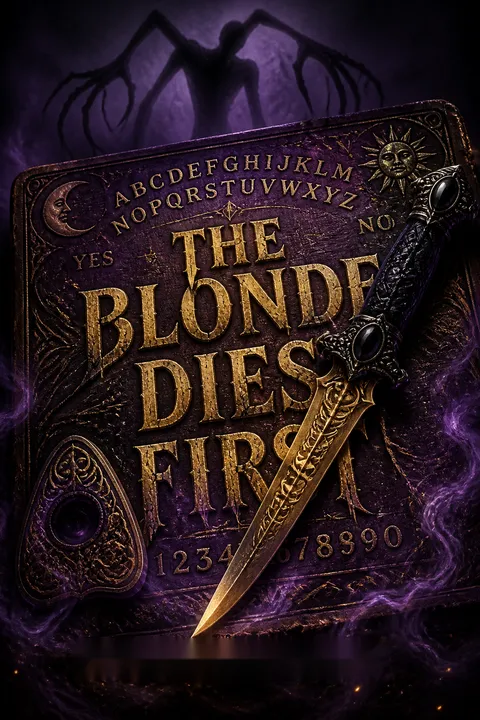
At Avery's party in Carroll Gardens, Devon discovers that Drew is relaxed among classmates who know her as Andrea, a polished student leader with a life her family back home barely knows. When Avery brings out an old Ouija board and a black glass knife, Devon's friends object, but she joins in rather than disappoint Drew.
Avery frames the ritual as a call to an unknown presence. The board appears to answer by naming Drew, then slides toward its farewell space when Avery dismisses it. The others treat the episode as a stunt, though Yaya's rosary breaks and the group leaves uneasy. Devon chooses not to challenge Drew's indulgence of Avery, valuing approval over her friends' discomfort.
The party makes Devon's self-erasure visible in small, consequential choices. She sees that her friends are uncomfortable, yet translates Drew's approval into evidence that the night is succeeding. The Ouija ritual matters both as a possible supernatural invitation and as a social test Devon believes she must pass. The board's apparent farewell offers no reliable proof that anything has happened, which preserves uncertainty while giving the later attacks a concrete point of origin. Devon's first mistake is not credulity, but choosing belonging over judgment.
The Freezer Door Opens
The next night, Devon works at Mr. Ahmed's bodega with Alexis, a coworker whose lateness and careless comments regularly infuriate her. After Alexis needles Devon about her appearance and flirts with older customers, Devon retreats to the freezer to cool down. A six-fingered, black-skinned creature appears inside.
Devon escapes, pulls Alexis away from the counter, and tries to get them both outside, but Alexis shoves Devon toward the creature when it catches up. An Uber strikes Alexis in the street. The creature tears free a lock of her blonde hair and swallows it before vanishing. Police dismiss Devon's account and interpret the death as suicide. At home, dried blood and a strand of Alexis's hair prove to Devon that the attack was real.
The supernatural threat enters through an ordinary workplace conflict, making Devon's irritation and guilt inseparable from her terror. Alexis is not a friend, and Devon's insistence that she did not want her dead complicates the familiar horror pattern of a blameless victim. The police explanation compounds the violence by converting Devon's eyewitness account into a story they can comfortably accept. Her evidence is intimate rather than institutional: blood under a nail, hair on her body, a wound on her ankle. The gap between what happened and what can be officially recognized becomes another form of danger.
Two Marcos, One Predator
Unable to bear the disbelief at home, Devon accompanies Malachi to a queer club while he meets Marco, an older man he has been dating online. Devon spots Marco at the bar, then sees a second Marco dancing with Malachi. The double is the creature from the bodega, wearing a convincing human likeness. Devon signals their emergency warning, then strikes it when it claws Malachi's shoulders.
They escape into an alley, where the real Marco arrives and refuses to take the threat seriously. The creature kills him with his own fleece vest, takes his phone, and consumes it. Malachi sees the attack and the phone disappear, then accepts Devon's explanation that the same predator killed Alexis. Together they call their friends in for a team meeting.
Malachi's encounter breaks the isolation that made Devon doubt herself. This time the danger is witnessed, leaves wounds, and takes an unmistakable object from its victim. The predator's ability to imitate Marco also turns attraction and trust into practical vulnerabilities, especially for Malachi, whose hope for romance can make him take risks. Devon's protective instincts work, but only partly: she helps Malachi escape the false date, not the real man's death. The shared witness transforms her account from a private fear into a collective problem.
The Movie's Kill Order
At Leila's house, Devon and Malachi describe their attacks to the whole group. Gael recognizes details from Read Your Rites, a badly received horror film whose consultant was Avery's mother. In the film, a summoned demon stalks friends in a set order and takes objects from its victims.
Gael maps the pattern onto their group: Devon is the blonde opening victim, Malachi the queer Black friend, and Yaya the likely Final Girl. The others resist being reduced to horror archetypes, especially Yaya, who fears being the last one alive. The group then visits horror expert Jack Strode, who explains that supernatural threats may be bound to their origin and that the film's athame could be used against its demon.
Gael's film knowledge gives the friends a usable model, but it also threatens to turn their identities into roles with predetermined endings. Devon's survival complicates the pattern from the start, while Yaya's proposed status as Final Girl feels less like an honor than a sentence to outlive everyone. Jack's advice introduces a counterweight to genre fatalism: the creature's origin may also reveal how to stop it. The group gains a theory, not certainty. Their task is to use the story's rules without mistaking those rules for proof.
A Knife from the Archives
Jack's advice sends the friends back to Avery, whose mother Diane Spring helped research Read Your Rites. Avery explains that the real athame was once an autopsy tool during the Black Death.
Stories grew around the physicians who discarded dissected bodies in the Thames, and the supposed demon became associated with plague and contagion. While Drew tries to repair her strained connection with Avery, Leila and Malachi search his house under the cover of retrieving forgotten weed.
Devon and Leila find a museum lockbox and open it using the film's premiere date. They take the real athame. Their search is interrupted by Lydia, Avery's former girlfriend, confronting Drew about her relationship with him. Avery tells Drew that her silence after their intimacy hurt him.
The weapon's history shifts the threat from a generic movie demon to a story about careless treatment of the dead and the consequences communities invent around it. The athame's origin makes it both a practical tool and a symbol of the group's attempt to diagnose what they have unleashed. Meanwhile, the break-in forces Devon to see that Drew's life has emotional complications beyond school and achievement. Lydia's confrontation and Avery's hurt expose how little Devon knows about the sister she is trying so hard to preserve.
The Stairs at Gael's
With the athame in their possession, the friends wait for the next attack, but the creature appears without warning while they are moving boxes at Gael's apartment building. It smashes through the entrance and pursues them up the stairs.
Gael tries to draw it away from his mother's apartment, while Yaya carries the athame higher. The creature catches Drew by the calf, but she breaks free and Devon keeps moving with her. When the group reunites on an upper floor, Yaya confronts the creature with the blade.
It recoils and escapes through a window rather than face her weapon. Drew acknowledges that Devon's account was true. The group has finally seen the monster together, but they have not learned whether the knife wounded it or Yaya herself frightened it.
The building's staircase converts the group's theories into bodily experience: they split up, get cornered, and discover that the creature can be hurt or deterred. Yaya's intervention offers hope, but the escape leaves the source of the creature's fear uncertain. Drew's recognition matters as much as the weapon's apparent effect. Devon no longer has to plead for belief, yet that validation arrives only after her sister is nearly attacked. The episode also shows the danger of treating horror rules as a tactical manual: the friends survive through improvisation, not a cleanly executed plan.
The Trap Breaks Leila
Drew proposes testing the creature's supposed rules by staging an intimate encounter between Gael and Leila, while Devon films from a closet with Yaya. The creature enters through Leila's window, but it does not follow the sequence they expected.
It pursues Drew, then attacks the group as they flee. Leila collides with it and tumbles down the stairs, breaking her ankle. At the hospital, the dismissive Dr. Laurie orders the friends away from Leila's room.
When Devon and Drew later encounter a silent nurse whose name tag is blurred, they recognize the creature's disguise. Dr. Laurie treats it as a real nurse until it strangles him with his own stethoscope and consumes the instrument. The friends realize their theories have not contained the threat.
The experiment exposes the ethical cost of treating friends as pieces in a genre puzzle. Drew's plan assumes the creature will obey a legible sequence, while Leila and Gael bear the immediate physical risk. The injury makes that risk concrete and strains the group's confidence in Drew's judgment. At the hospital, the monster exploits the same social reflex that failed Devon earlier: people trust familiar uniforms and dismiss the young witnesses. Its disguise is not merely a trick; it borrows authority to make disbelief easier.
The Twins Finally Clash
After the hospital attack, Devon confronts Drew for treating friends as bait and for dismissing her earlier warning. Drew reveals that she has not applied to college and does not know what she wants, despite the future others keep assigning her.
She says Devon stopped listening to her life, while Devon admits she has felt abandoned since Drew changed schools. Their argument remains unresolved when the creature's pursuit resumes. On the exhausted walk home, Keith corners Yaya and grips her wrist, prompting Devon and Malachi to pull him away.
Kendra defends her son and threatens the group with complaints about their behavior. Their parents discover the friends' dangerous outing and ground Devon and Drew, allowing them only to attend the block party.
The twins' conflict is not simply ambition against insecurity. Drew has been carrying expectations that Devon mistakes for desire, while Devon's fear of abandonment has made her avoid asking questions whose answers might hurt. Their argument names these failures but does not repair them. Keith's possessiveness and Kendra's threat extend the same conflict into the neighborhood, where adult authority is used to discipline the young people rather than examine the harm done to them. The limited permission to attend the block party turns the community gathering into their only remaining chance to act.
A Confession Before the Hunt
On the day of the block party, Devon leaves home after Drew argues that Avery wants the athame returned. At Yaya's dance studio, she admits that the planned perfect summer came from fearing Drew would leave her behind. Yaya points out that Devon has avoided listening to Drew even as she tried to keep her unchanged.
Devon then confesses her long-standing love for Yaya, who reveals that her feelings are mutual and accepts Devon as her girlfriend. Before they can rejoin the others, a death rattle rises from below the studio. The creature appears and ignores Yaya, fixing its attention on Devon. It speaks in Keith's voice, while Yaya reaches for her phone and the two prepare to escape.
The confession marks a change in Devon's relationship to uncertainty. She stops treating love as a secret that can be protected by silence and risks asking for something she cannot control. Yaya's response makes intimacy reciprocal rather than a prize for Devon's persistence. At the same time, the attack refuses to let romance suspend danger. The creature's focus on Devon unsettles the group's tidy division between opening victim and Final Girl, suggesting that identity in this story is not fixed by appearance or a role assigned by others.
Keith Wears the Demon
The creature speaks with Keith's voice and reveals that he is not possessed but directing it. He says construction began his hunger and admits the earlier victims were inadequate substitutes for the friends he wanted to consume.
Keith had intended to reach Yaya through Devon, whom he identifies as the Final Girl's love interest. Devon and Yaya flee the studio and find their friends waiting near Devon's home, but Keith follows in the creature's hide.
Kendra emerges from her brownstone and, instead of intervening, tells him to bring Devon inside rather than attack her in public. The group recognizes that the monster is not an accidental consequence of Avery's party alone. Kendra and Keith have deliberately turned the neighborhood against them.
The revelation replaces supernatural accident with human intention. Keith's hunger does not excuse his choices; it makes his entitlement literal, as he treats people as food and Yaya as something he deserves. Kendra's calm permission to continue the attack shows how her hostility toward the neighborhood has become an active threat. Devon's role also changes: she is no longer simply the girl expected to die first. The story's genre labels have become misleading, and the group must respond to the people using them.
The Brownstone Showdown
Kendra admits she summoned the demon with Keith, hoping it would remove the neighbors she considered troublesome before her tenants arrived. The friends corner them in the unfinished brownstone. Keith attacks Yaya, but Devon throws herself into the fight, while Drew directs Gael to pass her the athame. Devon drives the blade into Keith's abdomen, separating him from the demon's hide.
Keith dies as the creature turns on him, consumes his copy of The Great Gatsby, then seizes Kendra and swallows her keys. Devon waits until it is weakened and drives the athame into its back. The creature collapses over both bodies. The friends decide to stage the deaths as a murder-suicide with carbon monoxide, then leave for the block party.
The climax turns genre expectation into a choice rather than a destiny. Yaya's importance is not diminished, but Devon takes responsibility for the decisive act herself, using the weapon the group retrieved together. Drew's instruction and the friends' coordination replace the failed plan that made Leila a casualty. The violence also exposes the limits of revenge: the demon consumes Keith and Kendra, but Devon's final strike is what ends its threat. Their cover story is morally uneasy, a survival strategy shaped by the fact that the authorities have never been reliable witnesses.
The Twins Sit Together
After the fight, Devon and Drew sit together outside the brownstone and discuss the distance between them. Drew says she doubted Devon's account of the monster and regrets not trying harder to understand her.
Devon admits she avoided Drew's school life because imagining it made her feel excluded. Drew explains that changing schools was difficult, not a simple escape toward greatness, and says she still does not know what she wants from adulthood. Neither sister offers a perfect apology, but they hold hands and cry.
Their friends reunite with them before heading toward the block party. The ice-cream truck, absent since Kendra's complaints, rolls back onto the block. The summer has not gone as planned, but Devon has her sister and Yaya beside her.
The resolution does not restore the twins to childhood closeness; it gives them a first honest conversation as people who have changed. Devon recognizes that her silence helped create the distance she blamed entirely on Drew, while Drew accepts that intelligence did not make her a good listener. Their tears are not a magical cure, but a physical release after weeks of fear and accusation. The returning ice-cream truck links private repair to neighborhood life: the block is not unchanged, yet a familiar communal pleasure can return when residents reclaim space together.
Epilogue
The post-credits scene shows Keith and Kendra's bodies in the unfinished kitchen as a carbon monoxide alarm sounds. The discarded demon hide twitches, then unfolds as if the creature might still be alive.
Devon's narration briefly suggests the danger is not over, but the story's own comic stage directions reject the prospect of another installment. The scene parodies the horror-film sequel tease even as it invites the audience to distrust the ending.
The coda deliberately creates and then punctures suspense. Its alarm and moving hide invoke the familiar commercial promise that a monster can always return, while the narration and stage directions argue against extending the story for its own sake. That joke echoes the friends' rejection of endless remakes and sequels, but it also leaves a small residue of uncertainty. The book closes not by pretending horror cannot recur, but by insisting that recurrence is not automatically a reason to surrender the satisfaction of an ending.
Analysis
The novel uses horror's familiar categories to expose the danger of treating people as legible types. Devon is marked as the blonde opening victim, Yaya is assigned the Final Girl role, and the group uses those labels to predict who will be harmed. But the creature's behavior repeatedly exceeds their model. Its most consequential rule is not a film convention but a human decision: Keith controls the violence, while Kendra recruits it to clear the neighborhood of people she regards as nuisances. The supernatural plot therefore magnifies ordinary forms of entitlement rather than replacing them.
Devon's emotional arc runs alongside this misreading. She begins by converting fear of change into a schedule for Drew, believing that a perfect summer can preserve their bond. Her devotion is real, but her refusal to ask about Drew's inner life helps the sisters drift apart. Drew, in turn, uses competence to avoid admitting uncertainty. Their eventual conversation matters because neither sister is simply absolved: Devon sees her role in the silence, and Drew acknowledges that intelligence has not made her attentive.
The friend group offers another model of survival. Their knowledge is distributed across Gael's film expertise, Drew's analysis, Leila's candor, Malachi's protective instincts, Yaya's discipline, and Devon's capacity to act under pressure. Their first plan fails when they mistake genre patterns for guarantees; they fare better when they share responsibility and adjust. The romance between Devon and Yaya grows through the same movement from inference to honesty. In the end, Devon becomes the Final Girl not by fulfilling a stereotype, but by accepting that she can occupy more than one role: sister, friend, lover, witness, and fighter.
Review Summary
The Blonde Dies First received mixed reviews, with an average rating of 3.56/5. Many praised the diverse friend group dynamics, queer representation, and humor. Readers enjoyed the blend of horror tropes and contemporary themes. Some found the pacing slow at first but appreciated the campy, fun tone. Critics felt the horror elements were underdeveloped and predictable. The book was generally viewed as an entertaining YA read, though some adult readers found it less engaging than Wellington's previous work.
People Also Read




Characters
Devon Harris
The anxious twinDevon is a Brooklyn teenager with platinum hair, expressive style, and a reflexive wit that often shields her from saying what she wants. She is fiercely loyal to her twin Drew and childhood friends, but her fear of being left behind makes her organize other people's lives instead of asking what they need. Her attraction to Yaya is obvious to everyone except, Devon assumes, Yaya herself. She also distrusts authority, especially when officials dismiss what she has seen. Devon's vivid narration lets readers feel both her humor and her panic. Her central tension is not a lack of courage, but the habit of minimizing her own importance until events force her to act.
Drew Harris
The guarded prodigyDrew is Devon's identical twin, an exceptionally gifted student whose polished self-possession has become a public identity. At school she uses Andrea, a name associated with the confident student leader her classmates know. Drew values precision and competence, and she can mistake being correct for being considerate. Her relationship with Devon is loving but strained by years of separate schools, unasked questions, and assumptions about what her intelligence should lead to. She wants room to define herself without being assigned a grand future, though she struggles to explain that need without sounding dismissive. Beneath her composure is a young person unsure what comes next, not the finished success her family and friends imagine.
Yaya Powell
The devoted ballerinaYaya is a gifted dancer training at the studio run by her mother, a former professional ballerina. She is disciplined to the point of pushing past fatigue, partly because she wants her achievements to feel like her own rather than an inheritance. In the friend group, she notices who needs comfort and remembers the small details that make people feel known. Her kindness does not make her passive: she can call out Devon's avoidance and Drew's overconfidence, and she has a dry, sometimes pointed humor. Yaya's confidence in performance coexists with doubt about whether she can handle life beyond the studio. Her care for her friends is the clearest measure of what she values.
Leila Benady
The candid artistLeila is Devon's closest friend, an aspiring artist who works steadily on the portfolio she hopes will earn her a place at art school. She is comfortable with silence, quick to read Devon's moods, and willing to challenge her when loyalty starts becoming self-deception. Leila's dry humor can soften a frightening moment, but it also serves as a boundary: she will not let concern become an excuse to control her. Her friendship with Gael is full of friction and old familiarity, and she is often the person who names what the group is avoiding. Leila's independence is real, though she relies on her friends more than her self-sufficient manner first suggests.
Malachi
The hopeful romanticMalachi is one of Devon's oldest friends, a stylish, sociable teenager who wants romance to mean something. His optimism can make him reckless, especially when a promising date is older or appears unusually attentive. The group watches out for him, but he is no mere dependent: he is frank about danger, protective of his friends, and capable of recognizing when a theory has gone too far. His humor and confidence sit alongside a genuine wish to be loved without being treated as a convenient target. Malachi's relationship to romance parallels Devon's: both want intimacy, but each has to learn when hope needs to be paired with judgment.
Gael
The horror obsessiveGael is the group's aspiring filmmaker, a horror enthusiast who treats cinema history as both a passion and a language for understanding the world. He can be provocative and self-satisfied, especially when other people dismiss the genre he loves, but his knowledge becomes useful when the group needs to identify patterns. Gael's enthusiasm sometimes makes danger feel like an exciting plot, a tendency that the real injuries force him to confront. He is also deeply loyal, particularly to Leila, whose sharpness matches his own. Beneath the performance of the horror auteur is a friend who takes team meetings seriously and is shaken when his theories put someone he loves at risk.
Avery
Drew's school friendAvery hosts the party that brings Devon and the friend group into Drew's school world. He is sociable, physically affectionate, and interested in spiritual practices and the history behind them. His mother works as a museum curator, and he shares some of her knowledge of the artifact used in the party ritual. Avery's closeness with Drew is obvious to her friends, though their relationship is complicated by unspoken expectations and poor communication. He wants to be taken seriously, especially when discussing the research he cares about, and reacts badly when he feels mocked or ignored.
Keith Thompson-Bryant
The watchful neighborKeith is Kendra's son, a college student who visits the neighborhood and repeatedly seeks Yaya's attention. He presents himself as educated and courteous, often carrying a book and trying to turn chance encounters into conversation. His confidence can shade into presumption, particularly when he assumes that Yaya's politeness signals interest. Keith is accustomed to his mother's protection and has absorbed some of her sense of status. The younger members of the block find him intrusive, while Yaya initially tries to interpret him generously. His presence creates tension between neighborhood familiarity and the boundaries people are entitled to set.
Kendra Thompson-Bryant
The ambitious developerKendra is a neighborhood homeowner overseeing the renovation of her late father's brownstone into apartments. She is controlled, image-conscious, and quick to treat noise or informal community life as a problem to be managed. Her polished authority contrasts with the warmth her father once showed the neighborhood children. Kendra sees herself as improving the property and protecting her interests, but she pays little attention to the people who already call the block home. Her conflict with Devon's mother over the ice-cream truck, construction, and block party exposes a struggle over who gets to define a neighborhood's future.
Alexis Mendoza
Devon's difficult coworkerAlexis works with Devon at Mr. Ahmed's bodega and has known the neighborhood children since they were young. She is often late, self-absorbed, and prone to giving unwanted advice while insisting she means no harm. Her behavior frustrates Devon, who has trouble separating genuine irritation from assumptions about Alexis's motives. Alexis's interactions with customers reveal poor judgment and a hunger for attention. She is not close to Devon, but their shared shifts make her an unavoidable part of Devon's daily life.
Jack Strode
The genre expertJack owns Freaks & Leeks, a horror video store and café, and has helped Gael find obscure films. He is knowledgeable about supernatural horror conventions and more practical than Gael about the difference between genre categories. Jack gives the group a framework for thinking about the creature, especially the importance of its origin and the danger of isolation. His advice is informed by films, not firsthand knowledge of the friends' situation, so it is useful without being definitive.
Carole Harris
The protective motherCarole is Devon and Drew's mother, a skilled hairdresser and an organizer of the annual neighborhood block party. She combines affectionate attention with firm expectations, and her home is a gathering place for the young people she has watched grow up. Carole understands that community traditions require work, especially as redevelopment changes the block. She tries to protect her daughters without turning their lives into a list of prohibitions, though serious danger and injury test that trust.
Devon and Drew's father
The steady parentThe twins' father works in technology and brings a gentle, grounding presence to family life. He is affectionate with Devon and supports the sisters through tense moments without forcing them to explain before they are ready. When the friends' recklessness has consequences, he joins Carole in setting limits. His quiet steadiness offers the twins a model of care that does not depend on solving every problem immediately.
Mrs. Benady
Leila's watchful motherMrs. Benady is Leila's mother and a familiar adult to the friend group. She provides a safe place for the teenagers while remaining alert to the ways their independence can turn into danger. Her response to the friends' reckless choices is measured but unmistakably serious, especially when Leila is hurt. She knows the group well enough to offer them trust, and she expects them to respect the responsibility that trust carries.
Dr. Laurie
The dismissive doctorDr. Laurie is an orthopedic administrator overseeing Leila's hospital care. He is status-conscious and condescending toward the teenagers, judging their appearance and treating their presence as an inconvenience. His confidence in his authority makes him slow to consider what the young people are trying to tell him.
Yaya's mother
The exacting dance teacherYaya's mother is a former ballerina who now runs Bet-On-It Studios and teaches young dancers. She holds high standards, including for her daughter, but her insistence that Yaya rest shows that she recognizes the cost of overwork. Her reputation and expertise shape Yaya's ambition even as Yaya tries to establish an identity of her own.
Mr. Ahmed
The neighborhood shopkeeperMr. Ahmed owns the bodega where Devon works. He is a steady presence in the neighborhood, attentive to his business and generous toward young people he has known for years. His trust in Devon gives her a sense of responsibility, while his patience with Alexis complicates Devon's resentment.
Plot Devices
The Best Summer Ever list
A plan against changeDevon writes down activities meant to make Drew's final summer before adulthood feel unforgettable. The list includes the party, familiar outings, group time, and a rule against fighting with Drew. It gives the story a recurring measure of Devon's hopes, then changes as those hopes collide with death, danger, and new knowledge. Its usefulness is emotional rather than practical: it shows how Devon tries to turn fear into tasks, and how a loving intention can become controlling when she plans for someone without asking what that person wants.
The athame
A weapon with an originThe black-bladed athame is introduced at Avery's party as part of his ritual. His mother's research connects it to medieval autopsies during the Black Death, and Avery explains that the stories surrounding the dead helped shape the demon lore. Jack Strode's advice suggests that a supernatural threat may be vulnerable to an object connected to its arrival. The friends retrieve the real artifact from a museum lockbox and use it to confront the creature. Its history binds the group's practical weapon to the story's central questions about the dead, the living, and what happens when people are treated as disposable.
Read Your Rites
A horror map, not proofThe fictional horror film gives Gael a structure for interpreting the attacks: a summoned demon follows a killing order and takes objects from victims. Jack Strode adds genre conventions about isolation, vice, and the Final Girl. These ideas help the friends anticipate danger and identify the athame as a possible means of stopping it, but their assumptions also mislead them. The creature does not obey their predicted sequence as neatly as they expect. The film therefore functions as both a survival manual and a trap: it offers patterns, while demanding that the characters notice when real people do not fit their assigned roles.
The stolen tokens
Evidence of the creature's hungerAfter killing a victim, the creature takes an associated object: Alexis's blonde hair, Marco's phone, and later Dr. Laurie's stethoscope. The objects connect the deaths to the horror film's lore and make the creature's attacks visible even when cameras or witnesses fail. They also reveal its appetite for the personal traces people leave behind. At first the tokens seem like ritual trophies gathered to complete a supernatural return. Later events show that the creature is hungry and that the objects are part of its feeding pattern. The device turns each attack into a clue while underscoring the victims' reduction to what the predator can consume.
The block party
A neighborhood's contested stageCarole's annual block party is both a family tradition and a public expression of community life. Kendra's construction plans and complaints threaten the gathering, making the party a focal point for the conflict over who belongs on the block and who gets to change it. For Devon, the event is initially another item on her summer list, a way to make memories with Drew. As the danger escalates, the party becomes a deadline and the nearby dance studio a place where the friends hope to face the creature away from the crowd. The device binds intimate relationships, neighborhood change, and the final confrontation to the same streets.
Download PDF
Download EPUB
.epub digital book format is ideal for reading ebooks on phones, tablets, and e-readers.








