Key Takeaways
1. Economics: The Science of Scarcity and Choice
Economics arises from the need to choose how to spend what we have, to apportion our resources – to economize, in fact.
Scarcity drives economics. At its core, economics is the study of how individuals, businesses, and governments make choices about allocating limited resources to satisfy unlimited wants and needs. This fundamental concept of scarcity means that choosing one option often requires giving up another, a trade-off economists call "opportunity cost." If resources were infinite, there would be no need for economics.
Resources are limited. Economists define resources broadly, including not just money, but also land, time, and natural materials. These are considered "scarce" if their supply is limited or not renewable at the rate of consumption, even if they appear abundant in certain areas (e.g., oil). A few exceptions, like air and sunlight, are termed "free goods" due to their essentially unlimited supply.
Choices and trade-offs. Scarcity forces us to weigh the costs and benefits of every decision. A farmer with limited land must choose between growing strawberries or raspberries, with the opportunity cost being the alternative crop forgone. This concept is visualized through a production possibility frontier (PPF) curve, illustrating the maximum output combinations given limited resources and the increasing opportunity cost as resources are reallocated.
2. Money: More Than Just Coins and Notes
Money is any token, physical or virtual, that can be used in trade.
Solving the barter problem. Money emerged as a solution to the inefficiencies of bartering, particularly the "double coincidence of wants" problem where two parties must simultaneously desire what the other possesses. By agreeing on a common token of value, societies created a "medium of exchange" that facilitates trade and makes transactions far simpler.
Functions of money. Beyond being a medium of exchange, money serves several critical functions:
- Store of value: It must retain its purchasing power over time without deteriorating.
- Unit of account: It provides a consistent way to measure and price goods and services.
- Standard of value: It allows for deferred payments and credit.
When money fails in these functions, as seen in hyperinflation, its value erodes, and people seek alternative means of exchange.
Modern money's evolution. From commodity money (e.g., gold, shells, tobacco) with intrinsic value, we've largely transitioned to fiat money (coins, notes) whose value is based on government decree and collective trust. Increasingly, "bank money" – electronic records of deposits and transfers – dominates, making most transactions virtual. This system, however, relies on confidence; a "run on the bank" occurs when too many depositors simultaneously demand physical cash, exposing the theoretical nature of much of our money supply.
3. Production: Land, Labor, Capital, and the Entrepreneur
The utility of the spear (the benefit of the spear to the individual) was greater than the utility of the stone, stick and labour to make it, as it would secure food more easily and save time in the future.
Adding value through production. Manufacturing involves transforming raw materials into finished goods, thereby adding value. Early examples, like a spear-maker, illustrate this: the time and effort (labor) invested in shaping a stone and stick (land/resources) into a spear creates a tool with greater utility, making food acquisition easier and saving future time.
Factors of production. Economists identify three core factors essential for production:
- Land: Encompasses natural resources, including the physical ground, minerals, and raw materials.
- Labor: The human effort, skill, and time contributed by workers.
- Capital: Goods used to produce other goods, not consumed in the process (e.g., tools, machinery, factories). This also includes intangible forms like financial, human, and social capital.
The role of the entrepreneur. Beyond these factors, entrepreneurship plays a crucial role. An entrepreneur identifies opportunities, organizes resources, and manages production to maximize efficiency and profit. This involves taking risks and coordinating labor and capital, transforming raw potential into economic output. This management of production is often termed "entrepreneurial capital."
4. Supply and Demand: The Market's Invisible Hand
Any market will naturally gravitate towards the equilibrium point unless it is prevented from doing so or is artificially altered (by a government subsidy on production, for example).
Fundamental market forces. Supply and demand are the twin engines of any free market. The demand curve typically slopes downwards, indicating that as prices fall, the quantity consumers want increases. Conversely, the supply curve slopes upwards, showing that as prices rise, producers are willing to supply more.
Market equilibrium. The intersection of the supply and demand curves defines the "equilibrium point" or "market-clearing point." At this price and quantity, the amount of goods supplied perfectly matches the amount demanded, theoretically leaving no surplus or shortage. This point represents the most efficient allocation of resources in a competitive market.
Dynamic market shifts. Real-world markets are rarely static. Changes in factors like income, consumer preferences, production costs, or technology can cause the entire supply or demand curve to shift, leading to a new equilibrium. For instance, a bumper harvest shifts the supply curve for fruit to the right, lowering prices. Adam Smith's "invisible hand" suggests that individual self-interest, guided by these market forces, ultimately leads to the most productive allocation of resources for society.
5. Value and Price: Beyond Production Cost
The value of an item is not the same each time you buy it.
Subjective value. The price tag on an item is a complex reflection of its value, which is highly subjective. For buyers, "economic value" is the maximum they are willing to pay, driven by perceived utility and benefit. For sellers, "market value" is the minimum they can accept while still making a profit. These values are fluid, influenced by context (e.g., water price on a hot day) and individual preferences.
Beyond utility. While "marginal utility" explains diminishing satisfaction with each additional unit of a good, other factors profoundly influence perceived value and price:
- Quality and trust: Consumers often pay more for known brands or perceived higher quality to reduce risk.
- Prestige and tribal affiliation: Expensive items can serve as social signals, badges of group membership, or aspirational symbols, leading people to pay far beyond functional utility.
- Psychological pricing: Retailers exploit biases, making "sale" items more attractive than lower-priced, full-price alternatives, or even increasing demand by raising prices (e.g., Cialdini's turquoise jewelry).
Bubbles and irrationality. Economic "bubbles" demonstrate how exchange value can detach from use value, driven by speculative greed and irrational behavior. The 17th-century "tulip mania" in the Netherlands, where single bulbs traded for fortunes, and the "dotcom bubble" of the 1990s, illustrate how inflated expectations can lead to catastrophic market crashes when the underlying value is disregarded.
6. Measuring National Wealth: The Complexities of GDP
A country’s income is often reported in terms of Gross Domestic Product (GDP).
GDP as a primary metric. Gross Domestic Product (GDP) is the most common measure of a nation's economic health, representing the total value of all goods and services produced within its borders over a specific period. It's used to gauge living standards and compare economic performance across countries and over time.
Limitations and nuances. While useful, GDP has significant shortcomings:
- Hidden economy: It excludes undeclared cash transactions and illegal activities.
- Unpaid work: It doesn't account for valuable non-market activities like DIY, childcare, or subsistence farming.
- Quality vs. cost: Increased efficiency or quality at no extra cost can appear as a drop in productivity.
- Distribution: A high GDP doesn't reflect wealth distribution; a small elite's extravagant spending can inflate figures while most people's living standards decline.
Adjusting for accuracy. To provide a more accurate picture, economists adjust GDP for inflation (real GDP vs. nominal GDP) and population size (per capita GDP). International dollars (Int$) and purchasing power parity (PPP) are used to compare GDP across countries, accounting for fluctuating exchange rates and varying costs of living. Despite these adjustments, GDP remains an imperfect measure, often failing to capture the true well-being or sustainability of a nation.
7. Capitalism's Evolution: From Feudalism to Mixed Economies
Capitalism is an economic system based on the principle that business is run to make a profit.
From subsistence to specialization. Early economies were largely subsistence-based, with individuals producing all their own needs. The shift to specialization of labor, where individuals focused on specific tasks, dramatically increased productivity and led to the emergence of trade and money. This laid the groundwork for more complex economic systems.
The rise of capitalism. Capitalism, characterized by private ownership of the means of production and the pursuit of profit, evolved from mercantile economies. It facilitated large-scale investment in research, development, and expansion, driving the Industrial Revolution and unprecedented economic growth. This system operates through three interconnected markets: labor, goods/services, and financial capital.
Mixed economies prevail. Pure free-market (capitalist) and command (state-controlled) economies are rare today. Most nations operate as "mixed economies," blending private enterprise with government intervention. The state typically provides essential public goods (e.g., roads, defense) and merit goods (e.g., education, healthcare) that the free market might under-provide, while allowing private markets to flourish in other sectors. The balance between state control and market freedom is a continuous political and economic debate.
8. Taxes and Public Goods: Funding Collective Needs
Taxes are essential if we want government to provide public goods and services – from a police force to roads and schools – the things everyone needs.
The necessity of taxation. Taxes are the lifeblood of government, indispensable for funding public goods and services that benefit everyone but would be under-provided by the free market. These include national defense, law enforcement, infrastructure, and, to varying degrees, healthcare, education, and welfare. Without taxes, the "free-rider problem" would lead to the collapse of essential public services.
Types and purposes of taxes. Taxes are broadly categorized as direct (e.g., income tax, corporation tax) or indirect (e.g., sales tax, excise duties). Beyond revenue generation, governments use taxes for social engineering: "sin taxes" on tobacco and alcohol discourage unhealthy behaviors, while exemptions or subsidies can incentivize desirable ones (e.g., healthy foods). The allocation of the tax burden reflects a government's political and economic values, with left-leaning governments often favoring progressive direct taxes and right-leaning ones preferring lower direct taxes and higher indirect taxes.
The Laffer Curve debate. Setting tax rates involves a delicate balance. While higher rates can increase revenue, excessively high taxes might disincentivize work and investment, potentially reducing overall tax collection—a concept illustrated by the Laffer Curve. The optimal tax rate is a subject of ongoing debate, as governments strive to fund public services without stifling economic activity or encouraging tax avoidance.
9. The Illusion of Printing Money: Inflation and QE
If a country prints lots of money, the value of its currency goes down, but its debt does not.
Money creation vs. printing. In a healthy economy, new money is primarily created by commercial banks through lending, not by printing physical notes. When a loan is repaid, that created money effectively disappears. This system can become unbalanced if banks stop lending, leading to economic stagnation.
Quantitative Easing (QE). In crises, central banks resort to "unconventional" monetary policies like Quantitative Easing (QE). This involves electronically creating new money to buy bonds from financial institutions, aiming to:
- Lower interest rates, encouraging borrowing and spending.
- Increase liquidity in financial institutions, prompting them to lend more to businesses and individuals.
The goal is to stimulate demand, boost production, and lift the economy out of recession.
The perils of simple money printing. Simply printing vast amounts of money and distributing it directly to citizens or to pay off international debt is disastrous. Without a corresponding increase in goods and services, more money chasing the same supply leads to hyperinflation, where prices skyrocket and the currency becomes worthless (e.g., Weimar Republic, Zimbabwe). Internationally, printing money devalues a nation's currency, making its foreign debts effectively larger, not smaller.
10. Economic Crashes: The Perils of Unchecked Speculation
The value of the financial markets was, in fact, many times greater than the value of the real goods and services underlying it.
Foundations of the 2008 crash. The 2008 global financial crisis was rooted in a period of excessive greed, over-confidence, and insufficient regulation within the financial sector. Banks created vast amounts of "bank money" through incautious lending, particularly in the US housing market, where "subprime" mortgages were issued to high-risk borrowers.
Complex financial instruments. These risky mortgages were bundled into complex financial products called Collateralized Debt Obligations (CDOs), which were then "tranched" and often given misleadingly high credit ratings by agencies paid by the banks themselves. Investors, seeking higher returns in a low-interest environment, leveraged heavily to buy these seemingly safe, yet fundamentally insecure, assets.
The domino effect. When US property prices began to fall universally, the entire edifice collapsed. Borrowers defaulted, houses entered negative equity, and the CDOs became worthless. This triggered a "liquidity crisis" as financial institutions couldn't convert their assets into cash. The bankruptcy of major players like Lehman Brothers, coupled with the failure of credit default swaps (insurance on these risky assets), caused a systemic panic, freezing interbank lending and plunging the world into recession. Governments were forced to bail out "too big to fail" banks, incurring massive national debts and leading to austerity measures.
11. Inequality: A Growing Threat to Economic Stability
Inequality is the plague of modern economies.
The widening gap. Economic inequality, measured by differences in income, wealth, and consumption, has dramatically worsened in recent decades. Statistics show a stark concentration of wealth: in the US, the top 1% now accounts for over 20% of national income, a significant increase since the 1970s. Globally, a tiny fraction of the population owns a disproportionate share of the world's wealth.
Measuring inequality. The Lorenz curve graphically illustrates wealth distribution, plotting cumulative population percentage against cumulative income/wealth percentage. The "Gini coefficient," a number between 0 (perfect equality) and 1 (absolute inequality), quantifies this disparity. Countries like South Africa historically show high coefficients, while Scandinavian nations tend to be more equal, often due to progressive tax and welfare systems.
Drivers of inequality. Several factors contribute to this growing chasm:
- Globalization: Corporations leverage global markets and cheap labor, increasing profits for shareholders.
- Technology: Automation replaces labor, shifting wealth from workers to capital owners.
- Neo-liberal policies: Deregulation, privatization, lower taxes for the wealthy, and reduced worker protections favor business owners over labor.
- Cultural shift: A growing tolerance for vast income disparities has normalized the situation.
Economists like Ricardo and Marx warned that unchecked capital accumulation by an elite would lead to societal instability, a concern echoed by modern economists like Piketty, who argue that current trends are unsustainable and undermine capitalism itself.
12. International Trade: Specialization for Global Benefit
Overall, the production of goats and olives has increased as in each country farmers are focusing on what they are good at and what their land is best suited to.
Free trade vs. protectionism. International trade involves a fundamental choice between free trade (minimal restrictions, tariffs) and protectionist policies (tariffs, quotas) designed to shield domestic industries. While protectionism can safeguard local jobs, it often leads to higher prices and less choice for consumers, and can invite retaliatory measures from other countries.
The power of specialization. The core benefit of international trade lies in specialization, mirroring the division of labor within a single economy. Countries can increase overall global productivity by focusing on producing goods and services where they have:
- Absolute advantage: They can produce more of a good using the same resources as another country.
- Comparative advantage: They can produce a good at a lower opportunity cost than another country, even if they don't have an absolute advantage in any good.
By specializing and trading, both countries can consume more than if they tried to produce everything themselves.
Enhanced choice and efficiency. International trade provides consumers with a wider variety of goods and services that might not be available domestically due to climate, resources, or production capabilities. It also fosters competition, which can drive down prices and improve quality. However, the terms of trade (the exchange rate between goods) must be mutually beneficial, ensuring that neither country pays more for an imported good than it would cost to produce it domestically.
Last updated:
Review Summary
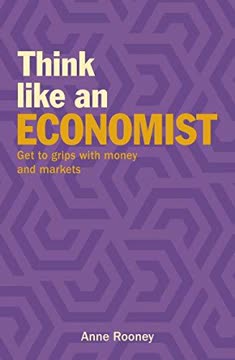
Think Like an Economist receives a 3.82 out of 5 rating across 38 reviews. Readers consistently describe it as a basic introduction to economics, ideal for beginners or those needing a refresher from college courses. The book effectively explains fundamental concepts like supply and demand in an easy-to-understand manner. While experienced readers find little new information, many appreciate revisiting economic fundamentals. Reviewers recommend it for middle school students, light readers, or anyone wanting short, clear explanations of economic issues without partisan bias.