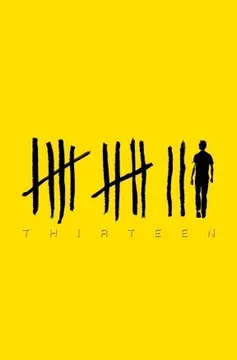


Plot Summary
Prologue
In 1982, sixteen-year-old Michael Brown was taken into care after attacking his parents. His room held a growing collection of writing about the devil, including a prophecy he called The Great Book. He later renamed himself Coron, drew followers around his teachings, and built a cult called The People, which began taking children from London.
By 2013, his book had expanded into a thousand-page doctrine. Its central claim was precise and murderous: a boy born at the turn of the millennium had to die before his fourteenth birthday, or Coron’s promised rule would never begin.
The prologue makes a private delusion the engine of a public threat. Coron’s prophecy does not begin as an ancient mystery or an outside force; it grows from one isolated boy’s fixation, then acquires authority as other people organize their lives around it. The birthday deadline gives the belief a frightening practical shape, while the repeated revisions to the book suggest that Coron is not discovering a truth so much as manufacturing one. The cult’s danger lies in turning a personal fantasy into a shared system, complete with rules, recruits, and victims.
Midnight’s Missing Child
On New Year’s Eve 1999, sixteen-year-old Kylie gives birth to Adam in a London hospital as the millennium begins. A wounded man arrives with a sword, convinced the baby is evil, but hospital porter Tyrone Macfarlane tackles him and the attacker vanishes after falling from a window.
Months later, overwhelmed and unable to care for Adam, Kylie leaves him on the steps of a bingo hall, mistaking its bright sign for a hospital. Cleaner Mrs Gowing takes him home and raises him until her death. When cult members find Kylie, they kill her for refusing to reveal where she left the child. She dies believing someone has found Adam, and this time her belief is right.
Adam’s survival begins with a sequence of mistaken readings: the attacker mistakes a baby for an apocalyptic enemy, Kylie mistakes a bingo hall for a place of safety, and Mrs Gowing turns an accidental discovery into a home. Each error has a consequence, but only the last one protects the child. The opening also makes care, rather than bloodline, the first force that saves Adam. Kylie cannot remain his mother, yet her desperate decision to leave him somewhere lit and public gives another woman the chance to choose him. The prophecy’s violence enters the story before Adam can know that anyone is looking for him.
The File Beneath the Folder
Thirteen years later, Adam Grant is a funny, restless schoolboy who steps in when Jake Taylor bullies his friend Leo. Adam hits Jake hard enough to earn a suspension, then discovers a file that overturns what he thought he knew: his adoptive parents took him in when he was three, not at birth.
They explain that Mrs Gowing had raised him without any known connection to him, and that she had kept the name Adam. His birth date remains unknown to them. Adam feels betrayed by the missing years, though he knows his parents love him. Meanwhile, Megan, his closest friend, spots a hooded watcher near their gardens. Adam dismisses the sighting, but the stranger has already been following him.
The adoption file turns identity into an unanswered practical question rather than a sentimental revelation. Adam’s anger is directed less at being adopted than at discovering that adults have withheld the circumstances that could explain him. His adoptive parents offer affection, but affection cannot substitute for information once he has found evidence that the story was incomplete. His school fight shows the same instinct in another register: he acts when someone vulnerable is targeted, then struggles to understand the force of his own anger. The watcher’s presence joins these two uncertainties, making Adam’s past and his immediate safety feel newly unstable.
The Thirteenth Candidate
Across London, The People are killing boys born around midnight at the millennium, following Coron’s belief that one of them threatens his coming kingdom. At a Tube station, Nick is pushed beneath a train, becoming the eleventh victim.
A second boy is murdered in his bed and left to look like an accidental overdose, bringing the count to twelve. Coron’s followers trace Adam through the records surrounding Mrs Gowing and the adoption, then conclude that he is the last boy alive on their list.
Inside their isolated headquarters, children are taught that Coron’s prophecy is history, that outsiders are corrupt, and that punishment is deserved. Coron assigns Viper, Cobra, and two younger followers to kill Adam at a music festival, while Adam remains unaware that his birthday has made him their target.
The countdown turns a supernatural-sounding prophecy into procedural murder. The cult does not need Adam to display any power; it needs only a pattern, a list, and a leader capable of persuading followers that arithmetic proves destiny. The children’s indoctrination is particularly unsettling because it recasts obedience as moral clarity: violence becomes service, and doubt becomes betrayal. In parallel, the ordinary administrative trail of an adoption becomes the means by which Adam is found. The danger grows through systems that appear mundane, from police and care records to classroom discipline, rather than through anything visibly magical.
The Pond Escape
As Adam and Megan leave school, Megan recognizes their pursuer as the supposed playground cleaner who has appeared in several places. When he chases them through Paradise Fields, Adam hesitates between fighting him and fleeing. Megan chooses the pond, wades across, and reaches a number 13 bus just before the older boy catches them.
On the ride home, Adam kisses her, and she does not pull away. Their closeness deepens just as Adam’s life seems to open outward: he and Megan travel to Rock Harvest with friends, where they meet a lively group of older festivalgoers, including the charming Keenan and Cassie. Adam takes their attention as friendship, while the scarred watcher continues tracking him through the crowd.
The pond crossing is a small but consequential reversal of Adam’s usual response to threat. He has relied on physical courage and anger, but Megan reads the terrain more clearly and saves them by choosing escape over confrontation. Their kiss follows because danger has stripped away some of Adam’s usual joking evasions, though he still does not know how to name what he feels. The festival then offers a persuasive image of growing up: older friends, music, flirtation, and risk. That apparent freedom is precisely what makes the trap effective. Adam’s desire to belong briefly outruns his instinct to question strangers.
Truth Or The Knife
At Rock Harvest, Keenan and Cassie draw Adam and Megan into drinking and a late-night game. Keenan sends Adam away on a dare, leaving him exposed to the scarred boy who has followed them. When Adam returns, Keenan restrains him and reveals that the friendly group belongs to The People. They take him to a hill and prepare to kill him as a sacrifice.
Simon, the scarred teenager, attacks the group and knocks the knife loose. Adam grabs it as Harry lunges at him; Harry is fatally stabbed, leaving Adam convinced that he has become a murderer. Simon urges him to run. Adam returns to the campsite, finds Megan, and hides what happened, but takes the attackers’ locked case with him, unaware that it contains money and a loaded pistol.
The betrayal works because it exploits Adam’s ordinary adolescent longing to be treated as older. The game, the cider, and the flirtation make a killing plan feel like an extension of teenage daring until restraint and ritual expose the trap. Adam’s accidental killing is not a clean heroic victory: he survives, but his first response is guilt and secrecy. That secrecy immediately isolates him from the adults who could protect him. Simon’s intervention complicates the scene further. The person Adam feared is also the person who breaks the ritual, yet Adam has no context for trusting him.
Fire Through the Grant House
Back home, Adam confides in Megan, who urges him to tell his parents and the police. He delays, keeping the case and its pistol hidden. Coron’s followers break into the Grant house, spread petrol through the rooms, and try to burn Adam alive. Adam’s father is shot when he confronts them. Adam fires the pistol, killing Cobra and wounding Coron; Simon rushes in and helps drag Adam’s mother from the flames.
Adam’s father survives the fire but is badly injured, and both parents are taken to hospital. In the wreckage, police find the dead attacker and another gun, while Adam’s attempts to explain are overtaken by suspicion. The house is gone, and the family’s safety has collapsed into a criminal investigation.
The attack converts Adam’s concealed guilt into immediate responsibility. He has kept the pistol because he fears the cult, but when the danger reaches his parents, the weapon forces a choice he is not prepared to make. His action saves lives and causes a death, making self-defence morally and emotionally difficult for him to separate from murder. The fire also destroys the home that had seemed stable despite Adam’s questions about his origins. His parents’ love is no longer an abstract reassurance; they are physically endangered because they took him in. The rescue depends again on Simon, whose presence remains unexplained.
The False Police Transfer
After Adam admits to shooting two people, DCI Hatfield takes him toward a station for minors, accompanied by policewoman Marcia. Megan receives a warning text that Hatfield cannot be trusted, but too late to stop the transfer. On the motorway, Adam realizes the adults are speeding away from London and fighting his attempts to get out.
He attacks the driver; the car crashes into a lorry, killing Marcia and injuring Hatfield. Adam escapes across traffic and clings to a passing tanker before reaching a service station, then sneaks onto a coach back to London. Simon finds him near the park and takes him to a hidden squat. There, Simon explains that he was raised by The People, killed boys for them, and is Hatfield’s son and Viper’s brother.
The crash reveals how thoroughly Adam’s ordinary institutions have been compromised. A police badge, a transfer, and a reassuring adult voice no longer guarantee protection; Adam has to judge danger through actions, not titles. His escape is physically desperate and morally costly, since Marcia dies and Adam is once again responsible for violence he did not initiate. Simon’s confession offers a map of the conspiracy but also destroys the simpler idea that a rescuer must be innocent. His guilt has not made him trustworthy automatically; his choice to protect Adam is the evidence he can offer.
Folders Become Lifelines
Adam and Simon hide near Paradise Fields while Megan uses the colour of her school folders to send coded messages along her walk home. Adam learns that his parents are recovering, and Simon plans to wait until they can expose The People with evidence. The cult watches Megan, traces a warning message to the park, and identifies her as Adam’s link.
At the British Museum, Viper lures Megan outside and cult members force her into a van. Deputy head Mr Sterling intervenes and is shot in the shoulder, but the kidnappers escape with Megan. Coron brings her to the Old School House and threatens her for Adam’s location. Adam and Simon set out to find her, while Coron’s followers move explosives toward a coordinated attack on London.
The folders transform Megan’s ordinary school routine into a covert language, showing how friendship can become infrastructure under surveillance. Its simplicity is also its weakness: the signals are legible to anyone who studies her habits long enough. Megan’s capture demonstrates the cost of Adam’s hiding without turning her into a passive hostage; she refuses to provide his location even when threatened. Sterling’s intervention gives his dry, unsentimental care a concrete form, but it cannot undo the cult’s reach. The explosives widen the stakes beyond Adam’s survival, shifting the story from private pursuit toward a planned public catastrophe.
The School House Explodes
Adam and Simon reach the Old School House and find a body displayed outside, along with signs directing Simon toward his sister. Simon runs inside to reach Viper, who has been confined in Dorm 13, while Adam heads for the summer house where Megan is held. Simon reaches a room wired with explosives; the blast tears through the building and kills him.
Adam finds a phone and a map left for him, then calls Coron, who keeps Megan captive and orders Adam to surrender. Rather than follow Coron’s route, Adam bargains for an exchange in Trafalgar Square, where witnesses might protect Megan. Coron accepts. The explosion destroys the cult’s headquarters, but it does not end its power or its plan.
The rescue attempt is built around two different forms of loyalty. Simon rushes toward the sister who has helped hunt Adam, while Adam refuses to treat Megan’s safety as a price he can simply pay with his own life. The explosion makes Simon’s past irreversible and leaves Adam with no guide except the message and map he has found. The public exchange is a tactical choice born of limited options, not a confident plan. Adam understands that Coron controls people and places, so he tries to use visibility as protection. The cult’s survival after its headquarters is destroyed shows that an institution can outlast its building.
A Bargain in Trafalgar Square
At Trafalgar Square, Adam rushes Coron while Megan breaks away, but Coron’s followers seize Adam and load him into a van. Megan ends up in a car driven by Hatfield, who takes her to the station rather than trusting her account of the cult. Mr Sterling had gone to police before the meeting, hoping to protect her, and his choice helps put her back in official custody.
Officers dismiss her story as confusion around gang violence. Coron keeps Adam hidden and uses noise, isolation, and physical punishment to wear him down. Megan returns home believing Adam remains in the cult’s hands. The two friends are separated again, each surrounded by adults who mistake control for safety.
The public square briefly appears to give Adam leverage, but visibility cannot protect him when the cult has planted people throughout the crowd. Megan’s escape is real yet incomplete: Hatfield takes her away from Coron, but his authority is compromised, and the police do not believe her. Sterling’s decision is similarly ambiguous. He acts from concern, but by contacting the institution Adam has learned to distrust, he unintentionally helps separate the friends. The scene’s emotional force comes from these failures of recognition: Megan tells the truth and is treated as unreliable, while Adam is treated as dangerous even when trying to protect her.
The Wristband’s Warning
For weeks, Adam lets Coron believe that he accepts the cult’s prophecy, even repeating phrases from The Great Book to gain access and time. Coron plans to sacrifice him on the tallest building in London at midnight on New Year’s Eve, while explosives are placed around the city. When Hatfield takes Adam to Simon’s former flat, Adam secretly leaves a message in the toilet cistern for Megan.
She is hiding in the loft above, and after the cult searches and leaves, she finds his red wristband and learns about the planned bombs. A guard discovers her hiding place; Megan knocks him down with a frying pan, takes his gun, and escapes. She sees that police have named her and Adam as suspects, but keeps moving toward the final confrontation.
Adam’s apparent conversion is a performance designed to survive an environment where every visible refusal brings punishment. His use of the Great Book is psychologically sharp: he does not have to believe Coron’s system to exploit its need for confirmation. Megan’s hiding place reverses the usual relation between visibility and safety. The cult searches the flat but misses the space above them, while the message survives because Adam knows her habits and the keepsake she values. Her escape requires violence, but the frying pan and the stolen gun are tools of necessity, not symbols of sudden mastery. Both children act with incomplete knowledge and little time.
Twelve Bells Above London
On New Year’s Eve, Coron brings Adam to the top of the Shard, binds him, and prepares to hang him outside the shattered window as the bells mark Adam’s fourteenth birthday. Viper holds the transmitter meant to trigger bombs at thirteen London landmarks. Megan arrives with the gun taken from the guard and shoots Viper’s arm, knocking the device away.
Adam kicks Coron over the edge with him; both boys hang from ropes high above the city. Megan fights Viper away from the transmitter, and Coron loses his grip and falls. Viper also falls from the building. Adam survives and turns fourteen as the final bell sounds, while the planned detonations are prevented. His parents are alive, and the cult’s leader is gone.
The climax defeats the prophecy through practical human action rather than a supernatural counterforce. Coron has built his authority on the claim that Adam’s birthday determines the world’s future; Adam reaches that birthday by resisting, improvising, and accepting help. Megan’s role is decisive because she acts where the cult expects her to be leverage, not an agent. The ropes, transmitter, and crowded city make the conflict concrete: belief has become a mechanism that can be stopped. Coron’s fall closes the immediate struggle, though the story’s final afterword leaves the wider reach of cult violence unsettled.
Epilogue
In June 2014, a government inquiry reviews the failures surrounding the New Year attacks. Adam and Megan are praised privately but kept anonymous in the report. Adam chooses to celebrate with friends, finally holding the birthday party he never had.
With Asa, Leo, Rachel, and Megan around the table, the ordeal briefly gives way to pizza, spilled Coke, and ordinary company. Yet the closing image shifts far from London: in a distant castle, a girl pounds on the glass of a container and begs for help. The report has ended, but another life remains imprisoned.
The epilogue offers an earned return to ordinary time without pretending that survival resolves every wound. Adam’s belated party restores a small ritual that the prophecy had tried to claim as a deadline for death. His choice to spend it with friends makes belonging, rather than cosmic destiny, the story’s final measure of a life. The inquiry acknowledges institutional failures, but its formal language cannot contain the human cost. The girl trapped in the castle abruptly breaks the comfort of closure: the immediate threat has ended, while coercion and captivity persist elsewhere. Recovery is real, but it is not the same as a finished world.
Analysis
Thirteen is built around the collision between a private fantasy and the machinery of ordinary life. Coron’s prophecy is irrational, but its consequences become concrete through adoption records, school routines, police procedure, weapons, and explosives. The novel therefore locates danger not in belief alone, but in belief backed by organization and authority. The People make violence seem ethical by giving it a schedule, a vocabulary, and a community of witnesses.
Adam’s central conflict is the struggle to remain a person rather than become a role assigned by others. His birth makes him the cult’s chosen enemy; his adoptive history leaves him with unanswered questions; his acts of self-defence leave him afraid that he has become what he resists. The story does not make his survival morally effortless. He carries guilt, withholds the truth, and sometimes acts rashly. His growth lies in learning that courage is not the same as solitary action. Megan’s judgment, Simon’s knowledge, and even imperfect help from adults repeatedly change what Adam can do.
Megan’s arc gives the book a second model of agency. She does not possess Adam’s physical force or Simon’s knowledge, but she notices patterns, makes plans, and refuses to surrender another person’s location under coercion. Her coded folders and hidden wristband turn care into practical intelligence. Their friendship is not merely an emotional refuge; it is a working partnership.
The novel’s most unsettling insight concerns institutions that look protective. The police, adoption system, school, and cult all depend on records and rules, yet their moral value depends on how people use them. The cult’s routines discipline children into harm, while Adam’s family uses ordinary care to give him stability. The ending distinguishes survival from closure: Coron’s immediate campaign is stopped, but the final imprisoned girl suggests that organized coercion can persist beyond one leader and one city.
Review Summary
Thirteen received mixed reviews, with an average rating of 3.42 out of 5. Readers praised its fast-paced, thrilling plot about a cult targeting 13-year-olds. Many found it addictive and suspenseful. However, some criticized the lack of character depth and development. The writing style was divisive, with some finding it simplistic or condescending. Some felt the violence was too intense for the target age group. While some readers couldn't put it down, others found it disappointing or unrealistic.
People Also Read
Characters
Adam Grant
The hunted birthday boyAdam is a thirteen-year-old adopted boy with a quick joke, a protective streak, and an anger that can outrun his judgment. He cares deeply about his friends, especially Megan, and instinctively steps between bullies and people they target. Discovering that his adoption happened when he was three unsettles his sense of identity, but his adoptive parents remain the emotional centre of his home life. Adam’s fear does not make him passive: he improvises under pressure, though guilt often follows his survival. His central struggle is not to become the figure other people have imagined for him. He wants an ordinary life with his friends, and he repeatedly chooses their safety over the story imposed on his birth.
Megan James
Adam’s clear-eyed allyMegan has been Adam’s closest friend since childhood, and she often sees danger before he does. Intelligent, observant, and practical, she recognizes the watcher in places Adam has dismissed as coincidence and chooses action when panic might be easier. Her affection for Adam is mixed with the awkwardness of growing up beside someone who has always felt like home. Megan is neither fearless nor invulnerable; she understands the risks and still makes decisions based on who may be harmed if she stays silent. Her loyalty is active rather than sentimental: she notices patterns, communicates carefully, and refuses to treat Adam as a problem to be handed over to someone else.
Simon
The scarred older watcherSimon is a guarded seventeen-year-old whose watchful presence first seems threatening. He knows how to move without being noticed and carries a burden of guilt that makes him wary of easy explanations or forgiveness. His connection to Adam’s pursuers gives him knowledge that Adam urgently needs, but it also makes trust difficult. Simon tries to turn the harm he has caused into protection, though he does not pretend that doing good can erase what came before. He is older than Adam but still a young person shaped by institutions that taught him obedience before he could question it.
Coron
The prophet of the cultCoron is the charismatic founder of The People and the author of the doctrine that organizes their lives. His soft manner can make his authority feel reassuring, but it rests on absolute certainty and an appetite for control. He interprets visions as commands, then turns his interpretations into rules for adults and children alike. Pain becomes proof of devotion; doubt becomes disloyalty. Coron needs Adam not only as a victim but as confirmation that his imagined world is real. His ability to recruit and command others makes his private delusion a social and physical danger.
Viper, also known as Cassie
The cult’s polished discipleViper is a young follower of Coron who can pass easily as an ordinary, confident teenager. At the festival she uses the name Cassie, and her ease with flirtation and games helps conceal how carefully she serves the cult. She has grown up inside a world that rewards obedience and frames violence as meaningful work. Her attractiveness and apparent warmth make her difficult for others to read, especially when she shifts from friendliness to threat. Viper’s identity is shaped by the approval she seeks from Coron and by the rigid community that has taught her to confuse power with belonging.
DCI Hatfield
The compromised detectiveDCI Hatfield is an experienced police officer whose calm manner initially encourages trust. He speaks with the authority of someone accustomed to directing frightened people and controlling an investigation. Adam and Megan have reason to rely on adults like him, which makes it difficult for them to recognize when official procedure is not protecting them. Hatfield’s family life and professional identity intersect in ways that he keeps concealed. He represents the danger of institutional trust when a person’s public role and private loyalties do not align.
Mr Sterling
The dry-witted deputy headMr Sterling is Adam’s deputy head, a tired, sardonic man who often sounds harsher than he intends. He dislikes performance and refuses to pretend he understands situations when he lacks the evidence. Beneath his dry manner is a willingness to intervene when a student is in danger. His imperfect judgment matters as much as his courage: he tries to help using the institutions he knows, even when those institutions cannot be trusted completely.
Mr Grant
Adam’s adoptive fatherMr Grant is one of Adam’s adoptive parents, offering steady affection and ordinary parental boundaries. He cares about Adam’s behaviour at school without reducing him to his worst moment. The revelation about Adam’s adoption challenges the family, but Mr Grant responds with honesty about what he does and does not know. His bond with Adam is built through years of daily care rather than biology.
Mrs Grant
Adam’s adoptive motherMrs Grant is Adam’s adoptive mother and a source of warmth, concern, and familiar routine. She wants to protect him, though she cannot anticipate the danger gathering around him. When Adam discovers the adoption record, she and her husband explain the facts they have rather than inventing certainty. Her instinct is to keep her son safe and emotionally connected to the family that raised him.
Kylie
Adam’s frightened birth motherKylie is sixteen when she gives birth to Adam. Overwhelmed by poverty, isolation, and her own distress, she cannot care for him alone. Her decision to leave him somewhere she believes is a hospital is desperate, but it is also an attempt to give him a chance at safety.
Mrs Gowing
The unexpected caregiverMrs Gowing is a cleaner who finds Adam abandoned outside the bingo hall where she works. She has long wanted a child and quietly takes him home, raising him until her death. Her decision is compassionate but secretive, leaving questions about Adam’s earliest years that later complicate his adoption.
Asa
The talkative school friendAsa is one of Adam’s friends, energetic, sociable, and fond of presenting himself as an expert on games, music, and romance. He brings comic confidence to the group but can be less perceptive than Megan or Leo. His friendship gives Adam a connection to the ordinary school life he longs to recover.
Leo
The clever, awkward friendLeo is Adam’s thoughtful friend and a strong student who is often the target of Jake’s bullying. He is awkward in social situations but loyal to the people who treat him well. Adam’s decision to defend Leo reveals how quickly his protective instincts can become physical.
Rachel Meyer
Megan’s popular friendRachel is Megan’s sociable friend, admired by classmates and comfortable attracting attention. She enjoys teasing Asa and sharing the energy of school and festival life. Her presence helps establish the ordinary peer world Adam and Megan are trying to inhabit.
Cobra, also known as Keenan
The festival recruiterCobra is a confident teenage follower of Coron who uses the name Keenan at Rock Harvest. He is physically imposing and skilled at presenting himself as a charming older friend. His authority among the younger cult members comes from his confidence and his willingness to carry out Coron’s commands.
Python, also known as Harry
The quiet cult followerPython is a young follower of The People who joins the festival group under the name Harry. He is less commanding than Cobra but participates in the cult’s plan against Adam. His role shows how the group turns ordinary adolescents into participants in organized violence.
Asp
The uncertain young discipleAsp is a young member of The People chosen to take part in the attempt on Adam. She has been raised within the cult’s strict beliefs and depends on Coron’s approval. Her unease around life outside the compound exposes the strain between her conditioning and her capacity to enjoy ordinary freedom.
Marcia
Coron’s trusted accompliceMarcia is an adult member of The People who helps carry out Coron’s plans. Practical and close to the leader, she participates in the cult’s operations while maintaining an outwardly composed manner. Her role illustrates how the group’s violence depends on adults as well as indoctrinated children.
Plot Devices
The Great Book
Prophecy turned into ordersCoron’s handwritten doctrine gives The People a story in which Adam’s birth threatens a new kingdom and his death will begin it. The book collects religious references, dates, predictions, and Coron’s own visions, making delusion look like a coherent system. Its repeated claims guide the cult’s killings, punishments, and plans. Adam later studies its language and uses Coron’s need for confirmation to conceal his resistance. The book is therefore both the cult’s command structure and a tool Adam can manipulate.
The Thirteen-Boy List
A countdown disguised as proofThe People compile thirteen boys born to single mothers around the millennium, treating the list as evidence that Coron’s prophecy is unfolding. Each death narrows their search until Adam remains. The list turns coincidence and incomplete records into certainty, allowing the cult to justify murder as necessary work. Adoption records eventually connect Adam to the final entry, demonstrating how ordinary paperwork becomes dangerous when interpreted by people committed to a fixed conclusion.
Dorm 13
Isolation as punishmentDorm 13 is a sealed, windowless room used to break the will of children and adults who disobey Coron. Its relentless, unpredictable noises deprive prisoners of sleep and make them vulnerable to fear and confusion. The room embodies the cult’s method: it calls coercion correction and presents suffering as a route back to obedience. Its threat shapes the decisions of those raised inside The People, while Adam later encounters the same psychological weapon as a captive.
The Red Wristband
A friendship made into codeMegan gives Adam a red wristband tied to a shared memory. It becomes a private emotional anchor during his captivity and, later, a hiding place for a warning about the planned attacks. Earlier, Megan and Simon use the colour of her school folders to signal through the park, turning her routine walk into a communication system. Together these simple objects show how the friends adapt familiar habits into messages that surveillance has difficulty reading.
The Shard Bomb Plan
A citywide threat with one switchCoron’s followers place explosives at London landmarks and prepare a transmitter to set them off together at midnight. Adam is to be displayed at the top of the Shard as the sacrifice that supposedly inaugurates the new kingdom. The plan fuses Coron’s private prophecy with public spectacle, using a real city and a precise deadline to make his delusion materially dangerous. Megan’s intervention at the transmitter prevents the planned sequence from being triggered.
Download PDF
Download EPUB
.epub digital book format is ideal for reading ebooks on phones, tablets, and e-readers.








