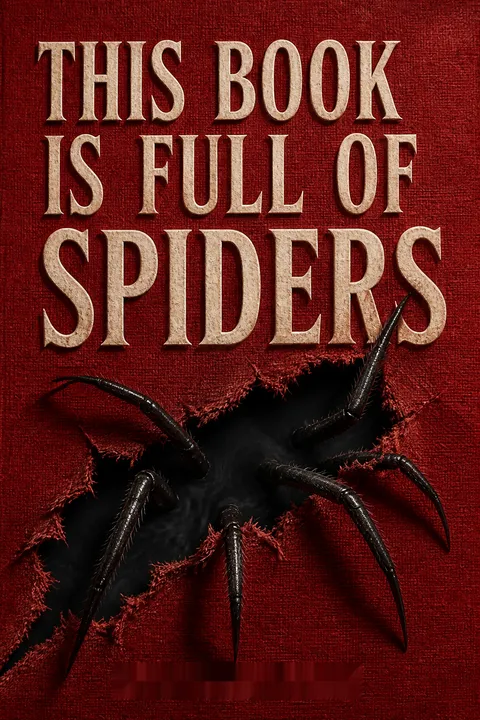


Plot Summary
Prologue
David Wong1 opens with a warning about an invisible presence, then rewinds to the night he and his friend John2 find an unmarked military convoy near their town. One truck crashes and continues without the others. Inside, its driver has been replaced by a tiny toy soldier, while a locked green box is guarded by more plastic figures.
John2 takes the box, because secrecy makes him curious rather than cautious. Their town has long been plagued by impossible disappearances, creatures, and official cover stories, and David1 hints that the box is only one part of a much larger pattern.
The prologue uses comic bravado to make recklessness feel like a local survival skill. John’s curiosity is not merely a personality quirk: in a town where authorities conceal danger and ordinary explanations repeatedly fail, investigating the forbidden becomes a way to reclaim agency. The toy soldier in the empty truck also compresses the book’s larger anxieties into a single image. A human life can be reduced to an object, while the people who discover the evidence are too compromised to understand its scale. The green box promises an answer, but its presence first establishes how little control the friends actually possess.
Therapy Meets the Shadow
Court-ordered therapy follows David’s1 crossbow attack on a pizza deliveryman he mistook for a monster. He insists that he can tell fantasy from fact, then shows Dr. Bob Tennet6 a video of an Asian man entering a burrito stand’s back room and vanishing. David1 also recounts water stopping around an invisible shape in his shower, followed by a fleeting black figure.
Tennet6 does not dismiss him. Instead, he tells a story about his wife hearing a living pulse in their laundry-room wall, which turned out to be a vast hive of bees. David1 takes the anecdote as evidence that real monsters can hide inside ordinary explanations. The conversation leaves him less reassured, and more certain that Tennet6 understands his fear.
David’s central conflict begins as a struggle over credibility. His fear is not simply that monsters exist, but that describing them makes him sound indistinguishable from someone delusional. Tennet recognizes the social cost of being disbelieved, yet his bee story offers no stable comfort: the harmless explanation can itself conceal danger. This exchange establishes the novel’s recurring problem of limited perception. People are not only unable to see what threatens them; they also use social confidence, professional authority, and familiar categories to decide what counts as real. David wants validation, but validation may not make him safer.
The Bedside Parasite
David1 wakes in darkness with a jointed, armored creature clamped to his ankle. He kicks it away, but its venom leaves his limbs numb and drops him helplessly onto the carpet. His dog, Molly,4 wanders in and tears several legs from the creature before it escapes. When David1 regains movement, the animal ambushes him again, bites his face, and leaves one leg fused to his shoulder.
He cuts the remnant free with a utility knife and traps the creature beneath a laundry basket. Officer Franky Burgess arrives after neighbors report the disturbance, but he cannot see the monster even as it crawls out of its cage. It disappears before Franky can confirm David’s1 account, leaving David1 injured and isolated.
The encounter turns private fear into a test of shared reality. David’s injuries are visible, but their cause is not, so the evidence that should persuade Franky instead makes David look unstable. Molly’s intervention briefly reverses the usual human-animal hierarchy: the dog recognizes the threat and acts while the people cannot. The episode also makes invisibility a practical weapon rather than a supernatural flourish. The parasite can attack without being acknowledged, and that gap between experience and public proof will soon become a civic crisis. David’s loneliness is therefore structural, not merely emotional: no witness can help if the danger remains perceptually unavailable to them.
Franky Leaves the Hospital
David1 tries to keep the creature hidden from Franky, but it climbs onto the officer and burrows into his mouth. John2 arrives and drives Franky to the hospital in the stolen squad car. Doctors and police fill the emergency entrance; gunfire erupts inside, and Franky emerges riddled with bullets yet still moving.
His broken arm twists into a weapon, and his shriek knocks people unconscious. The National Guard seals the hospital and orders witnesses to remain inside the quarantine.
David1 and John2 escape through one of the town’s strange doors, which links to other doors but never reliably to the same place. They emerge at a Walmart, outside the immediate cordon. John2 then tells the news what he saw, drawing attention to himself and making the authorities more suspicious.
The outbreak begins not with a clear invasion, but with an institution’s failure to distinguish the injured from the dangerous. The hospital is supposed to restore order, yet its doctors and police can only answer a threat they cannot perceive with bullets and containment. Franky’s transformation makes the public response look justified, even as it confirms the limits of that response. John’s televised account is both courageous and tactically careless: truth reaches the public, but in a form that reinforces his reputation as a crank. The magic doors offer escape without reliable control, a small-scale version of the larger predicament facing the town.
The Turkey-Farm Hunt
While authorities search the woods for Franky, John2 reasons that the infected officer may follow familiar habits and searches the places where local police eat. A report of stolen turkeys leads him to a processing plant. Franky attacks, and John2 runs inside a building packed with live birds. A smaller parasite has attached itself to a turkey and uses its long limbs to bind birds into a towering, shambling body.
John2 escapes in a farm truck, but crashes it into a lake and nearly drowns among the turkeys. Police arrest him after he reaches shore. The pursuit confirms that the creature is not a one-off attacker: parasites can multiply, alter bodies, and turn whatever surrounds them into material for further violence.
John’s improvised investigation shows both his intelligence and the cost of his impulsiveness. He correctly anticipates that Franky’s former routines might survive inside the infection, but he enters the hunt intoxicated, unprepared, and without the chainsaw he meant to bring. The turkey creature makes the threat grotesquely adaptive: the parasite does not need a human body to become dangerous. Its use of a flock as a composite body also unsettles the assumption that monstrosity is an individual condition. The crisis is not only that people can be taken over, but that the environment itself can be assembled into a weapon.
The House Becomes a Nest
Franky reaches David’s1 home carrying stolen turkeys, and the parasites hatch across David’s1 bed. John2 arrives with a chainsaw and helps decapitate the infected officer, but Franky’s severed head crawls toward the door. David1 traps it in the bedroom with the newly hatched parasites. Detective Lance Falconer5 arrives and, unable to see the infestation, assumes David1 and John2 are hiding a crime.
They lock the room and set the house alight, believing the fire will destroy the nest. Instead, it draws firefighters and onlookers. An infected firefighter attacks, and the burning house releases waves of tiny parasites into the crowd. David1 and John2 flee as the infection spreads beyond the building they meant to contain.
This is the novel’s decisive failure of containment. David and John make a desperate, intelligible choice: destroy the nest before it spreads. Their mistake is not simply recklessness; it is acting without the power to make others understand the danger or keep them away from the fire. Falconer’s skepticism, the firefighters’ unprotected intervention, and the neighbors’ curiosity combine into a chain of ordinary behavior with catastrophic consequences. The scene also gives David a concrete form for guilt. Like his earlier workplace mistake with the DVD security system, a practical decision meant to solve a local problem becomes the mechanism that harms a much larger group.
Amy Arrives Too Late
Amy Sullivan,3 David’s girlfriend,3 takes a bus toward town after hearing that something has happened. The highway is blocked, the phones fail, and the news shows David’s1 house burning. John2 and David1 have already escaped to a shopping center outside town. David1 sees Amy’s3 message and rides a borrowed dirt bike back toward the cordon, hoping to reach her through a portal at a portable toilet.
The door takes him to a guarded area instead. Soldiers shoot him, and he falls unconscious. John2 finds Amy3 at the shopping center and tells her David1 is still inside. With no safe way to return, the two head north, leaving David1 in government custody and Amy3 without any confirmation that he survived.
The separation is produced by systems that claim to protect people: roadblocks, emergency communication networks, and quarantine procedures. For Amy, love becomes a practical obligation to move toward the danger; for David, the same impulse drives him back through a guarded portal. Their choices mirror each other, but the machinery of containment prevents them from meeting. The scene also shifts the story’s emotional center from David’s disbelief to Amy’s uncertainty. She cannot distinguish a manageable emergency from a catastrophe, and the missing information itself becomes a form of coercion. The state’s silence does not merely delay rescue; it dictates who can reach whom.
A Town Behind Fences
Over the following days, Amy3 stays near the university with John,2 who drinks heavily and fails to follow through on contacting the monster expert Albert Marconi.7 She keeps calling David,1 searches for official information, and learns that the government has moved possible cases into quarantine without establishing a reliable test.
When John2 retreats into a motel, Amy3 turns to Josh Cox13 and the university’s Zombie Response Squad. Their preparation becomes useful when rumors of infection spread, but the group’s confidence is built on games, guns, and an assumption that the infected are easy to identify.
Amy3 also discovers that the public story is changing faster than facts can be checked. She decides that if David1 is in the quarantine, she must find a way back to him.
Amy’s initiative contrasts with John’s retreat without reducing either character to a simple moral type. John is overwhelmed and self-medicates; Amy converts fear into lists, calls, and concrete tasks. Yet her new allies reveal how preparedness can become another kind of fantasy. The Zombie Response Squad has rehearsed catastrophe as entertainment, so the real crisis threatens to turn their competence into performance. The novel’s humor sharpens rather than softens this criticism: weapons and terminology can create the feeling of readiness without the judgment required to protect people. Amy’s persistence is valuable precisely because she remains attentive to specific lives, not merely to the scenario.
The Spider-Man of Quarantine
David1 wakes handcuffed in the dark basement of the abandoned Ffirth Asylum, where eight-year-old Anna11 keeps him company with a stuffed bear. Dr. Tennet6 appears in a protective suit, says David1 has been repeatedly tested, and returns him to the hospital quarantine with much of his recent memory erased.
The hospital has become an improvised settlement divided between red and green jumpsuit groups, with Owen10 controlling the lower floors and the only gun. The inmates call David1 Spider-Man because he can see the invisible parasites.
He is expected to inspect new arrivals, though the group’s improvised system offers no certainty. When he misses an infected woman among the newcomers, Owen’s10 trust in David1 weakens and another prisoner is killed trying to climb the fence.
David’s memory loss makes him a stranger in the consequences of his own earlier actions. He has to learn the quarantine’s rules as though entering a community whose history has been hidden from him, while others treat his former reputation as evidence of authority. The title Spider-Man is less a compliment than a job imposed on him: his unusual sight makes him useful, but also responsible for decisions no person should have to make alone. The red and green factions reveal how quickly emergency sorting becomes social hierarchy. In the absence of reliable institutions, a fragile perceptual advantage is mistaken for a trustworthy system.
Molly Finds the Tunnel
Molly4 makes her way into the quarantine and finds David,1 who realizes she must have entered through an old steam tunnel beneath the hospital. He and TJ Frye8 inspect the passage and discover it leads toward the asylum, outside the visible perimeter. TJ8 warns that many inmates have never been checked for infection, so an escape could carry parasites into the unquarantined town.
David1 nevertheless helps gather a small group, including Hope,9 Corey, and several others, and asks a doctor for supplies. More people join than the plan can safely move. Owen10 discovers the tunnel before David1 can enter. At the far end, gunshots and screams erupt, showing that the asylum is no refuge and leaving David1 trapped with the consequences of a failed escape.
Molly’s arrival gives David a living link to the world beyond the fence, but the tunnel turns hope into an ethical problem. Escaping could save the uninfected prisoners, yet it could also spread an invisible threat among people who have no way to detect it. TJ understands that freedom is not a purely individual good when one person’s route out may endanger many others. David’s decision to organize the attempt reflects his compassion, but his planning remains incomplete and overlarge. Owen’s control is brutal, yet the novel makes the conflict harder than a simple tyrant-versus-prisoners story: both sides fear becoming responsible for mass death.
The Asylum Massacre
Amy3 joins Josh’s13 armed squad on a mission to reach the old asylum, where they hope to help the quarantined. The team enters through a basement window and finds a hidden cell block, a mutilated patient, and a maintenance room riddled with bullet holes. Monsters surge from the room and kill the squad one by one.
Amy3 watches the attack through Josh’s13 gun camera, then escapes the RV when a creature kills its driver, Fredo. Molly4 leads her through the asylum’s lower rooms and into the old steam tunnel. Amy3 crawls for what feels like hours, pursued through the dark, before breaking through a blocked passage into an abandoned REPER office. There she finds working computers and begins searching for a way to stop the operation.
The massacre dismantles the fantasy that force and equipment can substitute for judgment. Josh’s squad has an arsenal and a plan, but its members cannot assess the building or respond coherently once the threat exceeds their rehearsed images. Amy’s survival depends instead on endurance, attention, and her bond with Molly. The camera feed makes spectatorship part of the horror: Amy sees violence as mediated images until the attack reaches her own vehicle. Her escape through the tunnel reverses the earlier failed escape plan. What was an uncertain route from confinement becomes a passage into the machinery of the people who created the quarantine.
John Stops the Clock
John2 and Falconer5 escape the REPER processing center after setting a controlled fire, then John2 retrieves the Soy Sauce hidden near David’s1 burned house. The black liquid lets him stop time as a malformed creature dives toward Falconer.5 Unable to move anything frozen, John2 explores the silent town and reaches the quarantine, where he sees David1 alive among the prisoners.
He returns to Falconer5 and arranges his own clothes around the attacker so it will be restrained when time resumes. The creature is killed, but the experience does not give John2 a simple way to rescue David.1 He continues searching for the green box and the equipment that may matter, carrying the knowledge that his friend is still alive but unreachable.
Time stopping grants John extraordinary access while withholding the ordinary power to intervene. He can witness the quarantine, confirm David’s survival, and inspect the consequences of the outbreak, yet frozen matter resists him. This distinction separates knowledge from control, a distinction the novel repeatedly tests. John’s choice to return to Falconer rather than exploit his temporary freedom also complicates his self-image as an irresponsible drifter. He remains impulsive, but loyalty gives his actions direction. The Soy Sauce magnifies what is already present in him: curiosity, improvisation, and the wish to repair damage that his earlier decisions helped cause.
The Cadillac Breakout
David1 is brought before Owen,10 who blames him for the failed tunnel attempt and prepares to execute him. John2 arrives in a Cadillac hauled on a tow truck and launches the car over the quarantine fence, scattering the bonfire and the bones it contains. He finds David1 and persuades him to flee with him and Marconi.7
The Cadillac smashes through the inner fence but stops at a concrete barrier, exposing the group to an unmanned gun turret. They escape the vehicle and run toward the old asylum, using a portal to reach its grounds. The breakout reunites the friends, but the crash also confirms that the quarantine’s security is failing and that the military’s response is likely to become more extreme.
John’s rescue is spectacular because it is both a genuine act of devotion and a deeply impractical plan. The ramped Cadillac converts his habit of reckless improvisation into a means of breaking a prison, but the concrete barrier immediately reminds everyone that daring does not equal foresight. David’s survival depends on John, yet the escape exposes the larger cost of any breach. The scene also gives the quarantine’s violence a material history: the bones in the fire are the remains of people whom the institution failed to protect. Their presence turns the rescue into an escape from a system already built on sacrifice.
Anna Opens the Way
At the damaged asylum, a little girl named Anna11 leads David1 and John2 through the building, warning them away from the dark stairwells. They find Amy3 in the abandoned REPER office, where she has used the computers to study the operation.
Amy3 has disabled the ground security robots and contacted Captain Shane McInnis, a drone pilot, with evidence that people inside the quarantine were wrongly classified. She explains that the government plans to bomb the entire town, not only the hospital.
Anna’s father,12 Carlos,12 arrives and confirms that some infected people can remain controlled, while Dr. Tennet6 is aligned with a more dangerous force. The reunion gives the three friends a chance to act together, but leaves them less than an hour to stop the bombing.
The reunion does not restore the old world; it assembles a temporary team inside the enemy’s abandoned infrastructure. Amy brings technical knowledge and a clear record of what the system is doing, while Anna and Carlos embody the unsettling fact that infection does not produce one uniform kind of person. The distinction complicates the moral categories that have governed the quarantine. David and John cannot simply classify everyone as safe or dangerous, and the clock prevents them from waiting for certainty. The office’s computers offer leverage, but only because Amy learns to work within the system rather than appealing to its absent authorities.
The Town Must Be Seen
Amy3 explains that the bombing can only be stopped if the outside world sees that the town is not filled solely with monsters. She has found the identity of drone pilot Shane McInnis and sent him records showing that a young man he killed had no detected infection. The group retrieves the mysterious green box and opens it with Amy’s3 help, revealing a weapon that alters targets according to the user’s thoughts.
They try the town’s portals to reach the water tower and its communications jammer, but the doors send them to a junkyard and a restaurant instead. David1 accidentally uses the weapon to destroy a mutant attacker and unleash a buffalo. John2 finally controls a portal through a dumpster, taking them to REPER’s water-tower camp.
The group’s strategy depends on visibility: Amy must make the pilot see individuals where official messaging has supplied a category of enemy. Yet the weapon in the green box literalizes the danger of acting on imagination. It turns thought into physical consequence without providing the user with moral or technical mastery. Their failed portal jumps expose how knowledge gained through the Soy Sauce remains partial, and the accidental buffalo makes that limitation comic without making it harmless. The scene’s movement from evidence to spectacle is crucial: changing minds will require more than facts if the audience has already been trained to see only monsters.
A Crowd Becomes Evidence
At the water tower, Tennet6 captures the group and describes the planned bombing as a necessary sacrifice to protect civilization. Falconer5 arrives and holds Tennet6 at gunpoint, while Amy’s3 message has already helped McInnis strike the communications jammer.
The restored signal allows residents to learn that the town itself is targeted. As the armed crowd storms the perimeter, Falconer5 uses an infrasound device to incapacitate REPER personnel, exposing parasites crawling from their helmets. The group drives toward the approaching bombers.
With seconds remaining, Amy3 recognizes that the pilots can see the ground and organizes townspeople into a shape no one could mistake for a living crowd. The lead aircraft turns away, followed by most of the formation. One bomber continues toward the asylum.
The turning point hinges on a message that bypasses argument and becomes bodily evidence. The pilots have been told to see infected bodies; the crowd’s deliberate arrangement forces them to see coordinated human beings. The absurdity of the formation is strategically exact, because it makes denial difficult without requiring the audience to accept a complicated explanation. The event also reveals that Tennet’s power depends on controlling the frame through which events are interpreted. Once residents receive information and act visibly, the official story fractures. Still, one bomber’s continued course prevents the moment from becoming a clean victory and keeps the consequences of the deception in view.
The Shadows Enter Time
Tennet6 escapes toward the military cordon, where he unleashes infected REPER personnel on the soldiers, hoping to justify renewed destruction. A battle erupts, and John2 uses the Soy Sauce to stop time as bullets fly toward Amy.3
The frozen world reveals shadow beings surrounding David1 and John,2 creatures that exist outside ordinary time and regard human bodies as prisons for souls. David1 raises the green-box weapon and imagines the velvet Jesus painting Amy3 kept from her parents.
The device produces the image, which emits blinding light and destroys the shadows. The parasites inhabiting the infected soldiers burn out as well. Yet time remains suspended, and a bullet still hangs on course for Amy’s3 heart. Stopping the supernatural threat has not removed the human danger.
The revelation recasts the parasites within a wider metaphysical conflict, but it does not erase the ethical questions raised by the human outbreak. The shadow beings see embodiment as captivity, while the humans have treated infected bodies as proof that their occupants no longer matter. David’s use of the battered religious painting transforms an intimate keepsake into a weapon, joining private memory to a public crisis. The scene refuses an uncomplicated spiritual victory: the shadows and parasites are defeated, but a soldier’s bullet remains suspended between suspicion and a human life. The final problem is not cosmic evil alone; it is what frightened people do to one another.
Molly Takes the Bullet
David1 realizes that the only way to keep the bullet from reaching Amy3 is to place himself in its path, accepting the sacrifice Marconi7 predicted. Before he can move, Molly4 races into the frozen moment and takes the shot meant for Amy3 when time resumes.
David1 knocks Amy3 down as soldiers continue firing, while the infected REPER attackers collapse after their parasites die. The ceasefire comes only when soldiers approach and see people, not a shambling horde.
John2 records the scene, and the image of Amy3 grieving over Molly4 spreads worldwide, weakening public support for exterminating the town. David1 and John2 bury Molly4 beside the ruins of David’s1 house. Her death becomes the undeniable proof that the quarantined are not interchangeable monsters.
Molly’s sacrifice resolves the novel’s central argument through a concrete loss rather than a speech. Her action cannot be dismissed as propaganda or explained away as a tactical trick; the dog’s vulnerability makes the cost of collective fear legible. The viral image works because it narrows a vast political catastrophe to a relationship viewers can recognize, though the book remains wary of how easily empathy depends on a compelling image. David’s willingness to die is interrupted by the creature who has repeatedly protected him and Amy. The final moral achievement is not certainty about every infected person, but a refusal to treat uncertainty as permission for indiscriminate killing.
Epilogue
By Christmas, David1 and Amy3 are living in a FEMA trailer while the town’s official history is buried beneath competing explanations. The government attributes the outbreak to contaminated sausage and reports far fewer infection deaths than the residents remember. Detective Falconer5 visits, seeking a book deal, and David1 jokes about telling the most absurd version possible.
Amy3 returns with cupcakes and plans to seek counseling for trauma. David1 admits he would not erase what happened, because he fears losing the good alongside the horror. Their home is temporary, Molly’s4 grave is nearby, and a Christmas card addressed to the dog4 suggests that Anna11 still remembers them.
The epilogue refuses the comfort of a definitive public account. The official version does not persuade everyone, but it overwhelms the truth with enough competing stories that most people move on. David’s joke about exploiting the absurdity of events is both defense and counterattack: if institutions can manufacture a usable narrative, he can at least refuse to let them own the only one. His reluctance to erase his memories links trauma to intimacy. The same perceptions that make the world unbearable also preserve his bond with Amy and the people they lost. Recovery is possible, but not by returning to innocence or certainty.
Analysis
This novel’s central horror is not simply bodily invasion. It is the ease with which people decide that another person has become something less than human. The invisible parasite supplies a literal reason to distrust appearances, while the government’s containment strategy turns that uncertainty into a public sorting system. Red and green jumpsuits, quarantine lists, drone footage, and news language make individuals legible as categories, even when the categories are wrong.
David’s1 unusual sight does not solve this problem. It gives him evidence others cannot access, but also makes him an authority without a reliable test, forcing him to decide who may pass through a gate. Amy’s3 technical work challenges the state’s monopoly on information, yet the decisive correction comes when people outside the town see a crowd acting together and recognize human intention. The novel suggests that empathy often begins not with complete knowledge, but with a visible interruption of a convenient stereotype.
Its comic voice keeps this argument from becoming solemn abstraction. Improvised weapons, terrible plans, and bodily absurdity expose how often characters confuse confidence with competence. The humor does not cancel the deaths; it makes their causes harder to hide beneath grand language about security and necessity. Marconi’s7 account of the Babel Threshold gives the conflict a social scale: human sympathy is limited, so societies invent categories that allow distant suffering to feel irrelevant. Molly’s4 sacrifice briefly defeats that mechanism by giving the catastrophe an intimate, unmistakable face. The ending offers no return to a trustworthy world. It offers a more modest obligation: when certainty is unavailable, do not let fear make extermination feel like the only responsible choice.
Review Summary
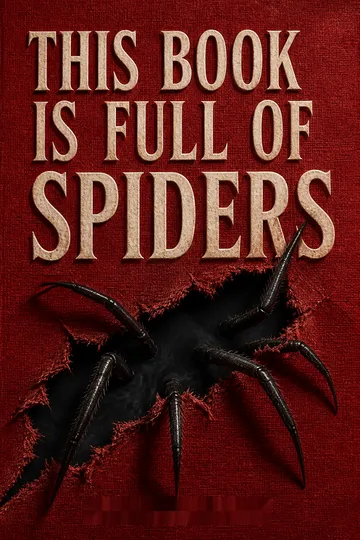
This Book Is Full of Spiders received mostly positive reviews for its blend of horror, humor, and social commentary. Readers praised Wong's improved writing and character development, though some felt it lacked the chaotic originality of the first book. The story's mix of zombies, parasitic spiders, and interdimensional elements captivated many, while its wit and unexpected emotional depth were frequently highlighted. Some found the narrative structure disjointed, but overall, fans of the series appreciated the book's unique style and engaging plot.
People Also Read

Characters
David Wong
Reluctant monster witnessDavid is a video-store manager in a town where the supernatural has become an unwanted part of daily life. Sarcasm helps him manage shame, fear, and the belief that other people would reject him if they knew what he had seen. He is devoted to Amy3 and relies on John’s2 companionship, though he often resents John’s2 impulsiveness. David’s unusual perception makes him valuable in a crisis, but it also presses him into responsibilities he is poorly prepared to carry. Beneath his self-deprecation is a strong instinct to protect others, complicated by his habit of assuming that catastrophe is his fault.
John
Curiosity without brakesJohn is David’s1 oldest friend, a musician and habitual investigator of the town’s locked doors and unexplained horrors. He acts before caution can catch up, often aided by alcohol, drugs, and a conviction that the most dangerous place is also the place worth exploring. His loyalty to David1 is fierce, expressed through physical risks and improbable improvisations rather than careful plans. John can be unreliable, self-absorbed, and difficult to reach, yet his humor keeps panic from becoming paralysis. He is not a conventional hero; his strongest resource is the refusal to abandon people once he has decided they are his.
Amy Sullivan
The practical rescuerAmy is David’s girlfriend1, a programmer in training whose humor and analytical habits make her attentive to flaws other people overlook. She lost her left hand and her parents in a car accident and lives with chronic pain, but resists being defined by either. Amy wants closeness without becoming possessive, and she understands that David1 often pushes people away when he is frightened. In a crisis, she turns worry into plans, research, and action. Her courage is not fearlessness: she cries easily, knows her limits, and moves anyway when someone she loves needs help.
Molly
The fearless companionMolly is Amy’s3 reddish-brown dog and a steadfast presence in David1 and Amy’s3 lives. She reads danger through instinct and senses details that human characters miss, while remaining focused on food, warmth, and the people she considers hers. Her attachment is expressed through practical acts: guarding, following, finding, and staying close. Molly’s canine perspective offers a counterpoint to the human characters’ theories and arguments. She does not need to understand the town’s politics to recognize when David1 or Amy3 is in danger.
Lance Falconer
The suspicious detectiveFalconer is a celebrated detective whose confidence rests on reading people and spotting deception. When he investigates David1 and John2, he trusts his own judgment more than their claims about invisible creatures. He is controlled, ambitious, and alert to the way a case can become a puzzle worth solving. His professional habits make him difficult to persuade, but they also give him a willingness to pursue evidence beyond the approved story. Falconer’s identity is tied to competence, and the crisis repeatedly tests whether that competence can adapt when the facts are stranger than his methods.
Dr. Bob Tennet
The fear specialistTennet is David’s1 court-appointed therapist and a respected expert on mass panic and group behavior. He is polished, patient, and skilled at drawing people into revealing what they fear most. His professional manner can feel humane, but his calmness also makes it difficult to know what he truly believes. Tennet is fascinated by the way fear changes a crowd’s judgment, and he treats public perception as something that can be managed. His role links the intimate therapy room to the larger machinery of the outbreak response.
Dr. Albert Marconi
The monster scholarMarconi is a public scholar of ghosts and monsters, known to David1 and John2 through earlier encounters and his books. He studies folklore, anomalous events, and the human instincts that shape belief. His intellectual manner can seem detached, but he remains willing to stay near danger when others withdraw. Marconi searches for patterns beneath the outbreak, especially the way people divide the world into those they recognize and those they fear. He provides the protagonists with ideas rather than easy solutions, and expects them to do the moral work of applying those ideas.
TJ Frye
The pragmatic organizerTJ is a National Guardsman and a friend of John’s2 who becomes one of the hospital quarantine’s organizers. He understands logistics, group tension, and the costs of making decisions for people who cannot leave. TJ is blunt and practical, but he does not mistake authority for wisdom. His respect for David’s1 ability to spot parasites coexists with awareness that the role is fragile and fallible.
Hope
The humane caretakerHope is a compassionate quarantine resident who helps care for others and supports plans to escape. She remains attentive to the sick and the vulnerable even when resources are scarce. Her optimism is not denial; she notices the cruelty around her and keeps looking for a way to reduce it. Hope’s concern for people who cannot manage the tunnel challenges the assumption that only the strongest deserve a chance at safety.
Owen
The armed gatekeeperOwen leads the red-jumpsuit faction in the hospital quarantine and controls its only known firearm. He values order because he believes disorder will get everyone killed, and he accepts harsh decisions as the price of keeping the group together. His authority is coercive, but his fear is rooted in real uncertainty about infection and escape. Owen’s greatest weakness is treating the need for control as proof that he alone should decide.
Anna
The uncanny childAnna is an eight-year-old girl David1 encounters in the darkness of Ffirth Asylum. She carries a worn stuffed bear and speaks with the practical certainty of a child who has made a home in an impossible place. Her presence unsettles adults because she seems to know more than she should, but she is also lonely and vulnerable. Anna’s attachment to her father12 and her need for safety complicate easy assumptions about what makes someone dangerous.
Carlos
A father in quarantineCarlos is Anna’s father11 and a man with knowledge of the infected that the authorities lack. He is protective of his daughter11 and measured in what he tells David1 and his friends. Carlos understands that labels such as infected and human cannot always capture what a person is capable of choosing. His presence makes the crisis more morally complicated, because his care for Anna11 exists alongside facts that frighten the people around him.
Josh Cox
The zombie-squad leaderJosh leads the university’s Zombie Response Squad, a group trained in weapons and survival skills. He believes preparation can help ordinary people face disaster, and he takes pride in having built a community around that belief. Amy3 sees both his courage and his limited experience. Josh’s confidence is sincere, but it has been shaped by fictional scenarios in which threats are visible and rules remain stable.
Daryl Lombard
The survivalist fatherDaryl is TJ’s father8, a heavily armed survivalist who has prepared his rural property for disaster. He is protective of his family and distrustful of strangers, especially people arriving from the outbreak zone. His preparedness gives him a sense of control, but his suspicion narrows the circle of people he is willing to help.
Plot Devices
Soy Sauce
A dangerous expanded perceptionSoy Sauce is a black, living substance taken as a drug. Most people who encounter it die, but those who survive gain an altered perception of hidden phenomena and unusual access to space, time, and the town’s portals. Its effects are unpredictable and do not grant dependable mastery. John’s2 experience of stopping time lets him inspect the quarantine and confirm David1 is alive, but he cannot freely change the frozen world. The substance links the friends’ perception of monsters to the larger mysteries around the town, while making knowledge itself costly and dangerous.
The parasites
Invisible agents of panicThe parasites are small organisms that most people cannot see. They can enter and alter human bodies, reproduce, and produce grotesque transformations, while some remain hidden long enough to defeat visual inspection. Because witnesses cannot prove what they see, the infection becomes both a biological threat and a crisis of trust. Governments use the visible violence of infected hosts to define everyone in the quarantined town as dangerous. The parasites therefore drive the physical horror while exposing how quickly fear turns uncertainty into permission for violence.
The town’s doors
Unreliable routes through townCertain ordinary-looking doors connect to other locations around town, though most people experience them as normal doors. David1 and John2 can use them because of their altered perception, but the destinations are difficult to choose until John2 gains greater control. The doors allow the friends to escape military cordons, move between the quarantine and the abandoned asylum, and reach the REPER command site. Their unpredictability prevents them from becoming a convenient solution. Each crossing offers a chance to act while also risking an arrival in the wrong place, under the wrong guns.
The green box
A weapon shaped by thoughtThe armored green box recovered from the military convoy contains a strange device covered in fine metal strands. It has no visible latch to ordinary perception, but Amy3 can help reveal its hidden mechanism. The weapon changes targets according to the user’s thoughts, producing effects that range from absurd transformations to lethal destruction. Its unpredictable operation makes it dangerous even to its owners. In the final crisis, David’s1 mental image of a cherished religious painting gives the device a power capable of confronting beings that ordinary weapons cannot harm.
Quarantine and broadcasts
A story enforced by fearThe military cordon, hospital camp, communications jammer, drone patrols, and official briefings turn the town into a sealed narrative as well as a sealed place. Authorities restrict movement and information, then describe the residents as irredeemably infected. Amy’s3 access to REPER records and her contact with a drone pilot disrupt that story, while the restored phone network lets residents transmit their own evidence. The device shows how control of information can make an extreme policy appear inevitable, and how one visible human act can weaken a narrative built on abstraction.
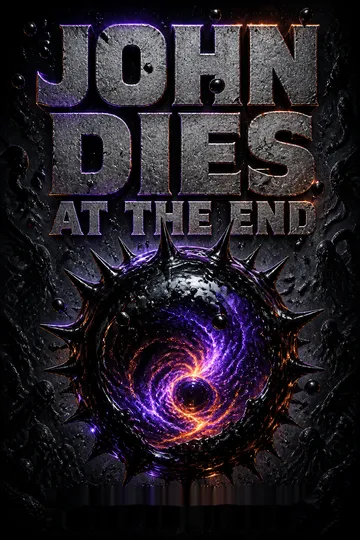
John Dies at the End Series

About the Author
Other books by David Wong
Download PDF
Download EPUB
.epub digital book format is ideal for reading ebooks on phones, tablets, and e-readers.








