


Key Takeaways
Treat this book as a map of possibilities, not a verdict on identity.
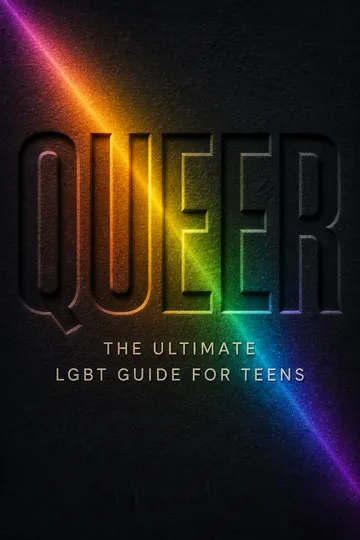
A guide to missing clues. The book begins with a problem many young people face: school and popular culture often assume everyone is straight and cisgender. In the author’s survey, 95 percent of more than 300 young respondents said school taught them nothing about gay sex. David Levithan’s introduction offers a personal example: he had experienced attraction to boys but did not understand what those feelings meant until another person described similar fantasies. Information did not assign him an identity. It helped him recognize what was already there.
Clues, not instructions. Dawson combines personal stories with testimonies from LGBT people to make unfamiliar experiences easier to imagine. The aim is not to tell readers what they are, but to give them language and examples with which to think. Questioning, curiosity, and uncertainty are treated as ordinary starting points.
The book’s guidebook metaphor is valuable because representation can make a possibility legible without dictating what a reader should conclude. That distinction matters: exposure to an identity is not the same as being persuaded to adopt it. The strongest educational material gives people vocabulary, context, and room to disagree with a label. The survey also reveals a practical failure in schooling: silence does not preserve neutrality. It leaves young people to assemble basic knowledge from peers, fiction, or pornography, sources that vary widely in reliability.
Use identity labels as tools, and replace them when they stop fitting.
Two different questions. Sexual orientation concerns who someone is attracted to; gender identity concerns who someone understands themselves to be. A transgender person can be gay, straight, bisexual, or another orientation. The book introduces labels such as lesbian, gay, bisexual, queer, asexual, and questioning, while stressing that nobody must choose one. Some people find a label useful because it makes conversation and community easier. Others prefer not to define themselves narrowly.
Labels are not contracts. Attraction, self-understanding, and the words people use for themselves may change over time, though they do not do so for everyone. The practical rule is to let people name themselves, revise their terms if they wish, and avoid treating a current label as a permanent prediction. Gender expression, such as clothing or hairstyle, does not by itself reveal someone’s gender identity.
Labels work best as shared shorthand, not as diagnostic boxes. They can help someone find peers or explain an experience, but a word can also flatten distinctions if others assume it tells the whole story. The book is especially useful in separating gender from orientation, two ideas often confused in everyday conversation. Its account of fluidity should be read as permission rather than expectation: some people’s identities shift, while others experience a stable identity for life. Neither pattern makes a person more authentic.
Do not demand a biological explanation before granting people dignity.
The science is unsettled. Dawson reviews proposed explanations for sexual orientation, including twin research, chromosome studies, epigenetics, birth order, prenatal hormones, and brain differences. The theories are presented as incomplete, and some findings have methodological limits. The author notes that much of the research discussed focuses on gay men, leaving bisexual, queer, and other experiences harder to explain through simple categories. The book also raises possible biological influences on gender identity, while warning against treating biology as destiny.
Respect does not require a cause. A person’s attraction or gender is not made more legitimate by finding a gene, brain pattern, or prenatal mechanism. The author’s central point is ethical as much as scientific: people should not have to prove why they exist. Research may help answer specific questions, but it cannot be a prerequisite for equal treatment.
This argument avoids a common trap in debates about human difference: making rights conditional on proof that a trait is innate. Scientific explanations can deepen understanding, yet they are vulnerable to changing methods and incomplete samples. An ethical case for dignity is more durable than any single causal theory. There is also a useful distinction between describing influences and reducing a person to them. Biology may shape possibilities, while culture, safety, and available language affect how someone understands and expresses those possibilities.
Challenge stereotypes before they turn a whole person into a category.
A stereotype erases variation. The book takes aim at familiar claims: that gay men are naturally stylish, that lesbians hate men, that bisexual people are indecisive, or that trans people share one appearance or life story. Such assumptions are not harmless shortcuts. They make it easier to dismiss individuals and can disguise prejudice as common sense. LGBT people differ in temperament, interests, bodies, relationships, and presentation; identity is one part of a person, not a complete personality.
Pressure exists inside communities too. Dawson describes gay men feeling pushed toward masculine looks and gay women judged for either femininity or masculinity. These expectations can turn a community’s visible styles into unofficial rules. People may enjoy particular subcultures, but no haircut, body type, or manner of speaking is a test of belonging.
The book does more than correct inaccurate images. It shows how stereotypes can become standards that people inside a group feel compelled to meet or reject. That creates a double bind: visibility helps outsiders see diversity, but a narrow set of visible figures can become a new norm. The useful question is not whether any individual matches a familiar image. It is whether the image is being used to predict what an entire group must be like. Personal taste is not evidence about a population.
Look for prejudice in silence, not only in insults.
Absence sends a message. The book calls attention to media, lessons, and institutions that portray heterosexual and cisgender lives as the default while rarely showing LGBT people. Even without an openly hostile statement, this pattern can imply that some identities are unusual or unfit for ordinary stories. The author also describes direct bullying and cites Stonewall research reporting that half of young LGB students had missed school because of bullying, while 70 percent said it affected their achievement.
Respond when it is safe. Dawson offers the Q.U.I.F.F. method for challenging anti-gay language: question what was meant, check understanding, refer to institutional expectations, explain the impact, or use humor. The book stresses that a response should never require someone to risk their safety. Repeated bullying should be documented and brought to a trusted adult or school authority.
This section usefully expands prejudice beyond individual intent. A school can avoid explicit slurs and still teach students whose relationships count as normal through its examples, curriculum, and omissions. The distinction between a single insult and repeated bullying also helps people describe what is happening and seek proportionate support. Statistics in the book are historical and should not be mistaken for current rates, but the underlying lesson remains concrete: exclusion can affect attendance, learning, and a student’s sense of safety.
Come out on your timetable, with safety and support in place.
Disclosure is a choice. Coming out means telling others about an identity, but no one owes the public a label or announcement. The book presents benefits of disclosure, including less secrecy, more honest relationships, and easier access to community. It also recognizes real reasons to wait, such as dependence on unsupportive family, hostile laws, or fear of losing housing. Dawson chose to tell his parents only after he lived away from home and could support himself.
Plan around your circumstances. The author recommends starting with someone trustworthy, gauging how they speak about LGBT people, choosing a private and safe moment, and arranging support if the reaction is poor. Parents may need time to process what they hear, but their adjustment does not make the young person responsible for changing or apologizing for their identity.
Coming out is often described as a single brave moment, but the book makes clear that it is usually a series of decisions made in different relationships and settings. Treating disclosure as a personal safety calculation respects the unequal power young people may face at home or school. It also avoids turning openness into a moral test. The book’s optimism about families can reassure readers, but individual outcomes vary. Support should be prepared before disclosure when housing, finances, or physical safety could be at stake.
Find community where you can be ordinary, not just visible.
Connection can reduce isolation. LGBT youth groups, school or university associations, clubs, and online spaces can provide friendship, advice, and contact with people who share some experiences. Dawson explains that gay bars and clubs historically offered refuge from harassment, but they are not the only route into community, and not every LGBT person enjoys or uses the so-called gay scene. Rural areas may offer fewer local options, making online and regional resources especially useful.
Belonging is not conformity. Some people feel out of place when a community seems to demand a particular look, lifestyle, or level of openness. A supportive space should make room for different ages, identities, interests, and comfort levels. The goal is not to replace one narrow social world with another. It is to find people and resources that make daily life less lonely and more navigable.
Community serves both emotional and practical functions. It offers recognition, but it can also circulate information about health, safety, and local support that an isolated person may not have. The book avoids presenting a single social scene as the authentic way to belong, an important point for readers who do not identify with nightlife or urban culture. At the same time, communities are not automatically welcoming to everyone. Their value depends on whether they create space for difference rather than turning shared identity into a new membership test.
Make communication and sexual health more important than performance.
Porn is not a classroom. Dawson argues that pornography shows selected bodies and practiced performances, not a reliable picture of ordinary sex or relationships. It does not teach people how to recognize boundaries, communicate, or reduce health risks. The book’s sexual-health chapter treats same-sex intimacy as varied: partners may prefer different kinds of touch, different roles, or no particular sexual act at all. There is no required script that makes someone gay, lesbian, or bisexual.
Prioritize care over imitation. The practical guidance is to respect a partner’s limits, say what feels comfortable, and use condoms and sexual-health services to reduce risk. The book’s HIV and STI figures reflect the period in which it was written, not current estimates. For present-day testing, prevention, or treatment advice, readers should use current medical guidance from qualified health professionals.
The book’s strongest sexual-health insight is that competence is relational, not theatrical. A person does not need to reproduce a media performance to have satisfying sex; attention, communication, and respect matter more. This also corrects the assumption that same-sex education is inherently more explicit than heterosexual education. Accurate, age-appropriate information can address safety without prescribing behavior. The chapter’s medical statistics are time-bound, which is a reminder that health guidance needs regular updating even when its basic emphasis on care remains sound.
Treat commitment, marriage, and parenting as choices, not heterosexual property.
Relationships have more than one shape. The book discusses monogamy, casual sex, and open relationships without claiming one arrangement suits everyone. It notes that a 2010 study of 600 gay male couples found about half were in open relationships, but the figure describes that sample, not all LGBT people. Dawson’s advice is to avoid staying with someone simply to escape loneliness and to discuss expectations honestly.
Families are built in different ways. The book describes same-sex marriage in the United States after the 2015 Supreme Court ruling and outlines routes to parenthood including donor conception, co-parenting, surrogacy, and adoption. Its central point is that sexual orientation does not determine whether someone can love or raise a child. Legal rules and practical barriers differ by place, so family plans require local, current information.
This section moves from recognition to ordinary life: partnership and parenthood are not special privileges that need a separate moral standard. Its emphasis on choice also matters. Equality means access to institutions and possibilities, not an obligation to marry, become a parent, or imitate a conventional couple. The study on open relationships is best read narrowly, as evidence of variety within one group rather than a defining fact about gay relationships. Family quality rests on care and responsibility, not on matching a single household template.
Let queer identity enrich your life without becoming your whole job.
A person is more than a label. In the book’s closing image, identity is one part of a larger self that also includes skills, friendships, work, interests, culture, and hopes. Dawson uses intersectionality to describe how overlapping identities can shape someone’s experience. Being LGBT may matter deeply, but it does not dictate a career, personality, or future. Readers are encouraged to build a whole life rather than making sexuality or gender the only subject that defines them.
Pride can include action. The book also asks readers to support LGBT people facing discrimination, learn about human-rights conditions, challenge harmful language when safe, and help organizations doing advocacy. Its final balance is deliberate: connection across communities matters, but progress is not automatic. A full life includes both personal ambitions and attention to the conditions that shape other people’s choices.
The closing argument resists two opposite reductions: treating identity as everything about a person, and treating it as too private to have social consequences. The idea of multiple, overlapping identities helps explain why the same label can lead to different experiences depending on race, class, disability, location, or family support. The call to action is strongest when it remains specific and sustainable. Supporting equality need not consume a person’s whole life, but neither does personal success erase the barriers others continue to face.
Analysis
This book is best understood as a practical primer built around a human problem: young people are asked to interpret desire and gender while receiving remarkably little trustworthy information. Its conversational tone, jokes, first-person memories, and testimonies from hundreds of participants make the material approachable, while the recurring movement from private uncertainty to public life gives it a loose narrative arc. The book is not a scientific treatise or a single theory of identity. It is a field guide to vocabulary, relationships, safety, discrimination, and belonging.
Its lasting strength is the distinction between giving readers clues and assigning them conclusions. That approach aligns with a broader principle in developmental psychology: identity exploration is not the same as identity confusion, and room to examine possibilities can support self-understanding. The book also makes an important privacy argument. Coming out can deepen relationships and reduce the burden of secrecy, but disclosure is not universally safe or necessary. Minority stress theory, which links health burdens to chronic stigma and exclusion rather than identity itself, helps clarify why supportive schools, families, and communities matter.
The source should also be read in its historical context. Some legal descriptions, health statistics, and terminology reflect the mid-2010s and may no longer describe current conditions. Its account of scientific explanations is intentionally provisional, and its broad claims sometimes lean on small or self-selected surveys. Those limits do not undo its central contribution, but they do make updated medical and legal resources essential. The most durable message is not a fixed glossary or statistic. It is a method: make room for self-description, distinguish identity from stereotype, and treat safety and dignity as more important than other people’s demand for certainty.
People Also Read



Glossary
Heteronormative values
Assumed straightness as defaultExpectations that heterosexual relationships and cisgender identities are the standard or usual form of life. In the book, these assumptions appear in sex education, media, and everyday talk that presume a boy will date girls or a family will have one mother and one father. Such defaults can make other lives less visible without anyone stating open hostility.
Cisgender
Gender matches birth assignmentA term for someone whose gender identity aligns with the sex they were assigned at birth. The book uses it to avoid treating cisgender people as the unmarked or normal category and transgender people as deviations. It describes gender identity, not sexual orientation, so a cisgender person may be straight, gay, bisexual, or another orientation.
Transgender
Gender differs from birth assignmentAn umbrella term for people whose gender identity does not match the gender associated with their assigned sex at birth. The book distinguishes transgender identity from sexual orientation, clothing choices, and performance drag. Some transgender people pursue social, legal, or medical changes; others do not. No single transition path or set of procedures defines the term.
Intersectionality
Overlapping identities shape experienceA way of examining how a person's identities overlap and influence their experiences. In the book, sexuality or gender is one part of a larger self that may also include race, disability, culture, and other attributes. These dimensions can interact, shaping how someone is treated and which forms of belonging, discrimination, or support they encounter.
Gaydar
Reading possible social signalsA humorous name for the supposed ability to recognize whether someone may be gay or otherwise LGBT*. The book treats it not as a genuine special sense but as an attempt to interpret cues such as eye contact, body language, or style. Such cues are uncertain and cannot reliably establish another person's identity.
Q.U.I.F.F. system
Ways to challenge harmful languageA response guide for addressing anti-gay language when it is safe to intervene. Its steps are to question the speaker's meaning, check their understanding, refer to institutional expectations, explain the effect of the words, or use humor. The method offers different levels of response rather than requiring confrontation in every situation.
Sexthoughts
Early thoughts about attractionThe book's playful term for thoughts or fantasies that reveal possible sexual attraction. Dawson uses it to describe the private clues people may notice before choosing a label or telling anyone else. The term is not a clinical category, and having a particular thought does not by itself determine a person's identity.


Download PDF
Download EPUB
.epub digital book format is ideal for reading ebooks on phones, tablets, and e-readers.








