Plot Summary
Accidental Inbox Connection
Ellie O'Neill, a small-town Maine girl, and Graham Larkin, a California teen, connect by chance when Graham's email about walking his pig, Wilbur, lands in Ellie's inbox. Their witty, anonymous banter quickly becomes a nightly ritual, each message a lifeline of honesty and anticipation. They share secrets, dreams, and the small joys that make them happy, all while keeping their real identities hidden. The anonymity is liberating, allowing them to be more themselves than with anyone else. As their correspondence deepens, so does the sense of possibility—a connection that feels both safe and thrilling, a secret world built on words and wonder.
Summer of Movie Magic
The sleepy town of Henley, Maine, is transformed when a Hollywood movie production arrives, bringing chaos, excitement, and a swarm of outsiders. Ellie, who usually dreads the summer influx of tourists, finds her world upended as the town becomes a carnival of cameras and celebrities. Her best friend Quinn is starstruck, especially by the film's lead, Graham Larkin, whose presence electrifies the town. Ellie, meanwhile, is more interested in her secret pen pal than the Hollywood spectacle. The movie's arrival is both a disruption and an opportunity, setting the stage for unexpected encounters and the collision of fantasy with reality.
Anonymous Hearts Revealed
Graham, longing for something real amid the artificiality of fame, orchestrates the movie's relocation to Henley, hoping to meet the girl behind the emails. Their first encounter is a comedy of errors—Graham mistakes Quinn for Ellie, leading to an awkward date and a cascade of misunderstandings. When the truth finally surfaces, the revelation is electric: the anonymous voices that have become so important to each other are now face-to-face. The thrill of recognition is tempered by nerves and uncertainty, as both struggle to reconcile the person they imagined with the one standing before them.
Small Town, Big Secrets
Beneath Henley's picturesque surface, Ellie harbors a secret: she is the illegitimate daughter of a prominent U.S. senator, a fact her mother has kept hidden to protect them from scandal. The weight of this secret shapes Ellie's choices, fueling her desire for anonymity and her reluctance to let anyone get too close. As her relationship with Graham deepens, the risk of exposure grows. The town's intimacy, once a comfort, now feels claustrophobic, as Ellie navigates the tension between her longing for connection and the need to keep her past buried.
The Boy Behind the Screen
Graham Larkin, despite his celebrity, is isolated by the demands of his career and the superficiality of those around him. The anonymity of his email friendship with Ellie offers a rare sense of authenticity. In Henley, he is both a spectacle and a stranger, craving normalcy and genuine relationships. His pursuit of Ellie is as much about finding himself as it is about romance. The contrast between his public persona and private self becomes stark, especially as he tries to bridge the gap between the world's expectations and his own desires.
Starstruck and Ordinary
As Graham and Ellie spend time together, the differences in their worlds become apparent. Ellie's modest life—her jobs at the ice cream shop and her mother's cluttered gift store—stands in sharp contrast to Graham's Hollywood existence. Yet, it is in the ordinary moments—sharing ice cream, walking on the beach, drawing together—that their connection feels most real. The town's fascination with Graham is both a blessing and a curse, offering moments of magic but also constant scrutiny. Their budding romance is tested by the pressures of fame and the fear of being exposed.
The Real and the Rumored
The presence of paparazzi in Henley turns private moments into public spectacle. A mistaken identity at the ice cream shop, a staged date, and relentless gossip magazines create a web of rumors that threaten to unravel everything. Ellie's secret becomes increasingly precarious as the town buzzes with speculation. Graham's attempts to protect her only draw more attention, and the line between reality and rumor blurs. The couple must navigate a minefield of misunderstandings, learning that love in the spotlight is never simple.
Tangled Friendships, Hidden Truths
Ellie's friendship with Quinn is tested by jealousy, misunderstandings, and the burden of secrets. Quinn, initially thrilled by the Hollywood excitement, feels betrayed when she learns of Ellie's secret correspondence with Graham. Their rift mirrors Ellie's internal struggle—her inability to share her true self, even with those she loves most. As the summer unfolds, both girls must confront the ways in which secrets can isolate and hurt, and the healing that comes from honesty and forgiveness.
Kisses, Cameras, and Consequences
A stolen kiss between Graham and Ellie, captured by lurking photographers, ignites a media firestorm. The resulting headlines threaten to expose Ellie's identity and her father's past, jeopardizing the fragile peace she and her mother have built. Graham, desperate to shield Ellie, finds himself at odds with his manager and the relentless demands of his career. The couple is forced to confront the cost of their relationship—can love survive when every moment is subject to public scrutiny and private pain?
Family Ties and Fatherless Daughters
Driven by financial need and a longing for closure, Ellie embarks on a journey to confront her father, hoping for help with her Harvard poetry program. Graham joins her, and together they navigate the Maine coast, only to find that some distances cannot be bridged. The encounter is anticlimactic and heartbreaking—her father does not recognize her, and the hoped-for miracle fails to materialize. Ellie is left to grapple with the meaning of family, the pain of abandonment, and the realization that some questions may never be answered.
The Cost of Dreams
Ellie's dream of attending a prestigious poetry course at Harvard is threatened by financial hardship. Her pride prevents her from accepting help, even from Graham. The struggle to achieve her goals without compromising her integrity becomes a central conflict. Graham, in turn, must decide how to support her without overstepping. Their journey becomes a meditation on the value of dreams, the price of ambition, and the importance of self-reliance and trust.
Escaping by Sea
In a bid to escape the chaos and find answers, Ellie and Graham "borrow" a boat and set out along the coast. The adventure is both literal and metaphorical—a journey into uncertainty, fueled by hope and desperation. They face mishaps, run out of gas, and are rescued by the coast guard, but the real rescue is emotional: in the quiet moments on the water, they confront their fears, share their vulnerabilities, and reaffirm their bond. The sea becomes a space of possibility, a place where they can be themselves, away from the world's demands.
The Unseen Goodbye
As the summer draws to a close, Graham's filming ends, and the inevitability of his departure looms. The couple must face the reality that their worlds may never fully align. Their goodbye is bittersweet, filled with unspoken promises and the ache of what might have been. Yet, there is also hope—a sense that the connection they forged will endure, even as they move forward on separate paths. The unseen goodbye is not an ending, but a transformation, a letting go that makes room for new beginnings.
Fireworks and Forgiveness
The Fourth of July brings the town together for fireworks, and with it, moments of reconciliation. Ellie and her mother confront the past, finding forgiveness and understanding in the aftermath of exposure. Quinn and Ellie mend their friendship, recognizing the strength that comes from honesty and vulnerability. The night sky, ablaze with color, becomes a symbol of renewal—a reminder that even after darkness, there can be light.
The Gift of Whoopie Pies
In a final act of love, Graham arranges for whoopie pies—the elusive Maine treat Ellie has never tried—to be served at their last dinner together. The gesture is both playful and profound, a symbol of his understanding and support. He uses the bet over the whoopie pies as a way to give Ellie the money she needs for her poetry course, respecting her pride while ensuring her dreams are within reach. The moment encapsulates the essence of their relationship: love expressed not through grand declarations, but through small, meaningful acts.
Sunrise Promises
On their last night together, Ellie and Graham wait for the sunrise, determined not to miss a single moment. The dawn becomes a metaphor for possibility—a promise that, despite uncertainty and distance, happiness is found in the present, in the courage to love and be loved. As the sun rises over the harbor, they greet the new day with hope, gratitude, and the knowledge that, whatever the future holds, they have changed each other's lives forever.
Characters
Ellie O'Neill
Ellie is a thoughtful, creative teenager who has grown up in the small town of Henley, Maine, under the shadow of a family secret: she is the illegitimate daughter of a U.S. senator. Raised by her fiercely protective mother, Ellie is both independent and cautious, wary of attention and skilled at keeping her true self hidden. Her love of poetry and longing for something more are tempered by financial hardship and the fear of exposure. Through her anonymous correspondence with Graham, she discovers a space where she can be fully herself. Over the course of the story, Ellie learns to confront her past, trust others, and embrace vulnerability, finding the courage to pursue her dreams and open her heart.
Graham Larkin
Graham is a seventeen-year-old movie star whose rapid rise to fame has left him isolated and disillusioned. Despite his charm and success, he struggles with the superficiality of Hollywood and the loss of genuine connection. His accidental email to Ellie becomes a lifeline, offering him the honesty and intimacy he craves. Graham is impulsive, romantic, and deeply loyal, willing to upend his life for a chance at something real. His journey is one of self-discovery—learning to balance the demands of fame with his need for authenticity, and to love without reservation, even when it means letting go.
Quinn
Quinn is Ellie's best friend—outgoing, dramatic, and fiercely loyal. She is initially swept up in the excitement of the movie's arrival, eager for adventure and recognition. Quinn's feelings are hurt when she discovers Ellie's secret correspondence with Graham, leading to a rift that mirrors the story's larger themes of honesty and trust. Her own romantic subplot with Devon provides a counterpoint to Ellie's story, highlighting the complexities of friendship, jealousy, and forgiveness. Quinn's journey is one of growth, as she learns to accept change and embrace the messiness of real relationships.
Maggie O'Neill (Ellie's Mom)
Maggie is a single mother who has built a quiet life for herself and Ellie in Henley, determined to shield her daughter from the fallout of her affair with a senator. She is practical, loving, and sometimes overbearing, her protectiveness born of regret and fear. Maggie's relationship with Ellie is central to the story—a mix of closeness and tension, shaped by secrets and sacrifice. Through the events of the summer, Maggie is forced to confront her own choices and let Ellie take risks, ultimately finding forgiveness and a renewed sense of connection.
Paul Whitman (Ellie's Father)
Paul is a successful U.S. senator and presidential hopeful, whose affair with Maggie resulted in Ellie's birth. Though he is physically absent from Ellie's life, his presence looms large—an object of curiosity, resentment, and longing. When Ellie finally meets him, he fails to recognize her, underscoring the emotional distance between them. Paul represents the complexities of family, the pain of abandonment, and the limits of reconciliation. His role is less about direct interaction and more about the impact of absence and the search for belonging.
Devon
Devon is Quinn's longtime admirer, a gentle and earnest presence in the background of the story. His unrequited love for Quinn is a running joke until, through a series of unexpected events, they finally connect. Devon's patience and sincerity provide a contrast to the drama swirling around the main characters. His subplot with Quinn adds warmth and humor, illustrating the rewards of persistence and the surprises that come from looking beyond first impressions.
Olivia Brooks
Olivia is Graham's beautiful and accomplished movie costar, the subject of endless rumors and speculation. She embodies the allure and pitfalls of fame—confident, savvy, and sometimes aloof. Olivia's presence heightens the tension between Graham's public and private lives, serving as both a temptation and a reminder of the world he is trying to escape. Her interactions with Graham are marked by professional rivalry and mutual respect, but she ultimately remains on the periphery, a symbol of the life Graham is leaving behind.
Harry (Graham's Manager)
Harry is Graham's manager, responsible for navigating the treacherous waters of Hollywood and protecting Graham's image. He is shrewd, sometimes exasperated, and always focused on the bottom line. Harry's interventions—whether warning Graham about Ellie's past or spinning the paparazzi scandal—highlight the pressures of fame and the compromises required to survive in the industry. Despite his cynicism, Harry cares for Graham and ultimately supports his pursuit of happiness, even when it complicates his job.
Joe Gabriele
Joe is the owner of the Lobster Pot, a fixture in Henley and a steady presence in Ellie's life. He represents the warmth and stability of small-town life, offering advice, support, and the occasional whoopie pie. Joe's restaurant serves as a gathering place for key moments in the story, and his kindness underscores the importance of community and belonging.
Wilbur (Graham's Pig)
Wilbur, Graham's pet pig, is a quirky and endearing presence, a reminder of Graham's longing for normalcy and comfort. Wilbur's antics provide comic relief and a touch of whimsy, but he also represents the idea of home—a place (or a person) where one can be fully oneself, free from judgment or expectation.
Plot Devices
Mistaken Identity and Anonymity
The story's inciting incident—a misdirected email—serves as a modern twist on the classic "meet-cute," allowing two strangers to connect in a space free from preconceptions. The anonymity of their correspondence creates a safe haven for vulnerability and honesty, while the eventual revelation of their identities introduces tension and excitement. This device explores the ways technology can both connect and complicate relationships, and how the masks we wear can sometimes reveal our truest selves.
Secrets and Revelation
Both Ellie and Graham are defined by secrets—Ellie's parentage and Graham's loneliness. The gradual unveiling of these secrets propels the narrative, creating suspense and deepening the emotional stakes. The tension between concealment and disclosure is mirrored in the story's structure, with key revelations timed to coincide with pivotal moments of growth and decision. The consequences of exposure—both feared and actual—force the characters to confront their fears and redefine their identities.
Fame and Ordinary Life
The intrusion of Hollywood into Henley serves as a backdrop for exploring the costs and illusions of fame. The constant presence of paparazzi, the blurring of public and private, and the pressure to perform all highlight the challenges of authenticity in a world obsessed with image. The contrast between Graham's glamorous life and Ellie's humble existence underscores the story's central question: what does happiness really look like?
Symbolism of Food and Place
Food is a recurring motif, symbolizing comfort, connection, and the sweetness of ordinary life. The search for whoopie pies becomes a metaphor for the pursuit of happiness—elusive, surprising, and ultimately found in unexpected places. The Maine setting, with its rocky beaches and small-town rhythms, grounds the story in a sense of place, reinforcing themes of home, belonging, and the beauty of the everyday.
Foreshadowing and Circular Structure
The narrative is rich with foreshadowing—early emails about sunrises, whoopie pies, and secrets all find their echoes in later events. The story's structure is circular, beginning and ending with greetings and goodbyes, emails and sunrises, underscoring the idea that every ending is also a beginning. The use of repeated motifs and mirrored scenes creates a sense of continuity and closure, inviting readers to reflect on the journey and its lessons.
Analysis
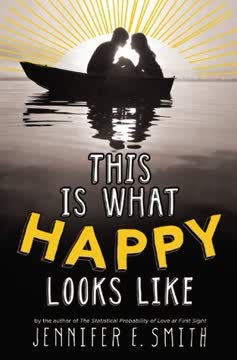
Jennifer E. Smith's This Is What Happy Looks Like is a contemporary romance that uses the accidental intimacy of digital communication to explore themes of identity, vulnerability, and the search for happiness. At its heart, the novel is about the courage to be seen—truly seen—by another person, and the risks and rewards that come with letting down one's guard. Through the juxtaposition of celebrity and small-town life, Smith interrogates the illusions of fame and the value of authenticity, suggesting that happiness is found not in grand gestures or public acclaim, but in the quiet, everyday moments of connection. The story's emotional arc is shaped by secrets—those we keep from others and those we keep from ourselves—and the healing that comes from honesty and forgiveness. Ultimately, the novel is a celebration of hope, resilience, and the transformative power of love, reminding readers that even in a world obsessed with spectacle, the truest miracles are often the simplest: a sunrise, a shared laugh, a whoopie pie, or the feeling of being known and cherished, just as you are.
Last updated:
Review Summary
This Is What Happy Looks Like received mixed reviews averaging 3.67/5 stars. Positive reviewers praised its sweetness, charm, and feel-good summer romance between a small-town girl and movie star. Critics appreciated the realistic portrayal of fame's downsides and the characters' email relationship. However, many found it boring, predictable, and lacking plot depth. Common complaints included weak chemistry, rushed romance despite months of emails, anticlimactic conflicts, and underdeveloped subplots involving Ellie's father and best friend Quinn. The third-person narration distanced some readers. Overall, it's considered lightweight, fluffy entertainment—perfect beach reading for some, disappointingly superficial for others.