

Key Takeaways
Pair a compelling ideal with the political skill to make it govern.
Ideas need instruments. Jefferson’s defining goal was a durable republic in which an educated majority could govern itself. But ideals did not automatically become policy. In 1801, an electoral tie with Aaron Burr sent the presidential choice to Congress, where Jefferson survived thirty-five ballots before winning on the thirty-sixth. The episode shows a politician working through alliances, procedure, and patient calculation, not merely trusting the force of his principles. His influence also outlasted his presidency: he and self-described Jeffersonians held the office for thirty-six of the forty years from 1800 to 1840.
Principle met practice. Meacham’s central portrait is of a thinker who could maneuver without giving up his democratic purpose. Jefferson’s flexibility made him effective, but also difficult to categorize.
What's striking is the distinction between having a political vision and building the coalition capable of enacting it. Political science treats this as a problem of translating preferences into institutions: a popular idea can fail if its supporters cannot coordinate, sequence decisions, or win procedural contests. Jefferson understood those mechanics unusually well. The tension is that tactical skill can serve ends that are not self-evidently democratic. His success invites a necessary question: who gets to define the public good when one leader claims to speak for the majority?
Turn principles into language that moves hearts as well as minds.
Politics needs a public voice. Jefferson was a poor public speaker, but a gifted writer and listener. In 1774, after Parliament closed Boston’s port, he and fellow Virginia burgesses called for a day of fasting and prayer. The religious language helped turn a distant political dispute into a shared moral alarm. Jefferson then wrote A Summary View of the Rights of British America, connecting colonial grievances to a larger claim about self-government. Its arguments ran ahead of public opinion, however, and he recognized that revolutionaries had to keep more cautious citizens with them.
Meet people where they are. Jefferson often drew people into conversation by asking about familiar concerns, then used what he learned to shape arguments suited to his audience.
The episode illustrates a durable insight from communication theory: information persuades more readily when it connects to identities and values people already recognize. Jefferson’s appeal to religious practice did not require his own conventional faith; it required an understanding of what moved his audience. That is politically potent, but ethically ambiguous. Emotional framing can illuminate stakes, or make a cause feel inevitable before people have weighed its costs. The strongest persuasion clarifies a choice rather than disguising one.
Learn the rules well enough to reopen a lost political fight.
Procedure is power. In 1765, Jefferson watched Patrick Henry push strong resolutions against Parliament’s Stamp Act through Virginia’s House of Burgesses by a single vote, 20 to 19. The next day, after Henry had left Williamsburg, opponents used legislative procedure to rescind the most forceful resolution. Jefferson saw that a vote was not always the end of a contest. Knowing the rules, watching for openings, and returning to the question could matter as much as making the best speech.
Persistence needs craft. The lesson was not simply to fight harder. Political actors had to understand how authority worked inside an institution and act when circumstances shifted. Jefferson later relied on that skill in legislative battles and negotiations.
This is an early lesson in agenda control, the ability to determine when and how a decision reaches a vote. It matters because formal institutions do not operate by principle alone; rules distribute opportunities, and a faction that understands them can gain leverage without changing public opinion. Yet procedural mastery is not inherently virtuous. It can preserve deliberation, or frustrate a clear majority. The case makes institutional literacy essential, while reminding readers that legitimacy depends on more than winning.
When danger is uncertain, delay still carries a price.
Waiting can decide events. In January 1781, British forces led by Benedict Arnold marched on Richmond. Jefferson hesitated for two days before calling out the militia, in part because earlier invasion alarms had led to needless disruption. By the time the threat was clear, the state could not mount an effective defense. The British occupied Richmond, and Virginia’s legislature later voted to investigate Jefferson’s conduct as governor. He believed an earlier call might have helped stop the invasion.
Context complicates blame. Virginia’s militia resisted service, supplies were scarce, and the governor’s authority was limited. Still, Jefferson learned painfully that leaders sometimes must act before certainty arrives, especially when the cost of delay is irreversible.
The episode resembles a classic decision problem under uncertainty. Waiting for better information can reduce false alarms, but it also consumes the time needed to respond. The proper choice depends on the relative costs of acting too soon and acting too late. Jefferson faced weak institutions and unreliable reporting, so hindsight should not turn him into a caricature of indecision. Yet the case shows why leaders need explicit thresholds for action, rather than treating delay as a neutral pause.
Let grief matter without letting it erase public duty.
Private loss was real. Jefferson’s marriage to Martha Wayles Skelton brought him years of companionship, shared music, and family life. Her health deteriorated after repeated pregnancies, and she died in 1782 at thirty-three. Jefferson was overwhelmed by grief, withdrew from others, and later said he had considered ending his own life. His daughter Patsy stayed close as he rode through the woods and tried to endure the loss.
Duty returned gradually. Within months, Jefferson accepted a diplomatic appointment in France, partly because a change of scene offered relief. The mission ended before he began it, but he soon returned to Congress. His career was not a clean escape from sorrow. It was a repeated negotiation between attachment to family and responsibility to the new country.
This personal history prevents the biography’s political narrative from becoming a tale of pure ambition. Grief is not an obstacle that a disciplined person simply conquers; it alters attention, judgment, and a sense of the future. Jefferson’s return to public life suggests that meaningful obligations can help structure life after loss, but they do not erase it. The account also resists turning sacrifice into a simple virtue: his political service repeatedly separated him from loved ones who depended on him.
Measure liberty by who can actually exercise it.
Universal language met a narrow world. The Declaration of Independence made equality and individual rights central to the American case for separation. Jefferson also drafted a passage condemning the slave trade, but Congress removed it under pressure from slaveholding states and northern merchants involved in the trade. Jefferson himself owned enslaved people. Early efforts to ease emancipation in Virginia failed, and he later retreated from challenging slavery directly.
Power shaped the private sphere. In Paris, Sally Hemings, Jefferson’s enslaved wife’s half sister, refused to return to Virginia unless he promised their children would be freed at adulthood. He agreed, and the children were later freed or permitted to leave. The relationship unfolded within slavery, making affection and coercion impossible to separate cleanly.
The contradiction is not a side note to Jefferson’s account of liberty. It tests whether rights are principles for everyone or protections reserved for those with political standing. His early reform efforts show that alternatives were imaginable in his lifetime, while his retreat reveals how personal interest and political calculation narrowed his moral horizon. Modern readers should avoid both easy absolution and simplistic condemnation: understanding the constraints of his world clarifies his choices, but does not make their consequences less real.
Build enough national authority to keep a republic intact.
Weak government had costs. Under the Articles of Confederation, Congress could not reliably tax, regulate trade, or enforce national decisions. In 1783, unpaid Continental soldiers forced Congress out of Philadelphia, exposing how little protection the central government could command. Jefferson worried that states might turn against one another or invite foreign powers into their disputes. His experience as governor and congressman convinced him that liberty needed a national government capable of acting.
Republican strength was not minimal government. As president, Jefferson cut taxes and lowered the national debt, yet also asserted executive authority and used congressional majorities to reshape the courts. He sought a government less intrusive than the Federalists’ version, not one too weak to defend the Union.
The useful distinction is between the size of government and its capacity. A government may spend less yet still possess concentrated authority, especially in foreign affairs or emergencies. Jefferson’s career shows how difficult it is to design institutions that can act decisively without becoming self-serving. The confederation’s weakness was not simply an abstract constitutional flaw; it undermined credibility and collective security. But strengthening the center shifts power away from states and citizens, so effectiveness must remain answerable to them.
Do not let constitutional caution forfeit a once-only national opening.
A rare opening appeared. In 1803, Napoleon offered the United States the Louisiana Territory, a vast region that included New Orleans and access to the Mississippi. James Monroe and Robert Livingston negotiated the purchase for about $15 million, roughly three cents an acre, doubling the country’s territory. Jefferson initially believed a constitutional amendment might be needed, since the Constitution did not explicitly authorize territorial purchases.
Urgency changed his judgment. After learning that France might reconsider the agreement, Jefferson pressed Congress to ratify it quickly and set aside his amendment plan. The purchase secured the Mississippi route and reduced the danger of a powerful European rival at America’s border. It also expanded presidential power through an action Jefferson might have criticized under another president.
The decision captures the difference between constitutional interpretation as a rule and constitutional interpretation as a governing practice. A rigid reading might have sacrificed an extraordinary opportunity; a flexible one can preserve public benefits while enlarging executive discretion. That discretion creates a precedent future presidents can use for very different purposes. The strongest defense of Jefferson’s choice is its public necessity. The strongest caution is that urgency is easy to claim and hard for the public to verify.
Use economic pressure only when you can bear its domestic costs.
The embargo was a gamble. After the British ship Leopard attacked the American frigate Chesapeake in 1807, Jefferson prepared for possible war but doubted that the United States was ready to fight Britain. He backed an embargo that stopped American ships from trading abroad, hoping to pressure Britain and France while buying time. Congress enacted the sweeping measure in December 1807.
The costs reached home. The embargo reduced trade, encouraged smuggling, and angered merchants and communities, especially in New England. It postponed war but did not prevent the War of 1812. Jefferson’s Treasury secretary Albert Gallatin preferred war to a permanent embargo, but Jefferson judged the policy the least damaging option available at that moment.
Economic coercion can substitute for military force only when the target depends on the trade being withheld and the sender can withstand the reciprocal costs. The embargo’s central weakness was that it punished American commerce immediately while relying on foreign governments to change course. Jefferson had limited military options, so the policy was not irrational. Its failure shows, however, that a nonviolent instrument is not necessarily a low-cost one, especially when enforcement spreads federal power into ordinary economic life.
Use hospitality to soften factions, but never expect politics to dissolve them.
Personal relations mattered. Jefferson used dinners, private conversations, and an informal manner to build trust with lawmakers and visitors. At his table, guests sat without formal precedence, and conversation ranged from science to government. Such hospitality could make opponents more familiar and supporters more loyal. Yet Jefferson did not invite political rivals to dine together, avoiding the arguments that might disrupt the setting.
Division remained structural. He called for national harmony, but his administration removed about 46 percent of incumbent officeholders, most of them Federalists. That choice reflected a belief that Republicans deserved a share of public authority, not merely polite treatment. Jefferson’s social skill could lower the temperature of conflict, but it could not make competing interests disappear.
Hospitality is a form of relationship-building, not a substitute for institutional compromise. Shared meals can reduce social distance and make it harder to rely on crude caricatures, a useful counterweight to partisan media. But access to a leader can also become patronage, rewarding insiders while excluding opponents. Jefferson’s dinners worked partly because he controlled the room. The distinction between civility and reconciliation is crucial: courtesy can preserve a working relationship even when substantive disagreement remains unresolved.
Educate citizens as the long-term defense of self-government.
Knowledge makes participation possible. Jefferson believed a republic depended on citizens able to judge public affairs, not simply defer to rulers. His proposal for public education in Virginia was an early expression of that belief. In retirement, he helped design the University of Virginia to educate future leaders in law, government, and other fields. He argued that public abuses should be corrected by informing citizens rather than removing power from them.
The project outlasted him. Jefferson personally shaped the university’s plan, buildings, and curriculum, just as his private library later helped form the Library of Congress. These institutions were practical extensions of his political premise: free inquiry and broad learning strengthen a society’s ability to govern itself.
Education is often described as an economic investment, but Jefferson’s argument is more explicitly constitutional: citizens need knowledge to supervise those who govern them. That premise links schooling, public debate, and accountability. It also raises a tension in his own educational vision, which focused on forming leaders and did not offer equal opportunities across race and gender. The democratic force of education depends not only on what is taught, but on who can access it and whose experiences count as knowledge.
Analysis
Meacham’s central claim is that Jefferson’s political achievement came from joining a capacious ideal of popular government to the practical work of acquiring and using power. The biography makes that argument through recurring collisions: the Declaration beside slavery, republican rhetoric beside executive expansion, the wish for harmony beside organized party conflict. Jefferson is not presented as a theorist who occasionally compromised. He is a working politician whose ideas gained force because he understood timing, institutions, persuasion, and the emotional needs of an audience.
The most useful interpretive move is to treat Jefferson’s fear of monarchy as a real part of his political world, rather than dismissing it as mere paranoia. That lens helps explain his suspicion of centralized finance, hereditary status, and Federalist influence. It also clarifies why he could support a stronger national government when the confederation seemed unable to preserve the Union. Yet the same framework risks making Jefferson’s own conduct look justified whenever he described it as necessary to save the republic. The Louisiana Purchase and the embargo reveal how easily emergency reasoning can enlarge executive discretion.
The biography is strongest when it refuses to separate public strategy from private character. Jefferson’s wish to be liked, his sensitivity to criticism, his grief, and his desire for control all illuminate how he governed. The limitation is that strategic coherence can be mistaken for moral coherence. Slavery is not merely a contradiction between ideals and circumstances; it is a sustained benefit Jefferson accepted while others bore the cost. His story therefore offers a sharper lesson than either hero worship or debunking: political effectiveness can advance genuine public goods, while leaving profound injustices untouched. A leader’s intentions matter, but so do the people excluded from the benefits of the system he builds.
Review Summary
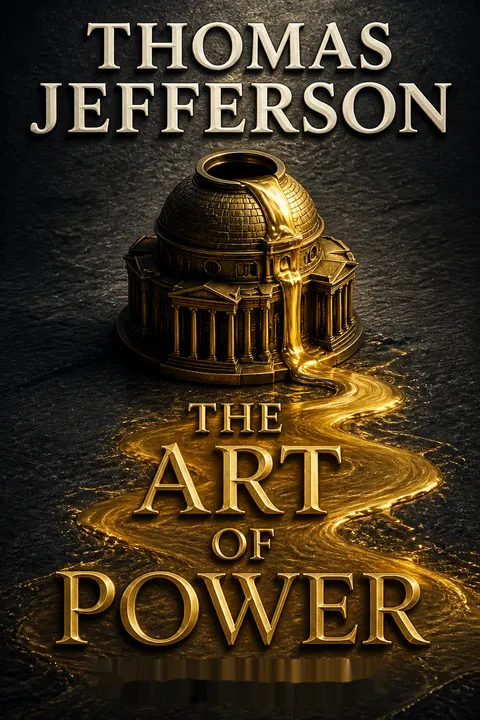
Thomas Jefferson: The Art of Power receives mostly positive reviews for its engaging portrayal of Jefferson's life and political career. Readers appreciate Meacham's balanced approach, highlighting Jefferson's strengths and flaws. The book is praised for its readability and insights into Jefferson's pragmatic leadership style. Some criticize it for lacking depth in certain areas or being too sympathetic to Jefferson. Overall, reviewers find it an excellent introduction to Jefferson's life, though serious scholars may prefer more comprehensive works.
People Also Read
Glossary
art of power
Turning ideals into influenceMeacham’s description of Jefferson’s ability to combine a political vision with the practical means to enact it. It includes persuasion, alliance-building, attention to legislative procedure, and adaptation to circumstances. The phrase emphasizes that political leadership requires both ideals and the skill to move institutions and people toward them.
Fifty Years’ War
Long conflict with BritainMeacham’s frame for understanding Jefferson’s experience of British-American conflict as a continuous struggle from the imperial disputes of the 1760s through the War of 1812. The conflict included military battles, trade restrictions, disputes over western territory, and fears that British influence could undermine American self-government.
Monocrats
Alleged advocates of one-man ruleJefferson’s label for political opponents he believed were moving the United States toward monarchy or concentrated rule. He applied it especially to Federalists associated with strong executive power, centralized finance, and closer ties to Britain. The term reflects Jefferson’s interpretation of their intentions, not a neutral description accepted by all parties.
Quids
Dissident Republican factionThe name given to John Randolph of Roanoke and other Republicans who broke with Jefferson, arguing that his administration had abandoned the party’s principles. They called themselves Old Republicans and criticized Jefferson’s compromises and expanding executive power. Their opposition showed that the president could be judged insufficiently republican by former allies.
Kentucky Resolutions
State protest against federal lawsResolutions drafted by Jefferson in 1798 for Kentucky’s legislature to oppose the Alien and Sedition Acts. They argued that states could challenge federal laws they considered unconstitutional, a position later associated with nullification. Jefferson used the resolutions to resist restrictions on speech, despite their tension with his earlier support for a stronger national government.
Jefferson Bible
Edited moral account of JesusA work Jefferson assembled by removing passages from the Gospels that he considered supernatural or implausible, then arranging the remaining material as an account of Jesus’s life and moral teachings. It reflected his commitment to religious inquiry and his distinction between the ethical value of Jesus’s teachings and traditional Christian doctrine.
empire of liberty
Expansion under republican governmentJefferson’s conception of an expanding United States whose territorial growth would support republican self-government. The idea informed his interest in the West and the Louisiana Purchase. It also exposes a tension in his vision: expansion offered opportunity to white Americans while increasing pressure on Indigenous nations and extending a slaveholding society.
FAQ
What's Thomas Jefferson: The Art of Power about?
- Comprehensive Biography: The book provides a detailed biography of Thomas Jefferson, covering his life from his early years to his presidency and beyond.
- Political Context: It situates Jefferson within the broader context of American history, highlighting his role in key events like the drafting of the Declaration of Independence and the Louisiana Purchase.
- Duality of Character: The narrative explores the duality of Jefferson as both an idealist and a pragmatic politician, examining his political philosophy and personal relationships.
Why should I read Thomas Jefferson: The Art of Power?
- In-depth Analysis: Jon Meacham offers a nuanced portrayal of Jefferson, revealing his complexities and contradictions beyond the typical hero narrative.
- Historical Relevance: The book connects Jefferson's ideas and actions to contemporary issues in American politics, making it relevant for understanding the evolution of democracy.
- Engaging Writing Style: Meacham's storytelling makes complex historical events accessible and engaging, drawing readers into Jefferson's world.
What are the key takeaways of Thomas Jefferson: The Art of Power?
- Art of Compromise: Jefferson's ability to navigate political landscapes through compromise and pragmatism is a central theme.
- Vision of Liberty: His belief in the "will of an educated, enlightened majority" as essential for liberty is emphasized.
- Personal Struggles: The book highlights Jefferson's personal struggles, humanizing him and showing the emotional weight behind his political decisions.
What are the best quotes from Thomas Jefferson: The Art of Power and what do they mean?
- "The whole art of government consists in the art of being honest.": Reflects Jefferson's belief in integrity as fundamental to effective governance.
- "Rebellion to tyrants is obedience to God.": Emphasizes the moral imperative to resist oppression and fight for liberty.
- "The tree of liberty must be refreshed from time to time with the blood of patriots and tyrants.": Highlights the necessity of sacrifice for freedom.
How does Jon Meacham portray Jefferson's political philosophy in Thomas Jefferson: The Art of Power?
- Enlightenment Influence: Jefferson was deeply influenced by Enlightenment thinkers, particularly in his views on individual rights and government.
- Pragmatic Idealism: He is portrayed as a pragmatic idealist who often had to compromise his ideals for political expediency.
- Vision for America: Jefferson's vision for America as a beacon of liberty and democracy is central to his philosophy.
How does Thomas Jefferson: The Art of Power address Jefferson's views on slavery?
- Complex Relationship: The book explores Jefferson's complex relationship with slavery, highlighting his ownership of slaves while advocating for liberty.
- Attempts at Reform: Discusses Jefferson's early efforts to address slavery, including proposals for gradual emancipation, and their ultimate failure.
- Legacy of Slavery: Emphasizes the lasting impact of Jefferson's views on slavery on American society and contemporary discussions about race and equality.
What role did Jefferson's personal life play in his political career as described in Thomas Jefferson: The Art of Power?
- Influence of Relationships: Jefferson's relationships, particularly with his wife Martha and his children, profoundly affected his emotional state and political decisions.
- Struggles with Slavery: His ownership of slaves and relationship with Sally Hemings create tension between his ideals and actions.
- Public Perception: His personal life influenced public perception and political alliances, with his charm being crucial to his success.
How did Jefferson's early life shape his later political actions in Thomas Jefferson: The Art of Power?
- Wealth and Education: His upbringing in a wealthy, educated family provided resources and opportunities that shaped his views on governance and liberty.
- Influence of His Father: Peter Jefferson's example instilled in him a sense of responsibility and leadership from a young age.
- Experiences in Williamsburg: His time at the College of William and Mary and interactions with influential figures helped develop his political philosophy.
What challenges did Jefferson face during his presidency, as discussed in Thomas Jefferson: The Art of Power?
- Political Opposition: Faced significant opposition from Federalists, complicating his efforts to implement his agenda.
- Economic Pressures: The economic challenges of the early 19th century, including the effects of the Napoleonic Wars, posed difficulties for his administration.
- Personal Struggles: His presidency was marked by personal challenges, including health issues and family matters.
How does Thomas Jefferson: The Art of Power explore the theme of power in Jefferson's life?
- Art of Power: Examines how Jefferson mastered the "art of power," balancing idealism with the practicalities of political life.
- Political Maneuvering: Highlights his strategic thinking and adaptability in various political contexts.
- Personal Ambition: Explores how his personal ambition and desire for legacy drove his actions throughout his life.
How does Jon Meacham portray Jefferson's relationship with Alexander Hamilton in Thomas Jefferson: The Art of Power?
- Rivalry and Conflict: Details the intense rivalry rooted in their differing visions for America, influencing key policies and political parties.
- Political Maneuvering: Their debates over financial policies and foreign relations were pivotal in defining the nation's direction.
- Mutual Respect: Despite differences, moments of mutual respect and acknowledgment of each other's talents are noted.
How does Thomas Jefferson: The Art of Power conclude regarding Jefferson's legacy?
- Enduring Influence: Jefferson's ideas and principles continue to resonate in American political discourse.
- Complex Legacy: Acknowledges the complexities of his legacy, particularly regarding slavery and personal contradictions.
- Reflection on Leadership: Reflects on the nature of leadership and the challenges faced by those in power, using Jefferson's story as a lens.
About the Author
Download PDF
Download EPUB
.epub digital book format is ideal for reading ebooks on phones, tablets, and e-readers.








