


Plot Summary
Helene Breaks Open
Scales, an Ashtown mechanic serving as a runner for the desert emperor, is delivering a package to the House when her friend Helene X begins convulsing onstage. Bones burst through Helene’s body, and Scales tries to hold her together even as the violence worsens. Across Wiley City, five people die in the same impossible way at the exact same moment.
No attacker is seen. At the scene, Scales reports what happened to Mr. Cheeks, her closest friend and commanding officer, while Mr. Cross, a Ruralite runner she despises, arrives to escort the body. The emperor, Nik Nik, privately questions Scales about Helene’s death, then orders her back to the palace as the synchronized killings turn one death into a crisis.
The opening makes Scales’s defining instinct physical: when someone she loves is breaking, she reaches in with her hands. That reflex is compassionate, but it also exposes the danger of treating every catastrophe as a repairable machine. The simultaneous deaths undermine the boundary between Ashtown and Wiley before either side can explain what happened. Scales’s account is shaped by grief and by the runner culture that turns experience into story, so the mystery arrives already entangled with memory, loyalty, and the need to make violence intelligible.
The Hermit’s Bad Math
At the palace, the officers confirm five more deaths in Wiley City and learn that all occurred at the same instant as Helene’s. Scales argues that Wiley should be left to its own disaster, but Nik rebukes her for speaking outside her rank. He then gives her a secret assignment: cross the wall alone and check on Adam Bosch, a reclusive scientist living near one of the unidentified victims.
Mr. Cheeks drives Scales to the perimeter while Mr. Em draws the surveillance drones away. Inside Wiley, Scales finds Bosch badly injured and shut off from the news. When she shows him a recording of the deaths, he recognizes a pattern and calls the event a consequence of multiverse travel. Scales takes him to Ashtown to examine the bodies.
Scales’s first answer to the crisis is indifference, but the emperor’s choice of assignment reveals how personal the danger may be: he sends her not merely to gather evidence, but to discover whether Bosch is alive. The crossing also makes the wall’s politics tangible. Wiley protects its citizens with technology while surveilling outsiders, and Scales must use an inherited citizenship credential to pass as someone the city accepts. Bosch’s explanation changes the genre of the mystery from unexplained killing to engineered contact between worlds.
A Test at Viet’s
At the deathkeeper Viet’s grounds, Bosch suddenly launches a metal device at Nik Nik and pins him against a vehicle. Scales restrains Bosch, nearly killing him before the emperor orders her to stop. Bosch asks Nik about a word their father used to begin a childhood fight; Nik answers correctly, and Bosch releases his attack.
He believes the deaths are caused by dop backlash, the lethal collision that occurs when a traveler arrives in a world where their counterpart is still alive. Bosch examines Helene’s body, while Scales is sent outside to guard the room.
Mr. Cross appears there, carrying more armor than his slight frame suggests. Scales still reads him as a threat, but she notices the strain beneath his disciplined silence as the investigation begins drawing their histories together.
Bosch’s assault is not simply a bid for power. He risks being killed to test whether Nik shares a precise memory, treating kinship as evidence that must survive an experiment. Scales’s near-violence shows how readily protection becomes lethal in a society where authority is expressed through force. Meanwhile, Cross’s concealed armor hints at a life Scales has not bothered to understand. The scene sets the book’s recurring problem: people mistake what they can observe for the whole truth, then act as though their first interpretation were certain.
Doubles in the Footage
Nik assigns Scales and Cross to investigate why two Wiley residents recorded deaths before the victims began to die. Disguised as a project supervisor and a wealthy financier, the pair question an uploader who remembers a second, pale image standing behind the doomed woman.
Scales returns to the park and asks Cross to reconstruct the victim’s route, then has Mr. Splice pull nearby surveillance. The footage reveals a second figure observing each victim, including the traverser Cara, a legendary Ashtown-born world traveler, and a version of Bosch from another world.
Cross recognizes the implications before Scales does, but Nik uses the gap to teach her to trust a partner’s knowledge. The evidence makes the murders look less like attacks from outside than the arrival of people who have already lived elsewhere.
The investigation tests whether Scales can work with someone she has reduced to an old insult. Her progress depends on asking Cross for help rather than turning every task into a contest. The ghostly doubles literalize a problem already present in the city: a person can be treated as an interchangeable version of someone else, with devastating consequences. At the same time, the recordings expose how surveillance can reveal what witnesses do not understand. The images are evidence, but interpreting them still requires humility and collaboration.
A Family in the Wastes
Nik takes Scales and Bosch toward the Rural territories to flush out whoever is tracking the scientist. On the ride, Bosch identifies himself as Adranik, the emperor’s supposedly dead firstborn brother, and recognizes Scales as Nik’s sister.
Nik accepts the connection but insists that family is made through loyalty as well as blood. At the compound, Scales discovers Mr. Cheeks hiding nearby, secretly visiting Esther, the Rural leader. Before they can sort through their tangled loyalties, Cara and Dell Ikari arrive, with Dell armed and Cara ready to confront Bosch.
Dell explains that she began tracking him after her father returned from a trip and called her by the wrong name. Nik persuades the women to cooperate, since the unexplained arrivals threaten lives on both sides of the wall.
The revelation does not make the three Nazarians a healed family. It gives Scales a new map of kinship, then immediately places that knowledge under pressure from secrecy and political danger. Nik’s insistence on chosen family competes with the importance of biological inheritance, particularly for Bosch, who has been displaced from both worlds. The discovery of Cheeks and Esther adds another hidden bond, while Cara and Dell arrive with their own reasons to distrust Bosch. Here, intimacy is not a refuge from politics; it is one of the places politics is most likely to erupt.
The Desert Ambush
A woman springs from Dell’s vehicle and attacks Bosch. Scales tackles her, recognizing Cara as the legendary traverser, while Dell admits she was the one tracking Bosch. She suspects a multiverse crossing because her father vanished after returning from a trip, leaving behind a version of himself who no longer recognized her.
Before the group can investigate, an explosive device detonates beneath Nik’s vehicle. Scales pulls Cara clear, then sees Nik beside an unconscious Bosch. A concealed defibrillator revives the scientist.
Runners capture three attackers hiding nearby, including a woman Scales recognizes from the death footage as a watching double. Nik marks his own face with blood, invoking the rule that anyone who harms his family must die; Scales executes the captured intruders before they can escape.
The ambush converts the idea of dop backlash into a direct physical threat, while the survivors’ relationships complicate the simple division between attacker and victim. Dell’s suspicion comes from intimate knowledge of a changed father, not from abstract theory. Nik’s blood signal turns family membership into a rule of state, and Scales carries out the consequences without pause. Her actions reveal both the protective logic of Ashtown and its cost: care is real, but it can be enforced through violence that leaves little room for investigation or mercy.
Helene’s Other Face
Mr. Cheeks summons Scales to identify a figure found wandering in the desert. The captive has Helene X’s face, but identifies as a man and says his grandmother was also named Helene. Scales refuses to mistake resemblance for identity, though the discovery wounds Exlee, the House’s proprietor, who had hoped to see their friend again.
Bosch explains that the stranger is another traveler and that the deaths began when counterparts were killed to make room for incoming versions. The team suspects more arrivals are hiding under familiar identities.
Esther then reveals that Alden Woods, a Wiley widower, visited her for a healing ritual before his wife’s counterpart killed him. Bosch traces the ritual to a dark Rural cave, where an unusual substance may have protected Alden from the fatal backlash.
The false Helene forces Scales and Exlee to distinguish grief from possession. A familiar face cannot restore the person lost, and insisting that it can would erase the stranger’s own identity. That ethical restraint becomes more difficult as the group seeks a way to stop further deaths. Esther’s ritual, which the others initially dismiss as religious practice, may contain the practical protection they need. The scene refuses an easy opposition between science and faith: both can be forms of inquiry, and both can miss what is directly in front of them.
The Daughter Behind Scales
After a Wiley officer identifies Scales as the daughter of industrialist Jeffery Ackerman, Cross confronts her with a family photograph and ties her dates in Ashtown to two old killings. Scales admits the truth behind her invented wasteland orphan story: she was raised in Wiley by Ackerman, who abused her, before her mother brought her to Ashtown.
She also remembers killing Nik Senior, the emperor’s father, while stopping him from beating Nik. Nik confirms that Scales is his daughter and that she is entitled to the secret of her father’s death. Cross claims a truth tribunal to prove he is not a spy, and the truth serum exposes his hidden despair as well as his loyalty. Scales brands him with the emperor’s secret, binding him to silence.
Scales’s celebrated origin story was a defense against a childhood in which adults controlled both her body and the account of what happened to her. The revelation does not make her invented story worthless; it shows how a chosen narrative helped her survive, while also keeping her isolated from people who might have known the truth. Cross’s interrogation reverses the expected roles: the accuser is emotionally exposed, and the accused has to decide what mercy looks like. The truth tribunal makes honesty bodily, a coercive ritual that complicates its claim to moral clarity.
Jack Ketch Unmasked
After the first cave visit, Scales realizes that Cross’s solitary post is Akeldama, where the masked executioner Jack Ketch carries out requested deaths. She drives there with Cara and finds Cross on his knees, unable to continue. The scythe beside him confirms that he has served as executioner for years.
Scales refuses to take his life or leave him alone; she brings him to the House, where Vex reluctantly accepts him into care. Cross tells her that he executed his own father, who had come to Ashtown to die, and kept the truth secret. At the House, Cross begins helping others rather than serving as the isolated instrument of death. Scales starts to see his faith and his depression as parts of a person, not proof of hypocrisy.
The discovery of Cross’s post changes Scales’s hatred by giving it a human context, but the story avoids making compassion an instant absolution. Cross has harmed others and carries responsibility for his choices; he is also being consumed by a role that leaves no space for ordinary connection. The House offers a different model of care, one that treats destructive behavior as evidence of unmet need rather than a reason to discard someone. Scales’s decision to bring him there is an early test of whether she can extend to an enemy the restorative mercy that once saved her.
Cheeks Takes Censure
As the crisis spreads, Scales learns that Cheeks is involved with Esther and has concealed their time together during the investigation. When he admits contact with an outside organization, he accepts demotion and asks Scales to administer his punishment. She beats him in front of the runners, striking hard enough to satisfy the ritual but carefully avoiding fatal injuries.
Their shared history makes every blow intimate, and Cheeks’s refusal to fight leaves Scales unable to read his feelings. Afterward, she and Cross join Cheeks on an unauthorized mission into Wiley City to investigate the mayor’s private security system. Their partnership is brittle, but the need to uncover what the city is hiding forces them to work together.
The punishment turns a private attachment into public spectacle. Scales performs the role demanded by the institution, even as her blows carry the grief of unreturned love and a friendship already strained by secrecy. Cheeks’s choice of her as his hand may be loyalty, guilt, or a wish to be understood; the ritual does not clarify which. His willingness to submit also exposes the asymmetry between them. Scales has often absorbed his pain in private, but now the whole community watches her inflict it, making repair far harder.
The Mayor’s Missing Hour
Cara suspects Bosch has concealed an earlier crossing, one that predates the known victims. Scales, Cheeks, and Cross break into Wiley’s security system to search for the missing evidence.
Cross discovers a first anomaly inside the mayor’s compound, and later footage shows Bosch visiting the vice mayor, Abigail Hawthorne, who recognizes him as a man from another world. The team also sees the mayor’s private enforcement unit seize Cheeks after he draws their attention away from Scales.
Nik dismisses Scales’s warning about Bosch and the mayor, arguing that the search distracts from predicting the next wave. Scales leaves the emperor’s office without permission, convinced that the threat is not simply coming from outside Wiley. The hidden footage gives her reason to distrust both Bosch and the city’s official story.
The discovery turns surveillance, usually an instrument of state control, into evidence against the state’s preferred account. Scales has to violate procedure to retrieve it, a choice that raises the stakes of her growing independence from Nik. The mayor’s apparent double makes political identity as unstable as personal identity: the person occupying office may not be the person who belongs there. Yet Scales’s suspicion is not automatically wisdom. Her past with Bosch and the emperor’s dismissal of her both create emotional incentives, so the evidence must be judged on its own merits.
Black Water Futures
Scales enters the cave’s black pool, where exposure lets her move through possible times by following the sound of her own heartbeat. At first she drifts through memories, then sees Cross dead and glimpses a future battle in which Wiley’s forces overwhelm Ashtown.
After a later, deliberate immersion, she searches countless possible futures. In every version, either the cities destroy Ashtown after retaliation or Wiley leaves it exposed to the incoming doubles.
Esther reveals that her father once fell into the same substance and later died by suicide. Scales returns convinced that neither the treaty nor a conventional victory can save her people. The pool has not given her a clean prediction; it has shown that every available choice carries a grave cost.
The pool makes possibility feel less like freedom than relentless exposure. Scales can see alternate outcomes, but the knowledge does not grant control over them; it multiplies her responsibility by showing how many people may die under each plan. Her method of navigating time through sound binds cosmic scale to the most personal form of orientation, the felt rhythm of being herself. Esther’s father’s fate also warns that repeated visions can destroy the person seeking certainty. Scales must eventually choose without mistaking foresight for innocence.
A Martyr Made
Cheeks is captured by Wiley’s black-clad enforcement unit after he takes Scales’s place during the break-in. He is beaten badly, and Scales learns that Nik concealed the larger plan from her because he wanted to spare her its moral burden.
After the cave’s visions show no future in which Cheeks survives freely, Scales uses truth serum to make him answer a declaration of love he cannot honestly give. The serum triggers his fatal injuries, and the authorities can present his death as enforcement violence.
Scales then accepts the throne, taking the name Nazarian and preparing to lead the runners. His death gives the coming conflict a recognizable victim and a public account of Wiley’s betrayal, but it severs the relationship Scales most wanted to preserve.
Scales’s choice is not a triumph over uncertainty. It is an attempt to make a coming atrocity legible enough that the powerful cannot dismiss it as faceless collateral damage. Her use of the truth serum turns their private ritual of teasing into the mechanism of his death, an especially cruel conversion of intimacy into political evidence. She accepts responsibility rather than letting Nik carry all the blood for her, but the choice does not become clean because she names it necessary. The scene asks whether resistance can expose violence without reproducing it.
The Wall Comes Down
Scales leads the runners toward Wiley’s wall after the city refuses entry promised by treaty. The battle begins with stun weapons and projectiles; Scales rides toward the fighting in Beast, her father’s enormous parade vehicle. Wiley civilians and Ashtown immigrants join the struggle, obstructing enforcement and recording the violence.
While the battle draws security away, Nik, Bosch, and Scales reach the atmosphere controls. The alternate vice mayor arrives, while the reigning mayor tries to force Bosch to complete the infusion.
Nik disables her guards, then beats the mayor to death so the killing resembles the otherworldly deaths. Scales triggers the prepared charges. The wall collapses, and Wiley’s artificial atmosphere spreads beyond the city, offering protection from the sun and the multiversal attacks while ending the city’s power to shut Ashtown out.
The battle is designed to expose a contradiction: Wiley calls its border a defense of public order while using force to deny people safety they were promised. Scales’s leadership depends on both spectacle and logistics, from the parade vehicle to the hidden charges. The civilians who join the fight complicate her conviction that the city can only be answered with violence, but they do not erase the coercive structure the battle confronts. Bringing down the wall transforms the material conditions of survival, yet the method leaves Scales implicated in a deliberate killing and in a future built through force.
Two Ghosts Arrive
As the atmosphere finishes infusing, blue-white counterparts of Bosch and Cara appear. The incoming Adam’s arrival triggers the same bodily backlash that killed the earlier victims. Nik shoots the dying Bosch to end his suffering, then kills the other Adam before the attack can continue.
A counterpart of Cara dies in her place, leaving the original Cara alive, though she is shaken by the survival she had not expected. The wall is already gone, the atmosphere is spreading, and the second-world attack can no longer be stopped by closing Wiley’s doors.
Scales, Nik, and Cara leave the infusion chamber with Bosch’s body. Scales has won the immediate struggle for Ashtown’s survival, but the victory arrives with the loss of a brother and the collapse of the world traveler’s certainty about her own mortality.
The final backlash makes the multiverse’s central cruelty intimate: survival can depend on another version of oneself dying. Nik’s gun, long a rumor, becomes an act of mercy and then a means of preventing further harm. Cara’s survival does not feel like a simple reprieve because she has spent years understanding herself as someone already living on borrowed time. Bosch’s death also complicates the idea that a person’s worst actions exhaust their identity. The new order has been secured, but the survivors must now live with deaths that cannot be reduced to either justice or victory.
Epilogue
After the battle, Wiley and Ashtown bury their dead, and the new mayor presents herself as the city’s protector. Scales completes treatment for the poisoning caused by the cave and gradually loses the memories of the possible futures she saw. At Adam’s funeral, Cross leads a ceremony that allows Nik to grieve his brother. When Scales’s obligations are over, she and Cross finally admit their mutual desire and kiss.
Cara returns to her family, though she seems increasingly distant from ordinary time. Esther later encounters a version of Cross who crossed over without taking the runner’s oath, leaving his possible future uncertain. Scales keeps telling stories, aware that some losses can be carried only by the people who remember them.
The closing chapter refuses to equate political victory with emotional repair. The wall is gone and survival is broader, but Scales still carries grief for Cheeks, Adam, and the people lost in the fight. Her relationship with Cross begins only after they have stopped treating desire as a debt or a weapon, an important contrast to the coercive forms of intimacy that shaped their childhoods. Cara’s uncertain presence preserves a cost the new order cannot solve. Stories remain useful not because they restore the dead, but because they let the living decide what must not be forgotten.
Analysis
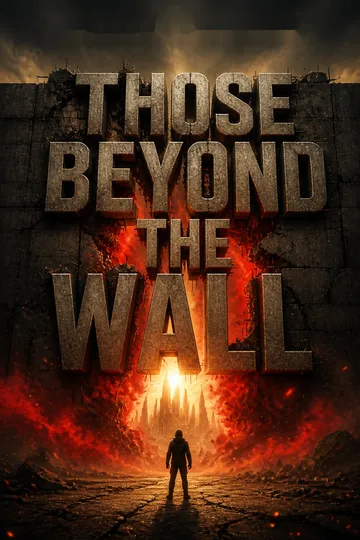
Those Beyond the Wall asks what protection means when safety is distributed according to political belonging. Wiley’s atmosphere can shelter a population from the sun, yet its wall and enforcement system make that shelter conditional. Ashtown answers exclusion with its own coercive order, where the emperor’s care can arrive as a command, a beating, or a death sentence. The novel does not offer a simple moral contrast between a civilized city and a violent desert. Wiley’s polished institutions hide the violence they authorize; Ashtown’s runners make violence visible, while sometimes mistaking visibility for honesty.
Scales’s arc turns on the difference between a story that sustains a person and one that protects the storyteller from change. Her invented orphan history helps her enter a community that gives her a home, but the truth of her childhood complicates the self she has made. Her capacity for repair grows as she begins to treat other people as more than the roles she assigned them: Cross is not only a preacher, Cheeks is not only a loyal friend, and Cara is not merely a legend. That growth does not make her choices innocent. Her decision to kill Cheeks demonstrates that she can understand the cost of an action and still choose it.
The multiverse expands this ethical pressure. Seeing other outcomes does not free Scales from responsibility; it makes every decision feel haunted by those who might have lived under a different one. The book therefore rejects the comforting idea that sufficient knowledge will reveal a painless solution. Instead, it locates hope in collective memory and action. The runners’ history, the House’s practices of care, and the public record of Cheeks’s death all give the vulnerable a way to make their experience impossible to dismiss. Bringing down the wall changes the material conditions of survival, but it does not erase the violence that achieved it. The ending asks readers to hold those truths together: liberation can be necessary and costly, and a community’s future depends on what it chooses to remember, repair, and refuse to repeat.
Review Summary
Those Beyond the Wall receives mixed reviews, with some praising its raw emotion, complex characters, and powerful social commentary, while others criticize its departure from the first book's tone and characterization. Many note its angrier, more violent nature compared to its predecessor. Readers appreciate Johnson's exploration of systemic issues and political violence, but some found the narrative confusing or heavy-handed. The protagonist, Mr. Scales, divides opinions, with some finding her compelling and others struggling to connect. Overall, the book seems to elicit strong reactions, both positive and negative.
People Also Read





Characters
Scales
Mechanic turned protectorScales is a tall, sharp-tongued mechanic and runner in the desert city of Ashtown. She trusts engines, tools, and her own ability to survive more readily than she trusts institutions or tenderness. Her loyalty to Nik Nik is profound, though she resists the authority and ambition he sees in her. Scales is also emotionally perceptive in ways she disguises with aggression: she notices who needs care, how power moves through a room, and where a person’s story does not fit. Her work, friendships, and history with the House shape a worldview in which violence is real but not the only form of connection. She is driven by belonging, self-determination, and the fear of becoming like those who once controlled her.
Nik Nik
Emperor with a hidden heartNik Nik rules Ashtown through an intimidating mixture of ritual, violence, and loyalty. He expects obedience from his runners and understands that their collective identity is part of the city’s defense. In private, his relationship with Scales is familial and tender, though he often disguises care as an order or a lesson. He is suspicious of outsiders and alert to political danger, yet his decisions are not driven by cruelty alone. Nik wants to protect the people who depend on him while maintaining control over a precarious world. His difficulty sharing responsibility creates tension with Scales, who loves him but increasingly insists on being treated as a moral agent rather than a protected child.
Mr. Cheeks
Scales’s trusted confidantCheeks is a handsome, charismatic runner and senior officer whose loyalty to Nik is almost devotional. He has spent years as Scales’s closest friend, sharing work, danger, jokes, and a degree of intimacy neither has fully named. His warmth makes him an effective leader, but his fear of abandonment can distort his judgment and leave him dependent on Scales’s care. He is also capable of acting decisively when someone else is in danger. Cheeks’s desire to be valued, especially by the people he loves, sits uneasily beside the demands of a culture that treats emotional attachment as a potential weakness.
Mr. Cross
Ruralite turned runnerCross comes from the Rurals, a religious society whose values Scales associates with judgment and hypocrisy. As a runner, he is disciplined, observant, and quieter than his rank and skill might suggest. Scales’s long-standing hostility toward him grows from an encounter in childhood, when his religious certainty made her feel condemned. Cross has a strong need to belong and to be useful, but he often hides his distress behind obedience. His intelligence complements Scales’s instincts, and his patience gives him a way of reaching people that she has not yet learned. He is still working out how to reconcile his upbringing, his vows, and the life he has chosen.
Adam Bosch
Disgraced multiverse scientistBosch is a brilliant, physically disabled scientist whose former work involved travel between universes. He now lives in isolation in Wiley City, surrounded by traces of an importance he has lost. His curiosity is relentless, and he often treats people as problems to solve rather than companions with limits. Sarcasm and arrogance protect him from vulnerability, though his connections to Nik and Cara expose how much history he carries. Bosch believes knowledge can be turned into practical power, a conviction that makes him valuable during the crisis and dangerous to those whose lives become his experiments. His past remains bound to the political conflicts between Wiley, Ashtown, and the Rurals.
Cara
Legendary world travelerCara is an Ashtown-born traverser whose journeys through other worlds have made her a figure of legend. Striped markings on her skin and a watchful, unsettling intensity set her apart even among people who know her history. She is brave, curious, and willing to enter danger for others, but her experiences have left her wary of Bosch and the harm his work can cause. Cara’s moral commitments are not abstract: she acts from remembered relationships and from the conviction that people must not be treated as expendable. Her life with Dell gives her a home beyond Ashtown, though she continues to be drawn back when the people there are threatened.
Exlee
House’s genderfluid caretakerExlee runs the House, a place offering sex work, companionship, and care to people who need shelter or support. They move easily across gender expression and insist that respect begins with listening to how people understand themselves. To Scales, Exlee is a former employer, mentor, and enduring source of safety. Their generosity is not sentimental softness: Exlee protects the House’s workers, sets firm boundaries, and understands how power can disguise itself as affection. They value restoration without pretending harm is harmless. Their relationships with Helene X and Scales show how chosen community can give a person practical tools for surviving a past they cannot erase.
Esther
Rural leader with resolveEsther leads the Rurals, a religious community that has long remained distinct from both Ashtown and Wiley City. She is graceful in public but not easily intimidated, and her authority rests on genuine attention to the people she serves. Esther’s religious practice includes private rituals of healing, which other characters initially misunderstand. She is protective of her community and careful about who is allowed access to its sacred places. Her connection with Cheeks reveals a private tenderness that does not erase her political responsibilities. Esther often has to negotiate between tradition, compassion, and the danger of powerful outsiders deciding what her people need.
Dell Ikari
Cara’s watchful partnerDell is Cara’s wife, a composed Wileyite who watches over her family with sharp attention. When her father returns from a trip changed and disappears, Dell begins tracking Bosch, hoping to understand what happened. She is not easily rattled by threats and can hold her ground without matching the loudness of those around her. Dell’s love for Cara is shaped by the knowledge that Cara’s work and past can pull her beyond ordinary reach. She combines practical caution with deep loyalty, making her an important bridge between Wiley’s domestic life and the danger emerging across worlds.
Helene X
House dancer and friendHelene X is a beloved dancer and House worker who came to Ashtown from Wiley City. She helped Scales learn how to inhabit her body without shame, offering instruction through example as much as formal guidance. Helene’s joy and confidence made her a source of comfort to the people around her, and her friendship with Scales reaches back to their early years at the House. She chose her name in honor of a grandmother who had treated her kindly. Helene’s life is not reducible to the tragedy that begins the novel; her humor, work, and care remain present in the people who remember her.
Mr. Splice
Runner technology specialistSplice is an inventive runner who builds and repairs the technology that helps Ashtown meet the outside world on its own terms. He is a patient problem-solver, often more comfortable with equipment than with public attention, though his confidence grows when others recognize his skill. Splice’s work supports Scales’s missions, from specialized gloves to data analysis and surveillance. He is also emotionally affected by the deaths he studies, reminding the group that useful expertise does not make someone immune to grief. His loyalty is expressed through practical help and a willingness to keep working when the task becomes frightening.
Mr. Tatik
Senior runner and mentorTatik is one of Ashtown’s oldest runners and a survivor of earlier political conflicts with Wiley City. She watches over the deepwaste and understands how quickly a local injustice can become a larger threat. Tatik is direct, politically astute, and unafraid to speak to Nik in a way few others would risk. She sees leadership potential in Scales even when Scales rejects promotion. Her memory preserves the history that younger runners might otherwise inherit only as rumor, giving her a role as both strategist and keeper of community knowledge.
Mr. Em
Quiet master of protocolEm is a highly capable runner whose quiet manner conceals exceptional knowledge of protocol and operations. She can draw Wiley’s surveillance drones away from a crossing without calling attention to herself, and she is trusted with delicate work near the emperor. Em’s approach contrasts with the runners’ louder public image: she does not need spectacle to exert influence. She also represents the practical intelligence that keeps the group functioning, often noticing what others miss while allowing them to take the visible risks.
Jax
House-trained city designerJax left the House for Wiley City and built a new life as a fashion designer. They once taught Scales about clothing and presentation, and later help her and Cross pass as city residents. Their relationship with Scales carries old hurt: Scales resented Jax’s departure and said cruel things at their farewell. Jax is practical and perceptive, with a talent for recognizing what a person is trying to conceal beneath an outfit. Their willingness to help Scales suggests that distance can soften a rupture without erasing it.
Viet
Keeper of life and deathViet maintains the desert grounds where births are blessed and the dead are prepared for burial. His work gives him authority across the boundary between beginnings and endings, though he does not explain every part of his practice to the runners. Scales trusts his care for the dead and respects the traditions he protects. Viet’s presence keeps the story’s violence from becoming purely tactical: each body has a place, a name, and people who must be helped to mourn it.
Anna Woods
Wiley widow and newcomerAnna is a Wiley woman who comes to Ashtown through a costly arrangement with the people attempting multiverse travel. She is not prepared for the violence she encounters, but she acts decisively when confronted with a version of her own life that no longer fits her expectations. Anna’s grief, fear, and capacity for action make her difficult to classify as either innocent or dangerous. The runners must decide whether a person who has killed can be taught to live differently, rather than simply discarded by the city.
Alden Woods
Wiley widower seeking healingAlden is a Wiley citizen grieving his wife and troubled by recurring dreams of her. He seeks help from Esther’s community when his own support systems fail him. His story connects a private loss to the strange events crossing into the public world, while showing how vulnerability can lead someone toward care rather than isolation.
Jeffery Ackerman
Wiley industrialistAckerman is a wealthy Wiley industrialist whose name carries weight in the city. His public reputation and private history are sharply at odds, and his life represents the kind of authority that benefits from being trusted before it is questioned. His legacy shapes the protagonist’s understanding of safety, family, and the city’s selective idea of respectability.
Mayor Macklyn O’Connell
Wiley’s embattled mayorO’Connell wins office on a hard line against Ashtown and presents herself as a defender of Wiley’s citizens. She is politically ambitious and skilled at turning public fear into support for stronger enforcement. Her choices are not merely cynical; she believes that control can protect her city, even when her policies place outsiders in danger. That mixture of conviction and self-interest makes her a formidable negotiator and a revealing example of how prejudice can be made to sound like public safety.
Abigail Hawthorne
Wiley’s curious vice mayorHawthorne serves as Wiley City’s vice mayor and approaches Ashtown with a curiosity that sets her apart from many of her colleagues. She notices details about the runners and their customs rather than treating the city as a collection of threats. Her political position requires her to balance personal judgment against an administration shaped by fear. She becomes an important figure in the negotiations between the two cities, though her private life and loyalties are not immediately clear.
General Ruthless
Retired runner with counselRuthless is an elder runner who served under the previous emperor and retains the instincts of a field commander. She understands that political promises are only as strong as the force behind them, and she presses Scales to decide what risks she is willing to accept before a crisis makes the choice for her. Her advice is blunt, shaped by years of violence and survival, but she does not confuse experience with certainty.
Mr. Sai
Young runner in trainingSai is one of the youngest runners, eager to prove that the oversized leathers they have been given belong to them. They look up to older runners such as Scales and learn the rituals of the group by watching as much as by training. Their presence reminds the older generation that protecting Ashtown means preserving a future for people still growing into it.
Mr. Tear
Runner and field leaderTear is a fierce runner known for her skill in close combat and her readiness to take on dangerous assignments. She is direct, disciplined, and respected by colleagues who understand the difference between enjoying violence and knowing how to use it. Her confidence in Scales matters because it comes from watching her work rather than from the emperor’s favor. Tear’s place in the organization shows how leadership can be earned through competence and trust.
Plot Devices
Dop backlash
Deadly cost of crossingWhen a traveler enters a universe where their counterpart is still alive, the two versions create a lethal collision. The first deaths seem spontaneous because the victims’ bodies are torn apart without a visible attacker. Bosch identifies the pattern and explains that the incoming travelers have found a way to shift the backlash onto the counterpart already living in the destination world. The mechanism gives the mystery its physical stakes and makes every new arrival a potential victim, while forcing the characters to distinguish a person from the version of them who has crossed over.
Barsamin
A shield between worldsThe black substance in Esther’s cave is an unusual material Bosch calls barsamin. It behaves as though its particles remain connected across universes, and contact can expose a person to visions of other times and possible futures. Esther’s healing ritual accidentally reveals a practical use: the cave’s substance can protect people from dop backlash. Bosch works to turn that protection into a larger atmospheric shield, while Scales’s exposure lets her examine choices that ordinary planning cannot reach. Barsamin links religious practice, scientific investigation, and the story’s question of whether seeing possible futures helps or harms the person who sees them.
The city wall
A border built from exclusionWiley City’s wall and artificial atmosphere protect its citizens from the harsh sun, but also mark the boundary between those it shelters and the people who built or live outside it. Runners use hidden tunnels and holographic disguises to cross the perimeter, while Wiley’s drones surveil the desert. The wall’s history shapes Scales’s memories and the political conflict: Wiley can choose whether to admit outsiders during danger, while Ashtown has no comparable barrier to close. In the climax, the wall’s destruction changes access to the city and allows its protective atmosphere to spread into the surrounding desert.
Stories and names
Identity made communalAshtown’s people use stories to preserve history, offer warnings, and give meaning to events that official records ignore. Runners use titles instead of birth names, and Scales’s account of her childhood becomes a shared origin story that helps her belong. These practices can protect people from imposed identities, but they can also distort what happened or turn a living person into a legend. Scales’s work as a witness connects storytelling to political action: the account of a death can determine whether the powerful treat it as a crime, an accident, or a reason to retaliate.
Truth tribunal
Loyalty tested through painA ceremonial substance administered by the emperor does not force a person to tell the truth, but makes lying physically unbearable. Runners use the tribunal to test allegiance and to confirm that a recruit can keep secrets. The ritual turns trust into a bodily ordeal, revealing that loyalty in Ashtown is both a chosen relationship and an institution enforced through pain. It also becomes part of Scales’s most intimate decisions, binding private affection to public consequences. The tribunal’s power depends less on uncovering every fact than on making certain secrets costly to betray.
The Space Between Worlds Series Series
Download PDF
Download EPUB
.epub digital book format is ideal for reading ebooks on phones, tablets, and e-readers.








