

Key Takeaways
Let God carry burdens you cannot solve instead of letting them define your journey.
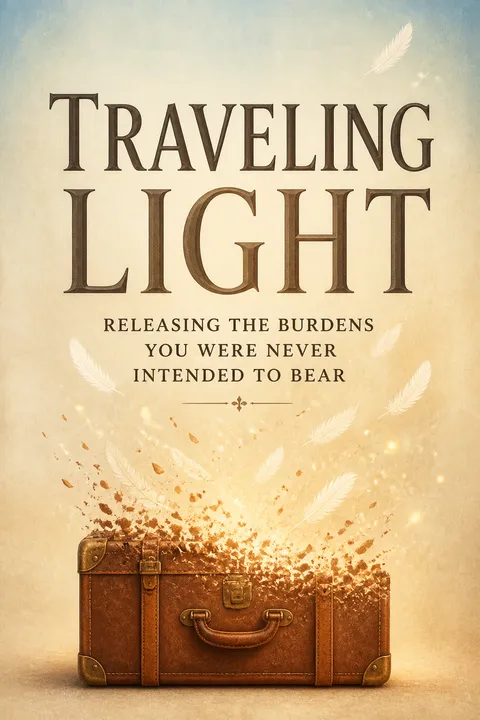
Life adds invisible luggage. Lucado turns Psalm 23 into a guide for setting down guilt, fear, grief, worry, and other burdens he believes people were not meant to carry alone. A man near death from cancer responds to the psalm’s words by gripping Lucado’s hand, as if finding enough trust to release some fear. The image is not of a life without hardship, but of a traveler who need not haul every weight unaided.
Full hands block connection. In a wedding skit, bride and groom arrive carrying labeled bags, each expecting the other to fix their problems. They cannot embrace. The picture makes the cost concrete: unresolved burdens can crowd out love, service, and joy. Traveling light means entrusting those weights to God, again and again.
The luggage metaphor gives diffuse distress a handle: a person can name what is weighing them down, rather than treating exhaustion as a character flaw. That resembles externalizing techniques in therapy, which help people view a problem as something they face, not their whole identity. The metaphor also has a limit. Some burdens require practical help, medical care, or changed circumstances, not only spiritual surrender. The strongest reading is not that people should stop acting, but that they need not confuse responsibility with carrying everything alone.
Anchor trust in a God too large to fit your convenient image.
Small gods cannot carry much. Lucado warns against picturing God as a wish-granting genie, a kindly but powerless elder, or a distant parent who appears only when life looks respectable. Such versions may feel manageable, but they cannot bear serious suffering. Psalm 23 begins by naming God as the shepherd, and the book connects that image to Yahweh, the divine name revealed to Moses.
Find your steady reference. Lucado describes Yahweh as unchanging, uncaused, and not governed by the limits that govern people. He recalls a music teacher who answered a student’s daily question about good news by sounding middle C: the note remained steady while everything around it varied. The analogy offers the book’s anchor: circumstances shift, but God’s character does not.
The contrast between a convenient deity and a dependable one highlights a subtle point: faith is not simply optimism about outcomes. It is confidence in a relationship and a character, even when the outcome remains painful or unclear. The middle C analogy works because it gives constancy a sensory image. Still, claims about divine unchangeability are theological commitments, not conclusions established by the analogy itself. Readers can recognize that distinction while appreciating how a stable point of trust may reduce the sense of facing change alone.
Ask for the Shepherd before self-reliance turns confidence into wreckage.
Confidence can overdrive. At the 1999 British Open, golfer Jean Van de Velde had a large lead and needed a modest final score. Instead of choosing a cautious shot, he took a risky line, struck trouble, and lost in a playoff. Lucado recognizes the same impulse in ordinary life: arguing when an apology would help, taking control when patience is needed, or trying to solve alone what should be entrusted to God.
Accept the sheep image. In Psalm 23, people are sheep: dependent, vulnerable, and poor at navigating alone. The metaphor is deliberately humbling. Lucado argues that the point is not to make people feel worthless, but to redirect attention to the shepherd’s care. Asking for guidance is not failure; it is an honest response to human limits.
The golf story captures a recognizable decision error: under pressure, people can prefer a dramatic attempt to a safer, more proportionate choice. The sheep metaphor usefully challenges fantasies of total self-sufficiency, especially in cultures that equate independence with competence. Yet dependence should not become passivity. Good judgment still requires gathering information, taking responsibility, and learning from mistakes. The practical insight is to notice when pride is masquerading as courage, then choose guidance before the cost of proving oneself becomes larger than the problem.
Stop postponing joy until life delivers one more thing.
Want keeps moving the finish line. Lucado calls the endless pursuit of the next possession, promotion, relationship, or improvement the prison of want. Each new acquisition may please briefly, but its novelty fades, and another desire takes its place. The book argues that possessions are neither permanent nor a reliable measure of personal worth.
Count what remains. Doug McKnight, diagnosed with multiple sclerosis at thirty-two, eventually lost his mobility and ability to feed himself. Yet his prayer list named eighteen blessings and six concerns. His example does not erase his suffering; it shows gratitude alongside it. Lucado’s Christian account locates contentment in what he believes cannot be taken: grace, relationship with God, and hope beyond this life. That perspective also counters envy by shifting attention from another person’s abundance to one’s own sources of meaning.
The book’s critique anticipates a familiar psychological pattern: people adapt to improved circumstances, so the next upgrade rarely delivers lasting satisfaction. Gratitude can interrupt the habit of comparing one’s private difficulties with another person’s visible advantages. But contentment is not a reason to accept preventable deprivation or injustice. McKnight’s story is powerful because it does not pretend illness is good; it shows that gratitude and loss can coexist. The distinction matters: contentment can steady a person without asking them to stop seeking help or change.
Treat rest as trust, not a reward for finishing everything.
Rest is part of care. Lucado links exhaustion to a life that rarely quiets down. He uses the image of sheep, which need a shepherd to find safe pasture, and points to the biblical Sabbath command as a deliberate stop in the workweek. Its detail matters: the command extends beyond the individual worker to family members, employees, and even animals. Rest is not reserved for the person who has finally completed every task.
The world can wait. A jackhammer drowned out conversation while Lucado’s wife visited a friend; amid the noise, she forgot her car was still running. The story illustrates how constant activity can make people miss what is happening. The book’s Christian interpretation adds that grace is already at work, so rest can be received rather than earned.
A regular pause is more than leisure. It creates a boundary against the belief that every problem depends on one person’s continuous effort. This connects to research on recovery from work, where detachment and restorative time support attention and well-being. The Sabbath framing also gives rest a communal dimension: a worker’s pause matters only if others are not forced to keep the system running in that person’s place. Religious practice can make that boundary meaningful, though the form of rest will vary with caregiving, health, and working conditions.
Meet only today’s trouble with today’s strength.
Worry divides attention. Lucado explains the Greek term merimnao as combining ideas of dividing and mind: anxiety splits attention between present tasks and imagined future problems. A person may spend today’s energy rehearsing a crisis that has not arrived, even though that rehearsal cannot guarantee a better outcome.
Take the next step. The book draws on Jesus’ teaching not to borrow tomorrow’s worries and on the story of manna, which the Israelites were instructed to gather one day at a time. It also retells physician William Osler’s image of a ship divided by watertight compartments: damage in one section need not flood the whole vessel. The practical lesson is to address what is actually in front of you, trusting that help and strength can meet future needs when they become real.
This is a spiritual version of separating solvable problems from hypothetical ones. Cognitive behavioral approaches make a similar distinction: planning can help when it produces a concrete action, while repetitive worry often circles without changing the situation. The book’s emphasis on timely help can ease the demand to solve an entire life in advance. Its limit is that preparation sometimes matters; financial planning, health decisions, and safety precautions are not needless worry. A useful test is whether thinking produces a next action or merely replays uncertainty.
In the jungle, trust the guide before demanding a map.
Hope can arrive before circumstances change. Lucado imagines a traveler lost in a dense jungle, without tools, direction, or a way to know whether the group is nearby. The person needs more than company: a guide who knows the route and can lead toward safety. In the book’s Christian reading, Jesus offers this presence and direction, even when he does not explain every turn.
The jungle may remain. The guide does not instantly remove the trees, dangers, or confusion. Instead, the traveler is no longer alone and has someone who knows the way. Lucado applies the image to illness, heartbreak, and financial trouble. Hope is not a guarantee that hardship disappears on demand; it is the conviction that hardship is not faced without help.
The guide image distinguishes emotional support from expertise. A companion can reduce isolation, but someone who knows the terrain can also make a path visible. In crises, people often need both: a trusted presence and practical direction. The image is especially useful when certainty is unavailable. However, trust in a guide should not require unquestioning obedience to human leaders or institutions. The book’s claim concerns trust in God; in everyday decisions, that trust can coexist with careful questions, evidence, and help from qualified people.
Receive forgiveness as a gift, not a wage earned by being good.
Guilt cannot buy admission. Lucado compares heaven to a feast whose guests need righteousness. His point is that people cannot make themselves perfectly good enough to qualify. He illustrates this with a church cookie exchange: unable to bake, he feared he would have nothing to bring, until someone gave him a plate of cookies. The gift made participation possible.
Grace changes the terms. In the book’s Christian theology, Jesus takes the burden of human sin, making forgiveness and reconciliation gifts rather than payment for moral achievement. The recipient’s role is to acknowledge the need and accept the gift. This is not a claim that harmful actions do not matter. It is a claim that guilt need not be carried as permanent proof that a person is beyond forgiveness.
The gift analogy sharply separates moral repair from moral perfection. That distinction can help people move from shame-driven hiding toward confession, accountability, and renewed participation in community. It also raises an important question: does receiving forgiveness excuse harm? The book’s metaphor is strongest when grace becomes the basis for truthful responsibility, not a substitute for it. Restoring a relationship may require changed behavior and repair, even when a person’s worth is not treated as something earned by flawless conduct.
Give credit away before success turns into another burden.
Humility is accurate self-knowledge. Lucado distinguishes humility from pretending to have no abilities. A humble person sees their strengths without claiming more credit than they deserve. He recounts arriving at a cafe convinced that people recognized him as an author, only to discover a streak of dried blood on his chin that had drawn their attention.
Applause can distort judgment. The book sees people as recipients of gifts and collaborators, not sole authors of their successes. It recommends honest self-assessment, celebrating other people’s contributions, and resisting the urge to advertise accomplishments before they are real. In the Christian frame, the psalm’s blessings come from the shepherd, not from the sheep. Humility therefore protects relationships and keeps achievement from becoming an inflated identity.
Humility is often misunderstood as self-erasure, but the book’s definition is closer to calibrated self-assessment. That matters in leadership: people who credit collaborators can strengthen trust and make others more willing to contribute. At the same time, giving credit away should not mean concealing one’s work or allowing others to claim it. A balanced practice recognizes both personal effort and dependence on support, luck, and opportunity. The aim is neither self-promotion nor false modesty, but a proportionate account of how success happened.
Grieve honestly, while treating death as a valley, not the final home.
Loss includes vanished futures. Lucado recalls Carlos, a three-year-old who died of leukemia. Watching a video of the boy dancing briefly brought his parents laughter, but the recording’s end returned them to grief. Another couple lost a baby before birth; the father said the loss included the future they had imagined. The book recognizes that mourning can contain sadness, anger, and disappointment, and that it may continue long after a funeral.
The valley is not the destination. Psalm 23 gives Lucado a way to speak of death as a passage in which God remains present. His Christian hope is that loved ones are not abandoned and that earthly life is not the whole story. He urges readers to face grief rather than deny it, while holding open the promise of a lasting home with God.
The recognition of lost futures is psychologically perceptive: bereavement is not only missing a person, but also relinquishing the life that seemed likely to unfold with them. Permission to mourn can protect people from the added burden of performing recovery on someone else’s timetable. The book’s hope is theological, not a universal account of what happens after death. Its comfort is most responsible when it accompanies grief rather than explaining it away, especially for parents and partners facing losses that resist tidy interpretations.
Bring fear and loneliness into God’s presence before they dictate your choices.
Fear can be spoken aloud. Lucado points to Jesus praying in anguish before his arrest, asking for the suffering ahead to be removed while remaining open to God’s will. The scene matters because fear is not presented as weak faith. The first move is honest prayer, not pretending to be calm. Lucado also advises directing attention toward a source of help rather than staring only at the threat.
Loneliness is about connection. A woman paid extra for bottled water delivered by a pharmacy because the delivery brought a human visitor. Her story shows that loneliness is not simply the absence of people; it is the absence of felt intimacy. Lucado presents God’s presence as a source of companionship, while recognizing that ordinary human contact also matters.
The image of Jesus expressing fear legitimizes emotional honesty within a religious life. That can counter the idea that faith requires suppressing distress. The water-delivery story also shows how small, repeated encounters can matter more than efficiency alone. Spiritual companionship may provide comfort, but it should not be used to dismiss the need for human relationships or mental health support. In practice, prayer and connection can reinforce each other: one can help a person endure, while the other offers tangible care.
Return to grace after failure, and bring fresh wounds to the Shepherd.
Failure need not exile you. After Peter denied knowing Jesus, he returned to fishing, perhaps unsure whether he still belonged. In the Gospel story, the risen Jesus meets him at the shore and prepares breakfast. Lucado reads the meal as welcome offered in the presence of shame: Peter’s failure is acknowledged, but it does not have the final word.
Care includes ordinary wounds. The psalm’s picture of a shepherd tending sheep with oil becomes an image of protection and healing. Lucado applies it to disappointment, conflict, and the small injuries that can harden into bitterness. He also recalls Paul, who wrote letters while imprisoned after his plans changed. The lesson is not that every setback is secretly good, but that a changed path can still hold purpose and care.
The breakfast scene offers a vivid model of restoration: belonging is renewed through presence and hospitality, not through public humiliation. The image of tending wounds adds a preventative dimension, suggesting that small hurts deserve attention before resentment becomes habitual. This insight connects with conflict repair, where acknowledgment and care often matter more than winning an argument. Still, not every disappointment can be redeemed on demand. The book’s message is strongest as permission to seek care and meaning without pretending that pain was necessary or deserved.
Analysis
Traveling Light is a Christian pastoral meditation organized around Psalm 23. Each phrase of the psalm becomes a lens for a recognizable burden: self-reliance, discontent, exhaustion, worry, hopelessness, guilt, arrogance, grief, fear, loneliness, shame, disappointment, envy, doubt, and homesickness. The repeated luggage image supplies a simple narrative thread, while Lucado’s personal anecdotes and stories of people facing illness, bereavement, failure, or isolation make abstract theology emotionally legible.
The book’s central argument is relational rather than procedural. It does not offer a secular method for eliminating distress; it invites readers to trust a shepherd who is present, capable, forgiving, and ultimately able to lead them home. This gives the chapters a coherent answer to different forms of suffering, but it also means the answer depends on accepting the book’s Christian claims. The adaptation should preserve that dependence rather than translate every promise into a universal psychological fact.
The most useful tension is between surrender and agency. The book asks readers to stop carrying what they cannot control, yet it also tells them to grieve, seek help, make humble choices, and tend wounds. Read well, surrender is not passivity: it is a way to act without imagining that every outcome rests on one person’s shoulders. Read carelessly, however, appeals to divine purpose or future heaven could minimize material hardship, discourage treatment, or make grief feel like a failure of faith. The book’s own strongest stories resist that simplification by allowing pain and trust to coexist. Its memorable achievement is turning a familiar psalm into a practical inventory. Readers can ask which burden is weighing them down, what the shepherd image offers in response, and what human action still belongs to them. The recurring invitation is not to deny the load, but to stop treating solitary endurance as the only form of strength.
Review Summary
Traveling Light by Max Lucado is highly praised for its insightful examination of Psalm 23. Readers appreciate Lucado's relatable writing style, personal anecdotes, and practical applications. The book offers comfort and guidance for those struggling with various burdens like worry, guilt, and fear. Many found it spiritually refreshing and a valuable tool for personal reflection or group study. While some felt it was repetitive or simplistic, most reviewers considered it an uplifting and enlightening read that helped them better understand and apply the psalm's teachings to their lives.
People Also Read

Glossary
Traveling light
Entrusting burdens to GodLucado’s central metaphor for living without treating guilt, fear, worry, grief, discontent, or other emotional burdens as solitary responsibilities. It does not mean that hardship disappears or that people stop taking practical action. It means trusting God with what they cannot control and receiving help rather than allowing burdens to dominate their relationships, service, and attention.
The prison of want
Happiness postponed for moreLucado’s image for the cycle in which a person believes joy depends on acquiring one more possession, achievement, relationship, or change in circumstances. Satisfaction lasts briefly, then desire relocates to the next thing. The proposed escape is contentment grounded in relationship with God and in blessings that possessions cannot secure or define.
Yahweh
God’s personal nameThe Hebrew divine name that Lucado emphasizes in his reading of Psalm 23. He connects it with God’s self-description to Moses as I AM and interprets it as pointing to God’s unchanging, uncaused, and unconstrained nature. The book presents Yahweh as more than a distant title: the personal name supports its image of a shepherd who is present with people.
merimnao
A divided, anxious mindA Greek term for worry that Lucado explains through its parts, associating it with a mind divided between present concerns and anticipated problems. In the book, this language illustrates how anxiety can split attention and drain energy without solving the future. Lucado contrasts that pattern with meeting current needs and trusting that help will be available when it is needed.
day-tight compartment
Keep attention within todayA metaphor attributed in the book to physician William Osler. Like a ship whose watertight sections limit the spread of damage, a person can mentally separate the past and future from the work of the present day. The practice is not a rejection of planning; it is a way to stop imagined future problems from consuming the strength needed for today.
A Heavenly Exchange
Christ bears human sinLucado’s description of the Christian belief that Jesus, understood as righteous, accepts the punishment associated with human wrongdoing so people can be reconciled with God. The chapter contrasts this gift with attempts to earn righteousness through moral performance. Receiving forgiveness does not make harmful actions irrelevant; it allows guilt to be faced without treating it as an irreversible barrier to grace.
FAQ
What's "Traveling Light" about?
- Theme of Burdens: "Traveling Light" by Max Lucado focuses on the burdens we carry in life and how to release them. It uses the metaphor of traveling with heavy luggage to illustrate the unnecessary burdens we bear.
- Psalm 23 as a Guide: The book uses Psalm 23 as a framework to explore different types of burdens, such as guilt, worry, and fear, and how God can help us lighten these loads.
- Spiritual Journey: It is a spiritual guide that encourages readers to trust in God and find rest and peace by letting go of their burdens.
Why should I read "Traveling Light"?
- Practical Advice: The book offers practical advice on how to deal with life's burdens by relying on faith and spiritual guidance.
- Relatable Stories: Max Lucado uses relatable stories and personal anecdotes to make the concepts accessible and engaging.
- Spiritual Growth: It is ideal for those seeking spiritual growth and a deeper understanding of how to live a life free from unnecessary burdens.
What are the key takeaways of "Traveling Light"?
- Trust in God: Trusting God is essential for releasing burdens and finding peace.
- Letting Go: The book emphasizes the importance of letting go of guilt, worry, and fear to live a more fulfilling life.
- Psalm 23's Wisdom: Each verse of Psalm 23 offers wisdom and guidance for dealing with specific burdens.
How does Max Lucado use Psalm 23 in "Traveling Light"?
- Verse-by-Verse Analysis: Lucado breaks down Psalm 23 verse by verse, using each line to address a different burden.
- Practical Application: He applies the wisdom of Psalm 23 to modern life, showing how its teachings can help alleviate stress and anxiety.
- Spiritual Insights: The psalm is used to provide spiritual insights and comfort, reinforcing the idea that God is a shepherd who cares for us.
What is the "Burden of a Lesser God" in "Traveling Light"?
- Concept of Lesser Gods: This burden refers to relying on things other than God for security and happiness, such as wealth or status.
- Psalm 23's Message: Lucado uses Psalm 23 to illustrate that God is the only true source of security and peace.
- Letting Go: The book encourages readers to let go of these false idols and trust in God's provision.
How does "Traveling Light" address the "Burden of Self-Reliance"?
- Self-Reliance as a Burden: Lucado describes self-reliance as a burden that leads to exhaustion and stress.
- God as a Shepherd: He emphasizes that God is our shepherd, guiding and providing for us, so we don't have to rely solely on ourselves.
- Trust and Surrender: The book encourages readers to trust in God's guidance and surrender their need for control.
What does "Traveling Light" say about the "Burden of Worry"?
- Worry's Futility: Lucado explains that worry is futile and does not add any value to our lives.
- God's Timely Help: He reassures readers that God provides help and guidance at the right time, just as a shepherd leads his sheep.
- Focus on the Present: The book advises focusing on the present and trusting God with future concerns.
How does "Traveling Light" explore the "Burden of Guilt"?
- Guilt as a Heavy Load: Guilt is portrayed as a heavy burden that consumes us and hinders our spiritual growth.
- God's Forgiveness: Lucado emphasizes that God's forgiveness is available to all, and we can leave our guilt at the cross.
- Path to Righteousness: The book encourages readers to follow the path of righteousness that God provides.
What is the "Burden of Arrogance" in "Traveling Light"?
- Arrogance as a Burden: Arrogance is described as a burden that distances us from God and others.
- Humility's Importance: Lucado stresses the importance of humility and recognizing that all we have comes from God.
- Living for God's Glory: The book encourages living for God's glory rather than seeking personal accolades.
What are the best quotes from "Traveling Light" and what do they mean?
- "Set that stuff down!" This quote emphasizes the need to release burdens and trust God to carry them.
- "The Lord is my shepherd; I shall not want." It highlights the sufficiency of God's provision and care.
- "He leads me beside the still waters." This quote reassures readers of God's guidance and peace in times of trouble.
How does "Traveling Light" address the "Burden of Fear"?
- Fear's Paralyzing Effect: Lucado discusses how fear can paralyze us and prevent us from living fully.
- God's Presence: He reassures readers that God's presence is constant, and we need not fear evil.
- Prayer and Trust: The book encourages turning to God in prayer and trusting Him to calm our fears.
What is the "Burden of Loneliness" in "Traveling Light"?
- Loneliness as a Common Burden: Lucado acknowledges that loneliness is a common burden that many people face.
- God's Constant Presence: He emphasizes that God is always with us, even when we feel alone.
- Finding Comfort in God: The book encourages finding comfort and companionship in God's presence.
About the Author
Other books by Max Lucado








Download PDF
Download EPUB
.epub digital book format is ideal for reading ebooks on phones, tablets, and e-readers.








