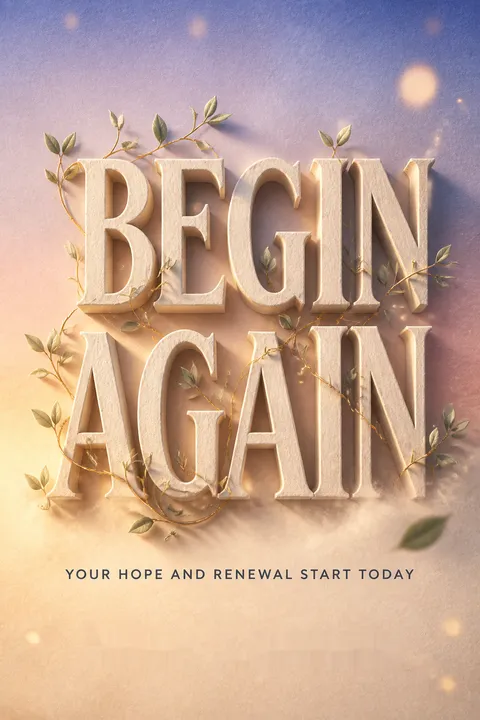


Key Takeaways
Treat hope as evidence that a new chapter remains possible
Hope is not a shortcut. The book opens with Noah surrounded by floodwater, unable to see whether life can resume. A dove eventually returns with an olive leaf, a small sign that dry ground exists somewhere beyond the horizon. The leaf does not end the flood instantly. It makes continued waiting imaginable. Lucado uses this image to define hope as confidence in a possible future, not a promise of immediate relief. His central claim is that God offers fresh starts after grief, failure, exhaustion, and fear, and that present circumstances do not get to write the final chapter.
Look for the next sign. A beginning again may first appear as a bit of evidence, a person who stays, a promise worth holding, or the strength to take one more step. The point is not to pretend the flood is gone, but to keep looking beyond it.
What's valuable here is the distinction between hope and prediction. Hope does not require certainty about how, or when, circumstances will improve. It gives a person room to act while the outcome remains unknown. That makes the olive leaf more psychologically credible than a sudden rescue: it is limited evidence that the future is not closed. The book grounds this confidence in Christian faith, not in a general promise that life will work out. That distinction matters, especially for readers whose grief cannot be resolved by optimism.
When the path disappears, trust the guide who knows it
Company alone is not enough. Lucado compares hardship to being lost in a jungle without tools or a map. A companion who is equally lost can offer company, but not a way forward. Restored hope requires someone trustworthy, a vision of a better destination, and guidance toward it. In the Christian frame of the book, Jesus is that guide: he knows the terrain because he made it and has passed through suffering and death.
The jungle may remain. The guide does not promise to remove every obstacle on command. The trees, dangers, and uncertainty can persist, but the traveler is no longer abandoned or directionless. The chapter's safari story captures the idea: asked where the path is, the guide answers that he himself is the path. Faith, then, means following a person when a full itinerary is unavailable.
This is a model of trust based on relationship rather than control. People often seek a complete explanation before they can move, but difficult situations rarely provide one. The guide image offers another possibility: take the next step with someone considered trustworthy, even when the whole route is hidden. Its strength is emotional and spiritual, not evidentiary. For readers outside the book's faith, the practical question remains useful: who has earned enough trust to help navigate a crisis, and what specific next step can they clarify?
Bring fear to God before fear dictates your next move
Honesty is part of faith. In Gethsemane, Jesus faces the suffering ahead, asks his Father to take it away, and yields to the Father's will. Lucado emphasizes the anguish in the scene rather than presenting Jesus as serenely untouched by fear. The example makes prayer a place for unedited distress, not a performance of confidence.
Name the actual fear. Instead of speaking vaguely about anxiety, the chapter urges people to tell God what they dread: a medical appointment, a flight, a job change, or a family crisis. Jesus' request is specific, and so can theirs be. The Christian claim is not that every feared event will disappear. In Jesus' case the cross remains, but the story presents divine strength as available within the ordeal. Prayer shifts fear from private burden to shared vulnerability.
The chapter's most humane move is allowing fear to coexist with faith. In many settings, confidence is mistaken for emotional silence, which can leave frightened people ashamed as well as distressed. Naming the feared event can make an overwhelming threat more concrete and make support easier to seek. The theological account adds a relationship of trust to that practice. Still, prayer should not be treated as a substitute for medical care, counseling, or practical planning. The chapter's own example supports asking for help without demanding that the danger vanish.
A failure is an event, not a permanent identity
Failure is common, not disqualifying. Lucado points to biblical figures who failed badly and were still given work to do. The prodigal son wastes his inheritance and returns home from poverty; his first important move is deciding to go back. Joshua loses an initial battle at Ai, then succeeds after seeking God's direction and changing his strategy. Peter fishes unsuccessfully until he follows Jesus' instruction to try again.
Start with the next step. A fresh start does not erase consequences or undo yesterday. It means refusing to let a mistake become a lifelong verdict. The 1991 Super Bowl kicker Scott Norwood missed the final field goal, then returned to Buffalo to hear thousands of fans call for him and cheer. The welcome did not change the result. It reminded him that one public failure did not cancel his belonging.
The distinction between an action and an identity is central to recovery from shame. When a mistake becomes a total description of the self, learning and repair become harder: there is little point trying if the person believes the verdict is already settled. These stories instead connect renewal to concrete response, including revising a plan, returning to supportive relationships, and accepting grace. The crowd's welcome of Norwood also shows how communities can interrupt self-condemnation. Encouragement does not absolve responsibility, but it can restore the capacity to take responsibility.
You are pursued, guarded, and helped even when you feel alone
Support can be present before it is recognized. Eric Hill left home and lived on the streets for sixteen years. When illness brought him near death, his sister Debbie found him and stayed, despite his confusion and rejection. He recognized her shortly before he died. Lucado reads her persistence as an image of God's pursuit: patient, familial, and not dependent on the lost person's ability to respond well.
The Spirit is described as assurance and help. The book calls the Holy Spirit God's seal, a sign of belonging and protection, and says the Spirit helps people who cannot find words to pray. This is not a promise that believers avoid hardship. It is a claim that hardship does not mean abandonment. The image of a father staying close to his blind son while the boy works captures the chapter's emphasis on unseen presence.
The chapter brings together two kinds of support: a visible person who refuses to disappear, and a spiritual presence that may be felt less clearly. Debbie's care is especially persuasive because it includes patience with behavior that is difficult to understand, rather than a simple rescue scene. Her story also highlights the limits of the metaphor: persistence cannot guarantee another person's recovery or recognition. As a pastoral claim, however, divine accompaniment can counter the isolation that makes suffering harder to bear, while human care gives that belief a tangible form.
Receive God's love as home, not a reward for success
Love is not a performance prize. Lucado argues that God's love depends on God's character, not on a person's achievement, attractiveness, or spiritual consistency. He points to Jesus' death as the defining evidence of that love, rather than using prosperity or illness as a measure of divine favor. The chapter invites readers to make this love a place to live, not an occasional reassurance sought only after doing well.
Job receives presence, not a tidy explanation. After losing his wealth, children, and health, Job demands answers. God's response describes the scale and complexity of creation rather than supplying a neat cause for each loss. Job says that knowing God directly has changed him. The book presents God's presence as a gift in itself, while acknowledging that this does not restore the children Job lost or make grief trivial.
This section resists a common but damaging equation: good fortune means divine approval, while suffering means rejection. Its alternative, a love not calibrated by outcomes, can help preserve dignity through both success and loss. The book's treatment of Job is strongest when it leaves room for lament and refuses to turn pain into a simple lesson. Its assurance is theological rather than a resolution of the problem of suffering. Readers may still ask why particular tragedies occur, and the chapter does not claim to answer them.
Anchor your faith to promises stronger than changing circumstances
An anchor holds beyond the storm. Hebrews describes hope as an anchor for the soul, and Lucado locates that anchor in Jesus rather than wealth, health, status, or another person. Those things can change; the book's Christian promise is that loss cannot remove Christ or erase hope in life beyond death.
Faith is a decision amid grief. Jonathan McComb survived a flash flood that killed his wife and two children. At their funeral, he spoke openly of anger, confusion, and tears, while also trusting that he would meet them again. His hope did not explain the flood or make the loss acceptable. Lucado encourages readers to collect scriptural promises that speak to their particular fears and return to them when panic rises. The practice is meant to steady attention, not to deny what has happened.
The anchor metaphor distinguishes stable commitments from changing conditions. It also clarifies why the book treats faith as a choice: not a choice to feel cheerful, but a decision about what account of reality to trust while pain remains. McComb's grief makes the point more convincingly than a painless success story would. A necessary caution is that promises should not be turned into guarantees of physical safety or a specific outcome. In this chapter, hope is ultimately located in relationship with God and in an afterlife, not in control of events.
Find your distinct strengths and put them to work for others
Your gifts are particular. The book argues that each person has a distinctive mix of abilities, interests, and temperament. Rather than copying another person's path, readers are urged to notice what comes naturally, what holds their attention, and what others ask them to do. The aim is to use those strengths in work and service, not merely to admire them.
Encouragement is a form of service. Arthur Bressi gave his prized class ring to his dying friend Skinner in a Japanese prisoner-of-war camp. Skinner traded it for medicine and food, and survived. The ring communicated practical help and belief in his future. Lucado connects that act to the prodigal son's ring, a sign that he still belonged and could act on his father's behalf. In this view, compassion does not earn salvation; it expresses the grace already received. Small acts, including listening and showing up, can help someone keep going.
The section joins vocation to generosity: personal strengths matter partly because they can meet another person's need. That is a useful alternative to treating talent as a private ranking system. It also broadens service beyond dramatic sacrifice. Presence, attentive listening, and words that restore confidence are available forms of contribution. The language of a unique calling can be encouraging, though it should not imply that everyone must discover one perfect job. Skills can be shared across roles, and meaningful service often grows through ordinary responsibilities rather than a singular revelation.
Wait for the whole story before naming a storm blessing or curse
One event is only a fragment. In a fable Lucado learned in Brazil, a poor woodcutter's valuable horse disappears. Neighbors call it a disaster. The horse returns with twelve wild horses, and they call that good fortune. Then the woodcutter's son breaks his legs while training them, which seems tragic, until a war takes the other young men and spares the son. At every turn, the woodcutter refuses to claim he knows the final meaning.
Keep a longer horizon. The lesson is not that every painful event secretly proves beneficial. It is that a person rarely sees enough to judge an entire life from one episode. The book extends that humility into its belief in heaven: earthly suffering is not the whole story. It also urges readers to record how faith has carried them through change, so their own history can offer hope to someone facing a similar fragment.
This fable is a compact lesson in epistemic humility: outcomes unfold through chains of events that cannot be read from the first link. That can soften premature despair or triumphalism. But the caution has a boundary. Telling someone in acute grief that a loss may turn out to be a blessing can invalidate the loss and imply knowledge no observer possesses. The woodcutter's restraint is more ethically useful than a claim that suffering always serves a visible purpose. The book's eternal perspective offers hope, but should not silence grief in the present.
Write down how grace changed you so another person can begin again
Remember the before and after. Lucado imagines a gallery of stories showing people before and after a new beginning. He urges readers to record what life was like before help arrived, what changed, and what remains unfinished. Remembering a painful past can guard against arrogance and make a person's transformation legible to others.
Tell the story for someone else. The point is not to present oneself as a finished success. A truthful account can include ongoing struggle alongside evidence of change. The book's biblical stories are offered as reminders of what God does, not only as records of what happened long ago. Personal stories work similarly: someone facing a dead end may recognize a path forward in another person's account. In Lucado's Christian view, every beginning points toward a final renewal beyond death, grounded in the resurrection of Jesus.
Narrative gives change a shape. Recording a difficult period and the steps beyond it can help a person notice progress that daily life obscures, while sharing the account can make private experience useful to others. The book wisely frames this as testimony rather than self-congratulation: transformation is unfinished, and credit is directed toward grace. A story should still be told with consent and care. Other people's pain is not raw material for inspiration, and a personal recovery story cannot prescribe the same route for everyone.
Analysis
Begin Again is a Christian devotional and pastoral guide, organized around five movements: trust God, receive spiritual gifts, rely on promises, serve others, and look toward eternity. Its 20 chapters are built from short biblical readings, contemporary anecdotes, and vivid metaphors. The book's structure is cumulative rather than argumentative: it returns repeatedly to one assurance, that people can start over because God remains present and faithful.
Its strongest editorial choice is to make hope concrete. Noah's olive leaf, a sister searching for her estranged brother, a friend giving away his ring, and a woodcutter refusing to judge too soon each turn a theological claim into a scene readers can remember. The stories also keep renewal relational. A new beginning is rarely depicted as sheer self-reinvention. It arrives through guidance, forgiveness, community, divine presence, or service to another person.
The central tension is between assurance and explanation. The book insists that God protects, pursues, and loves people, while acknowledging illness, death, and catastrophe. Its most careful moments distinguish God's presence from a guarantee that suffering will be prevented, as in Jesus' anguish and Job's unanswered questions. At other moments, assurances about protection and providence risk sounding like claims that every tragedy is harmless when viewed from heaven. Readers may need to preserve the book's humility about what cannot be known, rather than use its confidence to minimize grief.
The book is explicitly Christian. Its hope depends on trust in Jesus, the Holy Spirit, Scripture, and resurrection, not on a universal self-help formula. For that audience, its value lies less in novel doctrine than in repeated retrieval: familiar convictions are reframed through memorable stories and practical invitations. Its most durable actions are modest: name fear honestly, return after failure, identify gifts, help one person, and keep a record of grace.
Review Summary
Begin Again by Max Lucado receives mostly positive reviews, with an average rating of 4.36/5. Readers appreciate Lucado's encouraging style and ability to inspire hope, especially during difficult times. Many find the book uplifting and relevant to current struggles. Some criticize it for being a compilation of previous works, lacking new material. The book's themes of trusting God, overcoming fear, and embracing new beginnings resonate with many readers. Some find it perfect for starting the new year or facing life changes, while others desire more depth in the content.
People Also Read






Glossary
begin-again life
A life renewed by graceLucado's recurring name for a life that can restart after fear, loss, failure, or exhaustion. The phrase does not mean that past events can be erased or consequences avoided. It describes renewed hope and direction grounded in God's presence, forgiveness, and promises, with a future that is not determined solely by present circumstances.
soul anchor
Hope secured in ChristThe book's image for hope that steadies a person through changing circumstances. Drawing on Hebrews 6, Lucado says this anchor is secured in God's presence through Jesus, rather than in possessions, health, reputation, or other unstable supports. It represents spiritual confidence and belonging, not certainty that hardship will be prevented.
seal of the Spirit
Sign of belonging to GodLucado's explanation of the Holy Spirit's role in Ephesians: the Spirit marks believers as God's own and serves as a pledge of their future inheritance. The book uses the seal to convey security and protection, and connects the Spirit's work with inward assurance, comfort, and help in prayer when people cannot express what they need.
boēthos
Helper who runs to aidA Greek word for helper, discussed in the book's reading of Hebrews 13. Lucado connects its components to a cry for help and running, presenting God as one who comes quickly to assist. The term supports the chapter's picture of God as a constant companion and defender, though the book does not claim that assistance removes every hardship.
song of the whip-poor-will
The heart's longing for eternityLucado's metaphor for the persistent human desire for a life beyond earthly suffering and limitation. The bird's imagined song represents an inner awareness that the present world is not a complete home. In the book's Christian interpretation, this longing points toward eternal life with God and sustains hope through pain.
FAQ
1. What is "Begin Again: Your Hope and Renewal Start Today" by Max Lucado about?
- Theme of Fresh Starts: The book centers on the idea that God offers everyone the chance to begin again, no matter their past failures, pain, or disappointments.
- Hope and Renewal: Lucado uses biblical stories, personal anecdotes, and practical advice to show how hope can be restored and dreams renewed through faith.
- Structure: The book is organized into five parts, each focusing on a different aspect of spiritual renewal: trusting God, enjoying His gifts, grounding yourself in His promises, influencing your world, and nurturing an eternal perspective.
- Practical Application: Each chapter includes relatable stories and scriptural insights, followed by reflection questions to help readers apply the lessons to their own lives.
2. Why should I read "Begin Again" by Max Lucado?
- Encouragement for Difficult Times: The book is designed for anyone feeling stuck, weary, or in need of a fresh start, offering hope and practical steps forward.
- Accessible Spiritual Wisdom: Lucado’s writing is clear, compassionate, and rooted in biblical truth, making complex spiritual concepts easy to understand and apply.
- Personal Growth: Readers are guided to reflect on their own lives, identify areas needing renewal, and take actionable steps toward positive change.
- Faith-Based Perspective: The book provides a Christian framework for overcoming setbacks, making it especially valuable for those seeking spiritual encouragement.
3. What are the key takeaways from "Begin Again" by Max Lucado?
- God Offers New Beginnings: No matter your circumstances, God is always ready to help you start over and restore your hope.
- Trust in God’s Character: Believing in God’s trustworthiness and promises is foundational to experiencing renewal.
- Practical Faith Steps: The book emphasizes giving your fears to God, choosing faith over fear, and relying on the Holy Spirit for strength.
- Impact on Others: True renewal leads to influencing your world through acts of love, compassion, and sharing God’s gifts.
4. How does Max Lucado define a "new beginning" in "Begin Again"?
- Spiritual Renewal: A new beginning is not just a change in circumstances but a transformation of the heart and mind through God’s grace.
- Letting Go of the Past: It involves releasing regrets, failures, and shame, and embracing God’s forgiveness and future promises.
- Active Trust: Starting over means actively trusting God’s guidance, even when the path is unclear or difficult.
- Ongoing Process: Lucado emphasizes that new beginnings are continual, as God is always working to renew and restore us.
5. What practical advice does "Begin Again" by Max Lucado offer for overcoming hopelessness?
- Trust Your Shepherd: Lucado encourages readers to see God as a trustworthy guide who restores hope even in life’s darkest "jungles."
- Give Your Fears to God: He advises being honest with God about your fears and anxieties, following Jesus’ example in Gethsemane.
- See with Eyes of Faith: The book teaches to look beyond present circumstances and believe in God’s unseen work and promises.
- Don’t Give Up: Lucado shares stories of biblical and modern figures who failed but found new beginnings by turning back to God.
6. How does "Begin Again" by Max Lucado address dealing with fear and anxiety?
- Jesus’ Example: Lucado highlights Jesus’ honest expression of fear in the Garden of Gethsemane, showing that it’s okay to bring fears to God.
- Prayer and Specificity: He encourages specific, honest prayers, trusting that God cares about every detail of our fears.
- God’s Presence: The book reassures that God is always with us, offering comfort and strength even when circumstances don’t change immediately.
- Replacing Fear with Faith: Lucado suggests focusing on God’s promises and presence as the antidote to fear and anxiety.
7. What role does faith play in "Begin Again" by Max Lucado’s approach to renewal?
- Faith as a Choice: Lucado asserts that faith is an intentional decision to trust God’s promises, even when evidence seems lacking.
- Seeing the Unseen: He encourages readers to "see with eyes closed," believing in God’s goodness and power beyond what is visible.
- Endurance and Perseverance: The book teaches that enduring faith, not perfect faith, is what leads to salvation and lasting hope.
- Faith in Action: Lucado links faith to practical steps—praying, acting in love, and holding onto God’s promises during trials.
8. How does "Begin Again" by Max Lucado encourage readers to see themselves and their purpose?
- Unique Design: Lucado emphasizes that each person is uniquely created by God, with specific gifts and a distinct purpose.
- Be Yourself: The book urges readers to embrace their "you-ness" and not compare themselves to others, as everyone has a unique role in God’s plan.
- Using Your Gifts: Readers are encouraged to identify and use their God-given abilities to serve others and make a difference.
- Value and Worth: Lucado reassures that God’s love and acceptance are not based on performance but on His unchanging character.
9. What does "Begin Again" by Max Lucado teach about God’s promises and their impact on daily life?
- Promises as Anchors: Lucado describes God’s promises as anchors for the soul, providing stability and hope in uncertain times.
- Scripture-Based Assurance: The book encourages memorizing and meditating on specific biblical promises to combat doubt and despair.
- God’s Faithfulness: Lucado stresses that God always keeps His promises, and trusting in them leads to unshakable hope.
- Practical Application: Readers are advised to write down and personalize God’s promises, making them a daily source of encouragement.
10. How does "Begin Again" by Max Lucado address helping others and making a difference?
- Influence Your World: Lucado teaches that renewed people naturally impact those around them through acts of kindness and service.
- Love in Action: The book highlights the importance of loving those in need, seeing service to others as service to Christ Himself.
- Sharing God’s Gifts: Readers are encouraged to share their resources, time, and encouragement, believing in others as God believes in them.
- Legacy of Impact: Lucado uses stories to illustrate how small acts of faithfulness can leave a lasting mark on the world.
11. What are the main spiritual concepts and metaphors used in "Begin Again" by Max Lucado?
- The Jungle: Life’s challenges are compared to being lost in a jungle, needing a trustworthy guide (God) to lead us out.
- The Anchor: Hope is described as an anchor for the soul, keeping us steady amid life’s storms.
- The Stump and the Potter: Transformation is likened to a tree stump being cleaned and displayed, or silver being refined by a smith.
- The Whip-poor-will: The longing for eternity is symbolized by the persistent song of a whip-poor-will, reminding us we are made for more than this world.
12. What are the best quotes from "Begin Again" by Max Lucado and what do they mean?
- "Hope is an olive leaf—evidence of dry land after a flood. Proof to the dreamer that dreaming is worth the risk." This quote illustrates that even small signs of hope can be powerful motivators to keep going.
- "Your current circumstances will not get the final say in your life." Lucado reassures readers that God’s plan and promises are greater than any present difficulty.
- "Faith is a choice." This succinct statement emphasizes that trusting God is an intentional act, not just a feeling.
- "God is the God who follows." Lucado highlights God’s persistent, pursuing love, assuring readers that they are never abandoned.
- "None of us can help everyone. But all of us can help someone." This quote encourages practical compassion, reminding readers that small acts of kindness matter.
About the Author
Other books by Max Lucado







Download PDF
Download EPUB
.epub digital book format is ideal for reading ebooks on phones, tablets, and e-readers.








