

Plot Summary
Prologue
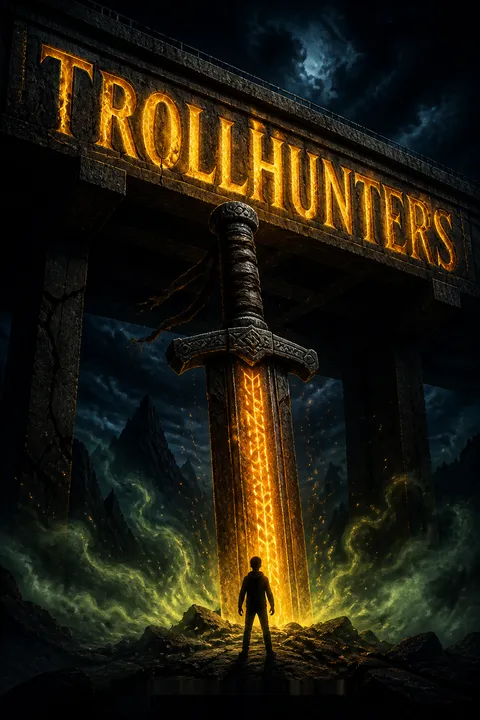
In 1969, on his thirteenth birthday, Jack Sturges races ahead of his eight-year-old brother, Jim, beneath the Holland Transit Bridge. Jim finds Jack’s red bicycle abandoned and sees a horned creature emerge from the darkness. He escapes on his training-wheel bike, but Jack is gone.
A bronze medallion briefly appears in the grass before vanishing. The disappearance ends San Bernardino’s epidemic of missing children, yet Jim spends decades searching the bridge. Forty-five years later, his son, fifteen-year-old Jim Sturges Jr., learns that the loss shaped every lock on their home and every fear his father passed down.
The opening makes fear an inheritance before the younger Jim knows what has been inherited. His father’s lifelong vigilance begins in a real encounter, not an irrational temperament, while the missing medallion leaves a physical clue suspended between evidence and memory. The prologue also plants a painful asymmetry: Jack vanishes at thirteen, but his younger brother must grow old carrying the absence. That imbalance gives the coming adventure its emotional stakes. Jim Jr. is not simply discovering monsters. He is entering the wound that has organized his family for forty-five years.
The Drain Below Saint B.
Fifteen-year-old Jim Sturges Jr. lives inside his father’s precautions: steel shutters, ten door locks, and a rule that he must never be out after dark. At school, Jim and his best friend, Tobias Dershowitz, endure Steve Jorgensen-Warner’s bullying, while Jim quietly admires Scottish newcomer Claire Fontaine.
Then a huge claw reaches from a parking-lot manhole as the boys hide from Steve. Jim escapes, but cannot prove what he saw. That night, eight red eyes move through his supposedly sealed house. A monster drags him from beneath his bed, through a hidden opening, and away from the life he thought he understood.
Jim’s first crisis joins two kinds of danger that adults around him have kept separate. Steve’s everyday cruelty is visible but socially tolerated; the creature beneath the house is unbelievable, yet physically real. Jim’s father has built a fortress around his son, but the fortress cannot protect him from entrances hidden in ordinary architecture. The story makes adolescent helplessness concrete: Jim is trapped by bullies in public and by monsters in private, and his father’s protection has taught him caution without teaching him what to do when caution fails.
A Medallion at Dawn
Jim wakes in a cavern stacked with abandoned children’s belongings, where a masked boy in armor made from junk fights beside two trolls, Blinky and ARRRGH!!!. Blinky explains that the giant troll is nearly blind; the armored boy urges Jim to wear a bronze medallion. Jim panics and runs instead, crawling through a sewage pipe into a vast underground market crowded with trolls.
ARRRGH!!! and Blinky pursue him through the stalls. As dawn sends the creatures fleeing from sunlight, the armored boy warns that they will return until Jim accepts the medallion. Jim chooses daylight over the underground, and wakes in his own bed with the medallion beside him.
The subterranean world turns Jim’s private fear into a crowded society with its own commerce, habits, and dangers. The junk hoard gives the missing-child epidemic material form, while the market complicates the simple idea that every monster is a solitary predator. Jim’s refusal of the medallion is understandable: he has no reason yet to trust the beings who seized him. But daylight offers only a temporary escape. The object left on his bed converts a terrifying night into an obligation that can no longer be dismissed as a dream.
The Bridge in the Museum
Jim finds sores on his father’s face and recognizes the wet sounds he heard during the night, but Dad is unusually cheerful after sleeping deeply. Jim races to Tobias’s dentist appointment and tries to convince him that monsters are real. Tobias doubts him, though he agrees to help investigate.
At play auditions, Jim performs opposite Claire and unexpectedly earns the role of Romeo. He and Tobias then trespass through the historical museum, where Professor Lempke has installed the ancient Killaheed Bridge. Its carved imagery matches the mural in the troll cavern. The bridge’s central stone is still missing, but Lempke expects it before Friday’s festival finale.
Jim’s search for confirmation produces evidence in two registers: the sores on his father are intimate and disturbing, while the bridge is public, catalogued, and treated as an art object. The museum’s prestige does not make the relic safe; it only gives the danger respectable packaging. Jim’s success at the audition also introduces a life he might want beyond mere survival, while the approaching festival fixes a deadline. The bridge links the old troll war to the town’s present, and the missing central stone makes its completion feel like a countdown rather than a restoration.
Jack Comes Through the Floor
Jim and Tobias prepare a nanny camera, a decoy, and a few makeshift weapons, then hide in Jim’s closet. When the intruders arrive, the boys charge into the kitchen and find Blinky and ARRRGH!!! searching the room, alongside the armored stranger who has been following Jim.
The stranger disarms them, removes his mask, and reveals the face of Jack Sturges, still thirteen despite his disappearance forty-five years earlier. Jack’s medallion lets Jim understand the trolls. Blinky explains that they sedated Jim’s father with a sleeping creature, and Jack refuses to let the boys wake him. Instead, he opens a stairway beneath Jim’s bed and takes them underground.
The revelation does not repair the family’s loss. It makes the loss stranger: Jack is physically the boy who disappeared, while his younger brother has spent a lifetime becoming an old man. Jim’s father is absent from the reunion because the trolls have deliberately removed him from it, a choice that immediately puts their methods in question. Yet Jack’s return also gives the boys a living link to the 1969 epidemic. The bedroom staircase turns the household’s most familiar place into a threshold, showing that family history is not behind Jim. It is literally beneath him.
The Sturges Spearhead
In the tunnels, Jack tells Jim that the Sturges family once produced human fighters called paladins. Blinky fills in the history: the Gumm-Gumm trolls arrived in California with the London Bridge, abducted children, and were defeated in 1969 by Jack and the troll warrior Johannah ARRRGH!!!. Jack spared their leader, Gunmar the Black, who is now regaining strength.
The Killaheed Bridge, Gunmar’s former stronghold, may be feeding that return. Jack expects Jim to prove he has a paladin’s instincts and begins training him with two swords. He teaches him to watch for danger, use an enemy’s force against it, and target a troll’s vulnerable organs before leading the group out to hunt.
Jack frames inheritance as a burden rather than a birthright. His lessons are practical, but his warning about war makes clear that competence will not protect Jim from grief. The family’s history also refuses a clean heroic ending: Jack’s mercy toward Gunmar preserved his own moral distinction, yet left a threat alive. Blinky’s elaborate account counters Jack’s severity with scholarship and cultural detail, implying that survival depends on more than violence. Jim is being trained to fight, but also to understand that choices made in one generation can become danger in another.
The Baby in the Nursery
The hunters attack ten Nullhullers, trolls that eject their organs so their bodies can scale a house and replace a human baby with a changeling. Jack and the trolls enter the home, while Jim cuts open the creatures’ organ sacs and searches their entrails for gallbladders. He reaches the nursery when the baby stops crying.
There, he kills the troll carrying her and destroys the half-formed replacement, then helps Jack confirm that the infant is human. One Nullhuller escapes with the collected gallbladders. Soon the Eye of Malevolence, a living relic taken from Gunmar, attaches itself to ARRRGH!!! and makes her attack her friends. Jack wounds her just enough to free her, but the hunters have lost their trophies and their secrecy.
Jim’s first successful rescue is not a clean initiation. He saves a real child by killing a creature that is still taking shape, and the horror of that act complicates the exhilaration Jack has taught him to expect from combat. The escaped Nullhuller converts a local failure into strategic danger by carrying information back to Gunmar. Meanwhile, ARRRGH!!!’s possession demonstrates that even the team’s strongest member can become a weapon against her companions. The scene tests Jim’s willingness to act, then immediately shows him the cost of acting without control over every consequence.
The Junkyard Gives Way
After the nursery raid, Jim’s father urges him to enjoy the festival and take on the school play, while Tobias resents being told he is not a trollhunter. That night, Jim joins Jack, Blinky, and ARRRGH!!! against rust trolls at Keavy’s Junk Emporium. The battle lasts for hours, then Gunmar’s voice shakes loose a landslide of scrap metal that buries the hunters and lets two rust trolls escape.
Sergeant Ben Gulager arrives, but the group slips away before he can identify them. With their cave exposed and their supplies buried, they have nowhere safe to return. Before dawn, Jim persuades Tobias to hide ARRRGH!!! at his grandmother’s house, where she becomes distracted by television static and the cats.
The junkyard battle makes the war’s escalation visible through logistics: the hunters lose not only a fight but their home, equipment, and ability to retreat. Jim’s father offers ordinary teenage freedom without knowing what Jim has been asked to face, creating a painful gap between care and understanding. Tobias’s exclusion sharpens that gap between the boys as well. Yet he still takes ARRRGH!!! in, and his practical improvisation keeps her safe. The first signs of loyalty are not grand declarations. They are the unglamorous decisions to shelter someone dangerous and stay involved after being told to leave.
The Static War
Over the next nights, Jim helps the hunters defeat Wormbeards that lure children from home, Yarbloods that infect children with fever, and Zunnn who seize children for Gunmar. Their searches for the Gumm-Gumm lair keep failing, while empty desks multiply at school.
The nanny camera’s recording eventually shows Jim’s father the trolls in his kitchen. Because Jack forgot to use another sleeping creature, Dad wakes and recognizes his brother. The reunion overwhelms him, and he faints.
Jim returns to school still carrying the burden of the war, where Tobias is again being extorted by Steve. Claire challenges Steve publicly, then offers to tutor Jim in mathematics. The boys’ growing danger and the ordinary school day now occupy the same shrinking stretch of time.
The repeated hunts make the threat cumulative rather than abstract: each creature has a distinct method, and each missing student turns the school’s ordinary routines into a ledger of loss. Jim’s exhaustion is therefore moral as well as physical. The nanny-camera footage, intended as proof of a monster attack, becomes the means by which his father encounters Jack again. Their reunion is not yet reconciliation; Dad faints before he can absorb what has happened. Claire’s intervention against Steve offers Jim a different kind of courage, one that challenges the social order in daylight rather than waiting for darkness.
A Kiss Before the Abduction
Claire’s fencing skills impress the cast at rehearsal, but Steve’s charm wins him a chance to understudy Romeo while Jim is sidelined. Later, Claire comes to Jim’s house to tutor him. She explains that her polished family life hides pressure from parents who expect her to become someone she is not. Jim admits that his mother left and that he locked the door behind her as a child.
The two kiss, but their brief closeness ends when a creature tears Claire from the house and drags her underground. Jim finds her bed ripped open and her passage blocked by an ambush of Gumm-Gumms. Blinky restrains him from charging into it, then summons the trollhunters with a call that can reach their kind.
The intimacy between Jim and Claire grows from mutual recognition, not from the fantasy that either has an uncomplicated life. Jim has imagined her home as a refuge; Claire’s opened backpack dismantles that picture, just as his confession exposes the shame he has attached to his mother’s departure. Their kiss briefly lets both be seen without performance. The abduction then makes the cost of that vulnerability immediate. Jim’s impulse to rush below is emotionally honest but tactically disastrous, so Blinky’s restraint forces him to accept that courage must sometimes wait for help.
The Family Door Opens
Jack arrives at Jim’s house and finds Dad awake, shaken by the footage and desperate for his brother to stay. Jack cannot return to the life Dad imagines, but their reunion finally makes the loss speakable. When Jack prepares to leave with Jim, Dad tries to forbid it. Jim chooses to go, accepting that the children in danger matter more than the comfort of staying home.
He takes the keys to Dad’s work van and drives to Tobias’s house. Tobias has fitted ARRRGH!!! with makeshift braces and agrees to join the hunt. The group heads for the Holland Transit Bridge, where ARRRGH!!! uses the Eye of Malevolence to open a path underground. The Eye breaks free, and the hunters follow it into the tunnels.
The choice to leave is not a rejection of family. Jim has finally seen what the family’s silence has cost his father, yet refuses to repeat that silence by staying safe while other children disappear. Jack’s reunion with Dad cannot restore their lost years, but it replaces imagined reunion with the harder truth of who each brother has become. Tobias’s return matters for a different reason: he enters the fight after Jim has dismissed him, and arrives having cared for ARRRGH!!! on his own terms. The team is becoming a chosen family, built through consent and responsibility rather than blood alone.
A Trail Through the Dead
The Eye slips through the tunnels, and its poisonous strike slows Tobias as the hunters lose their route. With Jack’s astrolabe unavailable, they wander until daylight forces the trolls to struggle through the underground passages. Then Tobias spots a strip of pink fabric from Claire’s backpack. More scraps, including pieces of the clothes her parents chose for her, lead the group deeper.
The trail carries them through the Cemetery of Souls, where trolls remain petrified in the shapes they made while dying in sunlight. At its far end, the hunters find Gunmar’s lair. A conveyor and crude grinder form a Machine that turns flesh into food, and Claire’s trail has led them to the missing children and the heart of the enemy’s plan.
Claire’s trail is an act of resistance made from whatever she can tear away. The pink fabric first associated with the image others impose on her becomes practical evidence of her agency. The hunters’ failure to navigate by the usual instruments makes attention to a person more valuable than mastery of the underworld. The Cemetery of Souls then places their rescue attempt against the history of troll suffering, refusing to let the enemy’s cruelty appear exceptional or cost-free. The Machine gives that cruelty an industrial form: children become material in a process designed to sustain conquest.
Gunmar’s Meat Machine
Gunmar sits above his Machine, feeding on a mixture of old troll meat and animals, while seventeen kidnapped children are held nearby. Jack confirms that the enemy has not yet begun processing them. The hunters attack, and Jim and Tobias circle the battle to reach the prisoners. They find the children buried to their necks, dig them free, and reunite Jim with Claire.
As the Killaheed Bridge is completed, the underworld and the surface fuse in a burst of white light. Trolls, hunters, and rescued children are deposited on the football field during San Bernardino’s festival game. The transition saves the captives from the Machine, but it also brings Gunmar and his followers into a stadium full of unprepared families.
The rescue turns a private pursuit into a public crisis. The children are not merely prisoners but prospective fuel for Gunmar’s machinery, which makes Jim’s earlier fear about the missing girl’s flyer brutally concrete. Digging them out requires the boys to make their own hands useful, and their growing number of helpers shows how care can spread under pressure. The completed bridge is both the enemy’s intended passage and the event that exposes the threat to the whole town. It destroys the hunters’ control over where the battle happens, but ends the isolation that had kept the community ignorant.
The Stadium Turns
The Gumm-Gumms charge the bleachers, and the crowd initially breaks in panic. Sergeant Gulager takes the microphone and directs people to use the red-and-white Steve Smackers scattered through the stadium. Their blows buy time.
Tobias reaches the jumbotron controls and floods its screen with static, drawing the trolls into the same trance that once held ARRRGH!!!. The humans seize the opening and pin the distracted creatures. Then Gunmar’s body releases hundreds of miniature copies of himself, overwhelming the defenders again.
Jim’s father arrives on his gold industrial mower and cuts through the newborn trolls. The machine he once used to mow parks becomes a weapon, while the crowd’s improvised defense gives Jim and the other hunters time to confront Gunmar directly.
The stadium reverses the meaning of the town’s most irritating objects. Steve’s noisemakers become tools of collective defense, and the jumbotron, built to magnify school spectacle, becomes a trap for creatures addicted to static. Gulager’s authority works because the town already trusts him, while Tobias’s technical improvisation turns that trust into time. Dad’s mower similarly changes from a sign of his diminished life into an instrument of action. The scene’s hope is deliberately practical: no one weapon wins alone. Ordinary people, familiar machines, and the trollhunters each create the opening the others need.
The Boulder Falls
Jack, Blinky, and ARRRGH!!! engage Gunmar while Jim searches for an opening. Claire takes a prop sword from the ruined stage and throws it into Gunmar’s mouth, then catches a blade Jack sends her. Her skill confirms that she, too, has a paladin’s inheritance. Gunmar’s six arms and spined back batter the hunters, and ARRRGH!!! is hurled into the goalposts.
The impact frees the boulder embedded in her skull since the 1969 battle. She uses it to crack Gunmar’s head, then collapses from her wounds. Jim climbs onto Gunmar and destroys his heart, softies, and gallbladder, completing the task Jack could not finish decades earlier. The surviving Gumm-Gumms are left without their leader.
The victory depends on each character contributing a different kind of knowledge: Claire’s trained movement, Jack’s combat experience, Blinky’s persistence, ARRRGH!!!’s strength, and Jim’s willingness to complete the final task. Claire’s recognition as a paladin expands the family legacy beyond the Sturges line, while the boulder that once marked ARRRGH!!!’s injury becomes the means of ending Gunmar’s rule. Jim’s final act is not triumphant in any simple sense. He must approach the defeated enemy closely enough to see its vulnerability and accept the physical and moral weight of ending the threat.
A Mascot and a Mask
The rescued children reunite with their families, and Jim’s father embraces both his son and the brother he thought lost. The community helps carry ARRRGH!!! to the field’s edge, where the rising sun will turn her into a statue honoring the alliance between humans and trolls.
Tobias stays beside her, insisting that she receive a memorial worthy of her courage. Later, he presses a football helmet’s horseshoe emblem to Steve’s forehead, using the test Jack taught the boys. Steve’s human face splits apart to reveal a troll changeling.
Jim, Claire, Jack, and Blinky take up their weapons again. The festival’s apparent ending becomes a warning: defeating Gunmar has not made San Bernardino safe, but the town and its hunters are no longer facing the danger alone.
The resolution answers the opening’s family wound without pretending that loss can be undone. Jim’s father no longer has to guard an empty place in the family alone, and the town turns a battlefield into a public memorial rather than hiding what happened. Tobias’s insistence on honoring ARRRGH!!! gives grief a communal form, not merely a private one. Steve’s exposure then unsettles the relief: the appearance of normality can still conceal danger. But the final threat lands differently from the first. Jim now has allies, inherited knowledge, and a community capable of acting.
Analysis
Trollhunters treats fear as a form of knowledge that can either protect a person or imprison one. Jim’s father has built a fortress because his own childhood taught him that danger can arrive without warning, but the fortress leaves Jim unprepared for danger that enters through the bed, the sewer, and the bridges beneath the town. Jack represents the opposite distortion: he has learned to survive by turning vigilance into discipline and discipline into emotional distance. Jim’s development comes from refusing both extremes. He learns to act while afraid, but he also learns that action requires trust, judgment, and help.
The novel’s strongest structural idea is that the hidden world is not separate from ordinary life. Missing children shape the school’s empty desks; a museum acquisition becomes a military threat; a football game becomes a site of rescue. Familiar objects change function under pressure. The jumbotron’s static distracts trolls, Steve Smackers become weapons, and Jim’s father’s lawn mower becomes a defense against Gunmar’s offspring. These transformations make courage collaborative. No single hero can solve the crisis alone, and each person’s ordinary knowledge becomes useful at the moment it is needed.
The family story gives the fantasy conflict its emotional measure. Jack’s disappearance did not only remove a boy; it froze his brother’s life around an unanswered loss. When Jack returns unchanged, the reunion cannot restore the years, but it does let the brothers confront the difference between memory and the person who survived it. Jim’s choice to enter the war is therefore not a rejection of his father’s love. It is a refusal to let fear dictate what love permits. The ending extends that idea to the town: remembrance becomes a public act, and the humans and trolls must decide whether the old cycle of appetite and retaliation will continue.
Review Summary
Trollhunters received mixed reviews, with an average rating of 3.69 out of 5. Readers praised the book's imaginative world-building, dark humor, and engaging characters. Many appreciated del Toro's signature style in the vivid descriptions of trolls and their underground realm. However, some found the pacing slow and the target audience unclear, as it blends elements of middle-grade and young adult fiction. The book's divergence from the Netflix series surprised some readers, while others enjoyed it as a standalone story with its own merits.
People Also Read
Characters
Jim Sturges Jr.
Reluctant young paladinJim is a short, uncertain fifteen-year-old whose life is hemmed in by his father’s locks and warnings. At school he avoids attention, struggles with mathematics, and stays close to Tobias, even when he cannot stop Steve from humiliating them. His attraction to Claire shows how strongly he longs for a life larger than his own fear. Jim is observant and imaginative, but his instinct to retreat often disguises a willingness to protect others. He measures himself against his father’s anxiety and his uncle’s warrior reputation, yet his real strength comes from noticing what others miss and acting when someone vulnerable is in immediate danger.
Jack Sturges
Boy trapped in warJack is Jim’s uncle, the thirteen-year-old son Jim’s father lost beneath the Holland Transit Bridge in 1969. He is a fierce swordsman, intensely disciplined, and far more comfortable facing monsters than explaining himself to family. His armor is assembled from objects taken from missing children, a grim reminder of the world that raised him after his disappearance. Jack treats fear as useful information and expects obedience because hesitation can kill. Beneath his severity is a boy whose life stopped at the moment his family’s continued without him. He is driven by responsibility for the war he helped end and by dread that it may begin again.
Jim Sturges Sr.
Father behind the shuttersJim Sr. is an anxious, aging father whose fear began when his older brother vanished during the Milk Carton Epidemic. He checks locks, monitors his son, and treats independence as a danger he can prevent through enough precautions. His old wound has shaped the household and contributed to the distance between him and his wife. Yet his vigilance is an expression of love as well as trauma; he wants his son to survive what he could never explain. His modest work and uncredited invention suggest a man accustomed to being overlooked, while his patience and care for Jim remain visible beneath the rituals that make their home feel like a fortress.
Tobias Dershowitz
Jim’s loyal best friendTobias, usually called Tub, is Jim’s funny, big-hearted friend, a target of Steve’s bullying and painfully aware of how little respect he receives. He uses jokes to turn humiliation into something he can survive, though the humor sometimes conceals genuine despair. He is resourceful, curious, and more courageous than his self-image allows. His grandmother’s crowded home and his affection for its many cats give him a domestic world unlike Jim’s guarded house. Tobias wants to matter to someone, but he also wants friendship that does not make him an accessory. His loyalty is strongest when he is treated as a person capable of choosing his own risks.
Claire Fontaine
Fencer with hidden depthClaire is a Scottish newcomer whose military-surplus clothes, beret, pink backpack, and appetite for junk food make her hard to mistake for anyone else. She moves easily outside the school’s social rules and can meet cruelty with startling verbal force. Her confidence is genuine, but it does not mean her private life is simple; she carries pressures she does not reveal to casual friends. Claire is an accomplished fencer, perceptive about other people’s loneliness, and willing to challenge Jim when he hides behind self-pity. She values independence and authenticity, and her warmth emerges not as a performance of niceness but as an active decision to see and support someone.
Blinky
Scholar of the underworldBlinky is a many-eyed troll scholar with tentacles, a formal manner, and an inexhaustible appetite for history. Nearly blind, he has trained himself to navigate by touch and smell, and he translates between the troll world and Jim. His sprawling knowledge gives the young hunters context for the war, though his elaborate explanations can test their patience. Blinky is more than a repository of lore: he is a careful observer of grief, custom, and character. He softens Jack’s harshness without denying the cost of Jack’s life, and his mixture of scholarship and tenderness makes him the group’s emotional interpreter as well as its historian.
ARRRGH!!!
Troll warrior and guardianARRRGH!!! is a towering, black-furred troll warrior with curled horns, immense strength, and speech altered by an old injury. She is blunt, loyal, and deeply protective, especially toward children. Her size makes her frightening to humans, but her behavior reveals a generous nature and a strong attachment to her companions. She follows the non-human diet favored by her family and can be unexpectedly gentle around those she trusts. The boulder lodged in her skull is both a reminder of battle and a familiar source of luck for troll children. ARRRGH!!! embodies the possibility that a fearsome appearance can coexist with patience, humor, and care.
Gunmar the Black
Ancient troll warlordGunmar is the leader of the Gumm-Gumms, an ancient and exceptionally cruel troll faction. Known as the Hungry One, he has built his power around human children and the terror their disappearances create. His history with Jack and ARRRGH!!! reaches back centuries, and his survival has left the peace between humans and trolls fragile. Gunmar is calculating enough to wait for the right conditions to regain strength, but his appetite and desire for dominion govern him. His physical grotesqueness is not the source of his danger; it is the deliberate system of abduction, consumption, and fear that he commands.
Steve Jorgensen-Warner
Star athlete and bullySteve is Saint B. High’s celebrated basketball player and football star, handsome enough to attract admiration and powerful enough to make his bullying seem untouchable. He carries a basketball everywhere, using its steady bounce to announce his presence and control the mood around him. Steve presents cruelty as a business arrangement, demanding money from Tobias while maintaining a polished, courteous manner. His athletic success gives him social protection, and the adults around him are inclined to excuse his behavior because the school depends on his talent. He represents the ordinary-looking authority that makes cruelty difficult to challenge.
Sergeant Ben Gulager
Stuttering local heroGulager is a San Bernardino police sergeant who survived a near-fatal gunshot while shielding children. A speech impediment and an ill-fitting hairpiece make him an easy target for jokes, but his courage has earned the town’s trust. He is practical about the limits of police resources and refuses to promise protection he cannot provide. Gulager continues searching for danger even when the evidence makes him question what he has seen. His instinct is to protect people first and explain events later, a quality that makes him an important bridge between the frightened community and the trollhunters.
Professor Lempke
Museum’s rigid curatorProfessor Lempke runs the San Bernardino Historical Society Museum with the severity of a man convinced that art requires reverence and strict control. He treats Jim and Tobias as persistent nuisances and prizes his career-making acquisition above the town’s festival. His pride in preserving the Killaheed Bridge blinds him to the possibility that an artifact can be dangerous as well as valuable. Lempke’s devotion to order makes him a comic antagonist in the boys’ museum escapades, but his actions also bring the ancient structure into the center of San Bernardino.
Grandma Dershowitz
Tobias’s cat-loving guardianTobias’s grandmother is a warm, practical presence in a crowded home filled with cats, baking, and carefully protected decorations. She often misunderstands what the boys are doing, but her generosity gives Tobias a secure place to return to. Her hearing aid and old-fashioned habits are part of the household’s rhythm, not signs that she lacks authority. She is affectionate toward Jim and proud of Tobias, even when she does not understand the dangers surrounding him.
Ms. Pinkton
Impatient mathematics teacherMs. Pinkton is a frustrated mathematics teacher who sees Jim’s poor performance as a problem he must solve before the coming test. She is sharp-tongued and impatient with the school’s decision to fund a giant scoreboard while neglecting classroom supplies. Her public challenges intensify Jim’s embarrassment, but her standards also give him a concrete academic obstacle that persists alongside the troll war.
Coach Lawrence
Gym’s boisterous coachCoach Lawrence teaches gym with loud encouragement and a sports-first understanding of what students should be able to do. He urges Jim and Tobias to climb the rope, unaware of how exposed and inadequate the exercise makes them feel. His attention tends to follow athletic spectacle, especially Steve’s talent, but he is not malicious. He represents the school’s assumption that confidence and physical skill should come naturally to every boy.
Mrs. Leach
Shakespeare’s determined directorMrs. Leach directs the school’s hurried Shakespeare production, trying to preserve a theatrical tradition with too little time and too few dependable actors. She is capable of cynicism about the festival but still hopes the play can reach its audience. Her casting decisions put Jim, Claire, and Steve into an awkward triangle of ambition, performance, and attraction.
Dr. Papadopoulos
Inventive family dentistDr. Papadopoulos is Tobias’s dentist, an enthusiastic practitioner who takes particular pride in the specialized tools he has designed. His professional vanity makes the dental appointment both comic and alarming for Tobias. The equipment he creates for braces becomes an unlikely resource beyond the clinic, linking one of Tobias’s recurring humiliations to his growing practical confidence.
Plot Devices
The Trollhunter Medallion
Opens a hidden callingThe bronze medallion bears a troll crest, an unfamiliar script, and a sword. It first appears in the grass where Jack vanished, then returns to Jim after his first encounter with the underground world. Wearing it allows Jim to understand troll speech and marks his connection to the paladin tradition. It also brings his private life into contact with the troll war: the object cannot make Jim fearless or skilled, but it makes denial increasingly difficult. Its appearance links the two generations of Sturges boys and turns a family mystery into a summons.
Bridges and Bedways
Connects the two worldsBridges and the space beneath children’s beds serve as crossings between the human world and the underground. Trolls use bridges to reach their hidden realm, while bedways allow them to enter homes at night. The entrances make the ordinary world porous: a bedroom can conceal a stairway, a sewer can open onto a market, and an underpass can hide a portal. The mechanism also gives the Killaheed Bridge its strategic importance. When it is completed, it does not merely provide a route underground; it carries Gunmar’s forces into the human world.
Jack’s Astrolabe
Finds hidden troll routesJack uses a battered, intricate astrolabe to locate secret doors and track troll movement. Its rings and dials help the hunters identify passages that ordinary maps cannot show, making it their best navigational tool underground. The device is not an effortless answer: the hunters can still lose their way, and it does not replace the need to observe their surroundings. When the astrolabe is lost, the group must rely on less formal evidence, including the scraps Claire leaves behind. Its absence makes attention and cooperation more important than equipment.
The Eye of Malevolence
Carries Gunmar’s influenceThe Eye is a living relic torn from Gunmar in the 1969 battle. ARRRGH!!! can use it to see what Gunmar sees, but prolonged exposure risks drawing her toward his way of thinking. The Eye also behaves like a creature: it attaches itself to hosts, lashes out, and searches for a path back to its master. Its pursuit pulls the hunters through a network of portals and makes ARRRGH!!! vulnerable to possession. The Eye turns distant danger into something the characters must physically carry, contain, and resist.
The Killaheed Bridge
Restores Gunmar’s powerThe Killaheed is an ancient Scottish bridge associated with Gunmar’s history and former stronghold. Professor Lempke brings its sections to San Bernardino for a museum exhibition, unaware that its completion coincides with Gunmar’s growing strength. The missing central stone creates a deadline, because the bridge’s finished structure allows the underworld and human world to connect on a larger scale. It is both a historical artifact and an active part of the conflict. Its arrival transforms the town from a place where trolls hide into the battlefield where humans must confront them.
FAQ
0. Synopsis & Basic Details
What is Trollhunters about?
- A Hidden World Unveiled: Trollhunters follows fifteen-year-old Jim Sturges Jr., who lives under the shadow of his father's intense paranoia, stemming from the mysterious disappearance of Jim's uncle, Jack, decades earlier. Jim's mundane suburban life is shattered when he stumbles upon a secret world of trolls living beneath his hometown of San Bernardino.
- Legacy of a Lost Brother: Jim discovers that his uncle Jack was not merely lost but was taken into this hidden realm and has become an eternal warrior, a "trollhunter," fighting against ancient evils. Jim is reluctantly drawn into this dangerous legacy, forced to confront terrifying creatures and learn the brutal truths of a war that has been raging for centuries.
- A Race Against Darkness: Guided by his un-aged uncle and two eccentric trolls, Blinky and ARRRGH!!!, Jim must embrace his destiny to prevent the resurgence of Gunmar the Black, a formidable troll leader whose power is tied to the reconstruction of an ancient bridge. The story is a thrilling blend of adventure, horror, and coming-of-age, as Jim navigates a world far more complex and perilous than he ever imagined.
Why should I read Trollhunters?
- Rich, Visceral World-Building: Del Toro crafts a deeply imaginative and tactile world, contrasting the mundane suburban setting with a grotesque yet fascinating subterranean realm. Readers are immersed in a sensory experience, from the "brackish funk" of troll caves to the "sickly yellow" of the Eye of Malevolence, making the hidden world feel incredibly real and immediate.
- Profound Exploration of Trauma & Legacy: Beyond the action, the novel delves into the psychological impact of loss and inherited fear, particularly through Jim Sr.'s debilitating paranoia and Jack's arrested development. It offers a poignant look at how past events shape present lives and the burden of a family's dark heritage, resonating on a deeper emotional level.
- Subversion of Hero Archetypes: The story presents a reluctant, often clumsy protagonist in Jim Jr., who grows into his role not through inherent strength but through sheer will and the support of an unlikely, flawed team. It celebrates the courage found in ordinary individuals and the power of friendship, offering a fresh take on the hero's journey.
What is the background of Trollhunters?
- Mythological Roots & Dark Folklore: The narrative is deeply steeped in Norse mythology and European folklore, presenting trolls as "Dark Beings" from ancient times, with origins tied to the Frost Giant Ymir. This rich mythological backdrop provides a sense of ancient conflict and primal evil, grounding the fantastical elements in established lore.
- Historical & Geographical Anchors: The story cleverly integrates real-world historical events, such as the disassembly and shipment of the London Bridge to Arizona, as a catalyst for the Gumm-Gumms' arrival in America. The setting of San Bernardino, California, with its "Cupped Hand of God" nickname, adds a layer of ironic contrast to the hidden horrors beneath.
- Suburban Anxiety & Cold War Paranoia: Set in 1969 and the present day, the story subtly taps into the anxieties of its time, particularly the "Milk Carton Epidemic" of missing children, which mirrors real-world fears. Jim Sr.'s fortified home and obsession with security can be seen as an echo of Cold War-era paranoia, where unseen threats lurk just beyond the threshold.
What are the most memorable quotes in Trollhunters?
- "You are food.": This chilling opening line immediately establishes the novel's dark tone and the brutal reality of the troll world, stripping away human complacency and setting the stage for the visceral horrors to come. It encapsulates the primal threat that underpins the entire narrative.
- "It's a terrible thing, isn't it? To be dragged under?": Uttered by Jack, this quote encapsulates the central theme of being pulled into a world of darkness and responsibility, both literally (into the troll world) and metaphorically (by trauma and destiny). It highlights the shared burden and the inescapable nature of their calling.
- "Long nights were just part of the deal.": Jim Jr.'s final realization reflects his acceptance of his role as a trollhunter, acknowledging that the fight against evil is not a one-time event but an ongoing, exhausting commitment. It signifies his maturity and the enduring nature of the struggle, even after a major victory.
What writing style, narrative choices, and literary techniques does Guillermo del Toro use?
- Sensory-Rich, Visceral Prose: Del Toro employs highly descriptive language that appeals to all five senses, immersing the reader in the grotesque beauty and horror of the troll world. He uses vivid imagery, strong verbs, and detailed descriptions of smells, textures, and sounds (e.g., "brackish funk," "slimy stomach surged," "clanging of tin") to create a palpable atmosphere.
- Dualities and Contrasts: A key technique is the stark contrast between the mundane human world and the fantastical, often macabre, troll world. This duality is reflected in characters like Claire (normal girl vs. warrior) and Jim Sr. (paranoid father vs. unexpected hero), highlighting the hidden depths and unexpected connections between seemingly disparate realities.
- First-Person, Coming-of-Age Voice: The narrative is primarily told from Jim Jr.'s perspective, allowing for an intimate exploration of his fear, confusion, and eventual growth. His voice evolves from a sarcastic, self-deprecating teenager to a determined, albeit still vulnerable, hero, making his journey relatable and emotionally resonant.
1. Hidden Details & Subtle Connections
What are some minor details that add significant meaning?
- Jim Sr.'s Green-Stained Socks: This seemingly trivial detail, mentioned when Jim Sr. escorts Jim Jr. to the bus, subtly highlights his father's weekend job mowing lawns. It underscores Jim Sr.'s dedication to providing for his son despite his personal struggles and the unglamorous nature of his work, contrasting with the hidden, heroic past he's trying to escape.
- The Jade Owl on the Museum Frieze: As Jim and Tub enter the San Bernardino Historical Society Museum, they pass "beneath the jade owl that glared down at us from the frieze carved over the entryway." This detail, initially just architectural, subtly foreshadows the ancient, watchful nature of the troll world and the museum's role as a gateway to it, hinting at the deeper, hidden history contained within.
- The "Schmoof" in Jim Sr.'s Stomach: Blinky's casual explanation of the "schmoof" – a troll fetus used as a sedative – is a grotesque yet pivotal detail. It not only showcases the bizarre and often horrifying aspects of troll biology but also explains Jim Sr.'s unusually deep sleep, revealing the trollhunters' pragmatic, if disturbing, methods and the extent of their intervention in human lives.
What are some subtle foreshadowing and callbacks?
- Jim Sr.'s "Sluuuurp" Sound: Early in the book, Jim Jr. hears a "Sluuuurp" sound from his father's bedroom, which he dismisses as normal. This sound is later revealed to be the "schmoof" entering or exiting Jim Sr.'s body, subtly foreshadowing the direct, physical connection between the troll world and Jim's seemingly mundane home life, and the extent of the trolls' influence.
- Steve Jorgensen-Warner's "Fangs" and "Beady Eyes": Steve is described with "a couple of teeth that looked like fangs" and "beady eyes," features that are initially dismissed as odd but later become clear indicators of his true nature as a changeling troll. This subtle characterization foreshadows the reveal of his troll identity and the pervasive, hidden threat of Nullhullers in human society.
- Jack's Naming of His Swords: Jack's revelation that his swords are named "Victor Power" and "Doctor X" is a powerful callback to the opening scene where he and Jim Sr. played as children. This detail not only provides a poignant link to his lost childhood but also subtly foreshadows Jim Jr.'s own naming of his swords, establishing a generational continuity in the trollhunter lineage and the personal stakes involved in their fight.
What are some unexpected character connections?
- Claire Fontaine's Scottish Heritage: Claire's seemingly random Scottish accent and her family's "upstanding American family" facade are later revealed to be a direct link to her trollhunter lineage from the Scottish Highlands. This connection is unexpected because she initially appears as a typical high school crush, but it establishes her as a natural, powerful ally, destined to join Jim in the fight.
- Tub's Dental Tools as Weapons: Tub's obsession with his braces and Dr. Papadopoulos's "award-winning tools" culminates in Tub stealing these instruments to use as weapons in the final battle. This unexpected connection transforms a source of his insecurity (his braces) and a mundane setting (the dentist's office) into a unique and effective arsenal, highlighting his ingenuity and growth beyond a mere sidekick.
- Sergeant Gulager's Unstuttering Voice: Sergeant Gulager, known for his stutter, loses it completely when addressing the public during the troll invasion. This unexpected shift in his speech, particularly when rallying the townspeople, signifies his true heroic nature and the profound impact of the crisis, revealing a hidden strength and clarity of purpose when faced with overwhelming danger.
Who are the most significant supporting characters?
- Sergeant Ben Gulager: Beyond a local hero, Gulager represents the human world's first line of defense and its limitations. His persistent patrolling and eventual direct confrontation with ARRRGH!!!, despite his stutter and the overwhelming nature of the threat, highlight the bravery of ordinary people. His later rallying cry, free of his stutter, symbolizes the collective human spirit rising to the occasion.
- Professor Lempke: The museum curator serves as a foil to the trollhunters, representing human arrogance and ignorance regarding the ancient world. His obsession with the Killaheed Bridge, viewing it as a mere artifact, ironically facilitates Gunmar's return. His physical deterioration (rash, sores) subtly mirrors the corruption and decay that Gunmar's presence brings to the surface world.
- Mrs. Leach: The drama coach, initially portrayed as exasperated and cynical, becomes a conduit for unexpected heroism. Her despair over the play's quality and her eventual collaboration with Sergeant Gulager to use the microphone for rallying the townspeople demonstrate how even seemingly insignificant figures can play crucial roles in extraordinary circumstances, highlighting the theme of finding strength in unexpected places.
2. Psychological, Emotional, & Relational Analysis
What are some unspoken motivations of the characters?
- Jim Sr.'s Need for Control: Jim Sr.'s extreme security measures and overprotective behavior are not just about fear for Jim Jr.'s safety, but an unspoken attempt to regain control over the trauma of losing Jack. His fortress-like home is a physical manifestation of his psychological prison, a desperate effort to prevent history from repeating itself, even if it stifles his son.
- Jack's Self-Imposed Exile: Jack's decision to remain eternally thirteen and underground is driven by an unspoken sense of responsibility and guilt. He feels he must perpetually guard against Gunmar's return, a burden he took on to protect his younger brother, Jim Sr., and the human world. His "useful rage" is a coping mechanism for a life denied of normal human experiences.
- Claire's Pursuit of Authenticity: Claire's "anti-establishment" appearance and her hidden fencing skills, contrasted with her parents' desire for her to be an "upstanding American family" member, reveal an unspoken motivation to live authentically. Her willingness to shed her "nice" facade and embrace her trollhunter identity is a quest for self-acceptance beyond societal or parental expectations.
What psychological complexities do the characters exhibit?
- Jim Jr.'s Transformation from Passivity to Agency: Jim Jr. initially exhibits learned helplessness, mirroring his father's fear and avoiding conflict (e.g., hiding from Steve, struggling with gym ropes). His psychological complexity lies in his gradual shift from this passive state to active agency, driven by a desire to protect others and a dawning realization that his "pitiful little life" has a greater purpose, culminating in his embrace of the "trollhunter" identity.
- Jack's Perpetual Adolescence and Rage: Jack is psychologically complex due to his arrested development; he's a seasoned warrior trapped in a thirteen-year-old's body and mind. His "great rage" is a manifestation of the life he was denied, a mix of bitterness and fierce protectiveness. This internal conflict makes him a formidable but emotionally volatile mentor, struggling to reconcile his past with his present.
- Tub's Mask of Humor and Underlying Insecurity: Tub uses humor and self-deprecation ("fat loser") as a psychological defense mechanism against bullying and his own insecurities. His complexity emerges when he sheds this mask to reveal genuine bravery and strategic thinking, particularly when he chooses to help ARRRGH!!! and later uses his dental tools. His journey is about finding self-worth through unexpected heroism.
What are the major emotional turning points?
- Jim Jr.'s Confrontation with the Closet Monster: The moment Jim Jr. decides to confront the "monster" in his closet (which turns out to be nothing) is an early emotional turning point, symbolizing his nascent desire to overcome fear, much like his father's lifelong struggle. This act of defiance, though seemingly small, sets the stage for his later courage in the face of real monsters.
- Jim Sr. Witnessing Jack's Return: The emotional climax of Jim Sr.'s arc occurs when he sees Jack alive, leading to his fainting spell and later, a raw, tearful plea for Jack to stay. This moment shatters his carefully constructed world of denial and paranoia, forcing him to confront the reality of his brother's fate and the depth of his own unresolved grief.
- Tub's Decision to Help ARRRGH!!!: Tub's initial reluctance to hide ARRRGH!!!, followed by his emotional plea to Jim Jr. ("Don't let us down, Jim. Don't you goddamn do it."), marks a significant turning point. It shows his shift from a self-interested friend to a deeply loyal and courageous ally, willing to face terrifying consequences for the sake of friendship and a greater cause.
How do relationship dynamics evolve?
- Jim Jr. and Jim Sr.: From Burden to Mutual Respect: Their relationship evolves from one dominated by Jim Sr.'s overprotective paranoia and Jim Jr.'s resentment to one of mutual understanding and respect. Jim Sr.'s eventual acceptance of Jim Jr.'s trollhunting role, and Jim Jr.'s newfound appreciation for his father's "brilliant" calculator pocket, signify a healing of their strained bond, rooted in shared experience and a deeper understanding of each other's burdens.
- Jim Jr. and Tub: From Sidekick to Equal Partner: Initially, Tub is Jim Jr.'s comic relief sidekick, often the victim of bullying. Their dynamic transforms into one of true partnership and mutual reliance. Tub's strategic thinking (e.g., the jumbotron static, dental tools) and unwavering loyalty elevate him to an indispensable ally, demonstrating that courage and intelligence come in many forms, not just physical prowess.
- Jack and ARRRGH!!!/Blinky: A Found Family's Deep Bond: Jack's relationship with ARRRGH!!! and Blinky is portrayed as a deep, familial bond forged over decades of shared struggle. Despite their monstrous appearances, they are his closest companions and confidantes. This dynamic highlights the theme of finding family in unexpected places and the profound loyalty that can exist between disparate beings united by a common purpose.
3. Symbolism & Motifs
What is the symbolism of the Killaheed Bridge?
- Nexus of Ancient Power: The Killaheed Bridge is not merely a portal but Gunmar's "ancestral home" and the "nexus of his ancient power." Its reconstruction symbolizes the reawakening and consolidation of Gunmar's strength, literally drawing weak-minded trolls back under his influence and fueling his regeneration.
- Bridge Between Worlds: Beyond its physical function, the bridge symbolizes the fragile barrier between the human and troll worlds. Its completion signifies the imminent collapse of this barrier, allowing Gunmar and his army to invade the surface, turning a metaphorical separation into a terrifying reality.
- Contested Heritage and Destruction: The bridge's journey from Scotland, where "simpletons" wanted to destroy it due to "primitive, archaic superstition," to San Bernardino, where Lempke sees it as a "grandest achievement," highlights a clash of perspectives. It symbolizes a contested heritage, where what one culture deems sacred or powerful, another might dismiss or exploit, leading to unforeseen consequences.
What does the "Eye of Malevolence" symbolize?
Download PDF
Download EPUB
.epub digital book format is ideal for reading ebooks on phones, tablets, and e-readers.








