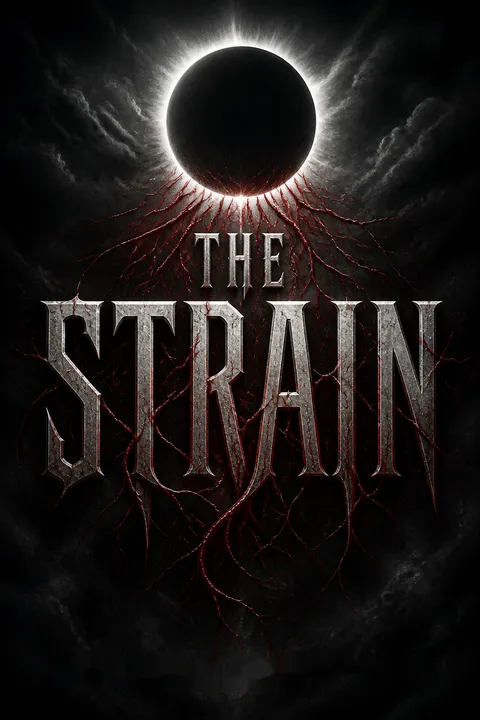


Plot Summary
Prologue
As a child, Abraham Setrakian hears his grandmother’s tale of Jusef Sardu, a Polish giant who returned from a Romanian forest transformed, followed by the disappearance of village children. Years later, fleeing the Nazis with his grandmother, Abraham loses her to poison and escapes alone.
At Treblinka, he sees the same creature feed on prisoners in the night. He tries to kill it, fails, and nearly dies in the camp’s execution pit before a prisoner revolt lets him escape. The legend has become a life’s work: Abraham will spend decades preparing to hunt the evil that survived his childhood story.
The frame turns folklore into inherited evidence. Abraham’s grandmother uses the Sardu tale to feed and comfort a frail child, but its warnings become literal when he encounters the creature amid the Nazi machinery of death. The book sets two kinds of horror beside one another: predatory evil that feeds in secret, and human cruelty organized as policy. Abraham survives the second through collective revolt and carries the first as a private obligation. His later expertise is not an eccentric hobby but the shape his grief and survival have taken. The wolf-headed walking stick links childhood memory, family loss, and the coming hunt.
Flight 753 Goes Dark
Regis Air Flight 753 lands smoothly at JFK after its crossing from Berlin, confirms its gate assignment, then loses every light and radio signal while taxiing. Air-traffic controller Jimmy Mendes cannot raise the crew, and airport worker Lorenza Ruiz finds the aircraft sitting black on the taxiway with every window shade drawn.
Fire captain Sean Navarro cannot open an emergency exit, so officials debate terrorism while the plane remains sealed. When the door finally unlocks, armed officers enter expecting a rescue or a threat.
They find passengers and crew sitting in their seats, apparently dead without signs of panic or injury. Their unanswered phones keep ringing inside the cabin, while the absence of any distress call makes the scene more disturbing than a conventional crash.
The opening turns an airport’s elaborate systems into a spectacle of helplessness. Controllers can redirect aircraft and firefighters can cut through a fuselage, yet none of their procedures explains why a full plane has gone silent without a struggle. The lack of visible violence makes the dead feel less like victims of an attack than evidence of a rule the investigators do not know. The ringing phones sharpen that uncertainty: individual lives remain audible, but no one can answer for them. By making the first crisis a failure of communication and diagnosis, the novel establishes the central conflict between institutions that demand a known cause and an emergency that refuses to behave like one.
The Canary Team Boards
The CDC summons Ephraim Goodweather, director of New York’s Canary disease-response team, away from a rare weekend with his eleven-year-old son, Zack. His strained custody case with ex-wife Kelly makes the interruption personal: he promises to return, then leaves Zack disappointed.
At JFK, Eph and biochemist Nora Martinez enter the aircraft in sealed suits. They find no obvious poison, injury, or cause of death, only one living pilot, Doyle Redfern, who briefly revives. A German diplomat’s bag offers no answer.
In the cargo hold, however, the team discovers an enormous carved wooden cabinet missing from the manifest, its straps undone and its interior filled with soil. Eph orders samples taken, but before the mystery can be examined, Jamaica Hospital reports that the survivors are waking.
Eph’s first choice is also a costly one. He answers the emergency because his training makes refusal feel impossible, but the missed weekend confirms Kelly’s concern that his work continues to consume family life. The plane’s survivors complicate the idea of a cleanly contained disaster, while the cabinet gives the investigators a material clue that official explanations can inspect but cannot yet interpret. Soil inside an unregistered container is not proof of the supernatural; it is simply a discrepancy that resists ordinary logistics. That distinction matters. The story lets scientific suspicion accumulate before demanding belief, and Eph’s professional habit of withholding judgment becomes both his strength and the limit he must eventually cross.
The Eclipse Opens a Door
The day’s rare total solar eclipse darkens New York, and Lorenza Ruiz returns to the airport, drawn by a droning sensation she cannot locate. She follows it beyond the hangar and finds the carved cabinet in a clearing, ringed by feral cats.
Something unseen lifts Ruiz off the ground and kills her. During the same darkness, the cabinet disappears from the secure hangar without appearing on the entrance logs. Abraham Setrakian, the aged Spanish Harlem pawnbroker who recognizes the aircraft as an incursion, tries to reach Eph outside the morgue.
He urges the doctors to destroy the bodies and warns them about the missing coffin, but police arrest him before they take him seriously. His warning leaves Eph and Nora with more questions than evidence.
The eclipse offers a plausible public explanation for unease while marking a private breach in the rules of safety. The city treats the event as spectacle; Kelly senses an omen, and Ruiz’s death confirms that the danger is not confined to the airplane. Meanwhile, the disappearing cabinet defeats the confidence of surveillance: the room is recorded, yet the crucial object seems to leave without a trace. Setrakian’s warning arrives in the wrong social form, spoken by an old man with a cane rather than an authorized expert. The sequence asks whether truth is recognized by its evidence or by the authority of its messenger. Eph’s hesitation is reasonable, but the cost of waiting is already growing.
The Survivors Change
At home in Brooklyn, computer programmer Ansel Barbour tries to resume family life with his wife, Ann-Marie, and their children, but throat pain, fever, and unbearable thirst worsen. Blood becomes more enticing than food.
He attacks and drains the family’s Saint Bernards, then chains himself inside their shed to keep from harming his children. In Manhattan, rock musician Gabriel Bolivar returns to his unfinished mansion and finds his body changing: his makeup no longer explains his pallor, his eyes develop a second lid, and he violently bites a woman during an encounter.
The two men respond differently to the same physical compulsion. Ansel hides himself in shame; Bolivar first tries to fold the change into his appetite for spectacle. Neither understands that the flight has altered them.
The first transformations are frightening partly because they begin in recognizable human needs: thirst, pain relief, sexual appetite, and the wish to return home. Ansel’s violence is followed by an attempt at restraint, while Bolivar interprets the unfamiliar sensation through his practiced persona of excess. Their responses reveal that identity does not vanish at the instant of infection; it is contested through habits and attachments. Ansel’s decision to chain himself is a desperate moral act, not a cure, and it places family protection inside a space that has become a prison. Bolivar’s performance instinct offers no control over what his body is becoming. The horror grows by making bodily change intimate before making it monstrous.
The Dead Come Home
Gary Gilbarton, grieving the deaths of his wife and daughter Emma, opens his door to the girl when she returns alone, dirty, feverish, and strangely unresponsive. He takes her inside and treats her as a traumatized child, unable to accept how little she resembles the daughter he lost.
Elsewhere, newly released teenager Augustin Elizalde, called Gus, drives a suspicious van into Manhattan for a stranger who knows his mother’s address. That night, Gus sees a naked, infected man attack a family in Times Square.
He intervenes, cuts the attacker’s throat, and the man is crushed by a truck, but Gus’s friend Felix is bitten. Police arrive after the crowd has scattered and arrest Gus for the death. The old pawnbroker Abraham Setrakian is in the same precinct, watching the plague take root.
Grief becomes the infection’s most effective disguise. Gary’s longing makes him interpret Emma’s return as a second chance, while Gus’s instinct to protect strangers turns a necessary intervention into a criminal case. The scene also denies the comfort of clear social roles: a corpse can arrive as a beloved child, and a young man who prevents an attack can be mistaken for its perpetrator. Gus’s paid van delivery links street-level desperation to a larger hidden operation, but he has no knowledge of its contents or sponsors. Setrakian’s presence in the precinct draws these separate lives toward one another. Institutions see a murder suspect and a disturbed old man; the reader sees two witnesses approaching the same truth.
A Pilot Becomes a Threat
At the medical examiner’s office, Eph and Nora find that the Flight 753 bodies are not decomposing normally. Each has a precise wound over a major artery, no blood, and a pale fluid where blood should be. One corpse’s tongue moves beneath Eph’s hand.
Captain Redfern, still under observation, develops swollen glands and a faint mark on his neck, then escapes sedation. In a hospital basement he attacks Nora and Jim Kent with a long, fleshy stinger that shoots from his mouth.
Eph stops him with a fire extinguisher, killing the pilot. Jim survives but is left with a puncture wound. Soon afterward, the bodies vanish from the city morgues. The official investigation now faces both an impossible biological event and a crime scene emptied of its evidence.
The medical clues translate terror into a sequence that can be examined: arterial punctures, altered fluid, abnormal tissue, and a weapon grown inside a human throat. Yet each observation destabilizes the categories that made it legible. The bodies are dead but not decaying; Redfern is a patient until he becomes an immediate danger; Jim is a colleague until the wound makes him a possible vector. Eph’s intervention saves Nora, but his killing of Redfern also becomes evidence that others can use against him. The missing corpses destroy the possibility of a controlled autopsy and convert a medical crisis into an information crisis. The novel’s scientific method remains essential, but it must now operate under conditions where every delay has human consequences.
Setrakian Names the Enemy
Eph and Nora return to Setrakian, whose decades of study have prepared him for the outbreak. In his hidden basement armory, he shows them a severed human heart that still moves when blood nears it, animated by a pale parasite.
He explains that the infected become vampires through a viral transformation: their organs are repurposed, their blood turns white, and a retractable feeding organ develops in the throat. Silver and ultraviolet light can injure them; sunlight can destroy them.
The missing coffin carried a powerful ancient vampire, the Master, into New York, and the city’s newly infected are linked to him. Setrakian’s lore becomes actionable when Eph accepts that the biological and folkloric descriptions refer to the same threat. They begin planning to contain it.
Setrakian does not ask the doctors to abandon science; he forces them to widen what counts as evidence. The preserved heart is grotesque, but it is also an experiment with repeatable conditions: blood triggers movement, and the parasite offers a biological mechanism. His account connects old cultural names to observable changes rather than treating folklore as a competing faith. Eph’s shift is therefore epistemic as much as emotional. He does not simply believe an eccentric stranger; he accepts that his existing explanatory model has failed. The distinction preserves his identity as a scientist even as the work ahead demands tactics outside public health’s ordinary mandate. Knowledge becomes useful only when it changes what the team is willing to do.
The Neighborhoods Fall
As night spreads the infection, the survivors return to people they know. Joan Luss leaves hospital isolation and becomes a danger inside her wealthy Bronxville home. Her nanny, Neeva, recognizes the change and escapes with Joan’s children, Keene and Audrey.
Neighbor Mark Blessige enters the house looking for his missing family and is attacked by a group of infected residents. In Brooklyn, Ann-Marie Barbour keeps her transformed husband chained in the shed, then lets a threatening neighbor approach him; Ansel kills the man.
Ann-Marie later takes her own life, leaving a note that explains the children are safe with relatives. Across the suburbs, familiar homes become nests. The victims are not simply lost in streets; they are drawn back toward the people whose attachment makes them easiest to reach.
The infection exploits social trust more efficiently than any disguise. People open doors to family, neighbors, and caretakers because care depends on believing that familiar faces remain familiar. Neeva’s suspicion protects the children because she treats unease as information rather than dismissing it as superstition. Ann-Marie’s decisions are more tragic: she tries to preserve her husband’s humanity even as the evidence accumulates, then is left with guilt, fear, and no viable way to restore the household. Mark’s attack shows how quickly community becomes a feeding network. These suburban episodes broaden the outbreak beyond the airport and make intimacy a transmission route. The danger is not that love is foolish, but that love can be used against those who practice it.
The Government Turns on Eph
Eph brings Setrakian to Canary headquarters expecting federal help, but CDC director Everett Barnes arrives with FBI agents and a doctored security video portraying Eph as the murderer of Redfern and the thief of the corpses.
Barnes shuts down the Canary project and offers to spare Nora’s reputation if Eph cooperates. Eph refuses to accept the false account. Setrakian returns with a silver blade, helps the group escape, and Nora takes their equipment and records. The team loses official authority just as it needs a citywide response.
In a separate warning, CDC scientist Peter O’Connell confirms that the samples contain a rapidly replicating virus, but Eph urges him to destroy the sample before it can spread. The conspiracy is no longer just concealment; it is active obstruction.
The state’s response is not simple ignorance. Barnes has seen enough to recognize a crisis, yet political exposure and institutional self-protection make denial the safer choice for him. The fabricated video converts the tools of evidence into instruments of discrediting, while the threat to Nora shows how coercion can travel through professional vulnerability. Eph’s decision to escape costs him legitimacy, access, and the protection of the CDC, but cooperation would require surrendering the only account that fits the facts. O’Connell’s sample creates a smaller, concrete version of the same dilemma: scientific curiosity can preserve knowledge while also multiplying danger. The section distinguishes responsible caution from bureaucratic denial by asking what each choice risks and who bears that risk.
Fet Follows the Rats
Vasiliy Fet, a New York City exterminator, contacts Eph after finding rats surfacing in daylight and two infected people burned to ash by sunlight in a Bushwick basement. He recognizes the behavior as an ecological disturbance, not an eclipse effect, and joins Eph, Nora, and Setrakian.
The group discovers that infected victims are hiding beneath Manhattan, leaving discarded phones and biological waste in abandoned tunnels. Eph also finds the Barbour household; Ann-Marie has died, and Ansel remains chained in his shed to protect his children.
Eph records the creature, then uses silver nails and a blade to kill it before burning the shed. Fet’s expertise in nests, food sources, and pest control gives the hunted team a way to locate the outbreak’s center.
Fet supplies a form of expertise that the institutions have overlooked because it belongs to maintenance rather than prestige. His observations connect unusual animal behavior to a change in habitat, making the city’s ecology an early-warning system. This practical insight complements Setrakian’s historical knowledge and Eph’s medical training: none is sufficient alone. The Barbour episode sharpens the ethical cost of their new role. Eph documents Ansel before killing him, trying to preserve evidence even while accepting that the creature is dangerous. His choice marks a shift from treating every infected person as a patient to distinguishing between an altered body and the person who once inhabited it. That shift is necessary for survival and morally corrosive.
The Master Takes Kelly
After returning to his Chinatown apartment for supplies, Eph finds two dead police officers and faces Bolivar, another infected survivor, and the towering Master. The creature overwhelms him, speaks directly into his mind, and threatens his family.
Setrakian, Nora, and Fet arrive in time to interrupt the attack. Setrakian kills one vampire while Nora and Fet drive Bolivar back, but the Master escapes through a shattered window, carrying Bolivar with him. Eph is left injured and convinced that the Master has taken Kelly.
He races to Kelly’s house and finds the door broken and Zack missing. Matt, Kelly’s partner, attacks him in an infected state. Eph kills Matt with a kitchen knife, then learns Zack had spent the night at a friend’s home. Kelly remains unaccounted for.
The Master turns the conflict from an outbreak into a personal war by naming Eph’s family as leverage. The attack reveals a difference between the Master’s overwhelming force and the newer vampires’ vulnerability, while the team’s intervention proves that coordination can make resistance possible. Eph’s return home collapses professional and domestic space: the apartment where he once spent time with Zack becomes a crime scene, and the kitchen at Kelly’s becomes the place where he kills Matt. Matt’s attack carries a private history of rivalry, but Eph’s response is not a triumph over a romantic rival; it is a traumatic necessity. Zack’s absence first appears as another loss, then becomes the fragile fact that keeps Eph moving.
Beneath the World Trade Center
Fet traces the rats’ flight to the tunnels beneath the World Trade Center site, where Setrakian believes the Master has established his lair. They enter the abandoned City Hall station and follow infected footprints into a maze of unused tracks.
Eph finds dozens of newly turned people laid out in the tunnels, including men, women, and children, and the team kills them before their transformation advances. In the deeper chamber, they find a mass of vampires and trigger Setrakian’s ultraviolet mine, burning most of them at once.
The Master’s coffin is there, but it contains only soil. The creature has escaped through a bolt-hole. Rather than treating the empty coffin as defeat, Setrakian recognizes that they have forced the Master from his nest and follow his trail toward Bolivar’s house.
The underground assault makes the city itself an antagonist’s infrastructure: abandoned stations, construction passages, and old foundations provide shelter that surface authorities cannot easily monitor. The team’s discovery of the newly infected raises the human cost of delay, because many victims have not yet completed their transformation. Killing them is presented as a rescue from a fate they cannot consent to, but it remains an act that changes Eph’s moral self-understanding. The ultraviolet mine gives the group a rare collective victory, yet the empty coffin prevents that victory from becoming closure. Setrakian’s pest-control metaphor proves tactically sound: flushing a creature from its nest matters only if the hunters can follow where it escapes.
Sunlight Wounds the Master
At Bolivar’s mansion, the team blocks the underground exit with ultraviolet lamps and searches the connected houses for the Master. He attacks Setrakian, Fet, and Eph through the unfinished rooms, using his speed and strength to separate them.
Eph wounds him with silver, and Fet drives him toward a rooftop patio as sunlight reaches the house. Setrakian collapses from heart trouble, but Eph gives him nitroglycerin and revives him. The three force the Master through glass doors into direct sun.
His skin blackens and smokes, yet he survives long enough to leap from the roof and vanish into the city. The team has injured him and destroyed many of his followers, but has not stopped the outbreak. Elsewhere, the Ancients capture Gus and prepare him for a purpose he does not know.
The apparent final victory is deliberately incomplete. The Master can be hurt by the methods Setrakian has taught the others, but injury does not equal destruction, and dawn offers an opening rather than a guaranteed execution. Setrakian’s collapse briefly shifts Eph from hunter back to physician; saving the old man allows the pursuit to continue, while also making the group’s dependence on each member visible. Their teamwork has improved, yet the Master still escapes through the city’s vertical and subterranean routes. Gus’s capture by the Ancients widens the conflict beyond the immediate New York team and suggests that power among the vampires is divided. The end of this battle therefore marks escalation, not resolution.
Epilogue
At Kelly’s house, Eph, Nora, Fet, and Zack regroup after burning Matt’s remains. Eph helps Zack upload his footage of Ansel to video sites, hoping the public will see proof the authorities suppress. Then Kelly appears in the house, changed and hungry. She recoils from Fet’s silver sword and flees before Eph can stop her.
Zack collapses at the sight of his mother, while Eph understands that the Master has turned her to torment them. He returns to the scotch he has avoided for nearly two years and pours a drink. The outbreak has entered his family, and the fight that began when he left Zack’s weekend now threatens the bond he left to protect.
The final image refuses the conventional satisfaction of a monster defeated and a family restored. Eph’s work has reached the public only through a child’s video, an improvised attempt to replace official silence with visible evidence. Yet the evidence cannot protect Zack from the loss in front of him. Kelly’s return is more cruel than her absence because her recognizable body carries an alien appetite, turning the mother-son bond into the Master’s weapon. Eph’s drink registers a relapse into an old coping mechanism, not simple weakness: he has reached the limit of self-control while confronting a grief that cannot be solved by professional competence. The custody struggle survives in a grotesque new form, with love still present but no longer safe.
Analysis
The Strain turns an epidemiological investigation into a contest over what counts as knowledge. Eph begins with methods designed for identifiable pathogens and accountable institutions: isolate patients, test samples, trace exposure, and communicate risk. The crisis defeats each method in sequence. The dead do not decay normally, the infected alter their anatomy, surveillance fails to record a coffin’s disappearance, and political authorities use evidence to discredit the people trying to warn the public. Setrakian’s folklore does not replace science; it supplies a neglected archive of observations that medical institutions have no vocabulary to interpret. Fet adds an ecological scale, showing that the rats’ behavior can reveal disturbance before human systems register an outbreak.
The novel’s most unsettling mechanism is the infection’s exploitation of attachment. The dead return to people who grieve them, and family homes become places where recognition delays self-defense. Gary welcomes Emma because he cannot bear another loss. Ann-Marie risks herself trying to preserve the husband she remembers. Eph’s work repeatedly pulls him away from Zack, then the Master uses Kelly and the boy to make that separation feel permanent. Care is neither mocked nor treated as a simple virtue. It is a real human need that can be manipulated by an intelligence that understands intimacy as access.
The book also tracks a professional and moral transformation. Eph moves from treating every infected person as a patient to accepting that some must be destroyed to prevent further harm. The shift is not celebrated as heroic certainty. He records Ansel, hesitates, and feels the violence of each decision. Setrakian’s long preparation provides technique, but his revenge and Eph’s medical ethics remain in tension. Their alliance works because neither can complete the task alone: history without biology becomes dogma, and biology without history misses the shape of the threat.
Finally, the outbreak is political as well as biological. Palmer’s private ambition converts public vulnerability into a bargain, while Barnes chooses reassurance over evidence. Against that organized silence, Eph and Zack use a video upload as improvised public health communication. The ending offers no restored normality. Kelly’s return shows the infection has crossed into the family, and Eph’s drink signals that knowledge and courage cannot shield him from grief. The first battle ends with proof, not safety.
Review Summary
The Strain receives mixed reviews, with some praising its fresh take on vampires and intense, cinematic storytelling. Critics applaud the scientific approach to vampirism and the creepy atmosphere. However, others find fault with predictable plot elements, underdeveloped characters, and excessive gore. The book's pacing and writing style are divisive, with some readers finding it gripping and others struggling to stay engaged. Despite its flaws, many readers appreciate the novel's return to frightening, monstrous vampires and its blend of horror and thriller elements.
People Also Read






Characters
Ephraim Goodweather
CDC field epidemiologistEph leads New York’s Canary disease-response team and approaches emergencies through observation, evidence, and containment. His greatest emotional commitment is his son Zack, whose custody he is fighting to retain after his marriage to Kelly collapses. Eph’s work often consumes the time he means to protect for his family, and his guilt makes him vulnerable to believing that one more sacrifice will repair the damage. As a physician, he is trained to preserve life and resist treating illness as moral failure. The outbreak tests that ethic by making some infected people active dangers. Eph’s central tension is not science versus faith, but the struggle to remain a healer when survival requires irreversible violence.
Abraham Setrakian
Keeper of forbidden loreSetrakian is an elderly pawnbroker, former professor, Holocaust survivor, and lifelong student of the creatures he believes stalk humanity. His grandmother’s story of Jusef Sardu becomes inseparable from the losses he suffers during war, and revenge gives his survival a direction. He is patient, disciplined, and capable of compassion, but his age and history have also made him severe about the cost of hesitation. Setrakian does not treat folklore as mere belief; he collects physical evidence, studies anatomy, and prepares weapons. His relationship with Eph develops around their shared commitment to stopping the outbreak, even as they disagree about when mercy becomes dangerous. His damaged hands embody both the price of past resistance and the limits he must work around.
Nora Martinez
Canary team biochemistNora is Eph’s trusted scientific partner and the Canary team’s biochemist. She notices inconsistencies that others dismiss, from the plane’s impossible deaths to the biological matter coating its cabin. Her relationship with Eph is intimate but complicated by their shared workplace, his attachment to his former marriage, and their habit of postponing private needs until a crisis passes. Nora’s emotional intelligence is part of her technical strength: she reads both data and the people interpreting it. She is not simply Eph’s assistant or romantic counterpart. She repeatedly challenges his assumptions, holds him accountable, and insists on her own place in the work. Her steadiness makes her an essential counterweight to his urgency.
Vasiliy Fet
City pest-control expertFet is a New York City exterminator whose knowledge of rats, burrows, and urban infrastructure makes him unusually alert to ecological change. He takes pride in practical work that leaves little trace, and he is blunt, observant, and more courageous than he initially expects himself to be. Fet joins the fight because the signs around him no longer fit ordinary pest behavior, not because he seeks glory. His perspective expands the team’s thinking from individual infected bodies to habitat, food supply, and routes of movement. He brings a grounded skepticism to Setrakian’s lore, testing what he hears against what he sees. His humor helps him manage fear without disguising the danger.
Augustin Elizalde
Reluctant street fighterGus is an eighteen-year-old Mexican American recently released from juvenile detention, trying to help his mother and avoid returning to the life that brought him there. Pride, quick instincts, and loyalty to his friends pull against his desire to make better choices. He accepts money to drive a van without knowing what it carries, then steps into danger when he sees a family attacked in Times Square. Gus is resourceful in a physical crisis and wary of authority, partly because his experiences have taught him how quickly he can be blamed. His connection to Setrakian begins in confinement, where both men recognize that conventional institutions may misunderstand what they have witnessed.
Zack Goodweather
Eph’s observant sonZack is Eph and Kelly’s eleven-year-old son, caught between a custody dispute and two adults who love him in conflicting ways. He is perceptive, serious, and attentive to details, often noticing what adults would rather explain away. His bond with Eph is built through shared humor, games, and a sense of being understood without constant supervision. Zack’s interest in making films gives him a way to observe and organize a frightening world. He is not merely a stake in his parents’ conflict; he has opinions, private fears, and a developing understanding of the adults around him. His need for security sits beside his wish to be trusted with the truth.
Kelly Goodweather
Protective mother and teacherKelly is a fourth-grade teacher, Zack’s mother, and Eph’s ex-wife. She values stability and control, partly because the marriage left her feeling that Eph’s career and intensity had crowded out her own needs. Her partnership with Matt offers a calmer domestic life, though her instincts about danger remain sharp. Kelly can be practical and deeply protective, but she also resists allowing Eph to dictate her choices, especially when his warnings arrive without enough explanation. Her relationship with Zack is loving and watchful, shaped by anxiety about doing right by him. She and Eph share a history of genuine affection as well as hurt, and both must confront how their private conflict affects their son.
The Master
Ancient hidden predatorThe Master is an ancient, powerful intelligence behind the strange events surrounding Flight 753. It treats human beings as prey and uses fear, secrecy, and attachment as instruments of control. Its immense physical form and ability to communicate directly into a person’s mind make it unlike the newly infected. The Master’s motives are not ordinary appetite alone: it seeks expansion and appears willing to defy the order maintained by other beings of its kind. It recognizes people as useful or disposable according to its purposes, while its human allies imagine they can bargain with it. Its presence transforms a biological outbreak into a political and strategic conflict.
Eldritch Palmer
Immortality-seeking financierPalmer is a fabulously wealthy investor with failing health, immense political influence, and a lifelong fear of death. His frailty has not weakened his appetite for power; instead, it has made survival an obsession. He cultivates an image of control through money, private medical care, and carefully chosen allies. His decisions reveal a willingness to treat public safety as expendable when personal deliverance seems possible. Palmer’s relationship with the Master is transactional in his own mind, though the balance of power is not as secure as he hopes. He embodies a human form of complicity, distinct from the creatures’ predation but capable of enabling it.
Jim Kent
Canary operations partnerJim handles Canary’s political and logistical work, arranging resources and keeping Eph’s scientific team connected to officials. He is dependable, discreet, and skilled at translating a medical emergency into institutional action. His long relationship with Eph makes him more than a colleague, and his partnership with Sylvia gives him a private life he tries to keep separate from the job. Jim’s value to the team comes from knowing how systems function and where decisions can be delayed. That same access makes him vulnerable to pressures beyond the team’s view. He represents the necessary, often invisible work that allows experts to act.
Doyle Redfern
Surviving flight captainRedfern is the third pilot aboard Flight 753 and the only surviving crew member discovered alive. A confident professional, he knows the aircraft as a machine and initially suspects sabotage when its systems fail. His scattered memories and physical symptoms make him a valuable but unreliable witness to the flight’s final moments. Redfern’s childhood fear of a figure he called Mr. Leech returns during his illness, forcing the investigators to consider that memory may carry information his conscious mind cannot organize. His experience links the aircraft’s mystery to the bodily changes unfolding afterward.
Ansel Barbour
Programmer and family manAnsel is a computer programmer whose life is organized around providing for his wife Ann-Marie and their two children. He is conscientious and devoted, but the family’s dependence on his steady presence leaves little room for him to express fear or weakness. After the flight, he tries to reassure those around him even as his own body becomes frighteningly unfamiliar. His instinct to protect his children persists under extreme pressure. Ansel’s story asks what remains of a person when care and appetite occupy the same body.
Ann-Marie Barbour
Ansel’s anxious wifeAnn-Marie is a sheltered, deeply anxious mother whose routines help her manage a world she experiences as dangerous. Her fears are rooted in childhood loss and have gradually narrowed her life, making Ansel’s reliability central to her sense of safety. She loves her children but struggles to separate protection from control, and her faith in familiar habits is tested by an emergency no ritual can contain. Her response to Ansel is complicated by tenderness, fear, and the responsibility of keeping their children safe. She is neither simply irrational nor merely passive; she is trying to act with the tools she has.
Gabriel Bolivar
Provocative rock musicianBolivar is a successful gothic rock performer whose public identity is built on corrupting beauty and shocking audiences. Offstage, he is accustomed to excess, attention, and the ability to turn discomfort into material for his act. As his career begins to lose its power to surprise, he feels pressure to invent a more extreme persona. His taste for performance complicates the way he interprets a frightening change in his body. Bolivar’s story explores the boundary between chosen transgression and a loss of agency: an image he once controlled becomes entangled with something he cannot command.
Joan Luss
Survivor and litigatorJoan is a high-powered tort lawyer, mother of two, and survivor of Flight 753. She sees catastrophe through the lenses of liability, negotiation, and opportunity, quickly imagining the legal case that may follow the disaster. Her ambition is tied to a carefully maintained vision of success, including the home and social standing she has worked to secure. Joan is capable and forceful, but her confidence in professional control makes it difficult for her to recognize a crisis that cannot be managed as a dispute. Her household relationships expose the difference between competence in public and care in private.
Neeva
Protective household nannyNeeva is the Luss family’s longtime nanny, a Haitian grandmother who trusts observation, memory, and inherited knowledge. Her care for Keene and Audrey is practical and unsentimental, shaped by years of tending children while their parents pursue demanding lives. She knows that respectability does not guarantee safety and is willing to act before she can persuade others to agree. Her religious and cultural traditions inform her vigilance, but she tests what works rather than relying on symbols alone. Neeva’s decisiveness contrasts with the adults who mistake familiarity for security.
Matt Sayles
Kelly’s steady partnerMatt manages a Sears store and offers Kelly a calmer, more predictable relationship than the one she had with Eph. He prefers practical routines and is uncomfortable when events exceed ordinary explanations. His relationship with Zack is friendly but still developing, and he sometimes misreads the boy’s loyalty to his father. Matt’s wish to protect the quiet life he and Kelly have built can make him dismiss warnings that challenge it. He functions as a portrait of ordinary confidence under extraordinary pressure.
Felix
Gus’s loyal friendFelix is Gus’s close friend, companion, and frequent partner in impulsive plans. His easy confidence encourages Gus to spend money and chase immediate pleasures, but their bond is genuine. Felix’s presence gives Gus someone to protect and a measure of belonging beyond his family responsibilities.
Everett Barnes
CDC political directorBarnes directs the CDC with the instincts of a public official as well as a physician. He understands the need for fast action but is acutely attentive to media risk, jurisdiction, and public confidence. His paternal manner toward Eph can soften disagreement without changing the decisions he makes. Barnes’s caution is not baseless, but it becomes dangerous when reassurance takes priority over evidence.
Lorenza Ruiz
First airport witnessRuiz operates baggage equipment at JFK and knows the tarmac through years of practical work. Her attention to the silent plane lets her notice details that officials miss, while her curiosity draws her closer to the danger. She is an ordinary worker whose firsthand perception becomes an early warning.
Gary Gilbarton
Grieving fatherGary is Emma’s father, devastated by the loss of his wife and daughter. His grief makes the possibility of Emma’s return more powerful than his ability to question it. He is loving and emotionally overwhelmed, illustrating how mourning can make a familiar face feel like proof enough.
Plot Devices
The Master’s soil coffin
Hides the invading ancientThe unlisted carved cabinet in Flight 753’s cargo hold contains soil and serves as the Master’s means of hiding during transport. Its presence gives Eph’s team a physical clue that something entered the country outside ordinary procedures. The loosened restraints, absent manifest entry, disappearance from the hangar, and eventual discovery beneath Manhattan’s tunnels make it a recurring trail marker. The coffin also misdirects investigators: finding it does not mean the occupant is inside. Its movement connects the airport mystery to Palmer’s conspiracy and the Master’s hidden lair.
The vampire virus
Turns victims into vectorsThe infection behaves as both a rapidly replicating virus and a bodily transformation. It alters organs, changes blood to a pale fluid, slows decomposition, and develops a feeding organ in the throat. Infected people are driven to seek blood and may return to relatives or friends, spreading the condition through close contact. The mechanism gives Eph and Nora medical evidence to study, while Setrakian supplies the lore needed to interpret it. Its progression also creates the story’s central ethical dilemma: the infected are patients, victims, and potential threats at once.
The eclipse
Marks the outbreak’s arrivalThe rare total solar eclipse gives New York a brief period of unnatural darkness just as the airport crisis unfolds. For most people it is a public spectacle, but Kelly and other witnesses feel an unease they cannot explain. Lorenza’s search for the sound near the hangar leads her to the cabinet and her death, while the darkness coincides with its disappearance from the secure site. The eclipse works as a temporal hinge between the contained aircraft emergency and the spreading urban threat, without being the biological cause of the infection.
Silver and ultraviolet light
Makes the hidden enemy vulnerableSetrakian’s weapons turn old folklore into practical countermeasures. Silver blades and nails can injure infected bodies, while strong ultraviolet light harms or destroys them; direct sunlight is the most powerful weapon. The team uses these tools in close encounters, in the Barbour shed, and during the assault beneath the World Trade Center. Their effectiveness is limited by batteries, angles, and the danger of entering a nest. The devices make preparation matter, but they do not provide an effortless cure or guarantee victory over the Master.
New York’s underground
Conceals the spreading nestOld subway stations, tunnels, construction sites, basements, and service passages form a hidden map beneath the visible city. Fet reads the rats’ displacement as evidence that something has disturbed this underground ecology. The infected use the tunnels to evade daylight, abandon phones where they cannot be tracked, and move toward the Master’s lair. The same infrastructure that supports a functioning metropolis provides cover for the outbreak. It also gives the hunters a route to the enemy, though the branching passages make escape and pursuit equally possible.
FAQ
Synopsis & Basic Details
What is The Strain about?
- Global Pandemic Threat: The Strain chronicles the sudden, mysterious landing of Flight 753 at JFK, where all passengers and crew are found dead. This inexplicable event draws CDC epidemiologist Dr. Ephraim Goodweather into an investigation that quickly uncovers a terrifying, ancient biological threat.
- Ancient Evil Unleashed: The story rapidly escalates from a medical mystery to a supernatural horror, as the deceased passengers reanimate and begin to spread a vampiric plague across New York City. This outbreak is orchestrated by an ancient, powerful entity known as the Master, who arrived hidden within a mysterious coffin on the plane.
- Desperate Fight for Survival: As the city descends into chaos, Eph, alongside the enigmatic Holocaust survivor Abraham Setrakian, and later joined by others, must confront the horrifying reality of the vampires. They race against time to understand the true nature of the infection and find a way to stop the Master before humanity is irrevocably lost.
Why should I read The Strain?
- Unique Genre Blend: The Strain offers a compelling fusion of medical thriller, supernatural horror, and urban fantasy, providing a fresh take on vampire lore rooted in biological and mythological explanations. It subverts traditional vampire tropes, presenting them as a parasitic infection rather than romanticized creatures.
- Intense Pacing & Suspense: The narrative maintains a relentless, escalating pace, building tension from the eerie silence of the initial plane landing to the city's rapid descent into chaos. Readers are drawn into a high-stakes race against time, filled with visceral action and psychological dread.
- Rich Character Development: The novel features a diverse cast of characters, from the flawed but determined scientist Ephraim Goodweather to the wise and vengeful Abraham Setrakian, each grappling with personal demons while fighting for humanity's survival. Their individual struggles and transformations add significant emotional depth to the apocalyptic narrative.
What is the background of The Strain?
- Post-9/11 NYC Setting: The story is deeply rooted in a contemporary New York City, leveraging its iconic landmarks (JFK, WTC site, Times Square, subway system) and the collective memory of urban disaster. The Port Authority's response and the lingering specter of 9/11 (e.g., the officer at Ground Zero, the WTC "bathtub" as a lair) ground the supernatural horror in a familiar, vulnerable reality.
- Ancient European Folklore: The narrative is heavily influenced by Eastern European vampire mythology, particularly through Abraham Setrakian's backstory as a Holocaust survivor and his lifelong pursuit of the Master. The legend of Jusef Sardu and Setrakian's experiences in Treblinka provide a historical and cultural depth to the origins of the "strain."
- Biological & Scientific Framework: The authors meticulously integrate scientific and medical concepts, portraying vampirism not as a curse but as a parasitic viral infection. Details like the CDC's Canary project, forensic pathology, and the specific biological changes in the infected (e.g., white blood, stingers, altered organs) lend a chilling realism to the supernatural elements.
What are the most memorable quotes in The Strain?
- "Pick-pick-pick.": This recurring sound, first heard in Abraham Setrakian's grandmother's tale of Jusef Sardu, then echoing in his memories of Treblinka, becomes a chilling motif for the Master's approach. It symbolizes the relentless, insidious nature of the ancient evil, a sound that heralds vanishing children and impending doom.
- "The dead have risen.": Uttered by Abraham Setrakian to Ephraim Goodweather, this blunt statement shatters Eph's scientific worldview and forces him to confront the impossible. It marks the definitive shift from a medical mystery to a full-blown supernatural apocalypse, encapsulating the horrifying truth of the unfolding plague.
- "My sword sings of silver!": Setrakian's battle cry, often repeated in the "old language," embodies his lifelong vendetta and the ancient methods required to combat the vampires. It highlights the unique vulnerability of the creatures to silver, transforming a common metal into a potent weapon against the supernatural.
What writing style, narrative choices, and literary techniques does Guillermo del Toro use?
- Visceral, Sensory Detail: The authors employ rich, often grotesque, sensory descriptions, particularly focusing on smells (ammonia, phosphorous, earthworms, putrid flesh) and tactile sensations (clammy skin, wriggling worms). This immersive style pulls the reader into the horrifying reality of the plague, making the supernatural feel disturbingly tangible.
- Alternating Perspectives & Pacing: The narrative frequently shifts between multiple character viewpoints (Eph, Setrakian, Nora, Fet, Gus, victims, even the Master and Palmer), offering a panoramic view of the unfolding crisis. This is coupled with a relentless, escalating pace, using short, impactful scenes and cliffhangers to maintain high tension and urgency.
- Subversion of Tropes & Scientific Realism: Del Toro and Hogan deconstruct classic vampire mythology, replacing romanticized notions with a biologically grounded, parasitic infection. They use scientific jargon and forensic detail (e.g., autopsy findings, viral replication) to lend credibility to the fantastical elements, creating a unique blend of horror and speculative fiction.
Hidden Details & Subtle Connections
What are some minor details that add significant meaning?
- Lorenza's "Dead Leviathan": The baggage handler Lorenza Ruiz's fleeting thought of Flight 753 as a "large, rotting corpse, a beached whale" upon first seeing it foreshadows the true, grotesque nature of its cargo and the biological decay it represents. This seemingly throwaway line hints at the plane's role as a vessel of death, not just a stalled aircraft.
- The Dogs' Behavior: Ansel Barbour's Saint Bernards, Pap and Gertie, exhibit unusual growling and fear around him as he begins to turn, and later, Ansel himself notes the "thrumming" coming from them. This subtle detail highlights animals' heightened sensitivity to the nascent vampiric infection, serving as an early, instinctual warning system that humans miss.
- Palmer's Cold Room & Dialysis: Eldritch Palmer's constant need for a precisely controlled, cold environment and his reliance on dialysis are not just eccentricities; they subtly mirror the vampires' aversion to heat and their own "replenishment" needs. This foreshadows his eventual alliance with the Master, as he seeks a "cure" for his frail mortality that aligns with the vampires' existence.
What are some subtle foreshadowing and callbacks?
- Setrakian's "Pick-Pick-Pick" Motif: The rhythmic sound of Jusef Sardu's cane, a childhood fear for Abraham, is subtly echoed throughout the book. It reappears in Setrakian's memory of the Master in Treblinka ("Pick-pick-pick..."), and later, in the "thrumming" sound heard by Ansel and Lorenza, linking the ancient evil directly to the modern outbreak and its victims.
- The Eclipse as an "Eclipse of the Earth": The narrative explicitly corrects the common misnomer of a "solar eclipse," calling it an "occultation" or "eclipse of the earth." This rephrasing subtly foreshadows the Master's true intent: not just to block the sun, but to cast a permanent shadow over humanity, effectively "eclipsing" the living world.
- The WTC Site's "Bathtub": Vasiliy Fet's observation of rats fleeing the World Trade Center excavation site, and his later realization that the Master's lair is there, subtly connects the new horror to a past national trauma. The "bathtub" becomes a symbolic wound in the city, a place of immense death and darkness that naturally attracts the Master, echoing Setrakian's "burning hole" experience.
What are some unexpected character connections?
- Jim Kent's Unwitting Betrayal: Jim Kent's seemingly innocuous role as Eph's logistical support hides a deeper, unwitting connection to Eldritch Palmer through the "Stoneheart Society." His phone calls to Palmer's company, initially dismissed as routine, later reveal him as a pawn in Palmer's scheme, highlighting how deeply the Master's influence has infiltrated human society.
- Ansel Barbour's Self-Imprisonment: Ansel's decision to chain himself in the dog shed, a place previously used to contain his beloved Saint Bernards, creates an unexpected parallel between his transformation and the animalistic nature of the vampires. His wife, Ann-Marie, later uses this self-imposed prison to contain him, mirroring the hunters' eventual strategy of trapping the creatures.
- Gus Elizalde's Streetwise Insight: Gus, initially a petty criminal, develops an unexpected connection to the unfolding horror through his encounter with the reanimated corpse in Times Square. His street-level pragmatism and understanding of "vermin" (rats) provide a unique, grounded perspective that surprisingly aligns with Setrakian's ancient knowledge, making him an unlikely but crucial ally.
Psychological, Emotional, & Relational Analysis
What are some unspoken motivations of the characters?
- Eph's Redemption Arc: Beyond his professional duty, Eph's relentless pursuit of the truth and his fight against the plague are deeply motivated by a desire for personal redemption. His failed marriage and strained relationship with Zack fuel his drive, as he desperately seeks to prove his worth as a father and protect his son from a world he feels he's already failed to safeguard.
- Palmer's Quest for Immortality: Eldritch Palmer's primary, unspoken motivation is his desperate desire to escape his frail, dying body and achieve immortality. His vast wealth and influence are merely tools to secure this ultimate "cure," leading him to align with the Master, a being of pure death, in a chilling Faustian bargain.
- Ann-Marie Barbour's Protective Rage: Ann-Marie's initial fear and obsessive-compulsive routines are rooted in a deep-seated trauma from her parents' death. Her unspoken motivation is to protect her children at all costs, which ultimately transforms her timidity into a fierce, desperate rage, enabling her to trap and sacrifice her turned husband for their safety.
What psychological complexities do the characters exhibit?
- Setrakian's Enduring Trauma: Abraham Setrakian exhibits profound psychological complexity stemming from his Holocaust experience. His "burning hole" nightmares and the "pick-pick-pick" motif reveal a man haunted by past atrocities, which fuels his singular, decades-long vendetta against the Master. His calm demeanor in the face of horror is a coping mechanism forged in unimaginable suffering.
- Eph's Moral Erosion: Dr. Ephraim Goodweather grapples with a rapid psychological transformation from a healer to a slayer. His initial scientific skepticism gives way to a brutal pragmatism, forcing him to commit acts of violence (killing Redfern, Matt, and the turned victims) that deeply conflict with his medical oath, highlighting the psychological toll of fighting an existential threat.
- Ansel Barbour's Self-Sacrifice: Ansel's internal struggle is a poignant exploration of self-awareness in the face of monstrous transformation. His initial thirst and pain lead to the horrifying act of killing his dogs, but his subsequent self-imprisonment and desperate attempts to protect his family reveal a profound, tragic self-awareness and a final act of love, even as his humanity slips away.
What are the major emotional turning points?
- Lorenza Ruiz's Primal Fear: The moment Lorenza Ruiz approaches Flight 753 and feels an unequivocal sense that "something in there was going to eat her" is a crucial emotional turning point. It's the first human, instinctual recognition of the supernatural horror, bypassing scientific explanation and setting a tone of primal dread for the reader.
- Eph's Discovery of Redfern's "Life": Eph's initial shock and subsequent realization that Captain Redfern is "alive" in the cockpit, followed by Redfern's "Mr. Leech" dream, marks a pivotal emotional shift for Eph. It shatters his purely scientific understanding of death and disease, opening the door to the terrifying, inexplicable reality of the vampires.
- Kelly Goodweather's Return: Kelly's appearance at her home, turned into a vampire and focused on Zack, is the ultimate emotional turning point for Eph. It transforms the global plague into an intensely personal battle, forcing him to confront the horror within his own family and solidifying his resolve to fight the Master, not just for humanity, but for his son.
How do relationship dynamics evolve?
- Eph and Kelly's Fractured Connection: The strained, post-divorce relationship between Eph and Kelly, initially marked by bitterness and custody battles, undergoes a tragic evolution. Their final, raw conversation reveals lingering affection and regret, only for Kelly's subsequent turning to twist their bond into a horrifying predator-prey dynamic, irrevocably tearing their family apart.
- Setrakian and Eph's Unlikely Alliance: The relationship between Abraham Setrakian and Ephraim Goodweather evolves from initial dismissal and skepticism (Eph viewing Setrakian as a "crazy old man") to a grudging respect and, eventually, a deep, interdependent partnership. Setrakian's ancient knowledge complements Eph's scientific pragmatism, forming the core of the human resistance.
- Gus and Felix's Tragic Friendship: Gus's loyalty to his friend Felix is tested and ultimately shattered by Felix's transformation. Gus's initial attempts to protect Felix give way to the horrifying necessity of destroying him, highlighting the brutal choices forced upon individuals by the plague and the tragic loss of human connection.
Interpretation & Debate
Which parts of the story remain ambiguous or open-ended?
- The Master's True Origins: While Setrakian provides a history of the Master and the Ancients, the ultimate origin of the "strain" and the vampires remains somewhat ambiguous. Setrakian states he "cannot prove" the Master's responsibility for the schism among the Ancients, leaving room for debate about the deepest roots of this ancient evil.
- The Nature of the Master's "Will": The Master's telepathic communication and hive-mind control over the turned vampires are clearly established, but the exact mechanism and limits of this influence are left open. It's unclear how much individual will, if any, remains in the newly turned, or how the Master's consciousness truly operates across such a vast network.
- The Fate of the Other Survivors: While Captain Redfern, Gabriel Bolivar, and Ansel Barbour are shown to have turned, the ultimate fate of Joan Luss and her children is left somewhat ambiguous. Her escape from the hospital and the subsequent "gas leak" in Bronxville imply her transformation and the spread of the infection, but her specific demise is not explicitly detailed, leaving it to reader inference.
What are some debatable, controversial scenes or moments in The Strain?
- The Killing of the "Dear Ones": The most controversial aspect is the necessity of killing newly turned family members and friends, referred to as "Dear Ones." Scenes like Eph killing Matt, Ann-Marie trapping Ansel, and Gus killing his mother and brother force characters and readers to confront the brutal reality that these are no longer human, but active vectors of a monstrous plague, challenging conventional morality.
- Setrakian's "Merciful" Beheadings: Setrakian's calm, almost ritualistic beheadings of the turned, often accompanied by his "singing sword" pronouncement, can be seen as controversial. While presented as a necessary evil for containment, his detached efficiency and the sheer number of victims raise questions about the dehumanization of the infected and the moral cost of fighting such a war.
- Eldritch Palmer's Alliance with Evil: Palmer's deliberate alliance with the Master, driven by his selfish desire for immortality, is a highly debatable point. His willingness to sacrifice humanity for personal gain, despite his immense wealth and power, presents a chilling commentary on human ambition and the corrupting influence of desperation, making him a truly despicable, yet complex, antagonist.
The Strain Ending Explained: How It Ends & What It Means
- The Master's Escape & Wounding: The first book concludes with Eph, Setrakian, and Fet confronting the Master in his Tribeca lair. Despite their combined efforts and the use of the UVC mine, the Master, though wounded by Eph's silver sword and temporarily blinded by the UVC light, manages to escape into the city's shadows. This signifies that the immediate threat is not neutralized, and the war is far from over.
- Kelly's Transformation & Zack's Peril: The most devastating personal blow comes when Eph discovers his ex-wife, Kelly, has been turned into a vampire. She returns to their home, drawn by the "Dear One" instinct to infect their son, Zack. This heartbreaking twist underscores the insidious nature of the plague, turning love into a weapon and forcing Eph to confront the horror within his own family.
- A Grassroots War Begins: The ending establishes that the official authorities
Synopsis & Basic Details
What is The Strain about?
- Global Pandemic Threat: The Strain chronicles the sudden, mysterious landing of Flight 753 at JFK, where all passengers and crew are found dead. This inexplicable event draws CDC epidemiologist Dr. Ephraim Goodweather into an investigation that quickly uncovers a terrifying, ancient biological threat.
- Ancient Evil Unleashed: The story rapidly escalates from a medical mystery to a supernatural horror, as the deceased passengers reanimate and begin to spread a vampiric plague across New York City. This outbreak is orchestrated by an ancient, powerful entity known as the Master, who arrived hidden within a mysterious coffin on the plane.
- Desperate Fight for Survival: As the city descends into chaos, Eph, alongside the enigmatic Holocaust survivor Abraham Setrakian, and later joined by others, must confront the horrifying reality of the vampires. They race against time to understand the true nature of the infection and find a way to stop the Master before humanity is irrevocably lost.
Why should I read The Strain?
- Unique Genre Blend: The Strain offers a compelling fusion of medical thriller, supernatural horror, and urban fantasy, providing a fresh take on vampire lore rooted in biological and mythological explanations. It subverts traditional vampire tropes, presenting them as a parasitic infection rather than romanticized creatures.
- Intense Pacing & Suspense: The narrative maintains a relentless, escalating pace, building tension from the eerie silence of the initial plane landing to the city's rapid descent into chaos. Readers are drawn into a high-stakes race against time, filled with visceral action and psychological dread.
- Rich Character Development: The novel features a diverse cast of characters, from the flawed but determined scientist Ephraim Goodweather to the wise and vengeful Abraham Setrakian, each grappling with personal demons while fighting for humanity's survival. Their individual struggles and transformations add significant emotional depth to the apocalyptic narrative.
What is the background of The Strain?
- Post-9/11 NYC Setting: The story is deeply rooted in a contemporary New York City, leveraging its iconic landmarks (JFK, WTC site, Times Square, subway system) and the collective memory of urban disaster. The Port Authority's response and the lingering specter of 9/11 (e.g., the officer at Ground Zero, the WTC "bathtub" as a lair) ground the supernatural horror in a familiar, vulnerable reality.
- Ancient European Folklore: The narrative is heavily influenced by Eastern European vampire mythology, particularly through Abraham Setrakian's backstory as a Holocaust survivor and his lifelong pursuit of the Master. The legend of Jusef Sardu and Setrakian's experiences in Treblinka provide a historical and cultural depth to the origins of the "strain."
- Biological & Scientific Framework: The authors meticulously integrate scientific and medical concepts, portraying vampirism not as a curse but as a parasitic viral infection. Details like the CDC's Canary project, forensic pathology, and the specific biological changes in the infected (e.g., white blood, stingers, altered organs) lend a chilling realism to the supernatural elements.
What are the most memorable quotes in The Strain?
- "Pick-pick-pick.": This recurring sound, first heard in Abraham Setrakian's grandmother's tale of Jusef Sardu, then echoing in his memories of Treblinka, becomes a chilling motif for the Master's approach. It symbolizes the relentless, insidious nature of the ancient evil, a sound that heralds vanishing children and impending doom.
- "The dead have risen.": Uttered by Abraham Setrakian to [Ephraim Goodwe
The Strain Series Series
Download PDF
Download EPUB
.epub digital book format is ideal for reading ebooks on phones, tablets, and e-readers.








