

Plot Summary
Prologue
A later chronicle looks back on the victory that ended the Twelve’s rule. Amy transformed in the stadium and helped destroy them, while Wolgast died protecting her. The survivors returned to Kerrville grieving, and Alicia and Peter joined the search for the remaining virals.
Amy vanished. The account also reveals what the characters could not know: Sara survived captivity in Iowa, and her infant daughter Kate was raised by Lila, Wolgast’s widow. The chronicle frames the novel’s central mystery: what became of Amy, and whether the threat truly ended.
The chronicle turns recent events into scripture, showing how survival begins to harden into shared history. Its solemn certainty contrasts with the characters’ unresolved grief and incomplete knowledge. Amy’s disappearance becomes more than a missing-person question: the community has already begun converting uncertainty into legend. That gap between what people believe and what actually happened drives the novel’s return to the past, especially through Alicia, Peter, and Michael. The frame also gives the story a future audience, where testimony will matter as much as victory.
The Daughter's Last Breath
Alicia gives birth alone in the Pennsylvania woods to a daughter conceived during her captivity in Iowa. The infant lives less than an hour. Alicia buries her beneath the trees, then spends two years in isolation, surviving on game and the company of Soldier, her horse. Grief does not soften into acceptance; it becomes the reason she can no longer stay.
She forges a crude sword, marks her daughter’s grave with a cross, and prepares to travel east. Before she leaves, a voice reaches her through her dreams, calling her toward New York and promising that someone is waiting. Alicia rides out carrying her weapons, her sorrow, and the name she gave the child: Rose.
Alicia’s departure begins not with hope but with a loss that cannot be repaired. Her wilderness refuge allows her to survive without asking anything of other people, but it also lets grief become a closed system. Making the sword is practical preparation and a ritual of agency: she turns metal into something she can control after failing to protect her child. Naming Rose matters because it refuses the anonymity imposed by violence. The voice that calls Alicia east offers belonging, but its promise is dangerous precisely because she is so hungry to be known.
A President's Unwanted Return
Three years after the Homeland’s liberation, Peter is raising Caleb as his son and working as a carpenter in a crowded, expanding Kerrville. Amy is presumed dead; Alicia has been missing for years. President Victoria Sanchez asks Peter to advise the government as Texas prepares to open its gates and settle the land beyond them.
He refuses, wanting ordinary days with Caleb, until a roofing accident puts young Jock in danger. Peter saves him by building handholds into the roof, then accepts Sanchez’s offer on conditions that protect his time with Caleb. He later becomes president. Meanwhile, Sara works as a doctor, reunited with Hollis and Kate, while Pim begins building a life with Caleb.
Peter’s reluctance is not a rejection of responsibility but a defense of the private bond he has built with Caleb. After years in which every decision concerned survival, fatherhood gives him a life measured by school mornings and shared routines. The near-fall on the roof exposes the old reflex beneath that quiet: Peter acts decisively when another person’s life is at stake. Sanchez recognizes that public trust is a resource, but Peter’s eventual leadership also reveals its cost. In this world, stepping back is a choice with consequences for people who cannot protect themselves.
The Ship That Found No Barrier
Michael leaves Kerrville to explore the Gulf in the sailboat he built, searching for evidence that the supposed barrier around North America is real. A storm drives him into Galveston Bay, where he boards the derelict freighter Bergensfjord. Inside, he finds dozens of bodies, a newspaper describing a lethal epidemic overseas, and a captain’s unsent letter naming a distant refuge.
The ship’s navigation files trace its intended course toward an island in the South Pacific, far from where it finally ran aground. Michael concludes that no barrier ever existed and that another viral strain may have survived the destruction of the Twelve. He takes his evidence to Lucius Greer, who admits Amy is alive and warns that the virals will return.
The Bergensfjord makes the past physically legible. Michael does not uncover a neat explanation, only material traces that undermine the comforting story of a completed victory. The bodies, letter, and broken route turn exploration into a confrontation with inherited ignorance: the survivors have mistaken silence for safety. Michael’s engineering mind is valuable because it treats the ship as a system whose failures and movements can be read. Yet the crucial conclusion depends on what the evidence cannot prove. His decision to trust the pattern over public reassurance begins the desperate work of preparation.
Fanning Before the Fangs
The novel reaches back to Timothy Fanning’s human life. A gifted scientist from Ohio, he leaves home for Harvard, where he meets Jonas Lear and falls in love with Jonas’s girlfriend, Liz. Years later, after Liz marries Jonas and becomes terminally ill, she and Fanning plan to escape together. Liz never reaches their meeting place; she dies on the train.
Fanning, devastated and drunk, takes a stranger home, and she is killed in their struggle. He flees, then joins Jonas’s search for a Bolivian virus that might cure disease. Fanning is infected, transformed, and used in a military experiment that produces the Twelve. Jonas creates Amy separately, hoping to undo the harm.
Fanning’s origin binds private grief to public catastrophe without making one an excuse for the other. He experiences abandonment as proof that love is temporary and the world is indifferent, then turns that interpretation into a moral system. Jonas’s attempt to cure Liz is also an attempt to master mortality, and his science creates consequences he cannot control. Amy’s separate creation complicates Fanning’s claim that she is merely another experiment: she embodies the possibility that care can produce something the maker did not intend. His tragedy lies partly in understanding the human cost and choosing destruction anyway.
Alicia Reaches Grand Central
Alicia reaches the ruined Grand Central Terminal and finds Fanning waiting in human form. She raises her sword, but cannot strike him. Fanning tells her that the virus in her comes from him, then uses her memories of abandonment, Hightop, and the child she has just buried to convince her that ordinary people will reject her.
When he asks what she named her daughter, Alicia answers Rose, and the answer breaks through her defenses. Fanning offers recognition and calls the station a home where she can remain forever. Alicia accepts the shelter he offers, while believing she has chosen it freely. Her old friends, unaware of her whereabouts, continue to search for her.
Fanning’s leverage is not simply physical power; it is his ability to make intimacy feel like proof. He knows Alicia’s wounds and presents himself as the only person who can name them without recoiling. Her inability to strike him is both a biological bond and a psychological trap, blurring coercion with comfort. Speaking Rose’s name makes Alicia’s grief real in the room, but Fanning converts that moment of truth into a claim on her future. The scene shows how recognition can heal, and how a skilled manipulator can use the same need to isolate someone.
The Trade Becomes a Lifeboat
Michael returns to Kerrville with a plan to restore the Bergensfjord, but the ship requires years of labor, money, fuel, and secrecy. He negotiates with Dunk Withers, expanding the criminal trade’s stills in exchange for resources and access to the shipyard. Lucius recruits workers who accept long contracts without knowing the full danger.
Michael’s operation grows into a hidden community on the isthmus. When Dunk threatens him over missed production, Michael decides the criminal boss has become too dangerous. His men kill Dunk and his lieutenants, then seize the refinery. Michael brings Lore, the refinery’s formidable manager, to the ship and reveals that he needs its diesel because the virals are returning.
Michael’s rescue plan is morally compromised from the outset. To build a vessel capable of carrying survivors, he funds the work through a trade that harms the very people he hopes to save. He tells himself that the ship’s future justifies the present cost, a logic that resembles the old world’s willingness to sacrifice individuals for progress. Yet he also builds loyalty through a shared purpose, offering restless workers a reason to commit themselves. His murder of Dunk is both a takeover and a point of no return: Michael can no longer pretend he is merely repairing an old ship.
The Townships Go Quiet
Across Iowa and Texas, disappearances begin before most people understand what they mean. Sheriff Gordon Eustace investigates empty homes and vanished families, then finds a building filled with dead dogs. A viral attacks him and carries him into the infection. In Texas, Caleb finds the township deserted, its shopkeeper gone and a bullet hole punched through a mirror.
At his homestead, ant mounds collapse, livestock die, and nearby houses burn. Dory Tatum survives a fire with devastating burns, but her wounds begin healing at impossible speed. Caleb and Kate realize the spreading animal attacks and disappearances are connected. When Dory transforms, Caleb kills her, while Kate is bitten and later takes her own life.
The outbreak arrives through absences before it arrives as open violence. Empty homes, missing animals, and the damaged mirror turn ordinary clues into evidence that the social world has already begun to fail. Caleb’s frontier confidence is undermined by how little he can explain or prevent. Dory’s rapid healing makes rescue indistinguishable from danger, while Kate’s death forces Sara and Hollis to confront a loss they cannot cure. Eustace’s fate echoes the community’s wider vulnerability: even those trained to interpret disorder are caught inside it. The invasion is not a single attack but a breakdown of trust in the familiar.
Water Gives Amy Back
Michael and Greer bring Peter to the Chevron Mariner, where they have kept Amy and Anthony Carter hidden in flooded compartments. Lucius has fed them animal blood for decades, while their minds inhabit a garden-like world beyond ordinary time. Peter and Michael release Amy by trapping her in a net and drowning her. The water reverses her transformation, but she stops breathing.
Peter and Michael revive her on the deck, and she recognizes Peter once he calls her back to life. Michael explains that Fanning’s forces are active and that the Bergensfjord can carry only a limited number of people. Peter is arrested after Michael visits him, but the crisis soon makes their disagreement secondary.
Amy’s return makes the novel’s distinction between body and person unstable. The same water that nearly kills her restores a human appearance, yet her survival depends on others choosing to pull her back. Peter’s role is intimate rather than strategic: he anchors Amy through recognition, not command. Carter’s garden offers an alternative mental refuge, but it does not erase the violence of the world outside. Michael’s limited-capacity ship turns rescue into an ethical problem before the attack begins. Every hope now carries a number attached to it, and every number implies someone left behind.
Alicia Carries the Warning
Alicia rides into Kerrville with a warning: Fanning is directing the new viral attacks and wants Amy delivered to him. She explains that she stayed with him because she believed her presence would protect the survivors. Peter cannot trust her after the townships have been destroyed and has her chained in the stockade.
Amy, now able to move between human and viral states, visits Pim and recognizes the woman’s hidden drawings of a distant island. She then frees Alicia. The two women ride out to meet Carter, who can summon the less vicious dopeys and transfer their allegiance to Amy. Their mission is to return with a force capable of defending Kerrville.
Alicia’s warning arrives too late to restore trust, which is the cruel timing of the scene. Peter responds as a leader responsible for thousands, while Alicia speaks as someone whose loyalty has been compromised by coercion and genuine attachment. Amy’s decision to free her rests on a more intimate reading of her than Peter can manage. Pim’s private drawings widen the story’s horizon, linking a domestic relationship to the island refuge without turning the clue into a guaranteed solution. The women’s departure marks a shift from waiting for rescue to assembling an answer of their own.
Mirrors at the Gate
Peter orders reflective metal fixed around the gate after Michael argues that virals hesitate when confronted with their own images. The defense is improvised: civilians receive scarce weapons, women and children are moved into hardboxes and the dam’s drainage tubes, and Caleb takes command at the orphanage.
Amy and Alicia return with Carter’s dopey army, which forms a barrier between Kerrville and the approaching horde. Their presence gives the city a chance, but Fanning’s forces have already infiltrated the ground beneath it. As the settlement’s lights come on and the first wave gathers outside the walls, Peter and his commanders prepare to hold the line, not knowing the attack will come from within.
The mirror defense converts a psychological insight into public infrastructure. It is a fragile tactic because it depends on the virals retaining some memory of the people they were, even as their bodies and impulses have been remade. Peter’s choice to keep the city defended rather than evacuate a select few expresses a political ethic, but it also exposes civilians to catastrophic risk. The placement of families in shelters reveals how care is organized under siege: children receive protection, while many adults are assigned to fight. The apparent calm before the attack is not safety; it is a misreading of the battlefield.
The City Opens Below
The siege begins with isolated sightings, then erupts through sinkholes, floors, and the waterworks. Virals emerge inside the city, flooding the dam tubes and overrunning the hardboxes. Sara helps survivors escape the hospital as Hollis drives a truck through its wall. Peter, Caleb, Jock, and Apgar retreat toward the orphanage while the ramparts collapse.
Sister Peg ignites fuel around the shelter to keep the attackers from reaching the children; Apgar leaves after helping secure the hatch, and the building burns. By morning, only a small group survives. Peter finds Amy and Alicia outside the ruined wall, but in grief he attacks Alicia before Hollis pulls him away. The survivors gather supplies and leave the shattered city.
Kerrville’s defeat comes from the gap between a visible threat and the hidden systems that sustain it. The walls, lights, and mirrors address what the defenders can see; Fanning wins by moving through the foundations they have forgotten. The destruction also strips leadership of its symbolic shelter. Peter’s attempt to blame Alicia is emotionally comprehensible but politically dangerous: grief searches for a face it can punish. Hollis stops him, insisting that the group’s future depends on separating culpability from evidence. Sister Peg’s choice to defend the children turns the orphanage into both refuge and sacrifice, while the city’s loss makes survival a collective, not governmental, task.
A Lifeboat Through Fire
The survivors reach the Bergensfjord as virals close in on the isthmus. Carter arrives from Houston and confronts the horde, giving Amy and the refugees time to board. Amy rescues a little girl named Rebecca from the dock, then leaps for the departing ship; Peter catches her hand and pulls her aboard. Michael stops the propellers and dives into the water after Alicia, whose stretcher has fallen overboard.
He reaches her and brings her to the surface. Carter, having surrendered his dopey army to Amy, enters the sea and dies. The freighter escapes the burning causeway with hundreds aboard, including Caleb’s family, but the victory leaves the survivors with grief, injuries, and no certainty about their destination.
The boarding sequence compresses the novel’s moral conflicts into physical choices. Amy risks the ship to save Rebecca, a child whose abandonment mirrors Amy’s own early life. Michael’s dive for Alicia rejects the arithmetic of survival that would leave a wounded friend behind. Carter’s death completes his movement from a weapon shaped by Fanning to a person choosing where his power belongs. Yet the freighter’s escape is not a clean triumph: those left on the dock and the dead at Kerrville remain part of its meaning. Survival requires loyalty, but loyalty makes survival slower and more perilous.
New York Drowns Its King
After the survivors escape, Peter, Amy, Michael, and Alicia sail the Nautilus to New York. Michael rigs explosives at the subway bulkhead while Peter and Amy enter Grand Central to face Fanning. He reveals his hybrid viral form and tries to make Amy accept that love only brings grief. Peter is bitten and loses his human identity, but Amy speaks his name until he remembers himself.
Michael’s effort to breach the flood barrier unleashes the sea beneath Manhattan. Water and collapsing buildings destroy the city. Fanning attacks Amy, blinded by reflected sunlight from the Chrysler Building; she snares him with the crane’s chain and he falls into the ruin. Amy shares blood with Peter, keeping him alive, though changed.
The final confrontation joins private and civic catastrophe: Fanning’s grief has become a theory of the world, and the flood gives that theory a literal landscape of collapse. Peter’s recovery depends on memory spoken by someone who knows him, not on force or cure. The sunlight reflected from the Chrysler Building makes the city’s surviving architecture an instrument against its destroyer, while Michael’s flood plan turns a desperate engineering gamble into a judgment on the buried past. Amy’s blood-sharing with Peter refuses Fanning’s premise that love is merely a route to loss. It cannot undo damage, but it sustains a self through transformation.
The Garden After History
Alicia, restored to human life by the water, climbs the Empire State Building, watches Michael sail away, and steps from the observation deck toward the death she has chosen. The Bergensfjord reaches the South Pacific island in the painting that guided Greer, but Greer dies soon after seeing it. Lore follows Michael’s final instruction and sinks the freighter, leaving its materials behind.
The survivors build shelters, organize a settlement, and welcome twins born to Pim and Caleb. In the world beyond ordinary time, Carter reunites with Rachel Wood and her daughters. Amy remains on the island; Peter, still viral, finds her each night, and together they travel west toward the California coast and the wildflower field.
The resolution does not restore the old world; it distributes its survivors into different forms of continuation. Alicia chooses an ending after the water returns her agency, while Michael chooses an open sea and the possibility of finding others. Lore’s scuttling of the freighter prevents the refuge from becoming a monument to dependence on old machinery. On the island, birth and construction replace the emergency logic of siege. Carter’s reunion and Peter’s nightly visits place love beyond ordinary chronology, but not beyond memory. The novel offers no single model of a good ending: it gives some characters a community, others a journey, and some a final release.
A Story Crosses Centuries
A millennium later, scholars debate the Book of Twelves and newly discovered evidence that virals were real. Logan Miles, a historian whose mother was an Amy dreamer, learns that a woman lives alone in a garden on the quarantined North American coast. He travels there with reporter Nessa Tripp.
The elderly woman recognizes the names on the First Colony stone, including Peter, Alicia, Michael, Sara, and Lucius. Logan tells her that she is Amy and that the people of the new civilization are descended from those she saved. He asks her to tell him the story. Amy, who has waited through centuries, finally has listeners.
The frame ending makes the novel’s survival depend on transmission as much as biology. Logan approaches Amy through archaeological evidence, but the encounter becomes personal when he recognizes his mother’s dreams as a possible inheritance rather than an embarrassment. The names on the stone preserve individual lives against the immense scale of the catastrophe. Amy’s final audience reverses the opening problem: the isolated girl who once needed someone to hear her is now the keeper of a history others have nearly forgotten. The story survives because a later generation chooses to ask, listen, and carry it forward.
Epilogue
In 1003 A.V., historian Logan Miles and reporter Nessa Tripp travel to the California coast after an aerial photograph reveals a house and garden. They find an ancient woman living alone among the flowers.
Logan recognizes the names she carved into the First Colony stone and tells her that the people of the new civilization descend from those she saved. When he identifies her as Amy, she slowly remembers her name. Logan asks her to tell the story, and the long silence between survivor and descendants finally breaks.
The epilogue turns archaeological discovery into an encounter between memory and its inheritors. Logan’s scholarship can establish that people lived and died, but it cannot recover their meaning without Amy’s testimony. His mother’s dreams have prepared him to recognize a story his profession might otherwise classify as myth. Nessa’s presence adds another form of transmission, journalism, while Logan’s request returns authority to the person whose life has been repeatedly narrated by others. The ending does not prove every legend; it gives the listener a responsibility to preserve what can still be told.
Analysis
The novel treats apocalypse not as a single collapse but as a contest over what people do with grief. Fanning turns his losses into a universal argument that love is futile, then uses that argument to justify making the world resemble his own despair. His position is powerful because it begins with recognizable pain; the book does not pretend that love prevents suffering or that good intentions erase damage. It asks instead whether pain authorizes a person to define reality for everyone else.
Against Fanning’s totalizing logic, the story sets forms of care that remain specific. Peter raises Caleb. Sara delivers babies and shelters patients. Michael repairs a ship. Carter tends a garden. These acts do not defeat history by themselves, but they keep people from becoming abstractions. Even the limits of rescue matter: the freighter cannot carry everyone, Kerrville cannot be saved, and some characters choose their own endings. The novel’s hope is therefore not uncomplicated optimism. It lies in taking responsibility without a guarantee of success.
Memory is the means by which identity survives bodily change. Peter remembers himself because Amy calls him back; the virals hesitate when confronted with reflections; future scholars find names carved into stone and try to understand the people behind them. In each case, recognition interrupts erasure. Yet memory is never complete. The Book of Twelves converts history into scripture, while the epilogue shows that scholarship alone cannot restore the human meaning of the past. Logan must ask Amy to tell it.
The final movement widens the scale from one damaged family to a civilization that may begin again. The island is not a reward for virtue but a place where survivors can build imperfectly, together. By ending with a listener asking for a story, the novel makes narration itself an act of survival: the future becomes possible when the living refuse to let the dead remain only evidence.
Review Summary
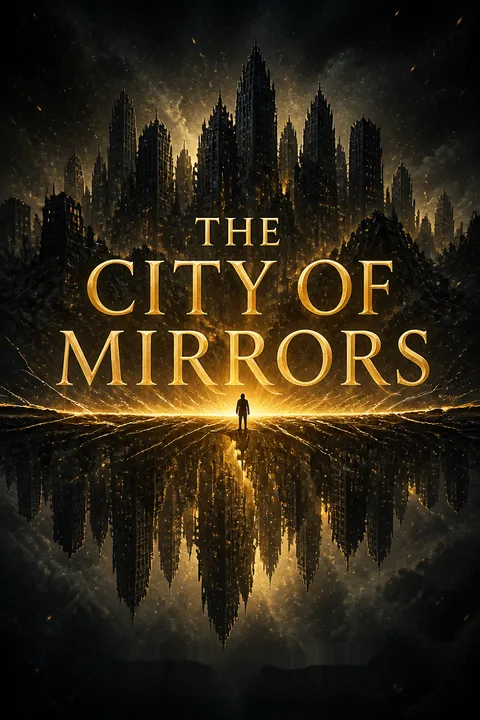
The City of Mirrors concludes Cronin's epic Passage trilogy. Readers praise the satisfying ending, character development, and emotional impact. Some found the pacing slow at times, particularly in the beginning. The backstory of Zero divided opinions, with some finding it fascinating and others unnecessary. Many appreciated the exploration of love and humanity amidst apocalyptic horror. While not perfect, most reviewers consider it a worthy finale to a remarkable series that blends literary fiction with post-apocalyptic vampire lore.
People Also Read






Characters
Amy Harper Bellafonte
The girl who enduresAmy is an orphan whose unusual sensitivity to the living world sets her apart from the people around her. She is observant, compassionate, and often burdened by events she cannot control. Her connection to animals and to other people gives her a kind of knowledge that is emotional rather than institutional. Amy’s strength is not simple fearlessness: she can doubt herself, grieve, and long for ordinary closeness. What distinguishes her is the persistence with which she continues to care, even when others treat her as a symbol, a weapon, or a solution.
Peter Jaxon
The reluctant protectorPeter is a soldier shaped by duty who gradually discovers that protection can mean raising a child, building a home, or governing a fragile community. His loyalty is practical and personal; he acts before he has fully resolved what an action will cost. As Caleb’s father and a public leader, he tries to keep intimate obligations from being swallowed by history. Peter’s recurring conflict is not whether he cares, but how far that care can extend without becoming control. He is most himself when he accepts responsibility without needing recognition for it.
Alicia Donadio
The soldier apartAlicia is a fiercely capable fighter whose independence began as a survival skill and hardened into a way of life. She has a sharp tongue, an instinct for action, and little patience for sentimental explanations. Beneath that armor is a person profoundly affected by abandonment and by the losses she cannot prevent. Alicia’s loyalty to her friends is real, even when she disappears from them or conceals what she fears they would reject. Her story asks whether a person can remain part of a community while believing herself fundamentally separate from it.
Michael Fisher
The builder of escapeMichael is an engineer whose mind turns problems into systems of parts, risks, and possible repairs. His curiosity pushes him beyond the safe borders of Kerrville, while grief and old family wounds make solitude feel more manageable than dependence. He can be funny, stubborn, and difficult to reach, yet he is deeply loyal to the people he loves. Building boats and machinery gives Michael a language for hope: he trusts work more readily than promises. His challenge is to recognize that carrying everything alone is not the same as protecting everyone.
Timothy Fanning
The grieving destroyerFanning begins as a brilliant scientist whose inwardness and ambition are sharpened by rejection and loss. He is capable of reflection, even remorse, but repeatedly converts private pain into a universal verdict about human life. His eloquence can make cruelty sound like philosophy, and his need to control how others understand him is as important as his physical power. Fanning is frightening not because he lacks feeling, but because he treats his suffering as evidence that everyone else must suffer too.
Lucius Greer
The faithful seerGreer is a former soldier whose faith takes the form of attention: to signs, to people, and to obligations that cannot be proven in advance. His visions make him seem distant, yet his loyalty is steady and concrete. He protects Amy and Carter through years of lonely, difficult care, then helps Michael turn a glimpse of the future into a workable plan. Greer’s strength is a willingness to act without certainty. He often carries knowledge privately, accepting that trust sometimes requires silence.
Anthony Carter
The reluctant viralCarter is a former inmate transformed by the viral infection, but his temperament differs from the violent creatures that dominate the world. Gentle, modest, and attentive to small tasks, he resists the impulses imposed on him and finds purpose in tending a garden. His care for Amy is patient rather than possessive; he offers companionship without asking her to become someone else. Carter’s story centers on the possibility that moral choice can survive even when a person’s body and instincts have been radically altered.
Sara Wilson
The healer and motherSara is a physician whose competence grew from practical experience, hard study, and the need to keep other people alive. She is compassionate without being soft-headed, and she understands that care often requires an uncomfortable decision. Her family, especially her daughter Kate and husband Hollis, anchors her after the ordeals of captivity. Sara also carries private trauma, which makes her ability to help others neither automatic nor easy. She believes in useful acts: delivering a baby, treating a wound, returning to a frightened child.
Hollis Wilson
The steady companionHollis is physically imposing but temperamentally gentle, a reader and family man who prefers quiet service to authority. He supports Sara without competing with her expertise and helps raise Kate in the aftermath of their captivity. His strength matters most when danger forces him to act, but it does not erase his tenderness. Hollis measures a life by the people who depend on him and the ordinary comforts he can provide. He is a reminder that courage can coexist with patience, domesticity, and grief.
Caleb Jaxon
Peter's chosen sonCaleb is thoughtful, quick to learn, and eager to understand the world his father survived. He grows up with the chance of an ordinary childhood, yet his admiration for Peter draws him toward military service and responsibility. His bond with Pim develops through attention and communication, particularly his effort to learn her signs. Caleb’s maturity shows in his willingness to accept work he would not have chosen, while his love for family keeps that duty from becoming mere obedience.
Pim
The quiet visionaryPim is deaf and communicates through signs, writing, and a private language shaped with her family. Her childhood abuse makes trust difficult, but it does not extinguish her curiosity or capacity for intimacy. She observes closely and records what others overlook, giving her journals a rich, inward life. Pim’s relationship with Caleb grows from his willingness to meet her on her terms rather than treat communication as a problem she must solve for him.
Lore DeVeer
The refinery captainLore is a skilled refinery manager with a hard-won command of machinery and people. Her directness can read as aggression, but it is also a refusal to waste time or disguise a difficult fact. She shares history and affection with Michael, while insisting that respect must be earned in action. Lore’s authority comes from competence rather than title, and she becomes a crucial leader when the group needs someone able to keep both a crew and a failing vessel in motion.
Jonas Lear
The ambitious scientistJonas is charming, intellectually bold, and convinced that scientific inquiry can reach beyond the limits most people accept. His ideas about disease and mortality make him an inspiring friend and a dangerous experimenter. He loves Liz and is drawn to problems that seem large enough to give his life meaning. Jonas’s confidence can blind him to the human costs of his plans, even when his motives begin in care.
Liz Macomb
The lost belovedLiz is perceptive, witty, and unusually direct about the gap between what people say and what they want. Her illness shapes her understanding of time, but she resists being reduced to a patient or to Jonas’s reason for pursuing a cure. She values emotional honesty and recognizes the quiet loyalty in people who underestimate themselves. Liz’s relationships expose the difference between being loved and being truly understood.
Victoria Sanchez
The shrewd presidentSanchez is a politically astute leader who understands that postwar peace needs new institutions, not merely the absence of enemies. She reads people accurately and knows how to frame responsibility as an opportunity. Her approach to Peter is strategic, but it also reflects a genuine concern for the future of children growing up in Texas. She is willing to use persuasion because she believes the transition cannot wait for perfect conditions.
Gunnar Apgar
The old generalApgar is a career soldier who values discipline, preparation, and plain speech. He respects Peter’s judgment while remaining willing to challenge it when lives are at stake. Beneath his formal manner is a loyal friend, shaped by years of watching the old military world disappear. He understands that institutions can preserve order, but he is not blind to their limits. Apgar’s practical outlook balances Peter’s instinct to carry responsibility personally.
Ford Chase
The patient strategistChase is a government administrator who sees the details others overlook: maps, supply chains, schedules, and the arrangements that make a community function. His formality can disguise a dry sense of humor and genuine loyalty. Though he and Peter have disagreed, he respects Peter’s leadership and understands the institutional burden of governing. Chase’s strengths are practical rather than theatrical, making him especially useful when a crisis requires organization.
Kate Wilson
Sara's resilient daughterKate grows up loved by Sara and Hollis after a childhood shaped by separation and uncertainty. She becomes a doctor, carrying forward her mother’s practical devotion to patients. Direct and mature, she often takes responsibility before anyone asks her to. Her family life includes both deep affection and disappointment, and she works hard to protect her daughters from the instability adults have endured.
Sister Peg
The orphanage guardianSister Peg is a stern, capable caretaker whose cantankerous manner conceals a deep tenderness for the children in her charge. She treats the orphanage as a family and takes its daily work seriously, from schooling to illness and discipline. Her faith is practical: she believes people must do what they can, rather than wait for rescue. She becomes a trusted adult to Sara and Peter and a steady presence for children with nowhere else to go.
Jock Alvado
The rescued rooferJock begins as a careless young construction worker whose chatter and poor judgment put others at risk. Underneath his immaturity is a capacity to learn from fear and accept responsibility. His later life connects him to Sara’s medical work and to the city’s emergency defenses. He represents the possibility that a near-fatal mistake can become a turning point rather than a permanent definition.
Rachel Wood
The grieving motherRachel is a mother whose despair isolates her from the people around her. She is remembered through her daughters, her garden, and the tenderness Carter shows her. Her story places private grief beside the larger catastrophe, emphasizing how personal loss can become invisible amid mass suffering.
Rebecca
The rescued childRebecca is a young orphan caught in the final chaos around the ship. She is frightened, quiet, and clutching a worn stuffed animal, a small image of childhood amid the collapse. Her presence matters because it gives Amy a chance to protect a child who resembles the girl she once was.
Logan Miles
The historian of returnLogan is a careful historian who distrusts easy conclusions and tries to distinguish evidence from inherited belief. His upbringing in a traditional community leaves him wary of spectacle, but his work brings him into contact with the history his family has carried. He is thoughtful, private, and more emotionally invested in the past than he initially admits. His curiosity eventually becomes a willingness to listen rather than merely classify.
Nessa Tripp
The persistent reporterNessa is an observant reporter who combines professional persistence with genuine curiosity about people. She is interested not only in public claims but in the private histories that shape them. Her warmth and directness help draw Logan beyond his practiced reserve, while her instinct for story makes her alert to the meaning behind small details. She approaches history as something lived, not merely archived.
Plot Devices
The Book of Twelves
History becomes prophecyA chronicle written by a later survivor recounts Amy and her companions as sacred figures. Its account frames the novel, foreshadows the fate of characters who do not yet know it, and shows how events become legend after witnesses are gone. The book’s certainty is deliberately incomplete: it records outcomes but cannot explain what Amy’s disappearance means or what happened to those still living. In the far future, archaeological discoveries challenge scholars to decide whether its claims are myth, history, or both.
The Bergensfjord
A refuge with a priceThe derelict freighter provides Michael with evidence that the world outside North America collapsed and that a distant island may offer safety. Rebuilding it requires money, fuel, secrecy, and years of labor. Its limited passenger capacity forces the survivors to confront who can be saved, while its failure and eventual voyage repeatedly test Michael’s faith in engineering. The ship is both a practical escape route and a symbol of the old world’s machinery, which can carry people forward but cannot build their new home for them.
Reflections and Mirrors
The viral sees itselfMichael’s observation that reflective surfaces can halt a viral gives Kerrville a possible defense. The theory rests on the idea that a viral retains a buried memory of its human self, and that seeing its own image can bring that memory painfully close. Mirrors, polished metal, and even another person’s gaze become ways of interrupting the creature’s automatic violence. The device matters because it makes identity a tactical force, not merely a private idea. It also prepares the final struggle, where light and reflection expose what Fanning has become.
Water and Transformation
Death becomes a thresholdWater is lethal to virals, yet it also triggers the rare reversal first experienced by Fanning. Michael uses that knowledge to restore Amy, and a later immersion changes Alicia in a different way. The effects are not identical, which keeps the phenomenon from becoming a simple cure. Water functions as danger, passage, and revelation: it strips away the assumption that a viral’s condition is fixed, while leaving the characters to face the consequences of whatever survives the transformation.
The Farmstead
Love crosses ordinary timePeter’s recurring dreams of the farmstead offer a vivid life with Amy, complete with a home, shared meals, and a piano. The place appears to exist beyond ordinary time, allowing the living and the dead to encounter one another through memory and feeling. Its quiet scenes contrast with the physical violence of the plot, but they are not simply escapes: Peter’s bond with Amy later helps him retain his identity. The farmstead makes the novel’s question about what is real inseparable from its question about whom we love.
FAQ
Synopsis & Basic Details
What is The City of Mirrors about?
- Humanity's Last Stand: The City of Mirrors is the concluding novel in Justin Cronin's Passage trilogy, chronicling humanity's desperate struggle for survival against a viral apocalypse. It follows the intertwined fates of a small band of survivors, led by the enigmatic Amy, as they face the ultimate confrontation with Zero, the progenitor of the virals, and the looming threat of a second global pandemic.
- Journey to a New Beginning: The narrative spans decades, shifting between the present fight for Kerrville, Texas, and the deep past, revealing the origins and motivations of key characters like Fanning (Zero) and the viral Amy. It culminates in a perilous exodus across the ocean to a fabled island, offering a chance for humanity to rebuild and begin anew, free from the viral threat.
- Exploration of Core Themes: Beyond the thrilling plot, the novel delves into profound themes of love, loss, sacrifice, duty, and the very nature of humanity. It explores how individuals grapple with their pasts, the choices they make, and the enduring hope for a future, even in the face of seemingly insurmountable odds.
Why should I read The City of Mirrors?
- Emotional Depth & Character Arcs: Readers should engage with The City of Mirrors for its profound emotional resonance and the culmination of beloved character arcs. The novel masterfully explores the psychological toll of survival, the complexities of relationships forged in crisis, and the enduring power of love and sacrifice, offering a deeply satisfying conclusion to the trilogy.
- Philosophical & Existential Questions: Justin Cronin elevates the post-apocalyptic genre by weaving in rich philosophical and existential inquiries. The book prompts readers to ponder the meaning of humanity, the cyclical nature of history, and the possibility of redemption, making it a thought-provoking experience that lingers long after the final page.
- Masterful Storytelling & World-Building: The novel delivers on the epic scale promised by the trilogy, with intricate plotlines, vivid scene descriptions, and relentless pacing that keeps readers enthralled. The expansion of the world beyond North America, the detailed backstories, and the ultimate vision of a reclaimed planet offer a truly immersive and unforgettable reading experience.
What is the background of The City of Mirrors?
- Post-Apocalyptic North America: The story is set centuries after a viral outbreak, known as the Great Catastrophe, decimated the global population, transforming most into monstrous "virals." North America has been quarantined, with isolated human settlements like Kerrville, Texas, struggling to survive against the remaining viral threat and the challenges of rebuilding civilization.
- Viral Origins & Evolution: The narrative delves into the origins of the virus, tracing it back to a scientific experiment involving Jonas Lear and Timothy Fanning (Zero) in Bolivia, and its subsequent mutation and spread. It reveals that the initial North American strain (NA-1) caused physical transformations, while a later global strain (EU-1, the "Easter Virus") was more lethal but generally did not lead to viral transformation, creating a complex viral ecology.
- Societal Reconstruction & Memory: Human society has fragmented into various forms, from the authoritarian Homeland in Iowa to the more democratic Texas Republic. The book explores how these societies grapple with collective memory, the suppression of painful truths, and the struggle to maintain order and hope in a world forever scarred by the past.
What are the most memorable quotes in The City of Mirrors?
- "Love was being known.": This profound statement, articulated by Peter Jaxon in his dream of the farmstead (Chapter 2), encapsulates a central theme of the novel: the deep human yearning for connection and understanding. It highlights that true love transcends mere affection, residing in the vulnerability of being fully seen and accepted by another, a rare and precious commodity in their broken world.
- "History is that scar on your hand. It's the stories that leave a mark, the past that refuses to stay past.": Spoken by Logan Miles in the epilogue (Chapter 91), this quote offers a powerful commentary on the nature of history and memory. It argues that history is not just a collection of facts, but the indelible imprints of lived experience, particularly trauma and love, that continue to shape the present, emphasizing the enduring legacy of the survivors.
- "Everything got a name. It's got a way to know itself. That's an important lesson in life.": Carter, the redeemed viral, shares this wisdom with the young girls (Chapter 88), reflecting a deep spiritual insight. This quote symbolizes the inherent identity and purpose in all living things, from trees and flowers to animals, suggesting a profound interconnectedness and a universal right to self-knowledge, even in a world where humanity has lost its way.
What writing style, narrative choices, and literary techniques does Justin Cronin use?
- Shifting Perspectives & Non-Linearity: Cronin employs a multi-perspective narrative, frequently shifting between characters like Peter, Michael, Alicia, and Fanning, often jumping across vast stretches of time. This non-linear approach, particularly evident in Fanning's extensive backstory and Peter's prophetic dreams, enriches the analysis of character motivations and provides a panoramic view of the apocalypse's impact, deepening the reader's understanding of the themes in The City of Mirrors.
- Sensory Immersion & Vivid Imagery: The author excels at creating a visceral and immersive experience through rich sensory details. Descriptions of the environment, the virals, and the characters' physical and emotional states are intensely vivid, from the "acrid spore-smell of mold" in New York (Chapter 13) to the "electrical sting of their teeth" from ants (Chapter 37), grounding the fantastical elements in a palpable reality.
- Intertextuality & Philosophical Depth: Cronin liberally sprinkles literary allusions (Shakespeare, T.S. Eliot, A.E. Housman) and philosophical musings throughout the text, particularly through Fanning's internal monologues and Logan Miles's academic reflections. This technique elevates the narrative beyond a simple survival story, inviting readers to engage with complex ideas about human nature, destiny, and the meaning of existence, making it ripe for literary analysis.
Hidden Details & Subtle Connections
What are some minor details that add significant meaning?
- The "Easter Virus" Origin: Michael's discovery of the International Herald Tribune newspaper (Chapter 4) reveals the global pandemic was called the "Easter Virus" and originated in the Caucasus region, with an avian source. This subtle detail expands the scope of the apocalypse beyond Project NOAH, suggesting a broader, more complex viral evolution and a world far more devastated than previously understood, adding depth to the themes in The City of Mirrors.
- The Orphanage as Underground Railroad: Chase's description of the orphanage's basement shelter (Chapter 58) as a former Underground Railroad hiding place for slaves adds a layer of historical resonance and symbolic meaning. It subtly connects the present struggle for freedom and survival to past battles against oppression, highlighting the enduring human spirit and the cyclical nature of seeking refuge, a detail often missed in a quick read.
- Fanning's "Costumery": Fanning's internal reflection on his human appearance as "costumery" (Chapter 14) after his transformation by water is a crucial, subtle detail. It implies that his human form is not a true return to his former self but a superficial disguise, hinting at the persistent viral nature beneath and foreshadowing his later, more monstrous appearance, deepening the Fanning analysis.
What are some subtle foreshadowing and callbacks?
- Peter's Farmstead Dreams: Peter's recurring dreams of the farmstead with Amy, where time is fluid and he feels "known" (Chapter 2), subtly foreshadow his ultimate fate and the nature of his afterlife. This consistent motif, initially presented as mere dreams, becomes a profound callback to his deepest desires and the enduring connection he shares with Amy, offering a poignant Peter Jaxon analysis.
- Lucius's Vision of the Island: Lucius Greer's hallucinatory vision of a mountainous island with a constellation (Southern Cross) and a ship (Chapter 3, later Chapter 12) serves as a direct, yet initially ambiguous, piece of foreshadowing for the Bergensfjord's destination and the survivors' eventual refuge. This "vision" is a callback to his spiritual journey and reinforces his role as "Lucius the Faithful," guiding Michael's desperate quest.
- The "City of Mirrors" Metaphor: Fanning's repeated description of New York as a "City of Mirrors" (Chapter 23, 33) is a powerful, recurring motif that subtly foreshadows the final battle strategy. It not only reflects his own fragmented identity and self-perception but also hints at the virals' weakness to reflective surfaces, a crucial detail for the climax that is woven throughout his internal monologues.
What are some unexpected character connections?
- Jock Alvado's Redemption Arc: Jock Alvado, initially introduced as an obnoxious, careless roofer who nearly causes Peter's death (Chapter 12), later reappears as a loyal, transformed soldier in the final battle (Chapter 66). His unexpected return and newfound sense of duty, spurred by the birth of his son, highlight the novel's theme of second chances and the capacity for growth, providing a surprising character connection.
- Sara and Grace Jiménez's Shared History: The revelation that Sara delivered Grace Jiménez as a baby, and even transferred her own birthright certificate to Grace's parents (Chapter 5, 64), creates a deeply personal and unexpected connection. This detail underscores Sara's compassionate nature and the quiet acts of defiance she performed, linking her past actions to the present survival of a new generation.
- Logan Miles's Ancestral Ties: The epilogue reveals Logan Miles's unexpected lineage as a descendant of the "First Family" (Jaxon) and his mother being an "Amy dreamer" (Chapter 91). This connection retroactively imbues his scholarly pursuit of North American history with a profound personal significance, transforming him from a detached academic into a direct inheritor of the trilogy's legacy, a surprising twist in the Logan Miles analysis.
Who are the most significant supporting characters?
- Sister Peg: Beyond her role as a nun and caretaker of the orphanage, Sister Peg emerges as a steadfast moral compass and a surprising warrior. Her quiet strength, unwavering faith, and ultimate sacrifice in setting the orphanage ablaze (Chapter 72) to protect the children underscore her profound significance as a symbol of selfless devotion and the enduring power of belief in the face of despair.
- Ford Chase: Initially presented as a somewhat bureaucratic and self-serving chief of staff to President Sanchez, Ford Chase undergoes a subtle but significant transformation. His unexpected loyalty to Peter, his practical ingenuity in identifying shelters (Chapter 58), and his willingness to fight alongside the military (Chapter 70) reveal a deeper character, proving his worth beyond political ambition and making him a key figure in Kerrville's defense.
- The Maestro: This eccentric, paranoid antiquarian (Chapter 10) is crucial to Michael's quest, possessing the unique ability to extract data from pre-Catastrophe electronics. His seemingly minor role in recovering the Bergensfjord's navigational data is pivotal, providing the concrete evidence that validates Michael's "crazy stories" and sets the entire escape plan in motion, a hidden detail that drives the plot.
Psychological, Emotional, & Relational Analysis
What are some unspoken motivations of the characters?
- Fanning's Desire for Validation: Beneath his nihilistic pronouncements and monstrous actions, Fanning (Zero) is driven by a profound, unspoken desire for validation and understanding, particularly from Liz and later Amy. His elaborate "tests" and philosophical monologues are attempts to justify his existence and prove his worldview, stemming from a deep-seated loneliness and a need to be "known," as Peter defines love. This is a key aspect of Fanning's motivations explained.
- Alicia's Self-Punishment: Alicia's relentless pursuit of death and her willingness to sacrifice herself are rooted in an unspoken motivation of self-punishment. Her viral transformation, particularly the conception of her daughter Rose by Martínez, leaves her with profound guilt and self-loathing. Her attempts to die, and her later acceptance of her "broken" state, are her way of atoning for what she perceives as her monstrousness, a deep psychological complexity in Alicia Donadio analysis.
- Michael's Quest for Purpose: Michael's obsessive dedication to the Bergensfjord and his solitary voyages are driven by an unspoken need for purpose and meaning in a world that has lost its way. Having witnessed his parents' suicide and the collapse of civilization, he seeks to fix something unfixable, to create a future where he can feel truly alive and useful, making his Michael Fisher motivation a central emotional driver.
What psychological complexities do the characters exhibit?
- Fanning's Nihilistic Grief: Fanning exhibits a complex psychological state of nihilistic grief, where his immense personal losses (Liz, his human life) have twisted into a desire for universal destruction. He rationalizes his monstrousness as a divine purpose, a "god of horrors" (Chapter 14), yet his moments of regret and his longing for connection reveal a deeply fractured psyche, making his character a rich subject for psychological analysis.
- Amy's Burden of Knowledge: Amy carries the immense psychological burden of her unique nature and prophetic insights. She understands the true nature of the virals and the cyclical patterns of destruction, yet she is often isolated by this knowledge. Her struggle to reconcile her human emotions with her viral instincts, and her quiet acceptance of her role as a "savior," showcases a profound internal conflict and resilience.
- Peter's Duty vs. Desire: Peter grapples with the psychological complexity of balancing his duty as a leader with his personal desires for a simple, happy life with Amy and Caleb. His internal conflict is evident in his initial refusal of Sanchez's offer and his later willingness to sacrifice himself. This tension highlights the universal struggle between individual happiness and collective responsibility, a core aspect of Peter Jaxon motivations.
What are the major emotional turning points?
- Sara's Act of Compassion: A major emotional turning point occurs when Sara, despite her initial hardening, chooses to protect Carlos Jiménez's baby, Grace, by destroying the illegal birthright certificate (Chapter 5). This act of quiet defiance and profound compassion, risking her own position, marks her re-engagement with the human cost of the apocalypse and foreshadows her later dedication to healing and family.
- Alicia's Confession of Rose: Alicia's emotional breakthrough in Grand Central Terminal, confessing her daughter Rose's name to Fanning (Chapter 13), is a pivotal moment. This raw vulnerability, breaking years of guarded silence, signifies a release of profound grief and self-loathing, allowing her to begin a path toward healing and re-establishing human connection, even with her tormentor.
- Peter's Acceptance of Amy's Love: Peter's realization and acceptance of his deep, enduring love for Amy, particularly during their shared dream of the farmstead (Chapter 68), marks a significant emotional turning point. This moment transcends the physical and temporal boundaries of their existence, affirming their bond as the central emotional anchor of the story and providing a powerful emotional analysis of their relationship.
How do relationship dynamics evolve?
- Peter and Caleb: Role Reversal: The relationship between Peter and his adopted son, Caleb, evolves from a traditional father-son dynamic to a poignant role reversal. As Peter ages and faces the ultimate sacrifice, Caleb steps into a leadership role, becoming the protector and the one who must "let go" of his father (Chapter 78). This evolution highlights themes of generational responsibility and the cyclical nature of family bonds.
- Michael and Lore: Unrequited Love to Mutual Respect: Michael and Lore's relationship transforms from one of unrequited romantic love and lingering resentment to deep mutual respect and professional partnership. Lore's initial anger over Michael's abandonment
About the Author

Download PDF
Download EPUB
.epub digital book format is ideal for reading ebooks on phones, tablets, and e-readers.








