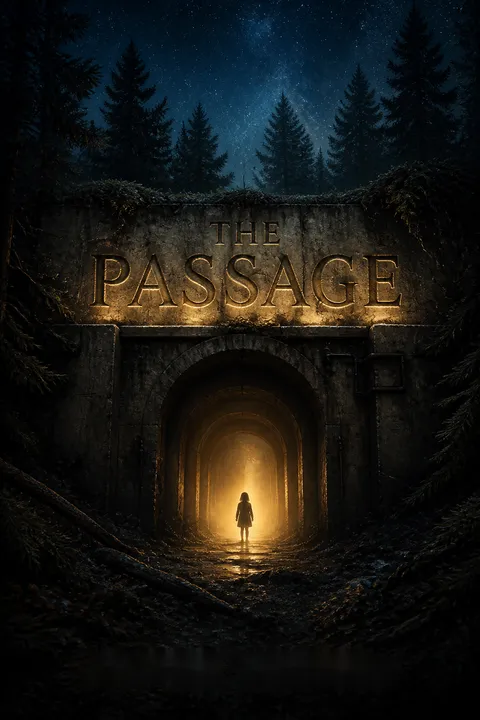


Plot Summary
Amy Left at Mercy
Six-year-old Amy Bellafonte has learned to be quiet while her mother, Jeanette, struggles through poverty, an abusive partner, and motel life in Memphis. After Jeanette shoots a young man who is trying to assault her, she knows the police will come. She takes Amy to the Sisters of Mercy convent, invents a story about a broken-down car, and leaves the girl with Sister Lacey Kudoto.
Lacey finds Jeanette’s apologetic note in Amy’s backpack and understands the child has been abandoned. Amy asks for Peter, her stuffed rabbit, then admits she does not think her mother is coming back. Lacey lies to the other nuns and keeps Amy with her, making the child’s safety her own responsibility.
Jeanette’s choice is both abandonment and protection: she leaves Amy because she believes remaining together will expose the child to arrest, violence, and a life already shaped by desperation. Lacey’s immediate lie is a moral turning point of its own. Her faith has trained her to seek divine intention, yet here she acts before certainty, treating care as a duty that cannot wait for institutional permission. Amy’s silence is not emptiness; it is a survival skill learned in a world where adults make decisions around her. The rabbit gives her a portable piece of continuity when every other bond has been severed.
A Jungle Discovery
Years earlier, Harvard virologist Jonas Lear leads a military-backed expedition into the Bolivian jungle, pursuing evidence of an ancient virus that can reverse disease and aging. His team finds stone figures near caves and a site scorched by an old fire.
Then enormous bat swarms attack, killing scientists and soldiers, including security chief Mark Cole. Lear reaches the burial site with a handful of survivors and discovers that the virus’s hosts are not dead in the ordinary sense. Tim Fanning, a brilliant scientist bitten in the jungle, is brought back alive.
The military hides the expedition’s losses and builds Project NOAH around the discovery. In Colorado, Lear and his staff begin testing the virus on human subjects, while security officer Richards protects the project from scrutiny.
The expedition begins with a scientific hope that is sincere but already entangled with military appetite. Lear seeks to defeat death after losing his wife; the Army sees a way to keep soldiers in combat. Their shared project masks incompatible purposes. The ancient statues and the blackened landscape establish that humanity has encountered this force before, but the researchers treat the site chiefly as a resource to extract. The bats turn exploration into catastrophe, yet the survivors respond by tightening control rather than reconsidering whether control is possible. The first moral failure is not a single experiment. It is the assumption that a discovery’s value can be separated from the power that intends to use it.
The Death Row Bargain
FBI agent Brad Wolgast and his partner Phil Doyle travel Texas to recruit death-row inmates for Project NOAH. The first is Anthony Carter, a poor, intellectually limited man sentenced for drowning Rachel Wood, the wealthy woman who once gave him work and treated him with kindness.
Carter cannot make his crime fit his memory of their friendship, and Wolgast notices that his remorse is mixed with genuine confusion. The offer is stark: leave death row and serve an unnamed government project, or face execution.
Wolgast secures Carter’s consent by promising him time to understand what happened to Rachel. He is also unsettled by the secrecy surrounding the experiment and by the private loss of his daughter Eva, which the project’s leaders have used to recruit him.
Carter’s case unsettles the machinery of punishment because his need is not simply to escape death. He needs a coherent account of himself, one that can hold both the tenderness he felt for Rachel and the fact of her death. Wolgast recognizes this need and uses it to secure consent, so compassion and manipulation become difficult to distinguish. His promise of time is emotionally truthful but institutionally false: Carter is being transferred into an experiment whose risks Wolgast does not fully understand. The recruitment also reveals Wolgast’s vulnerability. His grief over Eva makes him susceptible to a project promising mastery over mortality, even as his instincts warn him that the bargain is poisoned.
The Zoo Goes Silent
At the convent, Lacey grows protective of Amy, whose unusual warmth and watchfulness unsettle her. When Lacey takes the child to the Memphis Zoo, Amy stands before the polar-bear tank and seems to communicate with the animals. The bears lunge at the glass, and a wave of agitation spreads through the zoo’s animals, sending visitors fleeing.
FBI agents Wolgast and Doyle arrive to take Amy, calling her a protected witness. Lacey resists, but the nuns help transfer the child. Wolgast is horrified to learn that his assignment involves a six-year-old. He begins to question the mission, while Amy, silent in the back seat, observes every choice the adults make. The seizure turns a secret government operation into a public crisis.
The zoo scene makes Amy’s difference visible without explaining it. The animals react to her as if they recognize something in her, while the human crowd can only interpret the disturbance as danger. Lacey’s protective response is shaped by her own childhood trauma: she knows what it means to be powerless before armed adults, and she refuses to accept the agents’ authority at face value. Wolgast’s conscience awakens not through policy or evidence but through proximity to Amy. The child’s silence forces the adults to reveal themselves through action. Their competing claims of protection mean little beside what Amy can observe: who risks themselves for her and who treats her as an object to be moved.
Wolgast Breaks Ranks
As Wolgast and Doyle drive Amy west, Wolgast stops at a small Oklahoma fair and lets her ride the Octopus and carousel. For a brief hour, she eats hot dogs, chooses rides, and calls him her father. Doyle watches from the crowd, still committed to the mission.
When the moment passes, Wolgast leads Amy away from the designated route and refuses to return her. He and Doyle later surrender at a diner, hoping local authorities will protect the child. Richards arrives, kills the deputy and witnesses, and takes Amy and the agents by helicopter.
Doyle finally turns against the operation, helping Wolgast escape with Amy. Richards kills Doyle during the pursuit; Wolgast carries Amy toward the Colorado mountains, cut off from the only people who might help.
The carnival matters because Wolgast gives Amy something the project cannot measure: an hour in which she is treated as a child rather than a specimen. Their invented father-daughter role begins as cover, but it awakens a tenderness he has buried since Eva’s death. Doyle’s shift is slower and more compromised; he has obeyed orders, then recognizes that loyalty to the Bureau has become complicity in kidnapping. The diner surrender shows how little protection ordinary institutions can offer once the government itself is the threat. Richards’s murders erase that last refuge. From this point, Wolgast’s rebellion is no longer a private moral objection. It is a flight with Amy’s life as its immediate purpose.
The Lab Breaks Open
At the Colorado compound, Carter’s body undergoes a terrifying transformation. The virus gives him strength, speed, and a hunger for blood; he kills the technician Pujol and escapes containment.
Grey, a former sex offender working as a cleaner, has already been hearing the original viral, Fanning, in dreams that recover the violence of his past. Grey opens the next containment gate and becomes one of the infected. As the subjects break free, security collapses. Wolgast reaches Amy’s chamber and carries her through a maintenance shaft while Lear guides him toward an exit.
Doyle dies covering their escape. Lacey arrives at the compound and draws the pursuing virals away from Wolgast and Amy, sacrificing herself. Wolgast gets Amy out, but the lab’s experiment has become an outbreak.
NOAH’s collapse is the material consequence of treating living beings as controllable instruments. Carter’s transformation gives physical form to the project’s original fantasy: that the virus can be separated from its costs and directed toward human purposes. Grey’s infection is more intimate, because Fanning enters through the buried memories that official treatment had tried to suppress. The facility’s locks, gates, and protocols fail in sequence, but the deeper failure is ethical: the project has built no meaningful relationship with the people it uses, only layers of containment. Wolgast, Doyle, and Lacey act differently because they recognize Amy as a person. Their costly choices become the only form of protection the laboratory cannot manufacture.
The World Ends Around Them
Wolgast takes Amy to Bear Mountain Camp, the Oregon retreat where he spent boyhood summers. He boards the windows, finds food and supplies, and adapts to Amy’s painful sensitivity to sunlight by helping her live mostly at night. She reads with astonishing ease and learns to swim as if remembering how.
A trip to the nearby store reveals the truth: the virus has spread across the country, cities are burning, and governments are retreating behind quarantine lines. Forest fires force them onto the lake in a canoe; later, a nuclear blast shatters the lodge windows and blinds Amy temporarily. Wolgast’s radiation sickness worsens. He stays with Amy until he can no longer rise, then dies alone in the woods, believing she has gone.
The camp gives Wolgast and Amy a fragile domestic life built from chores, books, food, and protection. Its small routines resist the scale of the catastrophe, but they cannot reverse it. Wolgast’s instinct to care for Amy becomes a second chance at fatherhood, not a substitute for Eva but a relationship that returns him to the world. The apocalypse arrives through ordinary evidence: a thin newspaper, a missing delivery, then a nuclear flash. His death completes the contrast between human vulnerability and Amy’s unexplained endurance. He cannot save the world or even guarantee her future, but he teaches her to swim, read, and trust another person. Those acts outlast the shelter that holds them.
Amy Walks the Dark
After Wolgast’s death, Amy wanders through the ruined continent for decades. She lives among occasional survivors, but they die or send her away; she keeps a few objects that help preserve her memories. The voices of the infected crowd her mind, asking who they are.
Amy gradually learns she can call the virals to her and send them away, though she does not understand why. Near the ruins of Los Angeles, she encounters Peter Jaxon’s scouting party and watches as the virals kill Willem, Peter’s uncle.
She follows the surviving riders toward the mountain colony. By then Amy has forgotten many ordinary words and cannot explain what she is, but she has learned to move through daylight and to recognize the sorrow buried inside the creatures that stalk her.
Amy’s long wandering makes survival a problem of memory as much as shelter. She collects physical tokens because her own identity is eroding; the locket, stone, book, and other objects give her a portable history. The voices of the virals complicate the simple division between monster and human. Amy senses their forgotten selves, and her power over them grows through listening rather than domination. Yet her compassion does not make her omnipotent: she can redirect the creatures, but she cannot restore their lives or abolish their hunger. Her journey carries a paradox. She becomes less able to speak about herself even as she becomes more capable of answering the question that torments the dead.
The Train Saves the Littles
Nearly a century before Peter’s story, eight-year-old Ida Jaxon leaves Philadelphia on an evacuation train with her father as the city falls to the virals. The crowd at the station becomes a crush of soldiers, gunfire, and separated families. Ida loses her father and boards the train with help from a stranger. The train sheds cars when virals breach them, carrying only a fraction of its passengers to California.
There Ida reunites with her cousin Terrence, who promises to look after her, and meets Lucy Fisher and her brother Rex. The survivors build a fenced colony, later governed by the Household and the One Law. Children are raised in a protected Sanctuary, taught nothing of the infected world until their eighth birthday.
Ida’s testimony turns the colony’s origin into a story of both rescue and rupture. The train preserves children, but only by abandoning cars and severing them from parents, siblings, and the world they knew. The colony’s strict laws emerge from genuine danger, yet they also institutionalize forgetting: children are protected by being denied the truth, then forced to absorb it all at once. Ida’s account counters the official simplicity of founding myths. It remembers the unrecorded costs: the dead on the bridge, a lost suitcase, the father whose fate she cannot recover. Her journal becomes an alternative shelter, one built from names and recollection rather than walls.
Peter Stands the Mercy
Ninety-two years after the outbreak, Peter Jaxon serves the Watch at First Colony, a settlement protected by walls, floodlights, and a strict division of trades. His brother Theo, a captain, has vanished on a ride beyond the perimeter, and Peter waits seven nights at the gate for him to return infected or not at all.
Their parents are gone: their mother died of cancer, and their father disappeared pursuing the Long Rides he believed could find other survivors. Peter admires his father’s courage but doubts he possesses the same appetite for risk. He also sees Theo’s attachment to Mausami, who has paired with Galen Strauss. When the seventh night ends without Theo, Peter must accept that the colony may record his brother as lost.
Peter’s watch is both a public duty and a private test. The Mercy makes a family’s grief into a ritual, assigning one person to face the possibility that a loved one will return as a threat. Peter’s doubts about his father and his own courage are not abstract; they are sharpened by Theo’s disappearance and by the expectation that he will inherit a leadership role. The colony’s safety depends on routines that conceal their emotional cost. Peter has been trained to protect the walls, but his father’s unanswered journeys have taught him to suspect that safety can become another name for surrender. His central conflict begins as a question about what kind of life he is willing to risk.
The Lights Have a Limit
Michael Fisher, an engineer who keeps the colony’s batteries and turbines working, discovers that the battery stack is failing. His father knew the same danger but never told the Household.
Michael also finds an old transmission log and begins secretly rebuilding a radio, hoping to contact survivors before the lights fail. With Elton, a blind technician, he detects a repeating military signal that grows stronger. Its coordinates point to Telluride, Colorado, and the message asks whoever finds Amy to bring her there.
Michael tells Peter the colony has perhaps months, not years, of reliable power. The signal offers a destination and a possible explanation for Amy, but reaching it will mean leaving the only protected home Peter has ever known.
The failing batteries turn the colony’s apparent permanence into a countdown. Its walls and lights are not natural facts; they are inherited technology, dependent on maintenance and finite materials. Michael’s discovery also reframes secrecy. His father’s silence and Theo’s agreement to keep the truth from the Household were intended to prevent panic, but withholding knowledge has left the community unprepared. The radio signal gives the group a reason to act, though not a guarantee that action will help. Its message is both practical and uncanny: a call from the past that names Amy. Michael’s engineering connects intimate loyalty to historical inquiry; he risks the system’s stability because continuing to preserve it without a future is no longer enough.
The Station Loses Zander
Peter joins Theo, Alicia, and a resupply party bound for the power station, carrying a motherboard Michael hopes to use. They arrive to find the crew missing. Caleb, a fifteen-year-old wrench, has survived three days on a turbine after station chief Zander Phillips turned violent and killed the jenny. The virals inexplicably leave Caleb alone.
When Peter’s group reaches the station, Zander attacks from above; Peter kills him with a rifle and learns the old engineer had stocked military weapons in a concealed bunker. Theo knew of the cache but had kept it secret. The revelation divides the brothers: Peter sees a possible future beyond the walls, while Theo believes the weapons cannot change humanity’s defeat.
The station’s silence exposes how precarious the colony’s infrastructure is: one absent crew can threaten every life under the lights. Caleb’s survival is therefore more than a rescue; it reveals that the virals may be acting with motives beyond simple predation. Zander’s transformation brings the threat into a familiar face, making Peter’s shot a duty that still feels like murder. The hidden arsenal connects Peter to his father’s forbidden Long Rides, but it also carries a warning. Weapons offer capability without strategy, and Theo’s skepticism reflects a community that has learned to survive by limiting its ambitions. The brothers inherit the same crisis but interpret its meaning differently.
The Library Takes Theo
Caleb leads the party to a library where Zander used to scavenge books. Inside, Peter, Theo, and Alicia find rows of dead children, many still holding toys, and syringes scattered across the floor. The discovery suggests that a refuge once became a place where parents chose death for their children rather than watch them turn.
Theo orders the building burned. The fire drives a hidden pod of virals from the sand-covered basement, and the group flees through an abandoned mall. In the atrium, a viral hurls Theo through the open roof. Peter escapes by following a silent young girl, who hides him under a carousel and guides him toward the roof, then rejoins Alicia and Caleb outside.
The library converts the colony’s protected childhood into its darkest mirror. Toys beside syringes show that the adults who gathered there were not indifferent; they were making a terrible choice in a world that had removed every safe option. Theo’s decision to burn the building tries to erase a scene too painful to comprehend, but the fire exposes the virals hidden beneath it. The attack separates the group and takes Theo from Peter, leaving the younger brother with no time to grieve. The silent girl’s intervention is a first, decisive encounter with Amy, though Peter cannot yet name her. She saves him through concealment, not combat, and her kiss makes their connection feel like a promise he does not understand.
The Walker Reaches Home
Peter returns to First Colony without Theo and serves the seven-night Mercy, while the Household debates his future and claims Theo’s seat. He visits Auntie, who gives him his mother’s old maps and says someone is coming. That night Amy reaches the gate, pursued by virals. The Colonel runs toward them and is killed; Alicia descends the wall to bring Amy inside.
Caleb opens the gate, letting one viral into the Sanctuary. Hollis kills his brother Arlo when he turns, and Teacher dies protecting the children. Amy is shot through the shoulder but heals with impossible speed. The Household quarantines her and arrests Caleb. Peter recognizes Amy as the girl who saved him, but keeps their encounter secret.
Amy’s arrival tests the colony’s laws at their weakest point: the rules can describe danger, but they cannot tell the Watch what to do when a child appears alone beyond the wall. Alicia acts before permission, choosing a human life over procedure; Caleb’s opening of the gate makes the cost immediate. Teacher’s death and Arlo’s transformation turn the Sanctuary, supposedly the safest place, into a battlefield. Peter’s private recognition of Amy gives him knowledge he cannot yet use openly. The colony’s response is not only fear of infection. It is fear of what Amy’s existence implies: that the world may still contain people beyond their walls, and that their settled story of extinction may be false.
The Colony Goes Dark
While Michael decodes Amy’s implant, the colony turns against Caleb and Alicia. Sam Chou and Milo Darrell gather parents who demand the boy be put out; Alicia breaks up the crowd and helps Peter reach the lockup. That night Jimmy Molyneau attacks Soo Ramirez and others, while virals breach the Wall during a power failure.
The assault kills numerous Watchers and colonists; the lights return only after Michael resets the breaker. As fear hardens into mob rule, Peter, Alicia, Michael, Sara, Caleb, Mausami, and Amy escape through a hidden tunnel under the power trunk. They leave the colony before its remaining batteries fail, carrying Michael’s decoded coordinates toward Colorado and abandoning the world they were raised to defend.
The colony’s disaster is not caused by a single breach. It emerges from accumulated weaknesses: failing infrastructure, suppressed knowledge, grief, and a political structure that can turn fear into punishment. The mob’s demand for Caleb offers a simple target for a crisis no one understands. Alicia’s intervention buys time but makes her an enemy of the authorities. When the lights fail, the community’s deepest promise collapses in minutes. The tunnel escape is therefore more than flight from virals; it is a break from a system that has confused order with safety. The group chooses uncertainty over a protected life whose foundations are already giving way.
A Family Keeps the Farm
While Peter’s party continues east, Theo and the pregnant Mausami remain at the isolated farmstead. Theo hunts, gathers food, and prepares the house for winter; their son Caleb is born there after a difficult labor. The family’s quiet life is repeatedly interrupted by dreams and by the sense that the dark contains more than animals.
A dog named Conroy joins them, and for a time the farm feels like a home recovered from history. Theo wakes one night to find the dog gone and Mausami threatened by a viral. The attack confirms that the valley is not truly safe, but their bond and the baby give Theo a reason to keep fighting rather than surrender to despair.
Theo and Mausami’s stay at the farm is a counterpoint to Peter’s expedition. They do not pursue the future through distance and weapons; they build it through shelter, food, birth, and care. Theo’s decision to remain is not cowardice but a different kind of commitment, one that recognizes the needs of the child they are bringing into the world. Yet the quiet is provisional. The viral’s appearance shows that no refuge can guarantee immunity from history. The family’s hope is therefore neither triumph nor denial. It is a practice of tending to life despite uncertainty, a small continuity that may matter precisely because it cannot control what comes next.
The Haven Demands a Ring
The expedition reaches a guarded refuge in Nevada, where a community appears to have survived without virals. Its leader, Olson Hand, welcomes them, but the settlement’s rules and evasions soon trouble Peter.
Michael is taken away for treatment; the others discover the community’s hidden bargain with Babcock, an enormous original viral who demands human sacrifices in a ritual ring. Theo is among the captives chosen for the next offering.
Peter and his friends enter the arena to rescue him, while Alicia and Mausami attack the machinery controlling the fire barrier. During the chaos, the group escapes aboard an armored train, but the virals pursue them. The train becomes their only moving refuge, and the rescue costs more than they can yet measure.
The Haven’s apparent peace is a social contract built on concealed violence. Its residents have organized their lives around appeasing Babcock, and the ritual makes complicity look like stability. Olson’s role is morally difficult because he both sustains the system and helps the newcomers understand it; survival has narrowed his choices until he mistakes submission for protection. The ring literalizes the cost of a community that preserves itself by sacrificing individuals. Peter’s group refuses that bargain, but escape does not erase its consequences. The train carries them forward while leaving them to face the same question in a new form: what kind of order can survive without repeating the cruelty that created the old one?
The Last Expeditionary
At the garrison, the survivors meet a remnant of the Texas Republic’s military, commanded by General Vorhees. Alicia reveals that she was raised by the Colonel as a future soldier and accepts her place in the First Expeditionary, separating from Peter and the others. Peter learns that the Army is real, that Texas still holds territory, and that its patrols are fighting the virals.
He nevertheless chooses to continue toward the Colorado signal with Amy, while Sara, Hollis, Michael, Theo, and Mausami head south toward Roswell with the military convoy. Later journal fragments record the group’s perilous road and end as Sara hears shots at the garrison. The book closes without confirming what happens to either party.
The reunion with a functioning army is not a simple restoration of hope. It offers structure, weapons, and a wider human world, but it also asks people to surrender themselves to military duty. Alicia’s choice is consistent with the identity she has carried since childhood, even as it separates her from Peter. Peter’s decision to continue is not a rejection of his friends; it is acceptance that Amy’s signal remains unanswered. The split creates two kinds of responsibility: protecting the survivors who can return to safety and pursuing the possibility that could change the larger war. The final journal fragment preserves uncertainty rather than resolving it, making the expedition’s future a question passed to whoever reads the record.
Epilogue
The novel closes through Sara Fisher’s journal, written during the march toward Roswell after the group separates from Peter and Amy. Her entries record exhaustion, dwindling fuel, fires, and the company’s efforts to keep moving; she also admits that the expedition has become a family, and that fear feels different when it might lead somewhere.
The final recovered page ends as Sara hears shots outside the garrison. A later archive identifies the journal with a Roswell massacre site, but the text does not explain what happened next. The record survives; the people’s fate remains unresolved.
The archival frame makes storytelling part of the book’s survival machinery. Ida preserves the evacuation; Sara records the expedition; each account resists the erasure built into catastrophe. Yet the final page is interrupted at the instant of danger, and its later recovery cannot supply the missing ending. The book therefore distinguishes survival from being remembered: the record can outlast its authors without restoring their lives or resolving their choices. Its uncertainty is deliberate and consequential. Readers inherit the same position as the future historians in the frame, holding fragments and trying to understand a world whose witnesses may already be gone.
Analysis
The Passage treats catastrophe as a contest over who gets to define survival. The military calls its experiment medicine, then weaponizes it; the colony calls its rules protection, then uses them to police what children may know; the Haven calls its sacrifices peace. Each institution makes violence seem necessary by narrowing the alternatives. Against these systems, the novel places acts of care that are modest but consequential: Wolgast feeding Amy, Lacey taking her in, Peter carrying the maps, Sara preserving testimony, and the group refusing to abandon one another.
Memory is the book’s crucial counterforce. The virals retain fragments of people they have consumed, the colony suppresses history to preserve childhood, and the journals attempt to return names to a world reduced to casualty counts. Amy stands at the meeting point of these struggles. She can hear the lost, but her power does not make her a simple cure; it gives her a responsibility to recognize persons where others see only enemies. The recurring question of identity is therefore practical as well as philosophical: what does a community owe the people it would rather classify, erase, or sacrifice?
The ending refuses easy restoration. The Army exists, but its return does not settle the war; the Colony’s lights fail, but the people carry its memory onward; Peter chooses to continue without knowing whether Colorado contains salvation. Hope in this novel is not confidence that events will turn out well. It is the decision to keep moving, to preserve the possibility of another person’s future, and to record what happened even when no one can promise who will read it.
Review Summary
The Passage received mixed reviews, with many praising its epic scope, complex characters, and suspenseful storytelling. Critics appreciated Cronin's literary style and world-building. However, some found the book's length excessive and pacing uneven, particularly in the second half. The novel's vampire-like creatures and post-apocalyptic setting drew comparisons to works by Stephen King and Cormac McCarthy. Despite divided opinions, most readers found the book engaging and looked forward to continuing the trilogy.
People Also Read


Characters
Amy Bellafonte
The silent survivorAmy begins as a child passed between adults who either protect her or treat her as a means to an end. She is observant, self-contained, and unusually sensitive to other people and animals. Her silence is not simple passivity; it allows her to watch before trusting, while her attachment to Peter grows through care rather than explanation. Amy is drawn to the lost and frightened, including creatures others regard only as threats. Her emotional center is a longing for connection, even as her origins and abilities make ordinary belonging difficult. She carries the book’s deepest tension between the need to remember and the burden of being remembered by others.
Peter Jaxon
The reluctant seekerPeter is the younger son of Demetrius and Prudence Jaxon, raised inside a colony where vigilance is a way of life. He is thoughtful, loyal, and more attentive to other people’s pain than he is to his own ambitions. His father’s Long Rides fascinate him, but he doubts whether he has the boldness those journeys require. Peter’s bond with Theo is loving and complicated, shaped by years of comparison and unspoken family expectations. His instinct to protect others repeatedly draws him beyond familiar rules. He is not naturally fearless; his strength lies in acting while afraid and accepting responsibility without pretending he knows how the story will end.
Brad Wolgast
Amy’s first protectorWolgast is an FBI agent whose practiced skill at persuading people conceals grief he has never learned to live with. The death of his infant daughter, Eva, has hollowed out his marriage and left him detached from ordinary hopes. Project NOAH recruits him because that grief makes him useful to the military, but his encounter with Amy disrupts his ability to treat people as cases or assignments. He is attentive to small needs: food, warmth, a carnival ride, a hand held at the right moment. His care for Amy grows from regret into genuine attachment, restoring his capacity to act for someone other than himself.
Alicia Donadio
The fearless WatcherAlicia is an orphan raised by the mysterious Colonel and trained for the Watch from childhood. She is physically daring, tactically sharp, and impatient with rules that put vulnerable people at risk. Her three blades signal a life organized around readiness, but beneath that discipline she has a fierce loyalty to Peter, Caleb, and the people she considers hers. Alicia is not immune to fear; she has learned to act despite it, sometimes so quickly that others call her reckless. Her identity is bound to the wall and the fight beyond it, yet she is also capable of humor, tenderness, and choices that cost her the place where she belongs.
Theo Jaxon
The burdened elder brotherTheo is Peter’s older brother, a captain of the Watch and later a member of the Household. He is disciplined, taciturn, and shaped by his father’s failed Long Rides and his mother’s death. Unlike Peter, Theo distrusts grand hopes; he believes the colony’s first duty is to keep its lights on and its people alive. His feelings for Mausami complicate his controlled exterior, though he rarely speaks openly about them. Theo’s caution is not a lack of love. He often accepts burdens that Peter would rather share, and his instinct is to protect people by narrowing the risks they face.
Sara Fisher
The searching nurseSara is Michael’s sister and a nurse who has chosen care as her trade. Growing up in the Sanctuary taught her that love can coexist with secrets, especially when children are being prepared for a dangerous world. She is compassionate, practical, and often more perceptive about other people’s needs than her own. Sara’s feelings for Peter are deep and longstanding, but she does not confuse affection with entitlement. Her work in the Infirmary forces her to confront the limits of healing, including the choice to ease a dying patient’s suffering. She also records events because she knows that unrecorded lives vanish twice.
Michael Fisher
The engineer of hopeMichael is Sara’s brother and the colony’s most inventive engineer. He trusts mechanisms because their failures can be diagnosed, a preference that often leaves him uncomfortable with human ambiguity. His work on the batteries, radio, and old machinery gives the group practical options, but his curiosity also pushes him into dangerous territory. Michael is funny, impatient, and deeply loyal, especially to Sara and Peter. He tends to bury fear under technical problems and can mistake isolation for independence. When the evidence becomes too large to ignore, his engineering becomes a form of historical responsibility: he searches for a future rather than merely maintaining the lights.
Mausami Patal
The mother who choosesMausami is a skilled Watcher, the daughter of Household leader Sanjay Patal, and a woman who refuses to be reduced to any single role. She loves Theo but marries Galen in a mixture of stubbornness, hurt, and hope that life can still be made workable. Her pregnancy forces her to reconsider the Watch and the future she has imagined. Mausami is direct, capable, and far less fragile than others sometimes assume. Her care for her child does not erase her courage or judgment. She makes consequential choices under pressure, often with more clarity than the people around her realize.
Hollis Wilson
The steady WatcherHollis is a veteran Watcher and Arlo Wilson’s twin brother. He is practical, dependable, and more emotionally perceptive than his quiet manner suggests. Hollis understands the cost of the Watch and does not romanticize its violence, but he continues to serve because others depend on him. His loyalty is expressed through steady presence: carrying a wounded friend, watching a perimeter, or taking responsibility when someone else cannot. He shares a growing closeness with Sara built on trust and mutual care. Hollis’s steadiness is not passivity; when a decisive moment comes, he acts without needing to make himself the center of it.
Jeanette Bellafonte
Amy’s desperate motherJeanette is a young single mother whose life narrows under poverty, abandonment, and domestic violence. She loves Amy intensely but lacks the resources and stability to protect her through ordinary means. After a violent encounter forces her to flee, she chooses the convent as the safest place she can find, even though leaving her daughter breaks her. Jeanette’s story resists easy judgment: her choices are shaped by survival, shame, and a sense that she has become dangerous to the child she wants to save.
Sister Lacey Kudoto
The convent’s protectorLacey is a nun from Sierra Leone who has long experienced the world as a place carrying a hidden voice. She is compassionate but not credulous; her faith includes uncertainty, and she acts when a child needs help even if the rules advise otherwise. Her bond with Amy grows through small acts of safety and attention: food, a light left on, a story shared in confidence. Lacey’s own childhood trauma gives her a particular sensitivity to people being hunted or abandoned. She is both a spiritual figure and a practical guardian, someone who treats mercy as action rather than sentiment.
Jonas Lear
The grieving scientistLear is a respected paleovirologist who joins the Bolivian expedition hoping to understand a virus capable of reversing disease. His scientific curiosity is sincere, but grief over his wife’s death makes the promise of defeating mortality intensely personal. He accepts military support because it offers resources, then becomes entangled in an enterprise whose aims exceed his control. Lear’s tragedy lies in believing that a discovery can remain benevolent simply because its discoverer began with compassionate intentions.
Anthony Carter
The condemned subjectCarter is a death-row inmate who cannot reconcile his conviction with his memories of Rachel Wood, the woman who treated him with kindness. He is gentle, literal-minded, and deeply uncertain about the event that ended their relationship. Wolgast’s offer appeals to his need for time and understanding more than to any abstract hope of freedom. Carter represents the human being hidden beneath legal labels: a person whose life cannot be summed up by the sentence imposed on him.
Phil Doyle
Wolgast’s divided partnerDoyle is Wolgast’s younger FBI partner, earnest, ambitious, and initially loyal to the agency and its mission. He is more comfortable than Wolgast with the official story, but he is not immune to what he sees. Amy’s kidnapping and Wolgast’s growing revolt force Doyle to choose between procedure and conscience. His military upbringing and desire to serve give him a strong attachment to duty, making his moral uncertainty especially consequential.
Giles Babcock
The first viral subjectBabcock is the first of the experimental subjects to survive the virus, becoming a central presence in the infected world. His past is marked by violence and a damaged relationship with his mother; his inner life remains bound to the hunger and confusion that define the transformation. He speaks through the dreams of others and exerts a collective pull over the virals associated with him. Babcock is not merely a physical antagonist. He embodies the way a person’s unhealed history can persist inside a monstrous new form.
Lawrence Grey
The haunted cleanerGrey is a former offender hired to clean and monitor the containment levels. The medication prescribed to control his impulses has made him emotionally dulled, but it has not erased his buried memories. Babcock’s voice reaches him through dreams, reconnecting him to experiences he had tried to forget. Grey’s role shows how the virus exploits the past rather than simply attacking the body. His desire to avoid becoming the person he once was leaves him vulnerable to a different kind of surrender.
Olson Hand
The compromised leaderOlson leads the guarded Haven, where he presents hospitality and order to newcomers. He has learned to live within a terrible bargain and carries the strain of protecting a community by surrendering some of its people. Olson is not simply cruel or innocent; his compromises have become a system, and he has grown skilled at describing them as necessary. His calm manner makes the Haven’s violence more unsettling because it has been normalized as policy.
Jude
Babcock’s human agentJude is a powerful figure within the Haven, marked by physical confidence and an unnervingly controlled manner. He serves Babcock’s interests and understands the community’s rituals better than its leaders admit. His influence depends on more than force; he can exploit fear, loyalty, and the residents’ desire to believe their sacrifices have meaning. Jude represents the point at which submission becomes active service.
Sanjay Patal
The rule-bound leaderSanjay is Mausami’s father and the Head of the Household. He is disciplined, politically astute, and deeply invested in preserving the colony’s order. His earlier rivalry with Demetrius Jaxon has shaped how he views the Long Rides and any challenge to established authority. Sanjay’s love for his daughter is genuine, but it often appears as control, especially when he believes her choices threaten her safety. He embodies the protective logic that can keep a community alive while also resisting the risks needed to change it.
The Colonel
Alicia’s absent mentorKnown only as the Colonel, he is a solitary survivor who raised Alicia after her parents died. His past is surrounded by uncertainty, but his knowledge of the Darklands and the virals shapes Alicia’s training and her understanding of fear. He teaches her to act as though death has already been accepted, turning terror into a practical discipline. His influence remains present even when he is absent, giving Alicia both her competence and some of the emotional distance she uses to survive.
Ida Jaxon
The colony’s remembering voiceIda is a survivor of the Philadelphia evacuation who records the journey that brought the first children to California. Her memories preserve details that official histories might discard: her father’s hand, the lost suitcase, the people killed at the station, and the trains that never arrived. As an elder known as Auntie, she becomes a keeper of names and stories. Her writing makes memory an act of care, especially for the dead and for those who have no descendants to remember them.
Caleb Jones
The unlikely survivorCaleb is a young wrench at the power station, bright with machines and books but inexperienced in the Watch’s rules. He survives alone after Zander turns, and Alicia and Peter rescue him. His knowledge helps the group navigate the station and later the old military technology. Caleb’s apparent awkwardness conceals courage and practical intelligence. He has grown up without the parents and sister lost during Dark Night, making Alicia’s protection of him a bond between two people who know what it means to be orphaned by the colony’s history.
General Curtis Vorhees
The military commanderVorhees commands the Second Expeditionary, a disciplined force operating from a fortified Texas garrison. He is blunt, experienced, and less interested in grand rhetoric than in the practical demands of keeping his people alive. His rules about civilians and military duty reflect hard lessons learned in a world where ordinary social bonds can endanger a mission. Yet he listens to Peter and recognizes the seriousness of the Colorado signal, even when he cannot promise immediate help.
Mausami and Theo’s son Caleb
The next generationCaleb is born at the isolated farmstead after Theo and Mausami choose to stay behind. He is named for the young wrench who traveled with Peter’s party, linking two parts of the story through a gesture of remembrance. As an infant, he represents the future Theo and Mausami are trying to build: a life shaped by shelter, care, and family rather than solely by war.
Plot Devices
The Viral
The weapon that remembersThe virus begins as a military experiment built on a natural discovery in Bolivia. Infected people become physically powerful, fast, and blood-hungry, while their minds connect to one of the original subjects. The collective dreams carry fragments of former lives, including trauma and identity, but the virals’ hunger can overwhelm those remnants. The virus drives the collapse of civilization, shapes the colony’s defenses, and links characters across time through dreams. It is not simply a disease in the story; it is also a vehicle for memory, coercion, and the struggle over whether a person remains inside a transformed body.
Walls and Lights
A shelter with an expiryThe colony’s walls, floodlights, and battery system turn survival into a daily engineering and political project. Light disorients the virals and gives the Watch a chance to defend the settlement; the walls define a border between a protected inside and a dangerous outside. The system also shapes the colony’s laws, trades, and rituals. Its eventual decline shows that safety is not permanent merely because it has been inherited. The lights are technology made into a social promise, and when that promise fails, the community’s dependence on secrecy and hierarchy becomes visible.
Amy’s Transmitter
A message across generationsThe small military transmitter embedded in Amy’s neck has monitored her for decades and continues to broadcast toward a signal in Colorado. Michael’s radio work decodes its identity and coordinates, giving the colony a concrete destination. The device links the experimental laboratory to the later post-apocalyptic world and turns Amy from an unexplained arrival into the center of a larger question. It is both a tracking mechanism and a piece of evidence: someone expected her to survive, and someone is still waiting for her return.
The Journals
Memory against erasureIda’s remembered account of the evacuation and Sara’s journal from the expedition interrupt the main narrative with testimony from people living through catastrophe. These records preserve names, ordinary sensations, and uncertainties that official reports flatten into numbers. The colony’s One Law also regulates what children may know, making written and remembered accounts acts of resistance to imposed forgetting. The book’s archival frame shows that stories can survive their witnesses, though they cannot guarantee the witnesses’ survival or resolve every mystery they leave behind.
The Dream Network
The past speaks through sleepThe Twelve reach people through recurring dreams, carrying images and memories that do not belong to the dreamer. The dreams blur the boundary between personal history and collective influence, sometimes tempting a sleeper toward violence and sometimes revealing a hidden connection. Amy also encounters the voices of the infected, but her relation to them differs from the Twelve’s coercive pull. Sleep therefore becomes contested territory: a place where the past can return, where identity can be invaded, and where the truth may arrive before waking minds are ready to accept it.
FAQ
Synopsis & Basic Details
What is The Passage about?
- Post-apocalyptic survival epic: The Passage chronicles the fall of civilization after a government experiment unleashes a deadly virus, transforming humans into vampire-like creatures.
- Dual narrative structure: The story follows two timelines: the events leading up to the outbreak and the post-apocalyptic world, focusing on the journey of a young girl named Amy and a conflicted FBI agent, Brad Wolgast.
- Themes of hope and despair: The novel explores themes of survival, sacrifice, and the struggle to maintain humanity in the face of unimaginable horror, while also highlighting the power of human connection and the search for a new beginning.
Why should I read The Passage?
- Epic scope and world-building: The Passage offers a vast, immersive world with a rich history and complex characters, blending elements of science fiction, horror, and post-apocalyptic fiction.
- Compelling characters and relationships: The novel features a diverse cast of characters with intricate backstories and evolving relationships, exploring themes of love, loyalty, and sacrifice.
- Thought-provoking themes and moral dilemmas: The Passage delves into profound questions about humanity, ethics, and the consequences of scientific ambition, prompting readers to consider the nature of good and evil.
What is the background of The Passage?
- Secret government experiment: The story is set against the backdrop of a clandestine U.S. government project aimed at creating super-soldiers, which goes horribly wrong, unleashing a deadly virus.
- Post-apocalyptic setting: The majority of the narrative takes place in a world ravaged by the virus, where civilization has collapsed and survivors struggle to exist in a dangerous, primal landscape.
- Historical and cultural references: The novel incorporates literary allusions, historical references, and mythological parallels, adding depth and complexity to its themes and characters.
What are the most memorable quotes in The Passage?
- "It happened fast. Thirty-two minutes for one world to die, another to be born.": This opening line encapsulates the sudden and catastrophic nature of the apocalypse, setting the tone for the entire novel.
- "You just see what the world has in store for you, Jeanette. You remember I said that.": This chilling line, spoken by Bill Reynolds, foreshadows the harsh realities and dangers that Jeanette and Amy will face, highlighting the theme of fate and consequence.
- "And all the days of Noah were nine hundred and fifty years; and he died.": This quote from the Bible, referenced by Colonel Sykes, underscores the novel's exploration of mortality, immortality, and the human desire to transcend death.
What writing style, narrative choices, and literary techniques does Justin Cronin use?
- Multiple perspectives and timelines: Cronin employs a non-linear narrative structure, shifting between different characters' viewpoints and timelines, creating a complex and immersive reading experience.
- Detailed world-building and vivid descriptions: The author uses rich, evocative language to create a believable and terrifying post-apocalyptic world, immersing the reader in its atmosphere of fear and uncertainty.
- Foreshadowing and thematic echoes: Cronin masterfully uses foreshadowing and thematic echoes to connect seemingly disparate events and characters, revealing deeper patterns and meanings within the narrative.
Hidden Details & Subtle Connections
What are some minor details that add significant meaning?
- Jeanette's choice of Amy's middle name: Jeanette names her daughter Harper after Harper Lee, the author of "To Kill a Mockingbird," reflecting her desire for Amy to grow up tough, funny, and wise, like Scout, a subtle foreshadowing of Amy's eventual strength and resilience.
- The description of Bill Reynolds's car: The new Pontiac with a dashboard that glowed like a spaceship and leather seats creamy as butter symbolizes the allure of a false promise, foreshadowing the disappointment and abuse Jeanette will experience with him.
- The color "Dreamtime": The nursery's paint color, "Dreamtime," which is both pink and blue, subtly hints at Amy's unique nature and her role as a figure who transcends traditional boundaries and expectations.
What are some subtle foreshadowing and callbacks?
- The Chuchote legend: The legend of a great conflagration sent by the god Auxl to destroy demons foreshadows the apocalyptic events caused by the virus, creating a sense of cyclical history and impending doom.
- The mention of "vampire": Dr. Lear's aversion to the word "vampire" foreshadows the monstrous nature of the creatures created by the experiment, highlighting the irony of his scientific pursuit.
- The recurring image of birds: The swallows nesting in Jeanette and Amy's old bedroom and the flocks of bats pouring out of the caves foreshadow the aerial nature of the viral attacks, creating a sense of impending doom and the interconnectedness of nature and the apocalypse.
What are some unexpected character connections?
- The connection between Wolgast and Eva: Wolgast's personal tragedy, the loss of his daughter Eva, is a subtle but powerful connection to the themes of loss and sacrifice, and it is the reason he was chosen for Project NOAH.
- The shared experience of loss between Wolgast and Carter: Both men have experienced profound loss, which creates a subtle bond between them, despite their vastly different backgrounds and circumstances.
- The connection between Lacey and Amy: Lacey's past experience of running away from home mirrors Amy's abandonment, creating a sense of empathy and understanding between them, and highlighting the theme of shared trauma.
Who are the most significant supporting characters?
- Colonel Sykes: As the military figure overseeing Project NOAH, Sykes represents the government's ambition and the ethical compromises made in the name of national security, highlighting the dangers of unchecked power.
- Paul Kiernan: As Lear's friend and colleague, Kiernan provides a crucial link to the scientific community and serves as a sounding board for Lear's ideas, highlighting the importance of collaboration and intellectual curiosity.
- Richards: As the mysterious civilian figure, Richards represents the shadowy forces behind Project NOAH, highlighting the hidden agendas and the moral ambiguities of the government's actions.
Psychological, Emotional, & Relational Analysis
What are some unspoken motivations of the characters?
- Wolgast's desire for redemption: Wolgast's unspoken motivation is to atone for his past actions and find meaning in a world that has lost its moral compass, driving his determination to protect Amy.
- Lacey's need for purpose: Lacey's unspoken motivation is to find a purpose in her life, which she discovers through her connection with Amy, highlighting the human need for meaning and belonging.
- Theo's desire for acceptance: Theo's unspoken motivation is to live up to his father's legacy and gain his approval, driving his actions and highlighting the burden of family expectations.
What psychological complexities do the characters exhibit?
- Wolgast's internal conflict: Wolgast exhibits a complex mix of cynicism and compassion, struggling with the moral implications of his actions and his growing attachment to Amy.
- Lear's obsession with death: Lear's obsession with death and his desire to conquer it are driven by his personal loss, highlighting the psychological impact of grief and the human desire to transcend mortality.
- Jeanette's cycle of abuse: Jeanette's psychological complexities are evident in her cycle of abuse, her inability to break free from destructive relationships, and her desperate attempts to provide for Amy.
What are the major emotional turning points?
- Wolgast's decision to protect Amy: Wolgast's decision to abandon his mission and protect Amy marks a major emotional turning point, highlighting his transformation from a detached agent to a compassionate protector.
- Lacey's decision to let Amy go: Lacey's decision to let Amy leave with Wolgast is a major emotional turning point, highlighting her acceptance of fate and her faith in Amy's destiny.
- Jeanette's decision to leave Amy: Jeanette's decision to leave Amy at the convent is a major emotional turning point, highlighting her desperation and her love for her daughter, even in the face of her own despair.
How do relationship dynamics evolve?
- Wolgast and Amy's bond: The relationship between Wolgast and Amy evolves from a reluctant partnership to a deep, familial bond, highlighting the power of human connection in the face of adversity.
- Theo and Peter's fraternal bond: The relationship between Theo and Peter is marked by a complex mix of love, rivalry, and mutual respect, highlighting the challenges of family legacy and the burden of expectations.
- Lacey and Amy's spiritual connection: The relationship between Lacey and Amy is characterized by a deep spiritual connection, highlighting the power of faith and the search for meaning in a chaotic world.
Interpretation & Debate
Which parts of the story remain ambiguous or open-ended?
- The true nature of the virus: The exact origins and mechanisms of the virus remain ambiguous, leaving room for interpretation and debate about its nature and purpose.
- The motivations of the government: The government's true motivations behind Project NOAH and their actions in the post-apocalyptic world remain ambiguous, raising questions about power, control, and the ethics of scientific research.
- The ultimate fate of humanity: The ending of the novel leaves the ultimate fate of humanity open-ended, prompting readers to consider the long-term consequences of the apocalypse and the possibility of a new beginning.
What are some debatable, controversial scenes or moments in The Passage?
- Jeanette's choices and actions: Jeanette's decisions, particularly her choice to leave Amy at the convent, are open to debate, prompting readers to consider the complexities of motherhood and the desperate choices people make in extreme circumstances.
- Wolgast's use of death row inmates: Wolgast's recruitment of death row inmates for Project NOAH raises ethical questions about the value of human life and the morality of using vulnerable populations for scientific experimentation.
- The nature of the virals: The virals' motivations and their capacity for thought and emotion are open to debate, prompting readers to consider the boundaries between humanity and monstrosity.
The Passage Ending Explained: How It Ends & What It Means
- Amy's role as a savior: The ending of The Passage solidifies Amy's role as a savior, a figure who transcends traditional boundaries and brings about the end of the viral threat.
- The power of human connection: The ending emphasizes the importance of human connection and the power of love and sacrifice in the face of overwhelming darkness, highlighting the enduring strength of the human spirit.
- A new beginning: The ending suggests the possibility of a new beginning, a chance for humanity to rebuild and create a better world, but also leaves the future uncertain, prompting readers to consider the long-term consequences of the apocalypse.
About the Author


Download PDF
Download EPUB
.epub digital book format is ideal for reading ebooks on phones, tablets, and e-readers.








