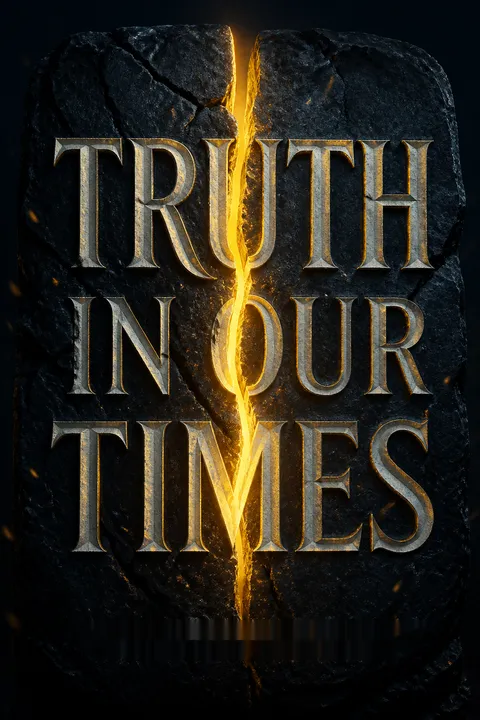


Key Takeaways
A free press needs public belief, not merely constitutional permission
A shocked newsroom. On election night 2016, New York Times staff watched Donald Trump approach victory after a campaign that had repeatedly attacked the press and the value of facts. The next morning, tables stood ready to sell a commemorative front page celebrating Hillary Clinton. Nobody came. The paper instead printed a headline announcing Trump’s triumph. The scene captures the book’s central shift: McCraw had trusted the legal protections around journalism, but gradually saw that law alone could not preserve its influence.
Trust is the battleground. The First Amendment can protect reporting from government punishment, but it cannot make readers believe what they read. Polls cited in the book found that many Americans suspected news organizations of inventing stories. A press that people dismiss cannot effectively expose wrongdoing or build public pressure for accountability.
What's striking is the distinction between a right and the social conditions that make the right matter. Constitutional protection gives journalists room to publish; public trust gives their reporting reach. That makes credibility an institutional resource, not a public-relations accessory. The challenge is that trust cannot be demanded as a civic duty. News organizations must earn it through transparent methods, clear corrections, and reporting that audiences can inspect, even when they dislike the conclusions.
Give journalists room to err, or powerful people will make error unaffordable
A civil-rights case changed libel law. In 1964, Alabama police commissioner L. B. Sullivan sued The New York Times over an advertisement supporting civil-rights protesters. It did not name him, and only 35 copies of the paper reached his county, yet an Alabama jury awarded him $500,000. The Supreme Court reversed the verdict and established that public officials must prove a publisher acted with actual malice to win a libel case.
Error is part of free debate. Actual malice is a legal standard, not ordinary spite: the plaintiff must show that a publisher knew a claim was false or seriously doubted its truth and published it anyway. The rule protects against powerful people using ruinous lawsuits to silence criticism. It does not excuse careless reporting, but it prevents every mistake from becoming a weapon.
This rule treats the risk of error as a cost of public scrutiny, rather than pretending that reporters can produce certainty on demand. Its history matters: Sullivan arose amid efforts to suppress reporting on racial injustice, not in a theoretical debate about journalistic perfection. The principle also has a limit. High legal protection cannot substitute for careful verification, especially when a false story can harm a person long before a court rules.
Publish verified, newsworthy secrets even when the source may have broken the law
A mystery envelope became a major story. In 2016, reporter Susanne Craig received pages from Donald Trump’s 1995 tax returns with no explanation of who sent them. The Times did not publish at once. Reporters tracked down the retired accountant who prepared the returns, confirmed their authenticity, and consulted tax experts. The documents showed a declared loss of about $916 million, which experts said could legally have allowed Trump to avoid federal income taxes for up to 18 years.
The source and the publisher face different rules. The Supreme Court had ruled that journalists who lawfully receive truthful, newsworthy information generally cannot be punished merely for publishing it, even if the source broke a confidentiality law. That distinction protects the public’s access to information while leaving the government free to investigate the leaker.
The account separates two questions that are often collapsed: Did the source act lawfully, and may a publisher report what the source revealed? Keeping them distinct protects investigative journalism from becoming an arm of government secrecy. The restraint before publication matters just as much as the legal principle. Authentication, expert review, and a chance for response help show that publication serves public understanding, not merely the thrill of possessing confidential material.
Test every story against evidence, not readers' demand for a preferred label
Fairness is not a quota. During the 2016 election, readers on the left accused The Times of false equivalence, while readers on the right saw an anti-Trump campaign. McCraw argues that journalists should investigate both candidates and let the evidence shape the coverage, rather than count negative stories or soften facts to create a visual balance.
Let reporting carry the judgment. Profiles of Steve Bannon and a young white nationalist drew anger from readers who wanted stronger labels in the headlines. The stories presented facts that allowed readers to draw conclusions, but many expected the paper to tell them what to think. A separate Clinton email story was initially framed incorrectly, then corrected; later evidence showed the FBI had in fact opened a criminal investigation before publication. Accuracy, context, and correction matter more than pleasing either camp.
The useful distinction is between neutrality of method and neutrality of outcome. A newsroom can apply the same verification standards to each subject without producing equally favorable or equally damaging stories. Yet process alone does not guarantee fairness: choices about framing, headline language, and whose expertise appears can tilt perception. Readers’ criticism is not automatically proof of bias, but it can expose blind spots worth examining.
Separate fabricated stories from newsroom mistakes and political attacks called fake news
There are two different problems. The book distinguishes fabricated stories designed to deceive from the political use of “fake news” to dismiss legitimate reporting. One Maryland man invented a story claiming fraudulent votes for Hillary Clinton had been found in Ohio. It reached six million internet users and earned him $22,000 in advertising revenue. Russian disinformation also reached large audiences online.
Corrections are not proof of conspiracy. News organizations made real errors, including mistakes involving a Trump ally, an inauguration crowd photograph, and climate reporting. They corrected or retracted them. McCraw argues that these failures should be addressed honestly, not treated as evidence of deliberate fabrication. Courts have also protected some false political speech, making legal bans on lies difficult to reconcile with free expression.
The distinction matters because a correction can strengthen credibility, while a deliberate fabrication exploits the same openness that permits reporting. The incentives are uneven: a false story can spread rapidly, while a careful correction may reach fewer people. At the same time, government power to label speech false invites political abuse. The hard task is not to pretend the information system self-corrects perfectly, but to improve accountability without handing officials control over acceptable truth.
Protect meaningful leaks without pretending every leaker is a hero
Secrecy can protect, and conceal. Governments need some confidential information for national security and effective work. But leaks can expose misconduct or reveal policies the public has a right to debate. McCraw notes that leakers have varied motives, from principled concern to personal grievance, and argues that blanket crackdowns deter future sources regardless of their reasons.
Prosecution can chill reporting. The Obama administration prosecuted nine government employees or contractors for classified disclosures, compared with three in the previous 40 years. General James Cartwright pleaded guilty to lying to investigators after information connected to The Times’s reporting on a cyber-operation against Iran. The Times wrote in support of him, explaining his role in helping reporters understand the operation and avoid harmful disclosures. President Obama later pardoned him.
A sound policy must distinguish the public value of disclosure from the source’s personal virtue. Treating every leaker as a hero romanticizes an imperfect practice; treating every leak as a crime gives the executive branch near-total control over what citizens can know. The book’s account of Cartwright also shows that journalism can reduce risk through consultation, without granting officials a veto over publication.
Sue for records when government turns a twenty-day deadline into fifteen years
The law needs enforcement. The Freedom of Information Act gives the public a way to request federal records, but agencies can delay, redact heavily, or refuse to confirm that documents exist. When The Times asked the Labor Department for a list of the country’s most dangerous workplaces, the agency estimated that a complete response would take 15 work years. The law required a response within 20 days. A judge ordered the agency to act, and the documents followed in about 15 days.
A court can force disclosure. McCraw filed more than 30 FOIA lawsuits during the Obama administration, seeking records on subjects including government surveillance and the legal basis for drone strikes. Many cases were frustrating or lost. One victory helped a Times editor obtain CIA files about his father, a former Cuban diplomat who defected to the United States.
FOIA litigation illustrates a broader accountability problem: a right written into law can become fictional if agencies control the pace and courts rarely challenge their explanations. Lawsuits are an imperfect remedy, costly and slow, but they create a route for citizens to contest secrecy. The father’s records also show why access is not only a newsroom concern. Public information can help individuals understand their own families and histories.
Defend access rules even when the excluded outlet is your political opposite
A press briefing became a loyalty test. In February 2017, White House press secretary Sean Spicer barred reporters from The New York Times and several other outlets from an informal briefing, while inviting selected organizations. The White House said the arrangement was a routine gaggle. Reporters who were excluded saw a clear attempt to reward friendly coverage and punish critical reporting.
The legal answer was uncertain. Courts had not established a simple right for every journalist to attend every government event. The Times did not sue, judging that a lawsuit might fail and strengthen the administration’s position. Instead, its executive editor publicly protested the exclusion. McCraw emphasizes that democratic norms cannot always be compelled by law. He also warns against treating press freedom as a partisan cause, recalling that administrations of both parties have restricted access to disfavored outlets.
The strongest defense of press freedom is reciprocal: access protections must apply when the reporter is disliked, the outlet is partisan, or the coverage seems unfair. Otherwise, each political camp will defend only its own messengers. The legal caution in this episode is not passivity so much as recognition that a bad precedent can outlast the immediate dispute. Public condemnation can matter, but only if it is consistent.
Treat reporter safety as part of press freedom, at home and abroad
Threats are not abstract. After Trump’s election, Times journalists faced threats and the publication of private information online. Overseas, reporters encountered detention, violence, and hostile governments. McCraw describes spending seven months helping respond after Times reporter David Rohde was kidnapped in Afghanistan with two Afghan colleagues. Rohde and one colleague eventually escaped, but the ordeal revealed how little control a newsroom has over events on the ground.
The danger crosses borders. In Egypt, reporting on secret government recordings led to calls for a criminal investigation of The Times and public attacks on its reporters. McCraw worries that when American leaders demonize journalists, foreign autocrats can borrow that language to justify repression. Protecting a free press therefore includes security planning, support for threatened staff, and diplomacy that does not abandon journalists because their reporting is inconvenient.
This account widens the meaning of press freedom from permission to publish into the practical ability to gather news without intimidation. Legal rights do little for a reporter whose family is threatened or whose government refuses protection. Security measures and diplomatic support are therefore part of the information system, not merely corporate precautions. Still, no safety plan eliminates the risks of reporting from conflict zones, and journalists themselves must have a voice in decisions about staying or leaving.
Answer intimidation with rigorous reporting and transparent defense, not partisan mimicry
Strong reporting makes threats less persuasive. In 2017, Times reporters Jodi Kantor and Megan Twohey investigated Harvey Weinstein’s treatment of women. They checked accounts, sought corroboration, and pressed Weinstein for a response. He issued an apology while his lawyer threatened to sue. McCraw helped the paper defend its reporting publicly, including challenging Weinstein to let the women speak freely. The story helped trigger wider reporting on abuse by powerful men.
A lawyer can support publication. McCraw’s public letter responding to Trump’s threat over a story about women who said he groped them became widely read. He presents the response as legal advocacy, not a political campaign. The distinction matters: journalists investigate and report; lawyers defend their ability to do so. If a newsroom adopts the posture of a political opposition party, it risks undermining the independence it is trying to protect.
The Weinstein reporting shows how legal preparation can strengthen journalism without replacing editorial judgment. Corroboration and a meaningful chance to respond make a story harder to dismiss as partisan retaliation. The public defense of reporting can also clarify what is at stake when powerful figures threaten lawsuits. Yet the lawyer’s role is inherently adversarial, so visible advocacy requires care: readers should be able to distinguish a defense of publication from a claim that a newsroom is incapable of error.
Analysis
McCraw’s central argument is that press freedom has two layers. The first is legal: courts limit libel suits, protect publication of truthful information, and provide routes to challenge government secrecy. The second is social: citizens must regard independent reporting as credible enough to use and worth defending. The first layer remains powerful in the book’s account, while the second is visibly fraying. This explains why the most consequential threats are not always lawsuits. A president’s attacks can reduce the audience’s willingness to believe reporting, while threats against journalists can make the act of reporting physically dangerous.
The book is strongest when law appears as working practice rather than abstract doctrine. The tax-return story shows caution, authentication, legal review, and publication in sequence. FOIA cases show how a right can be hollowed out through delay. The gaggle episode shows that not every democratic norm has a clear legal remedy. Together, these episodes reject both legal fatalism and legal triumphalism: courts matter, but they cannot make a government behave democratically or compel an audience to trust a newspaper.
The tension lies in the phrase “honest broker.” Journalists can aspire to fair methods, but choices about prominence, labels, and context inevitably shape meaning. McCraw acknowledges this, yet the book’s defense of conventional journalism sometimes relies on readers recognizing its good faith. In a fractured media environment, that recognition cannot be assumed. Transparency about verification and correction may help, but it cannot by itself solve the deeper problem of audiences receiving radically different accounts of events.
The final implication is demanding. Press freedom is not secured once, in a Supreme Court opinion, but maintained through repeated choices: publish carefully, correct openly, resist selective access, protect sources, and defend rights across political lines. The law can keep the door open. Journalists and the public still have to decide whether truth is worth walking through it.
Review Summary
Truth in Our Times is praised for its insightful look into press freedom and the First Amendment. Readers appreciate McCraw's behind-the-scenes perspective on journalism and legal challenges faced by the New York Times. The book's focus on Trump's attacks on media and the changing landscape of truth in journalism resonates with many. While some find it biased against Trump, most commend McCraw's defense of press freedom and his engaging writing style. Critics note the book's narrow focus on recent events and lack of broader historical context.
People Also Read




Glossary
actual malice
reckless or knowing falsityA legal standard public officials and public figures generally must prove to win a defamation suit against a news organization. It means the publisher knew a factual claim was false or published it while seriously doubting its truth. Despite the word malice, the standard concerns knowledge and recklessness, not ordinary hostility or an intent to criticize.
New York Times Co. v. Sullivan
landmark libel protectionA 1964 U.S. Supreme Court decision arising from a libel suit over an advertisement supporting civil-rights protesters in Alabama. The Court ruled that public officials must prove actual malice to recover damages for defamatory statements about their official conduct. The decision made it much harder for officials to use libel lawsuits to punish critical reporting.
Landmark Communications v. Virginia
protection for publishing secretsA 1978 Supreme Court case involving a newspaper convicted under a Virginia law for identifying a judge under investigation. The Court held that the state could not punish the newspaper for publishing truthful, newsworthy information it had lawfully obtained. The ruling helped establish that confidentiality rules for government participants do not automatically bind publishers.
Glomar response
neither confirm nor denyA government response to a public-records request stating that an agency can neither confirm nor deny whether requested records exist. Agencies use it when acknowledging the existence or absence of documents would itself reveal information they claim must remain secret. The response can protect genuine secrets, but it can also block scrutiny when the underlying facts are already public.
Freedom of Information Act (FOIA)
federal records access lawA 1966 U.S. law allowing members of the public to request records from federal agencies, subject to exemptions for certain protected information. The law sets response requirements, but agencies may delay, redact, or deny requests. Requesters can sue to challenge those decisions, though litigation may be lengthy and courts often defer to national-security claims.
save the secret
authorized disclosure to prevent publicationA government practice described in the book in which officials disclose additional classified information to a journalist who already has sensitive material. The aim may be to persuade the journalist not to publish, or to provide context about risks. The practice exposes the flexibility of official secrecy: information can be selectively disclosed when officials believe disclosure serves their interests.
fake fake news
label used to discredit reportingMcCraw’s term for calling legitimate journalism fake news in order to weaken its credibility, distinct from fabricated stories deliberately designed to deceive. The label can blur the difference between intentional disinformation and ordinary reporting errors that are corrected. Its political effect is to encourage audiences to dismiss unwelcome reporting without examining its evidence.
Download PDF
Download EPUB
.epub digital book format is ideal for reading ebooks on phones, tablets, and e-readers.








