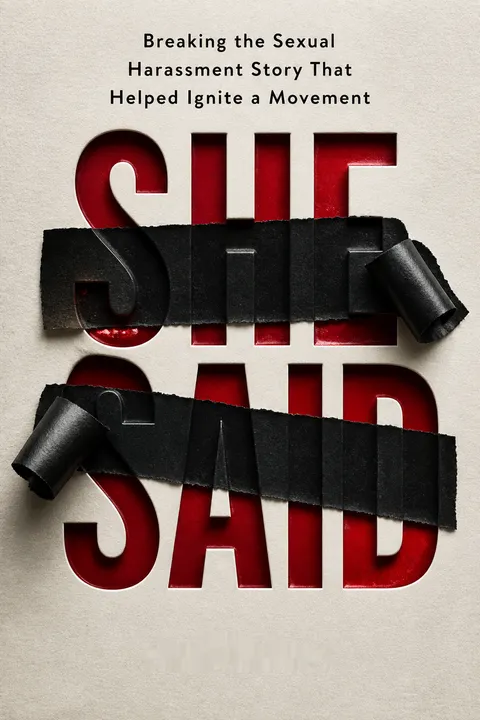


Key Takeaways
Turn isolated accusations into a documented pattern others can recognize.
Repetition changed the story. The investigation began with Rose McGowan, whose account of an encounter with Harvey Weinstein was difficult to verify on its own. Then actresses and former employees, many of whom had never shared their experiences with one another, described recurring scenarios: a meeting presented as work, a hotel room, sexual pressure, and career power hanging in the balance. The reporters called this recurring pattern The Pattern. Their evidence combined firsthand accounts with settlement records, company documents, and witnesses who had heard complaints at the time.
Convergence is not certainty. Similar accounts helped turn whispers into a reportable case, but did not automatically prove every allegation. The value came from checking each account separately and showing how multiple kinds of evidence fit together.
What's striking is that the investigation treats pattern recognition as a disciplined form of evidence, not a substitute for evidence. Independent accounts that converge on details can strengthen confidence, especially when records or contemporaneous disclosures support them. Yet patterns can also be misread if witnesses share a rumor or if investigators select only confirming stories. The reporting's insistence on separate corroboration matters for that reason. It offers a broader lesson for institutions: repeated complaints should trigger examination of the system producing them, not be dismissed as unrelated interpersonal disputes.
Treat hush-money records as evidence of concealment, not proof by themselves.
The paperwork mattered. Weinstein's $100,000 payment to McGowan was documented in a settlement that did not include a confidentiality clause. In a separate case, former Miramax employees Zelda Perkins and Rowena Chiu received settlements that sharply restricted what they could say. Weinstein's public-relations lawyer later told the Times that he believed Weinstein had settled eight to twelve claims, a figure also confirmed by a company executive. Those payments helped the reporters establish a trail that earlier investigations had struggled to find.
A payment proves a deal. It does not, by itself, establish exactly what happened between the parties. Its significance came from the surrounding evidence: similar accounts, restrictive agreements, company records, and repeated settlements. The contracts were not a final verdict on every allegation. They were evidence that complaints had been handled privately and systematically.
Settlements are morally and evidentially complicated. For someone who has been harmed, compensation and privacy can be rational priorities, not complicity. But repeated confidential agreements can create an information asymmetry: the organization accumulates knowledge of recurring claims while future workers see none of it. The book's strongest point is not that settlement equals guilt. It is that a pattern of private resolutions can itself become public-interest information, particularly when the same powerful person remains positioned to encounter new complainants.
Confidentiality can protect a victim today while shielding a repeat offender tomorrow.
Silence had a price. Settlement agreements could bar women from discussing their experiences with journalists, assisting other claimants, or even keeping complete copies of the documents. Perkins described restrictions affecting conversations with a therapist and accountant. People accepted such terms for understandable reasons: they needed money, wanted privacy, feared retaliation, or saw no realistic alternative to a long, costly lawsuit. Federal harassment protections also left gaps, including for some workers and smaller employers, while legal deadlines could be short.
The system hid its own data. Government agencies sometimes kept complaint records confidential, and one California agency had destroyed records related to a Miramax complaint. Confidentiality may help an individual close a painful chapter, but widespread secrecy makes it harder for workers, regulators, and the public to see repeated conduct.
This is a classic conflict between individual choice and collective risk. A confidential settlement may provide immediate control to a person with limited resources, so condemning every agreement can inadvertently remove an option victims value. The deeper design question is whether a contract should be able to hide a repeat pattern from everyone else. A system can preserve privacy around a claimant's identity while still allowing independent oversight of complaint frequency and employer response. The book makes clear that secrecy is not merely a private bargain when it shapes the risks faced by future workers.
A company protects abuse when it measures liability instead of harm.
Warnings became paperwork. By 2014 and 2015, Weinstein Company executives had heard complaints from young employees. A temporary receptionist, Emily Nestor, described Weinstein persistently offering career help in exchange for sex. Lauren O'Connor, a development executive, later wrote a detailed internal memo describing harassment, a toxic workplace, and female employees being drawn into Weinstein's sexual arrangements. The company received the memo, then settled with O'Connor and restricted her ability to speak.
Risk controls were not protection. Board member Lance Maerov focused on the company's exposure. A new contract imposed escalating financial penalties if Weinstein generated further settlements, but it did not create a reliable system to prevent harm. Bob Weinstein and Irwin Reiter also knew troubling information, yet neither stopped the behavior. The institution repeatedly treated allegations as problems to contain.
The corporate failure resembles a familiar governance problem: managers optimize what the organization measures. If the target is limiting legal exposure, a company may settle complaints, document penalties, and still leave workers vulnerable. A genuine safeguard needs independent reporting channels, protection against retaliation, and authority to investigate senior leaders. The account also resists an easy villain-only explanation. Some insiders objected, but private concern did not become effective action. Ethical awareness without decision-making power, transparency, or enforceable procedures is a weak form of accountability.
Verify hard, especially when a source's claim could decide a public fight.
Accuracy protected the case. In 2016, Megan Twohey and Michael Barbaro reported allegations about Donald Trump's treatment of women after more than fifty interviews and hundreds of records. When one former pageant contestant described an encounter but her father could not remember the event she said she had told him about, the reporters left her allegation out. That did not prove she was wrong. It meant the available corroboration was insufficient for publication.
The same discipline shaped the Weinstein investigation. Reporters checked sources' histories, sought people who had heard accounts at the time, reviewed documents, and gave Weinstein detailed chances to respond. The failed Rolling Stone investigation of an alleged campus assault had shown how a serious reporting failure could damage a publication and hand skeptics an excuse to dismiss other victims.
Rigor serves more than a newsroom's reputation. It protects sources from being exposed by a weak story and helps readers distinguish a carefully supported claim from a compelling but unverified one. The caution is that verification standards must not quietly demand impossible proof from people who reported abuse late or privately. The book's method navigates that tension by treating gaps as limits on what can be stated, not automatic evidence that an accuser is lying. Fairness means testing claims without pretending every kind of harm leaves the same paper trail.
Expect powerful subjects to attack the reporting, not just deny it.
The counterattack was organized. Weinstein hired lawyers and advisers, monitored potential sources, and paid Black Cube, a private intelligence firm, to gather information and help stop a damaging article. An operative posing as an investor approached McGowan and built a relationship while seeking material from her memoir. Weinstein's legal team also threatened a major libel suit and tried to discredit accusers with personal information and photographs.
The newsroom set boundaries. Editors warned reporters to assume they might be monitored and to keep conversations with Weinstein on the record. The Times continued to offer him a chance to answer specific allegations, but did not give him access to sources or confidential reporting. The distinction was essential: fairness meant hearing a response, not letting the subject control the investigation.
The episode shows that information security is part of investigative method. When a subject can hire investigators, lawyers, and publicists, source protection is not a technical afterthought; it is a condition for obtaining truthful testimony. The same tactics can also exploit legitimate journalistic norms, such as allowing a subject to respond, to fish for names or delay publication. Strong boundaries help separate procedural fairness from surrendering control. At the same time, a newsroom must avoid letting the existence of a counterattack make every defense or criticism seem automatically sinister.
Offer sources solidarity and agency, not pressure disguised as courage.
Speaking was a choice, not a duty. Ashley Judd wanted to know whether other actresses would come forward before she named Weinstein. Gwyneth Paltrow helped reporters reach women but hesitated to go on the record, worried about sensational coverage and damage to her business. McGowan declined to participate in the first article, despite sharing her settlement document. Laura Madden chose to speak partly because she was no longer employed in film and had not signed a gagging agreement. Rowena Chiu remained silent for years before deciding to identify herself publicly.
Numbers can help, but not guarantee safety. Sources hoped other women would share the burden. The reporters tried to show the scope of their evidence while recognizing that no one could promise how speaking out would affect a person's life.
Collective action can reduce isolation, but the costs are still paid by individuals. A source may lose work, privacy, relationships, or simply the ability to move through daily life unnoticed. Calling someone brave can become another way of assigning them responsibility for fixing a broken system. The book's most respectful insight is that solidarity should make room for both disclosure and refusal. Journalists, employers, and advocates can support a person without treating public testimony as the only honorable choice.
Public evidence can change incentives faster than private warnings.
Exposure altered the calculus. The Times investigation into Bill O'Reilly documented settlements with women who had accused him of misconduct. Advertisers withdrew, and Fox News fired him less than three weeks after the article appeared. The company had known about complaints before publication; public scrutiny changed the cost of continuing to protect him. The Weinstein story similarly made private allegations visible, prompting company crisis, new reporting, and a wave of women sharing experiences under #MeToo.
Journalism opened a door, not a finished reform. The authors credit earlier activists, including Tarana Burke, and other journalists as part of the change. The public response reached across industries and prompted some employers to investigate leaders. Yet secret settlements persisted, low-wage workers still lacked clear recourse, and laws remained uneven.
Publicity can alter incentives because it coordinates attention: employees, customers, advertisers, boards, and regulators suddenly see the same evidence. Private warnings often fail when each decision-maker believes the problem is isolated or manageable. But a firing is not the same as a safer workplace, and a viral moment cannot substitute for enforceable procedures. The narrative is persuasive precisely because it distinguishes the power of exposure from the slower work of institutional change. The measure of success is not only whether a famous person falls, but whether future complaints can be heard and acted upon.
Demand fair process without pretending every accusation has equal evidence.
The Kavanaugh story tested the limits. Christine Blasey Ford said Brett Kavanaugh assaulted her when they were teenagers. She had told her husband about the incident in therapy by 2012, but there were no known contemporaneous records or eyewitnesses. Kavanaugh denied the allegation. Ford testified publicly; a narrow FBI inquiry reported no corroboration, which did not establish that the event had not happened. The Senate confirmed Kavanaugh, and the public remained divided.
Different decisions need different standards. The book contrasts a criminal prosecution, a workplace investigation, a journalistic article, and a Senate confirmation. Each asks different questions and carries different consequences. Treating all allegations as automatically proven is unfair; treating missing evidence as proof of fabrication is also unfair. Responsible scrutiny must explain what is known, what is disputed, and what the process can actually determine.
The episode reveals why public arguments often collapse into a false binary: believe every claim without question, or dismiss anything that cannot be proven in court. Evidence is not one-size-fits-all. A criminal verdict, an employer's duty to protect staff, and a senator's judgment about a nominee are distinct decisions with different burdens and purposes. Clear process does not remove uncertainty, but it can make uncertainty legible. The account also shows the danger of partisan incentives: once a case becomes a proxy battle, evidence can be treated as ammunition rather than a shared basis for judgment.
Speaking out can restore self-trust, while leaving the costs unevenly distributed.
There was no uniform aftermath. Laura Madden had spent years blaming herself for not leaving Weinstein's room sooner. Hearing the events described objectively helped her see that the wrongdoing was his, not hers. Zelda Perkins turned her experience into a public challenge to confidential settlements. Kim Lawson, a McDonald's worker who had faced harassment and housing insecurity, became an organizer for workers seeking safer conditions. Their gains did not erase the obstacles: promised company reforms were slow, and financial security remained unequal.
Visibility could also exact a lasting toll. Ford received threats and struggled to reclaim private routines. Chiu watched the consequences for others before deciding, years after the alleged assault, to speak publicly. The women's stories offer no guaranteed path from disclosure to justice, but show how testimony can change a person's understanding of her own past.
The book avoids a tidy empowerment story. Speaking can restore agency, but it can also expose someone to scrutiny, retaliation, and a permanent public label. Those burdens differ sharply by money, race, job security, and access to support. Madden's relief, Lawson's organizing, and Ford's fear are not competing accounts of the movement; they describe its uneven terrain. A fair social response should value testimony without requiring survivors to become symbols, organizers, or proof that change is working.
Analysis
She Said is both an account of investigative reporting and a history of how a hidden pattern became publicly undeniable. Its central craft lesson is triangulation: the reporters build from testimony, settlement records, internal memos, financial details, and contemporaneous disclosures, while repeatedly distinguishing what each source can and cannot establish. That method makes the book more than a sequence of accusations. It shows how evidence can expose not only an alleged perpetrator, but the organizations and contracts that made recurrence easier.
The narrative's most important turn comes when the inquiry shifts from old Hollywood rumors to current company records. Lauren O'Connor's memo makes the consequences immediate: insiders had seen the problem, and internal knowledge had not produced protection. The story therefore challenges the comforting idea that abuse persists only because nobody knows. Often people know in fragments, but each person has incentives to minimize, defer, or treat the issue as someone else's responsibility.
The book also resists claiming that exposure solves the underlying problem. The Weinstein revelations helped change public expectations, but legal protections, confidential settlements, and workplace power imbalances remained. Its reporting could trigger accountability; it could not create a reliable complaint system for every worker. The contrast between celebrity sources and low-wage employees underscores that public attention is distributed unevenly.
The Kavanaugh account adds a difficult counterweight. It shows that testimony can be credible to some listeners and still leave facts unresolved, especially when memories are old and political stakes are high. The authors preserve uncertainty rather than treating either public sympathy or official non-corroboration as final proof. This is the book's broader argument about social change: visibility is necessary, but durable justice also needs fair procedures, institutional independence, and protections that do not depend on a survivor's willingness to become public.
Review Summary
She Said is a compelling account of the investigative journalism that exposed Harvey Weinstein's sexual misconduct and ignited the #MeToo movement. Readers praise the authors' tenacity in uncovering the truth and giving voice to victims. The book offers a behind-the-scenes look at the challenges faced by reporters and the courage of women who came forward. While some found the later sections on Brett Kavanaugh less engaging, most reviewers consider it an important, eye-opening read that highlights the pervasive nature of sexual harassment and the systems that enable it.
People Also Read








Glossary
The Pattern
Recurring alleged conductThe reporters' shorthand for similarities across accounts of Weinstein's behavior. Women described work-related meetings that became private hotel-room encounters, sexual pressure, and the use of career influence. The term describes a pattern emerging from multiple interviews and records. It is not, by itself, a legal finding that every reported incident occurred.
nondisclosure agreement
Contract restricting disclosureA contract that limits what a person may reveal about specified information. In the cases described, settlement agreements often restricted women from discussing allegations with journalists or helping other claimants, sometimes under threat of financial penalties. Such agreements can provide privacy and compensation, but broad confidentiality can also conceal repeated complaints from workers and the public.
actual malice
Knowing or reckless falsityA legal standard in United States defamation law for public-figure plaintiffs. A plaintiff generally must show that a publisher knew a statement was false or acted with reckless disregard for whether it was true. It does not simply mean hostility or ill will. The standard shaped the threats made against the Times and its response to them.
on the record
Publishable, attributable informationA journalistic ground rule meaning that a reporter may publish a source's information and identify the source, unless another arrangement is agreed upon. The Weinstein investigation relied heavily on persuading sources to speak on the record, while also using confidential conversations to develop leads and understand documents. The distinction affects whether information can be attributed and how it can be used.
FAQ
What's She Said about?
- Investigative Journalism Focus: She Said by Jodi Kantor and Megan Twohey details their investigation into Harvey Weinstein's history of sexual harassment and abuse, revealing systemic issues in Hollywood.
- #MeToo Movement Catalyst: The book highlights how their reporting ignited the #MeToo movement, encouraging women worldwide to share their stories of harassment and abuse.
- Personal Stories of Victims: Through interviews, the book provides a poignant look at the personal impact of Weinstein's actions, emphasizing the courage of those who spoke out.
Why should I read She Said?
- Insight into Investigative Process: Readers gain a behind-the-scenes look at the rigorous investigative process journalists undertake to expose powerful figures.
- Understanding Systemic Issues: The book delves into systemic issues surrounding workplace harassment, particularly in Hollywood, and how these systems protect perpetrators.
- Empowerment and Awareness: She Said serves as a powerful reminder of the importance of speaking out against injustice, encouraging reflection on personal experiences and societal implications.
What are the key takeaways of She Said?
- Courage to Speak Out: The book emphasizes the bravery of women who shared their stories, helping to dismantle the culture of silence around sexual harassment.
- Role of Journalism: Kantor and Twohey illustrate how investigative journalism can effect real change, exposing Weinstein and prompting a global conversation on sexual misconduct.
- Need for Systemic Change: The authors highlight the necessity for systemic changes in corporate policies and legal frameworks to protect victims and hold perpetrators accountable.
What are the best quotes from She Said and what do they mean?
- “There will be a movement”: Reflects the authors' belief in collective action and change following Weinstein's exposure, signifying a societal shift towards accountability.
- “The point of the Times investigations department... was to dig for what had never been reported”: Underscores the mission of investigative journalism to uncover hidden truths and hold powerful individuals accountable.
- “If everyone takes that stance, the story will never be written”: Highlights the importance of taking risks to expose wrongdoing, serving as a call to action for individuals to share their experiences.
How did Kantor and Twohey approach their investigation in She Said?
- Building Trust with Sources: The authors focused on establishing trust with hesitant sources, approaching conversations with sensitivity and respect.
- Thorough Research and Documentation: They conducted extensive research, gathering documents and corroborating accounts to support their findings.
- Navigating Legal and Ethical Challenges: The journalists faced numerous challenges, including protecting their sources, while remaining committed to journalistic integrity.
What impact did She Said have on the #MeToo movement?
- Amplifying Voices: The book played a significant role in amplifying the voices of women silenced by powerful men, encouraging many to come forward.
- Cultural Shift: She Said contributed to a cultural shift in how society views sexual harassment and accountability, fostering an environment where victims felt empowered.
- Inspiring Change: The revelations inspired changes in policies and practices within various industries, prompting organizations to reevaluate their approaches to handling misconduct allegations.
What challenges did Kantor and Twohey face during their reporting?
- Reluctance of Sources: Many potential sources were initially reluctant to speak due to fear of retaliation, requiring the journalists to build trust.
- Legal Threats: Weinstein's legal team employed aggressive tactics to intimidate the journalists and their sources, including threats of lawsuits.
- Navigating a Complex Landscape: The investigation required strategic navigation of Hollywood politics, corporate interests, and personal relationships.
How did the authors document their findings in She Said?
- Use of Primary Sources: Kantor and Twohey incorporated transcripts, emails, and other documents to provide authenticity to their narrative.
- Detailed Accounts: They meticulously documented the accounts of various women, ensuring accuracy and respect for their stories.
- Endnotes and References: The book includes extensive endnotes detailing sources of information, adding credibility and allowing further exploration.
What role did corporate culture play in the events described in She Said?
- Complicity in Abuse: The book illustrates how corporate culture often prioritizes profit over employee well-being, allowing Weinstein to operate with impunity.
- Silencing Mechanisms: Policies like nondisclosure agreements served to silence victims and protect perpetrators, enabling abuse without accountability.
- Need for Reform: The authors argue for systemic reform to create safer workplaces, emphasizing transparency and accountability.
How did Christine Blasey Ford's story intersect with the investigation in She Said?
- Parallel Narratives: Ford's allegations against Kavanaugh emerged alongside the Weinstein investigation, highlighting pervasive sexual misconduct.
- Cultural Context: Ford's testimony became a focal point in the broader conversation about women's rights and the #MeToo movement.
- Media Coverage: The media's handling of both stories reflected the changing landscape of reporting on sexual harassment and assault.
What lessons can be learned from She Said?
- Importance of Listening: The book emphasizes the need to listen to survivors and take their allegations seriously, advocating for safe spaces.
- Role of Accountability: She Said highlights the importance of holding powerful individuals accountable and calls for systemic changes.
- Power of Storytelling: The narrative illustrates how storytelling can inspire others and contribute to a larger movement for justice and equality.

Download PDF
Download EPUB
.epub digital book format is ideal for reading ebooks on phones, tablets, and e-readers.








