

Plot Summary
Prologue
Julian Faraci remembers a childhood in which his father beat his mother and his mother passed the violence on to him. He began watching martial arts classes, imagining the strength to protect himself. Years later, he stands in a hidden room with a captive man and his enormous python, Isabella.
The prisoner admits he came for Yasmin Karam, the daughter of Julian’s employer and the woman Julian has decided belongs to him. Julian takes out his compact staff and prepares to make the captive understand the cost of reaching for her.
The opening links Julian’s adult violence to a childhood in which care and cruelty arrived from the same people. His mother soothed him after punishing him, teaching him that tenderness could follow harm without undoing it. The scene with the captive shows how Julian has converted that confusion into a method: he treats fear as proof of control and protection as a claim of ownership. His language of possession is not yet romantic devotion. It is the logic of a boy who learned that the vulnerable are controlled by whoever can hurt them first.
Ali’s Final Demand
At a dinner in the Karam estate, Yasmin watches her father, Ali, struggle through terminal lung cancer while guests mistake his exhaustion for ordinary fatigue.
She has returned from college with a psychology degree, though she wanted to study photography, and still hides her relationship with Aidan Lancaster, the household staffer she has loved since childhood. When Julian Faraci, Ali’s powerful chief operating officer, dismisses her knowledge of the family diamond business, Yasmin publicly challenges its claims of ethical sourcing.
Later, Ali tells her he wants her to marry so a husband can protect her and preserve Sultans, the empire he intends to leave her. Yasmin nearly tells him about Aidan, but his worsening illness silences her. She promises to obey his final wish.
Yasmin’s conflict begins as a collision between loyalty and self-authorship, not simply between two suitors. She has learned to treat her father’s approval as the price of belonging, so his illness makes refusal feel like abandonment. Her public criticism of Sultans shows that she already sees the corruption he hopes to keep from her, yet she still edits her own ambitions to spare him distress. The request for marriage converts grief into obligation: Ali means to protect his daughter, but his solution repeats the patriarchal logic that excludes her from governing her own inheritance.
Julian Watches the Wrong Couple
Julian has spent eight years making himself indispensable to Ali, but he believes the company’s future and its wealth should be his. He also wants a fabled Egyptian lamp that could open a new market in antiquities. Learning that Ali’s will leaves Sultans to Yasmin only if she marries a suitable man, Julian sees her as both obstacle and opportunity.
After a dinner guest, Samuel, disappears before meeting her, Julian finds Yasmin secretly with Aidan in a staff bedroom. He watches instead of exposing them, and Yasmin’s response to his presence unsettles the contempt he has long cultivated. Her attraction becomes another lever in his plan: he will keep other suitors away and make himself the husband who inherits the empire.
Julian’s ambition is built from a genuine wound and an exploitative conclusion. Having climbed from poverty into the machinery of Sultans, he reads inheritance as a verdict on his worth, then treats the company as compensation he can seize. Yasmin’s sexuality disrupts his carefully arranged categories: she is no longer only an heiress to displace, but a person whose attention affects him. Rather than interpret this vulnerability as a reason to change course, he folds desire into strategy. The scene establishes the central danger of his character: he can recognize attachment while still trying to control its terms.
Aidan Is Sent East
Unable to tell Ali about Aidan, Yasmin asks Julian to help her win her father’s approval. Julian agrees on the condition that Aidan work for Sultans and travel to its Egyptian compound to search for the lost lamp. Aidan accepts, believing success might prove he deserves Yasmin.
Julian presents the relic as a major opportunity for the company, while concealing how much he wants it for himself. Yasmin objects that Aidan has no archaeological experience, but the men settle the arrangement without giving her meaningful authority over it.
When Julian learns Ali may have only two months left, he pushes the plan forward. He also raises the possibility that Yasmin could marry him temporarily, buying time before her father’s condition forces a decision.
The bargain exposes how easily love can be recruited into unequal systems of power. Aidan’s willingness to risk a dangerous assignment is framed as devotion, but Julian redirects that devotion into labor that benefits Sultans and removes him from Yasmin’s reach. Yasmin recognizes the danger yet continues to negotiate through the same men who have denied her agency. The lamp’s promise of value makes a useful counterweight to the romance: every relationship is becoming a transaction, whether the participants admit it or not. Julian’s accelerated timetable also makes Ali’s illness a mechanism he can exploit.
The Suitor’s Last Drive
Ali arranges a meeting between Yasmin and Alexander Sokolov, a Russian suitor whose family could help Sultans enter a market Julian has not conquered. Julian attends in Ali’s place and watches Alexander belittle Yasmin, criticize her clothes, and speak as if marriage would make her his property.
Julian ends the dinner early, then takes Alexander for a drive in the man’s prized Lamborghini. The next morning, news reports show the car wrecked, with no body recovered; Julian implies he had tried to stop Alexander from driving drunk.
He then tells Yasmin that Aidan is already on a plane and hints that his assistant Ian could harm him. Yasmin agrees to pretend she and Julian are in love. When Ali sees them together, she confirms the story, and he approves their marriage.
Alexander’s entitlement makes Julian’s intervention look like protection, but the resemblance is deceptive. Julian removes one coercive man only to replace him with a more powerful one whose motives Yasmin cannot safely challenge. The car wreck demonstrates that his influence does not rely on persuasion; threats and probable violence are always available beneath his polished manner. Yasmin’s false declaration to Ali is therefore both a tactical choice and a surrender made under pressure. The scene asks readers to distinguish rescue from control: Julian opposes Alexander’s ownership of Yasmin while preparing to claim her himself.
A Ring Without Consent
Julian arranges a private civil ceremony and uses a compromised judge to secure the paperwork before Yasmin can reconsider. He brings her to the courthouse with his assistant Ciara and a bodyguard, then tells her the marriage will be made legal immediately, even if a public wedding can come later. Yasmin signs, and Julian gives her a large yellow diamond ring.
At his secluded mansion, she discovers that he has prepared a bedroom that echoes the comforts of her old home. He also returns the phone he took from her, revealing that he had used it to impersonate her and stop Aidan from meeting her. Yasmin sends Aidan a message explaining the marriage, but his distant replies leave her frightened and isolated.
The wedding makes the coercion materially difficult to escape: a signature, a ring, and a new residence turn Julian’s private plan into public fact. His attention to Yasmin’s familiar surroundings complicates the captivity, offering comfort at the same time as it removes her choice. The phone is especially revealing. Julian does not merely separate the couple physically; he edits their communication, manufacturing absence and misunderstanding. This is control presented as intimacy, a pattern that will confuse Yasmin because his acts of care are real even when the conditions around them are coercive.
The Father He Chose
Julian takes Yasmin to see Ali, who is growing weaker and spending more time asleep. He reveals that their marriage is already legal, then frames it as a love match and refuses to let Ali blame Yasmin for the secrecy. Ali accepts the relationship without the anger Yasmin expected, though he still resists involving her in Sultans’ business.
During a coughing fit, Yasmin grips Julian’s wrist as she watches her father struggle; Julian stays beside her and offers steady support. She asks for a later wedding with Ali walking her down the aisle, a wish neither can be sure he will live to fulfill. The visit leaves Yasmin grateful for Julian’s protection and uneasy about how much comfort she is beginning to accept from him.
This visit changes the emotional geometry of the marriage. Julian’s defense of Yasmin is partly performance, yet its consequence is real: he protects her bond with Ali at a moment when she expects rejection. His care does not erase the fraud that brought them there, but it makes the fraud harder to separate from genuine attachment. Ali’s refusal to treat Yasmin as a business partner also remains painful, even as he accepts her marriage. The scene puts two forms of paternal power side by side, one withdrawing and one newly attentive, forcing Yasmin to question what protection costs.
Anita’s Dinner Table
Yasmin accompanies Julian to dinner with his mother, Anita, who greets her coldly and needles Julian about his distance and late father. Julian loses his temper when Anita invokes the man who abused them, then drags Yasmin away from the table. Back at home, she urges him to make peace before it is too late.
He rejects the advice and calls his mother a liar, but their argument draws out a buried memory: as a child, he was beaten by Anita after his father assaulted her. He describes how violence passed from one generation to the next, and Yasmin sees the fear beneath his polished authority. Their closeness turns physical, but when he asks whether she is truly his, she cannot answer, and he stops before they have sex.
Anita’s dinner makes visible the family pattern Julian has tried to master by becoming the person no one can overpower. His childhood story does not excuse his present violence, but it clarifies why control feels safer to him than mutual dependence. Yasmin responds with empathy while still resisting the role he assigns her, a distinction that matters: understanding his wound is not the same as consenting to his demands. His decision to stop when she cannot answer reveals an emerging boundary in their intimacy, although his possessive question shows how urgently he still wants certainty from her.
Riya’s Burner Phone
Riya, Yasmin’s outspoken college friend, notices her distress and visits the estate. Yasmin admits she is being forced into marriage and fears for Aidan, and Riya promises to help her find a way out. At brunch, Riya gives her a burner phone and the contact information for Randy Gazim, a lawyer willing to challenge Julian’s power.
Yasmin also begins learning to drive with Julian, who treats her inexperience as something she can overcome rather than a reason to take over. When a police officer harasses her during a lesson, Julian sends her to the car, then later abducts and tortures the officer for disrespecting her. The protection reassures Yasmin while showing that Julian answers ordinary danger with extreme violence.
Riya’s practical help gives Yasmin something the romance cannot: an outside perspective and a route toward independent action. The burner phone restores a small zone of privacy, while driving lessons introduce a concrete skill that her sheltered upbringing withheld. Julian’s response to the officer complicates that growth. He defends Yasmin, but does so by repeating the coercive logic that strength means the right to punish. The contrast prevents protection from appearing uncomplicated. Yasmin is learning to act for herself even as the people around her keep defining safety as someone else’s power over her.
A Goodbye Before Egypt
As Julian prepares to travel to Egypt, he asks Yasmin to come with him. Before deciding, she visits Ali, whose illness has made him reflective and physically fragile. He admits that he mistook providing for her for truly knowing her, and regrets missing her love for Aidan and her ambitions as a photographer.
Yasmin does not reveal how Julian forced the marriage, but she accepts that her feelings have changed and tells her father she is happy. Ali urges her to go with her husband, promising he will still be there when she returns. She leaves the estate after embracing him, carrying grief and uncertainty onto the plane. Julian, meanwhile, is unsettled by the possibility that she may choose Aidan once they are reunited.
Ali’s confession gives Yasmin a rare experience of being recognized without having to earn it through obedience. It does not repair the years in which he chose for her, but it changes the emotional meaning of their farewell: she can leave without pretending he was flawless or demanding a final correction. Her decision to travel is an act of self-direction, though still shaped by the marriage she entered under pressure. Julian’s anxiety about Aidan reveals that his control cannot secure the one thing he wants most, voluntary attachment.
The Old Love Breaks
At the Egyptian compound, Yasmin sees Aidan again and learns that he has grown close to Jeannie, the lead archaeologist. Their conversation makes clear how much their relationship depended on secrecy and how differently they now understand love.
Aidan kisses Yasmin without permission; Julian witnesses it and withdraws, convinced she will return to her first love. Yasmin follows him and insists she chooses him, and Julian finally admits that his attachment has become love. They have sex, crossing a boundary neither can dismiss as strategy.
That night, Jeannie secretly gives Yasmin a jeweled lamp she found and warns her that Julian’s people may intend to kill her once they get what they want. Yasmin keeps the relic hidden as the group prepares to return to New York.
The reunion with Aidan is not a simple romantic test but a measure of what Yasmin has outgrown. His unwanted kiss forces her to name the difference between a cherished history and a present choice. Julian’s confession is still colored by possessiveness, yet the risk of being refused makes it more vulnerable than his earlier bargains. Jeannie’s warning then punctures the couple’s private turning point with the criminal reality around them. The lamp, once an abstract prize, becomes evidence that can alter who holds power and who is in danger.
The Relic and the Will
Back in New York, Yasmin returns to Ali’s bedside and stays with him through his final hours. He dies after she gives him permission to let go, leaving her overwhelmed by grief. She sends Randy, the lawyer, a message ending their plan to challenge her marriage, then searches Julian’s desk for paper and finds a forged will that leaves her estate to him if she dies.
Before she can confront Julian, Ian arrives, strikes her unconscious, and takes her away. At the same time, Julian finally breaks contact with Anita, refusing to remain bound by the guilt she has used to control him. When he returns home, he finds blood, a broken vase, and Yasmin’s phone, then watches security footage that reveals Ian’s kidnapping.
The forged will forces Yasmin to reinterpret every earlier kindness through the possibility of betrayal. Her grief for Ali leaves her emotionally exposed just as the danger she feared becomes physical. Ending the lawyer’s involvement is an important choice, but it also removes an avenue of protection before she discovers the document. Julian’s break with Anita marks a parallel refusal to let family obligation dictate his life. The two developments sharpen the book’s question about loyalty: care can be freely chosen, but blood ties and marriage vows can also be used as instruments of control.
The Warehouse’s False Ending
Julian reaches the warehouse with the lamp and finds Ian and the rival relic hunter Darryn holding Yasmin. Riya and Aidan have followed him; Riya attacks Darryn but is shot, and Julian tells Aidan to carry Yasmin away while he faces the armed men. Yasmin hears a gunshot and believes Julian is dead.
At Aidan’s cottage, she overhears him admit that he and his mother wanted the lamp and Sultans, then finds a gun in his bag. When Aidan tries to take it, Yasmin fights back and shoots him. She returns to Julian’s home carrying the lamp and discovers he survived, killed Ian and Darryn, and has a doctor treating Riya. Julian takes Yasmin into his arms, and she chooses to remain with him.
The climax strips away the last comforting fiction around Yasmin’s relationships. Aidan’s betrayal turns her first love into another attempt to use her inheritance, while Julian’s willingness to trade the lamp for her life finally makes his priorities legible through action. Riya’s injury raises the cost of the rescue beyond the couple’s private stakes. Yasmin’s decision to shoot Aidan is not a triumphant escape from violence; it is an irreversible act of self-preservation in a world shaped by the men around her. Her return to Julian becomes a choice made after she has seen the truth, not merely a response to captivity.
Epilogue
Two months later, Riya is recovering, Julian has cut his abusive mother out of his life, and the lamp is buried with Ali. Julian has also dealt with Aidan, Ian, and Darryn, leaving Isabella to consume the men who threatened Yasmin. Rather than claim Sultans as the prize he once wanted, he helps Yasmin build a darkroom so she can return to photography.
He asks her to choose him freely, including the awkward beginnings and ordinary future he once believed he did not deserve. Yasmin accepts, and they begin their life together on terms that acknowledge both his violence and her agency.
The ending does not make Julian’s criminality disappear; it relocates the measure of his success. He gives up the lamp and his claim to Sultans as the objects that once promised to prove his worth, while Yasmin recovers a vocation her father’s expectations had crowded out. The darkroom is not simply a romantic gift. It restores her capacity to frame and preserve her own experience, reversing a story in which men repeatedly arranged her future. Their union remains morally charged because tenderness coexists with violence, but Yasmin’s final acceptance follows the removal of her false alternatives and a conscious declaration of choice.
Analysis
Twisted makes inheritance the pressure system beneath its romance. Ali’s fortune, Julian’s career, Aidan’s hopes, and Yasmin’s safety all become entangled with who is permitted to decide her future. The result is a story in which protection and possession repeatedly resemble one another. Ali wants a husband to shield Yasmin from the dangerous business he has kept from her; Julian uses the same language of safety while manipulating her, controlling her communication, and threatening the people she loves. The difference between them is not that one is wholly benevolent, but that Julian gradually becomes capable of hearing what Yasmin wants.
The novel’s psychological engine is the inheritance of violence. Julian learns from his parents that intimate bonds can carry injury, guilt, and obligation. As an adult, he makes domination appear orderly: a staff, a python, a corporate hierarchy, a forged document. These tools let him imagine that nothing can surprise or wound him. Yasmin’s photography offers a counterpractice. She observes without possessing, preserving others as they are rather than forcing them into roles. Her return to the darkroom matters because it represents more than career choice: she regains a method for making meaning that belongs to her.
The romance remains intentionally morally unstable. Julian’s tenderness does not cancel his coercion, and Yasmin’s attraction does not retroactively make the forced marriage consensual. Instead, her later choices acquire meaning because she has access to other possibilities, including Riya’s friendship, legal help, and her own capacity to defend herself. The conclusion offers not moral purification but renegotiation. Julian relinquishes the objects that once defined his ambition, while Yasmin chooses a shared future without surrendering her creative identity. The book’s final claim is that love becomes credible only when it stops functioning as a deed of ownership.
Review Summary
Twisted receives mixed reviews, with an average rating of 3.87 out of 5. Many readers praise the intense romance, steamy scenes, and clever Aladdin references. The enemies-to-lovers and arranged marriage tropes are popular. Julian, the male lead, is particularly well-received. Some criticize the pacing, character development, and portrayal of Arab culture. The book is noted for its dark themes and explicit content. Opinions vary on whether it's the best in the Never After series, but most agree it's an engaging read.
People Also Read








Characters
Yasmin Karam
The reluctant diamond heiressYasmin is Ali Karam’s only child, raised amid wealth, strict expectations, and the quiet rules of a powerful household. She wants to make photographs and understand people, but years of pleasing her father have taught her to mistrust her own wishes. Her anxiety and indecision are not signs of ignorance: she sees the dangers around her, yet fears that speaking plainly will cost her the people she loves. Her relationships with Ali, Aidan, Riya, and Julian expose different versions of loyalty and dependence. Yasmin’s central psychological struggle is learning to distinguish care from control, and to recognize that choosing herself need not mean abandoning everyone else.
Julian Faraci
The ruthless company heirJulian is Sultans’ chief operating officer, a calculating strategist whose rise from poverty has made power feel like proof of survival. He controls business through political favors, intimidation, and violence, and keeps a compact staff as both weapon and symbol of discipline. His childhood taught him that love and harm can come from the same hands, leaving him guarded, possessive, and suspicious of emotional dependence. Ali is the first powerful man to treat him as worthy, so the company becomes entangled with his hunger for paternal recognition. Yasmin unsettles his belief that control can substitute for being chosen, though his capacity for tenderness never erases the danger he poses.
Ali Karam
The ailing empire builderAli built Sultans into a global diamond business and remains its formidable patriarch even as terminal lung cancer weakens him. He loves Yasmin deeply, but his protection takes the shape of control: he shields her from the company’s criminal dealings and assumes a husband should manage the inheritance he leaves her. His attachment to tradition and male succession blinds him to his daughter’s abilities and desires. As illness forces him to reflect on his life, he becomes more willing to acknowledge where provision fell short of presence. Ali’s bond with Julian is also central, because Julian sees in him both a mentor and the father he never had.
Aidan Lancaster
The hidden first loveAidan is the son of a longtime household employee and Yasmin’s childhood friend. Their closeness grows through years of shared summers and secret meetings, but Yasmin’s fear of her father’s disapproval keeps their relationship private. Aidan wants the freedom to stand openly beside her and believes he can prove his worth through loyalty and ambition. His position outside the Karam family’s wealth gives him a different view of opportunity and security. For Yasmin, he represents both the comfort of first love and the cost of choices postponed for too long.
Riya
The loyal truth-tellerRiya is Yasmin’s closest friend from boarding school and college, a sharp-witted woman who refuses to let wealth or family expectations disguise an unhappy life. Her own parents pressure her toward a career she did not choose, giving her an intimate understanding of Yasmin’s fear of disappointing Ali. Riya uses humor to pierce self-deception, but when Yasmin is in danger she becomes practical, resourceful, and fiercely loyal. She offers the kind of friendship that does not require Yasmin to perform gratitude or obedience.
Ian Godard
The devoted operatorIan is Julian’s longtime assistant, responsible for logistics, schedules, and the countless tasks that keep Sultans moving. His loyalty to Julian is intense, and he admires the authority and ambition his employer embodies. Ian is impatient, crude, and eager to be included in the more dangerous work, often mistaking access to Julian’s power for equality with him. Their relationship is built on dependence and reward, which makes Ian’s need for recognition a point of tension.
Anita Faraci
The wounded motherAnita is Julian’s mother, a woman whose long history of abuse and resentment has made affection difficult to separate from guilt. She can be warm and commanding, but she also uses her son’s sense of responsibility to keep him emotionally tethered to her. Her relationship with Julian carries the unresolved damage of a household where violence passed between generations. She embodies the painful difference between biological family and a genuinely safe bond.
Jeannie Grants
The desert archaeologistJeannie leads Sultans’ archaeological work in Egypt and is experienced enough to judge when a dig site or a colleague is becoming dangerous. She values her professional independence and does not automatically defer to Julian’s authority. Her work places her at the center of the search for the ancient lamp, while her observations of the people around the compound make her an important source of information.
Darryn Anders
The rival relic hunterDarryn is an established figure in the illicit antiquities trade and has spent years pursuing the Egyptian lamp. He guards his territory and resources aggressively, making him a dangerous competitor for Julian’s new operation.
Alexander Sokolov
The Russian suitorAlexander is a wealthy prospective husband whose Russian family connections could help Sultans enter a market Julian has not reached. He approaches marriage as a transaction and expects Yasmin to conform to his standards.
Tinashe Moyo
The trusted field managerTinashe oversees Sultans’ international operations and manages the company’s work around its Egyptian search. Julian relies on him as a capable representative who understands the people and risks on the ground.
Shaina
The hospice nurseShaina cares for Ali during his final illness. She protects his need for rest while helping Yasmin understand the physical changes that come with hospice care.
Razul
The silent bodyguardRazul is assigned to protect Yasmin and accompany her in public. He follows Julian’s instructions closely and provides a watchful presence around a woman whose safety has become part of Julian’s control.
Ciara
The rising assistantCiara works at Sultans’ reception desk and later takes on greater responsibility when Julian’s usual staff are away. She is conscientious and eager to prove she can handle the demands of the company.
Anthony McFarlane
The compromised judgeAnthony is a municipal judge whose personal secrets have given Julian leverage over him. His position allows him to make an otherwise ordinary legal process serve Julian’s private agenda.
Samuel
The wealthy prospectSamuel is a wealthy suitor expected to meet Yasmin at the Karam estate. His disappearance signals that Julian is willing to remove people who might interfere with his plans.
Plot Devices
The marriage ultimatum
Inheritance through marriageAli’s decision to leave Sultans to Yasmin only if she marries gives Julian a route toward the company and turns Yasmin’s private life into a matter of succession. The demand begins as Ali’s attempt to protect his daughter, but Julian exploits it to isolate her from Aidan and secure a legal claim. Marriage therefore functions as both romantic premise and instrument of corporate control.
The Egyptian lamp
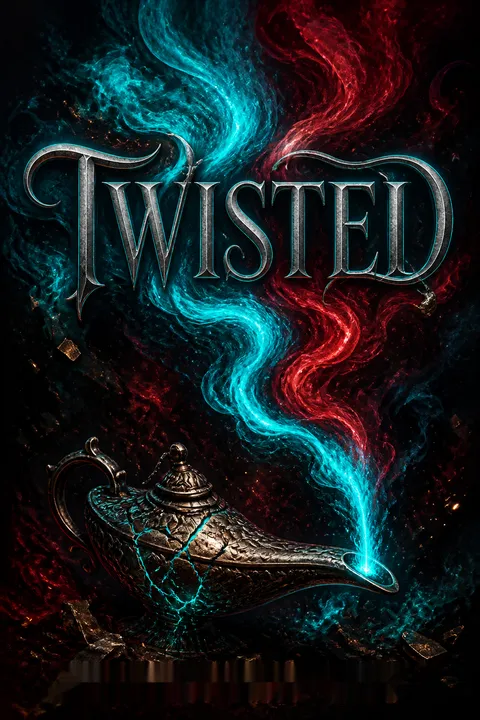
A prize that shifts powerThe rumored ancient lamp is a relic Julian hopes to use to extend Sultans beyond diamonds into antiquities. Its uncertain location draws archaeologists, criminals, and rival collectors into the same search. The object first gives Julian a reason to send Aidan away, then becomes a source of leverage and danger as the competing factions close in.
Isabella and the staff
Violence made ritualJulian’s compact metal staff reflects his martial arts training and his belief that control depends on practiced force. Isabella, his enormous python, is both a childhood gift and a living extension of his power. Together they make his violence feel ritualized: he plans and stages it rather than treating it as a loss of control. Their presence also links his adult identity to the abuse that shaped him.
Yasmin’s camera
Memory made visiblePhotography gives Yasmin a way to attend closely to other people and preserve moments that might otherwise vanish. Her camera also points toward a life she postponed to satisfy her father’s expectations. The images she keeps of childhood and Aidan reconnect her with a self that existed before the marriage crisis. The darkroom ultimately makes photography a practical part of her future, not merely a private hobby.
The forged will
A hidden threat on paperThe forged document in Julian’s desk states that Yasmin’s estate would pass to him if she died. Its discovery converts her vague suspicion into proof that his original plan involved more than controlling the company. It also arrives just after Ali’s death, when grief has left Yasmin especially vulnerable, and precipitates Ian’s abduction of her.
FAQ
Synopsis & Basic Details
What is Twisted about?
- Dark romance and manipulation: Twisted is a dark contemporary romance that explores the complex relationship between Yasmin, a woman bound by family expectations, and Julian, a man driven by ambition and a troubled past.
- Fractured fairy tale: The story is a fractured fairy tale, not a literal retelling, with a focus on a villainous main character and mature themes.
- Slow-burn and power dynamics: The narrative unfolds as a slow-burn romance, delving into the power dynamics between the characters and their struggles with control and desire.
Why should I read Twisted?
- Complex characters: The novel features morally gray characters with deep psychological complexities, making their motivations and actions intriguing.
- Intense emotional journey: Readers will experience a rollercoaster of emotions, from desire and passion to betrayal and heartbreak, as the characters navigate their complicated relationship.
- Unconventional romance: Twisted offers a unique take on romance, subverting traditional tropes and exploring the darker side of love and obsession.
What is the background of Twisted?
- Contemporary setting: The story is set in a modern, contemporary world, with references to high-end business and luxury lifestyles.
- Cultural influences: There are subtle cultural influences, particularly in the characters' names and family backgrounds, hinting at Middle Eastern and Italian heritage.
- No specific historical context: The story does not rely on a specific historical or political context, focusing instead on the personal struggles and relationships of the characters.
What are the most memorable quotes in Twisted?
- "It will only hurt for a little.": This recurring phrase, used by both Julian's mother and Julian himself, highlights the cycle of abuse and the characters' attempts to justify their actions.
- "The girl and everything that comes with her are mine.": This quote reveals Julian's possessive nature and his view of Yasmin as an object to be controlled.
- "If I wished for it, I could make you need nothing but me.": This line showcases Julian's manipulative tendencies and his desire for absolute power over Yasmin.
What writing style, narrative choices, and literary techniques does Emily McIntire use?
- Dual POV: The story is told from the alternating perspectives of Yasmin and Julian, providing insight into their thoughts, motivations, and emotional states.
- Foreshadowing and callbacks: McIntire uses subtle foreshadowing and callbacks to create a sense of unease and anticipation, hinting at future events and connecting past experiences to present actions.
- Intense and descriptive language: The author employs intense and descriptive language to convey the characters' emotions and the dark, sensual atmosphere of the story.
Hidden Details & Subtle Connections
What are some minor details that add significant meaning?
- Julian's tattoos: The tattoos on Julian's body, particularly the snake, are not just decorative but represent his past, his kills, and his inner darkness, adding layers to his character.
- The recurring use of "gattina": Julian's use of the Italian word "gattina" (kitten) for Yasmin is both a term of endearment and a way to assert his dominance, highlighting the complex power dynamics between them.
- The significance of the color red: The color red, often associated with passion and danger, is used in Yasmin's clothing and surroundings, foreshadowing the intense and volatile nature of her relationship with Julian.
What are some subtle foreshadowing and callbacks?
- The mention of the lost lamp: The initial mention of the lost lamp, seemingly a minor plot point, foreshadows its later significance as a catalyst for the climax and a symbol of power and control.
- Julian's mother's words: Julian's mother's words, "It will only hurt for a little," are echoed by Julian, creating a callback that highlights the cyclical nature of abuse and the lasting impact of his childhood.
- The use of "princess": Aidan's use of "princess" for Yasmin, initially a term of endearment, becomes a symbol of his manipulative nature and her perceived naivety.
What are some unexpected character connections?
- Julian and Ali's relationship: The deep bond between Julian and Ali, often described as a father-son dynamic, is unexpected given Julian's ruthless nature and his desire to take over Sultans.
- Jeannie and Aidan's connection: The connection between Jeannie and Aidan, initially presented as a professional relationship, is revealed to be more complex, with Jeannie ultimately helping Yasmin.
- Riya and Aidan's friendship: The fact that Riya and Aidan were friends for years, and that Riya knew about their relationship, adds a layer of complexity to their dynamic with Yasmin.
Who are the most significant supporting characters?
- Riya: Yasmin's best friend, Riya, serves as a confidante and a source of support, providing a counterpoint to the manipulative relationships in Yasmin's life.
- Ian: Julian's assistant, Ian, is a key player in the plot, acting as a foil to Julian and highlighting the dangers of unchecked ambition and loyalty.
- Jeannie: The lead archaeologist, Jeannie, plays a crucial role in the story, ultimately helping Yasmin and revealing the truth about the lost lamp.
Psychological, Emotional, & Relational Analysis
What are some unspoken motivations of the characters?
- Julian's need for validation: Beneath his ruthless exterior, Julian craves validation and acceptance, particularly from Ali, which drives his need to prove his worth and take over Sultans.
- Yasmin's desire for independence: Yasmin's unspoken desire for independence and autonomy fuels her rebellion against her father's expectations and her struggle for control over her own life.
- Aidan's insecurity: Aidan's insecurity and fear of losing Yasmin drive his manipulative actions, revealing a hidden desire for power and control.
What psychological complexities do the characters exhibit?
- Julian's trauma and control issues: Julian's abusive childhood has left him with deep-seated trauma and a need for control, which manifests in his manipulative behavior and his possessiveness towards Yasmin.
- Yasmin's people-pleasing tendencies: Yasmin's people-pleasing tendencies and fear of disappointing her father stem from her desire for his approval and her need to maintain a sense of stability in her life.
- Aidan's hidden ambition: Aidan's hidden ambition and desire for power are masked by his seemingly genuine love for Yasmin, revealing a complex and manipulative personality.
What are the major emotional turning points?
- Yasmin's realization of Aidan's betrayal: The moment Yasmin overhears Aidan's conversation and realizes his true motives is a major emotional turning point, shattering her illusions and forcing her to confront the reality of her situation.
- Julian's confession of love: Julian's confession of love for Yasmin, despite his initial manipulative intentions, marks a significant emotional turning point, revealing his vulnerability and the depth of his feelings.
- Yasmin's acceptance of Julian: Yasmin's acceptance of Julian, despite his flaws and past actions, signifies a major emotional shift, as she chooses to embrace her feelings and build a future with him.
How do relationship dynamics evolve?
- From manipulation to love: The relationship between Julian and Yasmin evolves from a calculated manipulation to a genuine love, as they both confront their vulnerabilities and learn to trust each other.
- From love to betrayal: The relationship between Yasmin and Aidan devolves from a seemingly genuine love to a bitter betrayal, revealing the manipulative nature of Aidan's feelings.
- From mentorship to rivalry: The relationship between Julian and Ali shifts from a mentorship to a rivalry, as Julian's ambition and desire for control clash with Ali's expectations and legacy.
Interpretation & Debate
Which parts of the story remain ambiguous or open-ended?
- The true nature of the lamp: The true nature and power of the lost lamp remain ambiguous, leaving the reader to wonder if it was truly magical or just a symbol of power and control.
- The extent of Julian's transformation: The extent of Julian's transformation and whether he has truly overcome his manipulative tendencies remains open to interpretation, leaving the reader to question the long-term implications of his relationship with Yasmin.
- The future of Sultans: The future of Sultans and whether it will remain a force for good or evil is left open-ended, allowing the reader to ponder the ethical implications of power and control.
What are some debatable, controversial scenes or moments in Twisted?
- Julian's possessive behavior: Julian's possessive and controlling behavior towards Yasmin is a controversial aspect of the story, raising questions about the nature of love and power dynamics in relationships.
- Yasmin's acceptance of Julian: Yasmin's acceptance of Julian, despite his past actions and manipulative tendencies, is a debatable point, with some readers questioning whether she has truly found empowerment or simply traded one form of control for another.
- The violence and brutality: The violence and brutality depicted in the story, particularly in Julian's actions, are controversial, raising questions about the glorification of violence and the moral implications of the characters' choices.
Twisted Ending Explained: How It Ends & What It Means
- Julian and Yasmin's union: The ending sees Julian and Yasmin united, having overcome their past struggles and embraced their love for each other, signifying a new beginning for both of them.
- The burial of the lamp: The burial of the lost lamp with Yasmin's father symbolizes the end of their past obsessions with power and control, allowing them to move forward with a focus on their relationship.
- A focus on love and choice: The ending emphasizes the transformative power of love and the importance of making choices based on genuine feelings rather than external pressures, highlighting the characters' growth and redemption.
Never After Series




About the Author
Other books by Emily McIntire









Download PDF
Download EPUB
.epub digital book format is ideal for reading ebooks on phones, tablets, and e-readers.








