



Plot Summary
Prologue
An unnamed mother14 carries a restless newborn2 to Neverland’s lagoon on a leaf raft. Convinced that keeping him would endanger her other children, she sends him onto the water, hoping the lagoon can change what she believes is dangerous in him.
The child is Peter Pan,2 though the prologue withholds his name. Her choice establishes the wound beneath his legend: before he became a king2 who feared losing power, he was a baby2 whom his mother14 decided she could not keep.
The opening makes abandonment an act of protection and harm at once. The mother does not reject her child casually; she trusts her fear as if it were knowledge of the future, and that certainty prevents her from testing whether the danger can be met another way. The lagoon becomes both the place where Peter is relinquished and the power that will shape him. By showing the choice before explaining its consequences, the prologue asks readers to hold two truths together: love can motivate a sacrifice, and the person sacrificed may still experience it as abandonment.
Snow Falls on Neverland
Peter Pan2 has only just recovered the shadow he spent years pursuing when Tinker Bell6 appears on his balcony, dressed as she was the night he killed her. He tries the words that once made her vanish, but she remains and laughs, leaving him with a fear he cannot explain. Across Neverland, snow begins falling for the first time.
Winnie1 wakes beside Vane,3 Bash,4 and Kas,5 senses Peter’s2 dread through her shared shadow with Vane,3 and follows it into the woods. There she finds Tinker Bell6 holding a blade to Peter’s2 throat. Tinker6 calls Bash4 and Kas5 her sons4 and invites everyone to the fae palace, promising to end their banishment and restore their wings. Peter2 agrees to go, afraid that refusing will provoke her.
The weather turns Peter’s private alarm into a change the whole island can see. His attempt to repeat the words that once killed Tinker Bell shows how readily he reaches for an old solution when fear returns, while her survival makes that familiar power useless. Winnie’s ability to sense Peter’s distress also shifts her from outsider to participant in the group’s emotional life. Tinker Bell’s invitation is therefore more than a summons to court: it offers the exiled twins what they most want and forces the others to decide whether trust can be risked for the possibility of belonging.
The Throne’s Fatal Price
Roc,8 Vane’s older brother,8 leaves Hook’s11 house after learning that Hook11 has gone to Everland in search of Wendy Darling. At the fae palace, Roc8 finds the queen,7 Tilly,7 shaken and her throne missing. In the woods, Tilly’s twin brothers,4 Kas5 and Bash,4 confront her at their grandmother Nana’s12 grave.
She admits that she gave the throne to the lagoon in exchange for a way to defeat Peter Pan,2 though Tinker Bell’s6 return was not the outcome she expected. Kas5 nearly strangles Tilly7 before Bash4 pulls him away. Tilly7 confesses that duty to their parents and the court has mattered more to her than asking her brothers4 for help. Peter,2 meanwhile, decides the group will accept Tinker Bell’s6 invitation and pursue the twins’4 wings.
The missing throne makes Tilly’s political ambition tangible: she has traded the seat that represents her authority for an answer she hoped would solve a personal and dynastic problem. Her brothers’ fury is not simply about power; their banishment has made every family decision feel like evidence that they cannot trust one another. Kas’s violence repeats the coercion he claims to oppose, while Bash’s intervention creates space for Tilly to speak. Peter’s decision to attend the palace adds another layer of risk, since he is choosing action partly to protect the group and partly because waiting leaves Tinker Bell in control.
A Feast of Old Wounds
At the palace celebration, Tinker Bell6 welcomes Bash4 and Kas5 before the fae court, then draws Peter2 aside. She tells him that his mother14 abandoned him as an infant because she feared his volatile nature would consume everything around him.
Peter,2 who has treated himself as a myth rather than an ordinary child with a past, is shaken by the revelation. Winnie1 watches him retreat into drink and silence, while Vane3 steadies her through the emotions passing between them.
Roc8 dances with Winnie1 and shares the history that binds him to her ancestor Wendy: after Roc8 accidentally devoured a Lorne princess, the Lornes killed his sister Lainey13 in front of him and Vane.3 His account exposes the grief beneath his predatory humor, even as Peter’s2 newly revealed history unsettles the evening.
Tinker Bell wounds Peter by attacking the story that has helped him survive himself. If he is not an exceptional being born of legend, then his power may be something he received, not something that proves he deserves it. That distinction threatens the identity he built around control. The parallel accounts of Peter and Roc also show how old injuries become private explanations for present behavior: Peter turns toward withdrawal and alcohol, while Roc uses appetite and wit to keep grief at a distance. Winnie’s attention to both men does not erase those defenses, but it lets the group see the human cost beneath them.
The Vault Has Teeth
While Tilly7 is called away from the royal dressing rooms, Kas5 and Bash4 slip toward the palace vault to recover the vessels holding their wings. The old magical lock still recognizes them, but the enormous collection offers no clear sign of the vessels they need.
Instead, the brothers4 find an empty shelf bearing unfamiliar traces of hard-edged magic. They return without their wings, and the court’s promise of restoration looks increasingly like bait.
Tinker Bell6 has presented their return as proof of goodwill, yet the princes4 remain outsiders in their own home, uncertain what their mother6 intends. The vacant shelf plants a practical clue alongside their emotional disappointment: something dangerous has been removed from the vault, although they do not yet know what it was.
The failed search converts the twins’ longing into a concrete absence. Their wings are not simply missing objects; they represent bodily freedom, royal identity, and a route back into a community that has excluded them. The vault’s empty shelf complicates that pursuit by showing that the palace contains a second, concealed history of power. Since the twins cannot identify what was stored there, their knowledge of their own home proves incomplete. The scene keeps the reader’s attention on the same uncertainty that traps the brothers: the court is offering restoration, but the evidence inside its most protected room suggests someone has prepared for violence.
Darling Buried Alive
After the celebration, Winnie1 finds Tinker Bell6 alone in the treehouse kitchen. Tinker6 explains that she wants Peter’s shadow, not Peter2 himself, and that the runes on Winnie’s back bind the shadow so it cannot be taken from her.
She then uses an illusion of Winnie’s mother to lure her outside, where a hidden trap drops Winnie1 into a wooden box and Lost Boys bury her. At the same time, mind-controlled Lost Boys attack the treehouse with black volcanic-stone blades from the fae vault. One blade wounds Peter,2 and several strike Vane.3
Tinker6 arrives with a reluctant Tilly,7 reveals that Tilly7 destroyed the twins’4 original wings, and offers the brothers4 a chance to claim Peter’s shadow. She threatens Winnie’s1 life; Peter2 gives the shadow freely, and it restores the twins’4 wings.
Tinker Bell’s strategy attacks the group through its separate vulnerabilities: Winnie’s longing for her mother, the twins’ grief over their wings, Peter’s shame about his past, and the others’ instinct to protect one another. The staged rescue works because it imitates an intimate need rather than presenting a recognizable threat. The buried box makes Winnie’s isolation physical, while the stolen blades turn the earlier vault clue into an assault on the group’s bodies. Peter’s surrender is an act of care, but it also confirms how easily he equates giving up power with proving he does not deserve it.
Tilly Opens the Grave
Tilly7 digs Winnie1 out of the buried box and admits that she acted to satisfy her parents and protect her claim to power, even though their approval never came. Vane3 rushes in and grabs Tilly7 by the throat, but Winnie1 stops him before he can harm her. Vane3 is badly wounded from the volcanic blades; Winnie’s bound shadow flows through their connection and begins healing him.
She learns that Peter2 has given his shadow to Kas5 and Bash,4 and insists they must help him rather than abandon him. Tilly7 explains that her mother6 can enter minds and control the Lost Boys and fae. With Tilly7 now willing to fight beside them, Winnie,1 Vane,3 and the brothers4 set out to find Peter2 and stop Tinker Bell’s6 control.
Tilly’s choice to free Winnie is the first time she acts against her mother without trying to secure a place in the royal order. Her admission does not erase what she has done, but it gives her brothers a reason to treat her as a person capable of change rather than only as the queen who betrayed them. Winnie’s intervention with Vane reverses the usual pattern of others protecting her: she restrains his violence, then uses the shadow to heal him. The group’s alliance now rests on reciprocal care, not on a single leader’s authority or a promise that everyone will receive what they want.
The Knife Cannot Kill
The reunited group meets Tinker Bell6 outside the fae palace, where her controlled army of fae and Lost Boys attacks. The twins4 fight with their restored wings, while Winnie1 and Vane3 use their shared shadow against the attackers. Tilly7 slips through the battle with one of the black blades recovered from the vault and drives it into her mother’s6 heart.
Tinker Bell6 collapses, and for a moment the others believe the weapon has ended her. Then she pulls the blade free and stands again, proving that steel alone cannot destroy whatever dark force returned her to life. The battle remains unresolved. With Tinker Bell6 still controlling the crowd and Peter2 missing, the group has no clear way to protect the island or the people fighting beside them.
The failed strike separates physical vulnerability from the source of Tinker Bell’s power. The blade can pierce her, but it cannot reach the force sustaining her, so the protagonists’ familiar language of combat has reached its limit. Tilly’s attack is significant even in failure: she has moved from making a sacrifice in secret to standing openly against the consequence of that choice. The absence of Peter sharpens the crisis because the group can no longer organize itself around the person who once held the shadow. They must confront both an enemy they cannot kill and a leader whose fate they do not know.
Roc Drowns the King
Roc8 finds Peter2 collapsed beside the lagoon, grieving the loss of his shadow and convinced that Tinker Bell’s6 return proves he never deserved it. Roc8 takes him into the water and forces him beneath the surface, leaving him to sink. In the darkness, Peter2 receives the memory of Balder,9 the wolf9 who witnessed his infancy: Peter’s mother14 sent him away, the lagoon carried him under, and he emerged years older.
The mother14 then asked Balder9 to watch over the boy2 while she watched from the sky. The memory reframes Peter’s2 origin. He was not simply abandoned to die; the lagoon transformed him, and the maternal presence remains connected to the stars. A pulse of light begins beating beneath the water.
Roc’s apparent murder strips Peter of the last external explanation he can cling to: he must face what he is without his shadow, his title, or the reassurance of his chosen family. The lagoon answers that loss not by restoring the old arrangement, but by returning a memory that changes its meaning. Peter’s mother made a fearful choice, yet she did not disappear from his story; Balder’s account shows a watchfulness that Peter could not perceive as a child. The scene distinguishes abandonment from absolute rejection and suggests that receiving help does not cancel the need to become responsible for oneself.
Light Breaks Tinker Bell
A burst of light erupts from the lagoon, and Peter2 flies back to the battlefield without his shadow. Tinker Bell6 attacks him, but he catches her blade and melts the volcanic stone in his hand. Winnie,1 Vane,3 Kas,5 and Bash4 restrain Tinker Bell6 while Peter2 turns the light within himself against the dark force keeping her alive.
The force pours out of her in black ribbons; Tinker Bell6 breaks apart into fairy dust, and her control over the Lost Boys and fae ends. Peter’s2 return resolves the battle without restoring the old shadow to him. He recognizes that his strength does not have to come from possessing a power that once served as a crutch, and Winnie1 and the others welcome him back into their circle.
Peter’s victory depends on a change in how he understands power. Earlier, he treated the shadow as the proof and instrument of his authority; now he can act without it because he no longer mistakes dependence for identity. The contrast between his light and Tinker Bell’s sustaining darkness gives the lagoon’s warning a concrete resolution, but the light does not make Peter innocent or erase his history. It gives him another way to meet it. The group’s physical restraint of Tinker Bell matters too: Peter can end the threat, but only because the people he once feared losing hold the line with him.
The Princes Take Court
After the battle, Tilly7 thanks Kas5 and Bash4 for saving the fae from the consequences of her decisions, then chooses to leave the court rather than keep ruling through fear and family obligation. The brothers4 accept that she will not remain queen,7 though their reconciliation cannot undo the harm between them.
Two weeks later, they prepare for their coronation. Tilly7 has sailed away, while Roc8 accompanies her toward Everland. At Peter’s2 treehouse, Bash4 again asks Winnie1 to become their queen.1
Winnie1 doubts the fae will accept her, but the men make clear that her place with them does not depend on a title. She tests their devotion by ordering them to kneel; Peter,2 Kas,5 Bash,4 and Vane3 do so, turning the question of rule into a private promise of chosen loyalty.
The resolution refuses to treat restored power as a cure for damaged kinship. Tilly leaves because the court has become the setting in which she learned to perform duty at the expense of family, while her brothers accept that loving her does not require returning the throne. Winnie’s possible queenship offers a different model of authority: she does not inherit a title or secure it through sacrifice, but tests the affection already freely given to her. The ending’s playful kneeling scene reverses the hierarchy of the palace. These men choose to yield, making intimacy, rather than command, the basis of their allegiance.
Epilogue
On the royal ship carrying Tilly7 toward Everland, Roc8 watches her begin to relax away from the fae court. Their agreement is that she will use her skill with minds to help him uncover what happened to Wendy Darling.
Roc8 admits to himself that finding Wendy is not the only thing drawing him onward: he is eager to see Captain Hook11 again, a pirate11 whose mouth and defiance have caught his attention. Tilly’s7 voyage opens a new road away from the throne, while Roc’s8 private anticipation turns the search into something more personal than a debt repaid.
The epilogue gives Tilly distance from the role that has consumed her, but it does not instantly settle who she will become outside the palace. Roc’s bargain offers direction without pretending that direction is the same as healing: helping him search for Wendy also gives Tilly a task she chose after relinquishing her crown. His thoughts about Hook introduce a different kind of vulnerability. Roc can speak openly about appetite and danger, yet his anticipation of one particular person exposes a desire he cannot reduce to the familiar language of conquest. The voyage closes this story while leaving its characters in motion.
Analysis
The novel’s central conflict turns on a question of ownership. Peter2 treats the shadow as the source of his legitimacy; the twins4 want their wings as evidence that they still belong to the fae; Tilly7 trades the throne to obtain an answer that will secure her position. Each character tries to make belonging tangible through a possession or title. The story complicates that strategy by making its supernatural powers responsive to need rather than entitlement. The shadow can move, wings can be restored through an unexpected exchange, and the throne can become the price of a choice its giver cannot control.
Family is the novel’s most unstable source of protection. Peter’s mother14 fears his nature and abandons him, Tinker Bell6 turns motherhood into a claim over her sons,4 and Tilly7 tries to satisfy parents6 who do not offer the love she wants. The brothers’4 conflict with Tilly7 grows from a genuine wound, but Kas’s5 near-strangling of her shows how easily protective anger reproduces the coercion it condemns. Their eventual separation from the old royal arrangement does not erase that damage; it makes room for a less possessive form of connection.
Winnie1 changes the group by refusing to accept that love must mean either submission or rescue. She stops Vane3 from hurting Tilly,7 pushes the others to save Peter,2 and uses her bond with Vane3 to help heal him. Peter’s2 transformation follows a related movement: he stops treating power as proof of identity and acts from a self that exists without the shadow. The novel’s resolution does not promise a world without danger. Instead, it proposes a more durable measure of strength: people may give up control, accept care, and still remain whole.
Review Summary
The Fae Princes receives mixed reviews, with an average rating of 3.96 out of 5. Many readers found it a satisfying conclusion to the series, praising the character development and world-building. However, some felt it lacked the spice and action of previous installments. Critics noted pacing issues and underdeveloped plot points. Fans appreciated the unique take on Peter Pan and the found family dynamic. The book sets up a spin-off series featuring Roc and Hook, which many readers expressed excitement for.
People Also Read



Characters
Winnie Darling
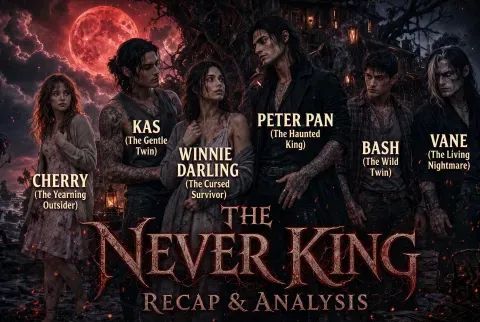
The shadow-bound DarlingWinnie arrives in Neverland carrying the instincts of someone who has spent much of her life moving from one unsafe home to another. She wants affection and protection, yet can feel exposed when the men around her know her fears too well. Her bond with Vane3 makes their emotions difficult to hide from one another, while her relationships with Peter2, Bash4, and Kas5 give her several distinct forms of intimacy and trust. Winnie is not a trained warrior, but she refuses to let vulnerability become passivity. Her curiosity, sharp humor, and protective streak help her challenge the group when its members mistake control for care. She is drawn to being loved without having to earn safety through silence.
Peter Pan
The restless Never KingPeter Pan is a powerful ruler whose confidence conceals a deep reliance on control. He has spent years chasing his shadow and treats its possession as proof that he can restore order to himself and Neverland. His history with Tinker Bell6 complicates that certainty: she was once his closest companion, and her return makes buried grief immediate again. Peter tends to turn fear into action, command, or withdrawal rather than admit that he needs others. Winnie’s1 presence and the loyalty of Vane3, Bash4, and Kas5 unsettle his isolation, but he remains suspicious of comfort he cannot control. His central struggle is not simply to keep power, but to understand what he is without defining himself by it.
Vane
The guarded Dark OneVane is a formidable, controlled man whose first instinct is to protect the people he loves by limiting their exposure to danger. His connection with Winnie1 makes that instinct harder to disguise, because he can sense her feelings and she can sometimes reach past his reserve. He is Peter’s2 trusted companion and the younger brother of Roc3, a relationship shaped by shared history and grief over their sister Lainey13. Vane’s violence is never far away, but neither is his capacity to recognize when fear is driving it. Winnie1 challenges him to accept closeness without turning it into a rescue mission. His strength lies in discipline; his difficulty is allowing affection to make him less guarded.
Bash
The playful fae princeBash is Kas’s twin brother4, a banished fae prince whose wit and appetite for pleasure often lighten a tense room. Beneath the teasing, he carries a strong sense of responsibility toward Kas5 and a complicated attachment to his younger sister Tilly7. He wants his wings and the life they represent, but he also wants a place among the fae that feels like home rather than a courtly performance. Bash has a gift for making other people feel welcome, especially Winnie1, and he uses humor to keep grief from becoming the only thing the group can share. His loyalty to Peter2 is real, though it does not erase the question of whether Peter2 has made room for the twins4 to lead.
Kas
The watchful fae princeKas is Bash’s twin5, a thoughtful and observant prince who tends to examine the cost of a choice before acting. His gentleness is not weakness; when he believes his family has been endangered, anger can move him toward frightening violence. Kas wants his wings restored, but his deeper longing is to recover a meaningful connection to the fae people and the family life he lost. His bond with Bash4 gives him a rare sense of being understood without explanation. With Winnie1, he shows patience and a taste for slow, deliberate intimacy. Kas often sees what others are avoiding, including the possibility that loyalty to Peter2 and longing for his own birthright may pull in different directions.
Tinker Bell
The ruthless fairy motherTinker Bell is a fairy of immense force and practiced emotional manipulation. She understands how to make affection resemble a gift and how to use an old wound as leverage. Her history with Peter Pan2 is intimate and painful: she once shared his life as his closest companion, but their bond became inseparable from betrayal and violence. As Bash4 and Kas’s mother6, she approaches family through entitlement and ambition rather than patient care. She believes power can repair weakness if it is placed in the right hands, and she is willing to make other people pay for that belief. Her brilliance at reading desire is matched by her inability to treat other people’s desires as anything but tools.
Tilly
The burdened fae queenTilly is the younger sister of Kas5 and Bash4 and the fae queen, raised amid royal expectations and the pressure to protect her court. She often tries to make fear invisible by appearing decisive, a habit that can turn duty into stubbornness. Her brothers’4 banishment has left her isolated, even while she holds the title and authority they lost. Tilly wants respect and family, but has learned to pursue both through the language of power. Her relationship with her mother6 makes that strategy especially painful, since compliance never guarantees love. She is most herself when she can stop performing the queen and acknowledge the sister beneath the crown.
Roc
The hungry CrocodileRoc, Vane’s older brother8, is a beast known as the Crocodile and the Devourer of Men. He uses appetite, provocation, and humor to make danger seem like a game he controls. His history includes wealth lost, violence committed, and the murder of his sister Lainey13, whose death remains an open wound. Roc is curious about secrets and people who resist him, but his curiosity can turn quickly into cruelty. He does not present himself as a safe ally, and he rarely gives affection without disguising it as appetite or a challenge. His attention to Wendy Darling and Captain Hook11 reveals that even a practiced predator can be unsettled by a particular person.
Balder
The silent wolf guideBalder is a large wolf who moves through Neverland with an awareness that exceeds his animal form. He is especially close to Winnie1, whose touch he welcomes, and he often appears when the group needs an answer about the island’s strange workings. Balder does not explain himself readily, which makes his silences feel deliberate rather than empty. He carries memories and knowledge that connect the present crisis to Neverland’s older history. His role is not to command the others but to witness, wait, and let the right moment reveal what he knows.
Smee
The sharp-eyed pirateSmee is a pirate connected to Captain Hook11 and one of the few people willing to confront Roc8 without being intimidated by his threats. She reads his indifference as a defense against attachment and warns him that caring makes loss more costly, not less. Her relationship with Hook11 is tense enough to involve disagreement, but she remains attentive to his movements and choices. Smee is practical, perceptive, and difficult to provoke into revealing more than she intends. She functions as a clear-eyed observer of Roc8, refusing to accept the careless persona he offers as the whole truth.
Captain Hook
The absent pirate captainCaptain Hook, called Jas by those close to him, commands the pirate household where Roc8 wakes. His departure for Everland to search for Wendy shapes Roc’s8 next journey and leaves Smee10 behind. Hook is not present for the central conflict, but Roc’s8 interest in seeing him again gives his absence a personal charge.
Nana
The twins’ earthwise grandmotherNana is the grandmother Kas5 and Bash4 remember as a source of practical wisdom, old stories, and affection that did not depend on royal usefulness. Her cottage and grave remain touchstones for the brothers4 and Tilly7. In memory, she represents a gentler model of family and power.
Lainey
The brothers’ lost sisterLainey is Roc8 and Vane’s sister13, remembered as bold, curious, and determined to study magic history. Her ambitions and the cruelty she faced shape her brothers’3 protectiveness and long-standing grief.
The Mother
The unnamed motherThe unnamed mother appears briefly at the beginning, carrying a newborn2 toward the lagoon while fearing what keeping him may mean for her other children. Her choice is driven by protection, but also by a certainty about the future that she cannot verify. The scene makes her both a parent who acts and a presence defined by absence.
Callio
The court’s welcoming advisorCallio is a fae courtier and trusted adviser who greets Peter2 and his companions at the palace. She represents the formal face of a court where ceremony and political tension sit close together.
Plot Devices
The Neverland shadows
Power chooses its bearerThe shadows are living powers connected to the islands rather than possessions that a ruler can simply claim. Peter’s2 Neverland Life Shadow has shaped his identity, while Winnie1 and Vane3 share the Neverland Death Shadow, which lets them feel one another’s emotions and channel power together. The characters’ assumptions about who deserves a shadow repeatedly distort their choices. Peter2 believes possession proves he is meant to rule; others learn that a shadow may choose someone who never asked for it. The power’s ability to move between hosts also makes loyalty materially consequential: giving it up can change who has the strength to protect the group.
The Mysterious Lagoon
A bargain with consequencesThe lagoon is a supernatural force that answers offerings and requests in ways its visitors do not necessarily anticipate. Tilly7 gives it the fae throne in search of a way to defeat Peter Pan2, and the result is the return of Tinker Bell6. The water is also tied to Peter’s2 earliest history, his transformation as a child, and the later return of his memories and power. It does not behave like a servant or a simple wish-granting source. Its interventions force characters to face the gap between what they ask for and what they truly need, while leaving the cost of that difference uncertain until events unfold.
Winnie’s binding runes
The shadow cannot be stolenThe runes on Winnie’s1 back appear to be protective markings, but Tinker Bell6 identifies them as a binding spell. They prevent the shadow within Winnie1 from being extracted, making Winnie1 an impossible direct target for Tinker Bell’s6 plan. This protection is not a simple advantage: it leaves Winnie1 tied to a dangerous power whose rules she is still learning. The runes also establish that magic can be misread, especially when a mortal created the markings. Their practical effect redirects Tinker Bell6 toward manipulating Peter2 and the twins4 rather than taking the shadow from Winnie1 herself.
Volcanic-stone blades
Weapons pierce shadowed bodiesThe black blades are forged from volcanic stone originating in Lostland and are kept in the fae vault. Their absence is first noticed as an unexplained gap during the twins’4 search for their wing vessels. Tinker Bell’s6 controlled Lost Boys later use the blades to wound Peter2 and Vane3, making the missing vault objects a direct threat rather than a minor mystery. The blades can injure powerful figures who would normally rely on supernatural resilience, but they do not solve every magical problem. Tilly’s7 attempt to use one against Tinker Bell6 fails because the dark force sustaining the fairy is not ended by a physical wound alone.
Fae mind magic
Illusion becomes controlFae magic can create convincing illusions and reach into other minds. Tinker Bell6 uses an image of Winnie’s mother to draw Winnie1 away from safety, then traps her underground while she believes she is acting on a real cry for help. The same kind of power lets Tinker Bell6 direct Lost Boys and fae as an army, turning familiar faces into attackers. The device makes perception itself part of the conflict: the characters cannot assume that a loved voice, a friendly approach, or an apparent victory is genuine. Tilly’s7 knowledge of her family’s skill with illusions helps the group understand the threat, but recognition alone does not immediately break it.
FAQ
Basic Details
What is The Fae Princes about?
- Dark Peter Pan Retelling: The Fae Princes is a dark romantic reimagining of Peter Pan, where the characters are adults navigating complex relationships, power struggles, and the return of a vengeful fairy.
- Resurrection and Conflict: The story centers around the unexpected return of Tinker Bell, who was previously killed by Peter Pan, and her attempts to manipulate the inhabitants of Neverland, particularly the fae princes.
- Sacrifice and Transformation: The narrative explores themes of sacrifice, redemption, and transformation as characters grapple with their pasts and make difficult choices that impact the future of Neverland.
Why should I read The Fae Princes?
- Complex Characters: The book features morally gray characters with deep emotional complexities, making their motivations and actions unpredictable and engaging.
- Intricate Plot: The story weaves together elements of fantasy, romance, and action, creating a rich and immersive world with unexpected twists and turns.
- Emotional Depth: Readers will find themselves invested in the characters' struggles, experiencing their triumphs and heartbreaks as they navigate love, loss, and the fight for power.
What is the background of The Fae Princes?
- Fantasy Setting: The story is set in Neverland, a magical island with its own unique rules and inhabitants, including fae, Lost Boys, and other mythical creatures.
- Fae Politics: The fae court and its power dynamics play a significant role, with the fae princes' birthright and their sister's rule adding layers of political intrigue.
- Mythological Elements: The lagoon and its spirits, as well as references to fae gods and myths, add a layer of depth and mystery to the world, hinting at a larger, interconnected universe.
What are the most memorable quotes in The Fae Princes?
- "Drenched in darkness, terrified of light.": This quote, repeated by the lagoon spirits, foreshadows Peter Pan's internal conflict and his struggle with his own nature and the shadow.
- "What's mine is mine, and once it's mine, it cannot be someone else's.": This quote from Roc reveals his possessive nature and his complex relationship with Wendy Darling, highlighting his internal struggle with control and ownership.
- "You cannot have light without darkness.": This quote, a key lesson from the lagoon, encapsulates the central theme of the book, emphasizing the balance between good and evil and the necessity of both for growth and understanding.
What writing style, narrative choices, and literary techniques does Nikki St. Crowe use?
- Dark Romanticism: St. Crowe employs a dark and sensual writing style, focusing on intense emotions, morally ambiguous characters, and passionate relationships.
- Multiple Perspectives: The narrative shifts between different characters' points of view, providing a multifaceted understanding of the plot and the characters' inner thoughts and motivations.
- Foreshadowing and Symbolism: The author uses subtle foreshadowing and recurring symbols, such as the lagoon, the shadow, and the color gold, to create a sense of mystery and to hint at future events and character development.
Hidden Details & Subtle Connections
What are some minor details that add significant meaning?
- The Mother's Dress: The Mother's dress, described as "a fabric finer than silk" that "glitters with the barest shift in light," foreshadows her identity as a star goddess and her connection to the celestial realm.
- The Peanut Cart: The old man selling peanuts, with his denim shirt and the "Potter's Peanuts" sign, hints at connections to the mortal world and the presence of other realms within the Seven Isles.
- Cherry's Room: The disarray in Cherry's room, with a well-loved sweater, highlights her transient life and the shared experiences of those who have no permanent home, connecting her to Winnie's past.
What are some subtle foreshadowing and callbacks?
- The Lagoon's Whispers: The spirits' warnings to Peter Pan about darkness and light foreshadow his eventual transformation and the loss of his shadow, hinting at a deeper connection to the lagoon.
- Tink's Words: Tinker Bell's repeated phrase, "men who think they are myths," subtly undermines Peter Pan's self-perception and hints at his true origins, setting the stage for his identity crisis.
- Nana's Stories: Nana's stories about the trickster god and the goddess of falling stars foreshadow the twins' complex relationship with their mother and their eventual rise to power, hinting at their dual nature.
What are some unexpected character connections?
- Roc and Wendy Darling: Roc's admission that he "loved how she made me feel" reveals a deeper connection to Wendy Darling, hinting at a shared history and a possible future exploration of their relationship.
- Vane and Lainey: Vane's reaction to the mention of his sister, Lainey, and his promise to protect Winnie "as if she were Lainey" reveals a deep-seated grief and a desire to atone for past failures.
- Tilly and Nana: Tilly's visits to Nana's grave and her creation of sweetgrass mementos reveal a hidden connection to her grandmother, highlighting her desire for a family connection that she never fully embraced.
Who are the most significant supporting characters?
- Roc: Roc's role as a guide and instigator, pushing Peter Pan to confront his past and his identity, makes him a crucial figure in the narrative, influencing the plot and character development.
- Tilly: Tilly's journey from a power-hungry queen to a remorseful sister, her actions directly impacting the plot and the fate of the fae, makes her a significant supporting character.
- Balder: Balder's silent presence and his connection to the lagoon and the Neverland Shadow make him a mysterious and important figure, hinting at a deeper understanding of the island's magic.
Psychological, Emotional, & Relational Analysis
What are some unspoken motivations of the characters?
- Peter Pan's Fear of Abandonment: Peter Pan's actions are often driven by a deep-seated fear of abandonment, stemming from his mother's rejection, which makes him cling to his shadow and his chosen family.
- Tinker Bell's Desire for Validation: Tinker Bell's manipulations are fueled by a desire for validation and power, stemming from her past as a "common house fairy," which makes her seek control and recognition.
- The Twins' Yearning for Belonging: The twins' desire for their wings is not just about power, but also about a deep yearning for belonging and acceptance within the fae community, highlighting their struggle with identity and purpose.
What psychological complexities do the characters exhibit?
- Peter Pan's Identity Crisis: Peter Pan's struggle with his identity, his fear of being "just a boy," and his reliance on the shadow reveal a deep-seated insecurity and a need for external validation.
- Vane's Internal Conflict: Vane's internal conflict between his desire for control and his growing love for Winnie, as well as his past trauma, makes him a complex character with a constant struggle between darkness and light.
- Tilly's Guilt and Redemption: Tilly's journey is marked by guilt and a desire for redemption, as she grapples with the consequences of her actions and her need to atone for her mistakes.
What are the major emotional turning points?
- Peter Pan's Sacrifice: Peter Pan's decision to give up his shadow is a major emotional turning point, signifying his willingness to sacrifice his power for the safety of his loved ones and his acceptance of his true self.
- Tilly's Abdication: Tilly's decision to abdicate the throne and seek her own path is a major emotional turning point, highlighting her growth and her desire to break free from the expectations of her family and her duty.
- Winnie's Acceptance of Love: Winnie's acceptance of love and her willingness to be vulnerable with Vane and the others is a major emotional turning point, signifying her growth and her ability to embrace her new life.
How do relationship dynamics evolve?
- Peter and Winnie's Bond: Peter and Winnie's relationship evolves from a power dynamic to a deep, reciprocal love, where they both find strength and solace in each other, highlighting their shared vulnerability and their need for connection.
- The Twins' Brotherhood: The twins' relationship evolves from a shared desire for power to a deep understanding of their bond, as they learn to support each other and to navigate their new roles as leaders.
- Vane and Winnie's Intimacy: Vane and Winnie's relationship evolves from a guarded connection to a deep, intimate bond, where they share their vulnerabilities and find strength in their shared shadow, highlighting their mutual need for acceptance and love.
Interpretation & Debate
Which parts of the story remain ambiguous or open-ended?
- The Lagoon's Intentions: The lagoon's true intentions in resurrecting Tinker Bell and its relationship with Peter Pan remain ambiguous, leaving room for interpretation and speculation about its role in the larger narrative.
- The Nature of the Shadow: The exact nature of the Neverland Shadow and its connection to the land and its inhabitants remains open-ended, leaving room for further exploration of its power and its influence.
- The Future of Neverland: The future of Neverland and the fae court after the twins' coronation remains open-ended, leaving room for speculation about the challenges and opportunities that lie ahead.
What are some debatable, controversial scenes or moments in The Fae Princes?
- Peter Pan's Treatment of Winnie: Peter Pan's initial treatment of Winnie, including his kidnapping and his use of her name as a term of endearment, can be seen as controversial, raising questions about power dynamics and consent.
- Roc's Actions and Motivations: Roc's actions and motivations, particularly his manipulation of Peter Pan and his past with Wendy Darling, can be seen as controversial, raising questions about his true intentions and his moral compass.
- Tilly's Decisions and Their Consequences: Tilly's decisions, particularly her sacrifice of the throne and her destruction of the twins' wings, can be seen as controversial, raising questions about her judgment and her ability to lead.
The Fae Princes Ending Explained: How It Ends & What It Means
- Peter Pan's Transformation: Peter Pan's transformation into a being of light, after sacrificing his shadow, signifies his acceptance of his true self and his ability to find power within, rather than relying on external sources.
- The Twins' Ascension: The twins' ascension to the throne, with their wings restored and the Neverland Shadow, signifies a new era for the fae, where they will rule with a balance of power and compassion.
- The Cycle of Love and Loss: The ending emphasizes the cyclical nature of love and loss, with characters finding new beginnings and new paths, while also acknowledging the pain and the sacrifices that come with growth and change.
Vicious Lost Boys Series


About the Author
Other books by Nikki St. Crowe


Download PDF
Download EPUB
.epub digital book format is ideal for reading ebooks on phones, tablets, and e-readers.








