


Plot Summary
The Shadow Crosses Borders
After decades of waiting, Pan2 finally senses his missing Life Shadow emerging from a box at the Treehouse. He and Vane3 chase it through the forest, past the lagoon and along the road, but it outruns them and crosses into Captain Hook's7 territory. Without it, Pan2 cannot fully feel or command Neverland, and the border prevents him from simply following.
At the Treehouse, Kas4 and Bash5 spot the second escaped shadow in the Never Tree. Their attempt to corner it becomes a new crisis, while Pan's2 failure leaves his most valuable power loose on enemy ground. The island has returned something he needs, but not on terms he can control.
The opening makes power feel less like a possession than a relationship with place. Pan believes the Life Shadow is rightfully his, yet it refuses to be captured and crosses a political boundary that limits even his authority. His urgency exposes how much of his identity depends on a force he cannot command. The simultaneous release of another shadow turns his personal lack into a wider instability: Neverland is not simply Pan's realm to manage, but a living system capable of resisting its supposed king.
Belief Keeps Bash Alive
Kas4 and Bash5 try to trap the other shadow in the Never Tree, but it attacks Bash5 and opens his throat. Winnie,1 a mortal newcomer still learning the island's rules, finds towels and helps Kas4 press them against the wound. When Bash's5 strength fails, she remembers that denying the existence of fairies can kill them.
She reverses the idea, insisting that fairies are real, and the affirmation pulls Bash5 back to breath. Pan2 returns without his Life Shadow and smashes bottles and furniture in fury. Winnie1 is moved to a bedroom while Kas4 explains that the Darling family helped Tinker Bell steal Pan's2 shadow, though the original scheme belonged to Pan's2 former ally, not to Winnie1 herself.
Winnie enters the story not as a chosen warrior but as someone willing to test an idea while everyone else is frightened. Her belief works because Neverland makes conviction materially consequential, giving language an almost bodily force. The rescue also changes how the group sees her: she can affect the island's magic rather than merely endure it. Pan's destruction after losing his shadow forms a sharp counterpoint. The king's powerlessness is visible in broken glass, while Winnie's small act of faith restores life.
The Darling Sets Terms
After waking alone, Winnie1 hears women laughing in the loft and assumes Pan2 and the Lost Boys have ignored his order to keep her safe. She finds Pan2 with a former lover on his lap, bolts for the stairs, and kisses a Lost Boy in full view of him. Pan2 carries her back upstairs, but Winnie1 turns the confrontation into a demand for mutual exclusivity.
She accepts the attention of Pan2 and the fae twins,4 Bash5 and Kas,4 on her own terms, then makes Pan2 acknowledge that he will not keep other lovers while forbidding her the same freedom. Their contest ends with an agreement: Winnie1 may choose among the four men, but Pan2 expects her to follow his rules. She has entered their dangerous household as a participant, not a captive audience.
Winnie's jealousy is less a claim to conventional romance than a protest against one-sided power. She refuses a rule that restricts her while excusing Pan, then uses the group's own appetite as leverage. The scene gives her agency, but not uncomplicated equality: Pan still sets the framework, and Winnie chooses to operate inside it. That tension defines the relationship. Desire becomes a negotiation over who may set limits, who is expected to obey, and whether being wanted can coexist with being treated as a person.
Blood Checks the Dark One
Winnie1 tries to draw Vane,3 the scarred Dark One, into the group's intimacy, but the darkness in him surges and he lifts her by the throat. As it overwhelms him, Vane3 turns on Pan2 and begins covering his skin with spreading blackness. Winnie1 cuts her foot on broken glass; the pain and blood interrupt the shadow's grip, and Vane3 releases Pan2 before leaving the house.
Pan2 stitches Winnie's1 wound and tends her gently, exposing a protectiveness he struggles to admit. Later, Vane3 explains that his own shadow is consuming him and longs to return to its origin. Pan2 asks him to secure Hook's7 permission to cross the border, using a missing Lost Boy as cover, while considering an appeal to Vane's3 estranged brother.
The episode makes danger intimate rather than distant: Vane's violence threatens Winnie and Pan in the same room, and the solution is not a stronger command but a physical sensation that breaks the spell. Blood becomes a form of grounding, restoring awareness when the shadow turns desire into force. Pan's care afterward complicates his earlier possessiveness. He can treat Winnie as someone worth protecting, even as he continues to frame protection as authority. Vane's divided self introduces a second power problem beside Pan's missing shadow.
A Shell Remembers Winnie
Searching for something that might draw his Life Shadow back, Pan2 finds a black shell hidden inside a hollowed book. He explains that Winnie's mother,11 Merry,11 gave it to him years earlier after the lagoon soothed her fear. Merry11 had been pregnant with Winnie1 while on Neverland, though she later left without telling her daughter about that beginning.
The shell carries lagoon magic and may serve as a tether to Pan's2 lost power. Winnie1 recognizes the place as strangely familiar, and Pan2 admits the island may have known her before she could remember it. The discovery shifts her place in Neverland: she is not only a visitor pulled into Pan's2 conflict, but the child of someone whose history is already braided into his own.
The shell turns personal history into a working magical object. It is a keepsake, a possible tool, and evidence that Winnie's connection to Neverland predates her conscious arrival. Pan's admission also reveals a softer kind of vulnerability: he remembers Merry's fear and the care he took to soothe it, though he does not readily share what that memory means to him. The revelation unsettles a simple division between mortal home and enchanted island. Winnie may have been shaped by Neverland long before she knew it existed.
The Queen Calls the Crocodile
Kas4 and Bash5 return to the fae palace to ask their sister,8 Queen Tilly,8 for their wings and place in the court. Tilly8 offers restoration only if they help her remove Pan.2 The twins4 reveal that their father intended to disinherit them and marry Tilly8 to Hook,7 and that they killed him to prevent both plans.
Tilly8 already knew, and she admits she wants control of Neverland for herself. She has summoned the Crocodile,10 a figure feared by both Pan2 and Hook,7 expecting him to destroy them. Back at the Treehouse, Kas4 and Bash5 warn Pan.2 He offers to help them regain their wings and court if they stand with him, and they accept, even though defeating Tilly8 may mean fighting their own sister.
The twins' political crisis is also a family wound. Their hope of returning home depends on a sister who knows the truth about their sacrifice and still treats them as useful bargaining pieces. Tilly's plan grows from a familiar court logic: power is secured through marriage, alliances, and the removal of rivals. The twins choose Pan not because they have stopped longing for their birthright, but because he offers a future built on an explicit bargain. Their loyalty is therefore real, yet remains entangled with unfinished grief and ambition.
Wendy Becomes Leverage
As Pan2 prepares to enter Hook's7 territory, he tells Winnie1 that he never returned her great-great-grandmother Wendy to the mortal world. On the journey, he took a wrong route and left Wendy on Everland, where she was separated from him. The Crocodile10 had loved Wendy, and Pan2 believes that knowledge can draw him away from Neverland.
Winnie1 is horrified that Pan2 treated her ancestor as disposable, but asks him to make sure Wendy is found. To gain permission to cross Hook's7 border, Pan2 agrees to return Cherry, Hook's sister,6 who has lived for years among the Lost Boys. Cherry6 learns she is being sent back and sees the decision as another sign that no one chooses her freely.
Pan's confession tests the difference between honesty and remorse. He admits what he did, but initially treats Wendy's fate as a strategic advantage rather than a moral debt. Winnie presses him to recognize Wendy as a person, not merely a useful link to the Crocodile. Cherry's promised return creates a parallel injury: she is again the object of a bargain made by others. The section places three women in the orbit of male power, but gives Winnie the clearest voice in challenging the terms on which their lives are discussed.
Cherry Finds a Shadow
After overhearing that the Lost Boys plan to return her to Hook,7 Cherry6 retreats to her room and finds the escaped Neverland Death Shadow inside. It slashes her arm before she escapes and shuts the door. Instead of alerting Pan2 or Vane,3 Cherry6 imagines that possessing the shadow might finally make her useful to Vane,3 who has long kept her at a distance.
Meanwhile, Hook's7 men search his territory for Pan's2 Life Shadow, encouraged by a reward and by Hook's7 hope that claiming it will protect him from the Crocodile.10 Smee9 warns Hook7 that the fae queen8 has summoned that feared figure. Hook's7 search becomes a race to capture Pan's2 power before Pan2 reaches the pirate lands.
Cherry's discovery turns rejection into a dangerous opportunity. She has little control over where she lives or whom she loves, so the shadow looks like a means to acquire leverage in a world that repeatedly trades her. Her choice to keep quiet is not simply jealousy; it is an attempt to become consequential. Hook's parallel hunt reflects the same fear-driven logic. He wants Pan's shadow as protection from the Crocodile, but trying to seize another man's power only tightens the web of rivalries already closing around him.
Hook's House Becomes a Battlefield
Hook's7 pirates capture Pan's2 Life Shadow in a chest before Pan,2 Vane,3 the twins,4 and Winnie1 arrive. Tilly8 and her fae warriors join Hook,7 and Tilly8 seizes Winnie1 to force Pan's2 surrender. Vane3 carries Winnie1 out of reach, then returns to the fight; at the Treehouse, Winnie1 kills a pirate who comes after her.
Inside Hook's7 house, Pan2 uses a ticking watch to trigger Hook's7 terror of the Crocodile,10 buying time to find the chest. Tilly8 stabs Pan,2 but Vane3 uses the lagoon shell to still the shadow long enough for Pan2 to reclaim it. With his power restored, Pan2 overwhelms the crisis, and Tilly8 escapes. Hook7 asks for help against the Crocodile,10 while Pan2 leaves the decision open.
The climax depends on tools introduced through character history: Hook's panic at a ticking clock and the shell Merry entrusted to Pan. The watch does not defeat Hook physically; it makes his fear interrupt his control. The shell, by contrast, reconnects Pan with a power he cannot simply order home. Winnie also acts under pressure, killing to survive rather than remaining a prize passed between antagonists. Pan's restoration settles the immediate struggle, but his refusal to give Hook an answer preserves the larger threat rather than pretending the island's alliances are repaired.
Cherry's Locked Door
After the battle, Cherry6 approaches Winnie1 and asks for help with a noise in her room. Winnie1 follows her downstairs, believing there may be a trapped parakeet. Cherry6 opens the door, shoves Winnie1 inside, and braces herself against it while the Death Shadow attacks. Winnie1 calls for Cherry6 as furniture breaks and the room falls quiet.
When Cherry6 finally enters, she finds the room wrecked and Winnie1 standing with her back turned. Winnie1 faces her, and her eyes have become completely black. The book ends before Cherry6 can learn what happened or the others can reach Winnie.1 Pan2 has recovered his own shadow, but the second shadow remains loose, and Cherry's6 choice has carried its danger directly into the Treehouse.
The ending converts Cherry's longing to matter into an act that endangers someone she has partly befriended. Her resentment is understandable in context, but it does not make the betrayal harmless. Winnie is again placed inside a trap built by someone else's decision, while the black eyes suggest the Death Shadow has altered her in a way the story does not yet explain. The contrast with Pan's restored power is deliberate: one conflict closes, but the island's unstable magic remains active, and personal loyalties prove more fragile than victory suggests.
Analysis
The novel uses the machinery of Peter Pan to ask who gets to define freedom when almost every relationship is shaped by ownership. Pan2 rules his territory, Hook7 guards his, the fae court trades status for obedience, and the men all test Winnie's1 willingness to submit. Winnie1 does not escape these power structures by refusing desire. Instead, she negotiates within them, insisting that her appetite and choices count even when the men retain greater physical and political power. That makes her agency real but uneasy, particularly when her attraction to danger intersects with Vane's3 loss of control.
Shadows externalize what the characters cannot easily admit. Pan's2 missing shadow makes his authority incomplete; Vane's3 shadow turns unprocessed violence into immediate physical threat; Hook's7 fear of the Crocodile10 makes the past audible through a clock. The lagoon shell gives this symbolism a lineage, linking Winnie's mother,11 Winnie,1 and Pan2 through an object that carries both comfort and strategic use. Magic is never purely abstract in this world. It enters bodies, memories, borders, and bargains.
Family offers no simple refuge. The twins4 want to return to their sister8 and court, yet the truth of their father's plans makes home morally compromised. Cherry's6 longing to be chosen is sharpened by years of being exchanged, and her final choice repeats the logic that has hurt her: she tries to gain power by controlling another woman's fate. Meanwhile, Pan's2 confession about Wendy shows that charm and loyalty do not erase harm. The book lets its characters desire fiercely while keeping the consequences of their choices visible. Its unresolved ending underlines that recovering power is not the same as securing safety, and that a victory over one rival cannot mend every fractured bond.
Review Summary
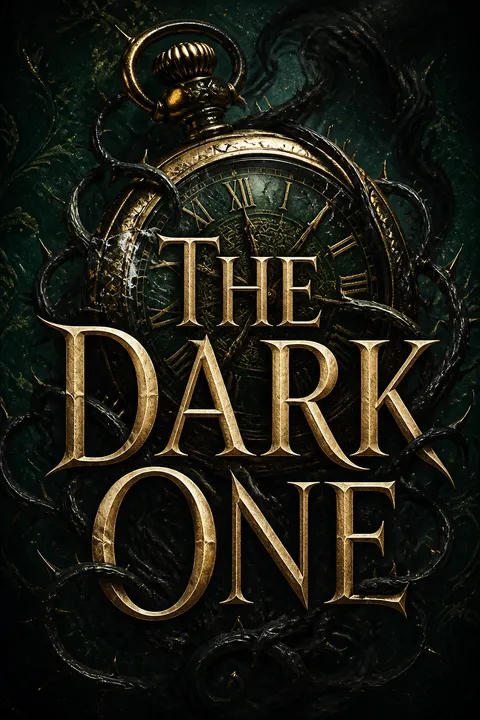
The Dark One receives mixed reviews, with ratings ranging from 1 to 5 stars. Fans praise the spicy romance, dark fantasy elements, and character development, particularly for Vane. Critics cite poor writing, lack of world-building, and excessive sexual content. Many readers find the book addictive despite its flaws, enjoying the unique Peter Pan retelling. The cliffhanger ending leaves readers eager for the next installment. Some reviewers note the short length and suggest the first two books could have been combined into one longer novel.
People Also Read



Characters
Winnie Darling
The mortal who choosesWinnie arrives in Neverland with little knowledge of its magic and a history that has taught her to expect pain more readily than care. She is observant, stubborn, and willing to test the rules people use to control her. Her attraction to Pan2, Vane3, Kas4, and Bash5 is tangled with a desire to belong, but she does not merely submit to their choices: she challenges Pan's2 double standard, uses belief to save Bash, and insists that her appetite and limits be taken seriously. Winnie is drawn to danger, yet she also wants tenderness and recognition. Her struggle is to distinguish chosen vulnerability from helplessness, and to claim a place without pretending she is unbroken.
Peter Pan
Neverland's possessive kingPan rules the Treehouse and the Lost Boys through force, appetite, and a deep familiarity with Neverland's magic. He is proud, volatile, and accustomed to treating desire as something he can command. The loss of his shadow threatens more than his strength: it cuts him off from the island he regards as part of himself. He is drawn to Winnie1 because she can unsettle his certainty and because her presence stirs a tenderness he would rather disguise as possession. Pan's history with the Darlings makes him both protector and danger to Winnie1. His central tension is between wanting control over everyone around him and needing forms of loyalty that cannot be compelled.
Vane
The shadow haunted outsiderVane is a feared outsider from Darkland who serves as Pan's2 closest ally and carries a dangerous shadow of his own. His mismatched eyes, scars, and blunt manner make him seem almost impossible to approach, while his flights over the island reveal a private need for release. Vane distrusts tenderness because attachment makes him feel exposed to loss, and his shadow can magnify desire into violence. He is drawn to Winnie1 even as he tries to keep her away from him. Their connection depends on seeing the fear beneath one another's defenses. Vane's defining conflict is not simply whether he wants Winnie1, but whether he can remain responsible for his power while wanting her.
Kas
The watchful fae princeKas is one of the banished fae princes and Bash's5 twin brother. He often acts as the more measured presence between the twins4, though his calm can turn into possessive intensity when Winnie1 is involved. His magic includes illusions, and his instinct is to care for people through practical attention as well as sensual play. Kas remains pulled toward the fae court and the wings he lost, but he is increasingly unwilling to treat Winnie1 as a temporary pleasure or an obligation. His twin bond gives him a private language and a powerful source of support, yet also makes separation and divided loyalty especially painful. He wants home, recognition, and the freedom to choose who counts as family.
Bash
The mischievous fae princeBash is Kas's4 twin, a banished prince whose humor and appetite conceal a fierce investment in family. He enjoys provoking people and turning intimacy into a game, but his teasing is also a way to keep fear from taking over. Bash longs for the wings and royal place he lost, while knowing that returning to court may require accepting his sister's8 terms. His bond with Kas4 is nearly instinctive, built through shared history and a private fae language. Winnie1 earns his trust by helping him when he is badly wounded, and he responds to her with both playfulness and care. Bash's choices are shaped by the tension between old loyalties and the people who have become home.
Cherry
Hook's lonely sisterCherry is Captain Hook's7 younger sister and has spent years living among Pan's2 Lost Boys after being exchanged as a hostage. She is vivacious, talkative, and hungry for Vane's3 attention, though she often covers hurt with flirtation and bravado. Winnie1 complicates Cherry's place in the household: Cherry does not simply hate her, but she resents how quickly the men turn toward her. Her longing to be chosen is intensified by a family history in which other people decide where she belongs. Cherry's actions are driven by a wish to be valued, but her attempts to secure that value can cross into dangerous choices.
Captain James Hook
The gentleman pirateHook rules the pirate side of Neverland and presents himself as a disciplined gentleman, carefully maintaining his house, ship, and reputation. Beneath that order lies a volatile hatred of Pan2 and a terror connected to the Crocodile10. His missing hand, replaced by a hook, makes old violence part of his daily life. Hook's relationship with Cherry6 is strained by the fact that he once gave her up in exchange for his trusted first mate, Smee9. He is ambitious and calculating, but fear can disrupt his careful self-command. His efforts to control the island are also efforts to keep its past from catching up with him.
Tilly
The calculating fae queenTilly is the fae queen and the younger sister of Kas4 and Bash5. She is politically astute, competitive, and accustomed to treating loyalty as something to be tested and used. The brothers remember a childhood sister who looked to them for protection, but the queen they face now is shaped by court politics and a hunger to prove she can rule. Tilly measures people by their usefulness and sees powerful alliances as a route to security. Her relationship with her brothers carries the weight of their shared childhood and divided memories of their father. She values control above reconciliation, which makes genuine trust difficult.
Smee
Hook's trusted first mateSmee is Hook's7 first mate, adviser, and most reliable source of information. She is perceptive enough to challenge his temper and independent enough to make him wait for news on her terms. Hook7 once traded Cherry6 to recover Smee after Pan2 captured her, giving their relationship the complicated weight of a choice that saved one woman by sacrificing another's freedom. Smee understands the politics and magic of the island better than most mortals, and she manages Hook's7 household without mistaking loyalty for obedience. Her practical judgment makes her a steady counterweight to Hook's7 impulsive anger.
The Crocodile
A feared island outsiderThe Crocodile is a feared figure whose reputation reaches Neverland before he does. Hook's7 terror of him is bound to a ticking clock, while Vane's3 history gives him a separate, personal connection to the threat he represents. Pan2 regards him as dangerous enough to reshape the island's alliances. The Crocodile's absence from much of the story makes him a pressure on the characters rather than a conventional onstage antagonist: each man imagines a different consequence if he arrives. His presence forces old injuries and unfinished relationships back into view.
Merry
Winnie's guarded motherMerry is Winnie's mother1, a woman whose past on Neverland was never fully shared with her daughter. She sought comfort from Pan2 during a frightening period of her life, yet later raised Winnie1 far from the island and its magic. The distance between mother and daughter leaves Winnie1 with unanswered questions about where she came from and why she carries old hurt. Merry's choices influence the living characters even when she is absent, making her a quiet link between Winnie's1 mortal upbringing and the history of Neverland.
Plot Devices
The living shadows
Power with a willIn this Neverland, a shadow is more than a shape cast by the body. Pan's2 Life Shadow holds a vital connection to his power and the island, while another escaped shadow behaves as a dangerous force in its own right. Vane3 also bears a separate shadow whose influence can overwhelm his judgment. These distinct shadows make inner conflict visible and physical: possession can grant strength, but it can also bring instability, fear, or violence. The story uses them to connect personal identity with the land each character inhabits.
Belief as magic
Words alter realityNeverland's magic gives belief and denial concrete consequences. Winnie1 learns that rejecting the existence of fairies can harm them, then discovers that affirming belief can help a wounded fae survive. The rule turns a familiar fairy tale idea into an action the characters can use under pressure. It also gives Winnie1 a form of agency that does not depend on strength or court status. Her knowledge is incomplete, so the device remains both an emergency tool and a reminder that the island's laws are not fully understood.
The lagoon shell
A magical tetherMerry11 brings a black shell from the lagoon to Pan2, where the island's magic makes it more than a keepsake. Pan2 later retrieves it because he believes it can draw or steady the Life Shadow. Its earlier association with Merry11 ties Winnie1 to the same magic before she knows she has any history on Neverland. The shell functions as both a plot tool and a material link across generations. It gathers meaning through use: what once comforted a frightened mother becomes relevant to the king's2 attempt to restore his lost power.
Territory and bargains
Borders demand paymentNeverland is divided among Pan2, Hook7, and the fae court, and crossing from one territory into another carries political risk. Pan2 seeks Hook's7 permission rather than simply invading, offering Cherry's6 return in exchange for access. Tilly8 likewise offers the twins4 their wings and court standing if they support her plans. These bargains make affection, family, and freedom vulnerable to political exchange. The device keeps the personal and the strategic intertwined: a character's movement across the island often depends on what another person is willing to trade.
Hook's ticking watch
Fear becomes a weaponHook7 cannot bear the sound of clocks because it recalls the Crocodile10 and the violence that cost him his hand. He bans watches from his household, but a pocket watch remains available when Pan2 needs a distraction. Its ticking interrupts Hook's7 composure at the moment he believes he has control. The watch turns trauma into an exploitable vulnerability, showing how carefully maintained authority can collapse around a sound the character cannot master. It also connects Hook's7 private fear to the wider threat moving toward Neverland.
FAQ
Synopsis & Basic Details
What is The Dark One about?
- Shadows and Power: The Dark One centers on Peter Pan's desperate quest to reclaim his escaped shadow, a source of his power, while navigating complex relationships and political intrigue in Neverland.
- Fae and Pirates: The story involves fae princes torn between loyalty and ambition, a vengeful Captain Hook, and a mysterious Dark One with his own shadow, all vying for control and power.
- Darling's Influence: A mortal woman, Winnie Darling, arrives in Neverland, disrupting the established order and challenging the men's control, becoming a focal point of desire and conflict.
Why should I read The Dark One?
- Dark Retelling: It offers a mature, dark reimagining of Peter Pan, exploring complex themes of power, identity, and desire with morally gray characters.
- Intricate Relationships: The novel features intense, evolving relationships between the main characters, filled with tension, jealousy, and unexpected connections.
- Action and Intrigue: The plot is driven by action, political maneuvering, and personal conflicts, keeping readers engaged with its fast-paced narrative and unexpected twists.
What is the background of The Dark One?
- Fantasy Setting: The story is set in a reimagined Neverland, a magical island with its own unique rules, history, and inhabitants, including fae, pirates, and lost boys.
- Power Dynamics: The political landscape is defined by power struggles between Peter Pan, the fae court, and Captain Hook, each vying for control of the island and its magic.
- Mythological Elements: The narrative incorporates elements of fae lore, shadow magic, and the concept of a "Dark One," adding layers of depth and complexity to the fantasy setting.
What are the most memorable quotes in The Dark One?
- "I don't want to share.": This quote from Winnie encapsulates her defiance and desire for exclusivity, challenging the established power dynamics and possessiveness of the men.
- "The only pussy I will have is your pussy.": Peter Pan's possessive declaration highlights his obsession with Winnie and his need to control her, revealing his complex character.
- "You'll crawl to me.": This line, spoken by Peter Pan, showcases his dominance and the power dynamics at play, setting the stage for Winnie's defiance and eventual control.
What writing style, narrative choices, and literary techniques does Nikki St. Crowe use?
- Intense and Sensual: St. Crowe employs a writing style that is both intense and sensual, focusing on the characters' desires, emotions, and physical interactions.
- Multiple Perspectives: The narrative shifts between different characters' points of view, providing a multifaceted understanding of the events and their motivations.
- Foreshadowing and Symbolism: The author uses subtle foreshadowing and recurring symbols, such as shadows and the lagoon, to enhance the story's themes and create a sense of unease and anticipation.
Hidden Details & Subtle Connections
What are some minor details that add significant meaning?
- The Lagoon's Magic: The lagoon is not just a location but a source of magic and connection, as seen when Winnie's mother finds a magical seashell there, foreshadowing Winnie's own connection to the island.
- Tattoos as Identity: The fae princes' tattoos, described as straight lines, symbolize their structured past and the loss of their wings, contrasting with the wildness of Neverland.
- The Never Tree's Significance: The Never Tree, where the shadows are first seen, acts as a central point of magic and conflict, its leaves and pixie bugs reacting to the presence of the shadows.
What are some subtle foreshadowing and callbacks?
- Wendy's Fate: Peter Pan's mention of taking a "wrong turn" when returning Wendy Darling foreshadows the revelation of her being alive in Everland, a key plot point.
- Vane's Island: Vane's description of his home island as a place where "little girls like you are broken" foreshadows his own internal struggles and his fear of hurting Winnie.
- The Ticking Clock: Captain Hook's reaction to the ticking clock foreshadows the arrival of the Crocodile, his greatest fear, and the impending chaos it will bring.
What are some unexpected character connections?
- Merry and Winnie: The connection between Winnie and her great-great-grandmother, Merry, is revealed through the magical seashell, highlighting a shared history and destiny on Neverland.
- Vane and Roc: The relationship between Vane and his brother, the Crocodile, is a complex one, with a shared history and a connection to Wendy Darling, adding layers to Vane's character.
- Tilly and Hook: The alliance between Tilly and Hook, driven by their shared desire to overthrow Peter Pan, reveals their similar ambitions and willingness to use others to achieve their goals.
Who are the most significant supporting characters?
- The Fae Princes: Kas and Bash, as fae princes, are not just supporting characters but key players, their internal conflicts and desires shaping the political landscape of Neverland.
- Captain Hook: As Peter Pan's long-time adversary, Hook's actions and motivations drive much of the plot, making him a significant force in the story.
- Cherry: Despite her jealousy and betrayal, Cherry's actions have a significant impact on the plot, highlighting the consequences of unchecked desire and resentment.
Psychological, Emotional, & Relational Analysis
What are some unspoken motivations of the characters?
- Pan's Fear of Loss: Peter Pan's possessiveness of Winnie stems from a deep-seated fear of losing her, mirroring his past loss of his shadow and his fear of being alone.
- Vane's Self-Loathing: Vane's harsh treatment of Winnie is driven by his self-loathing and fear of hurting her, stemming from his past trauma and the darkness of his shadow.
- Tilly's Insecurity: Tilly's ruthless ambition is fueled by her insecurity and desire to prove herself, stemming from her perceived lack of worth compared to her brothers.
What psychological complexities do the characters exhibit?
- Pan's Contradictions: Peter Pan exhibits a complex mix of charisma and brutality, possessiveness and vulnerability, highlighting his internal struggle with power and control.
- Vane's Internal Conflict: Vane's internal conflict between his desire for Winnie and his fear of his own darkness creates a complex character torn between love and self-destruction.
- Winnie's Resilience: Winnie's resilience and defiance in the face of powerful men reveal her inner strength and determination to assert her autonomy in a world that seeks to control her.
What are the major emotional turning points?
- Winnie's Choice: Winnie's decision to stay in Neverland and embrace her desires marks a turning point, solidifying her agency and challenging the established power dynamics.
- Vane's Vulnerability: Vane's admission of his past trauma and his fear of hurting Winnie marks a turning point in his character arc, revealing his vulnerability and humanity.
- Pan's Shadow Return: Peter Pan's reunion with his shadow is a major emotional turning point, restoring his power and connection to Neverland, but also highlighting his dependence on it.
How do relationship dynamics evolve?
- Pan and Winnie: The relationship between Pan and Winnie evolves from possessiveness and control to a complex mix of desire, respect, and a shared understanding of power.
- Vane and Winnie: The relationship between Vane and Winnie evolves from a mix of desire and fear to a deep connection built on shared vulnerability and a mutual understanding of pain.
- The Twins and Winnie: The twins' relationship with Winnie evolves from a playful dynamic to a deep bond of loyalty and affection, highlighting their shared desire for connection and belonging.
Interpretation & Debate
Which parts of the story remain ambiguous or open-ended?
- The Crocodile's Arrival: The exact nature of the Crocodile's arrival and his motivations remain ambiguous, leaving the reader to speculate about his role in the future of Neverland.
- The Fae Court's Future: The future of the fae court and the role of Kas and Bash remain open-ended, leaving the reader to wonder about their ultimate fate and their relationship with Tilly.
- The Nature of Shadows: The true nature of the shadows and their connection to the characters remains somewhat ambiguous, leaving room for interpretation and further exploration in future books.
What are some debatable, controversial scenes or moments in The Dark One?
- Winnie's Submission: Winnie's submission to the men's desires, particularly her willingness to be used as a "whore," can be seen as both empowering and problematic, sparking debate about agency and consent.
- Vane's Violence: Vane's violent tendencies and his treatment of Winnie, particularly his choking her, can be seen as both a source of tension and a trigger for some readers, sparking debate about the nature of his character.
- Pan's Possessiveness: Peter Pan's possessiveness of Winnie and his desire to control her can be seen as both a source of attraction and a red flag, sparking debate about the nature of his character and his relationship with Winnie.
The Dark One Ending Explained: How It Ends & What It Means
- Shadow Reclaimed: Peter Pan reclaims his shadow, restoring his power and connection to Neverland, but also highlighting his dependence on it and the potential for future conflict.
- Alliances Formed: The ending sees the formation of new alliances, with the twins choosing to side with Peter Pan, setting the stage for a potential overthrow of the fae queen.
- Uncertain Future: The ending leaves the future of Neverland uncertain, with the arrival of the Crocodile and the unresolved conflicts between the characters, hinting at more challenges to come.
Vicious Lost Boys Series



About the Author
Other books by Nikki St. Crowe



Download PDF
Download EPUB
.epub digital book format is ideal for reading ebooks on phones, tablets, and e-readers.








