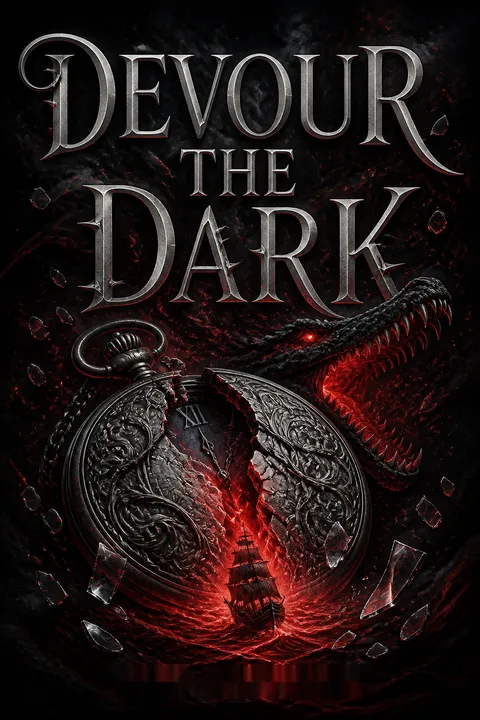


Plot Summary
Prologue
Roc once had a family and a name, but his father answered his monstrous strength with mercury burns and a steady catalogue of blame. Years of loss hardened him into someone who claims to regret nothing, though memories of his mother, his sister Lane, and the people he has abandoned still break through.
Now he lies sick and shifting, unable to tell memory from the room around him. Someone sits beside his bed, pleading for him to survive, while Roc can only feel the old terror of being left alone.
The prologue places Roc’s present danger inside a much older wound. His body has always made ordinary punishment impossible, so his father’s mercury becomes a way to teach him that even immortality can be made vulnerable. That history clarifies why Roc treats dependence as both danger and humiliation. The person beside his bed is not simply caring for an injured man; their presence confronts the belief he has built his life around, that loving anyone only gives loss another entrance. His denial of regret reads less as confidence than as a practiced defense against grief.
The Crocodile Unravels
After escaping Everland, Captain James Hook sails toward Neverland with Roc, the immortal Crocodile, repeatedly shifting in his cabin. Roc devoured a Myth Maker witch, and now his body breaks apart into shadow before he can control it. Each episode leaves Hook’s crew more frightened, and six sailors have already died. Wendy and Hook are the only people who can sometimes draw Roc back from his monstrous state.
With Roc unconscious and the crew whispering about throwing him overboard, Asha volunteers to find his younger brother Vane, a Lost Boy on Neverland. Roc has said he needs Vane, and the ship has no other way to stop the deaths. Asha goes ashore alone, hoping knowledge and nerve can accomplish what the crew’s weapons cannot.
The opening crisis makes Roc’s appetite a physical problem with a mounting human cost, rather than a mysterious quality that can be admired from a safe distance. Hook’s fear is sharpened by his helplessness: the captain can command a ship, but cannot command the person he loves to remain human. Asha’s choice offers a different response to danger. She volunteers not because she has mastered the threat, but because she trusts research, observation, and action more than panic. The story begins when private loyalty becomes a public responsibility.
Wendy Finds Her Descendant
At the Neverland treehouse, Asha finds Vane beside Winnie Darling, his lover and Wendy’s distant descendant. Vane initially refuses to help Roc, but Winnie insists that she has a right to meet her ancestor, and Peter Pan eventually permits the group to visit Hook’s ship.
At the docks, Wendy and Winnie recognize their family resemblance and embrace. Wendy also confronts Pan for abandoning her on Everland, striking him before he can dismiss the past.
Their reunion ends when Roc bursts through the ship in a cloud of shadow and begins tearing through the harbor. Hook and Vane pursue him through the streets while Wendy and the others try to contain the danger. Vane explains that a special hat can remove what Roc devoured, but it is in Darkland.
Wendy’s reunion with Winnie gives her a chance to meet a descendant who has inherited the family resemblance without inheriting Wendy’s exact history. Winnie’s confidence challenges Wendy’s old image of herself as powerless, while Wendy’s slap at Pan turns remembered injury into an act of present-tense agency. The interruption matters: personal repair cannot be completed while Roc remains a danger to strangers. By sending the group toward Darkland, the plot joins Wendy’s emotional return to a practical rescue mission, binding new family ties to the consequences of Roc’s past.
The Brothers Choose Darkland
Hook reaches Roc on a beach after the rampage, where Roc is back in human form and has adopted an orange kitten. The promised hat is not on Neverland, so Roc must return to Darkland, the home he has avoided. In a bakery, Vane cuts his wrist and gives Roc blood, briefly calming the transformation.
Roc tells his brother that the witch warned of a new Myth ruling the Council of Seven, and that maker’s marks have appeared on powerful objects in Everland. He suspects the Myth Makers are using him. Vane agrees to go to Darkland despite the grief tied to their family and their sister Lane’s death. Wendy, Hook, Asha, and Winnie join them. Before sailing, Vane warns Roc that if he becomes irretrievably dangerous, he may have to kill him.
Vane’s blood gives the brothers a form of care they can perform without discussing grief: one makes himself physically vulnerable so the other can keep control. Yet this solution is only temporary, and its limits prevent intimacy from becoming a substitute for action. The revelations about the Myth Makers also widen the stakes beyond Roc’s body. Vane’s reluctant return to Darkland forces him to face a place he has treated as finished, while his promise to kill Roc reveals the terrible shape his loyalty can take when protection and mercy seem incompatible.
Love Meets the Monster
At sea, Wendy struggles with jealousy and fears she is only an addition to the history Roc and Hook share. Roc reassures her through intimacy, then admits to Hook that he wants to keep both Wendy and the captain at a distance.
When they ask whether he will remain with them after the danger passes, Roc leaves rather than answer. The witch presses on his fear, urging him to claim the people he loves and then consume them. Asha draws Roc out onto the dark deck, where they trade pieces of their histories.
She reveals her intention to return someday to the Winterland court that stole her throne; he recognizes her resolve and keeps her secret. Their exchange exposes how easily both mistake self-protection for strength, even as the ship carries them toward the past Roc fears.
Roc’s withdrawal is not a lack of desire; it is an attempt to control the risk of attachment by refusing to name it. Wendy and Hook seek reassurance, but his refusal leaves them to interpret silence as rejection. Asha offers a useful contrast: she has not abandoned fear, but converts it into a deliberate plan. Their private exchange makes recognition possible without demanding instant confession. The witch exploits the same vulnerabilities the group is beginning to expose, turning intimacy into a potential instrument of harm. The journey therefore tests whether honesty can become protection rather than simply another weakness.
A Deal at the Warehouse
Darkland feels familiar to Roc and Vane, but their old warehouse has already been entered. Inside, Myth Maker Malachi offers them a bargain: kill a powerful Myth at a ball in Maddred Manor, and he will provide the hat. He says the Darkland monarchy is unstable and that Myth Makers intend to take control. The brothers accept, though Vane distrusts Malachi and plans to kill him once the hat is secured.
At Roc’s loft, Vane assigns himself, Asha, and Winnie to the ball, leaving Roc with Wendy and Hook because Roc is the center of the threat. The arrangement exposes how much the group has begun to rely on one another. Roc’s illness worsens, however, and he prepares a hidden monster-killing blade before the others depart.
The bargain turns the return to Darkland into a test of judgment: the brothers need Malachi’s help, yet the offer requires them to kill a stranger on his terms. Vane’s instinct is to treat alliance as a temporary arrangement that should end in violence; Roc recognizes that surviving political conflict may require keeping potential allies alive. Their disagreement reflects different adaptations to danger. Vane reduces uncertainty by controlling it, while Roc risks ambiguity. Leaving Roc behind is tactically sensible but emotionally fraught, because the group’s protection cannot be separated from the bonds he is still afraid to acknowledge.
The Manor's Missing Fires
At Maddred Manor, Asha notices that the ball’s guests are cold and every fireplace is unlit. She also remembers that Malachi wore his dagger on the right arm, implying he was left-handed, but the man hosting them now uses his right hand. The mismatch suggests a shapeshifter, and Asha and Winnie move to find Vane after the false Malachi leads him away.
Elsewhere in the manor, Roc’s failing control draws him toward memories of his childhood and his sister Lainey. Hook and Wendy follow him to his room, where he lights a fire and reveals the name Bane, the name his mother gave him and his father turned into an insult. He apologizes for bringing them into danger, but Wendy chooses to stay beside him.
Asha’s discovery depends on attention to small inconsistencies, a skill shaped by her life as both scholar and survivor. The absence of fire is not merely atmosphere; it becomes evidence that separates a convincing performance from a real person. At the same time, Roc’s return to his childhood room pulls the political plot into the intimate territory of memory. Sharing his birth name is a rare surrender of control, while lighting the fire gives him a concrete task amid hallucinations and distress. Wendy’s decision to remain does not cure him, but it refuses the isolation his fear expects.
The Maddreds Are Exposed
The false Malachi’s people ambush Vane and Roc inside the manor. Mercury weakens Vane, while the rare blade Roc had hidden in his room wounds him badly. Their captor reveals that the brothers are Jabberwockies from Wonderland and intends to use Roc’s unstable transformation to put him on Darkland’s throne.
The plan depends on Roc yielding to the witch he devoured, who will claim the Darkland Shadow and rule through him. Wendy and Hook are dragged in and held at knifepoint to force Roc’s compliance. Believing they have abandoned him, Roc nearly gives up. Instead, Hook reminds him of their bond, and Wendy joins him in affirming their love. Roc recognizes them, then urges them to flee before the witch takes full control.
The ambush converts the brothers’ hidden history into a political weapon. Their origin as Jabberwockies explains why the Myth Makers know which substances and weapons can disable them, while the throne plot gives Roc’s private illness a public consequence. The captors target attachment because it is both Roc’s deepest vulnerability and the strongest reason he has to resist. His near surrender is not simple weakness: it grows from a belief that love has already failed him. Hook and Wendy’s insistence counters that belief with a shared commitment, though the rescue still depends on action rather than reassurance alone.
The Hat Breaks the Spell
Asha and Winnie reach the captives as Firecracker leaps at the Myth’s face, giving Asha time to stab the attacker in the eye and free the others. Wendy heals after a guard cuts her throat, while Hook fights back. Roc stands again under the witch’s control, but Hook and Wendy’s declaration of love restores enough of his will for him to transform and devour the Myth.
The group finds the real Malachi, bound in a hidden wine-cellar room, and learns that he hid the hat inside the library piano. Vane retrieves it and places it on Roc. A burst of light and violent pain follows; when it ends, Roc is alive, the witch and her sister are gone, and the danger of another uncontrolled shift has been lifted.
The rescue succeeds through several kinds of agency at once. Firecracker creates an opening, Asha uses it decisively, Wendy’s healing keeps her in the fight, and Hook and Wendy reach Roc through the relationship the witch tried to make him distrust. But emotional recognition alone is not the cure: the hat is needed to remove the devoured powers that have overwhelmed his body. The climax thus refuses an easy choice between love and mechanism. Attachment helps Roc act, while the artifact makes survival possible, joining personal commitment to the practical knowledge the group gathered along the way.
Roc Claims His Name
Two weeks later, Roc is stable and living at Maddred Manor. He has claimed the Darkland Shadow, which keeps his monster under control, and tells Vane he intends to assert his right to the Darkland throne.
He no longer sees responsibility only as a trap; remaining in one place means accepting the people and obligations he once escaped. Vane promises Neverland’s support, and the brothers part on warmer terms than they began. Roc also makes clear that Wendy and Hook are part of the life he is choosing.
In the epilogue, the group returns to the warehouse to store the hat among the Maddred brothers’ magical collection. Winnie and Wendy uncover a concealed portrait of Alice, a woman from the brothers’ past, and Roc’s anger suggests that their history is not finished.
Roc’s political choice completes a movement from evasion toward chosen responsibility. The Darkland Shadow does not erase his nature; it gives him a way to live with it without treating each attachment as a hostage to future disaster. His claim to the throne also reframes power: he is no longer merely the heir who inherited privilege or the outlaw who rejected it, but someone deciding what obligation might mean on his own terms. The portrait of Alice unsettles that resolution. The past has been contained, not explained, leaving the family’s new stability shadowed by an old unresolved bond.
Epilogue
Roc and Vane return to their warehouse with Wendy, Hook, Winnie, and Asha to lock the devourer hat inside a cabinet of magical headwear. Their companions discover a hidden portrait of the brothers with a girl called Alice, whom Vane identifies as a figure from their past.
Roc covers the painting again, but his anger makes clear that Alice’s history still has a hold on him. The group leaves the warehouse without learning what happened between them, and Roc hopes she will remain far away.
The epilogue gives the newly restored family a domestic task, securing the hat, then opens a door onto a different kind of danger: memory that cannot be managed by locking an object away. Alice’s portrait shows the brothers as they once were, but Roc’s reaction warns that the image is not a neutral record. His insistence that she is irrelevant conflicts with the intensity of his anger, making denial itself a clue. The scene grants the main crisis closure while withholding emotional closure, suggesting that survival and reconciliation do not erase the histories that shaped either brother.
Analysis
The novel makes intimacy a practical problem. Roc’s immortality does not protect him from dependence; instead, his ability to transform makes closeness dangerous to the people around him. His attempt to avoid commitment therefore looks like caution, but it also leaves others to bear uncertainty and risk without knowing whether he will remain. Wendy and Hook ask for recognition, while Vane and Winnie negotiate a related conflict between protection and autonomy. Across these relationships, love becomes meaningful not as possession but as an agreement to remain present without controlling the other person’s choices.
The brothers’ story also links private trauma to political inheritance. Their father’s abuse, their family’s fall, and Lane’s death have taught them to treat power as a burden that ends in loss. Returning to Maddred Manor forces them to see that retreat does not undo inheritance; it only leaves the future to people with worse intentions. The Myth Makers’ plan to place Roc on the throne turns his unstable body into a political instrument. His final willingness to claim responsibility is therefore not a simple embrace of authority. It is an effort to choose how inherited power will be used.
The book’s magical objects and powers repeatedly externalize psychological limits. Blood buys Roc time but cannot restore him. The shadows strengthen bonds but cannot make trust automatic. The hat can remove the witch, yet it does not provide the emotional courage Roc needs to resist her. Asha’s attention to details, Wendy’s healing, Hook’s persistence, and Firecracker’s accidental attack all matter because survival is distributed across the group. The story’s resolution depends on a form of interdependence that does not erase individual agency. Roc is saved by others, but he must still choose to turn back toward them, and afterward he chooses a future that includes responsibility rather than escape.
Review Summary
People Also Read


Characters
Roc
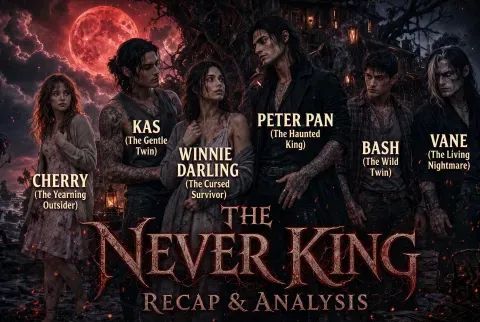
The immortal CrocodileRoc is an immortal shapeshifter whose need to devour and recover makes him dangerous even to the people he wants near. As Vane’s older brother, he shares a history of family loss and violence, but he responds by avoiding obligation and disguising pain with humor. His appetite gives his choices immediate consequences, while his reluctance to name affection reveals a deeper fear of losing what he loves. Roc is charismatic and often generous, yet he can treat freedom as an excuse not to be accountable. His struggle asks whether a person can accept care without turning it into a debt or a threat.
James Hook
The stubborn pirate captainJames Hook is a pirate captain who relies on discipline, navigation, and command, but Roc makes clear the limits of each skill. His attachment to Roc is expressed through practical attention: he watches the sick man, stays close during danger, and keeps trying to reach him even when fear would be reasonable. Hook’s history with Roc is tangled with rivalry and regret, and his careful reserve makes emotional candor difficult. He is neither a passive admirer nor simply a caretaker. The captain’s steadiness gives the group an anchor, while his willingness to risk it reveals how deeply he wants a life beyond command.
Wendy Darling
A survivor reclaiming agencyWendy has survived kidnapping, imprisonment, and years under the power of other people. She can still doubt her own strength, but she is learning to make choices without waiting for permission. Her friendship with Asha gives her a relationship grounded in equality, while her meeting with Winnie connects her to a descendant who reflects both family history and a different kind of freedom. Wendy’s care for Roc and Hook is not passive: she asks for reassurance, names what she wants, and stays present when their fears make closeness difficult. Her journey is shaped by recovering the right to define herself.
Vane
Roc's guarded younger brotherVane is a Lost Boy, a former ruler of Darkland’s underworld, and Roc’s younger brother. His scarred, watchful manner reflects a life spent treating danger as something best handled before it can surprise him. He loves fiercely but often expresses that love as control, planning, or readiness to use violence. His history with Roc is inseparable from their family’s losses, especially the death of their sister Lane. Winnie challenges his instinct to decide what is safest for her, while Roc’s return forces Vane to face a home he has tried to leave behind.
Asha
The scholar with a bladeAsha is a Winterlander scholar and former soldier whose intelligence is matched by an ability to act under pressure. She studies myth and history because knowledge gives her a way to test danger rather than simply fear it. Her friendship with Wendy is affectionate and equal, but Asha does not soften her judgments to make others comfortable. She has her own history of betrayal and a reason to imagine returning to the court that wronged her. Curiosity is both her vocation and a source of risk: she wants to understand people whose secrets may be dangerous to uncover.
Winnie Darling
Neverland's fierce queenWinnie is Wendy’s distant descendant and a powerful presence in the Neverland household. She shares a magical bond with the island’s shadow and refuses to let Peter Pan or Vane make decisions for her simply because they consider it protective. Her relationship with Vane is intense, but she meets his possessiveness with confidence and humor rather than surrender. Winnie’s warmth makes room for Wendy quickly, helping the older woman imagine family as a living relationship rather than a lost inheritance. She is affectionate without being deferential, and she treats independence as part of love.
Peter Pan
Neverland's formidable rulerPeter Pan is an ancient and powerful figure whose authority has shaped Wendy’s history and the lives of the Lost Boys. He is accustomed to being obeyed, yet Winnie can challenge him in ways few others dare. His relationship with Wendy carries the weight of her abandonment, and her return forces him to face the harm attached to his choices. Pan remains difficult to read, at once a ruler, a former captor, and part of a changing Neverland community.
Kas
One of the fae princesKas is one of the fae twins living with Peter Pan and the Lost Boys. He is physically capable and dangerous, but he often shows a gentler instinct when tension rises, especially when Winnie needs support. His closeness with his brother Bash gives the household a teasing, familiar energy amid its rivalries.
Bash
The other fae princeBash is Kas’s twin and another of Neverland’s fae princes. He shares his brother’s strength and place in Winnie’s circle, but brings a more irreverent, quick-witted edge to tense situations. Their banter makes them feel like family rather than a formal guard around the island’s rulers.
Malachi
A bargaining Myth MakerMalachi is a Myth Maker who approaches the Maddred brothers with a political bargain. He understands the instability of Darkland and knows that information can be as valuable as force. His polished manner gives little certainty about his loyalties, and his dealings with Roc and Vane reflect the danger of making alliances in a world where appearances can be manufactured.
Mareth
The witch inside RocMareth is a Myth Maker witch whose power and presence become entangled with Roc after he devours her. She understands how to find the fears her host would rather conceal and presses on them until they threaten to govern his actions. Her connection to the wider Myth Maker conflict makes her more than a private haunting; she is part of a political design that treats bodies and identities as instruments.
Firecracker
The fearless orange kittenFirecracker is the orange kitten Roc adopts during the Neverland crisis. Small, curious, and difficult to keep out of trouble, the kitten becomes an unexpected companion to the group. Its fearless attack during the manor confrontation creates a crucial opening for Asha.
Juliette
The displaced royal heirJuliette is the surviving member of Darkland’s ruling Remaldi family and a possible focus of the kingdom’s unstable succession. Her interests do not neatly align with the political role others might assign her, making her a reminder that royal status does not guarantee personal freedom.
Alice
A figure from the brothers' pastAlice appears in a portrait kept among the Maddred brothers’ hidden possessions. The painting presents her as someone who once stood close to both men, while their guarded reactions suggest an unresolved history. Her full significance remains deliberately uncertain.
Plot Devices
Roc's devouring
Power with a bodily costRoc and Vane can transform into monstrous forms and devour living beings, but each transformation leaves them vulnerable and requires recovery. Repeated shifts can make it impossible for Roc to return to human shape. Blood from Vane can stabilize him temporarily, yet cannot solve the deeper problem caused by devouring a powerful witch. The device turns appetite into both supernatural ability and moral consequence: every use endangers bystanders, tests the brothers’ loyalty, and raises the possibility that Roc may become permanently uncontrollable.
The devourer hat
Undoing what was consumedThe hat is a magical object designed to counter the consequences of devouring power. Vane knows it exists, but it has been left in Darkland, forcing the group to return to the place the brothers hoped to avoid. The search leads them through Roc’s warehouse, a political bargain, and a dangerous ball at Maddred Manor. Placed on Roc after the confrontation, the hat removes the witch and the power she carried, ending his uncontrolled transformations. Its ordinary appearance disguises the scale of what it can undo.
The island shadows
Power shared through bondsThe Neverland Shadow is shared by Winnie and Vane, and its strength responds to their connection. It can protect them and increase their power, but Vane’s tendency to shut Winnie out weakens their access to it. The Darkland Shadow also matters to the Maddred brothers, since it can help contain their monstrous transformations. These shadows make emotional relationships materially consequential without reducing them to simple magic. Their power depends on connection, while the characters’ fear of dependence repeatedly threatens that connection.
Myth Maker disguises
Trust turned into a trapMyth Makers pursue influence across the Seven Isles through hidden marks, political schemes, and powers that can make deception difficult to detect. At the manor, Asha recognizes that the apparent Malachi behaves unlike the man she saw at the warehouse. The absence of fire and a change in handedness reveal the imposture. The disguise draws Vane away from his allies and helps the conspirators capture the brothers. This device rewards close observation while showing how easily an informed group can still be divided by a convincing performance.
The monster-killing blade
A weapon against immortalityA particular blade is one of the few objects capable of killing Roc and Vane, making its presence a secret the brothers guard closely. Roc retrieves it from a hidden compartment in a lamp before leaving his loft. During the manor ambush, the weapon is used against him, while mercury weakens Vane. Together, these vulnerabilities make the brothers’ immortality conditional and give the Myth Makers leverage. The blade’s role also sharpens the brothers’ promise to protect one another, because the threat they face is not merely injury but an ending they cannot reverse.
About the Author
Other books by Nikki St. Crowe


Download PDF
Download EPUB
.epub digital book format is ideal for reading ebooks on phones, tablets, and e-readers.








