

Key Takeaways
Digital tools can summon a movement before it has learned to survive
Speed creates a dangerous gap. Digital networks let people assemble, publicize, and coordinate at a scale that once required months of organizing. But a crowd can arrive before its members have practiced making decisions, resolving disputes, or changing strategy. Tufekci compares this technological boost to guides and equipment that help inexperienced climbers attempt Everest: useful support, but no substitute for the skills needed when conditions turn dangerous.
Gezi Park in Istanbul showed both sides. A small protest against the destruction of a public park rapidly grew into a vast occupation, with kitchens, clinics, and supplies organized through phones and social media. Yet the movement had little experience or structure for the political challenges that followed. Its early strength and its fragility came from the same source: rapid growth without equivalent preparation.
The distinction between mobilizing people and preparing them is useful far beyond protest. A startup can acquire users faster than it builds reliable operations; an online campaign can attract attention before it can sustain a coalition. In each case, scale tests capacities that visibility alone cannot create. The mountaineering comparison also cautions against treating technology as either magic or menace. A boost changes who can attempt a difficult climb, while the terrain and the consequences of inexperience remain real.
Use networks to reveal dissent, not just broadcast it
Connection can make belief visible. Under authoritarian rule, people may privately oppose the government yet assume they are isolated. This is called pluralistic ignorance: people mistake others' silence for agreement, and stay quiet themselves. Social media can help dissidents find one another, build relationships, and signal that their views are shared. Weak ties matter too, because acquaintances can carry a message into social circles that close friends do not reach.
Tunisia illustrates the change. In 2008, protests in Gafsa were largely contained by censorship. By the 2010 uprising, Facebook use had expanded from about 28,000 Tunisians to roughly 2 million, and established activist networks helped circulate and verify reports. In Egypt, a Facebook page about police brutality helped make dissent more visible. The online connections did not create the grievances, but they helped people recognize and act on them together.
This mechanism resembles a coordination problem: people may share a preference but need evidence that others share it before taking a risk. Public signals reduce that uncertainty. The important distinction is between exposure and persuasion. A post can tell someone that dissent exists without changing their mind, while the knowledge that others have also seen it can change what feels possible. Visibility is not automatically inclusive, though. People without reliable access, safety, or relevant networks can remain unseen even as a movement appears to speak for everyone.
Fight for attention, then earn trust through verification
Information needs an audience. In a networked public sphere, censorship is not only the removal of a story. It can also mean denying it attention, credibility, or a route to wider audiences. A phone camera can defeat a newsroom blackout, but a flood of unverified reports can make important evidence difficult to trust.
After Turkish military jets killed 34 Kurdish villagers near Roboski in 2011, journalist Serdar Akinan posted an image of the coffins online. The picture forced a story ignored by television into public view. In response to such gaps, four young volunteers created 140journos, a citizen-journalism group that checked reports using timestamps, maps, phone calls, and local witnesses. Its members learned that distributing a report was only half the job. Reliable intermediaries were needed to distinguish evidence from rumor in an information-rich environment.
The shift from scarcity to abundance changes the central media skill. When few people can publish, access is the bottleneck; when everyone can publish, verification and prioritization become essential. This does not make professional journalism infallible. It does make its norms of checking and correction valuable public infrastructure. Citizen reporters can add local knowledge and speed, while curation supplies context. The difficult design question is how to verify quickly without granting a small number of intermediaries unchecked authority over what counts as true.
Treat organizing chores as training for collective judgment
Logistics teach people to work together. In Cairo in 2011, four young volunteers used Twitter, messaging apps, and shared spreadsheets to coordinate supplies for ten field hospitals. They raised more than $40,000 for surgical equipment in under five hours. Digital tools made a complex task possible with little preparation and few organizers.
Earlier movements had to build more capacity before acting at scale. In Montgomery, organizers printed 52,000 leaflets for a bus boycott, then coordinated carpools that carried people to work for a year. The work was tedious, but it also created trust, delegation, and habits of decision-making. Tufekci calls those gains network internalities: capabilities a group develops through sustained interaction, apart from the immediate task. Digital shortcuts can solve logistical problems while bypassing some of this collective practice.
A useful analogy is organizational learning: teams become more capable not only by completing a task, but by learning how to coordinate, repair mistakes, and assign responsibility. That learning is not guaranteed by effort alone. Repetitive work can also exhaust volunteers or reproduce hierarchy. The sharper question is whether an organizing method gives participants meaningful practice in cooperation. A spreadsheet may efficiently distribute supplies; it does not necessarily teach a group how to settle a contested strategy.
Build participation without letting consensus become a veto by the loudest
Leaderlessness has tradeoffs. Many networked protests reject formal leaders because participants distrust institutions and fear that leaders can be co-opted, corrupted, or targeted. But when no recognized process exists for representation or decisions, informal power does not disappear. It may shift to people with more time, confidence, social status, or control of a meeting.
At Gezi Park, the government invited people to negotiate, but protesters had no agreed way to choose representatives or authorize a decision. In an Occupy Atlanta assembly, one participant blocked a proposal to let civil-rights leader John Lewis speak, despite broad support for hearing him. The consensus process gave a single objection enormous weight, while the facilitator shaped how the group interpreted its own response. Participation can deepen commitment, but it needs fair rules for resolving disagreement.
This tension is familiar in democratic design: equal voice is not the same as equal influence. Consensus can protect minorities from being overruled, yet a veto without accountability can empower whoever is most willing to use it. Conversely, delegation can make action possible while excluding participants from consequential choices. The goal is not to choose between pure horizontality and rigid hierarchy. It is to make authority visible, revisable, and answerable, so that participation does not depend on having endless free time or the loudest voice.
Protect the human community inside the protest, not only its demand
Protest offers more than a policy goal. Participants may seek legal or political change, but they also value belonging, shared agency, and the experience of strangers caring for one another. These rewards help explain why people accept risks even when success is uncertain, and why a protest camp often creates services that are not strictly necessary to stage a demonstration.
Libraries, free meals, clinics, and clothing exchanges appeared in camps from Gezi Park to Occupy. In Gezi, people donated food and blankets, cleaned shared spaces, and helped strangers after police attacks. The exchanges expressed a form of community not organized around buying and selling. This expressive life can be politically meaningful in itself, even as it creates a challenge: the energy that sustains a temporary community does not automatically produce a strategy for changing institutions.
The book's account helps explain why protest participation cannot be reduced to a calculation of personal costs and public benefits. People also seek identity, solidarity, and a felt sense of agency. Those experiences can create durable relationships and widen empathy across social divisions. Yet emotional intensity is not a substitute for political leverage. A movement can be deeply transformative for participants and still fail to change a law. Taking both outcomes seriously avoids dismissing the community as mere spectacle or mistaking it for policy success.
Do not mistake a platform's reach for public ownership
The digital square has private owners. Facebook, Twitter, and Google became central to civic life partly because of network effects: a service becomes more useful as more people use it. Their advertising-based business models also reward scale and collection of user data. As a result, a handful of companies can shape who is visible through policies, moderation decisions, and algorithms.
Facebook's real-name rule nearly removed the Egyptian page We Are All Khaled Said, a major gathering point for dissent, because its administrator used a pseudonym. In Ferguson, Facebook's feed appeared to give less visibility to protest reports than to the popular Ice Bucket Challenge. A study involving 61 million users also found that a small change to Facebook's voting reminder was associated with roughly 340,000 additional voters. Platform choices can therefore affect civic attention and behavior, even when no explicit political intervention is intended.
The central issue is governance, not simply whether a company is biased in an individual case. A platform combines the functions of a public forum, private messaging service, and distribution system, while its rules remain largely corporate decisions. That concentration makes small design choices consequential and hard to audit. At the same time, removing algorithmic ranking would not produce a neutral or equally visible public sphere; popularity, social status, and coordinated campaigns would still shape attention. Accountability requires transparency and meaningful appeal, not an imaginary platform without gatekeeping.
Choose identity rules with both safety and accountability in view
Names are a design choice. Real-name systems can make it easier to connect online speech to offline people, but they can expose dissidents, LGBTQ users, and others who need separation between public and private identities. Pseudonyms can give people room to speak and build a reputation without disclosing their legal identity. They can also shield harassment or deception.
Reddit's karma points let pseudonymous users build standing within communities. In one notorious forum, that reputation system helped normalize the sexualization of minors by rewarding participation according to the group's own standards. In a different case, a man posing online as a Syrian lesbian activist invented an abduction, damaging trust in genuine reports from Syria. Neither real names nor anonymity solves these problems. Identity systems shape who feels safe, who is believed, and which community norms gain strength.
Identity architecture is a balance among privacy, credibility, and protection from abuse, not a binary choice between honesty and deception. Pseudonymity can support vulnerable speech, while persistent reputations can make accountable communities possible without legal names. But reputation scores measure approval within a group, not moral reliability. The platform's context matters: the same identity protection that helps a dissident may shelter an abuser. Policy therefore benefits from separating identity verification from public naming, and from giving users remedies that do not require exposing themselves.
Judge a protest by the power it can credibly mobilize
Crowd size is not capacity. Tufekci's capacities-and-signals framework asks what a protest demonstrates about a movement's ability to shape public understanding, disrupt routine, or influence elections and institutions. A large gathering may signal commitment, but its meaning depends on how it was organized, what participants can sustain, and whether decision-making allows the movement to adapt.
The global antiwar marches of 2003 were enormous, yet the invasion of Iraq proceeded. Occupy Wall Street shifted public discussion toward inequality but developed little immediate electoral or institutional leverage. The Tea Party, by contrast, focused heavily on elections, primaries, and legislative procedure, and helped move Republican politics. These cases show why identical-looking outputs, such as marches or online campaigns, can signal very different abilities to those in power.
This framework improves on simple scorekeeping because it distinguishes attention from leverage. It also resembles signaling theory: an action is persuasive when observers believe it reflects real resources and commitment, rather than a claim that is easy to imitate. Still, capacity is difficult to measure from outside, and decision-makers can misread signals or act for reasons unrelated to protest. The framework is best used as a disciplined set of questions, not as a formula that predicts outcomes from a march, hashtag, or turnout figure.
When blocking fails, power can bury truth in noise
Modern censorship can overwhelm rather than erase. Mubarak's 2011 communications shutdown backfired: it drew attention, alarmed families, and did not stop protesters from reaching the outside world. Governments increasingly use subtler tactics, including disinformation, harassment, distraction, and attacks on the credibility of independent media. A movement needs attention and persuasive evidence; those protecting the status quo may only need to make people doubt what is knowable.
Research on China found that censors often tolerated criticism of the government while targeting posts that could help people organize collectively. State-linked commentators also posted distracting material rather than arguing directly. In Hong Kong, authorities let an occupation lose momentum instead of triggering another dramatic confrontation. Yet digital tools can serve governments too: during Turkey's 2016 coup attempt, officials used a live phone video to reach the public, and citizens mobilized through phones, television, and mosque loudspeakers.
The asymmetry is stark: challengers must persuade people to act, while incumbents can benefit when people become confused or exhausted. This makes reliable verification and sustained attention democratic resources, not merely media concerns. But the Turkish coup also complicates any simple opposition between networks and state power. Connectivity can help defend an elected government against a coup, just as it can help challenge one. The relevant question is not who owns the technology, but which actors can use it credibly, at what moment, and with what consequences.
Analysis
The book's strongest contribution is a change of unit: instead of treating a protest as an event to count, it treats the event as a signal of collective ability. That shift explains why a million-person march can be politically weak, while a smaller action backed by durable organizations may alter policy. Digital media scramble the old sequence. Movements once built many capacities through the slow work required to organize public action; now they can become visible first and face the harder work of coordination, negotiation, and tactical change afterward.
This is not a claim that older organizing was automatically democratic or effective. Formal organizations can entrench insiders, exclude newcomers, and become targets for repression. Nor does horizontal participation guarantee equality: without accountable procedures, informal status and platform popularity can become leadership by another name. The challenge is institutional design, not choosing hierarchy or its absence as a moral absolute.
The book also treats attention as a contested resource, then shows how abundance changes the contest. Cameras and social platforms help expose hidden abuses, but reach without verification can make evidence easier to dismiss. Corporate ranking systems and state disinformation exploit this vulnerability in different ways. Public visibility, therefore, needs counterweights: trusted verification, transparent rules, and organizations able to sustain attention beyond the initial surge.
The result is a deliberately unsettled account of technological change. Digital tools lower the cost of connection and action, but they redistribute power rather than abolish it. Their political effects depend on design, business incentives, movement culture, and the capacities already built around them. The practical lesson is not to reject rapid mobilization, but to pair it with durable decision-making, plural forms of leadership, and strategies for surviving both repression and distraction.
Review Summary
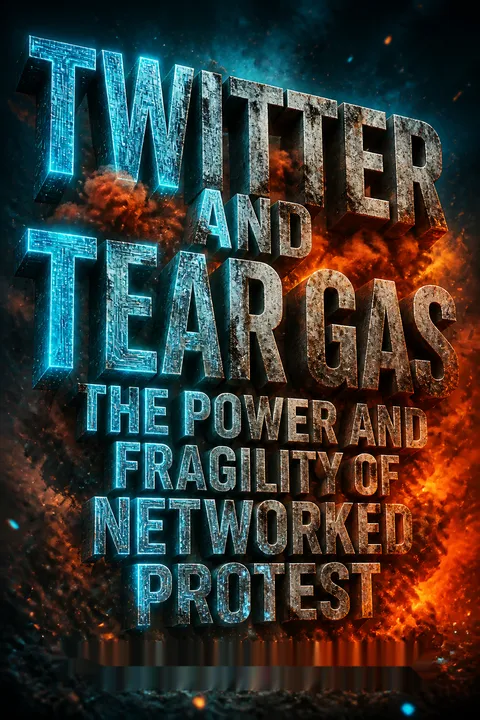
Twitter and Tear Gas explores the impact of social media on modern protest movements. Tufekci analyzes how digital technologies have reshaped activism, examining case studies from the Arab Spring to Occupy Wall Street. She discusses the strengths and weaknesses of networked protests, including their ability to quickly mobilize large crowds but struggle with long-term organization. The book offers insights into government responses, censorship tactics, and the changing nature of public discourse in the digital age. Readers praise Tufekci's balanced approach and firsthand experiences, though some find the academic tone challenging.
People Also Read








Glossary
networked public sphere
Connected civic spaceThe public arena reshaped by digital connectivity, including online platforms, mass media, and physical gathering places. It is not an online-only realm. Digital communication changes how people find one another, circulate information, and gain visibility, while older institutions and offline relationships remain intertwined with those processes.
affordances
Actions a design enablesThe possibilities for action that a technology makes easier, harder, or more likely. A tool's affordances depend on its design and context. For example, Twitter's mentions and hashtags can help users reach strangers and gather around a topic, while another platform may favor communication among established contacts.
adhocracy
Ad hoc task organizationA way of organizing in which people take on tasks as they arise, often through informal, temporary coordination rather than a fixed hierarchy. In networked protests, volunteers may use messages, shared documents, or hashtags to organize food, medical care, or communications. This can be fast and flexible, but may leave decisions and accountability unclear.
network internalities
Capabilities gained through cooperationThe collective skills and relationships a group develops while working together over time. These include trust, shared decision-making, delegation, and the ability to resolve conflict. They are distinct from the immediate output of a task. A movement may successfully organize an event with digital tools while gaining fewer of these durable capacities through the process.
tactical freeze
Inability to change strategyA movement's difficulty adapting its tactics, negotiating demands, or agreeing on a next step after its initial protest strategy stops working. Tufekci links this problem to rapid growth without established decision-making structures, especially in movements that reject formal leadership. The initial tactic can remain emotionally powerful even when it no longer offers a workable path forward.
capacities and signals
Abilities conveyed through actionA framework for understanding how movements demonstrate their underlying power to authorities and wider publics. Rather than judging only turnout or online activity, it asks what a movement can do, sustain, or credibly threaten. A protest may signal capacities to shape public narratives, disrupt routine, or influence elections and institutions.
narrative capacity
Power to shape public understandingA movement's ability to attract attention, explain events in its own terms, and have its account treated as legitimate. Digital media can help activists document events and bypass traditional media gatekeepers. But visibility alone is insufficient: a movement also needs credibility, verification, and a way to keep its account in public discussion.
pluralistic ignorance
Mistaking silence for disagreementA situation in which people privately hold a view but assume that few others share it because those others remain silent. This mistaken belief can discourage dissent, particularly where speaking carries risks. Public discussion and visible acts of support can reveal that a supposedly isolated opinion is more widely held.
Streisand Effect
Suppression that attracts attentionThe unintended spread of information caused by an attempt to suppress or remove it. The term refers to Barbra Streisand's effort to limit circulation of a photograph of her home, which brought the image much wider attention. In protest settings, conspicuous censorship can amplify the story it was meant to conceal.
FAQ
What is Twitter and Tear Gas by Zeynep Tufekci about?
- Exploration of networked protests: The book investigates how digital technologies, especially social media, have transformed the organization, culture, and impact of social movements in the 21st century.
- Power and fragility focus: Tufekci analyzes both the empowering aspects and the vulnerabilities of these networked protests, using case studies from around the world.
- Interplay of technology and society: The book emphasizes that technology interacts with political, cultural, and organizational factors, rather than determining outcomes on its own.
- Empirical and theoretical approach: Drawing on fieldwork, interviews, and big data, Tufekci provides conceptual frameworks to understand how modern movements form, organize, and face repression.
Why should I read Twitter and Tear Gas by Zeynep Tufekci?
- Nuanced insider perspective: Tufekci combines her expertise as a social scientist, technologist, and participant-observer, offering grounded insights into real-world activism.
- Understanding modern protest dynamics: The book clarifies why networked protests can mobilize rapidly but often struggle with long-term organization and adaptability.
- Broader implications for society: It sheds light on how governments counter digital dissent and how platform design and algorithms affect social movements, making it essential for activists, scholars, and anyone interested in digital politics.
- Critical perspective on technology: The book challenges both utopian and dystopian views, emphasizing the complex relationship between digital tools, social movements, and power structures.
What are the key takeaways from Twitter and Tear Gas by Zeynep Tufekci?
- Networked protests are powerful but fragile: Digital tools enable rapid mobilization and visibility but often result in movements lacking deep organizational capacity.
- Technology is not deterministic: Outcomes depend on the interaction between digital affordances and social, political, and cultural contexts.
- Government countermeasures are evolving: States use sophisticated tactics like misinformation, surveillance, and algorithmic manipulation rather than just censorship.
- New frameworks are needed: Understanding modern movements requires new conceptual models that account for their unique strengths and vulnerabilities in the digital era.
What are the main concepts introduced in Twitter and Tear Gas by Zeynep Tufekci?
- Networked public sphere: A digitally reconfigured space where online and offline interactions enable new forms of collective action and visibility.
- Capacities and signals: Movements have underlying capacities (organizational strength, decision-making) and send signals (protests, marches) that communicate power; digital tech alters this relationship.
- Tactical freeze and adhocracy: Leaderless, decentralized organizing can lead to difficulties in adapting tactics and making decisions, often resulting in stagnation.
- Horizontalism and participation: Many movements value inclusivity and leaderlessness, but this can create challenges in coordination and resilience.
How does Zeynep Tufekci define and explain the "networked public sphere" in Twitter and Tear Gas?
- Digitally reconfigured public space: The networked public sphere is where digital and physical interactions blend, allowing new forms of collective action beyond traditional media.
- Bypassing traditional gatekeepers: Social media enables activists to reach large audiences directly, challenging the monopoly of mass media.
- New challenges and choke points: While dispersing attention, digital platforms also introduce new forms of control through algorithms and platform policies.
- Role in protest visibility: The networked public sphere amplifies protest messages but also exposes movements to misinformation and manipulation.
What is the "capacities and signals" framework in Twitter and Tear Gas by Zeynep Tufekci?
- Capacity defined: Refers to a movement’s underlying ability to effect change, including narrative, disruptive, and electoral/institutional capacities.
- Signals as communication: Protests and digital actions serve as signals to both supporters and authorities, indicating the movement’s strength and intentions.
- Digital amplification and fragility: Digital tools can quickly amplify signals but may bypass the slow building of organizational capacity, making movements more vulnerable.
- Interpretation shapes outcomes: The perceived capacity signaled to elites and the public influences political responses and movement success.
How does Twitter and Tear Gas by Zeynep Tufekci compare traditional and networked protest organizing?
- Traditional organizing builds depth: Historical movements like the U.S. civil rights movement invested years in building formal organizations and decision-making structures.
- Networked protests scale quickly: Modern movements can mobilize large crowds rapidly via digital tools but often lack organizational depth and collective experience.
- Consequences for adaptability: The difference in organizing affects a movement’s ability to adapt tactics, negotiate, and survive repression, with networked protests often facing fragility despite initial power.
- Tactical freeze risk: Leaderless, digitally-coordinated movements may struggle to shift strategies after initial successes.
What does Twitter and Tear Gas by Zeynep Tufekci say about leadership and leaderlessness in networked protests?
- Leaderlessness as a choice: Many movements embrace horizontalism and reject formal leadership to avoid co-optation and repression, reflecting deep political and cultural values.
- Emergence of informal leaders: Despite claims of leaderlessness, de facto leaders often arise due to social media dynamics and attention economies, but they lack formal legitimacy.
- Challenges in decision-making: The absence of recognized leadership complicates negotiation, tactical shifts, and internal conflict resolution, often leading to tactical freeze.
- Balance of participation and coordination: Movements struggle to maintain inclusivity while achieving effective organization and resilience.
How does Twitter and Tear Gas by Zeynep Tufekci analyze the role of digital platforms and algorithms in protest movements?
- Platforms as public squares: Social media platforms like Facebook, Twitter, and YouTube are central to organizing, communication, and narrative control.
- Algorithmic gatekeeping: Algorithms shape what content is visible, often amplifying sensational or divisive material, which can both help and hinder movements.
- Content governance and censorship: Platform policies can censor or restrict protest-related material, sometimes under government pressure, affecting movement capacities.
- Economic incentives: The ad-based business model of platforms influences what content is promoted, often prioritizing engagement over accuracy or social good.
What are the main government countermeasures to networked protests described in Twitter and Tear Gas by Zeynep Tufekci?
- Evolved censorship tactics: Governments have shifted from outright internet shutdowns to more sophisticated methods like information glut, distraction, and delegitimization.
- Surveillance and repression: Digital tools have increased governments’ ability to surveil and target activists, both politically and personally.
- Disinformation campaigns: State actors use misinformation and troll armies to confuse, overwhelm, and polarize public discourse, undermining protest credibility.
- Strategic demonization: Some regimes demonize platforms themselves to discourage use among supporters, rather than attempting total censorship.
How does Twitter and Tear Gas by Zeynep Tufekci address the challenges of misinformation, credibility, and attention in the digital age?
- Information glut problem: The abundance of information online makes it difficult for individuals to verify facts, leading to confusion and mistrust.
- Deliberate sowing of doubt: Governments and other actors use hoaxes, false claims, and credibility denials to undermine protest narratives and foster resignation.
- Streisand Effect: Attempts to suppress information often backfire, drawing more attention to the censored content.
- Need for new verification tools: Activists face increasing challenges in authenticating content and metadata, a critical area often overlooked by technology developers.
What are the best quotes from Twitter and Tear Gas by Zeynep Tufekci and what do they mean?
- "The power of networked protests is real, but so is their fragility." This quote encapsulates the book’s central thesis that digital tools empower movements but also introduce new vulnerabilities.
- "Censorship in the digital age is not just about blocking information, but about denying attention." Tufekci highlights how modern censorship operates through distraction, misinformation, and algorithmic suppression.
- "Movements must keep walking and asking questions." The book concludes with a call for ongoing adaptation and critical reflection, acknowledging the uncertain and evolving nature of digital-era activism.
- "Digital tools are aids, not substitutes, for the hard work of building collective resilience." This underscores the importance of organizational capacity and strategic planning beyond rapid online mobilization.
Download PDF
Download EPUB
.epub digital book format is ideal for reading ebooks on phones, tablets, and e-readers.








