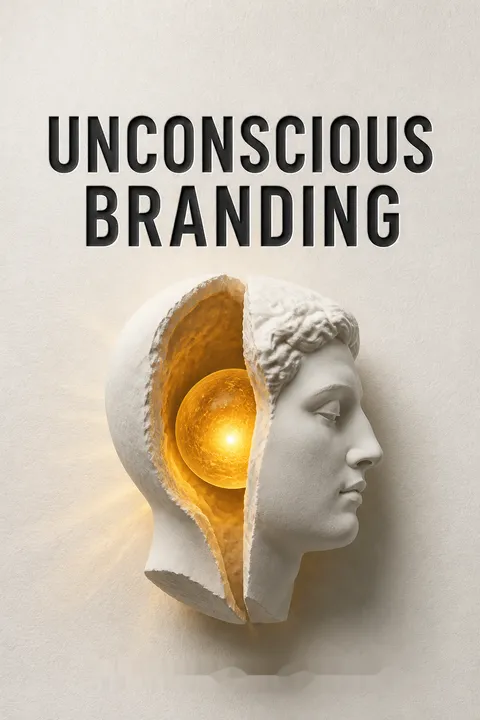


Key Takeaways
Treat people's stated preferences as explanations, not reliable maps of choice
Choice starts out of sight. The book argues that much decision-making happens before it reaches conscious awareness. It cites a brain-imaging experiment in which researchers could predict a simple left-or-right button choice several seconds before participants reported deciding. This is evidence about a narrow laboratory task, not proof that every choice is predetermined, but it challenges the idea that people can always explain what drives them.
Brands carry memories. In a Coke and Pepsi tasting experiment, blind tasters responded similarly to both drinks, while seeing the Coke brand changed reported preference and brain activity. A brand cue can summon learned associations and personal memories that a shopper may not be able to put into words. Surveys still reveal opinions, but those opinions should be tested against behavior and the circumstances in which it occurs.
What's useful here is the distinction between a person's experience and their explanation of it. Self-report is not worthless; it can reveal language, values, and conscious objections. It is simply not a transparent window into causes. The practical implication is to combine interviews with observation, experiments, and real-world behavior. Brain scans can add another measurement, but a vivid image of activity is not itself an explanation of why someone buys. Good research triangulates rather than replacing one imperfect tool with another.
Build for human motives that outlast product trends
Markets inherit older needs. Van Praet urges marketers to see people as humans before they see them as buyers. For most of our species' history, people lived in small hunter-gatherer groups. The book uses this long evolutionary backdrop to explain why familiarity, safety, food, status, and group belonging still shape decisions in modern shops and digital spaces.
Social motives sell. A free sample can trigger a wish to return a favor, while a popular product can feel safer because others have chosen it. Status can matter even when people describe themselves as strictly practical. In focus groups about the Volkswagen Jetta, participants denied caring about others' opinions, yet responded warmly to a concept promising a more stylish car at an attainable price. The lesson is to investigate motives beneath a polished self-description, not simply target a demographic label.
The evolutionary lens is valuable because it asks what recurring human problem a product helps solve, rather than which trend it happens to ride. It also encourages marketers to take social context seriously: choices often communicate identity to other people. But ancestral explanations can become too easy to invoke. Human behavior is shaped by institutions, culture, learning, and individual circumstance as well as shared biology. A useful human insight should generate a testable hypothesis, not become a universal story that explains every result after the fact.
Interrupt autopilot, then make the unfamiliar feel safe
Novelty earns a look. The book calls an unexpected break in a familiar perceptual or behavioral routine a pattern interrupt. In Volkswagen's Super Bowl ad, a small child dressed as Darth Vader repeatedly fails to move household objects, then seems to start the family car with a gesture. The surprising payoff drew attention because it overturned what viewers expected, while the warm family story made the interruption easy to enjoy.
Attention needs direction. A piano staircase in a Stockholm train station made an ordinary commute playful, and 66 percent more people than usual chose the stairs. Yet surprise by itself is not persuasion: the book contrasts engaging novelty with ads that pair sandwiches and food with ratlike characters, a mismatch likely to repel viewers. The interruption should make the brand more relevant, not merely louder.
The key design problem is not simply how to startle someone. It is how to use surprise to create a useful update in attention. In product design, an unexpected feature can invite exploration; in safety communication, startling material may focus attention but can also provoke avoidance. A novelty device succeeds when the emotional payoff resolves the disruption and fits the product's promise. Otherwise, it becomes memorable entertainment attached to the wrong thing, or an irritation mistaken for engagement.
Let people complete the story with a future they want
Imagination personalizes persuasion. Shirley Polykoff's hair-coloring campaign invited women to wonder whether a woman's hair color was natural or changed. Its suggestive ambiguity let the audience privately complete the thought, helping normalize a behavior that had carried social stigma. According to the book, hair coloring among American women rose from about 7 percent to roughly half within a decade, while Clairol sales climbed from $25 million to $200 million.
Leave room for projection. Nike's open-ended call to act could mean running, pursuing a personal goal, or making a difficult life change. Apple's iPod ads used dark silhouettes dancing with white devices, so viewers could imagine themselves in the scene rather than watch a specific celebrity perform. Advertising can function as mental rehearsal: the audience pictures an outcome and makes the invitation feel personally relevant.
Imagination is a form of participation. When people supply part of a story themselves, the message can feel less like an instruction and more like a possibility they own. This connects naturally to narrative psychology, where people make sense of choices by fitting them into a story about who they are. Yet ambiguity has limits. If the audience cannot connect its imagined future to the product, the ad may inspire without persuading. Open-ended creative work still needs a clear bridge to the brand.
Make the brand feel valuable before offering reasons to buy
Feeling assigns value. The book describes the somatic marker hypothesis, Antonio Damasio's account of how bodily feelings associated with past outcomes help guide decisions. In the Iowa Gambling Task, participants' bodies began reacting to risky card decks before they could explain which decks were losing. The point is not that feelings are always right, but that emotion helps a person evaluate options when conscious reasoning is still catching up.
Brands cue anticipation. In the cola experiment, the Coke label changed responses even before a sip, because brand knowledge brought memories and expectations into the tasting experience. A familiar package, sound, color, or scent can make a product feel promising before its practical features are considered. For marketers, emotional value is not decorative frosting on the product; it is part of what the product means to the buyer.
This insight helps explain why two technically similar products can feel profoundly different. Expectations shape experience, so perceived value is not confined to what a product objectively contains. That can support meaningful differentiation, especially when memory and sensory cues make a brand easy to recognize. It also creates responsibility: expectation can improve an experience, but it cannot indefinitely substitute for one. When a product repeatedly disappoints the feeling its cues promise, the same memory system can make the brand a warning instead.
Give the critical mind one clear reason to approve desire
Emotion and logic cooperate. The book rejects the idea that effective marketing must choose between feeling and facts. A reason can help someone act on an emotional preference by resolving a practical barrier. In Jetta research, people who initially rejected German cars reconsidered when they learned the redesigned car would cost less than they expected. The price did not create every desire; it made an already attractive option feel permissible.
Coherence beats clutter. A Trident gum campaign used a simple dental-health rationale to answer the objection that gum chewing was bad for teeth. The book draws on psychologist Daniel Kahneman's account of how people form judgments from a coherent story, often with incomplete information. A pile of unrelated product claims can make a decision harder. Give people a credible, relevant explanation that fits the emotional promise and can be repeated without a brochure.
A sound rationale is not merely a post-purchase excuse. It can reduce uncertainty before a decision, especially when the choice involves cost, risk, or social judgment. The strongest proof point addresses a genuine obstacle rather than padding an ad with impressive-sounding facts. There is a further ethical distinction: simplifying a decision should mean clarifying the trade-off, not hiding it. Cognitive ease can help people choose, but it is not evidence that the choice serves their interests.
Repeated cues become the shortcuts people mistake for preference
Association builds the brand. A brand is not just a logo or a product claim. It is the web of memories, expectations, and feelings that become linked to its cues. Intel's cooperative advertising program put its name and signature sound beside computer makers' products. The book reports that awareness of the Intel Inside mark among European PC buyers rose from 24 percent to 94 percent between 1991 and 1995, helping make an invisible component recognizable to shoppers.
Context can change meaning. The National Pork Board's phrase positioning pork as another kind of white meat borrowed from consumers' existing associations between white meat and leaner eating. Repetition can strengthen such links, but hidden messages are not required: the book distinguishes unconscious influence from subliminal advertising. People may consciously see an ad yet remain unaware of how its repeated cues shape their later feelings.
Association is a more useful account of branding than the idea that a single slogan installs a fixed belief. Cues gain meaning through repeated encounters, product use, social conversation, and context. That makes consistency valuable, but consistency should not be confused with repetition at any cost. An annoying interruption can bind a brand to frustration, and a borrowed association can change as culture changes. The central discipline is to decide which memory the experience should reinforce, then check whether actual encounters support it.
Turn brand promises into physical experiences worth remembering
Action makes the promise real. The book argues that experience can change attitudes as well as follow them. Starbucks built its brand through repeated visits, familiar service rituals, and a distinctive place to pause, not only through advertising. Red Bull, facing weak survey results and an unfamiliar product, seeded parties with free drinks and later built an identity around energetic events and extreme sports. The experience gave the product a social meaning that a can alone could not deliver.
Design the remembered moment. Drawing on Daniel Kahneman's peak-end rule, the book advises that people often remember an experience through its emotional high point and how it concludes. That makes the last stage of a purchase, service interaction, or event disproportionately important. The brand's task is to make it easy to try, create a meaningful moment, and deliver an ending that confirms rather than contradicts its promise.
Experiential branding joins communication to operations. A store, product interface, delivery, or customer-service exchange is not a support layer around the brand; each is evidence for or against its promise. This is where a memorable campaign can become a durable relationship, because action supplies sensory and social detail that an advertisement cannot. The peak-end rule is a helpful design prompt, not a license to ignore the ordinary parts of service. A dramatic finale cannot reliably compensate for repeated friction throughout the experience.
Trace behavior change from surprise through action, not awareness alone
Use a sequence as a diagnostic. Van Praet's seven-step behavior-change process treats persuasion as more than attention or ad recall. In paraphrase, its stages are: disrupt an expectation; reduce apprehension; help the audience picture a benefit; shift the emotional value of the choice; offer a credible reason; strengthen useful associations; and make the desired action possible.
Find the missing link. These stages are not a rigid production line. A brand may need to repair trust before its message can be heard, or make trial easier before repetition can build an association. The book's advice is to identify what is blocking action rather than keep polishing a single ad. Awareness that never becomes consideration, consideration that stalls at justification, and positive feeling without a clear next step are different problems and call for different interventions.
The framework is strongest as a planning checklist: it forces teams to ask what must change in the audience's experience before purchase becomes plausible. Its sequence also connects creative strategy to service design, since comfort, proof, memory, and action may depend on different business decisions. The risk is treating a complex, socially situated choice as a predictable funnel. People can skip steps, revisit doubts, or reject the product for reasons outside the campaign. Use the map to diagnose, then let evidence correct the map.
Analysis
Unconscious Branding makes a forceful strategic pivot: stop treating marketing as the transmission of claims to rational shoppers and study how people perceive, feel, remember, and act. Its most valuable contribution is not a startling statistic about unconscious thought. It is a practical insistence that marketers connect research, creative work, and customer experience to the sequence of behavior change. A useful ad must earn attention, establish enough trust to be considered, give imagination somewhere to go, engage feeling, satisfy practical objections, build associations, and make action attainable.
The book's cases make that pivot memorable. Coke demonstrates how brand knowledge can alter a tasting experience. The Jetta interviews reveal a gap between a self-image of pure practicality and a desire for status. Red Bull shows how a brand can attach itself to a lived social experience instead of relying on conventional advertising. Across these examples, the consumer is not a stable profile but a person interpreting cues through memory, identity, and circumstance.
The neuroscience, however, needs careful handling. The book often presents broad claims about brain activity and marketing with more confidence than a laboratory result warrants. The triune-brain model is a simplification, not a literal map of three independent brains, and a neural response alone cannot establish why someone buys or what will happen in a marketplace. Likewise, evolutionary explanations for motives can illuminate hypotheses but can also overgeneralize across cultures and individuals. The strongest parts of the argument do not require those claims to be taken literally. Observation, controlled testing, clear storytelling, and reliable customer experience already support the practical approach.
There is also a productive ethical tension. Understanding unconscious influence can help a company reduce confusion and make a genuinely useful choice easier. The same knowledge can exploit status anxiety, social belonging, or instinctive appetite. The book's call to create real value is therefore central, not ornamental. Its best lesson is that persuasion earns durability when the promised feeling, the product, and the lived experience agree.
Review Summary
Unconscious Branding receives mixed reviews, with an average rating of 3.92 out of 5. Many readers find it insightful, offering valuable information on neuroscience, consumer behavior, and marketing strategies. The book is praised for its thought-provoking content and real-world examples. Some readers appreciate its applicability to both business and personal life. However, critics argue that the information may be outdated or manipulative, and some find the technical language challenging. Overall, it's recommended for those interested in marketing, psychology, and consumer behavior.
People Also Read








Glossary
Unconscious branding
Branding through learned associationsThe process of connecting a brand to memories, expectations, feelings, and sensory cues that influence choice, often without deliberate awareness. In the book, it is not covert or subliminal messaging. It depends on recognizable experiences and repeated associations that can shape how a product is anticipated, interpreted, and chosen.
Seven steps to behavior change
A behavior-change planning sequenceVan Praet's practical model for thinking through how marketing can move someone toward action. It proceeds from disrupting an established pattern, through lowering resistance, imagination, emotion, and rational justification, to reinforcing associations and enabling action. The author presents it as an interacting process and diagnostic aid, not a mechanical formula that guarantees a purchase.
Six S's
Six recurring human motivesThe author's mnemonic for primal themes that can influence behavior: survival, safety, security, sustenance, sex, and status. Van Praet uses the categories to help marketers look beneath short-lived product trends toward enduring human concerns. They are strategic prompts for considering motivation, not a validated list that explains every individual choice.
somatic marker hypothesis
Bodily feelings guide decisionsAntonio Damasio's account of how feelings associated with past outcomes help guide choices. These bodily signals, or somatic markers, can bias attention toward options that previously felt rewarding or away from those associated with harm. The book applies the idea to branding: sensory cues and experiences can become linked to emotional expectations that influence future decisions.
mere exposure effect
Familiarity can increase likingA psychological effect associated with Robert Zajonc's research, in which repeated exposure to a stimulus can increase people's preference for it, even when they cannot recall seeing it before. Van Praet uses the effect to explain why familiarity and consistent brand presence can create comfort. Repetition does not ensure liking when the experience is unpleasant.
peak-end rule
Memories weight peak and endingA finding associated with Daniel Kahneman's work on remembered experience: people's retrospective evaluation can be disproportionately influenced by the most intense moment and the ending, rather than by a complete average of every moment. The book applies this to brand experience design, encouraging businesses to create positive high points and satisfying conclusions.
brand-tailing
Pairing emotion with purchase factsVan Praet's term for an advertising approach that builds a brand connection while also supporting a sale. It leads with emotional material that gives the brand meaning, then provides practical information such as price, availability, or how to buy. The intent is to serve both emotional motivation and the rational questions that can prevent action.
FAQ
What's Unconscious Branding about?
- Unconscious decision-making: The book explores how most consumer decisions are made unconsciously, challenging the assumption that consumers are fully aware of their choices.
- Neuroscience integration: Douglas Van Praet combines insights from neuroscience with marketing strategies to enhance marketing effectiveness.
- Human behavior focus: It emphasizes viewing consumers as humans with emotions and instincts, rather than just statistics.
Why should I read Unconscious Branding?
- Revolutionary insights: Offers a fresh perspective on consumer behavior, highlighting the unconscious mind's role in decision-making.
- Practical strategies: Provides actionable strategies for marketers to connect with consumers on a deeper emotional level.
- Science and practice bridge: Integrates neuroscience with marketing, equipping readers to influence consumer behavior effectively.
What are the key takeaways of Unconscious Branding?
- Two minds concept: Introduces the idea that humans operate from two cognitive systems—the conscious and the unconscious.
- Seven steps to change: Outlines a seven-step process for changing consumer behavior, including interrupting patterns and creating comfort.
- Emotional connection: Stresses that successful marketing must engage consumers emotionally, as feelings drive decisions more than rational thought.
What are the best quotes from Unconscious Branding and what do they mean?
- Einstein's insight: “The rational mind is the humble servant, the intuitive mind the faithful gift.” Emphasizes the importance of intuition and emotion in decision-making.
- Jung's perspective: “Until you make the unconscious conscious, it will direct your life and you will call it fate.” Highlights the significance of understanding unconscious motivations.
- Damasio's message: “We are feeling machines that think.” Captures the book's core message that emotions play a fundamental role in decision-making.
How does Unconscious Branding define the unconscious mind's role in consumer behavior?
- Influence on decisions: The unconscious mind significantly influences consumer decisions, often without awareness.
- Emotional triggers: Emotional triggers processed unconsciously shape consumer preferences.
- Neural pathways: Repeated exposure to stimuli creates strong neural pathways, influencing brand perception.
What is the seven-step process for behavior change in Unconscious Branding?
- Interrupt the Pattern: Capture attention by doing something unexpected to break habitual thought processes.
- Create Comfort: Establish safety and familiarity to make consumers receptive to new ideas.
- Lead the Imagination: Encourage consumers to envision product benefits, stimulating desire for change.
How can marketers apply the concepts from Unconscious Branding?
- Emotional connections: Prioritize creating emotional bonds with consumers to drive loyalty and purchasing decisions.
- Pattern interrupts: Implement strategies that disrupt habitual thought patterns to capture attention.
- Neuroscience insights: Use neuroscience findings to ensure campaigns resonate on both conscious and unconscious levels.
What role does neuroscience play in Unconscious Branding?
- Understanding the brain: Explains how the brain processes information and makes decisions, emphasizing the unconscious mind.
- Behavioral insights: Provides insights from cognitive science and neurobiology to create effective strategies.
- Emotional engagement: Supports the idea that emotional engagement is crucial for influencing consumer behavior.
How does Unconscious Branding suggest marketers create comfort for consumers?
- Establish familiarity: Create a sense of familiarity and safety in messaging to ease consumer anxiety.
- Build trust: Foster trust through transparency and authenticity, making consumers comfortable with purchasing decisions.
- Reduce anxiety: Address potential concerns and provide reassurance to make consumers more receptive.
How can brands effectively change consumer associations according to Unconscious Branding?
- Reframing narratives: Change consumer associations by reframing brand narratives to align with desired perceptions.
- Celebrity endorsements: Use celebrity endorsements to influence perceptions and enhance brand image.
- Positive experiences: Create positive experiences that reinforce desired associations, reshaping consumer perceptions.
What are some practical applications of the concepts in Unconscious Branding?
- Marketing strategies: Apply the seven steps to develop comprehensive strategies that engage consumers on multiple levels.
- Customer experiences: Focus on creating memorable experiences that resonate emotionally, increasing loyalty.
- Neuroscience insights: Craft messages that resonate deeply by using emotional triggers and appealing to both rational and emotional aspects.
What is the significance of pattern interruption in marketing according to Unconscious Branding?
- Captures attention: Crucial for breaking through everyday marketing noise and grabbing attention.
- Stimulates curiosity: Piques curiosity by presenting something unexpected, encouraging engagement.
- Facilitates behavior change: Leads to new behaviors, making consumers more open to trying new products.
Download PDF
Download EPUB
.epub digital book format is ideal for reading ebooks on phones, tablets, and e-readers.








