

Key Takeaways
Start racial repair by confronting the prejudice you carry, not just condemning extremists.
A post became a conversation. After a grand jury declined to indict Darren Wilson in the 2014 Michael Brown shooting, Benjamin Watson wrote about feeling angry, fearful, embarrassed, sad, sympathetic, and hopeful at once. His Facebook post reached more than 800,000 likes and opened conversations with teammates who had struggled to express similar thoughts. Its power came partly from refusing a simple racial script: Watson condemned injustice and violence while admitting uncertainty about the case.
The problem is closer than it looks. Watson argues that racism is not confined to hate groups or an attacker such as Dylann Roof. He admits that he, too, sometimes assumes the worst about white people or instinctively favors people who look like him. The first task, then, is honest self-examination, not simply identifying someone else as the racist.
The focus on self-scrutiny connects to research on implicit bias, which finds that people can act on learned associations without consciously endorsing prejudice. That makes confession more than a moral performance: it creates an opening to notice patterns and change behavior. Still, individual introspection cannot by itself repair unequal institutions. A person can reject prejudice and still participate in systems that produce unequal outcomes. Watson's strongest implication is therefore not that structural reform is unnecessary, but that it becomes harder to pursue honestly when people refuse to examine their own motives.
Read racial conflict through history and evidence, without forcing a tidy verdict.
The past is close. Watson's grandfather, Pop Pop, grew up under segregation, saw burning crosses near his Virginia home, and warned that Black people faced a ceiling on opportunity. His own great-great-grandfather was born in 1860, before slavery ended. These family stories make the passage of time feel shorter than a national timeline suggests. Watson argues that formal segregation has receded, while unequal schools, housing patterns, incarceration, and social bias persist in new forms.
Ferguson resists simple certainty. The accounts of Brown's final moments conflicted, and Watson says he cannot know exactly what happened. He argues that several truths can coexist: Brown committed a theft and did not deserve to die for it; police work can be difficult and can also be racially biased. His both/and approach asks readers to resist turning uncertainty into a convenient verdict.
This approach resembles intellectual humility: the discipline of separating what is known, what is inferred, and what remains uncertain. That is especially valuable in fast-moving crises, when group identity can make one account feel self-evident. But balance is not automatically fairness. Historical discrimination and present-day vulnerability are not erased simply because facts in one encounter are disputed. The both/and lens works best when it complicates judgment without flattening unequal histories or treating every interpretation as equally well supported.
Keep people larger than the racial story your group assigns.
Stereotypes arrive through experience. Watson recalls his childhood friend Bert, whose family introduced him to fishing and venison. Their differences were simply part of friendship. Later, another friend told Watson that a white girl would like him if he were white. That remark transformed race from a neutral difference into a judgment about who deserved acceptance. Watson describes how family, school, friends, media, and painful encounters teach people which assumptions to make about other groups.
A single story shrinks a person. Drawing on Chimamanda Ngozi Adichie's idea, Watson warns against reducing someone to one defining account. His friend Chris began interpreting workplace disappointments and public events through racial resentment; Watson recognized that he also generalized from painful experiences. The remedy is to treat people as individuals with overlapping identities, histories, and motives, not as proof of a group stereotype.
The social psychology of intergroup contact supports the value of real relationships, but with an important qualification: contact is most likely to reduce prejudice when people meet with some equality, shared purpose, and repeated cooperation. A brief encounter can reinforce stereotypes as easily as weaken them. Watson's childhood friendships show the human texture that categories hide, while his painful memory shows that closeness does not prevent harm. The point is not to pretend race never matters, but to resist letting one racial explanation become the whole person.
Make cross-racial friendship intentional before the next crisis makes it urgent.
Proximity needs a purpose. Watson argues that segregation limits the ordinary chances to build trust across racial lines. He points to friendships formed through work, children's schools, community projects, and churches. His friend Chris, who had long attended a predominantly white church, chose to visit a Black church to understand its worship and community. He returned, not as a rescuer, but because the experience mattered to him.
Practice changes the conversation. Watson proposes making room for genuine relationships while also challenging racist comments among friends and relatives. He identifies four settings for action: personal life, family, church, and nation. In each, the aim is sustained involvement rather than a symbolic gesture made during a news cycle. His example of a church planted in a racially divided St. Louis neighborhood shows how shared worship can become a practical meeting place.
This emphasis echoes the contact hypothesis, the idea that interaction across groups can reduce prejudice under supportive conditions. Repeated cooperation matters more than polite proximity: people need chances to depend on one another, solve problems, and be known beyond a single role. The challenge is that friendship cannot substitute for fair rules or public accountability. Nor should people from marginalized groups be expected to provide unpaid education. Intentional relationships are most constructive when responsibility, curiosity, and the work of repair are shared.
Protect protest's moral force by refusing violence and premature certainty.
Nonviolence changed the audience. Watson recalls the 1965 Selma marchers, who faced beatings and tear gas yet continued their campaign peacefully. Television showed the violence to a national audience; the later march grew to about 50,000 people, and Congress passed the Voting Rights Act that year. By contrast, he argues that the Watts riots and later urban unrest weakened support for civil rights and fueled backlash. He sees peaceful protest as a way to expose injustice without handing opponents an excuse to dismiss it.
Breaking news is not settled fact. Watson warns that television speculation and social media posts can turn incomplete accounts into apparent truth. He urges readers to wait before taking sides, since early witnesses may be mistaken and visual evidence can mislead without context. His point is not to silence protest, but to protect it from rumor, violence, and arguments designed only to win.
The contrast between Selma and destructive unrest underscores how tactics shape public attention, but it should not imply that disciplined protest always wins or that backlash is the protesters' responsibility. Political change also depends on institutions responding to demands. The warning about early reports is equally timely: digital platforms reward speed and emotional reaction, while corrections usually travel less dramatically. A useful civic habit is to distinguish verified facts from interpretation, then preserve the right to protest even when the evidence is incomplete.
Hear Black fear of police, and demand safety and accountability for everyone.
Fear has a history. Watson recounts being pulled over in Boston at 3 a.m. while driving his wife, who was in labor, to the hospital. The officer gave no clear reason for the stop and sent them on their way. Watson also describes earlier experiences and histories of discriminatory policing that make a stop feel dangerous to many Black people, even when they have done nothing wrong. In one poll he cites, 69 percent of white respondents expressed confidence that police treated both races equally, compared with 28 percent of Black respondents.
Safety is not the same as fairness. Watson urges young people to comply with police orders to reduce immediate danger, while insisting that officers must treat authority as a responsibility. He acknowledges that this advice places a heavy burden on those who already fear mistreatment. The deeper problem, he argues, is how to make encounters safe and just for everyone.
The account connects personal fear with procedural justice, the principle that people judge institutions not only by outcomes but by whether they are treated respectfully and fairly. That helps explain why a routine stop can feel routine to one person and threatening to another. Practical advice about de-escalation may protect someone in a dangerous moment, but it cannot become a substitute for transparent investigations, reliable data, and accountable policing. Public safety requires both individual caution and institutional obligations.
Question art that turns grievance into a script for violence and contempt.
A soundtrack can shape a story. Watson describes loving hip-hop as a teenager, starting with a Snoop Dogg cassette that his father rejected because of its vulgarity. He still values hip-hop as a form of Black storytelling and protest, but criticizes lyrics that glorify wealth, misogyny, drugs, and violence. He worries that music can make a destructive lifestyle seem attractive or make aggression feel justified. He extends the concern to entertainment across genres, including films and games that celebrate violence or self-absorption.
Influence is not destiny. Watson argues that repeated messages affect attitudes and may contribute to harmful behavior, but he does not claim that a song alone causes violence. His concern is that entertainment can either describe hardship or turn it into a prescription for how to live. He asks listeners to notice what their favorite media rewards and what it teaches them to admire.
Media can influence emotion, attention, and social norms, but a direct line from lyrics to violence is difficult to establish. The risk of Watson's argument is that criticism of misogyny or materialism can slide into moral panic about Black culture, especially when similar themes elsewhere escape scrutiny. Its useful core is broader: audiences can distinguish art that gives voice to injustice from content that markets domination as liberation. That distinction invites criticism without dismissing the genre or the experiences it represents.
Never demand forgiveness before grief has had room to speak.
Forgiveness is not a shortcut. After the Charleston church shooting, relatives of victims publicly forgave the gunman. Watson honors their response but warns against expecting survivors to offer a quick, comforting resolution. Drawing on Dietrich Bonhoeffer's term cheap grace, he distinguishes forgiveness without repentance from costly forgiveness that faces the harm honestly. The mother of Sam DuBose, who was killed by a police officer, struggled through pauses when asked whether she could forgive. Watson sees that hesitation as a truthful expression of grief, anger, and faith.
The harmed person sets the pace. Watson argues that forgiveness can free a person from consuming resentment, but it should not erase accountability or be extracted for an audience's comfort. His Christian understanding links forgiveness to repentance and grace, while acknowledging how difficult that is when the victim's family sees the violence as an attack on a whole community.
Research on forgiveness distinguishes a freely chosen process from pressure to reconcile, and the distinction matters. A person can release some hold of resentment without restoring trust, ending legal consequences, or declaring the harm acceptable. Watson's account respects that complexity better than sentimental stories in which forgiveness instantly heals everyone. The Christian framework gives the practice moral depth for believers, while the broader lesson applies across traditions: compassion is meaningful only when it does not silence the person who was hurt.
Convert hope into repeated work across homes, churches, and civic life.
Progress and pain coexist. Watson sees meaningful changes across generations: Black Americans no longer face the official segregation his grandparents endured, cross-racial friendships are more common, and white flight has declined. He cites a historical comparison showing that 44 percent of white respondents said they would move if a Black family entered their neighborhood in 1958, compared with 1 percent in 1998. Yet he also describes ongoing disparities, violence, and segregation. Hope, for him, does not mean declaring the problem solved.
Faith must become action. Watson calls for personal self-examination, honest family conversations, churches that cross racial lines, prayer, and sustained civic involvement. He frames the deepest cause as sin and the Christian gospel as the source of changed hearts, but insists that belief should produce work. The practical test is whether people build durable relationships, challenge prejudice close to home, and protect the dignity of those unlike themselves.
The book's religious conviction supplies a clear moral vocabulary for repentance, grace, and human worth. Its practical strength is the movement from private belief toward family, congregation, and community, where habits can be repeated and observed. A limitation appears when spiritual transformation is treated as the primary remedy for problems that also require policy and institutional change. Durable progress needs both moral motivation and measurable public action. The historical comparisons are also rooted in the book's 2015 context, so they should not be mistaken for current measurements.
Analysis
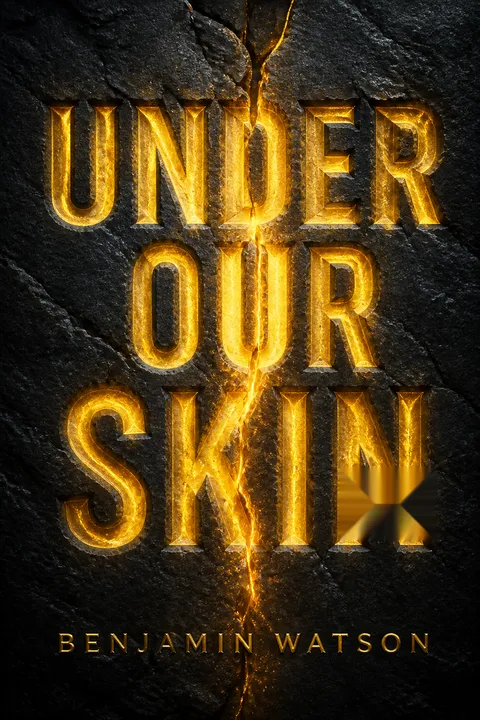
Under Our Skin is part memoir, part Christian argument, and part invitation to a difficult public conversation. Its structure follows the emotions Watson listed in his widely shared Ferguson post, turning each feeling into a doorway to family history, personal memory, and social critique. That choice keeps an abstract subject grounded: Pop Pop's warning about a ceiling, a childhood friend's hurtful remark, the 3 a.m. traffic stop during his wife's labor, and his own uneasy relationship with hip-hop make racial dynamics intimate rather than theoretical.
The book's most useful discipline is its refusal to make moral certainty depend on racial allegiance. Watson asks readers to hold uncertainty about a specific encounter while still recognizing historical patterns and unequal experiences. His account of talking with Chris demonstrates how people on different sides can examine assumptions without pretending their histories are identical. The call to build friendships and challenge prejudice in ordinary settings turns dialogue from a media spectacle into repeated practice.
The argument also has clear limits. Watson locates racism primarily in sin and individual hearts, a powerful theological account of motive and moral responsibility, but one that can understate how unequal outcomes persist without explicit personal hostility. The book discusses institutions, policing, incarceration, education, and segregation, yet its proposed remedies lean heavily toward conversion, personal responsibility, relationships, and church life. Readers who do not share its Christian premises may find the explanation of change less persuasive, though its call to empathy and accountability remains accessible.
Its discussions of Ferguson, policing, and public opinion reflect 2015, not present-day evidence. The statistics should be read as part of the book's historical argument, not as current estimates. Taken as a whole, the book is strongest as a moral and relational guide: it asks readers to listen across difference, resist easy narratives, and make another person's humanity concrete. Its deepest challenge is whether private conviction can become sustained institutional repair.
Review Summary
Under Our Skin by Benjamin Watson receives high praise for its balanced and honest approach to race relations in America. Readers appreciate Watson's personal stories, Biblical perspective, and call for understanding between races. Many find the book enlightening, challenging, and a valuable resource for discussions on racism. While some critics feel the religious emphasis is too strong, most reviewers commend Watson's vulnerability and ability to address complex issues with grace. The book is frequently recommended as an accessible starting point for conversations about race in America.
People Also Read








Glossary
both/and
holds competing truthsWatson's way of interpreting racial conflict without forcing a choice between supposedly exclusive explanations. In Ferguson, for example, he argues that Brown's theft and flight can be acknowledged while also insisting that those actions did not make his death deserved. The approach asks readers to recognize complexity, uncertainty, and the possibility that more than one troubling reality is true.
single story
one-dimensional group narrativeA simplified account that reduces a person or community to one defining trait or experience. Watson draws on Chimamanda Ngozi Adichie's use of the idea to explain how stereotypes deny people complexity and make connection harder. A single story may arise from media, limited contact, or repeated assumptions, and can be applied to Black people, white people, or other groups.
living-room racist
private everyday prejudiceWatson's phrase for someone who may appear fair in public yet expresses racial resentment or stereotypes in private settings, such as at home or among trusted friends. He applies the idea to both Black and white people, including himself. The term shifts attention from conspicuous extremists to ordinary assumptions and comments that help prejudice persist.
cheap grace
forgiveness without repentanceA theological term associated with Dietrich Bonhoeffer that Watson uses to criticize forgiveness offered as an easy, expected resolution without repentance or meaningful engagement with wrongdoing. In the context of racial violence, it warns against pressuring victims to forgive quickly so that others can feel reassured. Forgiveness, in this account, must face the harm and its consequences.
skin problem / sin problem
racial conflict, moral rootWatson's contrast between visible racial divisions and what he sees as their deeper spiritual source: human sin, expressed through prejudice, abuse of authority, violence, and self-justification. He believes the Christian gospel can transform hearts and behavior. The framing is theological, not a claim that institutional inequalities are imaginary or that policy and social action are irrelevant.
FAQ
What's "Under Our Skin" about?
- Exploration of Race and Religion: "Under Our Skin" by Benjamin Watson delves into the complex issues of race and religion in the United States, offering a personal and insightful perspective.
- Personal Experiences: Watson shares his own experiences and emotions in the wake of racial incidents, such as the Ferguson shooting, to provide a candid look at the racial divide.
- Call for Dialogue: The book encourages open and honest conversations about race, aiming to bridge the gap between different racial and cultural perspectives.
- Hope and Faith: Watson emphasizes the role of faith and the gospel in addressing racial issues, suggesting that spiritual transformation is key to overcoming racial divides.
Why should I read "Under Our Skin"?
- Personal Insight: Watson provides a deeply personal account of his experiences as a black man in America, offering a unique perspective on race relations.
- Encourages Dialogue: The book is a call to action for readers to engage in meaningful conversations about race, promoting understanding and empathy.
- Faith-Based Approach: Watson integrates his Christian faith into the discussion, offering a spiritual perspective on how to address and heal racial tensions.
- Timely and Relevant: Given the ongoing racial issues in society, the book provides timely insights and encourages readers to reflect on their own beliefs and biases.
What are the key takeaways of "Under Our Skin"?
- Race is Complex: Watson emphasizes that race issues are not black-and-white but involve complex emotions and historical contexts.
- Personal Responsibility: The book highlights the importance of personal responsibility in addressing racial issues, encouraging individuals to examine their own biases.
- Role of Faith: Watson argues that faith and the gospel are crucial in healing racial divides, suggesting that spiritual transformation can lead to societal change.
- Hope for Change: Despite the challenges, Watson remains hopeful that through dialogue and understanding, racial unity can be achieved.
How does Benjamin Watson address the issue of race in "Under Our Skin"?
- Personal Stories: Watson uses his own life experiences to illustrate the realities of racial tensions and the impact they have on individuals and communities.
- Emotional Honesty: He candidly shares his emotions, from anger and frustration to hope and encouragement, in response to racial incidents.
- Both/And Perspective: Watson advocates for a "both/and" approach, recognizing the validity of multiple perspectives in racial discussions.
- Faith as a Solution: He emphasizes the role of faith and the gospel in addressing racial issues, suggesting that spiritual transformation is key to overcoming divides.
What are the best quotes from "Under Our Skin" and what do they mean?
- "The problem of race is not a SKIN problem, it is a SIN problem." This quote highlights Watson's belief that racial issues are rooted in deeper spiritual and moral failings.
- "I’m encouraged because the gospel gives mankind hope." Watson expresses his faith in the transformative power of the gospel to bring about racial reconciliation.
- "We all have malice deep down." This quote reflects Watson's view that everyone harbors biases and prejudices, and acknowledging this is the first step toward change.
- "The solution to the problem of race in America will be found only by ordinary people, 'good' people, looking inside themselves." Watson emphasizes personal introspection as a crucial element in addressing racial issues.
How does Benjamin Watson incorporate his faith into "Under Our Skin"?
- Faith as a Foundation: Watson's Christian faith is the foundation of his perspective on race, influencing his views on forgiveness, reconciliation, and hope.
- Gospel as a Solution: He argues that the gospel provides the ultimate solution to racial issues, offering a path to spiritual and societal transformation.
- Personal Transformation: Watson shares how his faith has shaped his own understanding of race and his commitment to addressing racial divides.
- Call to Action: He encourages readers to embrace their faith as a means to engage in meaningful dialogue and work toward racial unity.
What personal experiences does Benjamin Watson share in "Under Our Skin"?
- Ferguson Reaction: Watson shares his emotional response to the Ferguson shooting, which prompted him to write a viral Facebook post that became the basis for the book.
- Family History: He discusses his family's experiences with racism, including stories from his grandfather and father, to illustrate the generational impact of racial issues.
- NFL Experiences: Watson recounts incidents from his career in the NFL, highlighting the racial dynamics within professional sports.
- Parenting Challenges: He reflects on the challenges of raising black children in America and the lessons he hopes to impart to them about race and faith.
How does "Under Our Skin" encourage dialogue about race?
- Open Conversations: Watson calls for open and honest conversations about race, urging readers to engage with others who have different perspectives.
- Personal Reflection: The book encourages readers to reflect on their own biases and assumptions, fostering a deeper understanding of racial issues.
- Empathy and Understanding: Watson emphasizes the importance of empathy and understanding in bridging racial divides, advocating for listening and learning from others.
- Actionable Steps: He provides practical advice for engaging in meaningful dialogue, including building relationships across racial lines and addressing offensive language and behavior.
What role does forgiveness play in "Under Our Skin"?
- Complex Forgiveness: Watson acknowledges the complexity of forgiveness in the context of racial violence, recognizing the deep pain and historical context involved.
- Grace and Redemption: He emphasizes the importance of grace and redemption, both personally and societally, as a means to overcome racial divides.
- Personal Freedom: Watson argues that forgiveness is essential for personal freedom, allowing individuals to move beyond anger and resentment.
- Faith-Based Forgiveness: He ties forgiveness to his Christian faith, suggesting that true forgiveness is possible through the transformative power of the gospel.
How does Benjamin Watson view the media's role in racial issues in "Under Our Skin"?
- Media Influence: Watson critiques the media for often exacerbating racial tensions through sensationalized and speculative reporting.
- Social Media Impact: He discusses the role of social media in spreading misinformation and fueling emotional reactions to racial incidents.
- Call for Responsibility: Watson calls for more responsible media coverage that focuses on facts and context rather than divisive narratives.
- Encouragement for Dialogue: Despite his criticisms, he acknowledges the potential for media to facilitate important conversations about race when used thoughtfully.
What challenges does Benjamin Watson face as a black father in "Under Our Skin"?
- Raising Black Children: Watson discusses the challenges of raising black children in a society where they may face racial bias and discrimination.
- Teaching Resilience: He emphasizes the importance of teaching his children resilience and the ability to navigate a world that may not always be fair.
- Instilling Faith: Watson is committed to instilling his Christian faith in his children, believing it provides a foundation for hope and strength.
- Balancing Fear and Hope: He candidly shares his fears for his children's future while also expressing hope that they can contribute to positive change.
What actionable steps does "Under Our Skin" suggest for addressing racial issues?
- Personal Introspection: Watson encourages readers to examine their own biases and assumptions, acknowledging the role they play in perpetuating racial divides.
- Building Relationships: He advocates for building genuine relationships across racial lines, fostering understanding and empathy.
- Engaging in Dialogue: Watson emphasizes the importance of engaging in open and honest conversations about race, even when they are uncomfortable.
- Faith and Action: He calls on readers to integrate their faith into their actions, using it as a guide to promote racial reconciliation and unity.
Download PDF
Download EPUB
.epub digital book format is ideal for reading ebooks on phones, tablets, and e-readers.








