

Key Takeaways
Earn responsibility through unglamorous work, not inherited access.
Work came before titles. Eric acknowledges that being Donald Trump’s son opened doors, but describes having to prove himself inside them. At eleven, he and his brother worked on the family’s Seven Springs estate, doing demolition, masonry, and other construction tasks for five dollars an hour. He says the work taught him practical skills, respect for tradespeople, and how effort earns trust. He also credits summers in his mother’s native Czechoslovakia, where everyday scarcity contrasted sharply with his privileged New York childhood.
Privilege still shaped the path. Eric joined the family firm after college, but says he began in a small cubicle and took on larger responsibilities gradually. His story presents competence as the way to honor opportunity, not as proof that the opportunity was equally available to everyone.
The most useful tension here is between inherited access and earned competence. A family name can secure a first chance, but it cannot by itself teach someone how a building operates or how to lead the people maintaining it. The distinction matters beyond family firms: apprenticeships and visible responsibility can turn opportunity into capability. At the same time, hard work does not erase unequal starting conditions. The account is strongest when it admits both facts, rather than treating effort as a complete answer to privilege.
Make quality visible in the places customers never see.
Standards travel backstage. Eric describes his father noticing a burned-out bulb while walking through a casino, then stopping until it was fixed. Eric adopted a similarly exacting inspection habit, beginning property visits at loading docks and opening closets and mechanical rooms. The point is not that guests admire every clean utility room. It is that unseen spaces reveal whether a team takes ownership of its work.
A turnaround needs execution. The family’s account of Trump Doral begins with a rat in a restaurant and neglected maintenance. Eric says the property’s basic structure had potential, but its management had lost pride and discipline. Renovating it meant improving systems and service, not merely advertising a more glamorous vision. He uses the same logic to argue that public institutions also need operational follow-through, not just slogans.
This is a sharp operational insight: culture becomes observable through the condition of work that no customer is meant to inspect. In management, such details can function as leading indicators. A neglected service corridor may signal weak routines, unclear accountability, or inadequate investment before those problems reach the lobby. Still, perfectionism has a cost if it becomes micromanagement. The practical test is whether inspection builds shared standards and gives workers the resources to meet them, rather than making every small flaw a personal failure.
Wait out the boom, then buy when other developers must sell.
Saying no created room. In 2007, Eric and his siblings considered a roughly billion-dollar office and hotel project in Charlotte. Their father warned that the property boom would not last, and they backed away. The 2008 crash followed. Eric argues that avoiding a major commitment at the market’s peak left the company able to pursue distressed properties when other developers were struggling with debt and scarce buyers.
Downturns change the bargaining table. The Trump Organization expanded its golf and hotel holdings after the crash, often acquiring properties from owners who lacked the capital or expertise to improve them. Eric’s experience in financial restructuring also proved useful. The larger lesson is not simply to predict a crisis. It is to preserve the financial and managerial capacity to act when conditions change.
The episode highlights an often-overlooked form of strategy: keeping options open. Businesses tend to celebrate bold expansion, yet the ability to decline a tempting deal can be more valuable when credit is easy and everyone assumes growth will continue. The story also shows the limits of hindsight. A successful decision looks obvious once the crash has occurred; before it, restraint may look timid. The transferable discipline is to test whether a project remains survivable under less favorable assumptions, rather than relying on confidence in a single forecast.
Campaigns can win attention by acting like live events, not scripted ads.
Television became a training ground. The Apprentice brought Donald Trump into millions of homes each week. Eric says the boardroom’s unscripted pressure helped prepare the family for campaign interviews and rallies. The show’s first-season finale drew 41.5 million viewers, and its recurring format made the Trump family familiar to a national audience before the 2016 campaign.
The campaign used that familiarity. Eric describes a small, unconventional team, frequent television appearances, and rallies that networks often broadcast live. He also recalls speaking in Iowa restaurants and calling delegates directly when the campaign learned how convention rules worked. His account credits plain speech, family surrogates, and constant contact with voters for helping an outsider campaign gain momentum without the large consultant operation its rivals had.
The chapter makes a persuasive case that attention is not merely purchased; it can be earned by creating an event audiences want to watch. Reality television supplied practice in public performance, while rallies supplied repetition and a sense of participation. But visibility should not be confused with broad agreement or policy competence. A compelling performance can help a candidate reach voters, yet the same media incentives reward conflict and oversimplification. The useful distinction is between gaining access to the public and demonstrating that a message stands up to scrutiny.
Public office made the family business an ethics and operating stress test.
Separation meant real trade-offs. Before Donald Trump’s 2017 inauguration, Eric took charge of the company while his father said he would not direct its business decisions. The family says it also declined new projects and tracked profits from foreign-government customers, sending those profits to the U.S. Treasury. Eric recounts turning down a proposed two-billion-dollar Dubai deal and later withdrawing a proposal to host the G7 at Trump Doral after criticism.
Rules were not the only pressure. The family argued that these precautions went beyond what the law required, while critics questioned whether the arrangements were sufficient. For Eric, the episode shows how a company can lose opportunities simply because its owner enters public office. It also shows that avoiding conflicts is both a matter of formal safeguards and public confidence.
The dilemma is structurally difficult: a business bearing a president’s name can create real or perceived conflicts even when its owners do not intervene in policy. Voluntary controls may reduce risk, but they cannot settle every concern if the public cannot independently assess them. This makes transparent reporting and clear decision boundaries more important than declarations of good intent. The episode also exposes a broader design question: should ethical safeguards depend mainly on an officeholder’s choices, or should institutions require a consistent standard for every president?
Good charitable work needs both measurable results and credible oversight.
A cause drove the effort. Eric says he founded a charity at twenty-one to raise money for St. Jude Children’s Research Hospital, which treats children without charging their families. He describes using the family’s golf properties and business relationships to reduce costs, relying on volunteers, and keeping the foundation’s reported expense ratio near 9.2 percent. In 2006, its first golf event raised $230,000. Eric later pledged $20 million toward a children’s surgery and intensive-care center and says the effort ultimately raised more than $50 million.
Success did not prevent suspicion. In 2017, New York’s attorney general investigated the foundation, and Eric says the resulting scrutiny damaged the charity’s work. He stepped back, and the organization was rebranded as Curetivity. The story is both a philanthropic achievement as he presents it and an example of how political controversy can surround charitable institutions.
The fundraising model is compelling because it links an emotionally urgent mission with concrete cost control and a large donor network. Yet a low expense ratio alone cannot establish that a charity is well governed; independent audits, clear disclosures, and oversight matter too. Likewise, the existence of an investigation does not prove wrongdoing. Readers can hold both ideas at once: the reported funds and facilities represent substantial work, while transparent accounting remains essential precisely because public trust is the asset on which philanthropy depends.
Treat the book’s siege narrative as Eric Trump’s argument, not a neutral verdict.
One frame connects many battles. Eric uses siege to describe persistent pressure on his family, the Trump Organization, and his father’s political movement. His examples include the 2022 FBI search at Mar-a-Lago, investigations of the company and its charity, multiple court cases, employee scrutiny, and banks and vendors ending business relationships. He says he received 112 subpoenas. In his interpretation, these events were connected efforts to weaken a political opponent and the people around him.
Chronology and interpretation differ. The book recounts real proceedings and public disputes, then often presents them as evidence of coordinated political persecution. That conclusion is the author’s; the summary cannot establish it. For readers, the useful distinction is between what happened, what the author says it meant, and what would require independent evidence.
The memoir’s central strength and central limitation are the same: it offers an insider’s emotionally coherent explanation of events that are usually encountered as disconnected headlines. Such a frame can make institutional pressure legible, especially when business, family, and politics overlap. But coherence is not proof of coordination. Subpoenas, lawsuits, and searches can be documented events while claims about motive remain contested. Reading the account carefully means taking its experience seriously without treating the narrator’s causal interpretation as settled fact.
Protect the people and systems that keep an enterprise alive.
Crisis management was human work. During COVID closures, Eric says the company negotiated rent relief with tenants, kept corporate employees on payroll, and worked through the practical problem of safely operating large buildings with few guests. He says he went without a salary for more than a year. His concern was not just revenue: hotels, restaurants, and golf properties employed people whose livelihoods depended on decisions made far from the front desk.
The pressure continued beyond lockdowns. Eric recounts banks, insurers, and online platforms ending relationships with the Trump Organization after the 2020 election. He says the company had to replace services, reorganize accounts, and reassure employees. The operating principle is resilience through adaptation, but the book presents the political motive behind these business decisions as his interpretation.
This section makes leadership concrete by measuring it in continuity: payroll, rent arrangements, safety systems, and communication with anxious employees. Those responsibilities are easy to overlook when a business story is told only through deals and valuations. The account also invites a useful question about resilience: does a company become stronger because it adapts, or does surviving a crisis merely conceal the costs borne by workers and owners? Both outcomes can coexist, so claims of organizational strength are most meaningful when paired with evidence about who absorbed the losses.
Under pressure, reliable allies matter more than public declarations of support.
Loyalty became visible in person. Eric contrasts acquaintances who reappeared after election victories with friends who stayed through difficult periods. He singles out Steve Witkoff, who attended Donald Trump’s Manhattan trial, and describes sitting beside his father in court even when he could not change the outcome. In Eric’s telling, presence was more valuable than a polished message of support.
Family became part of the work. Don, Ivanka, Tiffany, Lara, and other relatives took different roles in campaigns and public life. Eric describes that shared effort as a source of endurance, but also acknowledges the strain of time away from his wife and children. The memoir’s idea of loyalty is practical: show up, shoulder some risk, and keep doing the work when public attention turns hostile.
Social support is most useful when it changes what a person can bear, not just how supported they feel in the abstract. The courtroom example captures that distinction: a companion cannot control a verdict, but can reduce isolation and signal commitment. Still, loyalty should not become a substitute for honest disagreement. Close teams can become more durable when members combine solidarity with the freedom to question decisions. The strongest version of the book’s principle is not unquestioning allegiance, but dependable presence without surrendering independent judgment.
After Butler, personal resilience became a defining image of the 2024 campaign.
A political story became personal. Eric recounts watching the July 13, 2024, shooting at a rally from home with his children. He describes the fear of seeing his father fall, then relief when he learned Donald Trump was alive. The family continued to the Republican convention, where Eric announced Florida’s delegate vote for his father. Eric treats that return as evidence that the family would not be intimidated.
The campaign made endurance visible. The book also describes a second security incident at a golf course, a shift toward podcasts and direct-to-audience interviews, and Lara Trump’s role in Republican organizing and early voting. Donald Trump won the 2024 election. Eric presents the result as vindication, then says he planned to leave politics and return his attention to business and family.
The Butler attack gave the memoir’s resilience theme an immediate, human scale: a family watching a parent face mortal danger, then deciding how to continue in public. The episode also shows how political meaning can gather around images and gestures, sometimes faster than detailed policy arguments. That symbolic force deserves recognition, but it should not be confused with proof about the causes of political conflict or the merits of every campaign claim. A powerful personal experience can explain commitment without settling the public questions surrounding it.
Analysis
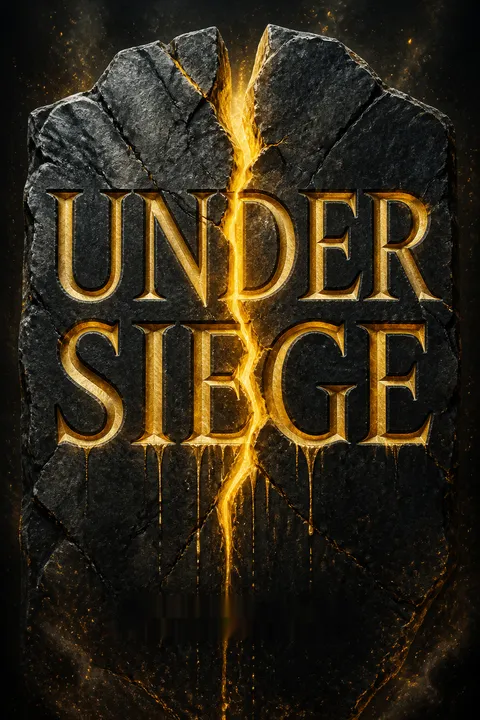
Under Siege is a family memoir, business narrative, and political brief. Its organizing idea is that public conflict does not stop at the candidate: it reaches relatives, employees, charities, tenants, and business partners. Eric Trump builds that case through a sequence of role changes, from construction-site apprentice to company executive, campaign surrogate, courtroom companion, and witness to an assassination attempt. The strongest narrative material is often the most concrete: inspecting mechanical rooms, managing a hotel closure, explaining a charity fundraiser, or sitting silently beside his father in court. These scenes make responsibility tangible.
The book also asks readers to accept a broad interpretation of disparate events as a coordinated siege. That interpretation is central to its emotional force, but the text frequently moves from documented events to conclusions about motive without establishing the connection independently. Readers should distinguish the author’s firsthand observations, public records he describes, and his political inferences. The distinction is especially important in a memoir written by a family member who is both participant and advocate.
As a leadership story, the book emphasizes standards, opportunistic restraint, loyalty, and endurance. Its most portable lessons are practical: learn the operation from the ground up, keep enough capacity to act when markets turn, communicate directly in a crisis, and remember the employees whose lives depend on executive decisions. Its account of privilege is candid but incomplete: hard work and family access coexist, and the former does not erase the latter.
Ultimately, the book is less a detached history of Trump-era conflict than an argument about how the family experienced it. Its value lies in that perspective, its vivid business and family scenes, and its clear portrait of political identity as an intimate, costly commitment. Its claims about institutional coordination require readers to apply scrutiny rather than inherit its certainty.
Review Summary
People Also Read


Glossary
lawfare
Legal action as political combatA specialized political term used in the book for what Eric Trump describes as the use of investigations, subpoenas, prosecutions, and civil cases to weaken political opponents. He applies it to proceedings involving his father, family, and company. The label expresses the author’s interpretation of motive; it does not by itself establish that a legal action was improper.
de-banking
Ending a customer’s banking accessThe book’s term for a financial institution closing or restricting a customer’s accounts or services. Eric Trump says banks ended relationships with the Trump Organization after the 2020 election, creating operational problems for properties, tenants, payroll, and payments. He interprets those actions as politically motivated, a claim distinct from the fact that an account was closed.
earned media
Coverage gained without buying adsPublicity received through news coverage, interviews, rallies, or other events rather than purchased advertising. Eric Trump argues that Donald Trump’s television appeal and large campaign rallies drew extensive coverage at no direct advertising cost. The term describes a communication channel, not whether the resulting coverage was favorable or whether its audience was persuaded.
MAGA
Trump’s America First movementAn abbreviation for Make America Great Again, used in the book for Donald Trump’s political movement and its supporters. Eric Trump presents it as a broad appeal to national priority, economic strength, border security, and constitutional patriotism. The label carries different meanings for supporters and critics, so the book’s favorable definition reflects the author’s perspective.
the swamp
Entrenched political and bureaucratic powerEric Trump’s name for the network of career politicians, bureaucrats, political appointees, and influential institutions that he believes resist challenges to their authority. In the book, the term includes alleged coordination among government agencies, prosecutors, and media actors. It is a political metaphor, not a formally defined organization or a demonstrated chain of command.
FAQ
What is Under Siege: My Family's Fight to Save Our Nation by Eric Trump about?
- Personal and Political Memoir: The book is Eric Trump’s account of managing the Trump Organization amid relentless legal, political, and media attacks, especially during and after Donald Trump’s presidency.
- Intersection of Business and Politics: It explores how the Trump family navigated the challenges of running a global business while under intense political scrutiny and legal warfare.
- Lawfare and Persecution: Eric details what he describes as coordinated legal assaults (“lawfare”) by government agencies and political opponents aimed at damaging his family and their business.
- Family Resilience: The narrative emphasizes the Trump family’s unity, sacrifices, and determination to fight back, framing their experience as a broader battle for American values.
Why should I read Under Siege: My Family's Fight to Save Our Nation by Eric Trump?
- Unique Insider Perspective: Eric Trump offers firsthand insights into the Trump family’s personal and professional challenges, providing details not found in mainstream media.
- Understanding Lawfare: The book explains how legal systems and government agencies were allegedly weaponized for political purposes, offering a behind-the-scenes look at “lawfare.”
- Lessons in Resilience: Readers can draw inspiration from the family’s loyalty, perseverance, and leadership under pressure, which Eric presents as universally applicable lessons.
- Charity and Human Impact: The book also highlights Eric’s charitable work and the personal toll of political attacks, adding a heartfelt dimension to the story.
What are the key takeaways from Under Siege: My Family's Fight to Save Our Nation by Eric Trump?
- Lawfare as a Political Weapon: Eric argues that legal cases against the Trump family were coordinated attacks designed to drain resources and damage reputations, rather than genuine justice efforts.
- Resilience and Unity: Despite intense pressure, the Trump family and organization remained united and financially strong, demonstrating grit and determination.
- Exposure of Corruption: The book claims deep corruption within government agencies, the judiciary, and media, describing a “swamp” working to undermine Donald Trump.
- Importance of Loyalty: Loyalty within the family, employees, and supporters is portrayed as crucial to withstanding political and legal assaults.
How does Eric Trump describe the concept of “lawfare” in Under Siege: My Family's Fight to Save Our Nation?
- Coordinated Legal Attacks: Lawfare is depicted as the use of legal systems and government agencies to wage political warfare against opponents, particularly the Trump family.
- Fishing Expeditions: Eric describes tactics like “fishing expeditions” and perjury traps, where obscure questions are used to entrap witnesses.
- Financial and Reputational Damage: The goal of lawfare, according to Eric, is to drain resources, inflict massive financial penalties, and damage reputations through relentless litigation.
- Broader Political Strategy: Lawfare is presented as a tool used by political adversaries to silence and destroy opposition, threatening the integrity of American democracy.
What does Under Siege: My Family's Fight to Save Our Nation by Eric Trump reveal about the Trump Organization’s separation from the presidency?
- Complete Operational Separation: Donald Trump had no role in company decisions during his presidency, with Eric Trump taking over operational control.
- Ethical Safeguards: The Trump Organization sent annual payments to the U.S. Treasury for profits from foreign government clients to avoid emoluments clause violations.
- Declined Lucrative Deals: Many profitable projects were turned down to prevent conflicts of interest, demonstrating a commitment to ethical governance.
- Continued Political Attacks: Despite these measures, the company and family faced unprecedented legal and media assaults, including investigations and harassment.
How does Eric Trump describe the legal battles and court cases against the Trump Organization in Under Siege: My Family's Fight to Save Our Nation?
- Biased Judicial Assignments: Eric claims cases were assigned to judges he describes as biased or “handpicked” to ensure unfavorable outcomes for the Trump family.
- Massive Financial Penalties: The New York civil case resulted in a $464 million judgment, which Eric calls “Soviet-style financial injustice.”
- Appeals and Partial Victories: The Trump legal team won some appellate rulings, such as lowering bond amounts and halting certain rulings, but the legal warfare persisted.
- Personal and Organizational Toll: The legal battles affected not only business operations but also personal relationships and family life.
What insights does Under Siege: My Family's Fight to Save Our Nation by Eric Trump provide about the FBI raid on Mar-a-Lago?
- Politically Motivated Action: Eric claims the FBI raid was orchestrated by Attorney General Merrick Garland and coordinated with the Biden White House to damage Donald Trump.
- Mischaracterization of Evidence: Many “classified documents” seized were allegedly personal or attorney-client privileged materials, with accusations of mishandling and possible evidence planting.
- Constitutional Concerns: Eric argues the appointment of Special Counsel Jack Smith was unconstitutional, leading to the dismissal of the case by Judge Aileen Cannon.
- Public Deception: The raid was accompanied by staged photos and misleading narratives to sway public opinion against Donald Trump.
How does Under Siege: My Family's Fight to Save Our Nation by Eric Trump address the attempted assassination of Donald Trump?
- Near-Fatal Incident: On July 13, 2024, Donald Trump was shot in the ear during a rally but survived due to quick action by Secret Service counter-snipers.
- Critique of Secret Service: Eric criticizes Secret Service leadership for ignoring requests for enhanced protection and allowing the shooter to get into position.
- Heroism Recognized: The book honors the agents who protected Trump and neutralized the threat, calling them “heroes.”
- Political Weaponization Alleged: Eric suggests that the politicization of agencies like the Secret Service contributed to security lapses.
What is Eric Trump’s view on the “swamp” and political corruption in Under Siege: My Family's Fight to Save Our Nation?
- Active and Coordinated Opposition: The “swamp” is described as a network of political operatives, law enforcement leaders, and media working to destroy Donald Trump and his movement.
- Examples of Corruption: Eric cites false dossiers, election interference, and weaponization of agencies like the FBI and DOJ as evidence of systemic corruption.
- Media Complicity: Major media outlets are accused of leaking information and manufacturing damaging narratives.
- Call for Reform: Eric expresses hope that exposing these abuses will lead to restoring integrity in American government.
How does Under Siege: My Family's Fight to Save Our Nation by Eric Trump address cancel culture and “de-banking”?
- Financial Institutions’ Actions: Major banks like Capital One and First Republic abruptly closed Trump Organization accounts for political reasons, despite long-standing relationships.
- Economic Siege: This “de-banking” threatened company operations, affecting employees, tenants, and vendors, and was part of a broader effort to financially cripple the Trump family.
- Legal Response: Eric Trump filed a lawsuit against Capital One in 2025 to hold the bank accountable for damages caused by unjustified account closures.
- Broader Warning: The book warns that financial censorship threatens free speech and free enterprise for all Americans.
What role do family and loyalty play in Under Siege: My Family's Fight to Save Our Nation by Eric Trump?
- Unbreakable Family Bond: Eric emphasizes that the Trump family’s unity and loyalty were critical to surviving political and legal onslaughts.
- Employees as Family: Trump Organization employees are portrayed as part of the extended family, many of whom faced intimidation but remained loyal.
- Personal Sacrifices: The book details the emotional toll on family life, including missed events and the impact on Eric’s children.
- Legacy for Future Generations: Eric writes partly to document the family’s fight and inspire resilience in future generations.
What are the best quotes from Under Siege: My Family's Fight to Save Our Nation by Eric Trump and what do they mean?
- “We stood under siege. But we never broke.” — Symbolizes the Trump family’s resilience and unity amid relentless attacks.
- “My revenge will be success.” — Donald Trump’s philosophy that overcoming adversity and achieving victory is the ultimate form of retaliation.
- “Show me the man and I’ll show you the crime.” — Used to describe the weaponization of the justice system against political opponents.
- “Fight! Fight! Fight!” — Donald Trump’s rallying cry after surviving an assassination attempt, representing defiance and determination.
- “Together, united as a movement, we are unbreakable.” — Emphasizes the power of loyalty and collective strength, using the analogy of a bundle of pencils.
Download PDF
Download EPUB
.epub digital book format is ideal for reading ebooks on phones, tablets, and e-readers.








