

Plot Summary
Prologue
At twelve, Amon Leone and his brother Dante take the blame for a broken vase to protect Tomaso Romero’s young daughters from Amon’s brutal father, Angelo. Reina, the golden-haired child, runs to Amon and hugs him, easing pain he has learned to endure alone.
After the Romero family leaves, Angelo has the boys beaten and tortured. Alone in the basement, Amon vows to grow strong enough to free himself and Dante from their father.
The childhood scene makes protection the first language Amon and Reina share. For Amon, tenderness arrives as a startling interruption to a life organized around punishment; his instinct to shield Reina is also an early attempt to become the opposite of Angelo. The prologue plants a crucial tension: the boys learn that love and violence can occupy the same household, while Reina’s spontaneous affection offers a glimpse of another kind of bond. His vow to escape is both a survival plan and the beginning of his lifelong struggle to control the power that shaped him.
The Party Ends in Blood
At a gathering of wealthy crime families, Amon spots Reina, the girl he loved and pushed away three months earlier. He is with Sakura, a model whose family connections serve his standing with the Yakuza, but he kisses her specifically to make Reina leave him alone. The sight wounds Reina; she hurries into the street and is struck by two cars.
Amon reaches her as his brother Dante holds her bloodied body, and finds a faint pulse. Dante points out that Amon ignored a request to replace Reina’s missing security guard. Amon carries her to a car and rushes her to a private hospital, knowing his attempt to protect her from his feelings has left her fighting for her life.
Amon’s public kiss is not indifference but a calculated act of rejection, which makes its consequence especially brutal. He tries to manage a dangerous relationship by controlling what Reina sees, yet the strategy only deepens her isolation. The accident converts private heartbreak into bodily peril and exposes how little control Amon actually has. His missed security warning gives guilt a concrete cause: his emotional avoidance has also become a failure of care. The scene establishes the novel’s central conflict between protection as genuine responsibility and protection used as a reason to decide for someone else.
Held Beyond Her Family
Reina’s injuries include broken ribs, fractures, damaged lungs, and a miscarriage. Amon stays beside her unconscious body, blaming himself for both the crash and the loss, while Illias Konstantin warns that her family and the authorities are searching.
A doctor says Reina needs urgent treatment but refuses to proceed without consent from her next of kin. Amon finally gives the family’s contact information, and her grandmother arrives furious at his presence. When Reina wakes, her sister Phoenix and friends gather around her.
They tell her she was in an accident, but not that Amon watched over her. Reina remembers seeing him kiss Sakura, then learns from the doctors that she can have children in the future. The lost pregnancy remains unspoken, a grief she cannot yet share.
The hospital turns Amon’s remorse into a contest over access. He wants to remain beside Reina, but his desire to witness her survival is not the same as her family’s right to care for her. Giving the doctors her contacts is an act of responsibility that costs him the closeness he has been clinging to. Reina’s awakening is equally incomplete: the body survives, while the central loss is kept from her and from her friends. The withheld information reflects a wider pattern in the families, where adults conceal painful facts in the name of protection and leave younger people to interpret the damage alone.
Paris Is Not Safe
While recovering at her grandmother Diana’s estate, Reina recalls childhood violence and learns that her father’s underworld dealings have put his family at risk. Tomaso later explains that the Brazilian cartel and the Yakuza have reasons to target them, and admits he is considering an arranged marriage to protect his daughters.
Reina returns to Paris and encounters Amon at Oba’s restaurant. He asks about her bruises; she tells him that the wounds he caused run deeper, then leaves without hearing his explanation.
Three years later, Reina has a job at Hermès, dreams of building her own fashion label, and trains in self-defense with Darius, an ex-special-forces instructor. She still loves Amon. Darius eventually reveals that Amon hired his agency to watch over her, though he never asked Darius to report on her feelings.
The revelations do not restore Reina’s sense of safety; they expand the threat from a single crash to a family system built on criminal bargains. Her father treats marriage as a shield, while Reina wants agency over the life that shield would supposedly preserve. The three-year jump shows survival as work rather than healing: she builds a career and learns to defend herself, yet remains emotionally attached to the man who hurt her. Amon’s hidden surveillance complicates care once more. He has acted to keep her safe, but from a distance that prevents him from offering either honesty or companionship.
New Year's Eve, Two Shots
On New Year’s Eve, Angelo Leone forces his way into Reina’s apartment while she is alone. Drunk and violent, he demands to know which of Tomaso’s daughters is his. He tells Reina that he had a sexual relationship with her mother, Grace, and implies that he forced himself on her.
When Reina refuses to identify Phoenix, Angelo hits her, chokes her, and cuts at her wrists. She reaches his gun during the struggle and shoots him, then fires again when he says Phoenix is his daughter. Her sister and friends return to find the body.
They help Reina cut it into pieces, hide the remains and gun in closed sections of the Paris catacombs, and clean the apartment. The killing ends Reina’s self-harm, but leaves her carrying the secret and the knowledge that she has killed a man.
Reina’s violence begins as defense, but its emotional aftermath is not simple triumph. Angelo’s attack repeats the family’s old pattern of men using power to control women, while his claim about Phoenix turns protection into an immediate choice with lethal consequences. Reina acts to save her sister, then joins her friends in concealing the evidence, binding them together through complicity as well as care. The act interrupts her self-harm because the threat makes her choose survival, but it cannot erase the earlier trauma. Her new capacity to fight is real; so is the burden of what fighting has cost.
Three Years, One Unhealed Heart
At twenty-one, Reina is still working an uninspiring administrative job while preparing a fashion show of her own designs. When a venue falls through, Tomaso’s associate Enrico Marchetti offers her a space, and Reina’s father attends the event. Amon returns to Paris after years spent in Asia and elsewhere, still monitoring Reina and unable to forget her.
She sees him across the room but keeps her distance, concentrating on the models and the friends who perform music for the show. Her designs sell well, giving her a reason to believe she can leave Hermès and build a label. The event is a professional success, but Tomaso asks to speak with her afterward about her future, and Amon’s presence makes clear that her past has not stayed behind.
Reina’s fashion show is more than a career milestone: it is a visible claim to authorship after years in which her family and Amon have made decisions around her. Her work earns attention on its own terms, even as the room remains saturated with criminal alliances and old emotional ties. Amon’s return threatens to pull her back into a story she has tried to outgrow, but she chooses to stay focused on the achievement she has built. The contrast between public success and private uncertainty captures her difficult progress: independence is taking shape, though it has not yet freed her from the people who define her history.
Dante Gets the Ring
After the show, Tomaso tells Reina he has terminal cancer and insists she marry Dante Leone to secure protection for the family. Reina refuses, but her father threatens that Phoenix will take her place if she does not comply.
Dante, Amon’s volatile brother, becomes her reluctant fiancé. He had previously pursued Phoenix, learning sign language before disappearing from her life, and Reina recognizes that her sister still carries the hurt. Dante’s attempt to take Reina on a date ends with him attacking a waiter who flirts with her.
Amon warns Reina against continuing the engagement, but she refuses to be directed by him. Her father’s failing health and the threat to Phoenix make a personal refusal feel like a choice with consequences for the whole family.
The engagement converts political protection into intimate coercion. Tomaso’s illness gives his demand urgency, but it does not make Reina’s consent less important; instead, it narrows her choices by making Phoenix’s safety the price of refusal. Dante’s violence during the date shows that the proposed marriage offers no obvious refuge. Amon’s warning is emotionally charged, yet Reina has reason to distrust his authority over her. Phoenix’s history with Dante adds a second broken romance to the arrangement, revealing how the sisters’ lives are being shaped by the same family network. Neither woman can simply choose love without confronting its costs.
Birth Records Break the Pact
Illias offers Amon documents that expose a forged marriage agreement and clarify the families’ tangled histories. The records show Amon is Tomaso’s biological son, while Reina is Angelo’s daughter; Reina and Dante share Angelo, but Phoenix is not Dante’s sister. Amon has spent three years believing that he and Reina were half-siblings, which is why he ended their relationship.
He confronts his mother Hana, who admits she concealed her marriage to Tomaso and allowed Angelo to raise Amon. Illias proposes an alliance that will help Amon claim the Yakuza leadership and prevent Reina’s marriage to Dante. Meanwhile, Reina and her friends debate retrieving Angelo’s remains from the catacombs, but decide the risk of being caught is too great.
The documents change the apparent shape of the romance without undoing the damage done in its name. Amon’s separation was driven by a real belief, but that belief was produced by generations of secrecy and manipulation. The truth does not automatically repair trust; it merely removes the biological barrier that made reconciliation seem impossible. The forged marriage agreement also shows that the political arrangement is not a neutral family tradition but a document someone has deliberately altered. Meanwhile, the friends’ decision to leave the remains alone keeps Reina’s past active beneath the marriage plot, a hidden danger that can still surface.
Blonde Women in the Warehouse
Amon, Dante, and Tomaso raid a warehouse believed to be used by the Brazilian cartel to traffic women. Their operation is ambushed, and the building explodes before they can save the captives.
Inside, they find the bodies of several women with curly blonde hair, a resemblance to Reina that suggests the cartel’s interest in her may be part of something larger. Amon’s suspicion grows as his cousin Itsuki makes dangerous alliances with Perez Cortes and Sofia Volkov. The discovery sharpens the threat surrounding Reina, but the attackers’ full purpose remains unclear.
Amon and Dante have spent years dismantling trafficking networks; this raid shows that their efforts have not ended the trade and that the enemy may be targeting women who resemble the woman Amon is desperate to protect.
The warehouse raid broadens the book’s danger beyond a personal vendetta. The women’s resemblance to Reina makes the violence feel unnervingly specific, while the absence of an explanation prevents Amon from converting fear into a clear plan. His anti-trafficking campaign is morally significant, but it also operates within the same criminal world that has made women into bargaining pieces. The scene complicates the brothers’ claim to protection: they can attack individual networks, yet the system keeps regenerating. The unexplained likenesses function as both evidence and warning, suggesting that Reina’s vulnerability is linked to a scheme whose reach exceeds the family’s current understanding.
The Dojo Ambush
At Darius’s training center, gunmen from the Cortes cartel open fire while Reina is practicing. Darius and his former military colleague River take cover, return fire, and hand Reina a weapon so she can defend herself.
After they secure the room, Darius tells her the attackers came for her. Reina understands that her father’s lost shipment and criminal agreements have made her leverage. At home, she tells her sister and friends that the wedding remains imminent, while they revisit the question of Angelo’s remains and choose not to risk another trip into the catacombs.
Reina has been learning self-defense to feel less helpless; now she has to use it under gunfire. The attack confirms that her family’s plans cannot keep danger safely at a distance.
The dojo attack gives Reina’s self-defense training an immediate, frightening payoff. She is no longer merely preparing for a hypothetical assault; she must act while Darius and River fight to keep her alive. The scene grants her practical agency without pretending that training cancels the power imbalance between a young woman and an armed cartel. Its cause, her father’s dealings, reinforces the novel’s intergenerational burden: Reina is endangered by choices she did not make. The friends’ decision not to retrieve Angelo’s remains also shows that protection has limits. They can support Reina, but they cannot cleanly separate her from the consequences of the underworld.
A Rehearsal Becomes a Kidnapping
Reina and her friends arrive at the rehearsal dinner in deliberately garish outfits, hoping to disrupt a wedding she does not want. The evening grows chaotic as Reina drinks, mocks the arrangement, and refuses to behave like a compliant bride. Amon intervenes when Dante grabs her, then takes Reina away after the party. Outside, he throws her over his shoulder and uses a tranquilizer to render her unconscious.
She wakes aboard his yacht, refuses his demands, and is bound while he tries to make her answer whether Dante has touched her. Reina insists that nothing happened between them. Amon’s possessiveness is not a substitute for consent, and his decision to abduct her makes their reunion a fresh crisis rather than a reconciliation.
The rehearsal dinner stages Reina’s refusal as comic spectacle, but the joke ends when Amon uses force to take control of her body and choices. His jealousy is rooted in longing, yet the narrative consequences remain coercive: he tranquilizes and confines her instead of asking what she wants. Reina’s defiance survives even in captivity, and her insistence that Dante has not touched her becomes a fact Amon desperately needs to hear. The scene exposes the gap between romantic devotion and ethical intimacy. Amon may believe he is preventing a disastrous marriage, but his methods repeat the controlling behavior that has shaped both families.
The Wrong Brother's Truth
On the yacht, Reina tries to escape by jumping into the cold sea. Amon dives after her and pulls her back before she can drown. Their anger gives way to sex, but Amon then locks her in her room and insists they will marry in Venice. When Reina argues that she cannot marry him because she and Dante are siblings, Amon finally explains that the records show she is Dante’s half-sister and that he himself is not Angelo’s son.
The three-year separation came from his mistaken belief that he and Reina were related. Reina is relieved but still furious that he never trusted her with the truth. Amon asks her to marry him, promising to earn back her faith. She accepts, though her hurt remains.
The revelation resolves the biological obstacle but not the ethical one. Amon’s fear explains why he left, yet his silence deprived Reina of the chance to face the truth with him. The yacht’s confinement continues that pattern: he claims their future before she has freely chosen it. Still, Reina’s acceptance is not presented as a clean reset. She names the harm, recognizes the pull between them, and decides to risk trust again. The chapter’s emotional turn depends on separating explanation from absolution. Amon’s history makes his actions legible, but his promise to repair the damage matters precisely because the damage is still present.
Venice, Then the Confession
Amon and Reina marry in Venice at the church associated with the Romero family, without their relatives or friends present. On the gondola afterward, Reina tells Amon that she killed Angelo on New Year’s Eve and hid his remains in the catacombs with help from her friends.
Amon does not condemn her; he is furious that Angelo hurt her and accepts that she acted to protect Phoenix. The newlyweds spend the next days together aboard Amon’s yacht, trying to begin again while Reina worries that her family has not answered her calls.
Amon admits he watched her from afar for years and regrets failing to be there during her pregnancy and recovery. They agree to take their future slowly, but head toward the Philippines amid unresolved family and criminal threats.
The wedding offers a chosen bond after a series of political arrangements, but it cannot erase the past that travels with the couple. Reina’s confession tests whether Amon can love her without demanding innocence from her. His acceptance gives her a form of recognition she has not received from the wider family, though it does not resolve what her friends risked or what the hidden remains might mean. Their conversations about the lost pregnancy acknowledge grief rather than treating marriage as a cure. The unanswered calls undercut the honeymoon’s shelter: intimacy may be renewed, but the family world that produced their crises remains active.
Fireworks Over the Philippines
After landing in the Philippines, Amon and Reina find his mother Hana and her longtime companion Hiroshi waiting. Hiroshi warns that Amon’s cousin Itsuki is moving a dangerous shipment through the region, while Reina still cannot reach her sister, father, grandmother, or friends.
As Amon’s car leaves the airport, gunmen fire into it, killing the driver. Amon pushes Reina down and exits to draw the attackers away from her, but an explosion throws him to the ground with blood spreading across his shirt.
Reina crawls to him, presses torn fabric against his wound, and begs him to stay alive. A voice she recognizes as Dante’s warns that drastic action is coming. A bomb detonates before she can learn whether he is rescuing them or attacking them, leaving the new marriage amid an unresolved assault.
The final attack ruptures the private refuge the couple has built and turns their unanswered messages into a concrete warning of isolation. Amon’s instinct is to place his body between Reina and the bullets, echoing the childhood impulse that began their bond, but now the cost may be fatal. Reina does not remain a protected object: she crawls toward him, treats his wound, and keeps him oriented toward a future they have only just begun. Dante’s voice complicates the threat rather than clarifying it. The novel ends before the blast’s consequences are known, making the marriage’s security and the family’s loyalties unresolved.
Analysis
Unforgiving Queen builds its romance through a series of failures in communication, but its secrets are not all equivalent. Amon’s belief that he and Reina are siblings is sincere, yet it is produced by older generations’ deceptions. The explanation makes his departure understandable without making its cruelty harmless. Reina is left to endure a pregnancy, miscarriage, and abandonment without knowing the reason he vanished. When the truth finally arrives, love can resume, but trust must still be rebuilt through choices rather than destiny alone.
The novel’s strongest psychological pattern is the inheritance of control. Angelo turns family life into discipline and fear. Tomaso treats marriage as security. Amon watches Reina from afar, then abducts her when he fears losing her. Each man can describe his actions as protection, but the women bear the cost of decisions made without their consent. Reina’s resistance, from demanding information to learning self-defense, challenges that pattern, even when she remains emotionally attached to Amon. The narrative’s dark-romance conventions place desire beside coercion, making it important to distinguish intensity from care.
The sisters provide an alternative form of loyalty. Phoenix and Reina protect one another through sign, shared memory, and difficult secrets, while their friends turn solidarity into practical action. Yet protecting one another can also mean concealment, as the hidden remains in the catacombs demonstrate. The story refuses a clean boundary between survival and wrongdoing: Reina’s killing is an act of defense, but it leaves a burden that marriage cannot dissolve.
The ending deliberately withholds resolution. Amon and Reina have chosen each other, but their families have not answered, the cartel threat remains active, and an explosion interrupts their first journey together. The romance’s promise is therefore tested at the moment it becomes legal and public. The couple’s future depends not only on passion, but on whether they can face inherited violence without repeating its methods.
Review Summary
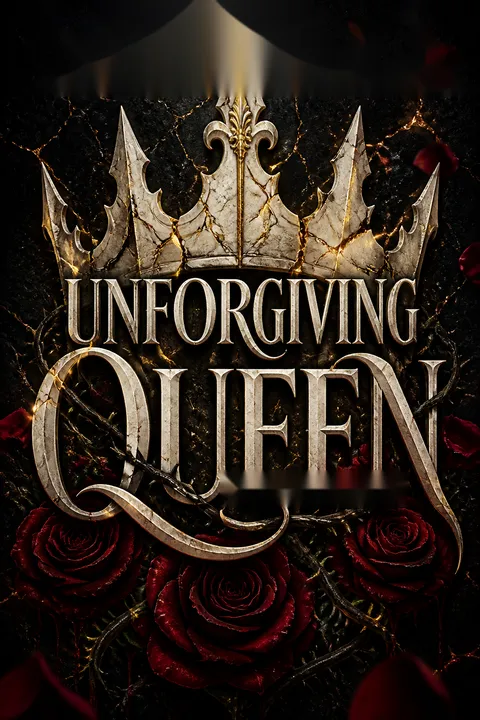
Unforgiving Queen is the second book in Eva Winners' Stolen Empire Trilogy, earning an overall rating of 4.18/5. Readers consistently praise its emotional intensity, complex characters, and unpredictable plot twists. The romance between Amon and Reina captivates readers, who describe devouring the book in a single sitting. The book's hallmark cliffhanger ending left many breathless and desperately anticipating the final installment, Wrathful King. Reviewers highlight Winners' skill at crafting dark, angsty mafia romance with seamless crossovers between her interconnected fictional universe.
Characters
Reina Romero
The defiant designerReina is a young fashion designer whose warmth and romantic imagination coexist with a fierce need to protect her older sister, Phoenix. She is shaped by early family upheaval, grief over her mother, and the expectation that powerful men will decide her future. Her attachment to Amon makes her vulnerable, but it does not erase her judgment or ambition. She builds a career, trains in self-defense, and pushes back when her father treats marriage as a political tool. Reina’s instinct is to care for others, sometimes at the expense of her own safety. Her central struggle is to remain tender without surrendering the right to choose.
Amon Leone
The guarded heirAmon is a feared underworld leader raised by a father who treated cruelty as discipline. He learned to control fear through violence, strategy, and loyalty to his brother Dante. Reina unsettles those defenses because her affection gives him a glimpse of a life beyond survival. His love is intense, but he often confuses protecting someone with controlling the conditions around them. Guilt becomes one of his strongest motives, especially when he believes his choices have harmed Reina. Amon’s deepest conflict is between the disciplined ruler he has trained himself to become and the emotionally dependent man he tries to conceal.
Dante Leone
The volatile brotherDante is Amon’s brother, a criminal power broker whose humor and recklessness can conceal a volatile temper. Their shared childhood under Angelo’s abuse formed a fierce loyalty, even as both men learned to use violence as a means of control. Dante is perceptive about Amon’s emotional deterioration and challenges him when he sees him spiraling. He is also capable of strategic secrecy, leaving others unsure whether his provocations are impulsive or deliberate. His relationships with the Romero sisters carry old wounds and complicated loyalties. Dante’s defining tension is between the brother who protects his own and the ruthless figure the underworld expects him to be.
Phoenix Romero
The protective sisterPhoenix is Reina’s older sister, a gifted pianist who communicates through sign language. She is watchful and protective, often recognizing Reina’s distress before Reina admits it. Her own disappointments make her wary of the Leone brothers, though she does not always reveal the full history behind that distrust. Phoenix values independence and refuses to let others define her by her deafness. She supports Reina while also needing space to confront her own emotional wounds. Their sisterhood is built on practical care, shared history, and a wordless fluency that survives even when both are hiding pain.
Tomaso Romero
The compromised patriarchTomaso is Reina and Phoenix’s father and a powerful figure in the criminal underworld. He loves his daughters, but his instinct is to solve danger through alliances, secrecy, and control. His work brings threats to the family, while his limited presence leaves the sisters relying heavily on their grandmother. Tomaso is capable of tenderness, yet he often treats protection as a decision he must make for them rather than with them. His strained relationship with Reina reflects the cost of a parent who wants to keep his children safe without relinquishing authority.
Hana Takahashi
Amon's secretive motherHana is Amon’s mother, a Japanese woman who has survived within the violent structures surrounding the Leone and Romero families. She is protective of her sons and deeply invested in their power, but her instinct to conceal painful truths damages the trust she wants to preserve. Her relationship with Amon is affectionate and strained, shaped by years of silence and choices made in the name of survival. Hana’s composure can conceal ambition, fear, and regret.
Angelo Leone
The brutal patriarchAngelo is the feared Leone patriarch and Dante’s father, a sadistic man who uses punishment to train and dominate those around him. His cruelty shapes Amon and Dante’s childhood, teaching them that power can be enforced through pain. He is also connected to the old conflict between the Leone and Romero families. Angelo’s authority depends on making others afraid to challenge him, and the violence inside his household leaves lasting consequences for the next generation.
Diana Glasgow
The formidable grandmotherDiana is Reina and Phoenix’s grandmother, a wealthy and forceful woman who steps in when the girls need care their father cannot reliably provide. Her sharpness hides a deep fear of losing her family, and she urges Reina to speak honestly about pain rather than bury it. Diana distrusts the underworld and the men who draw her granddaughters toward it, but her counsel is shaped by her own history of heartbreak.
Illias Konstantin
The calculating allyIllias is a Russian crime leader and member of the Omertà, known for his patience, intelligence, and careful management of alliances. He notices the risks Amon refuses to acknowledge and supplies information when it serves both loyalty and strategy. Illias is not sentimental, but he understands that personal attachments can become political vulnerabilities. His support often comes with a plan already taking shape.
Darius
The trusted trainerDarius is an ex-special-forces instructor who runs a training center in Paris and teaches Reina self-defense. He is physically imposing but patient, encouraging her progress without pretending she is already safe. His professional connection to Amon complicates his friendship with Reina, though he values her as a person rather than a client. Darius offers a rare form of support grounded in practical skill and steady presence.
Raven
The fearless friendRaven is one of Reina’s closest friends, an artist with a blunt manner and a strong instinct for action. She is quick to defend the group and often masks fear with sarcasm. Her artistic work connects her to the criminal families, while her loyalty keeps her close to Reina through danger and grief. Raven is more comfortable acting than explaining what frightens her.
Isla
The loyal romanticIsla is one of Reina’s friends, a romantic who values commitment and emotional honesty. She is observant and willing to challenge the group when she believes they are ignoring danger. Her love life brings her into the orbit of powerful crime families, but her loyalty to Reina remains central. Isla’s optimism is not naïveté; it is a choice to keep making room for attachment.
Athena
The curious storytellerAthena is Reina’s friend, a writer whose curiosity leads her to research unsettling details and whose humor helps the group bear tense moments. She can sound detached when nervous, but she is deeply loyal. Athena often breaks silence with an unexpected observation, balancing the group’s more forceful personalities with wit and imaginative thinking.
Hiroshi
Hana's steadfast confidantHiroshi is Hana’s longtime companion and a trusted presence in Amon’s family circle. His loyalty to Hana influences where his allegiance falls, but he also serves as a discreet source of information. Calm and practical, he tends to communicate serious news without dramatizing it.
Itsuki
The grasping cousinItsuki is Amon’s cousin and a Yakuza figure hungry for influence. He pursues new alliances and opportunities even when his plans are poorly executed or dangerous to others. His ambitions make him difficult for Amon to trust, especially as criminal interests converge around the cartel and the trafficking trade.
Kian Cortes
The estranged cartel brotherKian is connected to the Cortes family but has distanced himself from its worst crimes. An experienced fighter with a strong sense of responsibility, he carries guilt over a family loss and uses underground fighting as a form of penance. His knowledge of the cartel makes him a useful, uneasy source for Amon.
Enrico Marchetti
The powerful benefactorEnrico is a prominent Italian crime figure with legitimate fashion interests and extensive influence. He offers Reina a venue when her show is at risk, expecting a future favor in return. His public composure conceals a deeply possessive devotion to his wife, Isla. Enrico’s power makes his kindness consequential rather than uncomplicated.
Oba
The warm restaurant ownerOba runs a Paris restaurant frequented by Amon and his family. She is perceptive and openly affectionate toward Reina, treating her with a warmth that stands apart from the underworld’s guarded formality.
Kingston, called Ghost
The quiet tacticianKingston, known as Ghost, is one of Amon’s most capable men. He specializes in tracking, strategy, and extraction, speaking little and acting efficiently when violence begins.
River
The steady combat veteranRiver is Darius’s former military colleague and a frequent presence at the training center. He is protective, restrained, and skilled under pressure, bringing experience to the defense of Reina during the attack.
Perez Cortes
The distant cartel threatPerez Cortes leads the Brazilian cartel and operates through subordinates and criminal alliances. His interest in Amon’s distribution network and the Romero family makes him a persistent threat, even when he is not physically present.
Plot Devices
The bloodline documents
Unmake a forbidden bondBirth certificates and marriage records expose how the adults’ concealed relationships shaped the younger generation. The documents overturn Amon’s belief that he and Reina share a father, while also revealing that the proposed marriage between Reina and Dante violates their own family ties. A forged agreement further shows that the arranged match is not simply a longstanding pact. The records change what the characters believe is possible, but they cannot undo the years of separation, grief, and mistrust caused by the secrets.
The arranged marriage
Turn daughters into leverageTomaso treats marriage as a protection strategy against the criminal families whose business threatens his daughters. Reina is expected to marry Dante, though neither the arrangement nor its consequences are within her control. The proposal forces her to weigh her own refusal against Phoenix’s safety and her father’s failing health. It also brings Amon back into direct conflict with the family and sets the romantic reunion against a coercive political bargain.
The paired jewelry
Keep absence tangibleAmon and Reina exchange a yin-yang bracelet and necklace pendants that remain meaningful after their relationship collapses. The jewelry makes their bond physically present even when they are apart, and it gives both characters a private object through which to remember promises, grief, and attachment. Their continued relationship to the pieces complicates their claims that they have moved on.
Surveillance and security
Protect from a distanceAmon hires Darius’s agency to watch over Reina and later builds a surveillance operation that lets him follow her life from afar. The system reflects genuine fear for her safety, especially after the cartel targets her, but it also permits Amon to avoid speaking honestly with her. Security becomes an expression of devotion and a tool of control at once, mirroring the novel’s repeated question about who gets to define protection.
The Paris catacombs
Hide a family crimeAfter Reina kills Angelo, her sister and friends conceal his dismembered remains and the gun in closed sections of the catacombs. The vast, anonymous burial site seems to offer a place where one more body can disappear among the dead. Its hidden passages become a physical repository for the secret that binds the women together, while the possibility of discovery continues to shadow Reina’s later life.
About the Author
Other books by Eva Winners









Download PDF
Download EPUB
.epub digital book format is ideal for reading ebooks on phones, tablets, and e-readers.








