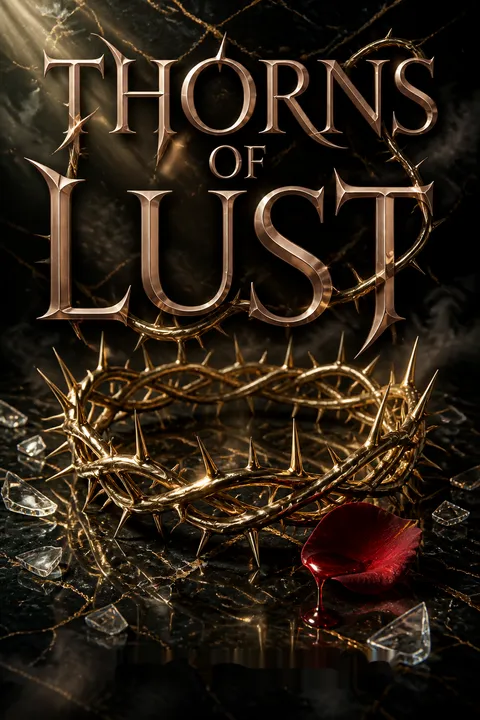


Plot Summary
Prologue
On a dark road outside New Orleans, a black SUV rams Tatiana Nikolaev and her husband, Adrian, then opens fire. Their car rolls; Tatiana wakes among broken glass, trapped as gasoline burns nearby. Men argue over a missing chip and whether she knows what Adrian was doing.
A stranger orders that she be spared, then pulls her from the wreck. Adrian is shot dead. Tatiana loses consciousness again, unaware that Illias Konstantin, the feared Pakhan who saved her, has been watching her for years.
The opening makes the marriage a crime scene before the reader can understand its private history. Tatiana sees fragments, not causes: the pursuers, the chip, Adrian's fear, and the stranger who chooses her survival. Her confusion is not merely an effect of injury; it establishes the book's central problem of incomplete knowledge. Illias's intervention offers rescue while also placing Tatiana under the protection of a man with his own dangerous agenda. The scene therefore binds intimacy, violence, and uncertainty from the start, while Adrian's death turns the mystery into a personal loss.
The Empty Crypt
After two weeks in hospital, Tatiana returns to a life that has lost its center. Adrian's body was destroyed in the explosion, so his family buries an empty coffin. She cannot remember how she survived or identify the man who brought her to the hospital.
At the cemetery, her brothers wait while she struggles to say goodbye; a tall, dark-eyed stranger watches from a distance and seems painfully familiar. Her grief is tangled with a late period and the hope that she may be carrying Adrian's child. Nightmares and gaps in memory keep her from trusting her own thoughts, while her brothers' protectiveness offers shelter without answers.
Tatiana's mourning is made unstable by the absence of a body and the absence of a reliable memory. She cannot perform a conventional farewell because the evidence of Adrian's death is incomplete, while her possible pregnancy turns loss toward a future she cannot yet confirm. The stranger at the cemetery complicates the family's familiar safety: the person who may know most about her survival is outside her circle. Her brothers' care is genuine, but it also repeats the pattern of deciding what she is allowed to know.
A Rose in Gold
At Christmas, Tatiana's sisters-in-law decorate her tree while she numbs herself with vodka and struggles to speak Adrian's name. A gold-wrapped package arrives with a ruby rose necklace, emerald thorns, and a Latin motto. The gift's password opens a laptop Adrian left behind. Tatiana discovers recordings of her own childhood, including a scene in which her unstable mother threatens to jump while Sasha protects the baby Tatiana.
The footage gives Tatiana a new view of the brother who raised her, but the other files are coded, encrypted, and full of unfamiliar names. Instead of easing her grief, Adrian's private archive makes her suspect that the husband she mourns kept a second life hidden beside their marriage.
The rose pendant works as both an invitation and a warning: it gives Tatiana access to the archive, but its thorns suggest that knowledge will wound as well as clarify. The childhood footage also revises her sense of family. Sasha's loyalty is shown as an action taken when their mother failed to protect her, not simply a role he claims as an adult. Adrian's digital secrecy contrasts with the family's visible, sometimes overbearing care. Tatiana begins to move from passive bereavement toward investigation, though she lacks the technical knowledge to distinguish evidence from manipulation.
The Husband's Other Life
As Tatiana and her sisters-in-law search for context, they learn that Adrian provided security and hacking services for a corrupt politician, then blackmailed Kingston Ashford for information about an organization that hired him. Vasili had also planned to buy Adrian out of their security company after discovering a breach of their agreement.
Alexei tells Tatiana that Adrian transferred her share into his own name, though Tatiana insists she never signed the papers. Their marriage had already begun to sour over Adrian's refusal to have children, which he linked to his own brutal childhood and infertility. Tatiana must now hold two versions of him together: the boy who grew up beside her and the man who kept secrets from her family.
The revelations injure Tatiana through betrayal rather than simple criminality. Adrian's work puts her family at risk, but the forged transfer also suggests he treated her as someone to manage rather than a partner to consult. Their conflict about children acquires a different weight: what she read as rejection may have been bound to his fear and hidden obligations, although the book does not excuse his choices. Tatiana's loyalty persists even as evidence accumulates against him, revealing how long attachment can outlast a person's imagined character.
The Yakuza Demand
While wandering New Orleans in a grief-fueled haze, Tatiana is cornered by a Yakuza attacker demanding Adrian's chip. She fights back, but her intoxication and the man's strength leave her in danger. Illias arrives, knocks the attacker unconscious, and has his men take him away. He then tortures and kills the man, sending his heart to the Yakuza leadership as a warning.
Tatiana learns that the chip holds information powerful enough to threaten criminal families across the underworld, but she has no idea where it is. Illias also discovers that his twin, Maxim, gave the Yakuza a tip that helped them reach her, so he shoots Maxim in the arm and orders him to stay away from her.
The attack converts Tatiana's private grief into a conflict with an international reach. The chip is no longer just a clue in Adrian's archive; it is a reason armed men will target her. Illias's rescue is inseparable from his brutality, making safety itself morally compromised. His response to Maxim reveals that his possessiveness is not a performance reserved for Tatiana. He will punish even family when he believes they have endangered her, but his decision to protect her still gives him power over the very danger he claims to contain.
Inside Adrian's Office
Searching Adrian's office for the missing ownership papers, Tatiana finds Illias already inside. He identifies himself as the Pakhan and says Adrian possessed something that belongs to him and the criminal alliance he leads. Illias helps her unlock Adrian's business laptop, but the machine contains no useful contract.
He reveals that Adrian's security company has no real customers because they moved their business to Illias. Tatiana cannot tell whether he is helping her or taking control of the investigation, so she leaves with more questions than answers. Still, Illias's knowledge of Adrian's operation makes him the first person able to connect her husband's business dealings to the chip and the attacks.
The office encounter changes the shape of Tatiana's inquiry. Until now, she has been searching objects and family testimony; Illias introduces an informed but self-interested witness. His admission that the company is a shell undercuts Adrian's public identity as an independent entrepreneur. Yet Illias does not offer full transparency, which prevents help from becoming trust. Tatiana's insistence on continuing the search is important: she does not surrender agency merely because the most powerful man in the room claims to know the stakes.
The Gazebo's Second Secret
Tatiana follows an image and a handwritten clue to the Washington estate where she and Adrian once shared an important memory. The note's reference to a voice continuing from the shadows offers no clear explanation, but it points her toward the gazebo. Illias follows her there.
He knows the place for another reason: years earlier, he met Tatiana at a party, received her teasing invitation, and had sex with her in that gazebo. Tatiana believes Adrian was her first lover and does not recognize Illias as the man from that night. He keeps the truth to himself. Their present encounter turns sexual, then continues at Tatiana's hotel, binding her more closely to the man who saved her.
The gazebo overlays two incompatible memories. Tatiana associates it with the beginning of her marriage, while Illias remembers a private encounter she has misattributed to Adrian. His silence gives him emotional leverage and leaves their intimacy built on unequal knowledge. The note also makes the past function like an active participant: Tatiana returns to a place expecting evidence and instead finds desire, confusion, and a concealed history. The relationship begins not with mutual disclosure but with a secret that will later threaten the trust Illias is trying to claim.
The Files He Erases
Back in New Orleans, Tatiana leaves Adrian's penthouse and returns to her former home, where she tries to resume ordinary life with Isabella and her nephew. At a restaurant, she sees Illias again and gives in to their attraction. Later, he comes to her house to examine Adrian's laptops and hard drives. He finds recordings of Tatiana's brothers and deletes them, promising to keep anything concerning her family private.
Tatiana watches him erase the evidence rather than use it as leverage, and her trust grows despite his threats and possessive behavior. The chip itself remains missing. For the first time, she and Illias investigate Adrian's archive as partners, though she still knows only a fraction of Illias's own history.
The archive becomes a test of practical trust. Illias could exploit the recordings, but he chooses to remove them, offering Tatiana a concrete act rather than a sentimental assurance. That choice does not erase the imbalance between them: he is a crime boss with surveillance and resources, while she is still learning what Adrian left behind. Their collaboration feels intimate partly because it addresses her deepest loyalty, her family. Tatiana's movement toward Illias is therefore both erotic and ethical, based on what he does with information that could harm the people she loves.
A Key Under Tile
A delivery brings Tatiana a phone playing footage of Sasha killing a man, with Adrian visible in the reflection as he removes the recording. The evidence confirms that Adrian kept material beyond the files Illias erased. Searching their old penthouse, Tatiana remembers the bathroom tile she once argued with Adrian about and smashes it open, finding a tiny key hidden beneath it.
Vasili tells her that Adrian was brought into the family because her father hoped he could connect them to a powerful secret organization. Those clues shift her attention from the New Orleans archive to Russia, where Adrian once took her and spoke cryptically about a death and a message. Tatiana decides to travel there despite the risks.
The new footage makes Adrian's archive feel less like a finished collection than a system of caches and delayed messages. His appearance in the reflection proves that he knowingly preserved evidence, while the key beneath the tile makes their domestic space part of the conspiracy. Tatiana's choice to travel is a reclaiming of agency, but it is also shaped by limited knowledge. She is not following a clear map; she is making the only move that might expose the history Adrian withheld.
The Siberian Gravel Box
Tatiana flies to Moscow and searches the gravel lot where Adrian once danced with her after their elopement. She finds a buried box but cannot open it with the key from the tile. At her hotel, a Yakuza intruder enters her room; Tatiana shoots him before he can reach her.
She then travels to the Nikolaev family home in Siberia, where Illias arrives and demands her hand in marriage from her brothers, arguing that Adrian's actions have made her a target. Tatiana refuses to be traded. Using a hairpin, she opens the box and finds old photographs of a man, a blonde woman, and a baby who appears to be Adrian. The images deepen the mystery without explaining his message.
Russia offers Tatiana not a solution but a more personal form of uncertainty. The photographs suggest that Adrian's identity and family history were constructed from omissions, while the failed key reminds her that clues may connect without fitting together yet. Her shooting of the intruder shows that grief has not erased her capacity to defend herself. Illias's marriage demand, meanwhile, frames protection as a bargain he expects her brothers to accept. Tatiana's refusal distinguishes her from the object of exchange that both criminal politics and family protectiveness might make her.
A Bride and a Bullet
At a meeting in Russia, Maxim tries to shoot Sasha but wounds Branka, the woman Sasha loves. Branka survives, but the attack destroys any chance of quiet reconciliation between the families. Sasha kills Maxim, and the violence leaves Illias bereaved by the death of his addicted twin.
The shooting also exposes the cost of Maxim's earlier decision to give the Yakuza information about Tatiana: his loyalties have become unreliable, and his choices threaten both families. Tatiana returns to New Orleans carrying the unresolved photographs and the knowledge that Illias has lost his brother. With the Nikolaevs preparing for conflict and Illias facing grief, the two are drawn toward each other even as their families move farther apart.
The attack makes private dysfunction impossible to contain. Maxim's addiction and resentment have already compromised his judgment; when he targets Sasha and wounds Branka, the consequences fall on people who did not choose his feud. Sasha's response protects his beloved but also ends Illias's relationship with his twin. Tatiana is positioned between two families whose violence is both familiar and newly personal. Her concern for Illias does not cancel her loyalty to Sasha, which makes affection a source of conflict rather than an escape from it.
Two Graves, One Promise
At Maxim's funeral in New Orleans, Tatiana arrives despite her brothers' hostility toward Illias. She sees his grave beside Adrian's and understands that he is mourning someone he loved, not merely managing a loss of power. Enrico Marchetti and Amon Leone attend, revealing the scale of Illias's alliance. Tatiana offers to take Illias home, and their guarded connection becomes intimate again.
He admits that he would have killed his own brother rather than force her to come to him, exposing the depth of his obsession. Tatiana calls their relationship temporary, but her return to him and her willingness to comfort him show that she is no longer treating their attraction as a simple distraction from grief.
The paired graves bring Tatiana's old and emerging attachments into the same physical frame. Her grief for Adrian remains, but she can also respond to Illias's loss without treating love as a finite resource. His admission is emotionally revealing and ethically troubling: devotion is expressed through imagined violence and ownership. Tatiana's presence at the funeral is a choice, yet the relationship is still shaped by Illias's possessiveness and her reluctance to name what she wants. Comfort becomes a genuine exchange, but not a resolution.
The Recording Between Them
After spending the night with Illias, Tatiana hears his phone play a video. It shows him shooting a kneeling red-haired woman, and the scene repeats before the recording can be stopped. Tatiana backs away from him, shaken by the sight and by the evidence that the man who has treated her tenderly is also capable of killing a woman at close range.
Illias tries to explain, but she refuses to hear him and leaves by climbing over his balcony. For six weeks she stays away while her brothers prepare for a possible war with him. Illias does not abandon his claim on her, and Tatiana cannot quite stop thinking about him, even as the video changes what she believes she can accept.
The recording breaks the fragile separation Tatiana has maintained between Illias's tenderness and his criminal violence. The image offers no context, so her response must be based on what she sees rather than what he might later explain. Her escape is a refusal to let sexual closeness obligate her to trust him. Yet the six-week distance does not restore emotional independence; desire and alarm coexist. The scene tests whether love can survive when one person controls both the evidence and the explanation.
A Child, No Agreement
Six weeks later, Tatiana attends a family gathering where Illias appears as Vasili negotiates a truce. She refuses to consider an arranged marriage and insists that her brothers cannot decide her future. At dinner, sudden nausea drives her from the table. Isabella performs an ultrasound and confirms that Tatiana is five or six weeks pregnant.
Tatiana asks her friend to keep the news from Vasili while she absorbs the fact that the child is Illias's. Illias learns the truth and declares that they will marry. Tatiana rejects him, reminding him that she saw him kill a woman. He answers with a threat wrapped in the language of possession. The book ends with pregnancy confirmed, trust broken, and no agreement between them.
The pregnancy gives Tatiana the future she once begged Adrian to share, but it arrives through a relationship she has not consented to formalize. The revelation does not settle the romance; it raises the stakes of every unresolved question, including Illias's violence and his right to claim her. Tatiana's refusal preserves her agency at the moment others might expect her to yield for the child. The ending therefore withholds the conventional comfort of a pregnancy-driven reconciliation. It turns a hoped-for family into a conflict over consent, safety, and who gets to define protection.
Analysis
Thorns of Lust builds its romance inside an investigation where nearly every source of comfort also carries a threat. Tatiana begins with a dead husband and an incomplete memory, then discovers that her marriage contained concealed criminal work, disputed property, and a hidden archive. Her grief is not a pause before the plot. It is the condition through which she must interpret every clue, and it makes her longing for a child especially charged: she wants a future that Adrian refused to imagine with her.
Illias offers a different kind of intimacy. He notices Tatiana, protects her from immediate danger, and deletes evidence that could harm her family. Yet he also monitors her, makes decisions around her, and treats marriage as the proper form of possession. The book lets his tenderness and coercion occupy the same space rather than presenting one as proof that the other is harmless. Tatiana's attraction is real, but so is her refusal to let desire settle the question of consent.
The repeated recordings and hidden clues make knowledge feel dangerous and incomplete. Adrian's archive exposes the violence of the underworld, but it also exposes the limits of Tatiana's understanding of the people she loves. Even the clues that appear intimate, such as the photographs and the inscription on a grave, lead to more questions. The rose and thorn motif compresses this structure: affection and injury grow together, and neither can be cleanly separated from the family's history of vows and betrayal.
The ending deliberately refuses a romantic resolution. Tatiana's pregnancy answers a wish she once held, but it does not create trust or settle the conflict over Illias's violence. Instead, it raises the consequences of her choices while leaving her autonomy contested. The central question is not simply whether she will choose Illias. It is whether protection can become love without turning into ownership, and whether Tatiana can build a future without inheriting the silences that shaped both Adrian and Illias.
Review Summary
Thorns of Lust by Eva Winners is a steamy mafia romance that readers found captivating and emotional. Many praised the complex characters, especially the fierce heroine Tatiana and obsessive hero Illias. The plot was described as intriguing, with secrets and twists that kept readers engaged. While some found the beginning slow or disliked certain character traits, most were eager to continue the duet. Reviewers appreciated the world-building, chemistry between leads, and connection to the author's other works.
People Also Read






Characters
Tatiana Nikolaev
Grieving heiress with a willTatiana is the youngest Nikolaev sibling, raised by older brothers who love her fiercely and often shield her from their criminal world. Fashionable and sharp-tongued, she is more perceptive than others assume, but her loyalty to Adrian makes it difficult to accept evidence that he concealed important parts of himself. Her grief first drives her toward isolation, alcohol, and obsessive searching; her stubbornness gradually turns that pain into action. She wants a family and a future of her own, not a life arranged by her brothers or a powerful man. Her central tension is between the need to trust and the conviction that trust must never require surrendering her choices.
Illias Konstantin
Possessive underworld rulerIllias, often called Konstantin, is the Pakhan whose criminal authority spans Russia and the American West Coast. He is disciplined in business, merciless toward threats, and far less controlled around Tatiana, whom he has watched and desired for years. His instinct is to protect by surveillance, force, and possession, habits formed by a childhood shaped by betrayal and family violence. He is capable of tenderness, including patience with Tatiana's grief, but he often treats his wishes as inevitable and her consent as something he can eventually secure. That contradiction makes him both a refuge from danger and a source of it.
Adrian Morozov
Beloved husband with secretsAdrian has been part of Tatiana's life since childhood, first as her brother Vasili's friend and later as her husband. He is intelligent, technically skilled, and private about his work, qualities that once made him seem dependable but also allow him to keep dangerous plans beyond Tatiana's reach. His troubled upbringing shapes his resistance to having children, while his affection for Tatiana coexists with choices that threaten her family. After his death, he remains present through the files, memories, and clues he leaves behind. Tatiana must separate her love for the person she knew from the increasingly difficult question of who he became.
Vasili Nikolaev
Protective eldest brotherVasili is Tatiana's eldest brother and the family member who most often assumes responsibility for everyone else's safety. He is married to Isabella and a father, but his concern for Tatiana remains intense enough to become overprotective. He wants to keep her outside the underworld's violence, even when withholding information makes her more vulnerable. His relationship with Adrian began in their youth, which leaves him balancing personal loyalty against his duty to his sister.
Sasha Nikolaev
Fierce, impulsive brotherSasha is the brother Tatiana feels closest to, a playful and affectionate presence within a dangerous family. He helped care for her when their mother could not, and his fierce loyalty is matched by a willingness to act violently when someone threatens the people he loves. His attachment to Branka gives him a life beyond his role as Tatiana's protector, but his impulsiveness can turn family conflict into open warfare.
Alexei Nikolaev
Blunt, watchful brotherAlexei is one of Tatiana's older brothers, known for his tattoos, controlled demeanor, and reluctance to soften difficult truths. His own history has left him wary and guarded, but he is devoted to his wife, Aurora, and son, Kostya. He protects Tatiana by investigating threats and telling her what he believes she needs to know, though his clipped manner can make facts feel like another barrier.
Isabella
Friend who refuses to leaveIsabella is Tatiana's best friend, Vasili's wife, and a doctor. Their friendship was forged through college, family crises, and periods when one had to support the other through grief. Isabella is warm but persistent; she stays near Tatiana even when Tatiana pushes her away. Her medical knowledge makes her a practical source of care, while her emotional steadiness helps Tatiana admit that she needs help.
Aurora
Evidence-minded sister-in-lawAurora is Alexei's wife and a sister-in-law who helps Tatiana investigate Adrian's dealings. She uses her contacts to search for records and does not dismiss Tatiana's questions, though she refuses to pry into her brother Kingston's painful past. Aurora's loyalty includes limits: she believes some histories belong to the person who endured them.
Maxim Konstantin
Illias's troubled twinMaxim is Illias's twin brother, once a gifted hacker and now increasingly impaired by grief and drug use. He has never recovered from the death of the woman he loved, and his resentment toward Illias compounds his self-destruction. His instability makes him dangerous to allies and family alike, even when he is acting from pain rather than a clear plan.
Amon Leone
Yakuza-connected allyAmon Takahashi Leone has ties to both the Yakuza and the Italian Leone family. His position makes him a valuable source of intelligence and an uneasy intermediary between criminal powers. He intervenes when Tatiana is threatened, but his help is framed as a favor that may be collected later, reflecting the transactional logic of his world.
Enrico Marchetti
Alliance's luxury kingEnrico Marchetti is a wealthy and influential leader within the Thorns of Omertà alliance. His public identity is tied to luxury businesses, while his private authority rests on loyalty, secrecy, and shared criminal interests. He watches Illias's pursuit of Tatiana closely and weighs her safety against the alliance's wider problems.
Isla Konstantin
Protected musical prodigyIsla is Illias's younger half-sister, a violinist raised away from the most dangerous parts of the underworld. She is affectionate toward her brothers and has a gentle, artistic presence that contrasts with their violent upbringing. Illias's need to protect her informs many of his choices, even when he keeps the truth of their family from her.
Branka Russo
Sasha's guarded belovedBranka is the woman Sasha has loved and pursued for years. She is connected to a powerful family and is not simply a prize in Sasha's ambitions; her own loyalties and decisions shape the risks he takes. Her relationship with Sasha places personal desire in the middle of negotiations between criminal families.
Kingston Ashford
Aurora's guarded brotherKingston is Aurora's brother and a highly capable hired assassin. His past is painful and largely private, and he resists sharing it even with family. His connection to Adrian's blackmail gives Tatiana a glimpse of how far her husband's hidden work reached.
Nikita, Boris, and Lenosh
Illias's trusted guardThese men serve as Illias's close security and operational circle. Nikita follows orders protecting Tatiana, Boris advises Illias and handles dangerous work, and Lenosh drives and assists with family business. Their disciplined loyalty helps show how Illias's authority operates beyond his personal presence.
Yan and Yuri
Tatiana's bodyguardsYan and Yuri are Tatiana's assigned protectors. They follow her through New Orleans and intervene when she is attacked, though Illias's men can overpower them. Their concern is genuine, but Tatiana's desire for independence often puts them in the position of negotiating between her wishes and her brothers' orders.
Plot Devices
Adrian's chip
A vault of blackmailThe chip contains sensitive material about powerful criminal families and their hidden connections. Its existence gives Adrian's enemies a reason to pursue Tatiana, even though she does not know where it is. Illias needs it recovered before the information reaches law enforcement or rival organizations. The chip turns the private mystery of Adrian's work into a threat against the entire underworld.
Adrian's recordings
Evidence that multipliesAdrian secretly records criminal acts and personal histories, then stores videos across devices and hidden locations. Some footage implicates Tatiana's family; other recordings arrive through anonymous messages and seem designed to expose or pressure powerful people. Illias deletes the files he finds on Tatiana's drives, but new evidence appears later, proving the archive is not fully contained. The recordings make truth feel unstable because each discovery raises the possibility of another copy.
Tatiana's memory gaps
A fractured witnessThe crash leaves Tatiana with a concussion, nightmares, and incomplete memories of the night Adrian died. She remembers pieces of the attack but not how she escaped or who brought her to the hospital. Her uncertainty delays answers and makes her vulnerable to other people's accounts. The gaps also deepen the emotional conflict: Tatiana cannot tell whether a familiar scent or voice belongs to memory, grief, or the man now pursuing her.
The rose and thorn motif
A family warning signRoses and thorns recur in Adrian's grave inscriptions, the necklace delivered to Tatiana, the password to his files, and Illias's tattoo. Their meaning shifts between grief, criminal vows, family loyalty, and love that carries a cost. The motif links the two men's histories before Tatiana understands why. It also makes the objects that guide her investigation feel personal rather than merely functional.
Hidden clues
A trail through the pastAdrian leaves clues in digital passwords, a message, a key beneath a bathroom tile, and a box buried at a Russian parking lot. Each clue points Tatiana toward a new location or memory without offering a complete explanation. The trail gives her a reason to act when grief has made ordinary life feel impossible, but its fragmented design also prolongs uncertainty. The photographs in the box expand the mystery of Adrian's origins without solving it.
FAQ
Synopsis & Basic Details
What is Thorns of Lust about?
- A widow's dangerous quest: Tatiana Nikolaev's life shatters after her husband Adrian dies in a mysterious car crash, revealing his hidden life in the criminal underworld and setting her on a path to uncover the truth behind his secrets and death.
- Entangled with a powerful Pakhan: As Tatiana navigates her grief and investigates Adrian's past, she catches the attention of Illias Konstantin, a formidable Russian mafia boss with a dangerous obsession with her, complicating her search for answers.
- Secrets, betrayal, and survival: The story follows Tatiana's journey through a world of hidden agendas, family loyalties, and escalating threats, forcing her to confront uncomfortable truths about her late husband and fight for her own survival and autonomy.
- Setting up a complex duet: Thorns of Lust is the first book in a duet, establishing the intense, volatile relationship between Tatiana and Illias and leaving key mysteries unresolved, leading directly into the next installment.
Why should I read Thorns of Lust?
- Dive into a dark, intense romance: The book offers a gripping blend of mafia intrigue, psychological depth, and a powerful, controversial connection between the protagonist and a dangerous alpha male.
- Uncover layers of mystery: Readers who enjoy unraveling secrets will be drawn into Tatiana's investigation of her husband's hidden life, piecing together clues from cryptic messages, hidden videos, and fragmented memories.
- Experience a strong female lead: Tatiana's journey from sheltered wife to defiant investigator showcases resilience and strength, challenging the patriarchal norms of her world and refusing to be a mere pawn.
What is the background of Thorns of Lust?
- Set within a vast criminal underworld: The story takes place across various locations including New Orleans, Russia, and Washington D.C., depicting a hidden world of interconnected mafia families (Russian, Italian, Yakuza, etc.) operating with their own rules and power dynamics.
- Legacy of Omertà and family history: The narrative is deeply rooted in the concept of Omertà (vow of silence/honor) and the complex, often violent, histories of the Nikolaev and Konstantin families, including past betrayals and power struggles that influence the present.
- Modern technology meets old-world crime: Adrian's use of hacking and digital data (the chip, videos) as tools for blackmail and revenge introduces a contemporary layer to the traditional mafia setting, highlighting the evolving nature of power and vulnerability.
What are the most memorable quotes in Thorns of Lust?
- "You're going to be okay... Because our story has barely begun.": Spoken by Konstantin in the hospital, this quote is a chilling promise that immediately establishes his presence and foreshadows his central role in Tatiana's future, linking her survival directly to him.
- "I will ruin you, break you. Then put you back together.": Konstantin's intense declaration to Tatiana reveals his possessive nature and dark intentions, highlighting the dangerous power dynamic and the consuming nature of his desire for her.
- "My brothers don't execute women on their knees, Illias. They are a different kind of monster. It's your kind that I won't tolerate.": Tatiana's defiant confrontation with Konstantin after seeing the execution video defines her moral boundary and showcases her strength, drawing a stark line between her family's violence and his.
What writing style, narrative choices, and literary techniques does Eva Winners use?
- Dual first-person perspective: The story alternates between Tatiana's and Konstantin's first-person points of view, offering intimate access to their thoughts, emotions, and motivations, often highlighting their contrasting perceptions of the same events.
- Emphasis on internal monologue and emotion: A significant portion of the narrative is dedicated to the characters' internal struggles, particularly Tatiana's processing of grief, confusion, and burgeoning feelings, and Konstantin's intense obsession and control.
- Recurring motifs and symbolism: Winners employs repeated symbols like roses and thorns (representing love, pain, sacrifice, death, family legacy), specific scents (citrus/sandalwood linking Adrian and Konstantin), and locations (the gazebo, the cemetery) to add thematic depth and foreshadowing.
Hidden Details & Subtle Connections
What are some minor details that add significant meaning?
- Specific shoe brands in the prologue: The mention of expensive Italian shoe brands (Santoni, Art. 504, Prada) worn by the attackers and Adrian subtly establishes the high-status, wealthy world of the underworld figures involved, contrasting with the brutal violence of the attack.
- The faulty marble tile in Tatiana's bathroom: This seemingly insignificant detail, which Tatiana and Adrian argued over, later becomes the hiding place for a crucial key, symbolizing the hidden secrets and unresolved conflicts within their marriage that Tatiana must literally break through to find.
- Konstantin's unique cologne scent: The recurring description of Konstantin's scent (citrus, sandalwood, spice) is initially linked to Adrian in Tatiana's memory, creating a subconscious connection and familiarity that draws her to Konstantin before she consciously recognizes him, hinting at a deeper, perhaps fated, bond.
What are some subtle foreshadowing and callbacks?
- Adrian's "Mistake" comment before the crash: Adrian's final, fragmented words to Tatiana, "Tatiana, I'm—Mistake," subtly foreshadow his later revealed betrayals and involvement in dangerous schemes, suggesting his awareness that his actions led to their predicament.
- The recurring "moya luna" endearment: Konstantin uses this Russian term of endearment ("my moon") for Tatiana in the hospital and later, echoing Adrian's rare use of the same term in the past, hinting at a deeper, possibly shared, history or connection between Tatiana and Konstantin that predates Adrian's death.
- The "I go on. Standing in the shadows." phrase: This line from the song Adrian chose as their wedding song reappears as a cryptic note left for Tatiana, foreshadowing Adrian's continued influence from beyond the grave and guiding her investigation into his hidden activities.
What are some unexpected character connections?
- Adrian's link to Konstantin's father: It's revealed that Adrian's biological father was killed by Konstantin's father, establishing a deep-seated, hidden history of conflict and revenge between their families that Adrian seemingly carried forward, making his marriage to Tatiana a potential act of infiltration or vengeance.
- Amon Leone's dual connections: Amon Takahashi Leone is shown to be connected to both the Italian Omertà families (Leone) and the Yakuza (Takahashi), highlighting the complex, sometimes contradictory, alliances within the global underworld and positioning him as a potentially significant player or source of information.
- The proximity of Adrian's and Konstantin's family graves: The discovery that Adrian is buried near Konstantin's mother and brother in the St. Louis Cemetery in New Orleans is a striking, symbolic connection, suggesting a fated or planned convergence of their lives and deaths in a territory significant to both families.
Who are the most significant supporting characters?
- Yan and Yuri: Tatiana's loyal bodyguards, initially seen as suffocating, become crucial protectors and sources of comfort after Adrian's death, symbolizing her family's unwavering commitment to her safety despite her attempts at independence.
- Isabella and Aurora: Tatiana's sisters-in-law provide vital emotional support and practical assistance (medical help, investigation contacts), representing the strength of female bonds and family loyalty within the Nikolaev world, contrasting with the often brutal male power dynamics.
- Sasha Nikolaev: Tatiana's closest brother, his fierce protectiveness, emotional depth, and willingness to defy Vasili for love (Branka) and family (Tatiana) position him as a key emotional anchor and potential ally in Tatiana's struggles against external threats and internal family conflicts.
Psychological, Emotional, & Relational Analysis
What are some unspoken motivations of the characters?
- Adrian's revenge motive: While not explicitly stated as his sole motive for marrying Tatiana or collecting videos, the revelation that Konstantin's father killed Adrian's biological father strongly suggests that Adrian's actions were driven, at least in part, by a long-term plan for vengeance against the Konstantin family and potentially the Omertà organization.
- Konstantin's need to protect Tatiana: Konstantin's intense possessiveness and determination to keep Tatiana safe, even from her own family or the consequences of Adrian's actions, appears deeply rooted in the trauma of witnessing his mother's execution and his inability to protect her, projecting this unresolved trauma onto Tatiana.
- Tatiana's pursuit of answers: Beyond simple grief, Tatiana's relentless search for the truth about Adrian seems driven by a need to reconcile the man she loved with the man revealed by secrets, seeking closure and validation for her past while also asserting her agency in a world where she feels powerless.
What psychological complexities do the characters exhibit?
- Tatiana's trauma and coping mechanisms: Tatiana displays symptoms of trauma including memory suppression regarding the accident, emotional lability (shifting between grief, anger, numbness), and developing unhealthy coping mechanisms like alcohol dependence, reflecting the psychological toll of sudden loss and betrayal.
- Konstantin's control and possessiveness: Konstantin's need for absolute control over his environment and people, particularly Tatiana, stems from his upbringing in a brutal world and personal trauma, manifesting as intense possessiveness that borders on the unhealthy, viewing her as property rather than an equal partner.
- Maxim's addiction and bitterness: Maxim's drug addiction and destructive behavior are explicitly linked to the trauma of witnessing his mother's death and the loss of his loved one, showcasing how unresolved grief and exposure to violence can lead to severe psychological breakdown and self-destruction.
What are the major emotional turning points?
- Witnessing Adrian's death in the prologue: The violent car crash and Tatiana's fragmented memory of Adrian's final moments are the initial, traumatic emotional turning point, shattering her perceived reality and initiating her journey through grief and discovery.
- Tatiana's breakdown in the restaurant bathroom: This public display of raw grief and anger marks a shift from numb denial to the intense emotional pain of loss, highlighting the depth of her suffering and prompting her sisters-in-law to intervene and offer help.
- Finding the video of Illias executing a woman: Discovering this damning evidence fundamentally alters Tatiana's perception of Konstantin, introducing deep mistrust and moral conflict into their relationship despite her growing attraction, forcing her to confront the true darkness of his world.
How do relationship dynamics evolve?
- Tatiana and her brothers: The dynamic shifts from Tatiana being a sheltered "pipsqueak" protected by her overbearing brothers to her asserting independence, seeking answers they might hide, and eventually relying on their unwavering loyalty while also challenging their authority.
- Tatiana and Adrian (in retrospect): As Tatiana uncovers Adrian's secrets, her idealized memory of their relationship is challenged, revealing layers of deceit and hidden conflict (arguments about children, company ownership, his dangerous activities) that complicate her grief and understanding of their past.
- Tatiana and Konstantin: Their relationship evolves rapidly from mysterious savior/stalker to intense, volatile lovers, marked by power struggles, mistrust (especially after the video revelation), undeniable physical attraction, and a complex blend of his possessiveness and her defiance, culminating in an unexpected pregnancy that binds them.
Interpretation & Debate
Which parts of the story remain ambiguous or open-ended?
- The full contents and purpose of the chip: While hinted to contain incriminating data on powerful underworld figures and illegitimate children, the exact nature of the chip and Adrian's ultimate goal for it remain unclear by the end of the book, serving as a central mystery for the duet.
- The identity and motive of the video sender: The source of the recurring, self-deleting videos exposing the characters' "sins" is not definitively revealed, leaving open the possibility that someone other than Adrian (or someone using his methods/data) is continuing his work or seeking to manipulate events.
- The extent of Adrian's betrayal: The narrative leaves room for debate on whether Adrian's actions were solely for revenge, self-preservation, or if he genuinely cared for Tatiana despite using her or putting her in danger, complicating the reader's final judgment of his character.
What are some debatable, controversial scenes or moments in Thorns of Lust?
- Konstantin's execution video: The scene where Konstantin is shown executing a woman on her knees is highly controversial, forcing readers to grapple with his morally ambiguous nature and question whether his actions are ever justifiable within the context of the underworld or his personal code.
- Tatiana's intimacy with Konstantin while grieving Adrian: Tatiana's rapid progression from deep grief and trauma to intense physical intimacy with Konstantin, the man potentially linked to her husband's death and revealed as a killer, is debatable, raising questions about coping mechanisms, trauma bonding, and the nature of consent under duress or emotional vulnerability.
- Konstantin's possessiveness and control: Konstantin's declarations of ownership over Tatiana ("You're mine," marking her body, demanding her obedience) are controversial, presenting a dynamic that some readers may interpret as romantic intensity while others view it as controlling and potentially abusive behavior.
Thorns of Lust Ending Explained: How It Ends & What It Means
- The ending reveals Tatiana's pregnancy: The book concludes with Tatiana discovering she is pregnant with Illias Konstantin's child, a direct consequence of their intense physical encounters and a pivotal plot twist that irrevocably links their lives.
- Tatiana confronts Illias about his violence: After finding a video of Illias executing a woman, Tatiana confronts him, calling him a "monster" and a "killer," highlighting the moral conflict she faces regarding his dark nature despite her attraction to him.
- Illias claims Tatiana and their child: Illias confirms the pregnancy and asserts his claim over Tatiana and their unborn child, rejecting her attempts to define their connection as "temporary" and declaring his intention to marry her, setting up a forced proximity/marriage plot for the next book.
- Meaning: A fated, dangerous bond: The ending signifies that Tatiana and Illias are bound by fate, violence, and now a child, despite the mistrust and moral chasm between them. It means their relationship is not a simple romance but a complex, dangerous entanglement rooted in the underworld, with the pregnancy raising the stakes for Tatiana's safety and future autonomy amidst the escalating war between their families.
About the Author
Other books by Eva Winners




Download PDF
Download EPUB
.epub digital book format is ideal for reading ebooks on phones, tablets, and e-readers.








