

Key Takeaways
Repair the dignity wound before arguing over the doctrines that grew around it.
Dignity starts at creation. Mason grounds human worth in the biblical idea of the image of God, or imago Dei: every person bears value because God created humanity, not because a person has earned status or become Christian. In this account, sin damages humanity's relationship with God but does not erase its worth. That distinction matters in a community whose history includes slavery, racist theology, segregation, and ongoing inequality.
Answer the whole objection. A debate about whether Christianity is historically true can miss the deeper question: does this faith recognize Black people as fully human? The book argues that apologetics must address that injury directly, while still pointing to the Christian claim that all people need redemption.
The distinction between inherent worth and social recognition is important. A community can affirm dignity in doctrine while communicating its opposite through images, institutional access, or silence about injustice. That gap helps explain why factual rebuttals alone may fail to persuade. The book's approach is strongest when it treats dignity as both a theological claim and a public obligation. It also cautions against treating Black experience as uniform: shared histories matter, but individuals will interpret them differently.
Correct Christian history where white images have made belonging look conditional.
History shapes belonging. The book challenges portrayals that make biblical figures and early Christian thinkers appear uniformly European. Jesus was Jewish, and African theologians such as Tertullian, Origen, Athanasius, and Augustine shaped early Christian thought. The authors trace the popular image of a European-looking Jesus to later art and the spread of mass-produced images, not to a physical description in the Gospels.
Correction is practical. Mason urges churches to reconsider white-only depictions of Jesus, teach neglected African Christian history, and use images that affirm Black and brown children. He recounts asking his young son what color he wished he were and hearing him answer white, a moment that prompted the family to seek more positive images of Black people.
Images are not neutral decoration. In social psychology, repeated representation can shape who appears authoritative, beautiful, or entitled to belong. Correcting a narrow visual tradition can therefore make a historical argument tangible. At the same time, rejecting a white Jesus does not establish that Jesus was Black. The book acknowledges that Scripture gives no reliable portrait of his appearance and that Revelation's imagery is symbolic. That distinction keeps a repair of erasure from becoming a competing claim of certainty.
Build an apologetic around the actual questions of the neighborhood.
Context changes the answer. The book defines urban apologetics as a culturally attentive defense of Christian faith, especially in response to questions and objections arising in Black communities. Urban describes more than a city address: it can name a mobile culture shaped by dense mixtures of people, ideas, hardship, art, and spiritual life. The method draws on history, sociology, theology, philosophy, ethics, and several established forms of apologetics rather than relying on one standard rebuttal.
Start with the concern. Objections such as Christianity being a white religion may combine historical claims with lived experience of racism. The authors recommend answering with evidence and Scripture, but also with humility, care, and attention to the person's emotional and cultural questions.
This model resembles good clinical practice: first understand the problem as the person experiences it, then choose an intervention suited to that problem. It also avoids assuming that every skeptic needs the same argument. The term urban can, however, become a shortcut that treats Black, poor, and city-dwelling as interchangeable. Contextual engagement works best when it begins with a particular person and place, not a prefabricated profile of a community.
Use Black church history as shared memory, not a defensive footnote.
Remembering builds continuity. Historian Carter G. Woodson established Negro History Week in 1926 to counter the idea that Black history was marginal. The chapter connects that work to biblical remembrance: Psalm 78 presents telling the past as a way to teach future generations about faithfulness and failure. The Black church's history includes enslaved Christians gathering secretly, Andrew Bryan organizing a congregation near Savannah, and Richard Allen founding Mother Bethel in Philadelphia after Black worshipers were forced out of a white church.
The legacy is material. Black churches created schools, supported literacy, and helped establish institutions of higher learning. The book reports that about 40 of the 101 historically Black colleges and universities were Christian-founded or based. It also urges churches to learn local history, honor existing community work, and preserve oral histories.
Collective memory can counter the isolation produced by historical erasure, while local archives make a church's claims answerable to evidence. The chapter's strongest lesson is not that every institution in the past was virtuous, but that Black Christians created communities and forms of resistance under severe constraint. Remembering both courage and complicity is more credible than either uncritical celebration or dismissal. The history becomes useful when it informs relationships with people and institutions in the present.
Ask what dignity and belonging a movement supplies before rebutting its claims.
Different groups meet different needs. The book examines the Nation of Islam, Hebrew Israelite camps, Kemetic movements, Black atheism, and other currents without claiming they are one uniform organization. It describes the Nation of Islam's appeal through discipline, self-sufficiency, and Black uplift; Hebrew Israelites offer a claimed Israelite ancestry; Kemetic movements connect identity to ancient Egyptian religion; and Black atheists often challenge the reasonableness and moral record of Christianity.
Understand before answering. The contributors argue that racial injury, weak biblical teaching, exclusion, and a search for identity can shape these commitments. They recommend learning what a person believes and why, building a genuine relationship, and then addressing specific historical or theological claims. A person's social concerns may precede agreement with a group's doctrine.
Beliefs are often held within communities that provide recognition, purpose, and mutual support. That social function helps explain why a correction of one historical claim may not change someone's allegiance. The book is right to resist treating every adherent as a caricature, though its own descriptions sometimes emphasize error more than internal diversity. Effective engagement requires accurate representation of a group's actual teachings, plus curiosity about what its community provides that a church has not.
Make Black women visible, safe, and consequential inside church life.
Listen to the appeal. Sarita Lyons describes leaving church for Kemetic and Yoruba practices while seeking cultural identity, spiritual agency, and relief from painful relationships and church hurt. She says affirming words and welcoming communities initially met needs that her Christian formation had not. Her account leads to a practical challenge: churches must confront sexism and abuse, offer compassionate support, and make Black women's beauty, history, expertise, and gifts visible.
Affirm without flattening. Lyons points to biblical women who teach, lead, serve, fund ministries, and spread the news of Jesus. She argues for broad opportunities for women, while defending male leadership in the home and pastoral office. That position is her theological interpretation, not a settled view shared by all Christians. Her wider appeal is that churches should not use disagreement over one role to neglect women's contributions.
The chapter connects theology to institutional experience: people judge a faith partly by whether its community protects them and makes room for their agency. Its call to confront abuse and include women's expertise is compelling regardless of one's view of church office. The argument about gender roles remains contested, and the chapter's own boundaries can appear narrower than its evidence of women's leadership. Readers can separate the urgent demand for dignity and safety from agreement on every theological conclusion.
Give Black men fathers, intellectual formation, and a useful place to serve.
Attendance is not the whole story. Mason cites research estimating that men made up about 25 percent of members in the average Black church represented in the study. He argues that churches should not simply lament men's absence, but build relationships and address why other groups can seem more compelling. His proposed response includes older men mentoring younger men, serious teaching in doctrine and Scripture, and practical opportunities for friendship and service.
Connect faith to lived concerns. The chapter identifies community, spiritual fathers, biblical literacy, and attention to social conditions as important. It also names incarceration, school exclusion, isolation, and church culture as factors that shape men's lives. The author describes his congregation deliberately investing in men after women became its main source of growth and outreach.
Mentoring and meaningful participation can create belonging more effectively than campaigns aimed only at increasing attendance. The chapter also usefully links religious disengagement to social conditions rather than explaining it solely as individual failure. Its gendered prescriptions should not become a single template for Black men, whose experiences differ by age, class, sexuality, and community. A stronger measure of success would include trust, leadership, and durable relationships, not just the proportion of men in pews.
Test every worldview for truth, coherence, and lived consequences.
Use three checks. Brandon Washington describes a worldview as a set of foundational beliefs that shapes how people interpret reality. He proposes assessing any worldview by whether its basic claims are true, whether those claims fit together logically, and whether they can be lived without destructive contradictions. His example contrasts a racist teacher's hierarchy with Nation of Islam teachings that answer racism by reversing the hierarchy. Both, he argues, fail to affirm equal human dignity.
Give reasons, not slogans. The chapter also presents Zera Yacob, a seventeenth-century Ethiopian philosopher whose Hatata asks where existence, order, and human reason come from. The author develops these questions into a case for God and argues that objective human value supports theism, using the Zong massacre as a concrete example of the moral consequences of treating people as property.
The three checks make worldview discussion more disciplined: a claim can be factually false, internally inconsistent, or damaging in practice. The chapter's arguments for God are substantial but not conclusive simply because they are formal. The principle of sufficient reason and the claim that objective morality requires God are debated by philosophers, including non-theists who defend moral realism. That does not make the arguments useless. It means the strongest conversations examine premises openly rather than treating disagreement as proof of bad faith.
Let service earn a hearing, while keeping the gospel explicit.
Conduct communicates credibility. Doug Logan calls this lifestyle apologetics: joining spoken explanations of faith with a visible ethic of generosity and care. In Camden, his church raised $30,000 and mobilized nearly 100 volunteers to renovate a neighborhood park. Residents asked why the church was helping. The work created a chance to explain its Christian motivation, but the service was valuable in its own right.
Build ordinary bridges. Logan also tells of giving furniture to a grieving, disabled neighbor and helping carry it into her home. She recognized the gesture as unusual and welcomed prayer. The chapter recommends learning a neighborhood, forming relationships, meeting practical needs, and praying for opportunities to speak. Service should express love, not function as a transaction for conversion.
Trust is built through repeated conduct, not merely through persuasive language. In that sense, community service can correct a credibility deficit before an argument begins. The ethical caution is important: if help is offered only to secure a religious response, generosity becomes a sales tactic. The book's best examples avoid that reduction by treating the neighbor as a person with immediate needs. Verbal witness and material care can reinforce each other without making either conditional.
Teach the Bible until believers can explain its context, not just quote verses.
Literacy transforms the reader first. Blake Wilson defines biblical literacy as knowing Scripture well enough to understand its message, live its teachings, and share them with others. It is not a stockpile of verses for winning arguments. The book's football comparison contrasts Michael Vick's athletic gifts with Peyton Manning's deep command of the playbook: preparation helps a person respond to changing situations rather than rely on talent alone.
Learn to read with care. The authors point to Jesus explaining Scripture to travelers on the Emmaus road and Philip helping an Ethiopian reader understand Isaiah. They urge churches to teach the whole biblical story and its context, and to prepare ordinary believers, not only pastors or professional apologists. The goal is spiritual maturity and clear witness, offered with patience rather than combative proof-texting.
Familiarity with a text is different from interpretive competence. Contextual reading reduces the risk of using a verse to support a claim that its author did not make, a problem the book identifies in some Hebrew Israelite arguments. The analogy to a playbook also highlights retrieval under pressure: people need more than abstract instruction when a real conversation becomes difficult. Biblical knowledge is most persuasive when the reader's conduct reflects the text's ethical demands.
Pair evidence with prayer, because the book sees persuasion as spiritual dependence.
Argument is not control. Mason closes by placing apologetics within spiritual warfare, the Christian belief that false teaching and human conflict also have an unseen spiritual dimension. He connects this view to the biblical armor of God: truth, righteousness, faith, salvation, Scripture, readiness to proclaim peace, and prayer. In this account, historical evidence and careful reasoning matter, but they do not mechanically produce belief.
Keep people distinct from ideas. The book urges prayer and dependence on the Holy Spirit while engaging those who hold opposing views. Mason recounts a debate with a Kemetic priest after which a listener who had challenged him asked for prayer. The encounter illustrates the book's conviction that apologetics should seek a person's good, not merely defeat an opponent.
Prayer can keep an argument from becoming a performance of superiority by reminding believers that another person's conviction is not theirs to command. The spiritual-warfare frame also gives the book a coherent account of why persuasion has limits. It requires care, however: describing whole communities as spiritually dangerous can encourage suspicion toward people rather than scrutiny of claims. The most constructive version directs spiritual discipline inward as well, toward humility, patience, and protection against contempt.
Analysis
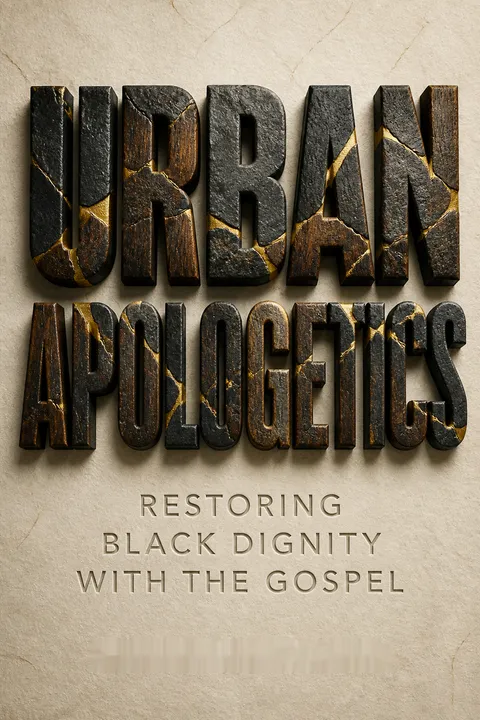
Urban Apologetics is an edited Christian apologetics volume, not a neutral survey of Black religious life. Its central claim is that a defense of Christianity in Black communities must answer both intellectual objections and the historical injuries that make those objections persuasive. The book moves from dignity and whitewashed Christian history, through accounts of particular religious and secular movements, to practical methods for ministry. Its narrative energy comes from contributors' experiences: a child absorbing racialized images, a former Nation of Islam member finding faith, a woman drawn to alternative spirituality, and churches earning trust through neighborhood service.
The book's major strength is its insistence that arguments are never delivered into a vacuum. The claim that Christianity is a white religion cannot be answered adequately by saying race does not matter, when Christian institutions have sometimes taught or depicted it otherwise. Recovering Black Christian history, listening to women's and men's concerns, and responding to material needs are presented as part of credible witness, not optional public relations. The contributors also offer usable tools: contextual apologetics, a three-part worldview test, biblical literacy, and the pairing of service with verbal explanation.
Its limitations follow partly from its purpose. The volume strongly defends evangelical Christian doctrine and often describes opposing beliefs through an adversarial lens. Its broad labels cover diverse communities, so readers should resist applying any group's description to every adherent. Several philosophical arguments, especially the claims that objective value requires God and that a first cause must be personal, are argued positions rather than settled conclusions. Similarly, debates about women's roles are not resolved merely by listing biblical examples.
The most durable lesson is therefore methodological as much as theological: take the objection seriously enough to understand its history, represent the other person's beliefs accurately, offer reasons rather than slogans, and examine whether Christian communities embody the dignity they claim. The book calls for a faith that can account for truth and demonstrate its concern through institutions, relationships, and public conduct.
Review Summary
Urban Apologetics receives mostly positive reviews, praised for its comprehensive coverage of urban apologetics and Black religious identity groups. Readers appreciate its biblical grounding, cultural insights, and practical tools for engaging urban communities. Some criticize its reliance on critical race theory and complementarian theology. The book is seen as valuable for both Black Christians and those seeking to understand urban ministry contexts. Reviewers highlight its importance in addressing unique challenges faced by the Black church and restoring dignity through the Gospel.
People Also Read










Glossary
Urban apologetics
Contextual defense of faithA culturally attentive defense and explanation of Christian faith, especially in response to questions shaped by Black experience, history, identity, and urban life. The book presents it as interdisciplinary, drawing on Scripture, theology, history, philosophy, sociology, ethics, relationship, and service rather than relying on a single style of argument.
Black Religious Identity Cults
Identity-centered religious movementsThe book's collective label for a range of religious or ideological movements it sees as challenging orthodox Christianity in Black communities. Examples discussed include Nation of Islam groups, Hebrew Israelite camps, and Kemetic movements. The contributors acknowledge that these groups are diverse and overlapping, so the term should not be mistaken for a single organization or a uniform set of beliefs.
whitewashing
Erasure of nonwhite historyThe book uses whitewashing to describe presenting Christian history, art, and scholarship as predominantly European or white while minimizing the role and identity of African and other non-European people. It includes both portraying biblical figures and early church thinkers as white and depicting people of color mainly as powerless or enslaved.
imago Dei
Humanity bearing God's imageA Christian theological term for the biblical teaching that human beings are created in the image of God. In this book, the concept grounds human dignity in creation rather than achievement, social status, or conversion. It is used to affirm that racism and the dehumanization of any ethnic group contradict the value God gives to humanity.
lifestyle apologetics
Witness through conduct and speechDoug Logan's term for Christian witness that joins a reasoned verbal defense of faith with a life of visible generosity, service, and care. The idea is that consistent conduct can create trust and opportunities for conversation, while service should remain an expression of love rather than a tactic that makes help conditional on religious response.
Truth, Logical Coherence, Existential Viability
Three tests for worldviewsBrandon Washington's three criteria for evaluating a worldview. Its core claims should correspond to reality, fit together without contradiction, and be practically livable. The book compares this to a three-legged stool: if any criterion fails, the worldview cannot reliably support the beliefs and practices built upon it.
Dependence, Order, Rationality (DOR)
Three clues in reasoning about GodA framework developed from Zera Yacob's philosophical inquiry in the book. Dependence asks what explains the existence of contingent things; order considers the regular structures of nature; rationality asks how human reasoning arises. The contributor argues that these features point toward God, though the conclusions depend on debated philosophical premises.
foundational biblical literacy
Scripture understood and appliedWilson's term for the basic scriptural understanding expected of Christians as they grow in faith. It involves more than remembering verses: believers should understand Scripture's message, apply it to their lives, mature spiritually, and explain the gospel to others. The book presents transformation and service, not debate victory, as its primary aims.
union with Christ
Believers joined to ChristA Christian doctrine describing the spiritual relationship between Christ and those who trust in him. Mason presents it as the foundation of Christian identity: planned by God, grounded in Christ's saving work, lived through faith, and expressed in justification, sanctification, perseverance, and future resurrection. In his account, it offers an identity not dependent on racial hierarchy or self-invention.
Download PDF
Download EPUB
.epub digital book format is ideal for reading ebooks on phones, tablets, and e-readers.








