

Key Takeaways
Treat self-deception as a tool to evaluate, not a flaw to erase

The book's central puzzle. Don Lowry invented women and sent love letters to thousands of lonely men. When the scheme was exposed, some members defended him. The letters had offered companionship, hope, and purpose, benefits that did not vanish when the deception became clear. Their response raises the book's central question: can a false belief sometimes help the person who holds it?
Function before accuracy. The brain filters enormous amounts of sensory information and retains only a small fraction. Its task is not to deliver a complete, neutral picture of reality, but to help people survive, connect, and keep going. Self-deception can serve those goals, though it can also expose people to manipulation and harm.
The distinction between accuracy and usefulness is powerful because it stops treating every false belief as the same kind of error. A reassuring story, a mistaken medical belief, and a political conspiracy can all distort reality while producing very different consequences. Yet usefulness is not a moral defense by itself. A belief can benefit one person while enriching a deceiver or injuring others. The most useful test is therefore not simply whether a belief works, but for whom, at what cost, and whether a less harmful source of the same comfort is available.
Use tact as social infrastructure, not proof that honesty has failed

Small fictions smooth contact. Hotel executive Jorge Trevino taught staff to show warmth even when a customer was hostile. This emotional labor, the management of feelings to provide a reassuring experience, is a demanding part of service work. Everyday greetings, compliments, and softened criticism perform a similar social function: they protect dignity and keep ordinary interactions from becoming fights.
Politeness has consequences. In one experiment described in the book, people treated rudely solved fewer puzzles and were much less likely to help someone pick up dropped books. Research on audience tuning finds that speakers tailor messages to fit an audience, then may come to believe the version they presented. Social ease can support cooperation, but it can also pull opinions toward what a group wants to hear.
Tact is not merely decoration. It can preserve the trust that makes disagreement possible, a point familiar in negotiation and conflict mediation: people listen better when they do not feel humiliated. But the same softening can conceal exploitation. A service worker's forced cheerfulness and a politician's audience-friendly shift are not ethically equivalent, even if both involve performance. The relevant distinction is power and choice. Courtesy freely offered can protect a relationship; courtesy demanded from someone with little power can disguise an unequal arrangement.
Offer hope carefully when truth alone could leave someone unable to cope

Comfort can be consequential. After Pete Troxell's pregnant daughter died of an overdose, he found solace in believing an eagle at her burial signaled that she was safe in heaven. The author did not challenge him. Behavioral economist Dan Ariely, badly burned as a teenager, also recalled that a nurse's reassuring account of a painful procedure spared him weeks of dread, even though the procedure hurt.
Optimism and health. The book describes studies linking optimistic outlooks with longer survival. One study of lung cancer patients found optimists lived six months longer than pessimists; another reported higher mortality among people with a pessimistic explanatory style. These findings do not prove that optimism alone caused longer life. They do show why reassurance can matter when people face illness, grief, or fear.
Hope can change what a person is able to endure, but it should not become a license to remove their agency. In care settings, there is an important difference between emphasizing possible paths forward and withholding information someone needs to make decisions. The strongest version of compassionate reassurance is truthful about uncertainty while protecting the person's sense that action, support, and connection remain possible. The survival findings also deserve caution: optimism may travel with other advantages, so the evidence supports taking hope seriously, not promising that a positive attitude cures disease.
Treat healing rituals as part of care, while keeping evidence in charge
The setting can help heal. In 1784, Benjamin Franklin and fellow investigators found no evidence for Franz Mesmer's proposed invisible healing force. They did, however, recognize that patients could feel better through expectation and imagination. More than two centuries later, surgeon Bruce Moseley compared real arthroscopic procedures for knee arthritis with sham operations. At two years, patients in all groups reported improvement, with no meaningful difference between groups.
Medicine is also an encounter. The placebo effect refers to improvement connected to expectations and the context of treatment, rather than a treatment's specific active ingredient. Attention, trust, ritual, and a clinician's confidence can shape a patient's experience. This does not mean medicine is only theater: it means the human encounter can add to, or detract from, effective treatment.
This account broadens the idea of medical efficacy beyond the chemical or mechanical intervention. Listening carefully, explaining a procedure, and creating a sense of safety are not mystical extras; they are parts of how care is delivered. The ethical challenge is to capture these benefits without deceiving patients or offering useless interventions in place of effective ones. Transparent placebo research suggests that honest communication and ritual can coexist. The book's examples are most relevant to pain and subjective experience, and should not be stretched into a claim that expectation can replace treatment for serious disease.
Expectations can change what a product feels like and how it performs
Stories alter experience. A Toyota Corolla and a Geo Prizm were built at the same plant from nearly identical designs, yet Corolla owners rated their cars more favorably. The Corolla also cost more. In wine experiments, people enjoyed identical wine more when told it came from an expensive bottle; brain scans showed greater activity in a region associated with pleasure.
Price can become part of the product. In an energy-drink experiment, participants told they had paid full price solved nearly twice as many word puzzles as those given the drink at a discount. The price-placebo effect describes how the price or presentation of a product can change the experience or perceived impact of that product. Sometimes expectations affect behavior too, as when owners take better care of something they value.
The important distinction is between an experience that is subjectively real and a claim about objective quality. A story can genuinely improve enjoyment or effort, even when the underlying product is unchanged. That creates a genuine benefit, but also an opening for manipulation: companies can charge more by cultivating expectations rather than improving what they sell. Consumers need not dismiss branding as imaginary, but they can ask whether the additional pleasure is worth the additional cost, and whether the claim being sold concerns experience or measurable performance.
Notice when longing edits perception before dismissing another person's belief
Love changes the evidence. Joseph Enriquez fell for Pamala through letters from Lowry's organization, which he believed came from a real woman. He was grieving his mother, worried about his father, and deeply lonely. The relationship felt meaningful to him, even after he learned the truth. The story does not make the fraud harmless; it shows why an outside observer's obvious answer may not match the lived experience of the person involved.
Positive illusions are favorable distortions in how people see themselves, their futures, or those they love. Studies of couples found that partners often rated each other more positively than the partners rated themselves, especially on traits the rater valued. Couples with stronger idealized views also tended to report greater satisfaction. Desire can shape perception, not just judgment: people may interpret ambiguous information in the direction they hope for.
The case encourages empathy without requiring a verdict that every comforting relationship is equally valid. A felt bond can be emotionally real while its apparent source is fabricated. That distinction matters in scams, parasocial attachments, and online relationships, where affection may be sincere but the exchange is unequal. Positive illusions can help couples tolerate ordinary flaws, but they should not be used to rationalize abuse or prevent needed change. The practical question is whether generosity in interpretation supports mutual care, or shields one party from accountability.
When facts threaten identity, people may protect the story instead
Contradiction creates pressure. Cognitive dissonance is the discomfort of holding beliefs that conflict with one another. Psychologist Leon Festinger studied a group that expected a UFO to rescue them before a predicted catastrophe. When the catastrophe did not occur, committed members did not simply abandon the prophecy. Some reinterpreted the failure in a way that preserved their faith and the sacrifices they had made.
The cost of changing one's mind. Church of Love members faced a similar problem when evidence of the fraud emerged. Accepting the deception meant questioning not only Lowry, but relationships, donations, and a source of purpose. The brain also uses expectations to interpret incomplete sensory information, making familiar patterns easier to see than surprises. Facts matter, but facts that demand the destruction of a person's whole story can be difficult to accept.
This is a useful corrective to the idea that people maintain false beliefs only because they lack information. Sometimes they understand the evidence and still resist, because changing the belief would threaten belonging, self-respect, or a carefully built life. That does not make evidence irrelevant. It suggests that correction works better when people have a dignified route out of the old position, rather than being mocked into defending it. Still, compassion should not be confused with endless accommodation: organized deception can keep extracting money and trust while its victims are urged to preserve the story.
Use rituals to turn private fear into shared courage and cooperation
Rituals coordinate people. In the Congolese village of Bulambika, an elder's vision inspired a charm believed to make defenders bulletproof. The charm could not stop bullets, but the villagers' belief helped them stand and fight rather than flee. Their resistance made raids more costly for attackers, who eventually backed away. In this case, a false physical claim helped produce a real collective effect.
Costly participation binds groups. Rituals can reduce anxiety, create a sense of belonging, and signal commitment. Researchers found that people who endured more pain in the Hindu kavadi procession later donated more to the temple. Yet rituals do not guarantee success: Ghost Dance believers at Wounded Knee and Chinese Boxers who expected protection from bullets suffered devastating defeats. A ritual can build cohesion while leaving people exposed to danger.
Rituals are a kind of social technology: synchronized behavior gives people a visible way to trust that others are committed too. The Bulambika case shows how a belief can alter behavior enough to change an opponent's calculation. But that does not make the charm physically protective, or make every costly ritual wise. When ritual confidence encourages resistance against overwhelming force, its social benefit can come with catastrophic individual costs. Any evaluation should include who bears those costs, whether participation is voluntary, and what alternatives the ritual makes possible or obscures.
Treat national and religious stories as powerful tools with dangerous blind spots
Shared stories make large groups possible. A nation is not only a border or a government; it is also a story that lets strangers imagine themselves as members of a common community. Such stories can inspire public projects, mutual aid, and sacrifice. They can also hide cruelty. At Arlington National Cemetery, a symbol of national honor, the land's history includes slavery, Indigenous dispossession, and a manor built by enslaved people.
Belief can comfort and govern. The book connects religious belief to fear of death, moral rules, social support, and group solidarity. It also describes mortality salience, the increased awareness of one's own death, as a condition that can intensify attachment to cultural norms. Shared faith and national identity can help people cooperate, but rigid group myths can excuse exclusion, persecution, and violence.
Collective stories solve a coordination problem: strangers can act together when they trust a shared identity more than personal acquaintance. But belonging often depends on selecting which parts of history to remember. The Arlington example shows how honoring a national ideal can coexist with evidence that the ideal was denied to many people. A healthy civic story need not be stripped of pride; it needs enough honesty to permit repair. The book's functional account of religion and nationhood explains their force, but function alone cannot establish that a group is just.
Challenge harmful beliefs by meeting the needs that make them useful
Start with the unmet need. In the Covington High School controversy, early video clips prompted people to settle quickly on a story that fit their political loyalties. As fuller context appeared, changing one's view risked looking disloyal to one's side. Research described in the book found that people who felt a lack of control were more likely to perceive patterns in random information and reach for conspiracy explanations.
Replace, do not just ridicule. The epilogue argues that false beliefs often provide comfort, identity, self-esteem, or a sense of control. Simply throwing more facts at someone may leave those needs untouched. Restoring a sense of control and belonging can make careful thinking easier. The same pragmatic logic applies to public problems: trusted religious leaders, for example, may help make environmental protection a shared moral commitment rather than a remote calculation.
This approach resembles good clinical and community practice: understand what a behavior accomplishes before trying to remove it. A conspiracy theory may offer order in a frightening situation; a group identity may offer dignity after exclusion. Addressing those functions can reduce the belief's appeal without treating its holder as stupid. The strategy is not guaranteed, and understanding a belief's appeal does not excuse the harm it causes. In public communication, the strongest response combines accurate evidence with credible messengers, meaningful agency, and a path to belong without endorsing the false claim.
Analysis
The book's most valuable move is to shift the question from whether a belief is true to what it does, and who pays for its effects. That change brings ordinary politeness, medical expectation, romantic idealization, consumer branding, ritual, and nationalism into a single frame. These are not equivalent phenomena, but each shows how perception and belief can serve social or emotional goals that bare accuracy does not always serve.
That functional lens also needs boundaries. An outcome that helps a person cope is not automatically a social good, and a belief that unites a group may also justify exclusion or violence. A con artist's profitable fantasy can provide genuine comfort while still exploiting its members. The book is strongest when it preserves both facts: subjective benefits can be real, and deception can remain wrong. Its examples invite an ethical assessment that includes the beneficiary, the harmed parties, the availability of consent, and the cost of alternatives.
The scientific claims vary in strength. Experiments on framing, expectation, and attention can demonstrate short-term effects under particular conditions. Observational findings linking optimism, religion, or longevity do not by themselves establish what causes what. Evolutionary explanations are useful hypotheses about why a mental tendency might persist, not proof that it is universally beneficial. Adaptive effects can differ across environments, and a trait that supports group survival can damage individuals.
The practical conclusion is neither to celebrate delusion nor to demand perfect rationality. It is to diagnose the need a belief serves, then ask whether that need can be met with less harm. Compassion can make truth easier to hear, while evidence and accountability keep compassion from becoming permission for manipulation. That balance is the book's deeper argument: reason works best when it understands the emotional and social machinery it is trying to guide.
Review Summary
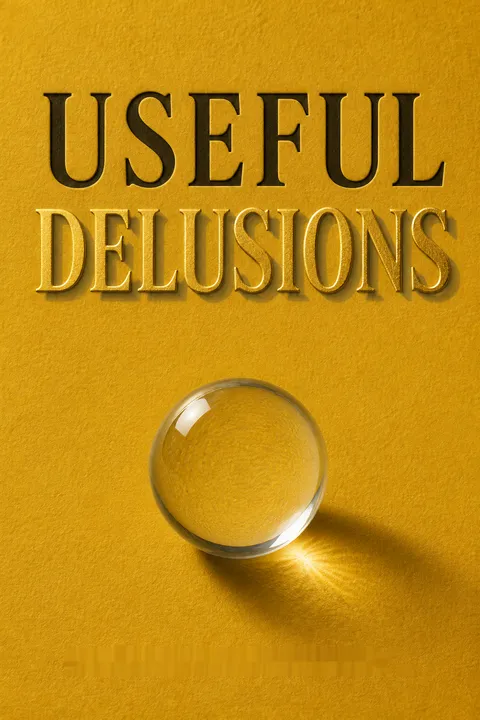
Useful Delusions explores how self-deception can be beneficial for individuals and society. Reviewers found the book engaging and thought-provoking, praising Vedantam's storytelling and accessible writing style. Many appreciated the book's perspective on the positive aspects of delusions, though some felt it could have gone deeper. The Church of Love scam and placebo effect were frequently mentioned as intriguing examples. While some readers found the ideas unsettling, others saw value in understanding how delusions shape human behavior and society.
People Also Read









Glossary
Useful delusions
Helpful distortions of realityBeliefs or perceptions that are inaccurate yet can serve emotional, social, or biological needs. The book uses the idea to challenge the assumption that every distortion is simply a defect. A delusion may offer hope, strengthen a relationship, or bind a group, while still carrying risks and potentially serving someone else's interests.
Audience tuning
Shaping a message for listenersA process in which speakers adapt what they say to fit an audience's existing views. Research discussed in the book suggests that communicators may later remember or believe the selected version as their own. The effect helps explain how social pressure can reshape not only public statements but private convictions.
Fudge factor
Self-justified dishonestyDan Ariely's term for the way people balance dishonest advantage against their desire to see themselves as good. Rather than lie as much as possible, people often adjust their conduct only as far as they can while preserving a positive moral self-image. The idea describes one psychological limit on everyday cheating.
Placebo effect
Improvement shaped by treatment contextA change in symptoms or experience associated with expectations and the context of care, rather than solely with a treatment's specific active ingredient. The book emphasizes that clinician attention, trust, ritual, and hope may contribute to improvement. The effect is especially relevant to experiences such as pain and distress, and does not mean all medicine is ineffective.
Price-placebo effect
Price changes perceived impactThe finding that a product's price can shape how people experience or perform while using it. In studies described in the book, higher stated prices increased enjoyment of identical wine and improved performance on puzzles after an energy drink. Price can act as a signal of quality, altering expectation and sometimes behavior.
Positive illusions
Favorable self-serving beliefsShelley Taylor's term for unrealistically favorable views of oneself, one's control over events, or one's future. The book describes research associating such beliefs with motivation, coping, and well-being. Positive illusions may help people persist through difficulty, but can also distort risk assessment and make harmful decisions more likely.
Depressive realism
Greater accuracy in some judgmentsA research idea arising from studies in which depressed participants judged their influence over outcomes more accurately than non-depressed participants, who tended to overestimate their control. The finding challenges the assumption that psychological health always means seeing reality more accurately. It is a limited research concept, not a claim that depression improves judgment in every setting.
Naive realism
Assuming one's view is objectiveThe tendency to regard one's own perception of a situation as an unbiased account of reality, and to explain disagreement by assuming others are uninformed, irrational, or biased. In the book, this concept helps explain why outsiders may dismiss another person's attachment or belief without understanding the circumstances that make it meaningful.
Cognitive dissonance
Discomfort from conflicting beliefsThe tension people experience when their beliefs, actions, or new evidence contradict one another. They may reduce that discomfort by changing a belief, reinterpreting the evidence, or avoiding the conflict. The book uses failed prophecies and the Church of Love to show why people may defend a story tied to costly commitments and identity.
Wishful seeing
Desire shaping visual perceptionThe influence of wants and emotional states on what people perceive visually. In experiments discussed in the book, people were more likely to interpret an ambiguous image in the way that promised a preferred outcome, and desired objects could seem nearer. Perception is therefore partly guided by expectation, not merely by incoming sensory information.
Costly rituals
Rituals requiring real sacrificeRitual practices that demand substantial effort, time, pain, or other sacrifice from participants. Such costs can signal commitment and build trust among group members, because participation is harder to imitate casually. The same demands can also create danger, so social bonding does not establish that a ritual is safe or worthwhile.
Collective effervescence
Shared emotional intensitySociologist Emile Durkheim's term for the heightened feeling of unity that can arise when people gather and participate in common rituals. Synchronized activity can make participants feel connected to one another and to a group larger than themselves. The book links this experience to social cohesion and collective confidence.
Sacred cause
A value beyond trade-offsA cause treated as so important that it cannot be exchanged for ordinary material rewards. The book uses the term for commitments that can unite personal identity with a religious, national, or political group and motivate significant sacrifice. Such commitment can support courageous collective action, but can also intensify conflict.
Mortality salience
Awareness of one's own deathThe degree to which a person is consciously aware of death at a given time. Studies discussed in the book find that reminders of mortality can strengthen attachment to cultural beliefs, increase conformity to group norms, and affect judgments of outsiders. The response may provide psychological security while also increasing bias.
Terror management theory
Managing fear of deathA psychological theory that people manage the fear created by awareness of mortality through cultural beliefs, self-esteem, and a sense of meaning. These structures can reassure people that their lives matter or that they belong to something enduring. Research discussed in the book connects mortality reminders with stronger defense of cultural worldviews.
Immortality narratives
Stories of living beyond deathStephen Cave's term for recurring accounts that promise continued existence or legacy. The book describes narratives of extending life, bodily resurrection, an enduring soul or reincarnation, and symbolic survival through memory, descendants, or a group. These stories can soothe mortality fears and encourage people to act for purposes beyond immediate self-interest.
Functional opacity
Benefits hidden from participantsAzim Shariff's term for the way a practice can produce social benefits without participants understanding those benefits as its purpose. A ritual may strengthen trust or group cohesion because it has been culturally selected for those effects, while believers experience it as devotion or obedience. Explaining the mechanism too plainly may change its perceived meaning.
FAQ
What's Useful Delusions about?
- Exploration of Self-Deception: Useful Delusions by Shankar Vedantam and Bill Mesler examines how self-deception is a fundamental aspect of human psychology, influencing our perceptions and decisions.
- Emotional and Social Benefits: The book argues that our brains often create illusions that help us cope with reality, providing emotional and social benefits.
- Case Studies and Examples: It uses various case studies, such as Donald Lowry's "Church of Love," to illustrate the positive and negative outcomes of self-deception.
Why should I read Useful Delusions?
- Insight into Human Behavior: The book offers a unique perspective on why people believe in falsehoods and how these beliefs can be beneficial, providing insights into human psychology.
- Practical Applications: Readers can apply the concepts of self-deception to their own lives, improving decision-making and understanding its effects on relationships and well-being.
- Engaging Narratives: The authors use compelling stories and research findings to make complex psychological concepts accessible and relatable.
What are the key takeaways of Useful Delusions?
- Self-Deception is Ubiquitous: The book emphasizes that self-deception is a common human experience, often serving as a coping mechanism in difficult situations.
- Delusions Can Be Functional: It posits that self-deception can lead to positive outcomes, such as improved mental health and resilience, challenging the notion that seeing reality clearly is always beneficial.
- Complex Relationship with Truth: The authors argue that our relationship with truth is complicated; sometimes, believing in a comforting falsehood can be more advantageous than facing harsh realities.
What are the best quotes from Useful Delusions and what do they mean?
- “The truth will set you free!”: This quote challenges the notion that truth is inherently liberating, showing how self-deception can also provide freedom from despair.
- “Life, like evolution and natural selection, ultimately doesn’t care about what’s true. It cares about what works.”: This underscores the idea that survival and well-being often depend on functional beliefs rather than objective truths.
- “We are not just in a war with con artists, conspiracy theorists and demagogues. We are in a war with ourselves.”: This reflects the internal struggle between our desire for truth and the comfort of self-deception, suggesting that understanding this conflict is crucial for personal growth.
How does Useful Delusions illustrate the concept of self-deception?
- Case Study of Donald Lowry: The authors detail Lowry's scheme of writing love letters from fictitious women, showing how his victims' self-deception provided emotional fulfillment.
- Everyday Examples: The book discusses common social niceties and emotional labor, illustrating how people often engage in minor deceptions to maintain harmony in relationships.
- Psychological Research: It incorporates findings from psychology that demonstrate how self-deception can enhance well-being, such as studies on optimism and its effects on health outcomes.
What is cognitive dissonance, and how is it explained in Useful Delusions?
- Definition of Cognitive Dissonance: Cognitive dissonance is the mental discomfort experienced when holding two or more conflicting beliefs or values, leading individuals to change beliefs or rationalize actions.
- Real-Life Examples: The book uses examples, such as the followers of Dorothy Martin, who maintained their beliefs despite failed prophecies, illustrating how cognitive dissonance can strengthen commitment.
- Implications for Behavior: Understanding cognitive dissonance can help individuals recognize their own rationalizations and biases, leading to more informed decision-making and healthier relationships.
How does Useful Delusions relate self-deception to mental health?
- Self-Deception as a Buffer: The book posits that self-deception can act as a protective mechanism against anxiety and depression, allowing individuals to maintain hope in challenging circumstances.
- Research Findings: It references studies showing that individuals with positive illusions about their health or circumstances often experience better outcomes than those who see reality more clearly.
- Balance of Realism and Optimism: The authors suggest that a blend of realistic and optimistic thinking can lead to better mental health, challenging the idea that only clear-sightedness is beneficial.
How does Useful Delusions relate to marketing and consumer behavior?
- Influence of Self-Deception: The book discusses how marketers exploit self-deception to create compelling narratives around products, leading consumers to perceive products as more valuable based on their stories.
- Placebo Effect in Marketing: The authors explore how perceived value can enhance consumer satisfaction, suggesting that belief in a product's effectiveness can be as important as the product itself.
- Brand Loyalty: Emotional connections to brands can lead to irrational loyalty, and understanding these dynamics can help marketers craft more effective strategies.
What role does self-deception play in relationships according to Useful Delusions?
- Positive Illusions in Love: The book discusses how seeing partners through "rose-tinted glasses" can enhance relationship satisfaction and stability, suggesting that some self-deception is beneficial.
- Coping Mechanism: Self-deception helps individuals navigate the complexities of relationships, allowing them to overlook flaws and focus on positive attributes.
- Emotional Bonds: The authors argue that self-deception fosters deeper emotional connections, as individuals often create idealized versions of their partners that enhance intimacy and commitment.
How does Useful Delusions address the concept of national myths?
- Construction of National Identity: The book explains that national myths are narratives that help unify people under a shared identity, often simplifying complex histories.
- Functionality of Myths: While these myths may be based on falsehoods, they serve important social functions, inspiring collective action and fostering resilience.
- Risks of Myths: The book warns that rigid adherence to national myths can lead to exclusion and conflict, promoting a more nuanced understanding of national identity.
How does Useful Delusions suggest we combat harmful self-deceptions?
- Awareness and Reflection: The authors emphasize the importance of self-awareness in recognizing our own biases and delusions, encouraging reflection on beliefs and motivations.
- Addressing Emotional Needs: Understanding the emotional needs that drive self-deception can help find healthier ways to meet those needs, such as seeking support or engaging in constructive activities.
- Encouraging Open Dialogue: The book advocates for fostering environments where open dialogue and critical thinking are encouraged, helping individuals challenge their beliefs and reduce harmful self-deceptions.
About the Author
Other books by Shankar Vedantam

Download PDF
Download EPUB
.epub digital book format is ideal for reading ebooks on phones, tablets, and e-readers.








