

Key Takeaways
War strips childhood fantasies down to fear, hunger, and responsibility.
The boy expects glory. Andrzej grows up among toy soldiers, parades, and his father’s military stories. He imagines Poland as a formidable power and war as an adventure that will end with Polish soldiers in Berlin. Then Germany invades in 1939. His family is scattered, cities are bombed, and the army he admired is defeated. In besieged Lwów, war means hiding in a cellar, carrying water, and listening to artillery. At eleven, he sees a person shot while trying to cross a frozen river to escape Soviet rule.
Growing up is not triumph. The child’s early excitement does not vanish all at once. It is replaced by the practical demands of survival, then by a teenager’s willingness to fight. The memoir’s coming-of-age story is therefore not a journey toward chosen maturity, but a record of childhood being interrupted.
What's striking is how the changing meaning of war is measured through ordinary objects: toy soldiers, a water pitcher, a schoolbook, and finally a weapon. These concrete details make political collapse legible at a child’s scale. The memoir also resists the tidy idea that suffering automatically produces wisdom. Andrzej’s early confidence and later fears coexist; he is brave in some moments, frightened in others, and often simply young. That unevenness makes the account more persuasive than a retrospective portrait of a boy who was always destined to become a soldier.
Survival under occupation means reading power, then choosing what to conceal.
Every rule has a cost. Poland is partitioned between Nazi Germany and the Soviet Union, and the two occupations demand different forms of submission. The Soviets impose new school lessons and hunt officers; the Germans restrict Polish education, seize property, and threaten forced labour. Andrzej’s father escapes Soviet custody, then survives German arrest partly because he speaks German and had served in the Austro-Hungarian Army. His family navigates checkpoints, permits, curfews, food shortages, and shifting borders.
Disguise becomes a tool. To cross into German territory, Mateczka claims that Andrzej is the child of German-speaking parents. A story that is false in fact becomes necessary for their passage. Later, Andrzej carries hidden papers for his father’s underground work, relying on his blond appearance to look like a German youth. Under occupation, identity is both personal and perilously useful.
The memoir shows adaptation not as moral surrender, but as a series of constrained judgments about risk. A false identity can protect a child; silence can keep a family alive; language can open one border and expose someone at another. These episodes complicate easy divisions between courage and compromise. They also suggest that survival depends on noticing how power operates locally, not only on understanding grand political events. Still, such calculations are never fully controllable: a helpful disguise can fail, and a seemingly safe authority can change its rules without warning.
Terror can make obedience look voluntary, and silence look like consent.
A town watches its neighbours disappear. In August 1942, Maków’s Jewish residents are ordered to assemble for what the Germans call resettlement. They walk to the station carrying small bags, while neighbours stand by. An SS man shoots an elderly man who cannot walk. Andrzej recognizes a boy he once knew among the people crowded into freight wagons, but cannot bring himself to call out. He later feels ashamed. At the time, neither he nor those watching understand that the train is taking its passengers to Belzec, an extermination camp.
Resistance was not simple. Andrzej’s father says attempts to organize joint resistance had been rejected by community elders who urged patience. In Warsaw, Jewish fighters eventually revolt in the ghetto. The memoir makes room for both the terrible pressure to comply and the courage to fight back, without pretending that everyone had the same options.
The scene’s moral force comes from its refusal to confuse visible passivity with free choice. Terror narrows what people believe they can do, while uncertainty obscures what is being done to them. Andrzej’s shame matters, but it does not make him responsible for the machinery of persecution. The distinction is important: remembering bystanders should not turn into a convenient judgment of people trapped under armed rule. The account instead asks what forms of knowledge, solidarity, or intervention remain possible when the likely price of action is death.
Turn forbidden schooling into a quiet form of resistance.
Lessons move underground. German authorities restrict Polish education above the elementary level, intending to keep Poles from entering professions such as medicine, architecture, and engineering. In Warsaw, Andrzej joins clandestine classes that teach the prewar curriculum, including Polish history and Latin. The meetings are small, their locations change, and students travel discreetly. The concealment is not theatrical. It is the routine work of keeping knowledge alive when official policy says it should disappear.
A classroom becomes a pathway. Andrzej’s classes also bring him into contact with the Grey Ranks, a youth organization within the Polish resistance. At fifteen, he takes on assignments such as distributing underground newspapers, carrying messages, and painting resistance symbols. Education and resistance are not identical, but in this setting they overlap: learning forbidden history helps young people understand what the occupation is trying to control.
The account makes education politically consequential without treating every lesson as a heroic act. A class can preserve intellectual possibility, connect students to trusted adults, and make historical memory harder to erase. Those functions are especially visible when the curriculum itself is censored. At the same time, underground schooling carries real danger, and its benefits are uneven: access depends on teachers, safe rooms, and family support. The memoir’s strongest point is not that learning alone defeats an occupier, but that control over what people may learn is part of control over what they can imagine.
Courage cannot compensate for a reckless plan or empty ammunition stores.
The uprising begins underarmed. On 1 August 1944, the Home Army launches the Warsaw Uprising against German forces, hoping to liberate the city before the Soviet army arrives. Andrzej, not yet sixteen, joins the fighting. The opening brings exhilarating gains, and civilians help build barricades. But the resistance lacks weapons, ammunition, and reliable coordination. Some attacks begin before the planned hour; German strongpoints, bridges, and airfields remain in enemy hands. A unit of about 600 people, the memoir notes, had only 300 grenades, thirty pistols, three sub-machine guns, and three rifles.
Bravery has limits. Andrzej throws his first grenade and fights with the Zośka Battalion. He also sees attacks fail and casualties mount. The uprising lasts sixty-three days. German forces destroy much of Warsaw and kill civilians on a vast scale. The memoir honours the fighters while making clear that determination cannot erase the consequences of poor preparation.
The contrast between moral resolve and military capacity is central. An insurgent can be courageous and still be placed in a position where courage is unlikely to change the outcome. The memoir’s detailed attention to weapons, routes, and defensive positions prevents the uprising from becoming a simple story of heroic spirit. It also raises a difficult question about leadership: when an action carries immense civilian risk, how should symbolic and political aims be weighed against readiness? The account does not reduce that decision to cowardice or folly, but its material details make the cost impossible to romanticize.
A nearby ally can choose to watch your defeat.
Rescue seems close enough to hear. The Red Army advances toward Warsaw, and Soviet broadcasts encourage the Polish population to rise against the Germans. Yet after the uprising begins, Soviet artillery falls silent across the Vistula. Soviet forces do not promptly cross the river to relieve the fighters. Stalin’s government blames the London-based Polish leadership and presents the uprising as an uncoordinated mistake, while the Home Army suspects that Moscow wants its independent leadership weakened.
A limited crossing changes little. In September, Polish troops serving under Soviet command cross the river into the Czerniaków district. Andrzej fights alongside them and briefly hopes that help has arrived. The bridgehead is too small to hold against German artillery and reinforcements. Soviet support remains limited, and the position collapses. The approaching army is an ally in name, but its political interests shape what help it gives.
The memoir makes proximity itself part of the tragedy. The fighters can hear the distant guns and see Soviet aircraft, so the absence of rescue is not abstract; it feels like a promise being withheld. This is a useful distinction between military alliance and political solidarity. A power may share an enemy yet have little interest in strengthening a partner it expects to control. The account also shows why aid cannot be measured only by whether it exists: timing, scale, and strategic purpose determine whether assistance changes the fate of people under attack.
Judge people by what they do, not the uniform they wear.
The camp contains several moral worlds. After the uprising’s surrender, Andrzej is sent to a German prisoner-of-war camp. The Home Army fighters are recognized as combatants, a protection negotiated in the surrender terms. In camp, captured British medics treat him, and a British doctor helps keep him in hospital by describing him as suffering from melancholia. Some German guards behave decently; others enforce the machinery of occupation and captivity. A German prisoner later warns Andrzej that an abusive farmer is dangerous, while a different German guard shares food and speaks candidly about the war.
Decency does not cancel guilt. The memoir does not present such individuals as proof that the system was benign. Nor does it erase the massacres committed by German forces in Warsaw. It shows how conduct can vary even within institutions, while the larger political system remains responsible for immense violence.
This is a demanding kind of moral clarity: individual kindness is real, but it cannot be used to soften institutional crimes. The book lets readers recognize humane acts without confusing them with innocence. It also resists the opposite simplification, in which every person wearing an enemy uniform becomes psychologically identical. That distinction matters because accurate judgment requires both scales at once: the choices of individuals and the policies they serve. The memoir’s personal encounters make the distinction vivid, though they cannot represent every prisoner, guard, or German unit.
Victory is no homecoming when another empire controls your country's future.
The fighting ends, but the danger continues. In April 1945, American troops reach the farm where Andrzej and other Polish prisoners are being held. For a moment, liberation seems to mean going home. But Warsaw is largely destroyed, his mother’s family has been displaced, and Poland is entering Soviet control. When Andrzej returns, he finds his mother in Łódź and sees how quickly the uprising is being blamed on the Home Army. His resistance experience, once a source of pride, is politically dangerous.
Exile becomes the next chapter. Andrzej joins other former fighters in an attempt to resist the new Communist authorities, then abandons the plan when he realizes how exposed they are. In 1946, he leaves Poland with his mother and half-brother. He settles in the West, learns English, and becomes a foreign correspondent. The war has ended, but his country remains beyond his reach.
The ending refuses the familiar promise that survival naturally resolves into restoration. Andrzej is free of German captivity, yet his political loyalties make return unsafe and his family’s home has been shattered. The change from soldier to student and journalist is not a clean reinvention; it is a life rebuilt around displacement. The episode also sharpens the book’s central question of what victory means. Military defeat of one occupier does not guarantee political self-determination, and a country can be formally liberated while its citizens remain unable to choose their future.
Analysis
Warsaw Boy is both a coming-of-age memoir and a history of occupation told from an unusually vulnerable vantage point: a child who does not yet know what events mean, followed by an adult who can supply the missing context. That double perspective is the book’s main narrative engine. The young Andrzej hopes for battlefield glory, misunderstands political slogans, and treats dangerous errands as proof of growing up. The older narrator places those perceptions beside massacres, military failures, and diplomatic calculation without pretending the boy understood them at the time.
The memoir’s strongest historical insight is that Poland’s wartime experience cannot be reduced to a single struggle against a single enemy. Nazi Germany and the Soviet Union partition the country, pursue different forms of control, and both devastate Polish lives. Their brief alignment, later conflict, and competing claims over Poland make the country’s position precarious even when one power appears to be retreating. The Soviet failure to rescue the Warsaw insurgents becomes not merely a battlefield event but a preview of the political future imposed on Poland.
The book is also careful about moral scale. It records the passivity of neighbours during Jewish deportations, the courage of Jewish resistance, and the varied behaviour of individual Germans, while refusing to equate these moments with the policies and violence of the regimes. Its attention to specific human choices does not offer easy absolution. Instead, it shows how people act within systems that constrain what they can know, risk, or protect.
The memoir’s limitation is also part of its strength: its account is shaped by one person’s route through the war, not a comprehensive view of every Polish experience. The retrospective historical passages sometimes make events feel more coherent than they could have felt to a frightened boy. Yet the narrative repeatedly restores uncertainty, including the author’s own mistaken hopes and incomplete understanding. The result is not a lesson in how to be heroic. It is an account of how war turns a child’s imagined world into a landscape of choices, losses, and unfinished belonging.
Review Summary
Warsaw Boy is highly praised for providing a vivid, firsthand account of a Polish youth's experiences during World War II, particularly the Warsaw Uprising. Readers appreciate Borowiec's detailed narrative, patriotic spirit, and unique perspective on often-overlooked aspects of the war. The book is commended for its historical significance, engaging storytelling, and emotional impact. While some found certain sections slow or confusing, most reviewers consider it an essential read for those interested in Polish history and World War II. The author's writing style and ability to convey the human experience of war are frequently highlighted.
People Also Read


Glossary
Grey Ranks
Resistance youth organizationThe Grey Ranks, or Szare Szeregi, were a clandestine Polish youth organization associated with the Home Army and the scouting movement. Younger members handled tasks such as carrying messages, distributing underground newspapers, and painting resistance symbols. Some members received military training and took part in operations. Andrzej joins as a teenager and serves first in support roles before fighting in the Warsaw Uprising.
Armia Krajowa
Polish Home ArmyArmia Krajowa, usually abbreviated AK and translated as the Home Army, was the principal Polish resistance organization loyal to the government-in-exile in London. It operated underground in German-occupied Poland, combining intelligence, sabotage, and armed action. In Warsaw, it organized the 1944 uprising, whose aim was to drive out the Germans and establish Polish authority before Soviet forces took control.
W-Hour
Uprising start timeW-Hour was the designated starting time for the Warsaw Uprising on 1 August 1944. The letter W referred to walka, meaning combat. The Home Army planned to use the moment to mobilize and attack German forces across the city. Some clashes began before the appointed hour, which weakened the intended surprise and contributed to the uprising’s disorganized opening.
kotwica
Polish resistance emblemThe kotwica, or anchor, was an emblem of the Polish underground resistance. Its design combined the letters P and W, originally referring to the promise to avenge the Wawer massacre and increasingly understood as a symbol of Fighting Poland. Resistance members painted it on walls and pavements as a visible sign of defiance under German occupation.
Arbeitskarte
German work authorization cardAn Arbeitskarte was a work card required by the German occupation authorities for Polish males above a specified age. It documented approved employment and could help protect a person from being seized and deported for forced labour in Germany. In the memoir, Andrzej obtains a card through a nominal job, then later uses employment records to reduce the risk of arrest.
Stalag
Enlisted prisoner-of-war campStalag was the German abbreviation for a prisoner-of-war camp for enlisted personnel and other ranks. Such camps differed from Oflags, which held officers. Prisoners could be assigned to work details at farms, mines, or factories, while camp hospitals were often run by captured medical personnel. Andrzej is treated in a Stalag hospital after the uprising and later transferred to the main camp.
FAQ
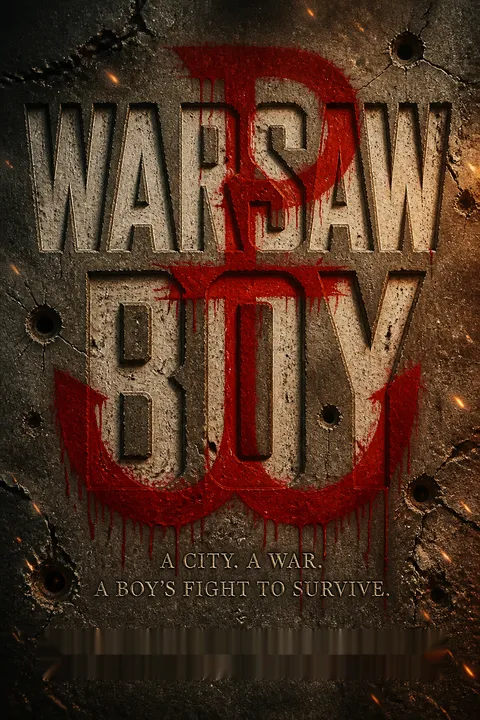
What's Warsaw Boy: A Memoir of a Wartime Childhood about?
- Personal Narrative: The memoir by Andrew Borowiec recounts his childhood experiences during World War II in Poland, focusing on the Warsaw Uprising and the impact of Nazi and Soviet occupations.
- Historical Context: It provides a vivid portrayal of the war's impact on Borowiec's family and community, capturing the complexities of identity and survival during wartime.
- Childhood Perspective: Told from a young boy's perspective, the narrative contrasts innocence with the brutal realities of war, making it both poignant and impactful.
Why should I read Warsaw Boy?
- Engaging Storytelling: Borowiec's writing is evocative, drawing readers into the emotional landscape of his wartime childhood.
- Historical Insight: The memoir offers a personal glimpse into significant historical events, such as the Warsaw Uprising and the Holocaust, providing context often missing in traditional histories.
- Universal Themes: Themes of loss, resilience, and identity resonate throughout the book, making it relatable to readers.
What are the key takeaways of Warsaw Boy?
- Resilience in Adversity: The memoir illustrates the strength of the human spirit in the face of overwhelming odds, highlighting how individuals and communities endure during crises.
- Complexity of War: It emphasizes that war is a deeply personal experience affecting families and relationships, showcasing moral ambiguities and difficult choices.
- Cultural Identity: Borowiec explores Polish identity and the impact of occupation on cultural heritage, providing a nuanced understanding of the era.
What are the best quotes from Warsaw Boy and what do they mean?
- “When I grow up, I will be an officer, n’est-ce pas, Mademoiselle?”: Reflects childhood innocence and aspirations shaped by societal expectations of honor and duty.
- “We will not give up a single button of our uniform.”: Captures the fierce pride and determination of the Polish people to resist occupation, symbolizing the struggle for national identity.
- “The day is coming.”: Serves as a rallying cry for hope and resistance, embodying the belief in eventual liberation and justice.
How does Warsaw Boy depict childhood during wartime?
- Loss of Innocence: Borowiec's childhood is marked by a transition from peace to the harsh realities of war, illustrating how innocence is shattered by violence and loss.
- Adaptation and Survival: The author describes how children adapt to new circumstances, often taking on adult responsibilities, highlighting their resilience.
- Friendship and Community: Despite chaos, the memoir emphasizes the importance of friendships and community bonds, providing moments of joy and normalcy.
What role does family play in Warsaw Boy?
- Support System: Family serves as a crucial support system, with relationships illustrating love, loyalty, and protection during wartime.
- Conflict and Tension: The memoir reveals family tensions, particularly between Borowiec's parents, reflecting broader societal struggles.
- Legacy and Memory: Borowiec's reflections highlight the importance of memory and legacy, shaping his understanding of identity and belonging.
How does Warsaw Boy address the theme of identity?
- Cultural Heritage: The memoir explores Borowiec's Polish identity and the complexities of living under Nazi and Soviet occupations.
- Personal Growth: As Borowiec navigates war challenges, he grapples with his sense of self and belonging, intertwined with historical events.
- Jewish Community: Observations of the Jewish community provide insight into broader issues of identity and persecution, underscoring shared humanity.
What significant historical events are covered in Warsaw Boy?
- Warsaw Uprising: Details the 1944 Uprising, a pivotal moment in Polish history, with Borowiec's firsthand account providing a unique perspective.
- Nazi and Soviet Occupation: Recounts experiences under both regimes, highlighting their differing impacts on Polish society.
- Holocaust and Jewish Persecution: Addresses the Holocaust and the extermination of Jews, serving as a poignant reminder of war's human cost.
How does Warsaw Boy illustrate the impact of war on community?
- Displacement and Loss: Depicts the displacement of families and loss of community ties, highlighting collective trauma in occupied Poland.
- Acts of Resistance: Illustrates community responses to occupation, including acts of resistance and solidarity.
- Cultural Resilience: Showcases the resilience of Polish culture and identity through shared traditions and acts of defiance.
What challenges did Andrew Borowiec face during the Uprising?
- Survival in a War Zone: Faced constant threats of violence and death amidst the chaos of the Uprising.
- Loss of Innocence: Confronted brutal war realities at a young age, leading to a profound loss of innocence.
- Family Separation: Experienced separation from family and uncertainty about their safety, adding to emotional turmoil.
How does Warsaw Boy depict the relationship between Poles and Soviets during the Uprising?
- Ambivalence and Distrust: Reveals a complex relationship marked by ambivalence and distrust, with hopes for Soviet support tempered by fear.
- Soviet Indifference: Highlights Soviet indifference during the Uprising, as they delayed their advance and failed to assist.
- Struggle for Independence: Emphasizes the Polish desire for independence from both Nazi and Soviet control.
How does Warsaw Boy contribute to our understanding of the Warsaw Uprising?
- Firsthand Account: Provides a unique perspective on the Uprising, enriching the historical narrative with personal stories and reflections.
- Historical Context: Situates the Uprising within the broader context of World War II and Polish history, highlighting its significance.
- Legacy of Memory: Contributes to preserving the memory of the Uprising, serving as a testament to the courage and sacrifices of those involved.
Download PDF
Download EPUB
.epub digital book format is ideal for reading ebooks on phones, tablets, and e-readers.








