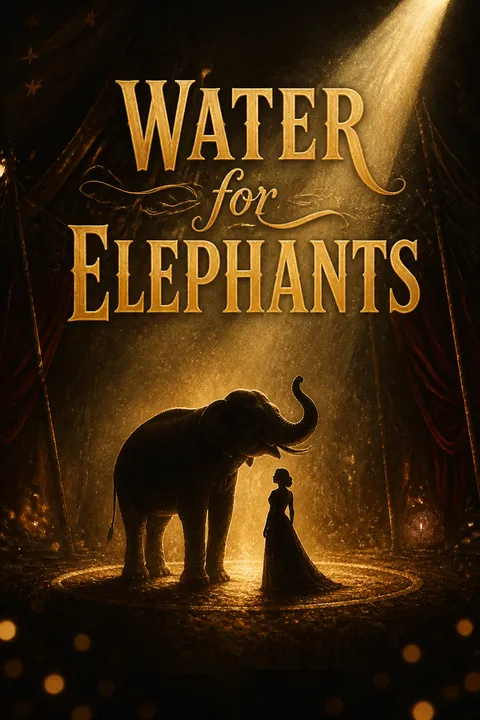


Plot Summary
Prologue
Decades later, Jacob hears the circus band break into its emergency signal. The menagerie has erupted, animals are loose, and the crowd is beginning to understand that the show has turned dangerous. Through the confusion, he catches sight of Marlena near August and believes he understands the violence that follows.
He keeps that belief, and the truth he thinks it protects, to himself for seventy years. His memory is vivid, but the view is partial: a witness can mistake what panic hides, then spend a lifetime guarding the mistake.
The opening makes memory both the book’s frame and its first uncertainty. Jacob presents an image with the force of eyewitness testimony, then admits that silence has shaped what he remembers and what he can say. The circus disaster is not merely a hook; it establishes that perception under pressure can be wrong, and that a secret may become part of a person’s identity through repetition. The older narrator’s confidence therefore carries a crack the reader cannot yet see. The story moves backward to show how he acquired the people, loyalties, and fears that made silence feel necessary.
Cornell Loses Its Future
At twenty-three, Jacob Jankowski is days from finishing veterinary school and joining his parents’ practice when a dean summons him from class. His parents have died in a car crash. The estate reveals that they mortgaged their home to pay for his education, and the bank has taken everything. Grief leaves him unable to read his final exam; he walks out and follows the railroad tracks into the night.
With no home, money, or plan, he runs beside a passing train and hauls himself into an open car. Its occupants nearly throw him off, but Camel, an aging roustabout, recognizes his desperation and offers to introduce him to the circus boss. Jacob has escaped one wreckage only to enter another.
Jacob’s departure from Cornell is not a romantic rejection of respectable life. It follows an abrupt double loss: his parents and the future they financed. The unreadable exam turns grief into a physical barrier, while the train offers motion without requiring a destination. His father’s generosity toward poor clients has left Jacob educated but penniless, a contradiction that shapes his later loyalties. The circus first appears as an accident of survival, not a chosen vocation. Camel’s intervention gives Jacob a foothold, but it also places him inside a world where shelter and safety depend on other people’s judgment.
A Job Beside Marlena
The train carries Jacob with the Benzini Brothers Most Spectacular Show on Earth, a struggling traveling circus run by Alan Bunkel, known as Uncle Al. Camel guides him through the rough division between laborers and performers, and Jacob meets Marlena, the equestrian star, and her husband August, the show’s animal director.
When the Arabian Silver Star comes off the train lame, Jacob recognizes founder, a potentially fatal hoof condition. His warning costs the circus its lead liberty horse, but proves that his veterinary training is real. Uncle Al hires him on the spot, assigning him to August. Jacob has found work, yet his new security depends on a boss whose charm and menace can change without warning.
The horse’s diagnosis gives Jacob a way back into the professional identity grief interrupted. The circus does not care that he has not passed his exams; it cares that he can read an animal’s body and make an urgent decision. That practical competence temporarily outranks credentials, though the job remains precarious because Uncle Al controls it. Jacob’s first encounter with Marlena places beauty and expertise in the same frame: she is not simply a performer to admire, but a person whose relationship with horses is already legible to him. August’s authority makes the offer a bargain with unequal terms.
The Elephant Nobody Wanted
Silver Star’s founder worsens during a forced three-day journey, and Jacob euthanizes him with August’s rifle rather than let him suffer. August then explains that the circus sells illusion as carefully as it sells tickets: even its advertised wonders are often invented. At Joliet, Uncle Al arrives hoping to acquire a sensational performer from a collapsed rival show, but Ringling takes the attraction first.
Instead, Al spends heavily on an elephant named Rosie and a special railcar. Jacob’s new bunkmate, Walter, a dwarf clown billed as Kinko, is furious at sharing space with a working man. Rosie arrives with no trained act, while Jacob learns that circus jobs, food, and even sleeping quarters follow a strict hierarchy.
This section makes the circus’s ethical contradictions concrete. Jacob’s first professional act is mercy toward Silver Star, while the organization’s business model depends on deception and calculated scarcity. Uncle Al’s purchase of Rosie shows the danger of confusing a spectacle’s promise with the animal’s actual needs. Walter’s objection to sharing a room is not mere snobbery; the show’s status system determines who eats, sleeps, and belongs. Jacob enters as a veterinarian but is still vulnerable to the labor hierarchy around him. His bond with animals begins to challenge the categories the circus uses to price people and creatures alike.
Chicago After Midnight
In Chicago, Jacob’s affection for Marlena becomes harder to dismiss. August takes them to an illegal nightclub, where Marlena and Jacob dance while August watches from the booth. A police raid scatters the patrons, and Jacob and Marlena escape together through back alleys. In the sudden quiet, Jacob kisses her; she responds, then pulls away in alarm and leaves him behind.
Their attraction is now real, but neither can treat it as harmless. Around them, the Depression is visible in breadlines, shuttered shops, and young people sleeping rough. Jacob returns to the circus with shame and longing, while his growing attachment to Marlena makes his dependence on August more dangerous.
The nightclub scene briefly lets Jacob and Marlena move outside the roles assigned to them: star and husband, employee and boss. The raid ends that borrowed freedom, and the kiss converts attraction into a risk neither can ignore. Marlena’s retreat is not simple rejection; she is married, financially dependent on the circus, and accustomed to managing August’s unpredictable moods. The Depression’s street-level hardship also makes escape less abstract. Jacob has already seen what life without work or shelter can mean. Desire therefore pulls him toward Marlena while material precarity keeps him inside the system that controls her.
Rosie Understands Polish
Rosie charms visitors with her trunk but cannot follow August’s English instructions, so Uncle Al demands a proper act. She repeatedly pulls up her stake and steals lemonade, and August punishes her by driving a bull hook into her. Greg, a Polish elephant handler who refuses to work for August, tends her wounds and speaks to her in Polish.
Jacob tries the same language and asks Rosie to lift a foot and step backward. She obeys. The supposedly stupid elephant has been listening all along, only in a language her new keepers do not know. Jacob begins coaching August in Polish, and Rosie’s treatment changes from blows to patient practice. The discovery gives the circus a possible act and gives Jacob a reason to trust her instincts.
Rosie’s apparent incapacity is produced by the humans around her, not by a lack of intelligence. The command problem is a failure of translation that the circus mistakes for disobedience, then uses to justify violence. Jacob’s Polish reconnects her present to an earlier handler and makes care possible through attention rather than force. Yet the discovery does not erase the power imbalance: August still controls her training, and the circus still needs her to earn money. The scene asks whether understanding an animal changes the institution that exploits it, or merely helps that institution use the animal more effectively.
A Secret in the Stock Car
Camel’s feet and hands grow numb after years of drinking adulterated Jamaica ginger extract, a cheap substitute for alcohol. Jacob learns that the resulting paralysis has no reliable cure, and the circus may discard Camel rather than pay for a doctor. He and Walter hide the old man behind trunks in their cramped stock-car room.
Walter gives up his cot, helps find Camel’s estranged son, and eventually shares real whiskey to ease Camel’s fear. Meanwhile, Marlena returns to Jacob after her riding injury and admits that her marriage has left her frightened and lonely. Jacob wants to help her, but she still sends him away. Their shared room becomes a refuge for three people the circus values only while they can work.
The hidden room briefly reverses the circus’s normal economy: instead of measuring a person by usefulness, Jacob and Walter spend space, food, and risk on Camel when he can no longer earn his place. Walter’s kindness complicates the defensive pride with which he first guarded his bunk. Marlena’s confession similarly exposes how charm and glamour conceal dependence and fear. Jacob cannot rescue her simply by wanting to, and Camel cannot be made whole by sympathy. The section’s care is therefore modest and costly: a cot, a doctor, a plan to locate family, and the decision not to abandon someone who has become inconvenient.
Rosie Takes the Ring
After ten days of practice, Rosie performs beside Marlena, balancing on a ball and responding to Jacob’s Polish cues. The crowd loves the act, and the flood of tickets and coins lifts the Benzini Brothers out of immediate danger. August presents Marlena with a diamond necklace and Jacob with a gold watch, then praises them and Rosie as the show’s salvation.
For a while, he is tender with the elephant and affectionate toward his wife, making his earlier cruelty seem almost like a separate man. Jacob remains wary, but even he struggles to reconcile the violence he witnessed with August’s new warmth. Rosie’s success creates security for the circus and a fragile hope that the people around her might change.
Rosie’s act is a genuine collaboration built from observation, language, and Marlena’s horsemanship, but its success is quickly absorbed into the circus’s financial story. The performance gives the workers a reprieve and gives Uncle Al the spectacle he wanted. August’s generosity complicates judgment: he can be attentive and loving, yet that capacity does not cancel the harm he has done. Jacob’s uncertainty is psychologically credible because intermittent tenderness can make abuse harder to name, not easier. The gifts turn gratitude into a possible obligation, while Rosie’s forgiveness seems to offer August a chance he has not yet earned.
Love Becomes a Liability
When August accuses Jacob and Marlena of sleeping together, he wrecks a celebration and attacks them both. Marlena escapes to a hotel, where she explains that his violent episodes have injured workers before and that her estranged family will not take her back. She and Jacob become lovers, then agree to leave the circus after Camel reaches his son in Providence.
Uncle Al discovers Jacob is hiding Camel and threatens the old man and Walter to force Jacob to help reunite August and Marlena. Jacob pretends to cooperate, promising that she will return, while Marlena later tells him she is pregnant. Their love has become more than a private risk: it is now entangled with the lives of the people they are trying to protect.
The relationship shifts from forbidden longing to a practical alliance, but intimacy does not free Marlena from the structures around her. Her family’s rejection, August’s control, and the threat to Camel and Walter narrow her options. Jacob’s deception of Uncle Al is an act of protection, yet it also requires him to perform compliance with the very order he opposes. Pregnancy raises the stakes without magically resolving the conflict. The section shows how coercive systems make private choices collective: leaving a violent husband may endanger friends, while staying may endanger Marlena and her child.
The Knife Above August
August forces pregnant Marlena to perform with Rosie, who refuses to complete the act. When Jacob tries to intervene, Blackie restrains him and knocks him unconscious. He wakes aboard the moving train with a concussion and learns that he cannot act without risking Camel and Walter. In the night, he climbs across the cars with Walter’s knife and enters August’s bedroom, ready to kill him.
Seeing August asleep and clutching Marlena’s pillow, Jacob cannot strike. Back in the stock car, he discovers Walter and Camel missing. At the next stop, Earl confirms that men were thrown from the train over a trestle. Camel died at once; Walter was badly injured and likely did not survive. Jacob’s hesitation has not saved them.
Jacob’s attempt at murder is the point at which resistance nearly becomes the same violence he wants to stop. His decision to lower the knife is not a clean moral victory: the next morning he finds that the circus has already exercised lethal power over the people he loves. Walter and Camel’s deaths make the cost of delay irreversible, while Jacob’s concussion leaves his judgment physically compromised. The sleeping August briefly appears vulnerable and human, but that image cannot undo what he has done. Jacob must now carry both grief and the knowledge that mercy toward one man did not protect the others.
The Disaster March
Grady warns Jacob that former roustabouts plan to take revenge on Uncle Al, then the band abruptly signals an emergency. The menagerie’s animals burst loose and surge through the tent, while a panther reaches the big top and sends the audience fleeing. Jacob finds Marlena beside Rosie and August, who is shouting and swinging his cane. Rosie has pulled her stake free.
As August turns away, she lifts it and strikes him, killing him before the stampede swallows the scene. The chaos then drives the remaining animals and people out of the tent. Jacob carries the stunned Marlena to safety. His first memory of the disaster had placed the act of violence in Marlena’s hands; the truth is that Rosie acted while protecting her.
The climax brings the circus’s violence back through the animal it has repeatedly misread and mistreated. Rosie’s action is not framed as a trained trick or a calculated human revenge. She responds in a crisis after years of being treated as an object, while the humans around her lose control of the spectacle they built. Jacob’s corrected memory also changes the meaning of his long silence: he was not merely hiding a crime, but protecting Rosie from a system that might punish her for surviving. The stampede collapses the boundary between entertainment and danger, exposing what the show’s managed illusions had concealed.
The Circus Comes Apart
In the days after the stampede, workers recover animals while police investigate August’s death. Uncle Al disappears, and the Benzini Brothers’ food runs out before another circus arrives to take the equipment. His body is found strangled beneath the canvas, though no one identifies a killer.
Jacob calls Cornell and is invited to complete his examinations. When a sheriff and the new circus try to claim the animals, Greg supports Jacob’s claim to Rosie, while Marlena confronts officials until they return her eleven horses.
Jacob, Marlena, and the animals find work with Ringling; they marry and later leave the road for a veterinary job near Chicago. Rosie and the chimp Bobo join their household. The life they build begins with a refusal to let the circus decide who is disposable.
The collapse of the Benzini show does not restore justice in any orderly way: August and Uncle Al are dead, the workers are scattered, and the animals risk becoming property in another bargain. Jacob and Marlena’s decisive acts are practical. He claims Rosie, she retrieves the horses, and together they seek employment rather than waiting for rescue. Cornell’s invitation repairs the educational future grief interrupted, but it is no longer the only measure of Jacob’s worth. Their next life joins professional care to chosen family, preserving the circus bonds without preserving the circus’s hierarchy.
Jacob Runs Away Again
In old age, Jacob lives in assisted care after his wife dies and a fall leaves him dependent on staff. He resents bland meals, fading memory, and relatives who visit dutifully but keep their own lives from him. When another resident claims he once carried water for elephants, Jacob calls him a liar; Rosemary helps him see that age can turn a wished-for memory into a sincerely believed one.
On circus day, his family forgets to take him. Jacob walks out with his walker and reaches the tent, where manager Charlie O’Brien recognizes the former Benzini veterinarian. After Jacob tells him the truth about Rosie and the disaster, Charlie hides him from police and offers him work selling tickets. Jacob chooses the circus as home once more.
The late-life frame makes the novel’s concern with usefulness painfully intimate. Jacob’s irritation is partly resistance to being managed, but the McGuinty dispute shows how easily certainty can become a weapon against another person’s failing memory. Rosemary responds by treating Jacob as an adult capable of reconsideration, and her care helps him remain connected rather than merely compliant. His family’s absence wounds him, but the escape is not only an act of rejection. Charlie recognizes a history Jacob has carried alone and gives him a role in the present. The final choice restores agency without pretending age has disappeared.
Analysis
Water for Elephants makes the circus a working institution rather than a decorative backdrop. Its tents promise escape to Depression-era audiences, but the same organization sorts people into ranks, withholds wages, and treats vulnerable workers as disposable. Jacob’s training gives him a vocabulary for animal suffering, yet his authority is limited by bosses who value an animal chiefly when it can perform. Rosie’s apparent stupidity is the clearest test of that system: the failure lies in the humans’ inability to listen, while violence is used to make their misunderstanding look like her defect.
The book also complicates the boundary between kindness and safety. August can be charming and tender, but those qualities do not neutralize his abuse. Jacob’s hope that a better version of August might endure reflects a familiar response to intermittent violence: people preserve the loving moments because they make the dangerous ones seem temporary. Marlena’s choices are shaped by the costs of leaving, including estrangement from her family and the risk to those who help her. Love becomes meaningful through action, but it cannot guarantee protection.
The frame of old age asks what happens when a person’s body and memory are treated as public property. Jacob resents being managed, yet his dispute with McGuinty forces him to recognize that sincerity and factual accuracy can diverge in an aging mind. Rosemary’s care matters because she neither indulges every impulse nor dismisses him as incapable. She offers respect with honest limits.
Ultimately, Jacob’s life is shaped by choices about who deserves care when care is costly: his father treats poor neighbors, Jacob protects animals and workers, and Marlena resists the circus’s ownership of her horses. The circus’s collapse does not create a just world, but Jacob and Marlena build a smaller one by refusing to let a boss decide which lives count. His final escape repeats the train jump of his youth, but this time he chooses the destination himself.
Review Summary
Water for Elephants received mixed reviews, with many praising its vivid depiction of Depression-era circus life and compelling characters. Readers enjoyed the dual timeline narrative and the memorable elephant, Rosie. Some found the romance predictable and criticized the flat female lead. The book's historical details and exploration of aging were appreciated. While some readers found it captivating, others felt it didn't live up to expectations. Overall, it was generally considered an entertaining read with a few shortcomings.
People Also Read







Characters
Jacob Jankowski
Orphaned animal doctorJacob is a Polish American veterinary student whose education and family life are cut short by sudden bereavement. He is observant, physically capable, and more comfortable interpreting animals than reading the shifting motives of people. His professional knowledge gives him purpose, but he begins with little confidence in his own authority and little experience of intimacy. The circus forces him to weigh compassion against obedience, especially when his work puts him near Marlena, August, and Rosie. His defining conflict is not simply whether to act bravely, but how to protect others without becoming cruel himself. In old age, his sharp temper and his hunger for independence coexist with a deep need to be seen as a person.
Marlena
The horse-ring starMarlena is the Benzini Brothers’ celebrated equestrian performer and the wife of August, the circus’s animal director. Skilled, disciplined, and attentive to horses, she has built a life around a talent that lets her command a ring even when she has little control elsewhere. Her glamour is partly work: it gives audiences delight and helps conceal the strain of a marriage shaped by August’s volatility. Marlena is neither passive nor simply rebellious. She weighs danger, money, family rejection, and affection before making decisions. Her bond with animals reflects a capacity for trust that she struggles to extend to people. Jacob’s arrival makes her imagine a different life, but the choice carries consequences for more than herself.
August Rosenbluth
The charming animal bossAugust directs the animal acts and serves as Marlena’s husband. He is handsome, socially agile, and capable of making a dinner party feel generous, yet his shifts in mood can turn him cruel and frightening. He expects obedience from workers and animals alike, and he treats challenges to his authority as personal affronts. His charisma is not a false mask so much as one real capacity among several, which makes people around him struggle to reconcile tenderness with violence. August’s intelligence and showmanship help the circus function, but they do not make his treatment of others safe. His character exposes the danger of confusing charm, talent, or illness with accountability.
Rosie
The misunderstood elephantRosie is an elderly elephant bought by Uncle Al to save a failing circus. She is enormous, expressive, and initially judged useless because she does not respond to the English commands her new handlers give her. Her curiosity, memory, and sensitivity become visible to anyone willing to watch rather than force her. Rosie forms connections through small exchanges of food, touch, and attention, and her behavior repeatedly unsettles the circus’s assumptions about intelligence. She is both a living creature with preferences and a public attraction expected to earn her keep. Her presence tests whether the people around her can distinguish cooperation from submission.
Walter, billed as Kinko
The guarded clownWalter is a dwarf performer who shares his stock-car room with Jacob and is billed as Kinko in the show. He guards his privacy, his books, and his hard-won place among the performers, reacting sharply when Jacob first intrudes on his space. His pride is a defense against a world that sorts people by size, job, and usefulness. Beneath his jokes and irritation, Walter is loyal, perceptive, and capable of practical generosity. He understands the show’s dangers better than Jacob does and warns him when affection begins to cloud judgment. His friendship with Jacob develops through shared cramped quarters, arguments, and care for people neither man can protect alone.
Camel
The aging roustaboutCamel is an old circus worker who meets Jacob on the train and helps him find a place in the show. He is stooped, sociable, and dependent on cheap alcohol to endure years of physical labor. His easy banter can disguise how little security a working man has once his body begins to fail. Camel understands the risks of the circus and tries to help Jacob navigate them, even while struggling to face his own family history. He embodies the loyalty and vulnerability of workers whose labor keeps the spectacle moving but rarely earns them protection.
Uncle Al
The predatory circus ownerAlan Bunkel, known as Uncle Al, owns and runs the Benzini Brothers show. He is a gifted promoter who can turn a dead animal or a minor attraction into a profitable public event. His ambition is built on opportunism: when other circuses fail, he buys their equipment and hires the people he considers valuable. He demands loyalty while treating workers as costs and animals as investments. Uncle Al’s theatrical warmth, grand promises, and quick anger are parts of the same managerial style, all directed toward keeping the show alive and himself in control. His ambition makes him resourceful, but it also makes the people around him expendable.
Rosemary
Jacob’s candid nurseRosemary is a warm, capable nurse at Jacob’s assisted-living home. She respects his humor without reducing him to it and is willing to challenge him when his anger turns into unfairness. Her approach balances practical care with respect for choice: she asks what Jacob wants, explains what she is doing, and takes his memories seriously even when they are confused. She becomes a rare person in his present life who treats him as more than a patient or a family obligation. Rosemary’s empathy has boundaries, but those boundaries do not diminish her generosity.
Jacob’s wife
His lifelong companionJacob’s wife shares his adult life and the family he builds after the circus. In memory, she represents steady companionship, ordinary domestic warmth, and the freedom to be fully known without being managed. Her influence remains present in his preferences, his recollections of family life, and his sense of what care between partners should look like. She is not merely an idealized absence: Jacob remembers her as a person whose understanding made room for his humor, desire, and flaws.
Charlie O’Brien
The circus manager who listensCharlie manages the modern circus Jacob reaches in old age. He is courteous enough to make room for an elderly visitor and curious enough to recognize the value of Jacob’s firsthand experience. Unlike the circus bosses of Jacob’s youth, Charlie listens before deciding what a person can contribute. His practical kindness offers Jacob a chance to speak openly and take on useful work. Charlie’s role is brief but consequential because he recognizes that dignity can mean offering someone responsibility, not simply offering protection.
Earl
The security man with limitsEarl is a large, tattooed security worker who helps manage trouble on the circus lot. His intimidating size and blunt manner make him seem like an instrument of the show’s authority, yet he has a personal loyalty to Camel and a willingness to protect Jacob when he can. Earl understands how the circus punishes people who become inconvenient, but his influence is limited by the bosses and the men who control the trains. He represents the uneasy position of someone employed to enforce a cruel system while retaining a conscience.
Grady
A roustabout who warns JacobGrady is a working man on the Flying Squadron who knows the circus’s unwritten rules and the danger of unpaid wages. He shares information with Jacob when doing so could put him at risk, partly because Jacob showed kindness to Camel. Grady is not a romantic rebel; he understands that a worker’s choices are constrained by hunger, transport, and the threat of being left behind. His warnings help Jacob see how close private trouble is to collective danger.
Greg Grabowski
Rosie’s Polish-speaking handlerGreg is a Polish elephant handler who knows how Rosie responds and tends her injuries after August has hurt her. He refuses to work for August, but his knowledge gives Jacob the clue needed to understand Rosie. Greg’s affection for elephants is practical rather than sentimental: he reads their behavior, speaks to them in familiar commands, and knows what motivates them. He helps Jacob see the difference between a disobedient animal and a human who has failed to communicate.
Catherine Hale
Jacob’s unfulfilled college crushCatherine is one of the few women in Jacob’s veterinary class at Cornell and the object of his uncertain romantic pursuit. She is playful and self-possessed, but Jacob’s inexperience makes him read her flirtation as a promise and then retreat when his parents die. Her brief presence reveals how little his student ambitions prepared him for grief or adult intimacy.
Dean Wilkins
The dean bearing bad newsDean Wilkins is the Cornell administrator who informs Jacob that his parents have died. He handles the announcement with awkward compassion and later remains a point of contact when Jacob seeks a way back to his education. His role links the institutional future Jacob loses with the possibility of recovering it.
Jacob’s parents
The generous veterinary partnersJacob’s parents run a veterinary practice and raise him toward a life of professional service. His father accepts food and goods from struggling neighbors rather than refuse care to their animals, while his mother is remembered through domestic rituals and Polish songs. Their values shape Jacob’s instinct to help even when there is no clear reward. Their love is also tied to the debt and sacrifice behind his education.
Dr. Rashid
The nursing-home physicianDr. Rashid evaluates Jacob after his anger and frustration become visible to the staff. She is responsible for his care, but her decision to treat his distress medically also illustrates how easily a patient’s protest can be interpreted as a symptom. She is not presented as malicious; she works within the limits and routines of the institution.
Joseph McGuinty
Jacob’s rival storytellerMcGuinty is a retired barrister at Jacob’s assisted-living home who claims a connection to circus life. Jacob’s anger at his elephant story becomes a conflict over whether an inaccurate memory is a deliberate lie. Their quarrel exposes Jacob’s fear of being fooled and his difficulty accepting how age can alter another person’s history.
Barbara
The burlesque performerBarbara performs in the circus’s cooch tent and takes paid callers after her show. She is confident, worldly, and amused by Jacob’s awkwardness, but she also shows him a measure of kindness when he is inexperienced and ashamed. Her work makes visible the separate economy of sexual entertainment operating behind the circus’s public family spectacle.
Bobo
The affectionate orangutanBobo is an orangutan in the Benzini menagerie who responds to Jacob’s attention with a strikingly human gentleness. Jacob feeds and handles him, and the animal becomes one of the creatures he feels responsible for protecting. Bobo helps make the menagerie more than a collection of attractions: each animal has habits, needs, and a distinct way of meeting the people around it.
Plot Devices
The elderly narrator’s frame
Memory keeps the story aliveThe novel alternates Jacob’s nursing-home present with his recollections of the 1931 circus. The frame makes physical decline, loneliness, and interrupted memory part of the story rather than a distant epilogue. Present-day scenes also show how the circus returns to him through sensory triggers, arguments, and encounters with other residents. The structure invites readers to trust Jacob’s experience while remaining alert to the limits of recollection. His old age changes the stakes of remembering: the past is not simply something he can tell, but the place where his sense of self still feels intact.
The Disaster March
A band signal warns of catastropheWhen the circus band abandons its ordinary music for the Disaster March, workers know an emergency has occurred and rush toward the danger. The sound turns a sprawling circus into a coordinated system, summoning people who might otherwise be scattered across the lot. Its use during the stampede makes the band itself part of the story’s machinery: music that has sold wonder becomes an alarm for real peril. The signal is introduced in the frame before the reader knows what caused the disaster, giving later events a sense of dread without explaining them at once.
Circus rank and redlighting
Precarity controls the workersThe circus divides performers, bosses, and working men through meals, sleeping cars, pay, and access to water. Workers who become a financial burden can be redlighted, meaning thrown from the moving train, so the threat is not merely losing a job. This hierarchy shapes Jacob’s daily life and makes helping Camel dangerous. It also explains why people often obey cruelty they privately recognize: a person without money or another show has few safe ways to refuse. The device turns the circus’s colorful community into a labor system with visible rules and severe consequences.
Rosie’s Polish commands
A language barrier hides abilityRosie seems unable to perform because her new handlers use commands she does not understand. Greg’s Polish speech gives Jacob a way to test whether the problem is stubbornness or communication. When Rosie responds to familiar Polish words, the discovery transforms the training process and helps the circus build an act around her. The device links language to trust: Jacob’s knowledge does not simply make Rosie more useful, it reveals that the humans have mistaken their own failure to communicate for her lack of intelligence. It also gives Jacob a distinct role between the animal, Marlena, and August.
Circus spectacle and fabrication
Illusion becomes the productThe Benzini Brothers sells grand claims, invented histories, and carefully staged attractions to audiences eager for escape during the Depression. August explains that the show routinely embellishes its acts, while Uncle Al treats publicity as a tool for survival. Rosie’s eventual performance complicates that practice because her appeal grows from a real relationship and a real ability, even as the circus turns her into advertising. The device keeps the novel attentive to the difference between theatrical deception, which audiences may accept willingly, and institutional deception, which hides exploitation from workers and animals.
Download PDF
Download EPUB
.epub digital book format is ideal for reading ebooks on phones, tablets, and e-readers.








