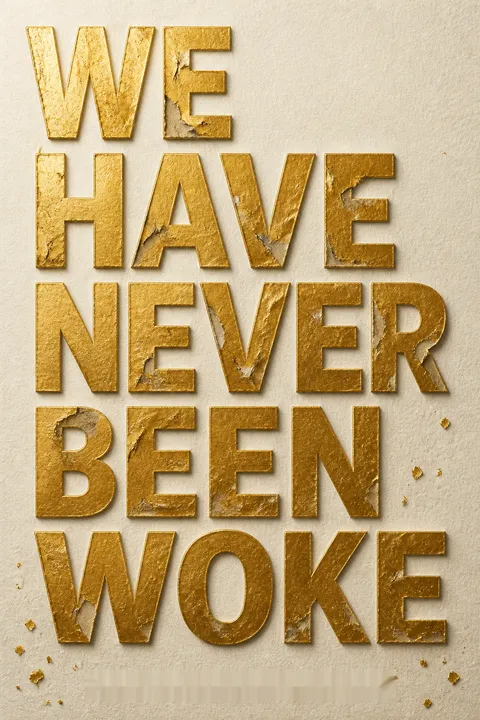


Key Takeaways
Ask who benefits when elite allyship costs nothing
A street-level contradiction. The book opens with progressive New Yorkers displaying Black Lives Matter signs beside homeless Black men, then supporting the removal of homeless people from their neighborhood. The gestures announced solidarity; the decision transferred inconvenience to poorer communities. For al-Gharbi, this gap captures the central argument: institutions and professionals can sincerely endorse social justice while their everyday conduct preserves inequality. He calls these professionals symbolic capitalists: people whose work centers on producing and managing information, images, ideas, data, and institutions, including academics, journalists, lawyers, and tech workers.
The measure is material. The claim is not that justice causes are false or that every advocate is cynical. It is that progressive language alone does not make a society egalitarian. The book asks readers to examine who gains power, money, and opportunity, and who bears the costs.
The opening scene is powerful because it makes political morality observable: not just what people say, but where they draw boundaries when a cause becomes inconvenient. This resembles the distinction in behavioral economics between stated preferences and revealed preferences, meaning choices made under real costs. Yet symbolic gestures are not necessarily worthless. They can change norms, make excluded people visible, or open doors. The sharper test is whether they accompany changes in resources, rules, and access, rather than serving as substitutes for them.
Read Awokenings as elite job-market revolts, not youth revolutions
Recurring waves, shared pressures. Al-Gharbi argues that the post-2010 Great Awokening was one of several surges in social-justice language and activism, with earlier waves in the 1920s and 1930s, the 1960s and 1970s, and the late 1980s and early 1990s. He links these periods to elite overproduction: more people expect prestigious professional lives than the economy can accommodate. When careers and status feel threatened, aspiring elites attack the existing order and align themselves with causes that already have moral force.
Not simply a youth uprising. The post-2011 shift appeared across news, scholarship, entertainment, and political attitudes, especially among educated professionals. The book treats Occupy Wall Street and later identity-focused movements as phases of a related mobilization, led largely by professionals and elite aspirants rather than by the young or working class.
This cyclical lens improves on explanations that make one election, social media, or a particular generation the single cause of broad cultural change. It directs attention to labor markets, credentials, and institutional competition. The account also encourages a useful comparison: when similar language rises in different decades, what changed in the careers and status prospects of the people adopting it? Still, timing alone cannot prove that professional insecurity caused a movement. A strong explanation needs to distinguish economic pressure from the events and organizing that turn pressure into collective action.
Look beyond billionaires to the credentialed class capturing opportunity
A wider map of power. The book argues that discussions fixated on billionaires miss professionals who control institutions, expertise, and cultural production. In 2022, U.S. households in the top income quintile held 71 percent of the nation's wealth. The top 1 percent held 26 percent, while the other 19 percent held 45 percent. Degree-holding households accounted for 72 percent of wealth. These figures do not make every graduate rich, but they challenge the idea that professionals are simply outsiders criticizing the powerful.
Altruism legitimizes authority. The symbolic professions expanded in the Progressive Era under claims that trained experts would serve the public good. Professional standards and credentials also helped secure status, autonomy, and pay for the professions themselves. The book argues that these occupations still benefit from presenting institutional influence as disinterested service.
Broadening the definition of elite is analytically valuable because power is not only ownership of assets. Professionals can shape which problems receive attention, how public programs operate, and whose knowledge counts. This complements research on bureaucratic discretion and agenda-setting. The wealth figures, however, describe households, not a unified professional class, and credentials alone do not establish control. The best use of the book's lens is to ask which groups combine income with institutional authority, then investigate how each group acquires and reproduces those advantages.
Follow convenience to workers subsidizing the professional lifestyle
Frictionless for whom? The book traces elite convenience to workers with less power. In its examples, wealthy urban professionals use delivery apps, rideshares, domestic help, and rapid online shipping, while couriers, drivers, cleaners, and warehouse workers face low pay, unstable hours, surveillance, and limited protections. Amazon warehouse employees, for instance, are tracked against demanding productivity targets; app-based delivery workers absorb costs such as transportation and equipment. These systems make services feel cheap and effortless to customers by shifting risk and expense onto workers.
The distance matters. Platforms stand between customers and laborers, making the human cost less visible. Al-Gharbi argues that liberal professionals can condemn inequality in public while relying on services built around vulnerable, often immigrant and minority, labor. The point is not that using a delivery app proves personal malice, but that ordinary consumption is connected to institutional arrangements.
This analysis turns convenience into a question of political economy: who absorbs the volatility that customers no longer see? It connects to the broader study of supply chains, where a product's price often hides costs borne by workers or communities elsewhere. The argument is strongest when it identifies specific mechanisms, such as shifting vehicle expenses to drivers. It is less useful if it turns every consumer into an equally culpable actor. Responsibility is unequal, and meaningful remedies require attention to company design, labor law, and bargaining power.
Treat victim status as a resource, not automatic proof of virtue
Victimhood can confer standing. The book describes victimhood culture as a moral setting in which people seek third parties to validate harms and intervene, rather than settling conflicts directly. Accounts of injury can bring attention, protection, or authority. Al-Gharbi adds the term totemic capital for the moral and epistemic credibility people may receive by identifying with groups understood as historically marginalized. In elite institutions, that credibility can influence who is heard, hired, or treated as representative.
Sincerity and advantage can coexist. The cases of Jussie Smollett, who was convicted for staging a hate crime, and Amber Heard, who described herself as a survivor while also promoting an upcoming film, illustrate different relationships between victim claims and career incentives. The book's point is not that victims are generally fraudulent. It is that experiencing harm and gaining status from an account of harm are not mutually exclusive.
Separating a person's suffering from the social rewards attached to its public recognition makes room for more careful judgment. Victims can deserve support while still having interests, ambitions, and mixed motives, as anyone does. This distinction is relevant to journalism, workplace investigations, and online dispute resolution, where premature certainty can harm both accusers and accused. The framework also carries a risk: treating victimhood as a strategy can encourage suspicion toward people with little power. Evidence, due process, and proportionality matter more than a person's status category.
Ask whether identity-based spokespeople represent ordinary group members
Visibility is not representation. Al-Gharbi argues that symbolic institutions often treat elite members of marginalized groups as natural spokespeople for much larger populations. Yet their education, income, networks, and interests may differ sharply from those of most people in the group. A prominent example is the term BIPOC, which can make an institution appear racially inclusive while obscuring how few Black, Indigenous, or Hispanic people it actually serves. The same concern applies when public figures claim that their own preferences reflect what an entire group wants.
Who gets the benefit? The book discusses how identity-based opportunities may disproportionately reach people who are already relatively advantaged within their group. That does not erase discrimination against them. It does mean that a promotion or platform for one elite person cannot automatically be counted as a gain for everyone who shares their identity.
The distinction between descriptive representation and substantive representation is useful here. A spokesperson can share a group's identity without advancing its priorities, and a person outside the group may sometimes advocate effectively. Representation therefore requires more than demographic resemblance: it needs accountability, contact, and evidence about what people actually want. At the same time, no individual can embody an entire population, and shared identity can still bring knowledge that outsiders lack. The goal is not to dismiss identity, but to stop treating it as a shortcut for representation.
Test egalitarian beliefs against costly behavior, not polished language
Belief does not guarantee practice. The author argues that many professionals sincerely support equality while acting in ways that protect their own position. Moral credentialing describes how a person’s public record of good intentions can make later biased choices feel fair. Moral licensing is the related idea that prior good deeds can make someone feel entitled to take a questionable action. The book applies these concepts to public declarations, diversity programs, and institutional statements that can reassure an organization without changing how it distributes power or treats employees.
Watch what changes. Al-Gharbi contrasts symbolic gestures, such as land acknowledgments that offer no material remedy, with costly commitments that alter access or resources. His closing test is whether a stated value reshapes decisions, relationships, and priorities. If it never asks the believer to give anything up, it may matter less than the believer assumes.
The distinction between declared values and costly choices gives readers a practical way to evaluate institutional sincerity without trying to read anyone's mind. It also fits organizational research on how public commitments can reassure audiences while leaving core incentives intact. Yet cost is not the only measure of moral seriousness: small procedural changes can have large effects, and sacrifice can become theater too. A stronger audit asks whether the action addresses the cause of harm, who gains from it, and whether outcomes are measured over time.
Expect elite-led movements to redirect causes toward elite priorities
Movements can change hands. The book argues that when professionals join movements for racial justice, feminism, or economic reform, they often bring different priorities from the people most affected. During Occupy Wall Street, for example, many participants focused on condemning the superrich, while the movement struggled to develop concrete policies that could address inequality. In another example, highly educated white liberals promoted defunding the police, although the book notes that Black Americans generally did not favor that demand.
Good intentions do not settle the issue. The author argues that symbolic changes, such as renaming a school, may provide a visible victory while leaving families' urgent concerns untouched. Professional expertise can help movements communicate and win policy changes, but it can also shift attention toward goals that reward activists' status or fit their institutional skills.
The idea of elite capture is a warning about agenda-setting, not a reason to reject coalitions. Movements need organizers, researchers, fundraisers, and public advocates, many of whom have professional backgrounds. The critical question is whether those resources remain accountable to affected communities. Durable organizing tends to require shared decision-making and concrete goals, not just the visibility of sympathetic outsiders. The examples also invite empirical testing: movement participants and the broader group may disagree, but claims about either side's preferences should be measured rather than assumed.
Notice when symbolic politics crowds out bread-and-butter demands
Politics reflects social position. Al-Gharbi argues that professionals are unusually focused on language, representation, expertise, and cultural conflict because their work and status depend on symbols. Many other Americans place greater emphasis on jobs, wages, safety, and public services. As educated professionals have moved toward the Democratic Party, the party's language and priorities have shifted toward issues that resonate with them. The book links this change to a widening cultural distance between professional urban voters and people whose work centers on physical goods and services.
Both sides can share the fixation. Anti-woke commentators may oppose progressive language, but the author argues they often treat symbolic conflicts as just as consequential as their opponents do. Awokenings can also undermine trust in institutions when professionals appear politically uniform or unwilling to tolerate dissent.
This account helps explain why disputes over language can dominate public attention even when they do little to change material conditions. Political parties respond to the voters, donors, and activists who participate most reliably, so professional influence can reshape both message and style. Still, symbolic and material politics are not clean opposites: labels and narratives can affect who receives services, protection, or public concern. The practical question is whether symbolic arguments connect to an implementable program, rather than becoming a substitute for one.
Keep powerful justice theories, but apply them to allies too
Critique is not rejection. The book argues that ideas associated with wokeness, including intersectionality and systemic analysis, can reveal real patterns of disadvantage. Their weakness is not that they are inherently useless, but that people can use them selectively, ignoring evidence that complicates their preferred story. A theory of structural inequality should include the institutions and individuals who claim to oppose inequality, not only those already regarded as villains.
Make analysis concrete. Al-Gharbi urges readers to trace how present-day practices reproduce outcomes rather than blaming history as if it acted by itself. He also argues that a group's identity does not make its elite spokespeople representative of everyone in that group. His final standard is practical: judge commitments by the actions and resource choices they produce, while remaining open to evidence that challenges both allies and opponents.
This is the book's most productive methodological move: reflexivity, the requirement that an explanation also apply to the people making it. It resists the comforting division between virtuous observers and defective subjects. The approach also fits causal analysis, which asks for mechanisms linking an institution's rules and everyday decisions to unequal outcomes. Reflexivity alone does not identify the right reform, however. It needs careful comparison, representative evidence, and attention to unequal power, or it can collapse into generalized suspicion of everyone involved.
Analysis
The book's strongest contribution is a change in the unit of analysis. Instead of treating progressive belief as evidence of egalitarian conduct, it places professional institutions, credential systems, consumer habits, and status competition inside the explanation of inequality. That move connects cultural politics to material organization: who gets a credential, who sets a newsroom's agenda, who delivers dinner, and whose labor makes an elite lifestyle seem effortless. The historical cycle of elite overproduction then offers a provocative account of why social-justice language intensifies when professional prospects become uncertain.
The argument is most persuasive where it identifies observable mechanisms, such as unpaid internships filtering entrants by family wealth, or delivery platforms shifting business costs onto workers. It is more debatable when broad patterns are interpreted as evidence of a shared elite motive. Symbolic capitalists are a heterogeneous category, and correlation between professional identity, progressive views, and institutional power does not by itself prove that status competition caused a given belief or movement. Some claims about whose preferences represent a group also require particularly careful sampling and context. The author frequently signals uncertainty, but the sheer range of examples can make a proposed mechanism feel more settled than the evidence warrants.
The book is therefore best read as a diagnostic framework, not a verdict that progressive advocacy is merely camouflage. Its central test is valuable across political camps: examine the distributional consequences of an idea, the incentives of its institutional sponsors, and the people excluded from defining its aims. That test should apply to critics of wokeness as well as its advocates. Opposition can also become a professional status business, centered on symbols while leaving material arrangements undisturbed. The analysis becomes most useful when it disciplines both moral self-congratulation and reflexive cynicism.
Review Summary
We Have Never Been Woke offers a critical analysis of "symbolic capitalists" - highly educated professionals who champion social justice causes while benefiting from inequality. Al-Gharbi argues that wokeness serves as cultural capital for elites, often contradicting their actions. The book examines how this class appropriates progressive language without effecting real change, perpetuating systemic issues. Readers found the book thought-provoking and challenging, praising its insights while noting occasional repetition and dense academic language. Many felt compelled to reevaluate their own beliefs and social positions after reading.
People Also Read









Glossary
symbolic capitalists
professionals managing symbolsProfessionals whose work centers on producing, interpreting, or managing information, ideas, images, data, narratives, and institutions rather than primarily making physical goods or providing manual services. Examples include academics, journalists, lawyers, consultants, administrators, and many workers in finance and technology. The author treats them as an influential elite formation, though their incomes and security vary.
symbolic capital
status-based social resourcesResources a person can draw on because others grant them honor, prestige, recognition, credibility, or authority. Such resources can shape who is treated as an expert, leader, or legitimate participant, and can sometimes be converted into income or institutional influence. The book draws on Pierre Bourdieu's account of symbolic power and applies it to professional status competition.
Great Awokening
surge in justice discourseA period of rapid change in social-justice language, expressed attitudes, activism, and institutional practices. The book uses the phrase for the post-2010 wave and compares it with earlier surges, arguing that these episodes tend to arise amid competition and insecurity among professionals and elite aspirants.
elite overproduction
too many elite aspirantsA condition in which a society produces more people who expect high status and high income than its institutions can absorb into prestigious positions. The resulting frustration can encourage aspiring elites to challenge established elites and attach themselves to broader social movements, while seeking improved prospects for themselves.
victimhood culture
status through recognized harmA moral culture in which people commonly seek third-party recognition and intervention when they perceive harm, rather than resolving disputes directly. Claims of vulnerability can bring sympathy, protection, or authority. The author argues that this culture can create incentives to frame conflicts in ways that increase a claimant's standing, without implying that victims are generally insincere.
totemic capital
authority attached to identityMoral and epistemic authority that a person may receive by being identified with a group understood as historically marginalized or disadvantaged. In the book's account, this authority is context-dependent and can influence whose views are trusted, who is treated as authentic, or who receives institutional opportunities. It does not establish that one person represents an entire group.
social justice sinecures
well-paid signaling rolesThe author's term for well-compensated professional positions organized around helping institutions display conformity with current social-justice expectations. Examples include some diversity-related administrative and consulting roles. The author argues that these positions can provide employment and institutional legitimacy even when their programs have limited effects on the inequalities they claim to address.
analytical egalitarianism
apply equal analytical standardsA commitment to analyze comparable behavior by people from different demographic groups using the same standards, rather than praising it in one group and condemning it in another. In the book, this approach is meant to prevent elites from being exempted from scrutiny because they belong to, or claim to represent, historically marginalized groups.
FAQ
1. What is We Have Never Been Woke: The Cultural Contradictions of a New Elite by Musa al-Gharbi about?
- Analysis of symbolic capitalists: The book explores how a new elite class—symbolic capitalists—shape American culture, politics, and social justice discourse through their control of symbols, ideas, and narratives.
- Critique of elite-driven wokeness: Al-Gharbi argues that while these elites champion progressive values, their actions often perpetuate the very inequalities they claim to oppose.
- Historical and sociological context: The book situates current social justice movements within a broader history of elite status competition, cultural shifts, and recurring "Great Awokenings."
- Contradictions and consequences: It highlights the gap between the rhetoric and reality of elite behavior, showing how symbolic gestures often substitute for substantive change.
2. Why should I read We Have Never Been Woke by Musa al-Gharbi?
- Critical perspective on elites: The book challenges common assumptions about the sincerity and impact of elite-led social justice movements, offering a nuanced critique of their motives and outcomes.
- Insight into cultural contradictions: Readers gain a deeper understanding of why progressive elites sometimes act in ways that reinforce exclusivity and privilege, despite their stated values.
- Empirical and accessible analysis: Al-Gharbi combines scholarly rigor with accessible writing, making complex sociological ideas understandable for a broad audience.
- Relevance to contemporary debates: The book provides a framework for critically assessing identity politics, culture wars, and the role of elites in shaping public discourse.
3. What are the key takeaways from We Have Never Been Woke by Musa al-Gharbi?
- Wokeness as elite ideology: The book contends that wokeness primarily serves the interests of symbolic capitalists, often benefiting elite members of marginalized groups rather than the genuinely disadvantaged.
- Recurring cycles of activism: Social justice movements led by elites have recurred in American history, typically resulting in limited material gains for marginalized populations.
- Contradictions of symbolic capital: Symbolic capitalists’ pursuit of status and moral authority often leads to performative activism and the mystification of real power dynamics.
- Need for reflexivity: Genuine progress requires elites to critically examine their own roles and avoid performative gestures, engaging meaningfully with nonelite perspectives.
4. Who are the "symbolic capitalists" in We Have Never Been Woke and how does Musa al-Gharbi define them?
- Professionals in symbolic economy: Symbolic capitalists are highly educated professionals—such as academics, journalists, lawyers, consultants, and tech workers—whose work centers on symbols, ideas, and cultural production.
- Socioeconomic status: They typically occupy the top quintile of income earners, enjoy high social status, and wield significant cultural and institutional influence.
- Dependence on symbolic capital: Their power is derived more from honor, prestige, and recognition than from material wealth alone, distinguishing them from traditional economic elites.
- Not a monolithic group: While most embrace progressive values, there are internal divisions, including right-leaning subsets, but all share a focus on symbolic power.
5. How does We Have Never Been Woke by Musa al-Gharbi define "wokeness" and trace its history?
- Evolving and contested term: "Wokeness" originated in Black vernacular as awareness of social injustice, evolving over time into a broader social justice register among elites.
- Multiple, contradictory meanings: The book treats wokeness as a "keyword" with shifting and often conflicting definitions, used as a marker of elite cultural alignment.
- Associated beliefs and practices: Wokeness is linked to trans-inclusive feminism, allyship, identity politics, and recognition of privilege, though these associations are not universally agreed upon.
- Neutral usage: Al-Gharbi uses "woke" descriptively, not pejoratively, focusing on its function as a cultural and ideological marker among symbolic capitalists.
6. What are the "Great Awokenings" in We Have Never Been Woke and why are they important?
- Definition of Awokenings: Great Awokenings are periods of rapid, elite-driven social justice activism and cultural upheaval in U.S. history.
- Four historical cycles: The book identifies four major Awokenings—the early 20th century, 1960s–70s, late 1980s–90s, and post-2010—each marked by elite overproduction and social unrest.
- Patterns and outcomes: Each cycle features heightened activism and institutional change but typically fails to produce broad-based social equality, often provoking backlash and polarization.
- Role of symbolic capitalists: These movements are led by symbolic capitalists, who position themselves as moral exemplars and authorities on justice.
7. What is "elite overproduction" in We Have Never Been Woke and how does it shape social dynamics?
- Concept explained: Elite overproduction occurs when more people attain elite education and credentials than there are elite positions available, leading to frustration and competition.
- Driver of social unrest: This surplus of aspirants fuels social tensions, as frustrated elites seek to challenge established elites by aligning with marginalized groups.
- Unstable alliances: Alliances between frustrated elites and marginalized populations are often unstable, as elite interests diverge from those they claim to represent.
- Cycle of co-optation: Existing elites typically co-opt or integrate enough discontented aspirants to quell unrest, preserving the status quo with limited concessions.
8. How does We Have Never Been Woke by Musa al-Gharbi explain the concept of "symbolic capital" and its significance?
- Definition and origins: Symbolic capital refers to resources based on honor, prestige, recognition, and cultural status, drawing on Pierre Bourdieu’s sociological theory.
- Central to elite identity: Symbolic capital is the primary source of power for the professional-managerial class, shaping their social positioning and influence.
- Implications for social dynamics: The pursuit and display of symbolic capital drive elite behaviors, including assortative mating, workplace dynamics, and political polarization.
- Role in inclusion and exclusion: Symbolic capital both enables access to elite spaces and reinforces social hierarchies, contributing to cultural contradictions.
9. What is "totemic capital" in We Have Never Been Woke and how does it relate to identity and victimhood?
- Definition of totemic capital: Totemic capital is the moral and epistemic authority granted to individuals based on their claimed or perceived membership in marginalized groups.
- Function in elite spaces: Claiming a totemic identity confers special status, authenticity, and moral superiority, especially in symbolic capitalist environments.
- Incentives and abuses: The value of totemic capital creates incentives for some elites to claim or exaggerate marginalized identities for social and material gain.
- Complex social dynamics: This dynamic leads to competition among victim groups, performative claims of victimhood, and challenges for genuine social justice efforts.
10. How does We Have Never Been Woke by Musa al-Gharbi critique the use of "privilege" and "victimhood culture" in elite social justice discourse?
- Relational and context-dependent: The book argues that privilege is relative to local context, and universalizing it obscures important socioeconomic differences.
- Instrumentalization by elites: Privilege talk often shifts blame onto less affluent whites and legitimizes existing inequalities, serving elite interests.
- Victimhood as status resource: Claiming victimhood is valorized in elite circles, conferring moral authority and career advantages, but can also excuse unethical behavior.
- Mystification of inequality: The focus on privilege and victimhood can mystify real power dynamics and marginalize nonelite voices within marginalized groups.
11. How do symbolic capitalists use social justice discourse and what contradictions does Musa al-Gharbi highlight in We Have Never Been Woke?
- Status signaling and legitimation: Social justice commitments serve as markers of elite status, signaling moral virtue and alignment with dominant values.
- Selective advocacy: Symbolic capitalists often champion causes in ways that benefit elite members of marginalized groups, rather than the genuinely disadvantaged.
- Symbolic over substantive change: Many efforts focus on gestures and language rather than addressing material inequalities or systemic reform.
- Rhetoric vs. behavior: There is a persistent gap between elites’ egalitarian rhetoric and their actual behaviors, which often perpetuate inequality.
12. What does We Have Never Been Woke by Musa al-Gharbi reveal about the impact of symbolic capitalists on media, philanthropy, and social mobility?
- Media as symbolic profession: Journalists and media professionals, as symbolic capitalists, shape public discourse but often reinforce elite values and ideological homogeneity.
- Elite philanthropy’s contradictions: Philanthropy by elites often serves to reinforce existing power structures, with limited direct benefit to underserved communities.
- Assortative mating and social reproduction: Symbolic capitalists tend to marry within their class, concentrating symbolic and economic capital and reinforcing social stratification.
- Impact on social mobility: While some enjoy upward mobility, elite overproduction creates many "professional losers," fueling anxiety, competition, and broader societal tensions.
Download PDF
Download EPUB
.epub digital book format is ideal for reading ebooks on phones, tablets, and e-readers.








