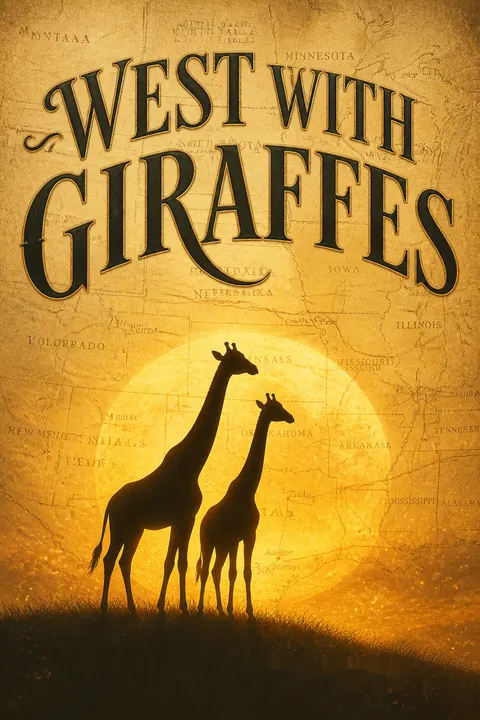


Plot Summary
Prologue
In 2025, a VA hospital liaison opens the footlocker of Woodrow Wilson Nickel,1 a veteran who has died at 105 with no survivors listed. Instead of uniforms, she finds bundles of handwritten pages and a small porcelain giraffe from the San Diego Zoo.
The pages explain that Woody1 is writing for a woman who should know what two giraffes, an old zookeeper,2 and her mother3 once meant to him. A television report about endangered animals has jolted his fading memory into urgency. The liaison abandons her schedule and begins to read.
The footlocker turns private memory into an object that can outlast its keeper. Woody’s choice to write is prompted not by nostalgia alone but by the threat that the animals themselves may disappear, taking the human story around them with them. The liaison’s decision to read creates a second act of care: she protects a narrative before she knows whom it belongs to or where it must go. The porcelain giraffe is both evidence and miniature ark, carrying a vast journey in a fragile form. From the opening, remembrance becomes an ethical action rather than a passive return to the past.
Hurricane Giraffes
Seventeen-year-old Woodrow Wilson Nickel,1 called Woody,1 has already lost his mother, father,8 and baby sister to the Dust Bowl when the 1938 hurricane kills his East Coast cousin Cuz and destroys the boathouse where Woody1 has been working.
The storm leaves him injured, bereft, and without a place to sleep. At the harbor, he sees two giraffes unloaded from a battered freighter: a male5 still standing and a female4 whose crate has crushed her injured leg. Riley Jones,2 the zoo keeper transporting them,2 refuses to abandon the female4 and gets her upright with the help of a veterinarian.
Seeing California named as their destination on a telegram, Woody1 decides to follow. On the way to the quarantine station, he catches sight of Augusta Red,3 a young photographer with a camera and a green Packard.
The hurricane does more than rearrange Woody’s circumstances. It tears away the last shelter he had found after the Dust Bowl and places him beside animals whose survival is visibly uncertain. His attraction to the giraffes begins with recognition, not ownership: he sees an injured creature treated with a tenderness missing from the human world he knows. California gives that recognition a practical direction, turning a desperate boy’s flight into a journey with companions. The damaged female’s survival also establishes the story’s governing test: care will matter only when it costs time, safety, or convenience.
A Stowaway in Peat Moss
At the quarantine station, Woody1 slips beneath a fence and watches the giraffes recover in a barn. He feeds them stolen onions; the female4 takes his food, then knocks him down when he reaches for Cuz’s rabbit’s foot.
Hiding in the padded traveling rig, he falls asleep and is discovered the next morning. He escapes, but hunger and the threat of arrest soon drive him back to the station. When Lionel Lowe,7 the sharply dressed reporter accompanying Red,3 grabs her arm, Woody1 punches him and runs.
He later returns Red’s3 forgotten notebook, learning that her ambitions include photographing the giraffes and seeing the world. While Woody1 waits for the animals to leave quarantine, Red3 keeps coming back, and he begins to imagine a future beyond mere survival.
Woody’s first acts of attachment are tangled with habits formed by deprivation. He steals because hunger has made taking feel like instinct, yet he risks punishment to protect Red from a man’s grasp. His feelings for the giraffes and Red do not immediately make him virtuous; they reveal that his capacity for care has survived beneath the survival reflex. Red’s notebook gives him a glimpse of a life organized around chosen aims rather than necessity. Its list becomes a quiet counterpoint to Woody’s improvised plans, while his return of it marks the first small exchange between them that is not driven by force.
The Empty Driver's Seat
Woody1 slips back into the barn on the morning the giraffes are due to leave, using the onions he dropped in the rig to lure them into their padded compartments. He follows the trucks on a stolen motorcycle.
At a roadside camp, three young men climb onto the open rig to harass the giraffes; Riley2 drives them off, but his hired driver, Earl,12 is drunk and quits after the female giraffe4 kicks him in the face. Riley2 cannot operate the truck because his right hand is badly damaged. Woody1 offers to drive, exaggerating his skill.
Riley2 rejects him, but Woody1 clings to the rig as it crosses a stream, falls into a ditch, and is left behind. When Riley’s2 truck stalls again, Woody1 warns him how to restart it. Riley2 relents and lets him take the wheel as far as Washington.
The truck makes trust a physical problem. Riley needs a driver, but Woody’s lies make him dangerous; Woody needs a place in the world, but his survival strategies keep undermining his credibility. His desperate leap onto the rig does not earn acceptance by itself. What changes Riley’s calculation is practical competence at a moment when the engine fails. Their arrangement begins as a limited transaction, with Washington as its boundary, but the shared responsibility of carrying the giraffes gives Woody a role he has never had before. The damaged hand is not merely a character detail; it creates the opening through which the boy can become indispensable.
Red Takes the Road
As Woody1 drives through Maryland, Riley2 teaches him how to handle the giraffes: stop often, keep the rig slow, and never mistake a wild animal’s tolerance for obedience. He also explains why the young giraffes were taken from Africa, where trappers had left them orphaned and unable to survive without a herd.
At a roadside camp, Red3 catches up in the Packard. Woody1 lets her climb into the rig and touch the giraffes, then accepts her offer to help document their trip. She wants a photo essay for Life magazine and treats the animals as a doorway to a larger world.
Woody1 is drawn to her confidence and red hair, while Riley2 allows the partnership because Red’s3 camera can record the journey. Her arrival shifts Woody’s1 goal from reaching California alone to hoping she will keep traveling beside him.
The early road lessons establish two different forms of attention. Riley watches the giraffes for signs of stress and injury; Red watches them as subjects whose presence can alter what people imagine possible. Woody stands between those forms of care, learning that affection does not authorize control. His attraction to Red is partly desire and partly awe at the freedom she claims for herself. The agreement to work together gives their connection a useful structure, but Woody’s investment quickly exceeds the terms. The journey begins to teach him that another person’s purpose cannot simply be folded into his own dream of escape.
The Blue Ridge Near-Fall
A detour forces the giraffe rig through a narrow tunnel and onto Skyline Drive, where steep switchbacks replace the highway Riley2 had planned to use. Woody1 manages the descent until Red’s3 Packard strikes the rear of the rig, tipping the giraffes toward the unguarded drop.
Riley2 takes the wheel while Woody1 climbs the mountain side and calls the animals toward him. They shift their weight back, allowing the rig to reach an overlook without going over the edge.
At a Civilian Conservation Corps work site, the giraffes draw a crowd and Red3 photographs them, but Woody’s1 attempt to shield her from the young workers angers her. Later, a bear approaches the rig, and Red’s3 camera flash drives it off. She apologizes for the collision, while Woody1 begins to understand that her bravery is not a request to be protected.
The mountain sequence makes trust measurable in weight. Woody cannot reason the giraffes out of panic or overpower them; his voice and presence matter only because they choose to move toward him. That choice gives him a first experience of responsibility grounded in reciprocity rather than command. Red’s crash is a mistake with real consequences, but Woody’s reflex to place himself between her and other men repeats the paternal logic she rejects. Their conflict therefore mirrors the larger question of the trip: whether care means making decisions for another being or attending closely enough to let that being act.
The Jacksons Lift the Rig
A damaged overpass sends the rig onto a side road, where a low railroad bridge traps it with two tires deflating. Moses Jackson9 arrives with his large farming family. They push the loaded truck clear, then build a wooden lever and use their combined weight to replace both damaged tires.
Their help is offered without payment; the family asks only that their young daughter, Honey Bee,10 meet the giraffes. They also shelter the travelers at their roadside cabins, a rare safe stop for Black motorists in a country of sundown towns.
That night, Red3 tells Woody1 that rheumatic fever has left her heart dangerously irregular. Her confession, together with the family’s generosity, unsettles Woody’s1 assumption that strength means being able to endure alone. He leaves the next morning more attached to the people and animals traveling with him.
The Jackson family turns a mechanical crisis into a demonstration of collective power. Their ingenuity solves what the well-equipped rig cannot, while their hospitality exposes the racial geography that has made even a roadside stop unsafe for them. The giraffes draw strangers together, but the family’s skill and generosity do the actual work of keeping everyone alive. Red’s disclosure changes Woody’s understanding of her risk-taking without canceling her agency. He must hold two truths at once: her body is vulnerable, and she remains the author of her choices. This section replaces the fantasy of solitary self-reliance with mutual dependence.
The Gold Coin
The Bowles and Waters circus keeps reappearing along the route, and its ringmaster, Percival Bowles,11 begins watching Riley’s2 cargo. At a fogbound camp, Bowles11 tempts Woody1 with a twenty-dollar gold coin in exchange for a closer look. Woody1 lowers the rig’s side panel, loses his footing, and nearly exposes the giraffes to danger.
He accepts the coin anyway. Before dawn, circus men open the rig and seize the female giraffe;4 Woody1 fires a rifle to stop one of them, and Riley2 is injured in the struggle. Woody1 and Riley2 coax the terrified animal back into her compartment with onions, but her wounded leg worsens.
At a gas station, Bowles11 returns with a large cash bribe for Riley.2 Woody1 takes the money, then hesitates as Bowles’11 driver threatens them with a gun. Riley2 throws the cash away, and a logging truck forces the circus vehicle off the road.
The gold coin and cash expose how closely Woody’s hunger sits beside his conscience. Bowles recognizes that a poor boy can be tempted by security before he has learned to trust it. Woody’s mistake is not simply greed; it is the belief that he can accept a reward while controlling what it obligates him to do. His decision to fire at the kidnappers shows that attachment has already begun to alter his priorities, yet he still keeps the coin and the first bribe. Riley’s refusal to punish him immediately makes the moral conflict harder, not easier. Woody must eventually choose loyalty without being forced into it.
A Choice in Little Rock
Near Little Rock, a sign warns Black travelers to leave before sundown. Riley2 hides a Black pecan seller in the truck so he can pass through safely, then lets him out near the city. At the small zoo, Woody1 sees a starving rail-riding boy steal food meant for the giraffes.
The sight recalls the person he might have become, and he returns to the animals instead of catching a freight train. Riley2 knows Woody1 took Bowles’11 cash but does not abandon him, explaining that he understands hunger.
When Woody1 realizes the road ahead crosses Oklahoma and the Texas Panhandle, he sees that California will require him to face the place he fled. He stays with Riley2 and the giraffes. This is no longer simply a way to reach the West; it is the first home he has chosen to protect.
The roadside warning makes racial danger explicit, while Riley’s decision to shelter the pecan seller gives the travelers’ ethics a public cost. Woody’s encounter with the hungry boy is a recognition scene: he sees not an abstract stranger but a possible continuation of his own life. Choosing the giraffes over the freight train is therefore more than a change of transport. Riley’s forgiveness also interrupts Woody’s expectation that wrongdoing must end in expulsion. The two men are beginning to form a family through repeated acts of risk and mercy, even though Woody still has not told Riley the truth about the past he fears revisiting.
Red's Borrowed Story
In Oklahoma, dust blows across the highway and makes the giraffes cough; Woody1 and Riley2 smear their nostrils with Vaseline and wash dust from them with water. During a stop, Woody1 sees Red3 steal an apple, echoing his own habits. At the Wigwam roadside court, he asks why she has followed them.
Red3 admits that Lionel Lowe7 is her husband, that she married him when she was seventeen to escape an unsafe home, and that his Life magazine job first opened the world to her. She still wants to become a photographer, but Riley2 has received a telegram saying Life is sending its own photographer to California.
Red3 also has falsely claimed to be working for the magazine. Riley2 sends her away from the giraffes. Woody’s1 anger at her lies is complicated by the lies he has told and the affection he cannot switch off.
The dust gives the travelers a physical version of what Woody has been trying to avoid: the past can return through the body, regardless of intention. Red’s admission reveals that her pursuit of freedom has depended on a story she invented to secure access to the journey. That deception does not make her ambition false, but it does injure the trust between her and Woody. His anger also exposes his double standard. He has lied about his age, skill, theft, and history, yet wants Red’s truth to be complete. Their bond now depends on whether either can recognize the other’s compromises without reducing the person to them.
The Flood at Arcadia
A flash flood turns the dry ditch beside Woody’s1 abandoned family farm into a torrent. Before the water arrives, Woody1 finally tells Riley2 what happened there: his father8 forced him to shoot their dying mare, then aimed a pistol at him.
Woody1 fired back, grazing his father;8 his father8 killed himself, and Woody1 burned the house and buried the family. As floodwater undermines the ground beneath the giraffe rig, the animals panic and the truck begins to tilt. Red3 drives the Packard into the surge and wedges it against the rig, holding the loaded vehicle upright until the water recedes.
Her cameras and film are ruined. Woody1 finds her soaked notebook, sees that she has added paying him back to her ambitions, and helps her leave the wreckage with them. The flood exposes the truth Woody1 has carried and makes his companions’ survival inseparable from his own.
Woody’s confession arrives when the landscape makes concealment impossible. The farm is not a symbolic backdrop alone; it is the actual place where his fear, anger, and shame began, and where the flood threatens the lives he now values. His father’s coercion explains the recurring nightmare without absolving Woody of the violence he remembers. Red’s decision to sacrifice the Packard is an action, not an emblem: it physically keeps the giraffe rig from overturning. The destroyed cameras cost her the proof of the career she pursued. Her added debt to Woody records a relationship no photograph can preserve, while Riley’s continued presence gives Woody a witness rather than a judge.
Cooter’s Cage Yard
In New Mexico, the travelers stop at Cooter’s13 roadside menagerie, where a bear, mountain lion, raccoon, and rattlesnakes are kept in harsh cages. Cooter13 takes their guns and demands one of the giraffes, threatening to shoot an animal if Riley2 refuses.
Red,3 who has been hiding inside the rig, emerges when Cooter13 discovers her and uses his gun to menace her. Woody1 lunges for the weapon; Red3 grabs it too, and their struggle turns the muzzle toward her. As the giraffes rear against their crates, Boy5 kicks Cooter13 in the head, saving Red3 and Woody.1
Riley2 and Woody1 open the cages, releasing the animals, then leave Cooter13 locked in the bear’s enclosure. The giraffes refuse water until the travelers calm them. The ordeal ends with the three humans sitting together beside the animals, shaken but alive.
Cooter makes the exploitation Woody has begun to recognize brutally visible: animals are treated as disposable commodities, and human vulnerability is treated as another bargaining tool. Woody’s lunge is protective but reckless, repeating the impulse that has endangered him before. Red’s attempt to help comes from the same courage that drives her photography, yet it puts her directly in danger. The giraffe’s kick is not a trained rescue but an instinctive act that changes the outcome. Riley’s choice to release the caged animals extends his ethic beyond his own cargo, even while he rejects the law’s likely response. Survival here depends on restraint, solidarity, and the animals’ own power.
Phoenix, Then California
After the desert crossing, Red3 asks Riley2 to take her to Phoenix, where she hopes to catch a train and reconnect with Lionel.7 Woody1 gives her the gold coin he kept from Bowles,11 no longer treating it as a private escape fund. They kiss before she leaves, and she says she would make the journey again. Riley2 later tells Woody1 about his own youth, circus work, and devotion to animals, though he keeps the truth of his damaged hand private.
In San Diego, the giraffes are welcomed at the zoo by Belle Benchley6 and a crowd. Woody1 tries to catch Red’s3 train but arrives too late. He steals a motorcycle to pursue it and is arrested in Yuma. Given a choice between jail and military service, he joins the army, leaving Riley2 and the giraffes behind.
The coin changes meaning as Woody changes. What once represented a way to protect himself from hunger becomes a gift offered without expectation of repayment. His farewell to Red is tender precisely because he cannot make her stay. The zoo arrival gives the giraffes the safe destination that has organized the trip, but it does not resolve the human attachments formed along the way. Woody’s failed pursuit of Red reactivates his old reflex to run, and the stolen motorcycle carries him into a new life he did not choose freely. His departure tests whether the belonging he has found can endure separation.
The Ones Who Remained
After serving in the army and working among the dead in Europe during the war, Woody1 returns to New Jersey to find Red.3 Lionel7 tells him that she died in her sleep about a year after giving birth to a daughter. Woody1 sees the child but honors Lionel’s7 wish to leave the family alone.
He then goes to the San Diego Zoo, where the giraffes, now named Lofty5 and Patches,4 recognize him when he offers onions. Their keeper tells him Riley2 died the same year Woody1 returned, leaving him wooden tokens for zoo visits and money for his driving.
Woody1 builds a life in San Diego, working at a cemetery and visiting the giraffes. He never stops carrying the journey, but for decades he keeps its story private, returning to it only after the people and animals he loved are gone.
The reunion Woody imagined cannot be restored: Red is dead, and the child is a living boundary he chooses not to cross. His restraint contrasts with the young man who once pursued every train and every possibility, suggesting a hard-won respect for other people’s claims. The giraffes recognize him through repeated sensory contact, not through names or stories, while Riley’s wooden tokens turn his generosity into a continuing invitation. Woody’s cemetery work keeps him close to death, yet his daily visits to the animals preserve a counterpractice of attention and care. His silence about the journey is not indifference; it is a form of possession he has not yet learned to share.
A Story Finds Its Reader
Decades later, after Boy5 and Girl4 are gone and Woody’s1 memory begins to fail, a television report about endangered species brings the giraffes back with sudden force. He strikes the screen, then understands that anger cannot protect what is vanishing.
At 105, he writes the journey for Red’s3 daughter, who deserves to know her mother’s3 daring and the friends who traveled with her. He records the truth he once withheld, including his father’s8 death, his own choices, and the ways Riley2 and the giraffes kept giving him another chance.
When he finishes, the old Woody1 dies. The hospital liaison carries the pages to the San Diego Zoo, whose director6 arranges for them to reach the now eighty-six-year-old woman in New Jersey. She opens the trunk and begins to read.
The final act repairs two kinds of silence. Woody writes against his fading memory, but also against the assumption that a story belongs only to the person who lived it. Red’s daughter inherits a history that includes not only her mother’s death but her appetite for a wider life. The endangered-species broadcast joins personal grief to ecological loss without making either interchangeable: the giraffes are loved as particular beings, and their disappearance would also impoverish the world that watched them. The liaison and zoo director complete the chain of care by carrying the pages where Woody could not. The story survives because others choose to receive it.
Epilogue
The VA liaison finishes Woody’s pages and takes them to the San Diego Zoo. The director6 reads the account, then asks staff to help find its intended reader.
In New Jersey, eighty-six-year-old Augusta Red3 receives the old military footlocker and finds the little porcelain giraffe inside. She settles into a chair, unties the bundles of pages, and begins reading the story of the journey she once made with Woody,1 Riley,2 and the giraffes.
The epilogue closes the distance between Woody’s final intention and its recipient. Red is not brought back into the past as a fantasy or reunion; she encounters it as testimony, delivered by people who understand that a private history can have a living heir. The physical footlocker echoes the opening, but its meaning has changed. It no longer holds only a dead man’s possessions. It becomes a vessel carrying Red’s own younger self back to her, alongside the story of the daughter she raised. The ending grants memory a modest, human form of survival: someone reads, and the vanished journey becomes present again.
Analysis
The journey in West with Giraffes is organized around a deceptively simple task: carry two young animals from a storm-damaged harbor to a zoo in California. Every mile makes that task ethical as well as mechanical. The giraffes cannot be treated as symbols alone, because their injuries, fear, needs, and unpredictable movements determine what the people can do. Their presence makes strangers stop, cooperate, and look again at the world beyond their immediate hardship.
Woody1 begins with a survival ethic learned in poverty: take food, lie when necessary, and leave before anyone can claim you. His change is not a sudden conversion to goodness. He repeatedly acts selfishly, accepts Bowles11’coin, pockets money, and confuses protection with possession. What alters him is the accumulation of relationships that do not collapse when he fails. Riley’s2 forgiveness, Red’s3 independent courage, and the giraffes’ continued trust give him opportunities to choose care without being guaranteed a reward. His eventual generosity with the coin matters because it comes after he has understood what he is giving up.
The book also places individual hardship inside structures that shape who can travel safely and who cannot. Dust Bowl poverty, racial segregation, gender restrictions, and the circus trade in animals all appear as material obstacles, not distant background. The Jackson family’s9 roadside rescue is especially pointed: the travelers depend on Black expertise and hospitality even as the surrounding society denies Black people equal freedom of movement.
Finally, the frame story argues that memory is a responsibility. Woody’s1 account preserves Red’s3 audacity, Riley’s2 care, and the giraffes’ particular presence for a reader who might otherwise inherit only absence. The novel does not claim that telling a story saves endangered animals by itself. It proposes something more precise: emotion and attention influence what people choose to protect. A story can keep a life from becoming merely a statistic, and that recognition can shape the next act of care.
Review Summary
West with Giraffes is a beloved historical fiction novel based on the true story of two giraffes transported across America in 1938. Readers praise the heartwarming tale, engaging characters, and vivid depiction of Depression-era America. Many found it emotionally impactful and educational. The story is narrated by 105-year-old Woody, recounting his youthful adventure. While most reviewers highly recommend the book, a few criticize the writing style or find it repetitive. Overall, it's considered a captivating, well-researched novel that appeals to animal lovers and history enthusiasts alike.
Characters
Woodrow Wilson Nickel
The orphaned driverWoody is a Texas Panhandle farm boy shaped by hunger, grief, and a childhood in which tenderness toward animals was treated as weakness. His quick fists and quicker lies are survival tools, but they do not erase his instinctive sympathy for vulnerable creatures. He is drawn to the giraffes before he can explain why, and their journey gives him a task that asks more of him than simply staying alive. His attraction to Augusta Red3 exposes both his inexperience and his wish to be seen. Woody’s defining tension is between the desperate self-protection he has learned and the capacity for loyalty he is only beginning to trust.
Riley Jones
The giraffes' keeperRiley is a rough-edged zoo keeper with a damaged right hand, a fierce temper, and a particular tenderness toward animals. He distrusts thieves and liars, yet his work repeatedly forces him to judge people by what they do after making mistakes. His care for the giraffes is practical: he watches their injuries, plans their stops, and accepts that they cannot simply be ordered into obedience. Riley becomes Woody’s1 stern teacher and reluctant guardian, offering food, work, and second chances without softening his blunt manner. His own history remains guarded, suggesting that compassion need not depend on complete self-disclosure.
Augusta Red
The restless photographerAugusta Red is a young woman with a camera, a green Packard, and an appetite for a life larger than the one available to her. She wants to document the giraffes and follow the world beyond the limits others set for women. Her confidence can look like recklessness, especially to Woody1, who mistakes protection for affection and often fails to see her boundaries. Red is imaginative, observant, and capable of risking comfort for a chance to pursue her ambitions. She also carries private burdens that make her courage more complicated than her public bravado suggests.
Wild Girl
The wounded giraffeWild Girl is the young female giraffe whose injured leg makes the cross-country trip precarious from its beginning. She is wary, forceful, and quick to kick when frightened or crowded, making clear that affection does not turn her into a tame animal. She accepts food from Woody1 and gradually permits Riley2 to tend her wound, but her choices remain her own. Her sideways-heart-shaped marking becomes an intimate point of recognition for Woody1. Girl’s vulnerability draws care from the humans around her, while her strength repeatedly reminds them that she is not merely cargo.
Wild Boy
The watchful giraffeWild Boy is the male giraffe traveling beside Girl4. More placid than his companion, he watches the humans closely and responds to gentle touch, food, and the presence of the other giraffe. His calm can be misleading: he is still a two-ton wild animal whose movements carry enormous force. He and Girl4 remain closely connected throughout the journey, often seeking one another when frightened. Woody1 learns to notice Boy’s behavior rather than assume it means what a human would mean. The giraffe’s quiet presence becomes part of the emotional shelter Woody1 finds on the road.
Belle Benchley
The zoo's determined directorBelle Benchley directs the San Diego Zoo and is known for combining administrative skill with direct, hands-on care for animals. Riley2 respects her authority, while the travelers rely on her decisions and connections to keep the giraffes moving. Stories of her work portray a woman unafraid to approach an escaped or frightened animal when others hesitate. She represents a practical model of leadership: knowledge matters, but so do attention, nerve, and the willingness to take responsibility.
Lionel Abraham Lowe
The ambitious reporterLionel is a professional reporter whose polished appearance and career give him access to the world of newspapers and magazines. He works with Augusta3 and is wary of her independence, sometimes responding to her choices with force rather than curiosity. His relationship with her is more complicated than Woody1 initially understands. Lionel’s presence links the journey to the public story being built around the giraffes, while his attention to reputation and control contrasts with Augusta’s3 hunger to make images of her own.
Woody's father
The hard-bitten homesteaderWoody’s father is a Dust Bowl farmer who treats endurance as a masculine duty and expects his son to accept the brutal rules of farm life. He regards animals primarily as labor, food, or property, and he has little patience for Woody’s1 attachment to them. His authority shapes the boy’s early understanding of fear, obedience, and manhood. He belongs to a generation trapped by a failing landscape, but his choices leave Woody1 with a burden he cannot easily name.
Moses Jackson
The resourceful farmerMoses is the eldest son in a large Black farming family living along the route. He assesses the trapped giraffe rig, gathers his relatives, and organizes a solution using tools and materials at hand. His reserved manner makes his actions more striking: he does not waste words where coordinated labor will do. Moses and his family provide the travelers with practical help and hospitality in a landscape where racial danger makes ordinary travel unequal.
Honey Bee
The family's young daughterHoney Bee is the young daughter of Moses’s9 family. Fascinated by the giraffes, she asks to meet them and gives the animals the simple names Boy5 and Girl4. Her delight softens the wary atmosphere around the stranded travelers and helps her family turn a rescue into an act of welcome.
Percival Bowles
The predatory ringmasterBowles is the ringmaster of a cheap traveling circus, a practiced showman who uses charm, money, and intimidation to get what he wants. He sees the giraffes as valuable attractions rather than living beings and correctly senses how poverty can make a person vulnerable to a bribe. His polished costume masks a calculating, dangerous character. He serves as a human version of the exploitation Riley2 opposes in the treatment of animals.
Earl
The unreliable driverEarl is Riley’s2 hired driver at the start of the journey. He drinks while responsible for the giraffes and behaves carelessly around them, provoking their fear. His failure leaves Riley2 without a driver and creates the opening for Woody1 to take the wheel.
Cooter
The roadside animal keeperCooter runs a ramshackle roadside menagerie where animals are confined in poor conditions. He is boastful, volatile, and willing to threaten people and animals to acquire the giraffes. His cruelty makes him the clearest expression of the commercial exploitation Riley2 has spent his life resisting.
Plot Devices
Woody's writing pads
Memory carried forwardThe handwritten pages frame the central journey as an account composed by Woody1 near the end of his life. They provide a reason for the story to be told now: he fears the giraffes and other species may vanish, and he wants Augusta Red’s3 daughter to know what her mother3 experienced. The pages also let the narrative move between the 1938 road trip and the aged narrator’s hospital room. Their physical journey from the VA footlocker to Red’s3 home turns writing into an act of delivery, not simply recollection.
The giraffe transport rig
A moving refugeRiley’s2 custom-built rig carries the two young giraffes in padded compartments with windows, trapdoors, and a hinged side that can open for loading. Its design allows them to travel across roads never made for such tall animals, but its weight and height create recurring hazards: bridges, tunnels, switchbacks, damaged tires, and floodwater. The rig is shelter and workplace at once. It keeps the giraffes contained without making them tame, and its limits force Woody1 and Riley2 to pay attention to the animals rather than assume machinery can solve every problem.
The twenty-dollar gold piece
Temptation made tangibleBowles11 gives Woody1 a gold coin to tempt him into exposing the giraffes to the circus ringmaster11. The coin condenses Woody’s1 fear of returning to hunger into a single, portable promise of security. When Woody1 accepts it and mishandles the rig, the bargain leads to danger for the giraffes. Later, he keeps the coin through further temptations, then gives it to Red3 when she needs money to continue her journey. Its changing use tracks the movement from self-preservation toward generosity.
Giraffe humming
A bond beyond speechWoody1 hears the giraffes produce a low humming sound at night, first in quarantine and again when he stands between them near the end of the trip. The sound is never explained as a message, and its uncertainty matters. It gives the animals a form of presence that does not depend on human interpretation, while echoing the book’s interest in instinct and attention. For Woody1, the hum becomes a bodily memory of belonging that survives separation, war, and age.
Download PDF
Download EPUB
.epub digital book format is ideal for reading ebooks on phones, tablets, and e-readers.








