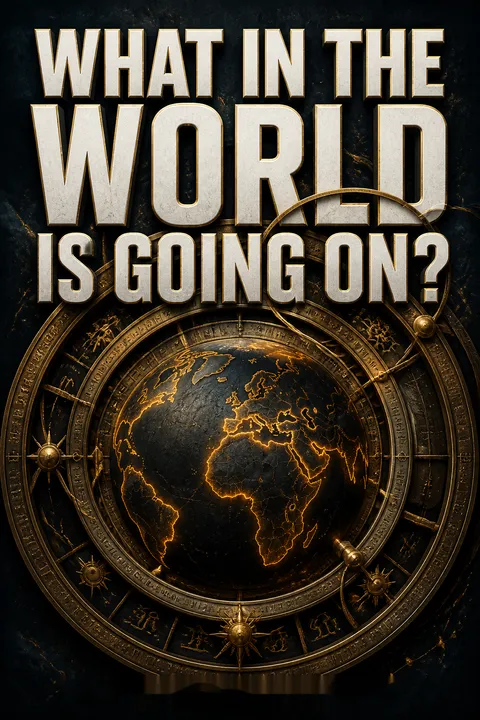


Key Takeaways
Read frightening headlines through Scripture, but distinguish signs from certainty
The book's central lens. Jeremiah argues that prophecy offers a way to interpret an alarming, unstable world. He opens with 2008 news of disasters, food shortages, economic turmoil, and political shifts, then compares two responses to warning signs: Chile evacuated people before a volcano erupted, while Myanmar's authorities failed to act on cyclone warnings. The analogy frames the book's purpose: biblical prophecy, he believes, helps Christians recognize what is coming and prepare without surrendering to fear.
A map, not a stopwatch. Ten developments are presented as clues to Christ's return. The intended response is awareness, hope, and faithful living, not panic. The argument depends on reading current events through a particular biblical framework, rather than treating headlines as self-interpreting proof.
What's useful is the distinction between noticing a warning and knowing exactly what it predicts. Disaster planning works best when alerts prompt proportionate preparation, not certainty about a single outcome. The same discipline matters when interpreting political events: a forecast should be judged by what it predicted in advance, not only by how neatly it can be matched to events afterward. The book offers readers a coherent religious lens and emotional reassurance. Its method is less reliable as a public forecast, since symbolic texts can support competing readings and the selection of relevant headlines is necessarily selective.
See Israel as the book's prophetic center, not just another headline
A covenant-shaped reading. Jeremiah sees Israel's modern restoration as a major sign because he interprets God's promises to Abraham as enduring commitments to the Jewish people, including a literal homeland. He points to Israel's declaration of independence on May 14, 1948, and to President Harry Truman's rapid recognition of the new state. The chapter also recounts Chaim Weizmann's role in British policy and the post-Holocaust movement of displaced Jews to Palestine.
Restoration is unfinished. In Jeremiah's reading, Israel's return to the land is not the same as a spiritual return to God or the full fulfillment of the covenant. He expects that completion under Christ's future reign. This theology explains why a small country receives such close attention in the book, while also making its political status part of a specific religious interpretation.
The chapter's account of Israel combines sacred memory, national survival, and modern diplomacy, which helps explain why the state carries meaning far beyond its size. It also makes clear that political history can be read through more than one moral and theological tradition. A covenant-based claim to land may be central to the author's faith, but it does not settle contemporary disputes over sovereignty, rights, or security for people living there. Holding the theological claim apart from policy conclusions allows readers to understand the book's conviction without mistaking its interpretation for a universally shared historical verdict.
Treat oil as strategic power, not merely a commodity
Energy shapes alliances. The book links oil dependence to global power, especially because much of the world's known conventional supply was concentrated in the Middle East. In figures available when Jeremiah wrote in 2008, the United States consumed about 20.7 million barrels daily, roughly a quarter of world consumption, while ranking eleventh in reserves. The 1973 Arab oil embargo showed how production cuts could cause shortages and economic pressure. President Jimmy Carter's 1980 declaration that the Persian Gulf was a vital US interest reflected the resulting strategic shift.
Supply carries political risk. Jeremiah argues that reliance on oil controlled by unstable or hostile governments helps explain international attention to the region. He also notes that alternatives such as biofuels can create trade-offs, including pressure on food prices. The statistics are period-specific, not current measurements, but the underlying question remains: who controls essential resources, and who depends on them?
The chapter's strongest insight is structural: energy dependence can turn distant geography into a domestic concern. This is a familiar problem in supply-chain analysis, where efficiency often creates vulnerability by concentrating production in a few places. Diversifying energy sources can reduce that exposure, although transition choices bring costs and competing priorities. The book is less persuasive when it treats resource concentration as evidence of a prophetic timetable. Oil prices, alliances, and military decisions have many interacting causes. A sound strategic argument does not, by itself, establish a theological prediction.
Read Europe's unity as a theological interpretation, not a settled forecast
Daniel's statue supplies the pattern. Jeremiah interprets the kingdoms in Daniel's vision as Babylon, Medo-Persia, Greece, Rome, and a future divided form of Rome. The statue's iron legs represent Roman power; its iron-and-clay feet suggest a later coalition that is strong yet unstable. He connects that final stage to European integration, from postwar economic agreements to the European Union, which had 27 member states when the book appeared.
Political union becomes prophetic evidence. In this reading, a future group of rulers will emerge from the revived Roman sphere, creating the conditions for a world leader. The EU's institutions and attempts to centralize decision-making are presented as possible signs. The connection is interpretive: the book treats a modern political project as a potential fulfillment of an ancient vision, not as proof that European integration must produce that outcome.
The comparison draws attention to a real political tension: shared institutions can increase collective power while leaving deep differences among member states. Political science often describes this as the challenge of building common rules without erasing national interests. The iron-and-clay image gives that tension memorable form. Yet the prophetic reading can become difficult to falsify if every expansion, delay, or institutional change is treated as confirmation. European integration has also faced reversals and limits. The vision is most valuable as a theological framework for the author, rather than as a reliable prediction of the EU's institutional future.
Condemn violent extremism without treating Muslims as a single enemy
The chapter focuses on radicalism. Jeremiah discusses jihad, meaning struggle, and distinguishes an inner spiritual struggle from militant interpretations that justify violence. He describes terrorist propaganda, threats against Israel and the West, and the possibility that radical movements exploit open societies. He also introduces fatah as a strategy of gradual cultural and political influence, as described by sources he cites. These claims express the book's strong warning about political Islam in 2008.
The distinction matters. Jeremiah acknowledges that most Muslims do not support terrorism and recounts a Muslim convert's escape from an execution sentence after embracing Christianity. He urges prayer, compassion, and evangelism rather than hatred. That humane response sits uneasily beside passages that generalize about Islam and demographic change. The book's most responsible takeaway is to oppose violence while recognizing that Muslims, like Christians, do not form one political or moral bloc.
Separating violent organizations from a vast and diverse religious population is essential both ethically and analytically. Security studies distinguish a movement's leadership, recruitment networks, and broader community, because confusing those categories can alienate potential allies and strengthen extremist narratives. The chapter's insistence that ordinary Muslims remain within the reach of compassion supports that distinction. Its weakest move is treating migration, religious accommodation, or population growth as evidence of a coordinated conquest strategy. Such claims require careful evidence, not inference from demographic change alone. Vigilance is compatible with religious liberty and equal treatment under law.
Keep the Rapture distinct from Christ's public return
Two events, in this framework. The Rapture is the author's term for believers being caught up to meet Christ, with Christians who have died raised first. Jeremiah places it before a seven-year Tribulation, a period of global suffering and divine judgment. The Second Advent, by contrast, is Christ's visible return to earth at the end of that period, followed by his reign. The distinction resolves an apparent contradiction: signs point toward the Second Advent, while the Rapture is presented as possible at any moment.
Comfort is central. Jeremiah draws on Paul's letter to the Thessalonians, which was written to comfort Christians grieving deceased believers. He reads the promise of reunion with Christ as a reason not to despair. This sequence reflects a pretribulation interpretation of prophecy. Other Christians interpret the timing and symbolism differently, but the book's practical emphasis is that death does not have the last word for believers.
The distinction offers a clear internal timeline and gives grief a strong language of hope. It also illustrates how the same biblical passages can support different eschatological systems, or accounts of the end times. Readers may benefit from separating the pastoral function of the passage, comfort for mourners, from the more disputed sequencing of future events. Those purposes do not depend equally on a precise timetable. The former can sustain a community through loss, while the latter remains a matter of interpretation among Christians who share the same scriptures.
Treat America's prophetic absence as uncertainty, not a prediction
The Bible does not name the United States. Jeremiah notes that Scripture gives no clear, direct role to America in end-time events, despite its prominence in 2008. He considers several possible explanations: the country could align with a European coalition, lose influence through attack or internal decline, or be dramatically changed by the Rapture. He also argues that America has been blessed for supporting world missions, protecting Jewish communities, and grounding its institutions in biblical principles.
National favor is conditional in this account. Jeremiah warns that abandoning those principles could mean losing divine blessing. His argument connects national prosperity with religious purpose, but it also draws on a particular reading of American history and providence. The chapter ultimately advises readers not to place ultimate trust in a nation or government, since political power is temporary and America's fate is not specified in prophecy.
The uncertainty is more intellectually honest than a confident claim that Scripture identifies America under another name. The chapter also exposes a recurring feature of national narratives: prosperity is often interpreted as evidence of moral favor, while decline is attributed to moral failure. That pattern can reinforce civic responsibility, but it can also simplify complicated outcomes and overlook injustice or economic causes. The most durable point is its distinction between patriotism and ultimate allegiance. A nation can deserve service and scrutiny without being treated as the center of sacred history.
Study the Antichrist's methods instead of guessing his identity
A leader built for crisis. Jeremiah says the Antichrist will oppose Christ and imitate him, presenting himself as a solution to global disorder. Drawing on Daniel, Paul, and Revelation, the author describes a persuasive, politically cunning ruler who consolidates power, breaks a peace agreement with Israel, demands worship, and persecutes believers. Earlier figures such as Hitler serve as partial examples of charisma and political manipulation, but Jeremiah rejects attempts to identify any present or historical person as the Antichrist.
Technology makes control imaginable. The book points to global media and biometric identification as tools that could support centralized power and economic exclusion. These examples help explain why an ancient prediction feels plausible to a modern reader. Still, technological capacity is not the same as inevitable abuse. Jeremiah emphasizes that even this ruler's authority remains limited by God, preserving divine sovereignty within his account of human tyranny.
The chapter's attention to charisma, crisis, and concentrated power connects prophecy to a wider study of authoritarian politics. Public fear can make promises of order appealing, while control over communication and economic access can weaken dissent. Those are useful warning signs in any era. The prophetic label, however, can also become a shortcut that turns political opponents into cosmic villains. A more practical reading asks which institutions constrain leaders, whether rights are protected, and how emergency powers are used. Such questions do not require certainty about a future individual.
Keep Ezekiel's Russian-led invasion separate from the final global war
Gog and Magog describe an earlier assault. Jeremiah reads Ezekiel's prophecy as a future coalition led by Russia and joined by Iran and other nations, attacking a prosperous, apparently secure Israel. He interprets ancient place-names through modern geography and argues that the coalition's defeat will come through earthquakes, confusion, disease, and other divine interventions. The chapter then describes the aftermath: seven months to bury the dead and seven years of burning captured weapons.
This is not Armageddon. In the book's sequence, the invasion of Ezekiel 38 and 39 occurs before a separate final campaign at the end of the Tribulation. The first attack is led by Russia and is defeated by God; the later war involves the world's armies and the Antichrist. The distinction matters to Jeremiah's overall timeline, though the identification of ancient nations with modern states remains debated.
The distinction between the two battles prevents readers from flattening several biblical passages into one generic apocalypse. It also highlights a broader interpretive risk: translating ancient ethnonyms into modern states can make a text feel strikingly current, while the historical and linguistic steps behind the mapping remain contestable. Geopolitical alliances shift, and nations do not inherit fixed moral roles across centuries. The account can still be read as a warning about hostility toward Israel and the limits of military power without treating its proposed map as an established forecast.
Understand Armageddon as a campaign ending in Christ's visible return
Armageddon names a place. Jeremiah explains that the term refers to the region of Megiddo in northern Israel, a plain that has witnessed many conflicts. He reads Revelation's final battle as a campaign spanning the land, with Jerusalem central, rather than a single clash confined to one field. Unlike the earlier invasion in Ezekiel, this conflict gathers the nations under the Antichrist and ends when Christ returns publicly to defeat the rebellion.
The ending reverses the opening. The book contrasts Jesus's first coming in humility with his return as judge and king. Christ's appearance ends human rule, establishes his reign, and fulfills the author's reading of biblical promises. An Albanian funeral custom provides an opening image: a folded napkin can signal an intention to return. Jeremiah uses it to introduce the Christian conviction that Jesus's return is not merely symbolic, but a promised event.
The chapter's movement from a recognizable landscape to a cosmic conflict gives abstract doctrine a strong narrative shape. Its contrast between the first and second comings also explains how Christians can understand suffering and judgment within a larger story of redemption. The vivid violence raises a difficult ethical question: how should readers hold hope for justice alongside images of mass destruction? The text answers through divine judgment and the end of rebellion. Readers may still distinguish the theological claim that evil should be judged from confidence in one detailed chronology of how that judgment unfolds.
Let prophecy make you watchful, compassionate, and faithful at work
Waiting is active. Jeremiah repeatedly rejects the idea that belief in Christ's imminent return excuses passivity. He condenses the Christian response into waiting, working, and watching: remain patient, continue ordinary responsibilities, and stay spiritually alert. He invokes C. S. Lewis's wartime counsel that danger does not erase a person's calling, and the biblical story of Esther, who acted courageously in a moment of national danger.
Hope should change conduct. The book connects expectation of Christ's return with holy living, service, care for grieving people, and sharing the gospel. Shackleton's Antarctic crew offers a final picture: while their leader was away seeking rescue, Frank Wild kept the stranded men organized and ready. Jeremiah sees Christian life similarly, as faithful service during a period of waiting. Prophecy matters, in this view, because it shapes what believers do now.
This is the book's most grounded application because it remains meaningful even for readers who disagree about prophetic timelines. Research on crisis resilience similarly emphasizes routines, social bonds, and purposeful roles; uncertainty becomes easier to bear when people keep caring for one another. The Shackleton story makes that point concrete: anticipation sustains action rather than replacing it. The challenge is to keep vigilance from becoming chronic alarm. A healthy practice of watchfulness should deepen service and compassion, not consume attention with speculation or encourage withdrawal from shared civic life.
Analysis
Jeremiah's book is an accessible, story-driven case for a particular evangelical and premillennial reading of biblical prophecy. It moves from recognizable news events to a sequence of scriptural interpretations, then closes by turning the reader's attention from world history toward personal readiness. Its strongest craft choice is the use of concrete scenes: Israel's 1948 founding, the oil embargo, wildfire evacuation, and Shackleton's stranded crew make a complex prophetic system easier to follow. The emotional throughline is reassurance. A frightening future is not meant to produce paralysis, because God remains sovereign and believers have a promised rescue and return of Christ. The main analytical tension is between the book's confidence in its timeline and the uncertainty of its evidence. Its interpretations of Daniel, Ezekiel, and Revelation are not shared by all Christians, and some of its proposed links between ancient peoples and modern nations are contestable. Its 2008 statistics and political projections should be read as period-specific claims, not current data. The text sometimes moves from a plausible observation, such as the strategic importance of oil, to a prophetic conclusion that the observation does not independently prove. The same caution applies to national decline narratives and claims about religious movements.
The book is most valuable when treated as a transparent theological lens rather than a neutral geopolitical forecast. It shows how belief organizes attention: Israel, energy, European integration, and political extremism become meaningful parts of a single story. That coherence can comfort believers and motivate ethical action. It can also encourage confirmation bias if every development is taken as validation. The author's best practical counsel survives that risk: do not abandon work, compassion, or patience in the face of uncertainty. For readers, the central distinction is between the devotional value of hope and the evidentiary status of detailed predictions.
Review Summary
What in the World Is Going On? received mostly positive reviews for its accessible explanation of biblical prophecy and current events. Readers appreciated Jeremiah's clear writing style and ability to connect scripture to modern issues like oil, terrorism, and geopolitics. Some found it eye-opening and faith-affirming, while others criticized the lack of citations and narrow theological perspective. The book was praised for providing hope and understanding amidst troubling world events, though a few reviewers disagreed with its interpretations.
People Also Read


Glossary
Rapture
Believers caught up to ChristIn Jeremiah's interpretation, the Rapture is the sudden gathering of Christians to meet Christ in the air. Believers who have died are raised first, followed by living believers. The author places this event before a seven-year Tribulation and distinguishes it from Christ's later, visible return to earth.
Tribulation
End-times period of sufferingThe Tribulation is the period of worldwide upheaval and judgment that Jeremiah believes follows the Rapture and precedes Christ's return. He presents it as lasting seven years, with intensified persecution and the rise of the Antichrist. This timeline reflects a pretribulation interpretation of biblical prophecy, not a consensus shared by all Christians.
Second Advent
Christ's public return to earthThe Second Advent is Christ's visible return at the end of the Tribulation, in Jeremiah's account. It differs from the Rapture, which he describes as Christ gathering believers before that period. At the Second Advent, Christ judges the nations, defeats the Antichrist's forces, and begins his earthly reign.
Antichrist
Future opponent and counterfeit ChristThe Antichrist is the future world ruler whom Jeremiah understands as both an opponent of Christ and a false substitute for him. Drawing on Daniel, Paul's letters, and Revelation, the author describes a persuasive political leader who gains power, breaks a peace agreement with Israel, demands worship, and persecutes believers. The book rejects attempts to identify him by name.
Gog and Magog
Prophetic coalition against IsraelGog and Magog refer to figures and territories in Ezekiel 38 and 39. Jeremiah interprets Gog as a future ruler and identifies Magog and several allied peoples with modern Russia, Iran, and other states. He reads the passage as a Russian-led invasion of Israel before a distinct final war. These modern identifications are disputed interpretations.
Armageddon
Final campaign in IsraelArmageddon is the place-name associated with Megiddo in northern Israel and, in Jeremiah's reading, the name for the final campaign at the end of the Tribulation. The conflict extends beyond the plain of Megiddo, includes Jerusalem, and draws in the nations under the Antichrist. It ends with Christ's visible return and defeat of the rebellion.
About the Author
Other books by David Jeremiah

Download PDF
Download EPUB
.epub digital book format is ideal for reading ebooks on phones, tablets, and e-readers.








