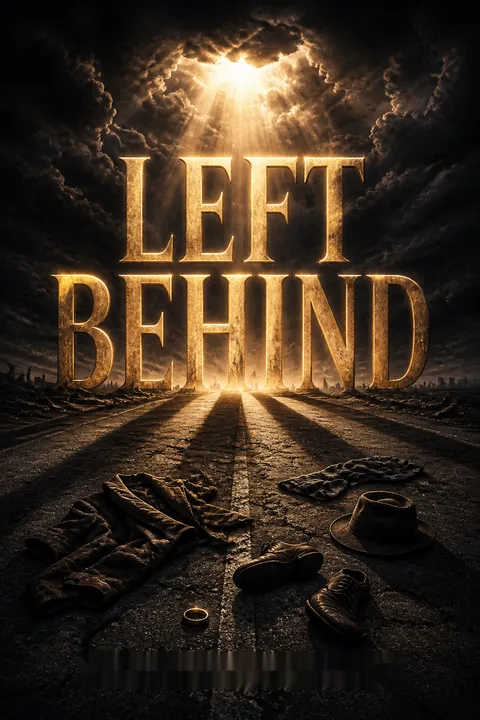


Plot Summary
Rayford Wants the Shot
In the rubble outside a secret Illinois safe house, Rayford Steele broods over the dead he has lost and begins imagining himself as the man who will kill Nicolae Carpathia, the ruler he believes is Antichrist.
He knows an assassination may fail, and that Carpathia may return from death, but the plan gives Rayford’s grief a dangerous purpose. Inside, Buck Williams, Rayford’s son-in-law, helps expand their underground shelter while Buck’s wife, Chloe, organizes a covert trading network for believers.
Their teacher, Tsion Ben-Judah, broadcasts biblical lessons that make him a target of Carpathia’s government. Meanwhile, inside the palace, David Hassid and pilot Mac McCullum use their trusted positions to frustrate searches for the Tribulation Force.
Rayford’s plot begins less as a tactical plan than as an attempt to convert mourning into agency. His enemies have killed people he loved, yet his own theology tells him that Carpathia’s rise belongs to a divine timetable. He lives inside that contradiction: wanting to submit to providence while trying to force its outcome. Around him, the Force survives through ordinary, practical work: shelter construction, communications, and trade. Those tasks make the group more than a band of fugitives. They are building a fragile alternative society, while Rayford’s private fantasy threatens to make personal vengeance its organizing principle.
The Doctor Comes Home
Buck finds Dr. Floyd Charles gravely ill and drives him to Young Memorial, where nurse Leah Rose recognizes the delayed effects of poison Floyd contracted while treating Hattie Durham after her miscarriage. The antivenin cannot save him.
Leah helps Buck remove Floyd from the hospital before Global Community agents discover him, but Floyd dies on the journey back to the safe house. His death leaves Hattie blaming herself and Rayford furious, convinced Carpathia’s attempt to poison Hattie has caused another murder.
He buries Floyd alone, then erupts at his friends before finally joining their prayer for him. Leah, herself a believer with a history of addiction, family loss, and near suicide, is welcomed into the group after she explains how Tsion’s teaching helped her find faith.
Floyd’s death makes the cost of rescue bodily and intimate: a past act of care becomes a delayed sentence, and no cleverness can reverse it. Rayford’s anger initially looks like moral clarity, but it also displaces helplessness onto a target he can name. His collapse before the group marks a small but essential change: he accepts care instead of performing command. Leah’s arrival mirrors the Force’s own origin in loss and belated belief. She is not admitted because she is useful alone; her willingness to risk herself and tell the truth makes her grief legible to a community that has learned to survive by trusting carefully.
A Woman Without a Wreck
After Floyd’s burial, Hattie disappears from the safe house with some of her belongings. Rayford discovers that a private plane has left Palwaukee with an unidentified passenger, while Global Community broadcasts a false report that Hattie and the pilot died in a crash off Portugal.
The report hides her trail, though Rayford suspects she is still alive. At the palace, David’s quiet sabotage grows more ambitious: he diverts computers meant to trace Tsion and Buck, secretly monitors Carpathia’s offices, and uses his access to aid the resistance.
His relationship with Annie Christopher, a fellow believer and Global Community employee, becomes harder to conceal. Mac recruits Abdullah Smith, a skilled Jordanian pilot and believer, as his first officer, giving their operation another trusted insider.
Hattie’s apparent death is an information weapon: the regime can control what the public believes while using uncertainty to confuse its enemies. The lie does not resolve her disappearance; it creates a more dangerous question about who knows the truth. David’s work operates by the same logic in reverse. He protects the Force by feeding the system false trails and extracting information from its center. His romance with Annie adds emotional risk to that espionage. Every private bond can become evidence, yet trust is also the resource that allows people inside Carpathia’s machinery to act against it.
The Cavalry in the Dark
Rayford takes Leah to her ransacked home to retrieve the cash she wants to give the Force. When Global Community guards catch them beside the hidden safe, Rayford distracts the officers so he and Leah can run. Leah freezes after seeing enormous, fire-breathing horsemen on the horizon; Rayford initially sees nothing, then finds the creatures surrounding them.
The guards cannot see the vision. The horsemen kill several officers, allowing Rayford and Leah to escape through the terrifying apparition. On the drive back, the supernatural attack spreads beyond their neighborhood: smoke, fire, and sulfur kill people across the world. Tsion recognizes the event as the sixth trumpet judgment, though believers differ on who can see its horsemen.
The horsemen transform private belief into a crisis of perception. Leah sees what Rayford cannot, and the guards’ inability to perceive the same danger does not protect them from it. The scene refuses the comfort of a shared, verifiable reality: the witnesses must act on what they see while others call it delusion. Rayford’s choice to trust Leah matters as much as the spectacle itself. Their escape depends on accepting an account he cannot initially confirm. The judgment also makes the world’s political language newly sinister, since Carpathia can describe a supernatural catastrophe as a human attack and turn terror into support for repression.
The Condor Burns
Mac and Abdullah hide 144 computers and food supplies inside the Global Community’s own Condor aircraft, planning to divert them to believers in Kuwait while carrying Supreme Commander Leon Fortunato toward Botswana. The horsemen appear in the sky during the flight. Abdullah reacts instinctively, injuring Mac as he wrestles the aircraft back under control; passengers who cannot see the apparition choke on smoke and sulfur.
After an emergency landing in Khartoum, the crew resumes its journey to Johannesburg. There, assassins posing as Botswanian dignitaries attack the plane, acting on a mistaken belief that Carpathia is aboard. Mac, Abdullah, and Fortunato survive the gunfire and firebombs, but the aircraft and several passengers are lost.
The flight braids two kinds of danger that the regime cannot admit: an invisible supernatural assault and a very visible political conspiracy. The passengers experience the same catastrophe differently, allowing Carpathia’s officials to dismiss the believers’ explanation even as they suffer its effects. Mac and Abdullah’s covert cargo operation shows that resistance depends on using institutional infrastructure against itself, but the diversion also places them inside the regime’s most dangerous theater. Fortunato’s survival creates an uneasy debt between enemies. Their temporary alliance is not conversion or reconciliation; it is the practical consequence of being trapped together under fire.
The French Address
Rayford pressures Beauregard Hanson, a small airport investor, into revealing the French address where Hattie may be hiding. He is already morally compromised by using Hattie’s money to coerce Bo, and T confronts him for treating an unbeliever as a disposable mark.
Meanwhile, Buck travels to Israel to visit Chaim Rosenzweig, a scientist and former mentor who is studying Tsion’s teachings but still resists conversion. In France, Rayford reaches the apartment and finds Samuel Hanson, the pilot’s brother, who is actually a Global Community decoy.
David discovers that Hattie has been captured and that the address is bait, but his warning cannot reach Rayford in time. Trudy Tuttle arrives with an urgent warning; Rayford tackles Samuel, escapes with Trudy, and flees the building.
This sequence tests whether the Force’s moral commitments survive contact with operational pressure. Rayford’s coercion may produce information, but T makes him confront what the method does to the person using it. His pursuit of Hattie then exposes the danger of acting on incomplete intelligence: the government has turned her into bait, and his urgency nearly delivers him into its hands. Buck’s visit to Chaim offers a quieter counterpoint. Chaim’s hesitation is not simple disbelief; he wants the truth to be real but cannot reconcile it with suffering. Both men face choices that cannot be solved by force alone.
The Turtles Fall
David learns from Leon Fortunato that Hattie is imprisoned in Brussels, while Global Community agents have killed her pilot and planted a false trail in France. Rayford does not yet know the full danger as he continues east with Dwayne and Trudy Tuttle. In Al Basrah, he meets Albie, a black-market supplier, and buys a concealed, extraordinarily powerful handgun called the Saber.
While Rayford tests it outside the city, Global Community forces kill the Turtles at their meeting place. Albie hides Rayford, gets him to the airport, and helps him escape under fire. Rayford reaches the aircraft carrying the Saber, but the deaths of the couple who helped him deepen his rage and leave him more determined to confront Carpathia.
The Saber gives Rayford’s old fantasy a physical form: compact enough to conceal, powerful enough to make a single act irreversible. Its purchase is framed as preparation, but the weapon also rewards the part of him that wants certainty through force. The Turtles’ deaths expose the cost of that world without turning their sacrifice into a simple lesson. They help Rayford because they believe the work matters, and Albie helps despite not sharing their faith. Their varied motives complicate the idea that only believers can act courageously. Rayford escapes, but survival brings no relief; each rescue leaves him carrying more grief and more capacity for violence.
Chaim Studies the Blade
In Israel, Buck finds Chaim frightened by the horsemen, mourning the death of his assistant Jonas, and questioning why a loving God permits so much suffering. Chaim has bought a motorized wheelchair despite being able to walk, and he secretly spends long hours filing blades to extraordinary sharpness.
Buck cannot persuade him to become a believer, though Chaim rejects taking Carpathia’s mark and admits that he no longer considers himself an agnostic. Buck also visits Lukas Miklos in Greece, where Lukas is building a discreet shipping network for Chloe’s Commodity Co-op. Back in the United States, Leah begins coordinating messages among the scattered Tribulation Force, reducing the confusion that helped leave Rayford exposed in France.
Chaim’s preparations reveal intelligence working under the pressure of fear. He studies scripture, plans for bodily decline, and sharpens blades, yet refuses to explain the connections even to someone he loves. His preparation is neither proof of faith nor mere eccentricity; it is an effort to regain control without surrendering his final judgment. Buck’s role is therefore constrained. He can accompany Chaim, ask direct questions, and offer care, but cannot make belief on his behalf. In parallel, Leah turns communication into shared infrastructure. Her system answers a practical failure with coordination rather than blame, giving the dispersed group a better chance to act together.
Three Roads to Jerusalem
Carpathia privately worships Lucifer and plots to consolidate power at the halfway point of his treaty with Israel. He arranges for the ten regional potentates to eliminate Peter the Second, leader of the Global Community’s world faith, using dissolving ice blades so the murder will leave little evidence.
The coming Global Gala is meant to celebrate Carpathia and the end of the Jerusalem witnesses’ ministry. Buck agrees to attend after Chaim formally invites him, while Rayford and Leah set out toward Brussels to contact Hattie.
Leah adopts a false identity as Hattie’s relative. David warns that travel will soon become harder, and later receives Leah’s message that Hattie has left the prison. Rayford cannot reach Leah, and the group’s plans fracture just as the Gala begins.
Carpathia’s private devotion clarifies the difference between his public language of tolerance and his actual spiritual allegiance. He does not merely oppose the witnesses; he wants their defeat staged as proof that his authority is absolute. His plan for Peter shows how he handles rival power: he recruits others to commit the act while reserving the public benefit for himself. Against this machinery, the Tribulation Force’s three journeys are personal and precarious. Buck goes because of loyalty to Chaim and his reporter’s instinct; Rayford pursues Hattie from responsibility and obsession; Leah enters the prison system under a fragile identity. Their separate motives make coordination essential just as communication fails.
The Witnesses Are Shot
At the Gala’s opening, Carpathia uses his uncanny influence over the audience to make millions accept Peter the Second’s reported death without alarm. The next morning he confronts Eli and Moishe at the Wailing Wall. The two witnesses, silent on their final day of ministry, do not answer his taunts.
Carpathia forces them outside their enclosure and shoots them with a Saber-like handgun, killing them in front of a crowd that has been primed to celebrate their defeat. Rayford carries his own Saber but cannot take a clear shot; after Carpathia kills the witnesses, he is swept through the crowd and loses the weapon’s casing before recovering it. Buck watches the bodies remain exposed as the revelers turn their deaths into a festival.
The murder is a performance designed to make violence appear like justice. Carpathia controls the setting, the audience’s expectations, and the story told afterward; the crowd’s celebration completes the spectacle by converting victims into public enemies. Rayford’s failure to shoot is not simply cowardice. He cannot distinguish his private desire for vengeance from a legitimate role in the unfolding events, and the crowd physically prevents him from acting. The witnesses’ silence also denies Carpathia the confrontation he wants. Their refusal to perform for him leaves the ruler to expose his own dependence on force.
The Dead Rise, Jerusalem Breaks
For three days, crowds mock the witnesses’ decaying bodies while the Global Community suppresses reports that contradict Carpathia’s account. Buck hides near the Wall on the final morning and watches Eli and Moishe rise, heal, and ascend into the clouds after a voice summons them. The terrified crowd falls into prayer and flight.
An earthquake then strikes Jerusalem, destroying a tenth of the city and killing thousands. Chaim, recovering from a mysterious stroke, insists on attending the Gala’s closing ceremony in his wheelchair. The Global Community blames the quake on ordinary forces and urges the festival to continue. Rayford, still carrying the Saber, returns to the ceremony grounds, where Carpathia plans to speak again.
The resurrection overturns the regime’s attempt to make death the final public fact. The same people who treated the witnesses’ bodies as entertainment must now face an event their own broadcast system cannot easily absorb. Yet the miracle does not produce unanimous belief; fear, grief, and political messaging continue to compete for interpretation. The earthquake further exposes the gap between Carpathia’s insistence on normality and the world’s actual collapse. Chaim’s decision to attend the closing ceremony brings private vulnerability into the public spectacle. His wheelchair, once a form of self-protection, places him directly beside the ruler whose promises he has begun to distrust.
The Closing Ceremony Shot
At the closing ceremony, Carpathia introduces Chaim as a honored guest and embraces him onstage. Rayford lowers his concealed weapon rather than risk hitting the old scientist. Later, as the ten potentates rise and the crowd surges, Rayford tries to aim again.
His arm will not steady; then a jolt from the crowd makes the Saber fire. Panic sweeps the plaza. Carpathia collapses with a catastrophic head wound, while Fortunato cradles him and the potentates flee. Buck sees the apparent fatal injury from the crowd.
The Global Community announces Carpathia’s death but delays the burial, awaiting an investigation. David reviews an alternate camera angle and recognizes Rayford as the shooter; when Fortunato asks, David confirms what the footage shows.
The climax makes intention and consequence diverge. Rayford has spent the novel imagining a purposeful assassination, yet the shot that strikes Carpathia is accidental, fired when his body is jostled and his control fails. That distinction does not erase responsibility, but it unsettles the fantasy that one can enter history as a chosen instrument and remain morally clear. David’s recognition creates a second crisis: loyalty to Rayford conflicts with the need to preserve his own cover inside the regime. The ending withholds the expected aftermath. Carpathia lies apparently dead, Rayford is exposed, and the world waits for an answer the book does not yet provide.
Analysis
Left Behind treats power as a contest over who gets to define what people have seen. Carpathia’s greatest instrument is not simply the police or the aircraft fleet. It is his ability to make a public story feel more convincing than private evidence. He announces false deaths, blames believers for supernatural judgments, and turns the murder of the witnesses into an entertainment event. Against this, the Tribulation Force builds its own systems of testimony: Tsion’s teachings, Buck’s reporting, David’s recordings, and Leah’s information network. None guarantees safety. They make it possible to compare accounts and resist isolation.
The novel’s religious framework sharpens rather than eliminates moral uncertainty. Rayford believes history follows divine prophecy, yet he is tempted to force the prophecy toward his own grievance. His wish to kill Carpathia grows from real losses, but the book refuses to treat grief as proof of moral permission. His eventual shot lands through accident rather than the purposeful agency he imagined, leaving responsibility and providence entangled. T’s rebuke over Bo and Leah’s insistence on being treated as a full partner similarly challenge the idea that urgent ends excuse any means.
Care is the resistance’s most durable practice. Floyd treats Hattie despite the danger; Leah risks her position to save Floyd; the Turtles help strangers; Abdullah and Mac trust each other in the cockpit; Chloe builds a trading network for people she may never meet. Their work does not stop catastrophe, but it gives survival a social meaning beyond individual escape. By ending with Carpathia apparently dead and Rayford identified, the novel refuses a clean victory. The ruler’s public authority has been struck, but the consequences of that strike remain unresolved. The next crisis begins at the instant one side appears to have won.
Review Summary
Left Behind receives mixed reviews, with some praising its thrilling plot and ability to make readers consider their faith, while others criticize its writing quality and perceived propaganda. Many readers find it gripping and thought-provoking, regardless of their religious beliefs. Critics argue it lacks literary merit and pushes a specific theological agenda. The series' popularity is noted, with some readers enjoying it as entertainment rather than spiritual guidance. Overall, opinions are divided, reflecting the controversial nature of its subject matter.
People Also Read







Characters
Rayford Steele
Grieving pilot and leaderRayford is a former airline and Global Community pilot who now helps lead the Tribulation Force. He is practical, experienced, and accustomed to making decisions under pressure, but the deaths of his wife, son, friends, and fellow believers strain his self-command. His faith gives him a framework for understanding the catastrophe, yet he repeatedly struggles to distinguish obedience from his own desire to act. He loves his daughter Chloe and her family, and he feels responsible for protecting the people around him. Rayford’s deepest conflict is not whether he hates Carpathia, but whether that hatred can be made to look like a divine assignment.
Buck Williams
Reporter on the runBuck is a journalist, the husband of Chloe, and the father of their young son, Kenny. His instincts are to investigate, travel toward the center of a story, and test claims against what he can witness. Those habits make him valuable to the resistance but create tension with his responsibilities at home. Buck admires Tsion’s teaching and cares deeply about Chaim Rosenzweig, yet he knows that neither affection nor argument can make another person believe. He works on the underground magazine The Truth and supports Chloe’s trading network, balancing the need to remain hidden against his desire to report what the world is becoming.
Chloe Steele Williams
Co-op's quiet architectChloe is Rayford’s daughter, Buck’s wife, and Kenny’s mother. Injured in the earthquake and occupied with caring for a baby, she nevertheless builds the Commodity Co-op, a clandestine trade network intended to help believers survive restrictions on buying and selling. Her strategic intelligence is matched by a clear sense of what her family needs. She understands why Buck is drawn to dangerous work but does not pretend that his choices leave her unaffected. Chloe often has to hold the household together while her father and husband pursue separate risks, making her influence practical, emotional, and political.
Tsion Ben-Judah
Teacher to the huntedTsion is an Israeli rabbi and biblical scholar whose daily online teachings reach believers across the world. He takes his responsibility to those readers seriously, especially when prophecy is difficult to interpret, and tries to distinguish certainty from speculation. Within the safe house he serves as spiritual mentor to Rayford, Buck, and the others, though he avoids forcing private counsel on people who have not asked for it. His intellectual discipline coexists with deep emotional tenderness. Tsion mourns the people lost around him while continuing to teach, and his public influence makes him one of Carpathia’s most important adversaries.
David Hassid
Palace insider and moleDavid is a young Global Community technology director who secretly supports the Tribulation Force. His access to computers, communications systems, and Carpathia’s inner offices gives the resistance information it could not otherwise obtain. He uses technical skill to conceal transmissions, misdirect searches, and monitor powerful officials, all while maintaining the image of a loyal employee. David’s relationship with fellow believer Annie makes his private life another security risk. He is clever and ambitious, but he must constantly judge how much information to reveal and when a useful deception might expose the people he is trying to protect.
Nicolae Carpathia
Charismatic world rulerCarpathia is the potentate of the Global Community, a polished public figure who promises peace, personal freedom, and a unified world. He understands how grief and disorder make people hunger for a confident leader, and he turns that hunger into political authority. Behind the public performance, he monitors dissent, manipulates officials, and regards religious resistance as a threat to his rule. His treatment of the two witnesses reveals a desire not merely to defeat opponents but to control the meaning of their defeat. Carpathia’s charisma is an instrument of power, and the people who admire him often mistake his calculated humility for moral restraint.
Leah Rose
Nurse finding her footingLeah is a nurse, a recent believer, and a survivor of a difficult childhood, addiction, bereavement, and suicidal despair. After losing her adopted sons and husband in the aftermath of the Rapture, she found Tsion’s teaching and chose to keep living. She risks her position at a Global Community hospital to help the Tribulation Force, then brings medical knowledge, money, and organizational ability into the safe house. Leah is direct and unwilling to be treated as foolish or expendable. Her sharpness can unsettle Rayford, but it also helps the group confront the assumptions that secrecy and fear can disguise as good judgment.
Mac McCullum
Pilot behind enemy linesMac is an experienced pilot who works for the Global Community while secretly serving the resistance. He is older than David and more at ease with discipline, procedure, and the risks of operating under a false identity. His loyalty to Rayford and the Tribulation Force is tested by the strain of living among people who would kill him if they learned the truth. Mac relies on skill and humor, but he understands that competence cannot remove the uncertainty of espionage. His work connects the palace’s aircraft and officials to the resistance’s covert supply routes.
Hattie Durham
Runaway palace insiderHattie is Carpathia’s former personal assistant and a survivor whose connection to the potentate makes her valuable and vulnerable. She is impulsive, proud of her physical resilience, and inclined to act without considering how her choices might endanger others. The safe house shelters her despite her not sharing the group’s faith, and Rayford feels both protective of her and frustrated by her independence. Hattie’s experience inside the palace gives her knowledge that the resistance cannot casually replace, but her unstable position makes every attempt to help her a possible trap.
Chaim Rosenzweig
Scientist at the thresholdChaim is an Israeli scientist, a respected statesman, and an important mentor to Tsion and Buck. He is intelligent, curious, and willing to examine evidence, yet he resists the demands of faith because the suffering around him seems incompatible with a loving God. His questions are not a pose; he wants an answer and fears what it might require of him. Chaim remains attached to Carpathia’s promises even as those promises disappoint him. His scientific habits shape his response to crisis: he studies, prepares, and tries to anticipate what his body and the world may soon endure.
Abdullah Smith
Pilot and trusted brotherAbdullah is a Jordanian pilot and believer who joins Mac inside the Global Community’s aviation operation. Quiet and formal, he is an accomplished flyer whose measured manner can conceal strong convictions. He carries the pain of a broken marriage and separation from his children, and his faith grew from letters his wife left behind. Abdullah’s discipline makes him a valuable partner in dangerous flights, while his reserve sometimes creates friction with Mac’s more talkative style. He is careful about the consequences of his actions and expects the same honesty from people he trusts.
Annie Christopher
Believer in uniformAnnie is a Canadian Global Community corporal who becomes a believer after the loss of her family and exposure to Tsion’s online teaching. She is blunt, independent, and impatient with the condescension she faces in a male-dominated workplace. Her relationship with David is both a source of affection and a security complication, since each must protect the other without giving away their faith. Annie’s technical and administrative access makes her useful to the resistance, but she is not content to be valued only for her work. She wants a life with David as well as a role in the cause.
Dwayne and Trudy Tuttle
Co-op's daring pilotsDwayne and Trudy are married pilots and Commodity Co-op operatives who use disguises, accents, and a fast aircraft to move people and supplies. They came to faith after their sons disappeared in the Rapture, and their grief gives their courage a personal cost. Dwayne is talkative, theatrical, and eager to confront danger; Trudy is steadier and more cautious, though no less brave when action is required. Together they provide Rayford with transport and help the wider network reach places the Global Community watches closely.
Floyd Charles
Doctor of the safe houseFloyd is a physician and a committed member of the Tribulation Force. He treats the group’s injuries, helps build their shelter, and gives practical care without insisting on status. His work for Hattie places him in danger, but his instinct is to help a patient rather than calculate what it may cost him. Buck and Rayford rely on Floyd’s medical judgment, while the household depends on his steady presence. His quiet competence makes him part of the group’s daily structure, not simply its emergency response.
Leon Fortunato
Carpathia's devoted commanderFortunato is the Global Community’s supreme commander and Carpathia’s most visible political lieutenant. He is vain, forceful, and eager to command, yet his loyalty to Carpathia is deeper than ordinary career ambition. He manages diplomatic missions, public ceremonies, and the machinery of repression while presenting himself as the ruler’s indispensable servant. Fortunato can be cruel to opponents and anxious when events slip beyond his control. His position gives him considerable power, but his dependence on Carpathia shapes nearly every decision he makes.
T
Rayford's candid allyT, also known as Delanty, is an airport operator, believer, and longtime friend of Rayford. He supports the Commodity Co-op and uses his access to flight records and local aviation contacts to help the resistance. T is loyal but not blindly affirming: when Rayford exploits Bo Hanson, T challenges him for acting without compassion. Their friendship gives Rayford a rare source of honest correction, especially when grief and anger distort his judgment.
Bo Hanson
Small-time airport investorBo is a privileged, self-important airport investor whose poor judgment puts Hattie’s escape in motion. He is motivated by money and status, and he often mistakes bluster for control. His dealings with Rayford reveal the uneasy boundary between exposing an opportunist and treating him with basic compassion.
Albie
Black-market supplierAlbie is a Muslim air-traffic controller and black-market supplier who opposes Carpathia’s regime. He offers Rayford a highly concealed weapon and later risks his own safety to help him escape. Albie’s alliance is based on trust and a shared enemy rather than the same faith.
Eli and Moishe
Witnesses at the WallEli and Moishe are the two prophetic witnesses who preach from the Wailing Wall in Jerusalem. Their warnings challenge Carpathia’s authority and call listeners to turn toward God. They speak with urgency, endure public hostility, and remain a focal point for both believers and the Global Community’s propaganda. Their ministry links the political events of the novel to Tsion’s interpretation of biblical prophecy.
Plot Devices
The Tribulation Force safe house
Shelter and coordinationThe ruined Illinois duplex hides the Tribulation Force from Global Community searches. Its expanded underground shelter gives the group a place to work, communicate, and prepare for a future in which believers may be barred from ordinary trade. Buck, Rayford, and their allies adapt an old owner’s plans, concealing access behind a decoy freezer and false basement wall. The house also concentrates the novel’s emotional life: grief, arguments, prayer, childcare, and decisions about who can be trusted all happen in close quarters. It is both refuge and pressure chamber, a fragile home whose secrecy must be continually maintained.
David's surveillance network
Intelligence and misdirectionDavid uses his position in Global Community communications to protect the resistance from discovery. He monitors high-level offices, builds secure ways to send information, and sabotages the computers assigned to trace Tsion and Buck. His tools turn the regime’s own technical infrastructure into a source of warning and a screen for false trails. The system is powerful but not infallible: messages can be missed, and Rayford’s decision to travel before receiving David’s information shows that intelligence has value only when it reaches the right person in time. David’s access creates opportunity and constant risk.
The horsemen of the sixth woe
Judgment made visibleThe enormous horsemen of Revelation’s sixth trumpet judgment appear to believers while killing people through fire, smoke, and sulfur. Leah sees them first near her home; Rayford and Abdullah later witness them in separate settings. Their presence makes private religious conviction an urgent question of perception, since unbelievers cannot see the beings that attack them. The resulting deaths change the balance of the world and intensify Carpathia’s campaign against believers, whom he accuses of causing the plague. The horsemen are at once a supernatural threat, a prophecy fulfilled, and a political opportunity that the regime tries to control through propaganda.
The concealed Saber
Violence within a disguiseAlbie sells Rayford a powerful handgun concealed inside a block of steel, allowing the weapon to pass as an ordinary heavy object. Its destructive force gives form to Rayford’s growing fixation on killing Carpathia. The Saber matters beyond Rayford’s purchase: Carpathia uses a similar weapon to kill the witnesses, and Rayford later carries his own into the Global Gala. Its repeated appearances connect political murder, public spectacle, and private revenge. The weapon can make an act sudden, but it cannot make the actor’s motives clear or control what follows after the shot.
The Global Gala
Propaganda becomes spectacleCarpathia stages the Global Gala in Jerusalem to celebrate the halfway point of his treaty with Israel and to present his rule as the beginning of a peaceful new era. The event gathers world leaders, worshippers, cameras, and crowds around the ruler, turning political power into a performance. Its program deliberately collides with the final days of the two witnesses’ ministry. Carpathia uses the audience’s attention to announce a rival’s death, boast of his power, and later confront the witnesses. The closing ceremony then becomes the setting for an attack that neither Rayford nor the regime can fully control.
FAQ
Synopsis & Basic Details
What is Left Behind about?
- Post-Rapture chaos unfolds: The story follows the lives of those left behind after the biblical Rapture, focusing on their struggles to survive and resist the Antichrist's regime.
- Tribulation Force forms: A group of believers, known as the Tribulation Force, emerges to oppose the Antichrist, Nicolae Carpathia, and win converts to Christianity.
- Prophecies come to life: The narrative depicts the fulfillment of biblical prophecies, including plagues, supernatural events, and political machinations, as the world descends into chaos.
Why should I read Left Behind?
- Prophetic thriller: The book offers a fast-paced, suspenseful narrative that blends political intrigue with supernatural elements, appealing to fans of apocalyptic fiction.
- Exploration of faith: It delves into themes of faith, redemption, and the battle between good and evil, prompting readers to consider their own spiritual beliefs.
- End-times perspective: It provides a unique perspective on the end-times, drawing on biblical prophecies to create a compelling and thought-provoking story.
What is the background of Left Behind?
- Biblical prophecy: The story is heavily based on interpretations of biblical prophecies, particularly from the Book of Revelation, creating a framework for the end-times narrative.
- Religious and political themes: It explores the intersection of religion and politics, depicting a world where a charismatic leader, Nicolae Carpathia, uses his power to establish a one-world government and religion.
- Cultural context: The book reflects a specific cultural context, drawing on evangelical Christian beliefs and concerns about the end-times, which resonates with a particular audience.
What are the most memorable quotes in Left Behind?
- "Rage. No other word described it.": This opening line encapsulates Rayford Steele's emotional state, setting the tone for his internal conflict and the book's themes of anger and grief.
- "God has his plan. Let him carry it out.": This quote, often repeated by Tsion Ben-Judah, reflects the theme of divine sovereignty and the importance of trusting in God's will, even in the face of chaos.
- "You're going to have to go round her up yourself or turn some of your contacts onto her over there.": This quote from T to Rayford highlights the practical challenges of the Tribulation Force's mission and the need for resourcefulness and collaboration.
What writing style, narrative choices, and literary techniques does Tim LaHaye use?
- Direct and accessible prose: LaHaye employs a straightforward, easy-to-read style, making the complex themes and events accessible to a wide audience.
- Multiple perspectives: The narrative shifts between different characters' viewpoints, providing a comprehensive look at the unfolding events and the various challenges faced by the Tribulation Force.
- Foreshadowing and symbolism: LaHaye uses foreshadowing and symbolism to create suspense and connect the events to biblical prophecies, enhancing the book's thematic depth.
Hidden Details & Subtle Connections
What are some minor details that add significant meaning?
- Donny Moore's notebooks: The meticulously kept notebooks of the original owner of the safe house, Donny Moore, reveal his foresight and planning for a future of seclusion, adding depth to the setting.
- Ken Ritz's background: The revelation of Ken Ritz's education and architectural skills, hidden behind his "clod-kicking" persona, highlights the diverse talents within the Tribulation Force.
- The "reverse intercom bug": The hidden surveillance device in Carpathia's plane, installed by Rayford, becomes a crucial tool for the Tribulation Force, revealing the importance of covert operations.
What are some subtle foreshadowing and callbacks?
- Rayford's anger: Rayford's initial rage and desire to kill Carpathia foreshadow his later actions and internal struggles, highlighting the theme of personal vendetta versus divine will.
- Hattie's selfishness: Hattie's self-centered behavior and ill-conceived plans foreshadow her later actions and the danger she poses to the Tribulation Force.
- The mention of the "mark": The early references to the mark of the beast foreshadow the future challenges and the ultimate test of faith for believers.
What are some unexpected character connections?
- David and Annie's shared faith: The unexpected connection between David and Annie, both working within the Global Community, reveals the presence of believers in unlikely places and the power of shared faith.
- Mac and Abdullah's past: The revelation of Mac and Abdullah's previous collaboration highlights the importance of trust and loyalty among believers, even across cultural and religious backgrounds.
- Leah and Ken's connection: The fact that Leah helped Ken Ritz after his injury and also helped with the miscarriage of Carpathia's child, connects her to the Tribulation Force's past and present struggles.
Who are the most significant supporting characters?
- T (Delanty): T, the manager of Palwaukee Airport, provides crucial support to the Tribulation Force, offering a safe haven and resources, highlighting the importance of hidden allies.
- Leah Rose: Leah's medical expertise and willingness to risk her life for the Tribulation Force make her a valuable asset, showcasing the diverse talents and backgrounds of those who oppose Carpathia.
- Abdullah Smith: Abdullah's loyalty and flying skills make him a key ally to Mac, demonstrating the global reach of the resistance and the importance of trust among believers.
Psychological, Emotional, & Relational Analysis
What are some unspoken motivations of the characters?
- Rayford's desire for control: Rayford's desire to assassinate Carpathia stems from a need to regain control in a world where he has lost so much, highlighting his struggle with grief and powerlessness.
- Hattie's need for validation: Hattie's actions are driven by a deep-seated need for validation and attention, revealing her insecurity and vulnerability.
- David's desire for connection: David's willingness to risk his position for Annie stems from a deep desire for connection and love in a world of isolation and fear.
What psychological complexities do the characters exhibit?
- Rayford's internal conflict: Rayford's struggle between his desire for revenge and his faith in God's plan reveals the psychological toll of loss and the difficulty of reconciling personal feelings with spiritual beliefs.
- Hattie's instability: Hattie's erratic behavior and emotional outbursts highlight her psychological instability and the impact of her past experiences.
- Tsion's intellectual struggle: Tsion's internal debate about the literal versus symbolic interpretation of prophecy reveals the intellectual and spiritual challenges faced by believers in the end-times.
What are the major emotional turning points?
- Rayford's breakdown after Floyd's death: Rayford's emotional outburst after the death of Floyd Charles reveals the depth of his grief and the toll of constant loss, marking a turning point in his emotional journey.
- Leah's vulnerability: Leah's emotional breakdown after seeing the horsemen reveals her vulnerability and the psychological impact of the supernatural events, highlighting the human cost of the conflict.
- Buck's grief over Floyd: Buck's grief over Floyd's death and his struggle to reconcile it with his faith, underscores the emotional toll of the Tribulation.
How do relationship dynamics evolve?
- Rayford and Buck's strained relationship: The tension between Rayford and Buck highlights the challenges of leadership and the difficulty of balancing personal feelings with the needs of the group.
- David and Annie's growing bond: The relationship between David and Annie evolves from a shared faith to a deep romantic connection, providing a source of hope and strength in a world of chaos.
- The Tribulation Force's reliance on each other: The Tribulation Force members become increasingly reliant on each other for support and encouragement, highlighting the importance of community in the face of adversity.
Interpretation & Debate
Which parts of the story remain ambiguous or open-ended?
- The nature of the horsemen: The exact nature and purpose of the 200 million horsemen remain somewhat ambiguous, leaving room for interpretation and debate about their role in the end-times.
- The extent of Carpathia's power: The limits of Carpathia's power and influence are not fully defined, leaving open the question of how much control he has over the unfolding events.
- The fate of Hattie Durham: Hattie's ultimate fate and her role in the larger conflict remain uncertain, leaving room for speculation about her future actions and allegiances.
What are some debatable, controversial scenes or moments in Left Behind?
- Rayford's desire to kill Carpathia: Rayford's intense desire to assassinate Carpathia raises questions about the morality of violence and the role of believers in opposing evil.
- The portrayal of unbelievers: The depiction of unbelievers as easily manipulated and morally corrupt can be seen as controversial, raising questions about the book's portrayal of those outside the faith.
- The literal interpretation of prophecy: The book's literal interpretation of biblical prophecy can be debated, with some readers questioning the accuracy and validity of its claims.
Left Behind Ending Explained: How It Ends & What It Means
- Carpathia's death and resurrection: The book ends with Carpathia's death and apparent resurrection, fulfilling biblical prophecy and setting the stage for the Great Tribulation.
- The Tribulation Force's survival: The Tribulation Force members continue their resistance, facing new challenges and uncertainties as the world descends into further chaos.
- The promise of ultimate victory: Despite the darkness and suffering, the book ends with the promise of ultimate victory for believers, highlighting the hope and faith that sustains them through the end-times.
Left Behind Series
About the Author



Download PDF
Download EPUB
.epub digital book format is ideal for reading ebooks on phones, tablets, and e-readers.








