



Plot Summary
Prologue
Nicolae Carpathia6 has learned to make ambition look like humility. While he courts praise as a Romanian peacemaker, he believes greater power is his due. In Illinois, airline captain Rayford Steele1 has reached the height of his career but feels trapped in a marriage strained by his wife2 Irene’s2 faith; the flirtatious flight attendant Hattie Durham8 has become his private temptation.
Journalist Buck Williams,5 meanwhile, travels to Israel to profile botanist Chaim Rosenzweig,13 whose agricultural discovery has enriched the country. Rosenzweig’s13 admiration for a little-known Romanian politician gives Buck5 an early glimpse of Carpathia’s6 growing reach.
The opening sets three kinds of appetite on a collision course: Carpathia’s hunger for authority, Rayford’s for escape, and Buck’s for a story that can be explained by evidence. Their ambitions differ in scale, but each man initially trusts his own competence to keep consequences manageable. The prologue also makes public appearance a recurring instrument of deception. Carpathia performs modesty, Rayford performs marital normalcy, and Buck assumes observation can keep him outside the events he records. The novel will test whether any of them can remain merely an observer.
The Storm Over Israel
At a military compound near Haifa, Buck Williams5 watches Russian aircraft and missiles descend on Israel in a seemingly unstoppable attack. He leaves the shelter to see the assault for himself, then survives a violent storm of fire, hail, rain, and earthquake as the Russian weapons crash across the country. The Israeli dead are the invaders, not the people they came to destroy.
Buck5 finds Chaim Rosenzweig13 alive and hears biblical scholars connect the disaster to an ancient prophecy about Israel’s northern enemies. A skeptical reporter cannot explain what he has seen away. He contacts Chicago bureau chief Lucinda Washington,10 whose Christian convictions give him a way to examine the event he witnessed without dismissing it.
The battle makes evidence itself unstable. Buck has the journalist’s habit of trusting what he can witness, but the witness does not produce a natural explanation; it produces a demand to reconsider what counts as evidence. The miraculous rescue also shifts the story’s scale. Israel is not merely a geopolitical subject for his reporting, but the site where biblical language appears to describe current events with unnerving specificity. Buck’s professional distance survives, though less comfortably. His curiosity turns inward, a change that will make Lucinda’s religious interpretation harder for him to dismiss.
Cracks in the Steeles
At home in Illinois, Irene Steele2 tries to love her husband1 without pressuring him into church, while Rayford1 grows more absorbed by Hattie8 and less attentive to their son,4 Raymie.4
Rayford1 buys Raymie4 expensive vehicles after breaking promises to spend time with him, but the boy still asks whether his father1 truly believes in Jesus. At Stanford, daughter3 Chloe3 is stung when her boyfriend marries someone else and channels her anger into academic ambition.
In Jordan, pilot Abdullah Ababneh’s7 Christian wife,11 Yasmine,11 leaves with their children after he reacts to her conversion with hostility; his drinking and affairs deepen the separation. Meanwhile, wars and disasters multiply worldwide, making these private fractures part of a growing atmosphere of instability.
The domestic stories make belief consequential before catastrophe arrives. Irene’s restraint is an attempt to preserve a relationship without controlling it, while Rayford interprets that restraint as permission to keep withdrawing. Raymie sees the difference between gifts and presence more clearly than his father does. Chloe’s achievement drive and Abdullah’s wounded pride are other forms of self-protection, each converting emotional pain into something more manageable. By placing these intimate failures beside worsening global events, the novel treats spiritual indifference not as an abstract position but as a habit embedded in family life.
Fortunato’s Coercion
After the failed assault on Israel, Nicolae Carpathia6 decides wealth alone will not secure his rise and orders adviser Leon Fortunato9 to remove Romanian president Gheorghe Vasile.20 Fortunato9 uses financier Jonathan Stonagal’s12 knowledge of Vasile’s20 secretly accumulated fortune to threaten exposure.
Carpathia6 wants the president20 to resign voluntarily and endorse him, preserving the appearance of lawful succession. When Vasile20 resists, Fortunato’s9 threats become physical: an operative is paid to approach the grandchildren’s driver, the president’s son’s20 prized horses are killed in an arson attack, and a false bomb warning empties the children’s school.
Fortunato9 also brutalizes the people he suspects of mishandling the scheme. Vasile20 finally announces his resignation and names Carpathia6 as his preferred successor.
Carpathia’s political method is to make coercion look like consent. He does not simply seize office; he engineers a public story in which the threatened president appears to choose his successor freely. Fortunato’s escalating violence exposes the machinery beneath that performance, while his eagerness to please makes him both agent and instrument of the manipulation. The sequence also complicates the idea of power as money: Stonagal supplies resources, but Carpathia increasingly dictates how they will be used. His rise depends less on persuasion than on controlling what other people fear losing.
The Romanian Peacemaker
Vasile’s20 resignation shocks Romania, but Carpathia6 publicly resists taking his place, insisting that procedure and popular approval matter. The performance fuels public demand for his installation, and political opponents fall in line as polls show his popularity surging. Once installed as president, he turns to Stonagal12 and demands access to international leaders and the secretive circles of finance that had treated him as a future asset.
He also secures an invitation to address the United Nations. Carpathia6 sends Fortunato9 and Viv Ivins14 ahead to New York to build the visit, while privately preparing a speech he expects to elevate him beyond Romanian politics. His image as a man of peace now carries him toward a global audience.
The presidency is not Carpathia’s destination but a platform. His feigned reluctance lets the public experience his ambition as a request made on their behalf, while his demands to Stonagal reveal that he considers old financial patrons temporary collaborators. The contrast between public humility and private command is not a lapse in character; it is the governing technique. Fortunato and Viv represent the administrative labor behind charisma, preparing the stage on which Carpathia can seem to act alone. The United Nations invitation marks the moment when a national performance is prepared for global consumption.
Churches Fill Overnight
As religious revivals gather crowds across several countries, Global Weekly religion editor Jim Borland tells Buck5 that salvation meetings are drawing an unprecedented response. At New Hope Village Church, Irene2 and Raymie4 attend the final sermon in pastor Vernon Billings’s17 series on the Rapture.
Billings17 explains that believers may be taken without warning and that salvation, in his teaching, comes through faith rather than moral achievement. The congregation is unusually full, and many people step forward afterward to commit themselves to Christ.
Irene2 hopes Rayford1 will listen, but he stays home, makes another excuse about church, and continues thinking about Hattie.8 Raymie4 worries aloud about his father’s1 readiness, while Irene2 asks him to keep loving Rayford1 rather than force a decision.
The sermon supplies the novel’s interpretive framework before its central supernatural event, so the Rapture will be recognizable to some characters but inexplicable to others. Its distinction between goodness and salvation also sharpens the family conflict: Rayford believes a decent life should be enough, while Irene and Raymie fear that decency cannot answer the question they are asking. The growing congregations suggest that private spiritual change is occurring on a wide scale, though observers such as Borland cannot yet make it into a coherent account. Irene’s hope remains relational, focused on one husband rather than an abstract end-time schedule.
London at the Edge
Rayford1 prepares to fly a Pan-Continental 747 from Chicago to London with Hattie,8 now a senior flight attendant. He has lied to Irene2 about seeing Hattie8 and has begun imagining a future that would cost him his marriage, though he has not yet acted on the attraction.
First officer Christopher Smith15 joins him in the cockpit, while Buck Williams5 boards as a passenger after visiting Chicago. During the flight, Rayford1 struggles to concentrate on his duties and Hattie8 watches for a sign that he will take their flirtation further.
In the dark cabin, she notices seats that seem unexpectedly empty and a passenger in the aisle who vanishes from sight. What first looks like fatigue becomes the first visible sign that the ordinary rules have broken.
The flight compresses the novel’s moral and physical tensions into one enclosed space. Rayford’s work demands attention to the safety of strangers, but his mind is occupied by a private fantasy that threatens the family he has neglected. Hattie’s ambition is more than flirtation: she wants Rayford to choose her, while he has treated the possibility as a flattering diversion. Buck’s presence links personal crisis to public observation, placing a reporter among people who cannot yet name what is happening. The cabin’s darkness turns absence into something the crew can initially mistake for a trick of perception.
The Missing World
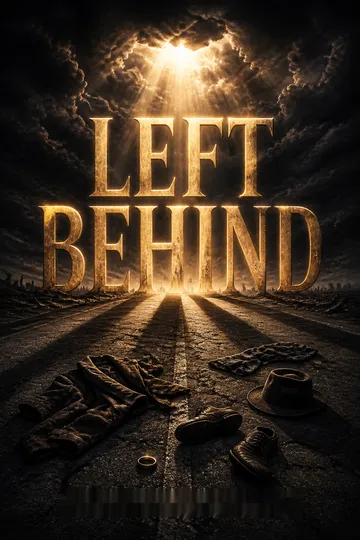
A trumpet sounds, and Irene2 and Raymie4 are lifted from their beds, transformed as they rise. Around the world, believers disappear from homes, vehicles, churches, workplaces, and aircraft, leaving clothes, jewelry, and other possessions behind.
The dead who belong to Christ are also taken, leaving cremation chambers and coffins empty. On Rayford’s1 flight, Hattie8 discovers missing passengers and crew, including flight attendant Antonio Salazar; children have vanished as well.
Rayford1 tries to steady the cabin, then learns from another pilot that planes across the world are turning back toward their departure airports. The event kills no one directly, but driverless cars crash, aircraft lose essential crew or passengers, and hospitals and emergency services are thrown into immediate crisis.
The disappearance is staged through ordinary objects rather than spectacle alone. A uniform, an empty seat, a set of pajamas: each turns absence into evidence, forcing survivors to confront a loss they cannot explain away. The selective pattern makes the event especially destabilizing because it does not correspond to age, status, or obvious virtue. At the same time, the Rapture’s consequences are brutally material. Removing people from cars, operating rooms, and cockpits creates secondary deaths and breakdowns. The spiritual event therefore arrives not as a clean escape from history but as an interruption that leaves the remaining world exposed to its own dependence on human presence.
The Welcome Above
Irene2 and Raymie4 rise into the clouds among millions of other believers, their bodies restored and Raymie4 grown into a young man. They recognize family, friends, and their pastor,17 then continue upward to meet Jesus. Irene2 experiences the welcome as intensely personal despite the vast multitude.
She and Raymie4 arrive in the heavenly city, where the story’s promised home is presented as a real place rather than a metaphor. Their new minds let them recognize and communicate with other believers without ordinary limits of distance or time.
Irene’s2 grief for Rayford1 and Chloe3 remains, but it is now held alongside the certainty that they are absent. She turns her attention to the worship and the people gathered around her, while still hoping her family will find faith.
The heavenly arrival answers the fear that salvation might erase individuality. Irene is one among millions, yet experiences recognition as intimate and particular; the novel imagines divine attention as unlimited rather than divided. Raymie’s transformed age also literalizes the passage from childhood vulnerability to spiritual understanding. The city functions as both destination and contrast: earthly homes have just been left full of empty clothes, while this home is described as prepared and enduring. Irene’s concern for her family does not disappear, but it changes form. She can no longer intervene in their choices, so love becomes prayer and trust rather than persuasion.
The Left Behind
As Rayford’s1 plane turns back toward Chicago, he and Buck5 encounter frightened passengers who cannot find relatives or seatmates. Buck5 searches the cabin after an elderly woman reports that her husband has vanished, then discovers clothes where passengers had been sitting.
On the ground, the same evidence spreads through cities and homes. Bruce Barnes,16 an assistant pastor who had not shared his family’s faith, finds his wife and children gone.
At Stanford, Chloe3 discovers her roommate’s19 clothes and belongings in the parking lot, then hears that students and children have disappeared across campus. She tries to reach her parents and packs to travel home. The survivors are not united by an explanation; they are united by the sudden absence of people who had warned them.
The aftermath turns prior relationships into evidence. Bruce’s empty house and Chloe’s abandoned campus belongings force survivors to remember the faith they had previously treated as eccentric, intrusive, or unconvincing. Their shock carries a specific ethical sting: the missing were not strangers but people whose warnings had been heard and set aside. The novel does not make every survivor respond identically. Chloe seeks her family, Buck searches for facts, and Bruce confronts a personal spiritual failure. Their different reactions suggest that recognition may arrive quickly, while repentance, grief, and practical survival remain separate struggles.
Abdullah Reads Yasmine
Jordanian pilot Abdullah Ababneh7 sees the chaos from the air, then remembers a letter from Yasmine,11 his estranged Christian wife.11 She had described a future in which Christ would take believers and urged Abdullah7 to trust Jesus rather than rely on religious observance or personal discipline. Abdullah7 flies to their home and finds Yasmine’s11 clothing near the stove and the children’s nightclothes on their beds.
He returns to the air base carrying their clothes, grieving that his family is gone. Alone in his quarters, he acknowledges his selfishness, anger, and failures, then asks God for forgiveness through Jesus. The loss does not erase his remorse, but it ends his former uncertainty about whether God exists and gives him a new purpose.
Abdullah’s conversion grows out of a letter he once resisted, so the catastrophe converts memory into an urgent form of knowledge. His wife’s warning is persuasive not because he suddenly becomes morally exemplary, but because he sees that discipline and religious identity have not made him whole. The clothes he carries back to the base become both proof of loss and the physical setting for his confession. His motives are mixed with fear and grief, a complexity the novel acknowledges before presenting his faith as sincere. The result is not a reunion but a changed orientation: he must live without his family and decide what service means now.
Carpathia’s Explanation
While survivors search for missing relatives, Carpathia6 consults the spirit that has guided his ambition. It frames the disappearance as an advantage and urges him to seize the opening by presenting himself as a source of order.
Carpathia6 learns that members of his own staff have vanished, yet he prepares to face the press in mourning clothes. He suggests an atmospheric interaction involving nuclear weapons and electricity as a possible scientific cause, while rejecting the Rapture explanation and promising respect for differing beliefs.
The explanation is unsupported, but it gives reporters a polished theory and a grieving world a confident speaker. Carpathia6 uses the first global broadcast after the disaster to appear compassionate, rational, and ready to lead.
Carpathia’s response shows how authority can occupy the space between uncertainty and proof. He does not need a convincing mechanism; he needs a story that sounds more manageable than the possibility of divine judgment. His scientific language gives an appearance of rational restraint, while his performance of grief lends emotional credibility. The vanished staff complicate his control, but he treats even that loss as material for public staging. In a world desperate for explanation, the person who speaks first can shape what counts as reasonable. The scene makes political deception a practical response to mass fear, not merely a private vice.
The Fire and Crowns
In heaven, believers’ earthly work is tested, and the results determine rewards rather than salvation. Irene2 and Raymie4 watch unknown servants, martyrs, missionaries, and well-known Christian figures receive recognition for work done in faith.
The process gives Irene2 a fuller view of lives she had never known and of the motives behind her own actions. When her turn comes, she sees that ordinary acts of study, teaching, service, and care have value, while hours spent only on trivial self-absorption disappear.
Jesus welcomes her and recognizes her work in teaching children and bringing Raymie4 to faith. The gathered believers eventually lay their crowns before Jesus, turning personal reward into collective worship rather than private possession.
The judgment separates salvation from performance while still insisting that choices matter. Irene is not measured by whether she was flawless, but she must face how she used the time she had. That distinction creates a subtler moral pressure than simple punishment: grace secures belonging, yet does not make a life’s attention meaningless. The parade of obscure believers also changes the scale of heroism. Work that received no earthly notice becomes visible, while public prominence does not guarantee lasting value. The crowns embody this tension; they recognize individual service only to be returned to the figure whom the believers understand as its source.
No Way Back Yet
After landing at a devastated O’Hare, Rayford1 makes his way home and finds the house empty of Irene2 and Raymie.4 He understands that the warning he dismissed has come true, while his longing for Hattie8 has abruptly lost its force.
Chloe3 struggles across California toward a route home, relying on improvised connections as airports and roads fail. Buck5 calls the Washington10 home and learns from Lucinda’s10 son21 Lionel21 that Lucinda10 and her husband22 are gone.
First officer Christopher Smith15 discovers that his wife was killed in a traffic collision and that his sons disappeared from their church, leaving him convinced he has no future. The story closes with the separated living facing grief and choice, while the believers in heaven anticipate Christ’s future return to earth.
The ending withholds reunion and replaces it with divergent thresholds. Rayford has reached the home he once neglected, but its emptiness offers no immediate repair. Chloe is still traveling, Buck has lost the colleague who could help him interpret what he witnessed, and Chris faces the worst combination of bereavement and belated understanding. Their stories remain unresolved because the Rapture is not a conclusion for those left behind; it begins a harsher historical interval. The contrast with heaven’s anticipation makes the cliff edge explicit: one group experiences fulfillment, while the other must decide what to do with evidence they once refused.
Analysis
The novel’s structure depends on a sharp asymmetry: the same event is deliverance for believers and catastrophe for everyone left behind. By following Irene2 and Raymie4 into heaven while keeping Rayford,1 Chloe,3 Buck,5 and Abdullah7 on earth, the story refuses to let the Rapture remain a purely theological proposition. Empty clothes, wrecked traffic, and a diverted airliner translate belief into visible consequence.
Its recurring moral distinction is between goodness and salvation, then between salvation and useful action. Irene’s2 heavenly judgment affirms that her faith is not earned by service, yet still subjects her time and motives to scrutiny. The parade of overlooked believers further contests ordinary measures of importance: domestic care, obscure missionary work, and daily integrity can matter more than public reputation. The book’s ideal is therefore not merely escape from history, but faithful conduct before and after a promised escape.
The political plot offers a dark counter-system. Carpathia6 also speaks the language of peace and order, but he uses spectacle, coercion, and fabricated explanation to turn fear into authority. His public role mirrors the spiritual conflict on a civic scale: the survivors need meaning, and he is prepared to supply a false one. Rayford’s1 and Abdullah’s7 stories make the same crisis intimate. Both men have treated family and belief as matters they can postpone; when the loss arrives, each discovers that delay has already shaped the choices available. The ending withholds reunion, leaving the central question not whether the vanished are safe, but what the survivors will do with the warning they can no longer deny.
Review Summary
Reviews of The Rapture are mixed. Many readers found it emotional and spiritually inspiring, appreciating the depiction of Heaven and its impact on their faith. However, common criticisms include the Heaven scenes feeling corny or presumptuous, excessive copying from the original Left Behind book, weak character development—particularly of Irene—and poor writing quality. Some felt the prequel trilogy could have been condensed. Fans of the broader series generally enjoyed it more, while newcomers or critical readers found it lacking in plot and literary merit.
Characters
Rayford Steele
Restless airline captainRayford is a successful Pan-Continental captain who has mistaken professional mastery for a satisfying life. He prizes competence, routine, and the sense that he can keep personal troubles contained. Irene’s2 Christian faith feels to him like pressure, while Hattie’s8 attention offers a flattering escape from a marriage he has stopped tending. His love for his children is real, but he repeatedly substitutes gifts and promises for the time they ask him to give. Rayford’s central weakness is not open cruelty but evasion: he postpones difficult conversations until postponement itself becomes a choice with consequences.
Irene Steele
Patient believing wifeIrene is Rayford’s1 wife1 and the spiritual center of the Steele family. Her faith gives her a firm understanding of salvation, but she is learning that conviction does not entitle her to control the people she loves. She seeks counsel from friends and her pastor17, then tries to replace nagging with patience and practical affection. Irene is attentive to the emotional weather of her household, especially Raymie’s4 worry and Chloe’s3 distance, and she fears that religious disagreement will harden into permanent separation. Her strength lies in persistence and care; her difficulty is accepting that another person’s decision cannot be made on their behalf.
Chloe Steele
Ambitious college studentChloe is Rayford1 and Irene’s2 gifted daughter1, a Stanford student whose independence has widened the emotional distance between herself and her mother2. She is proud, capable, and protective of her privacy, especially after a painful breakup leaves her feeling exposed. Rather than sit with that hurt, she tries to redirect it into academic achievement and debate. Chloe’s relationship with Rayford1 has been close, partly because they share skepticism toward Irene’s2 faith, but her confidence conceals a young woman still working out what she wants from family, belief, and adulthood. She resists being treated as a project, even when her parents’ concern is sincere.
Raymie Steele
Faithful young sonRaymie, the Steeles’ eleven-year-old son1, is openly devoted to church and unusually direct about the spiritual questions his parents avoid. He wants his father’s1 affection, but he is perceptive enough to know that new equipment cannot replace time together. His concern about Rayford1 is both theological and deeply personal: he fears losing his father1 and believes that faith matters to what happens after death. Raymie’s childlike certainty does not make him naïve about family disappointment. He keeps loving Rayford1 while naming the gap between what his father1 promises and what he actually does.
Cameron Buck Williams
Skeptical foreign correspondentKnown professionally as Buck, Cameron Williams is a driven Global Weekly writer who approaches life as a sequence of assignments to master. His confidence rests on observation, planning, and the belief that a sharp mind can sort fact from superstition. Witnessing Israel’s inexplicable deliverance unsettles that confidence without instantly turning him into a believer. He remains curious, independent, and wary of being preached at, yet his conversations with Lucinda Washington10 make it harder to treat faith as an irrelevant private matter. Buck’s journalistic skill brings him close to consequential events; his challenge is deciding whether reporting on them is enough.
Nicolae Carpathia
Charismatic political climberNicolae Carpathia is a brilliant Romanian politician whose polished manners and public advocacy of peace make him easy to admire. Beneath that surface, he is impatient with limits and convinced that ordinary routes to power are too slow for a man of his ability. He knows how to present ambition as service and how to let other people believe they have freely chosen what he has arranged for them. Carpathia reads relationships in terms of influence and usefulness, yet he understands that affection, modesty, and public grief can be politically valuable performances. His confidence is formidable, and his need for greater authority appears almost limitless.
Abdullah Ababneh
Wounded Jordanian pilotAbdullah is a talented Royal Jordanian Air Force pilot whose identity has long depended on discipline, professional respect, and his role as husband and father. He reacts to Yasmine’s11 Christian conversion as a personal and cultural rejection, though his own conduct has already undermined the religious life he claims to defend. Pride makes him defensive; loneliness makes him desperate to recover his family. His story examines the difference between outward observance and inward conviction without denying the real consequences of his choices. Abdullah is capable of self-command, but he must learn what that discipline is for and whom it serves.
Hattie Durham
Ambitious flight attendantHattie is a young Pan-Continental flight attendant whose beauty leads others to underestimate her intelligence and professional ambition. She has learned to use that misreading while working hard to earn promotion and respect. Her attraction to Rayford1 is not merely casual amusement; she sees him as a man whose restraint might signal a meaningful choice. Hattie is socially skilled but not immune to risk, and she wants more than the hidden attention of someone unavailable. Her confidence and appetite for a larger life make her a genuine participant in the relationship, not simply an object of Rayford’s1 fantasy.
Leon Fortunato
Power broker’s chief aideLeon Fortunato is Carpathia’s6 close adviser, a practiced intermediary who understands how to flatter powerful people and exploit their vulnerabilities. He wants to be indispensable, but he is acutely sensitive to his rank and to any sign that he has been excluded from important decisions. His mixture of deference and resentment makes him both effective and unstable. Leon is willing to take responsibility for dangerous assignments when doing so might secure his place beside Carpathia6. He understands politics as personal leverage, and his professional loyalty is bound tightly to the recognition and influence he hopes to receive.
Lucinda Washington
Christian newsroom chiefLucinda is Global Weekly’s Chicago bureau chief, a veteran journalist admired for loyalty to her staff and for leading through personal connection rather than office status. She is direct, humorous, and difficult to intimidate, especially when speaking with Buck5, whom she treats with the affection and candor of family. Her Christian faith shapes how she interprets world events, but she does not confuse conviction with a license to belittle people. Lucinda challenges Buck5 to reconsider his assumptions while respecting his intelligence. Her warmth and authority make her both a mentor and a counterweight to the magazine’s detached view of religion.
Yasmine Ababneh
Steadfast Christian motherYasmine is Abdullah’s7 wife7 and the mother of their two children. Her conversion to Christianity gives her a conviction she will not hide, even when it costs her marriage and makes her vulnerable within a Muslim household. She tries to speak with Abdullah7 honestly about his conduct without reducing him to his worst choices. Her faith is not presented as a strategy to win an argument; it is the foundation of her decisions about herself and her children. Yasmine combines gentleness with resolve, and her letters show her trying to leave Abdullah7 a clear path toward belief without pretending she can choose it for him.
Jonathan Stonagal
Billionaire political financierJonathan Stonagal is an elderly American financier whose wealth and international relationships make him a powerful ally to political figures. He regards himself as more than a source of money and expects his resources to carry authority. Carpathia’s6 refusal to wait for his preferred timetable unsettles that expectation. Stonagal is experienced enough to recognize the danger of moving too quickly, but his confidence in his own network can make him underestimate a younger partner’s independence. He represents a world where influence is commonly purchased, negotiated, and guarded as carefully as a private fortune.
Chaim Rosenzweig
Israeli scientific statesmanChaim Rosenzweig is an Israeli botanist and public figure whose agricultural discovery has transformed the country’s fortunes. He is thoughtful and cautious about political suitors, valuing sincerity over rank or spectacle. His respect for Buck5 gives the journalist access to both his scientific achievement and his unease about Carpathia6. Rosenzweig does not begin as a confident religious interpreter of events; he is willing to admit uncertainty and consult people who may understand what he has witnessed. That intellectual modesty makes him an important bridge between Buck’s5 professional skepticism and the possibility that evidence may point beyond conventional explanation.
Viv Ivins
Carpathia’s longtime aideViv Ivins is a longtime friend and household aide to Carpathia6, trusted with the practical arrangements that keep his public and private life running. She knows him from before his political ascent and remains attentive to what he needs, even as the boundaries of her influence change. Viv is experienced, observant, and efficient, but she must navigate the quiet rivalries that arise around a charismatic leader. Her role reveals the often invisible labor behind political spectacle, including the work of turning a leader’s ambitions into schedules, rooms, meetings, and appearances.
Christopher Smith
Conflicted first officerChristopher Smith is Rayford’s1 first officer on the London flight, an ambitious pilot who presents himself as relaxed and easygoing. Beneath that manner, he carries dissatisfaction with his marriage and discomfort about the kind of husband and father he has become. He has difficulty sustaining honest emotional contact with his sons, whose growing religious interest unsettles him. Christopher is not as composed as Rayford1 in the cockpit, and the crisis exposes how little his professional competence can protect him from private guilt. His character brings the disaster down to the level of family choices and self-judgment.
Bruce Barnes
Church staff survivorBruce Barnes is the visitation pastor at New Hope Village Church, a personable church worker whose family life is central to his sense of himself. He is familiar with Christian teaching, but familiarity has not settled his own spiritual questions. Bruce’s role highlights the difference between working near faith and being certain of it. He is capable of caring for a congregation and still privately unsettled by the claims its members take seriously. His ordinary domestic rhythms make him an especially human figure within a story that places religious conviction under sudden, irreversible pressure.
Vernon Billings
Humble prophecy pastorVernon Billings leads New Hope Village Church with a manner that shifts attention away from himself and toward the Bible and the people in his congregation. His teaching about Christ’s return is structured and direct, but he also emphasizes that believers should care for the vulnerable rather than withdraw from earthly responsibilities. Irene2 and Raymie4 trust him because he answers difficult questions without pretending to know what cannot be known. Billings gives the novel its clearest account of the beliefs that shape the Steeles’1 choices, while his pastoral role connects private faith to a wider community.
Jackie
Irene’s Christian friendJackie is Irene’s2 close friend at New Hope, a practical source of counsel who encourages her to approach Rayford1 with patience rather than accusation. Her own experience of loving a skeptical spouse gives her advice personal weight. Jackie also helps with church teaching and welcomes newcomers without demanding that they already understand the faith. She represents the informal care that sustains Irene2: friendship, shared worship, and an example of conviction lived within a marriage.
Amy
Chloe’s candid roommateAmy is Chloe’s3 roommate at Stanford, a friend who can tease her without dismissing her pain. She recognizes that Chloe’s3 breakup has hurt more deeply than Chloe3 wants to admit and helps redirect her energy toward school. Amy’s warmth provides a counterpoint to Chloe’s3 guardedness, giving her a place to be angry and vulnerable without having to perform maturity. Their friendship is affectionate and lightly competitive, grounded in the everyday negotiations of college life.
Gheorghe Vasile
Romanian president under pressureGheorghe Vasile is Romania’s sitting president, an experienced politician who values his office, his public standing, and his family’s security. He is accustomed to managing appearances and believes political opponents can be handled through familiar procedures. Fortunato’s9 approach confronts him with the vulnerability hidden beneath his authority, especially where his private finances and grandchildren are concerned. Vasile’s pride makes him resistant to yielding, but his political instincts also tell him when the balance of power has shifted.
Lionel Washington
Lucinda’s watchful sonLionel is Lucinda10 and Charles Washington’s22 thirteen-year-old son10. He is surrounded by a family whose public and private identity is deeply tied to church, yet he has doubts he is afraid to share with his mother10. His unease makes him observant of the gap between appearing religious and believing. Lionel’s relationship with his mother10 is loving, but his fear of disappointing her keeps him silent.
Charles Washington
Lucinda’s devoted husbandCharles is Lucinda’s10 husband10, a warm and unpretentious man who takes pride in her work and enjoys welcoming her friends into their home. His ease and humor make Buck5 feel included, while his personal faith is expressed through ordinary gestures of hospitality and gratitude. Charles offers a picture of a long marriage in which affection remains visible.
Dooley
Jackie’s churchgoing husbandDooley is Jackie’s18 husband18 and a member of the New Hope community. He appears alongside Jackie18 in the church’s shared life and supports its activities, including events that bring new people into contact with the congregation. His presence helps establish the network of friendships surrounding Irene2 and Raymie4.
Jeremy Phillips
Raymie’s school friendJeremy is Raymie’s4 former classmate, a boy from Mount Prospect whose friendship gives Raymie4 a familiar peer within the church community. Their conversations show that young believers may not know one another’s faith until they speak openly about it. Jeremy is curious, candid, and still recognizably the boy Raymie4 knew at school.
Plot Devices
Ezekiel’s Israel prophecy
Makes prophecy observableBuck’s5 assignment places him inside a Russian assault on Israel that ends in a storm, earthquake, and the destruction of the invading forces without Israeli casualties. Biblical scholars connect the event to a prophecy about Israel’s northern enemies and the conditions of their defeat. This device moves prophecy from the realm of interpretation into Buck’s5 firsthand reporting, although his experience does not instantly settle every religious question. It also provides an early model for the novel’s broader claim: events that seem politically or scientifically inexplicable can be read as part of a religious pattern.
Carpathia’s spirit guide
Directs hidden ambitionCarpathia’s6 private contact with a supernatural spirit gives his political rise a second layer beyond money, strategy, and public charm. The spirit promises power, urges obedience, and later interprets the mass disappearance as an opportunity to consolidate influence. This device links Carpathia’s6 personal ambition to the book’s conflict between divine and demonic authority. It also helps explain why his public language of peace can coexist with a private willingness to use coercion and deception.
The Rapture
Removes believers instantlyThe Rapture is the sudden removal of living believers and the resurrection of believers who have died. The event leaves physical possessions behind, including clothing, jewelry, and objects in homes, vehicles, and workplaces. Its timing fulfills the warnings Irene2 and Raymie4 have heard, while its selectivity leaves skeptical relatives and strangers to interpret what has happened. The disappearances cause immediate secondary disasters because people vanish from cars, operating rooms, and aircraft. This device drives the central rupture between the believers’ arrival in heaven and the disoriented societies left on earth.
Clothes left behind
Makes absence undeniableThe empty clothes provide a repeated, physical trace of people who have disappeared. They appear in bedrooms, cars, crematoriums, church grounds, and passenger seats, turning an invisible event into evidence that survivors can touch and inspect. The detail is particularly effective aboard Rayford’s1 aircraft, where the crew first notices unoccupied seats and then finds garments where passengers and colleagues had been. Across the novel, these remnants connect private losses to a worldwide event and make disbelief increasingly difficult to maintain.
The Bema judgment
Measures service, not salvationIn heaven, believers’ earthly works are tested by fire, with enduring deeds represented by precious materials and wasted effort by what burns away. The judgment does not determine whether a person is saved; it reveals how that person used the life already given. The resulting crowns honor different forms of service, including perseverance, spiritual leadership, hope, and bringing others to faith. Irene’s2 own experience makes the doctrine personal, while the many lesser-known believers receiving recognition broadens the novel’s account of heroism beyond public fame.
About the Author
Other books by Tim LaHaye



Download PDF
Download EPUB
.epub digital book format is ideal for reading ebooks on phones, tablets, and e-readers.








