

Key Takeaways
Replace control with clear, cooperative leadership when safety is at stake.
Guidance without domination. Marohn’s relationship with Pegasus, a miniature white mare first found tethered, begins with a practical problem: the horse will not accept a halter. Following her around only makes the problem worse. A horsewoman teaches Marohn to build trust through liberty work, meaning relationship-based interaction in which the horse moves freely without a lead rope. Marohn learns that leadership is not about winning a contest. It is about communicating clearly, setting safe boundaries, and inviting cooperation. With large animals, avoiding leadership can itself be unsafe, so care requires both respect and direction.
A better measure of success. On a trail, Marohn meets a rider trying to force an agitated horse to obey. Rather than scolding her, she asks what the rider hopes to achieve and suggests cooperation. The rider dismounts, and the horse begins to settle.
What's striking is the distinction between authority and coercion. In animal behavior, predictable cues and consistent boundaries can reduce uncertainty, while punishment may suppress visible resistance without resolving distress. The account also corrects a common misconception about gentleness: refusing to guide is not always kind, especially when an animal's size creates real risk. The useful test is whether leadership makes the situation safer and more intelligible for both parties. The approach should not be romanticized as a universal replacement for training expertise; its value lies in treating compliance as a relationship problem, not simply a contest of wills.
Judge an animal’s behavior by its world, not by human standards.
Behavior has context. When sheep join the sanctuary, Marohn notices how casually people call them stupid or mindless. Living with them changes her interpretation. Sheep bunch and flee when startled because their main defense is escaping together, not because they lack thought. Their ability to move as a flock depends on close attention to one another. Each animal also has a distinct temperament, a fact easier to see once stereotypes stop doing the looking.
Curiosity replaces labels. Marohn learns to ask what a behavior accomplishes for the animal and what conditions might have produced it. That question changes the relationship: instead of treating the sheep as interchangeable livestock, she begins to recognize individual personalities and preferences. Her account of bottle-fed lamb Wonder and his mother Charlotte makes that individuality vivid, as does her observation that animals respond differently to touch, handling, and separation.
This is a practical lesson in avoiding anthropocentrism, the habit of treating human-like behavior as the default measure of intelligence. Comparative cognition faces the same problem: a test can mistake unfamiliar abilities for an absence of ability. A sheep's attention to flock members may be more revealing of sheep intelligence than performance on a human-designed task. Contextual interpretation also guards against a different mistake, assigning a noble motive to every action. Respect begins with observation, but good observation remains open to correction rather than replacing one stereotype with an affectionate fantasy.
Trauma softens through safety, choice, and steady, respectful presence.
Trust starts with room. Gabriel, a wild desert donkey, arrives deeply frightened of people. Earlier handling has made confinement terrifying, and he sometimes seems to withdraw from awareness when he cannot escape. Marohn first tries to coax him into a small pen, then realizes that pressure is intensifying his fear. She changes the interaction: she approaches in the open, steps back when he faces her, and lets him decide whether to come closer. Over repeated encounters, Gabriel eventually touches her hand.
Reliable care matters. A skilled farrier later handles Gabriel calmly, using brief pressure followed by release. The donkey accepts hoof trimming without tranquilization and leans his head against Marohn rather than shutting down. The shift is not presented as a quick cure. It grows from repeated experiences in which human contact becomes more predictable and Gabriel retains some choice.
The pattern resembles trauma-informed practice: establish safety, reduce avoidable coercion, and let trust develop through repeated, manageable interactions. Choice can matter even when a person or animal cannot control every part of care. The account also illustrates why apparent passivity should not automatically be read as comfort; a distressed animal may freeze or withdraw. At the same time, trauma language cannot establish exactly what Gabriel experienced internally. The strongest evidence in the story is behavioral: his responses change when the handling changes, and skilled, patient care makes necessary procedures less frightening.
Make respect for animals visible in what you buy and support.
Freedom is physical. Marohn volunteers at a farm sanctuary when more than 700 hens are rescued from a commercial egg farm. The eighteen-month-old birds, considered past their productive prime, face slaughter as the operation closes. Some arrive thin, missing feathers, and with overgrown nails. After release, they scratch dirt, bathe in dust, stretch their wings, and test their ability to fly. Their delight makes clear how much ordinary chicken behavior had been denied by confinement.
Respect changes choices. The rescue is not only a moving encounter; it prompts Marohn to connect animal welfare with everyday consumption and public policy. She urges readers to support animal-protection organizations, choose products from better conditions when possible, and reduce other harms to nature. Her central point is that respect means allowing a being the space to express its own nature, not merely feeling affection for it.
The hens' first hours outside make a powerful case for considering what an animal can actually do, not just whether it is alive and fed. This connects individual empathy to institutional design: housing conditions determine whether basic behaviors are possible at scale. Yet the story also shows the limits of rescue as a solution to industrial systems. A sanctuary can restore freedom to a small number of birds, while lasting change depends on regulation, producers, and consumer demand. The most actionable contribution is therefore paired: attend to the individual animal, and question the structures that make such deprivation routine.
Trust means helping another thrive, even when closeness must end.
Care includes restraint. A wild doe Marohn names Angel begins spending time near the sanctuary and later appears with two fawns. When another deer’s body is found nearby, Marohn and a wildlife rescuer initially conclude that the fawns are orphaned. They capture one, then discover signs that the mother may still be alive. Days later, Angel reappears with both young. The rescue attempt came from concern, but incomplete information nearly separated a family unnecessarily.
Connection needs boundaries. Marohn helps the young deer survive, then faces a harder choice when they grow accustomed to food and remain inside the fenced property. The land cannot sustain them, and a wildlife expert says they must be encouraged to leave. Marohn opens the gate and eventually uses apples to lead them out. The choice hurts, but keeping them close would not serve their long-term welfare.
The episode captures a central tension in wildlife care: intervention can prevent harm, but it can also disrupt natural behavior when the situation has been misread. The most important safeguard is consultation with people who understand the species, paired with restraint when an animal may be merely resting or temporarily unattended. The later decision to stop feeding the deer extends the same principle. Affection can create dependence, so ethical care sometimes means reducing access and accepting separation. The story makes trust less sentimental: it means prioritizing the other being's ecological needs over the comfort of continued contact.
Belonging sometimes begins with one careful step beyond familiar isolation.
The familiar can confine. Isabel, a sheep rescued from severe neglect, initially spends nearly all her time in a shelter with Leopold, the companion who came with her. Although the new sanctuary offers room and a flock, she repeatedly retreats to the shelter. After Leopold dies, Marohn worries that Isabel will remain isolated. She closes the route back to the old shelter and gradually guides Isabel toward the other sheep, giving her time to explore rather than forcing a sudden merger.
The flock was ready. Isabel first stays near the gate, then begins grazing in the shared pasture. Within days, she joins the group and remains with them. Marohn observes that the other sheep were not rejecting her; fear of unfamiliar possibilities had kept Isabel from approaching. Her return to the flock brings a visible change in her daily life, including the ease with which she greets Marohn.
Isabel's story suggests that adaptation depends not only on a safe destination but also on a tolerable path toward it. In human psychology, familiar routines can persist even when they are painful because predictability itself offers protection. Gentle exposure to new settings can help, especially when the individual retains time and space to respond. But the story's intervention raises a real ethical question: a caretaker may mistake reluctance for fear when it could be preference. Marohn's gradual approach is more defensible than force because Isabel's behavior is observed over time, and the change remains responsive to her pace.
Care combines loving attention with practical skill and sound expertise.
Attention is not enough. Marohn initially knows little about sheep care. When Charlotte gives birth to twins and one lamb does not survive, she must learn feeding, medication, and handling quickly. The experience exposes the limits of good intentions: an animal's needs require knowledge as well as emotional connection. Later, Charlotte and Wonder develop serious hoof problems. Marohn searches for help, tries supportive measures, and eventually finds a sheep-experienced veterinarian whose trimming approach improves their condition.
Listen, then verify. Marohn also describes Pegasus's recurring laminitis and the alternative diet and herbal regimen she chose after seeking advice. She reports that Pegasus improved, but these are her personal observations, not controlled evidence that the treatment works generally. The broader lesson is to stay attentive, ask questions, and seek qualified help rather than treating either intuition or one professional opinion as infallible.
The strongest version of Marohn's lesson joins care with epistemic humility. Attention can reveal a change in gait, appetite, or comfort that a rushed observer misses, while veterinary knowledge helps distinguish plausible treatments from dangerous guesses. Her account of finding a specialist after receiving a bleak prognosis shows the value of a second opinion. The alternative treatments require more caution: an individual recovery cannot establish efficacy, and dietary or herbal choices can carry risks. Listening to an animal should sharpen collaboration with competent clinicians, not replace diagnosis, evidence, or urgent treatment.
Let an animal’s needs, not your grief, guide the final hours.
Presence over panic. Gabriel, Charlotte, and Wonder each die at the sanctuary. During Gabriel's last evening, Marohn sits with him, offers water, removes his halter, and apologizes for past mistakes. When Charlotte is dying, Marohn stays close but calls a veterinarian because she fears Charlotte is suffering. She later regrets that the intervention interrupted what she experienced as a shared, natural passing. The regret becomes a question for future care, not a reason to erase the love that shaped her decision.
Grief is not the only concern. Wonder stops eating after Charlotte dies. Marohn believes he chooses to follow her, while continuing to offer food and observe him. The animals' deaths teach her to consider the dying animal's comfort and choices, not only the caretaker's fear of loss. She also describes hospice care as a way to provide company and ease discomfort when an animal approaches death.
The account treats animal death as a relationship and a caregiving decision, rather than a problem with one universally correct answer. Hospice ethics similarly asks about comfort, dignity, and the likely burdens of intervention. Marohn's regret is emotionally honest, but it should not become a rule against euthanasia or veterinary help. An animal's suffering can be difficult to assess, and delaying intervention can also cause harm. The useful distinction is between acting from panic and making a considered decision with informed support. Caregivers deserve compassion for choices made under uncertainty, especially when love cannot guarantee a painless ending.
Treat change as shared work, while allowing each being time to adjust.
Adjustment takes time. After Gabriel dies, Marohn fulfills her promise to rescue two donkeys in his name. Sylphide and Raphael arrive from a neglected herd, bray through their first nights, and cautiously explore their new home. Marohn does not expect instant affection or treat hesitation as ingratitude. She speaks to them, appears consistently, and gradually introduces handling. The animals' relationships with Pegasus and the sheep also develop at different speeds.
Plans meet surprises. Marohn initially believes Sylphide is not pregnant. Months later, Sylphide gives birth to Ulysses in a ravine, and Marohn helps reunite the newborn with his mother before learning to stay back. Marohn calls this cocreation: change shaped by the choices and circumstances of multiple beings. The story holds both sides together: people can take practical action, while outcomes remain partly beyond their control.
This account offers a humane model of transition: allow protest, preserve routine where possible, and avoid demanding immediate intimacy. Organizational change and migration research likewise emphasize that people need time to understand a new environment before they can participate fully. The surprise birth also illustrates why plans require revision when new evidence appears. Cocreation is meaningful as a relational metaphor, but claims about guidance from beyond are Marohn's spiritual interpretation, not independently verifiable causes. The grounded insight remains compelling: attentive choices shape outcomes, even when no participant controls the whole process.
Build sanctuary through everyday acts that widen your circle of care.
Care is a daily practice. Marohn's final vision of sanctuary grows from her work with rescued animals, but also from a painful realization on Mount Shasta. Hearing about elephants beaten during training, she remembers using a newspaper to punish her own puppy because that method was accepted practice. She sees a continuum of violence and awareness, while recognizing that differences in scale still matter. Love alone does not prevent harm when custom and authority go unquestioned.
Make the principle concrete. Marohn defines sanctuary as safety, room to express one's nature, connection, and peaceful care through life and death. She asks readers to examine how they treat animals, people, and the natural world. Her practical suggestions include learning about animal welfare, supporting protective organizations, spending time in nature, reducing environmental harm, and acknowledging people who are often treated as invisible.
The continuum framing makes moral change more inviting because it replaces purity with responsibility: harmful habits can be inherited, recognized, and changed. It also needs care. Comparing unlike acts too loosely can flatten the severe, structural violence faced by animals in industrial systems. Marohn's own example is most useful as a prompt to examine how accepted practices shape behavior, not as an argument that all harms are equivalent. Sanctuary becomes more than a private refuge when it changes attention, purchasing, and public choices. Small acts matter most when they reinforce, rather than substitute for, institutional reform.
Analysis
This memoir is built as a sequence of relationships rather than a conventional argument. Pegasus teaches the difference between guidance and control; sheep and chickens expose the limits of human-centered judgments; Gabriel makes trauma and trust tangible; deer, donkeys, and dying companions extend the inquiry into boundaries, change, and grief. The sanctuary itself is both setting and method. Each new animal gives Marohn a practical problem that requires her to revise what she thinks care means.
The book's distinctive strength is its insistence that affection must become behavior. A loving caretaker still needs to learn how to handle a horse, recognize an animal's social needs, seek skilled medical help, and sometimes step back. Its most persuasive moments are those in which the narrator changes her conduct after observing an animal's response. The rescued hens' first dust baths and Gabriel's growing ease with a patient farrier show how environment and handling shape behavior more concretely than abstract claims about animal wisdom.
The memoir also asks readers to consider animals as individuals with preferences, relationships, and possible grief. That invitation is ethically powerful, though its spiritual interpretations require a separate kind of judgment. Dreams, telepathic communication, and a sense of guidance from deceased animals are presented as Marohn's experience; they are not evidence that every animal's motives can be known with certainty. Similarly, accounts of alternative remedies are anecdotes, not general medical proof. The book is most useful when intuition encourages attention and humility, and least reliable if intuition is treated as a substitute for veterinary expertise.
Its central achievement is therefore not proving that animals deliver supernatural messages. It is making ordinary human assumptions harder to maintain. The reader is asked to notice what an animal can choose, what an environment prevents, and whether care is organized around the animal's welfare or the caretaker's convenience. That shift turns sanctuary from a place into an ethical practice, one that can guide daily choices while remaining open to evidence and correction.
Review Summary
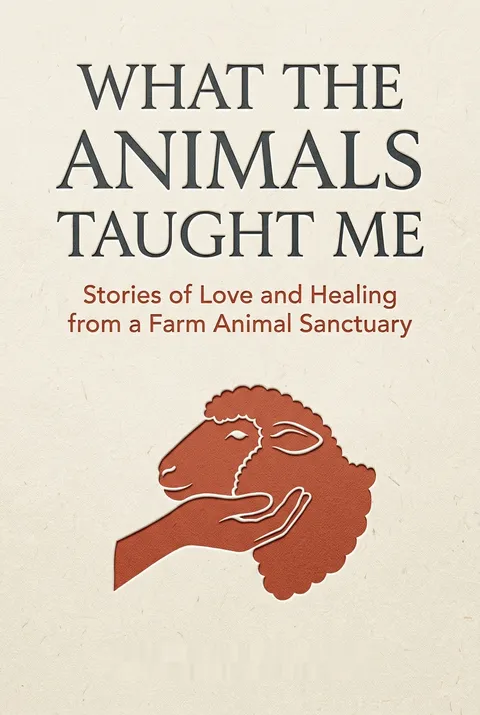
What the Animals Taught Me received mixed reviews from readers. Many appreciated the heartwarming stories of rescued farm animals and the author's compassion. Some found the book insightful and inspiring, praising its lessons on unconditional love and animal care. However, others criticized the metaphysical aspects and perceived judgmental tone. Some readers felt the author's spiritual interpretations were too "out there," while others embraced the energy healing approach. Overall, the book resonated with animal lovers but may not appeal to those skeptical of alternative healing methods.
People Also Read








Glossary
Liberty work
Relationship without restraintA way of working with a horse through unrestrained interaction, including walking together without a halter or lead rope. In Marohn's account, it emphasizes attention, shared movement, and communication rather than making the horse submit through equipment or force. She uses it to develop cooperation and to understand how her own positioning affects the horse.
Animal Messenger Sanctuary
Safe haven for animalsMarohn's name for the sanctuary she develops as a refuge for rescued farm animals and visiting wildlife. It represents both a physical place where animals can live more safely and a message that humans should treat other beings with respect. The idea expands beyond the property into a way of relating to animals, people, and nature.
Way of the Horse
Cooperative horse relationshipMarohn's description of what she learns through Pegasus and Gabriel: work with horses by understanding their communication, establishing safe leadership, and building trust rather than relying on domination. The phrase includes practical lessons about handling and safety as well as her broader conviction that cooperation creates a better relationship than trying to win control.
Way of Healing
Care through attentive serviceMarohn's name for a form of caregiving that combines practical attention with emotional presence, listening, and love. Caring for ill animals teaches her to turn fear and worry into focused service. The term also includes openness to intuition, but the book's personal experiences do not establish that intuitive or alternative treatments are medically effective.
Way of Dying
Presence during an animal's deathMarohn's approach to an animal's final days and death, centered on attending to the animal rather than making the experience solely about the caretaker's grief. It emphasizes companionship, comfort, respect for the animal's condition, and reflection on whether intervention is needed. The book presents this as a personal ethical approach, not a universal rule against euthanasia.
cocreation
Change shaped by many participantsMarohn's term for outcomes produced through the actions and circumstances of multiple beings, including people, animals, and, in her spiritual understanding, sources of guidance beyond the physical world. It does not mean that any one participant controls what happens. In the donkey story, practical choices help make a rescue possible, while unexpected events reshape the plan.
Way of Welcome
Offering safety through attentionMarohn's practice of meeting each moment and each being with an open, respectful awareness. She connects this to creating an inner sense of sanctuary and extending that sense of safety through ordinary encounters. It can mean acknowledging another person, allowing an animal its individuality, or approaching the natural world with care.
FAQ
What's "What the Animals Taught Me" about?
- Overview: "What the Animals Taught Me" by Stephanie Marohn is a collection of stories about the author's experiences with animals at her farm animal sanctuary. It explores the deep connections between humans and animals.
- Themes: The book delves into themes of love, healing, and the lessons animals can teach humans about life, compassion, and understanding.
- Structure: Each chapter focuses on a different animal or group of animals, sharing their stories and the insights they provided to the author.
- Purpose: The book aims to inspire readers to reflect on their relationships with animals and consider the broader implications of how humans treat other living beings.
Why should I read "What the Animals Taught Me"?
- Inspiration: The book offers heartwarming and inspirational stories that highlight the profound impact animals can have on human lives.
- Awareness: It raises awareness about the often overlooked intelligence and emotional depth of animals, encouraging readers to reconsider their views on animal welfare.
- Personal Growth: Readers can gain insights into personal growth and healing through the lessons Marohn learned from her animal companions.
- Connection to Nature: The book fosters a deeper connection to nature and emphasizes the importance of respecting all living beings.
What are the key takeaways of "What the Animals Taught Me"?
- Unconditional Love: Animals teach the importance of loving unconditionally and letting go of control, judgment, and fear.
- Healing Power: The stories illustrate how animals can be powerful healers and messengers, offering guidance and comfort.
- Respect and Trust: The book emphasizes the need for respect and trust in relationships with animals and humans alike.
- Sanctuary Concept: Marohn introduces the idea of creating sanctuaries in our lives, where beings can live in peace and harmony.
How does Stephanie Marohn communicate with animals in "What the Animals Taught Me"?
- Intuitive Connection: Marohn often relies on an intuitive connection with animals, listening to their needs and understanding their behaviors.
- Telepathic Communication: She describes instances of telepathic communication, where she receives messages or guidance from the animals.
- Observational Skills: Marohn uses keen observation to interpret the animals' actions and emotions, allowing her to respond appropriately.
- Respectful Interaction: Her approach is based on respect and empathy, ensuring that the animals feel safe and understood.
What are some of the most memorable stories in "What the Animals Taught Me"?
- Pegasus the Horse: The story of Pegasus, a miniature horse, teaches lessons about letting go of control and embracing freedom.
- Gabriel the Donkey: Gabriel's journey from fear to trust highlights the power of love and forgiveness in overcoming past trauma.
- Charlotte the Sheep: Charlotte's resilience and healing journey demonstrate the importance of listening and responding to the needs of others.
- Angel the Deer: Angel's story illustrates the interconnectedness of all beings and the unexpected ways animals can impact our lives.
What lessons does Stephanie Marohn learn from Pegasus the Horse?
- Letting Go of Control: Pegasus teaches Marohn the importance of releasing control and allowing things to unfold naturally.
- Freedom and Joy: The horse embodies the joy of freedom, inspiring Marohn to embrace spontaneity and presence.
- Communication: Through her interactions with Pegasus, Marohn learns to communicate more effectively with animals by understanding their language.
- Leadership: Pegasus shows Marohn how to lead with love and cooperation rather than dominance.
How does "What the Animals Taught Me" address the concept of sanctuary?
- Definition of Sanctuary: Marohn defines sanctuary as a place of safety, peace, and respect where beings can live authentically.
- Creating Sanctuary: The book encourages readers to create sanctuaries in their own lives, fostering environments of love and acceptance.
- Sanctuary for All Beings: Marohn emphasizes that sanctuaries are not just physical spaces but also states of being that can be extended to all relationships.
- Impact of Sanctuary: The concept of sanctuary is shown to have a profound impact on both animals and humans, promoting healing and connection.
What role do dreams play in "What the Animals Taught Me"?
- Guidance and Messages: Marohn often receives guidance and messages from animals through her dreams, which help her make decisions and understand her experiences.
- Connection to Animals: Dreams serve as a bridge between Marohn and the animals, deepening her connection and understanding of their needs.
- Symbolism: The dreams are rich with symbolism, offering insights into the spiritual and emotional aspects of her relationships with animals.
- Validation: Dreams validate Marohn's intuitive feelings and reinforce the lessons she learns from the animals in her waking life.
How does Stephanie Marohn approach healing in "What the Animals Taught Me"?
- Holistic Methods: Marohn uses holistic methods, including natural medicine and energy healing, to care for the animals at her sanctuary.
- Listening and Intuition: She emphasizes the importance of listening to the animals and trusting her intuition to guide her healing practices.
- Collaboration with Experts: Marohn collaborates with veterinarians and other experts to ensure the animals receive the best possible care.
- Emotional Support: Providing emotional support and creating a loving environment are key components of her healing approach.
What are the best quotes from "What the Animals Taught Me" and what do they mean?
- "Letting go of control is the first step toward unconditional love." This quote highlights the importance of releasing control to foster genuine connections.
- "Every moment is a sanctuary." It suggests that peace and safety can be found in every moment if we approach life with an open heart.
- "Animals are powerful healers and messengers." This emphasizes the transformative impact animals can have on human lives through their presence and wisdom.
- "Respect is at the center of healing our disconnection from nature." The quote underscores the need for respect in all interactions to restore harmony with the natural world.
How does "What the Animals Taught Me" explore the theme of unconditional love?
- Animal Lessons: The animals at Marohn's sanctuary teach her about unconditional love through their actions and relationships.
- Letting Go: Unconditional love involves letting go of judgment, fear, and past grievances, as demonstrated by the animals' ability to forgive and trust.
- Heart-Centered Living: The book encourages living from the heart, where unconditional love naturally flows and fosters deeper connections.
- Universal Application: Marohn applies the lessons of unconditional love learned from animals to her interactions with humans and the world around her.
What impact does "What the Animals Taught Me" aim to have on readers?
- Increased Awareness: The book aims to increase awareness of the emotional and spiritual lives of animals, encouraging readers to reconsider their treatment of them.
- Empathy and Compassion: By sharing her experiences, Marohn hopes to inspire empathy and compassion for all living beings.
- Personal Reflection: Readers are encouraged to reflect on their own relationships with animals and nature, leading to personal growth and transformation.
- Action and Advocacy: The book motivates readers to take action in their own lives to create sanctuaries and advocate for animal welfare.
Download PDF
Download EPUB
.epub digital book format is ideal for reading ebooks on phones, tablets, and e-readers.








